

Technologies
FAA warns U.S. airlines of safety risks over Saudi Arabia after attacks
The FAA warned U.S. airlines about flight risks over Saudi Arabia as Riyadh airport attacks disrupt travel and Delta weighs an Oct. 23 launch.


Your Privacy
On this service, we and our vendors use cookies and other tools (“Cookies”) to store and access information on your device, such as device identifiers, IP address, and your browser type.
Your data may be used to save and communicate your privacy choices; ensure security, prevent fraud, and debug our products and services; personalize advertising and content; for advertising and content measurement; to conduct audience research and services development; so we can improve our services and develop new ones; to match and combine offline data with your online activity; and for social features.
We may share this data with select vendors with your consent. You can adjust your choices any time through the “Cookie Preferences” link in the footer of relevant Versant sites or in-app settings.
We will also use other Cookies that are essential or related to our services, including for security and fraud prevention. To learn more about some of our vendors, see the IAB and Google Vendors under each purpose. Visit our Cookie Notice and Privacy Policy to learn more.
These Cookies and SDKs are required for Service functionality, including security and fraud prevention, and to enable any purchasing capabilities. You can set your browser to block these tracking technologies, but some parts of the site may not function properly.
The choices you make regarding the purposes and entities listed in this notice are saved and made available to those entities in the form of digital signals (such as a string of characters). This is necessary in order to enable both this service and those entities to respect such choices.
Your data can be used to monitor for and prevent unusual and possibly fraudulent activity (for example, regarding advertising, ad clicks by bots), and ensure systems and processes work properly and securely. It can also be used to correct any problems you, the publisher or the advertiser may encounter in the delivery of content and ads and in your interaction with them.
Certain information (like an IP address or device capabilities) is used to ensure the technical compatibility of the content or advertising, and to facilitate the transmission of the content or ad to your device.
Cookies, device or similar online identifiers (e.g. login-based identifiers, randomly assigned identifiers, network based identifiers) together with other information (e.g. browser type and information, language, screen size, supported technologies etc.) can be stored or read on your device to recognise it each time it connects to an app or to a website, for one or several of the purposes presented here.
– Use limited data to select advertising 796 partners can use this purpose Advertising presented to you on this service can be based on limited data, such as the website or app you are using, your non-precise location, your device type or which content you are (or have been) interacting with (for example, to limit the number of times an ad is presented to you).
– Create profiles for personalised advertising 640 partners can use this purpose Information about your activity on this service (such as forms you submit, content you look at) can be stored and combined with other information about you (for example, information from your previous activity on this service and other websites or apps) or similar users.
This is then used to build or improve a profile about you (that might include possible interests and personal aspects). Your profile can be used (also later) to present advertising that appears more relevant based on your possible interests by this and other entities.
– Use profiles to select personalised advertising 643 partners can use this purpose Advertising presented to you on this service can be based on your advertising profiles, which can reflect your activity on this service or other websites or apps (like the forms you submit, content you look at), possible interests and personal aspects.
– Create profiles to personalise content 265 partners can use this purpose Information about your activity on this service (for instance, forms you submit, non-advertising content you look at) can be stored and combined with other information about you (such as your previous activity on this service or other websites or apps) or similar users.
This is then used to build or improve a profile about you (which might for example include possible interests and personal aspects). Your profile can be used (also later) to present content that appears more relevant based on your possible interests, such as by adapting the order in which content is shown to you, so that it is even easier for you to find content that matches your interests.
– Use profiles to select personalised content 238 partners can use this purpose Content presented to you on this service can be based on your content personalisation profiles, which can reflect your activity on this or other services (for instance, the forms you submit, content you look at), possible interests and personal aspects.
This can for example be used to adapt the order in which content is shown to you, so that it is even easier for you to find (non-advertising) content that matches your interests.
– Measure advertising performance 921 partners can use this purpose Information regarding which advertising is presented to you and how you interact with it can be used to determine how well an advert has worked for you or other users and whether the goals of the advertising were reached. For instance, whether you saw an ad, whether you clicked on it, whether it led you to buy a product or visit a website, etc.
This is very helpful to understand the relevance of advertising campaigns.
– Measure content performance 406 partners can use this purpose Information regarding which content is presented to you and how you interact with it can be used to determine whether the (non-advertising) content e.g. reached its intended audience and matched your interests.
For instance, whether you read an article, watch a video, listen to a podcast or look at a product description, how long you spent on this service and the web pages you visit etc. This is very helpful to understand the relevance of (non-advertising) content that is shown to you.
– Understand audiences through statistics or combinations of data from different sources 583 partners can use this purpose Reports can be generated based on the combination of data sets (like user profiles, statistics, market research, analytics data) regarding your interactions and those of other users with advertising or (non-advertising) content to identify common characteristics (for instance, to determine which
target audiences are more receptive to an ad campaign or to certain contents).
– Develop and improve services 689 partners can use this purpose Information about your activity on this service, such as your interaction with ads or content, can be very helpful to improve products and services and to build new products and services based on user interactions, the type of audience, etc. This specific purpose does not include the development or improvement of user profiles and identifiers.
– Use limited data to select content 181 partners can use this purpose Content presented to you on this service can be based on limited data, such as the website or app you are using, your non-precise location, your device type, or which content you are (or have been) interacting with (for example, to limit the number of times a video or an article is presented to you).
These Cookies and SDKs are used to collect data about your browsing habits, use of the Services, your preferences, and your interaction with advertisements across platforms and devices for the purpose of delivering targeted advertising content, both on our Services and on third party sites.
Third-party sites and services also use Targeting Cookies to deliver content, including advertisements relevant to your interests on the Services. If you reject these Cookies or SDKs, you will see less relevant advertising.
Data collected under this category through Cookies and SDKs can also be used to select and deliver personalized content, such as news articles and videos.
Technologies
Delta postpones launch of Saudi Arabia flights to March following Riyadh airport attacks
The article explains how the service uses cookies and similar technologies to collect data for security, personalization, advertising measurement, and service improvement, detailing the various purposes and partner counts. Users can adjust their cookie preferences at any time via the provided settings.

Your Privacy
On this service, we and our partners use cookies and similar technologies (“Cookies”) to store and retrieve information on your device, such as device IDs, IP address, and browser type.
This data may be used to record and share your privacy preferences; maintain security, prevent fraud, and troubleshoot our products and services; tailor advertising and content; measure advertising and content performance; conduct audience research and service development; enhance our services and create new ones; link offline data with your online activity; and enable social features.
We may share this information with selected vendors when you give consent. You can change your preferences at any time via the “Cookie Preferences” link in the footer of relevant Versant sites or in the app settings.
We also employ other Cookies that are essential or related to our services, including those for security and fraud prevention. For details about some of our vendors, refer to the IAB and Google Vendors listed under each purpose. See our Cookie Notice and Privacy Policy for further information.
These Cookies and SDKs are necessary for the service to function, including security and fraud prevention, and to enable any purchase capabilities. You can configure your browser to block these tracking technologies, but certain parts of the site may not work correctly.
The choices you make regarding the purposes and entities listed in this notice are stored and made available to those entities as digital signals (for example, a string of characters). This is required so that both this service and those entities can honor your choices.
Your data can be used to detect and prevent unusual or potentially fraudulent activity (for instance, concerning advertising, ad clicks generated by bots), and to ensure that systems and processes operate correctly and securely. It can also be used to fix any issues you, the publisher, or the advertiser may experience in delivering content and ads and in interacting with them.
Certain information (such as an IP address or device capabilities) is used to guarantee the technical compatibility of the content or advertising, and to facilitate the transmission of the content or ad to your device.
Cookies, device or similar online identifiers (e.g., login‑based identifiers, randomly assigned identifiers, network‑based identifiers) together with other information (e.g., browser type and details, language, screen size, supported technologies) can be stored or read on your device to recognize it each time it connects to an app or website, for one or several of the purposes described here.
– Use limited data to select advertising – 796 partners can use this purpose. Advertising shown to you on this service may be based on limited data, such as the website or app you are using, your approximate location, your device type, or the content you are (or have been) interacting with (for example, to limit how many times an ad appears to you).
– Create profiles for personalised advertising – 640 partners can use this purpose. Information about your activity on this service (such as forms you submit, content you view) can be stored and combined with other data about you (for example, information from your previous activity on this service and other websites or apps) or from similar users.
This is then used to build or refine a profile about you (which might include possible interests and personal traits). Your profile can be used (also later) to present advertising that appears more relevant based on your possible interests by this and other entities.
– Use profiles to select personalised advertising – 643 partners can use this purpose. Advertising presented to you on this service can be based on your advertising profiles, which can reflect your activity on this service or other websites or apps (like the forms you submit, content you view), possible interests and personal aspects.
– Create profiles to personalise content – 265 partners can use this purpose. Information about your activity on this service (for instance, forms you submit, non‑advertising content you view) can be stored and combined with other information about you (such as your previous activity on this service or other websites or apps) or from similar users.
This is then used to build or improve a profile about you (which might, for example, include possible interests and personal aspects). Your profile can be used (also later) to present content that appears more relevant based on your possible interests, such as by adjusting the order in which content is shown to you, making it easier to find content that matches your interests.
– Use profiles to select personalised content – 238 partners can use this purpose. Content shown to you on this service can be based on your content‑personalisation profiles, which can reflect your activity on this or other services (for instance, the forms you submit, content you view), possible interests and personal aspects.
This can, for example, be used to adjust the order in which content is displayed to you, so that it is even easier to locate (non‑advertising) content that matches your interests.
– Measure advertising performance – 921 partners can use this purpose. Data regarding which advertising is presented to you and how you interact with it can be used to assess how well an ad performed for you or other users and whether the advertising goals were met.
For instance, whether you saw an ad, whether you clicked on it, whether it led you to purchase a product or visit a website, etc. This helps understand the relevance of advertising campaigns.
– Measure content performance – 406 partners can use this purpose. Information about which content is presented to you and how you interact with it can be used to determine whether the (non‑advertising) content—for example, reached its intended audience and aligned with your interests.
For instance, whether you read an article, watched a video, listened to a podcast, or viewed a product description, how long you spent on this service and the web pages you visited, etc. This is useful for gauging the relevance of non‑advertising content shown to you.
– Understand audiences through statistics or combinations of data from different sources – 583 partners can use this purpose.
Reports can be generated by combining data sets (such as user profiles, statistics, market research, analytics data) concerning your interactions and those of other users with advertising or non‑advertising content to identify common characteristics (for instance, to determine which target audiences are more receptive to an ad campaign or to certain types of content).
– Develop and improve services – 689 partners can use this purpose. Information about your activity on this service, such as your interaction with ads or content, can be very helpful to improve products and services and to build new products and services based on user interactions, the type of audience, etc. This specific purpose does not cover the development or improvement of user profiles and identifiers.
– Use limited data to select content – 181 partners can use this purpose. Content presented to you on this service can be based on limited data, such as the website or app you are using, your approximate location, your device type, or the content you are (or have been) interacting with (for example, to limit how many times a video or article is shown to you).
These Cookies and SDKs are used to gather data about your browsing habits, use of the Services, your preferences, and your interaction with advertisements across platforms and devices for the purpose of delivering targeted advertising content, both on our Services and on third‑party sites.
Third‑party sites and services also use Targeting Cookies to deliver content, including advertisements relevant to your interests on the Services. If you reject these Cookies or SDKs, you will see less relevant advertising.
Data collected under this category through Cookies and SDKs can also be used to select and deliver personalized content, such as news articles and videos.
Technologies
World Bank jobs council urges ‘crisis-era’ employment support measures as IMF warns of AI ‘tsunami’
IMF Chief Kristalina Georgieva warned AI is hitting the global labor market like a “slow-moving tsunami,” with young workers entering the job market the most exposed.

BANGKOK — Policymakers are moving from debating whether artificial intelligence will hit jobs to issuing stark warnings about AI-led disruption and recommending measures on cushioning the fallout.
International Monetary Fund Managing Director Kristalina Georgieva warned on Monday that artificial intelligence was hitting the global labor market like a “slow-moving tsunami,” with young graduates first in line to be knocked down.
“People to worry about, first and foremost, [are] young people that are coming into the labor market,” Georgieva said at a panels on Monday. “Normally, they would get into these routine, repetitive jobs and then grow up the ranks. But if they’re gone, I don’t think any young person wants to be a barista in a coffee shop as … professional future.”
Speaking on the same panel, Singapore President Tharman Shanmugaratnam, who co-chairs the World Bank’s Jobs Council, called for governments to make “crisis-era” support measures a permanent tool for getting young people into work.
What governments did during the Covid-19 pandemic and, in some cases, the global financial crisis “now has to be thought of not as a crisis measure, but as part of the structural, the menu of structural policies,” he said.
That means working with the private sector, and incentivizing firms to hire fresh graduates, because “the first rung in employment, your first job upon graduation, is now seeing less demand,” Shanmugaratnam said.
The remarks show that policymakers are moving from debating whether AI will disrupt jobs to deciding how to cushion the fallout, at a time when rapidly aging populations, particularly in Asia, already threaten to shrink workforces.
World Bank President Ajay Banga, estimates 1.2 billion young people will turn 18 over the next 15 years, and the private sector, which already generates 75% to 85% of jobs in any country, will have to absorb most of them.
Governments’ role is to make that possible, he said, by building infrastructure, setting policy and “de-risking” private capital, or lowering the risks that deter investors from putting in money at scale. “It is private capital that creates jobs,” he said.
The IMF estimates that about 40% of jobs worldwide will eventually be “augmented, downgraded or eliminated.” Exposure is about 60% in advanced economies and 23% in low-income countries, she said, but poorer nations are not better off: that is “just because AI is further away.”
The squeeze is clearest in tech, Shanmugaratnam said, adding that in the U.S. “for the first time in a century, demand for graduates has gone down,” with the wage premium for a college degree also shrinking. Without action, a cohort of graduates loses more than a year of skills: “you lose trust in the future,” he said.
‘Love it, hate it, or fear it’
AI has also been the major driver propping up growth this year. AI-related investments and trade have lifted output in a handful of economies, helping keep global expansion near 3% despite an energy supply shock, Georgieva said.
“Love it, hate it, or fear it. It [AI] is here, and we are already seeing the first wave of impact,” Georgieva said, estimating AI adoption could lift growth by 0.5 percentage point to 1 percentage point in advanced Asia, and 0.2 percentage point to 0.8 percentage point in emerging Asia. At the high end, that “would more than offset the loss that comes from aging population,” said Georgieva.
Shanmugaratnam cautioned that growth alone may not necessarily deliver job creation. China, India and developing Southeast Asia are “growing quite well, but job creation is weak,” he said, and AI “is going to widen that divergence if we are too passive about it.”
AI-induced job displacement, however, will come “task by task,” he said, “and that gives us time” — provided workers can learn on the job and universities shift toward applied training.
Technologies
Brent tops $106 after deadly Saudi airport attack, Ukraine says Russia violated energy ceasefire
Ukrainian President Volodymyr Zelenskyy said that “Ukraine supports the ceasefire, and it is important that Russia support it as well.”

Crude oil prices rose Monday after a deadly attack on Saudi Arabia’s airport in Riyadh, while Ukraine said Russia continued to attack its energy facilities.
Brent crude
Iran-backed Houthi militants in Yemen attacked King Khalid International Airport in Saudi Arabia’s capital Riyadh on Saturday, leaving 12 people dead and more than 300 injured in a major escalation.
Meanwhile in Europe, Ukrainian President Volodymyr Zelenskyy said Monday that Russia violated the energy ceasefire declared by President Donald Trump. Moscow attacked a gas-production facility in Ukraine, Zelenskyy said.
Prospects of more Russian energy hitting markets after a deal with the U.S. have also risen. Trump said Friday that Moscow will supply more than 4 million tons of diesel to the global market under a deal he struck with Putin during a phone call.
Elsewhere early on Monday, the Saudi-led coalition fighting Yemen’s Iran-backed Houthis said it was dealing with another round of drone and missile attacks directed at Saudi Arabia.
It comes after Iran’s Minister of Foreign Affairs Abbas Araghchi made a phone call to Saudi Arabia’s Minister of Foreign Affairs Faisal bin Farhan bin Abdullah to discuss the region’s recent escalation of events as well as the efforts to address it, according to the Saudi state news agency,
In the U.S., about 1.2 million barrels per day of oil production in the Gulf of Mexico remained shut in Sunday due to Hurricane Isaias, according to the Bureau of Safety and Environmental Enforcement.
-
 Technologies4 years ago
Tech Companies Need to Be Held Accountable for Security, Experts Say
-
 Technologies5 years ago
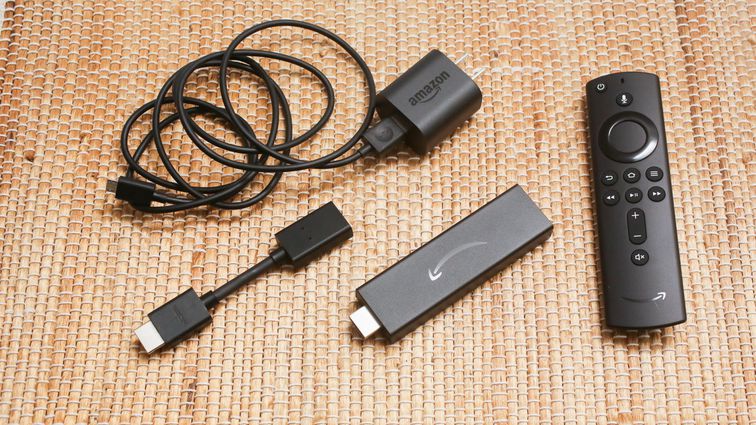
Black Friday 2021: The best deals on TVs, headphones, kitchenware, and more
-
 Technologies4 years ago
Tighten Up Your VR Game With the Best Head Straps for Quest 2
-
 Technologies5 years ago
Google to require vaccinations as Silicon Valley rethinks return-to-office policies
-
 Technologies4 years ago
The number of Сrypto Bank customers increased by 10% in five days
-
 Technologies5 years ago
Verum, Wickr and Threema: next generation secured messengers
-
 Technologies5 years ago
Olivia Harlan Dekker for Verum Messenger
-
 Technologies5 years ago
iPhone 13 event: How to watch Apple’s big announcement tomorrow


