

Technologies
Saudi Arabia reports ongoing drone and missile strikes as Iran‑backed Houthis intensify attacks on the kingdom
Saudi Arabia faces continued drone and missile strikes from Iran‑backed Houthis, prompting travel warnings from multiple nations and raising questions about its defense capabilities.

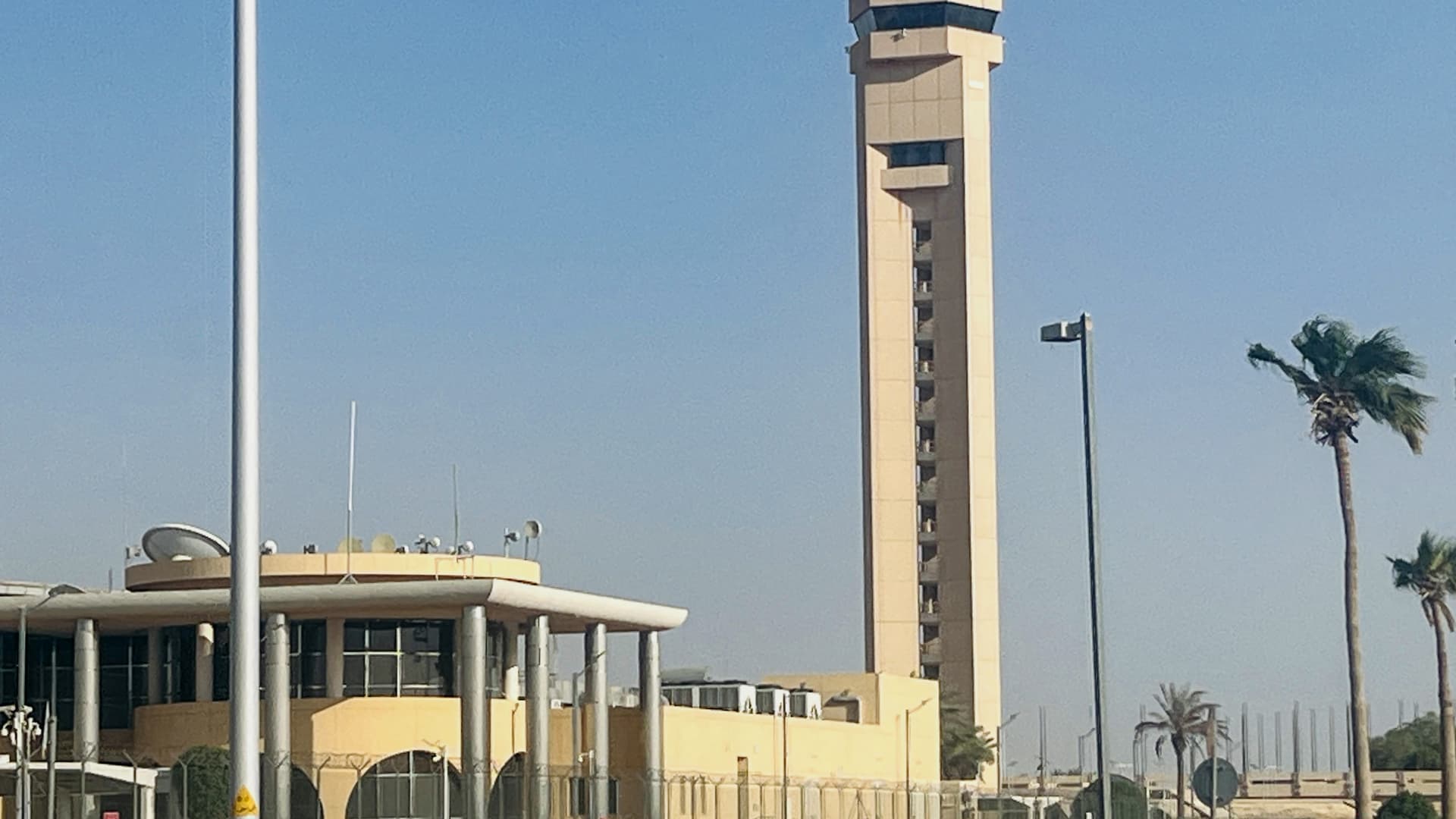
Saudi Arabia said Monday it was dealing with more drones and missile strikes as a slew of countries warned against travel to the kingdom due to fatal attacks on Riyadh’s airport by Iran-backed Houthi militants.
The Australian and New Zealand governments on Monday cautioned their citizens against traveling to King Khalid International Airport in Riyadh and other Saudi destinations, joining similar advisories from the U.K., U.S., Canada, France, Germany, Japan and others.
The Saudi aviation authority extended the suspension of operations at the airport, which has been hit by numerous projectiles over the past week. The deadliest strike came on Saturday, when 12 people were killed and more than 300 were injured, according to officials. Another strike on Sunday killed one person and injured nearly a dozen.
Yemen’s Iran-backed Houthi rebels have claimed responsibility for the attacks, which have raised questions over the robustness of Saudi Arabia’s defense capabilities despite its huge military spending.
The fatalities come as the kingdom hosts major corporate conferences, including the World Petroleum Congress, the International Energy Forum Ministerial Meeting and the Future Investment Initiative.
Airlines canceled hundreds of flights scheduled for the coming days, and about 100 flights were forced to divert to other airports, according to Flightradar24. The Federal Aviation Administration warned U.S. carriers of potential risks of flying over and around Saudi Arabia.
Delta Air Lines
U.S. President Donald Trump said Sunday that the U.S. “may” join Saudi Arabia in its retaliation against the Houthis.
Iran’s foreign minister, Abbas Araghchi, said Sunday that he had told Saudi Minister of Foreign Affairs Prince Faisal bin Farhan Al Saud by phone that Tehran was willing to take steps to start dialogue between Saudi Arabia and Yemen, where the Houthis are based.
Iranian Foreign Ministry spokesperson Esmail Baghaei meanwhile said Iran was still reviewing a U.S. response to its proposal for reopening the Strait of Hormuz and would reply through its intermediaries, Reuters reported.
— CNBC’s Leslie Josephs contributed to this report.
Technologies
Microsoft Boosts In-House AI Chip Usage, Lessening Nvidia Dependence
Microsoft is expanding its use of custom AI chips, starting with the third‑generation Maia accelerator, to lessen reliance on Nvidia GPUs. The company expects the Maia 300 to deliver significant performance and efficiency gains across its data centers by 2027.
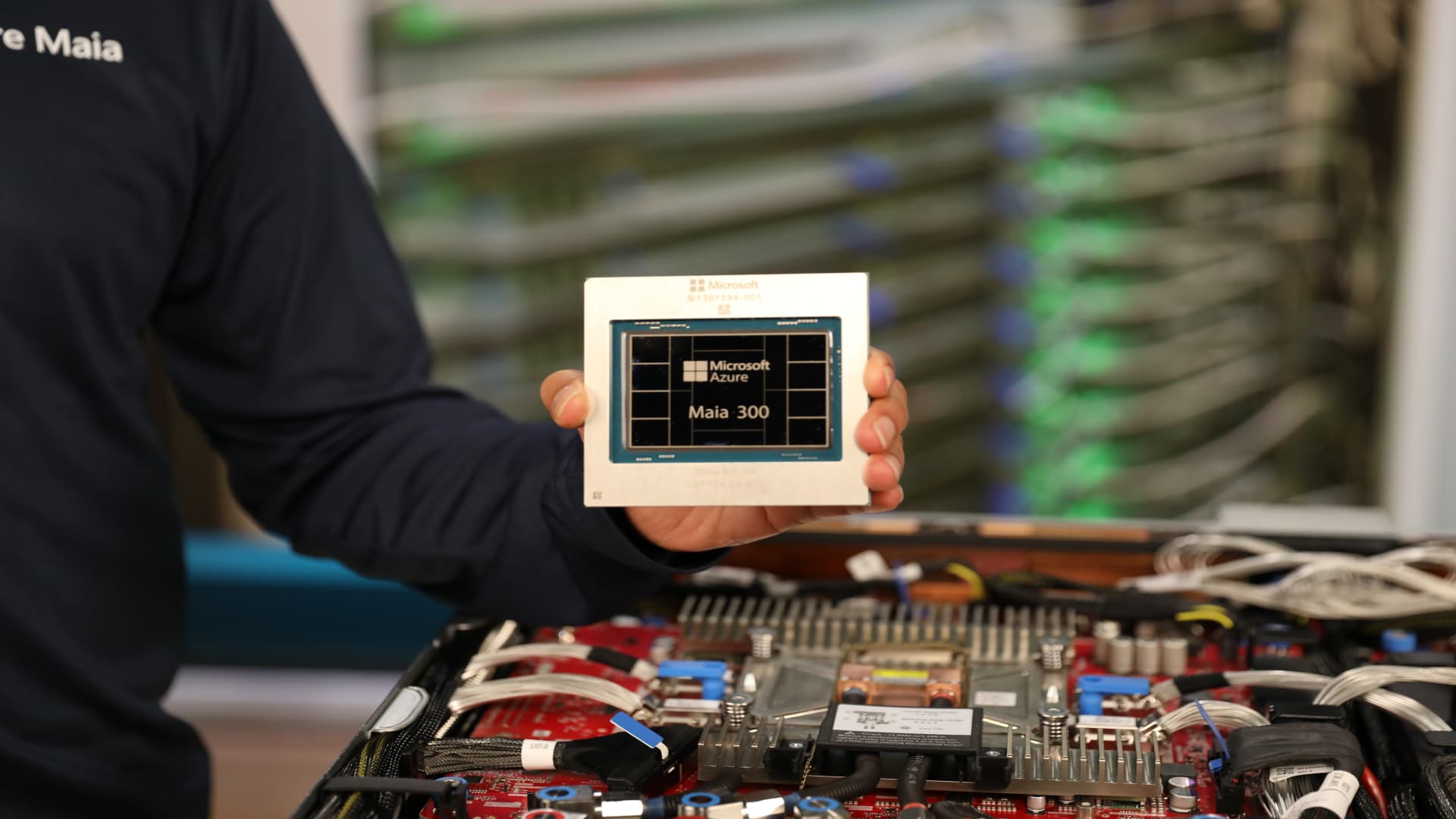
Microsoft plans to increase deployment of its internally developed AI chips following years of depending on Nvidia’s GPUs, as the company seeks to strengthen its AI portfolio. Beginning with the newly unveiled third‑generation Maia AI accelerator, Microsoft stated it will primarily use its own silicon to process incoming requests.
Microsoft’s core AI advantage lies in its Azure cloud, which hosts numerous models for customers. Products such as Microsoft 365 Copilot and GitHub Copilot deliver AI‑driven capabilities to developers and office staff. The firm also creates proprietary models, though they have not yet gained significant traction in a market led by OpenAI, Anthropic and Google.
The chip opportunity arises from relentless demand for advanced processors and a market appetite for alternatives. Nvidia’s GPUs have long been the default for AI workloads, populating Microsoft’s data centers and also training models for OpenAI and Anthropic.
As demand continues to rise, AI leaders are diversifying their silicon sources, turning to offerings from Amazon, AMD, Cerebras, Google and, recently, Microsoft itself. For general‑purpose computing, Microsoft already uses its own CPUs alongside chips from Intel and AMD.
CFO Amy Hood noted at a Goldman Sachs conference last month that leveraging its own hardware has contributed to “margin improvement over the course of a decade.”
Microsoft launched its first AI chip, the Maia 100, in 2023. It highlighted the Maia 200 earlier this year, and CEO Satya Nadella told analysts in July that the Maia 200 provides “30% better performance per dollar than the latest generation hardware in our fleet” and is already running OpenAI models.
Mass production of the Maia 300 is slated for 2027. Microsoft aims for multi‑gigawatt rollouts of the Maia family, according to a blog post by Executive Vice President Scott Guthrie, though General Manager Alistair Speirs declined to give a firm timeline.
“We keep some flexibility because the sector evolves rapidly, and we want to match the right silicon to the right models at the right time,” Speirs remarked. Microsoft plans to fit 96 Maia 300 chips per data‑center rack—twice the count of the Maia 200.
The new chip can process up to seven times more AI tokens per rack and delivers 40% more tokens per megawatt compared with GPUs. “We need architectures that improve performance and power utilization,” Speirs said, adding that power efficiency translates directly into lower data‑center operating costs.
Jim Kleewein, a technical fellow, said portions of Microsoft 365 Copilot will run faster with the Maia 300.
In a Wednesday client note, Evercore ISI analysts projected that Maia will account for roughly 10% of Microsoft’s AI chip spending by Q1 2027 and advised buying the stock.
Nvidia will remain a major partner; CEO Jensen Huang spoke at an event last week where Microsoft unveiled a Surface laptop equipped with an Nvidia processor, and Speirs confirmed that Microsoft continues to collaborate with Nvidia and AMD on model training. Unlike Google’s TPUs or Amazon’s Inferentia and Trainium, Microsoft’s accelerators are not offered for hourly rental to external firms.
“No one has tested them outside Microsoft yet,” said Patrick Moorhead, CEO of Moor Insights and Strategy. WATCH: Melissa Otto: Nvidia is the bellwether of the AI trade
Technologies
TikTok CEO predicts major AI-driven scientific breakthroughs within three years
TikTok CEO Shou Zi Chew predicts that artificial intelligence will drive major scientific breakthroughs in fields like physics, biotech, chemistry, and materials science within the next two to three years, potentially reshaping many industries.
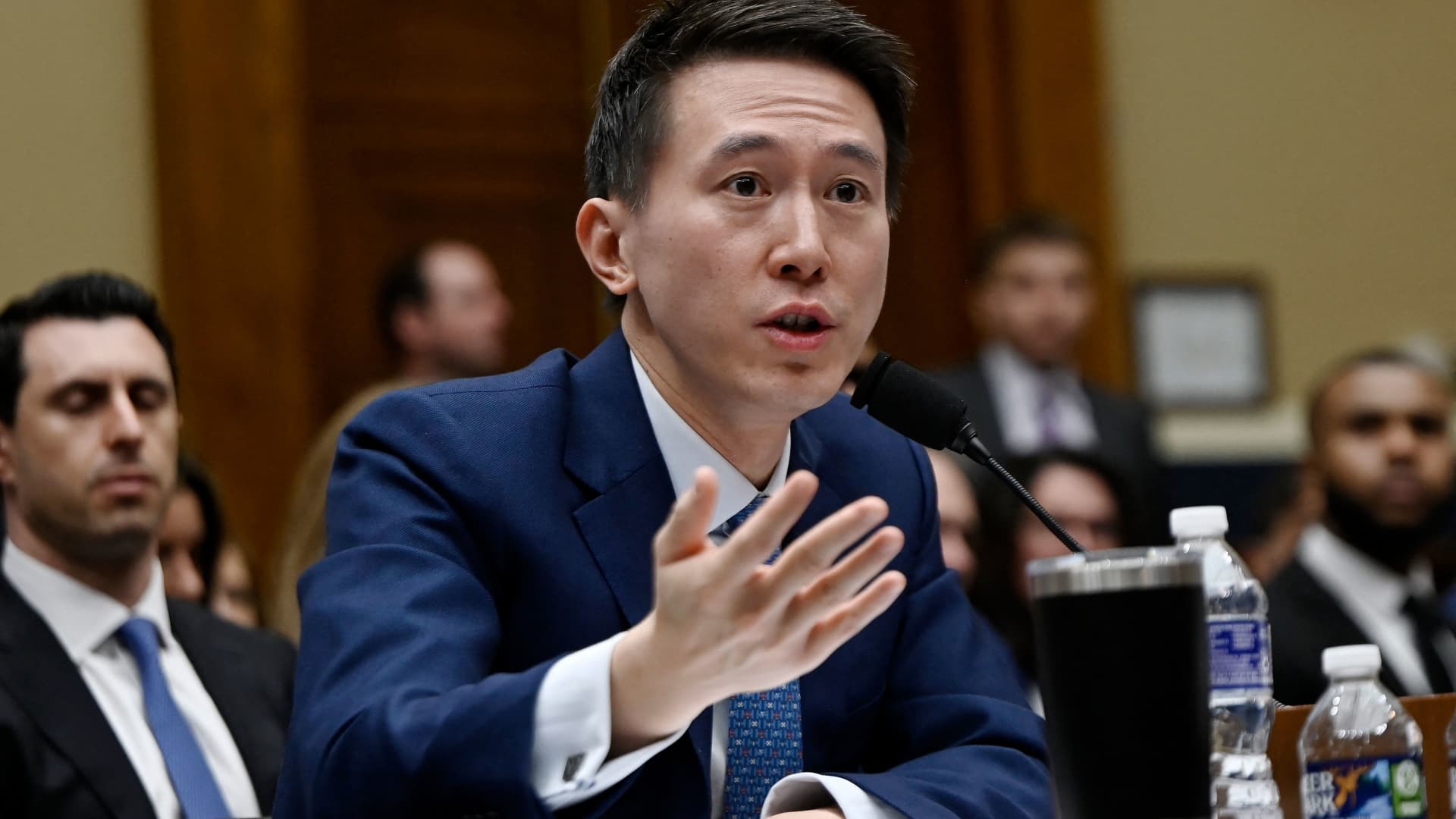
At the DBS Asia Future Forward Conference in Singapore on Monday, TikTok CEO Shou Zi Chew expressed his belief that artificial intelligence will lead to significant scientific breakthroughs across multiple disciplines within the next two to three years.
He highlighted fields such as physics, biotechnology, chemistry, and materials science as likely beneficiaries of AI advancements, stating that such progress is highly plausible.
Chew’s comments follow ByteDance, TikTok’s Chinese parent, expanding its AI research beyond consumer apps. In April, the company’s Seed research team introduced Protenix‑v2, an AI model designed for biomolecular structure prediction and design, with potential uses in drug discovery.
He noted that rapid AI development is unlocking possibilities far beyond current applications, yet concerns remain about ensuring these powerful systems operate within ethical human boundaries. If that alignment is achieved, the key question becomes how to make models and machines perform tasks that are intuitive to people.
Chew emphasized the accelerating pace of technological progress, especially in scientific research, arguing that AI’s long‑term impact could be far greater than today’s expectations. He described the trend as clear and steep, suggesting we are only at the beginning of AI’s potential.
While immediate effects may be over‑hyped, he believes the long‑term promise of AI is still under‑appreciated, stating that short‑term expectations are likely too high but long‑term ones too low.
His optimism aligns with major tech investments in AI‑driven science. Last week, the U.S. government, Meta, and Google announced a $1.8 billion partnership to create AI models that can predict cell behavior, aiming to speed up biological research and drug development.
ByteDance, TikTok’s parent, is also building its own AI models and looking for ways to work with scientists on research projects. Chew added that the company is actively collaborating with many researchers and has already done exciting work in this area.
He called scientific discovery one of AI’s most promising applications, even as the technology reshapes TikTok’s own operations—from content creation and recommendations to search and moderation.
However, Chew warned that AI’s growing capabilities will demand stronger safeguards, particularly as autonomous systems become more common. He raised concerns about cybersecurity risks, noting that users may grant AI agents broad permissions without fully understanding the consequences.
Allowing AI agents to make purchases on their own could lead to unintended spending, as the systems might buy more than users intended in their rush to complete tasks. He also highlighted the rising cybersecurity challenges firms face, as sophisticated AI lowers the cost for malicious actors to commit fraud.
To counter this, he stressed the need for robust tools to protect platforms from the rapidly decreasing cost of creating security problems.
Technologies
Intel, Broadcom CEOs warn capital crunch could become AI’s biggest bottleneck
The CEOs of Intel and Broadcom warned that access to capital could emerge as a major constraint on the artificial intelligence boom.
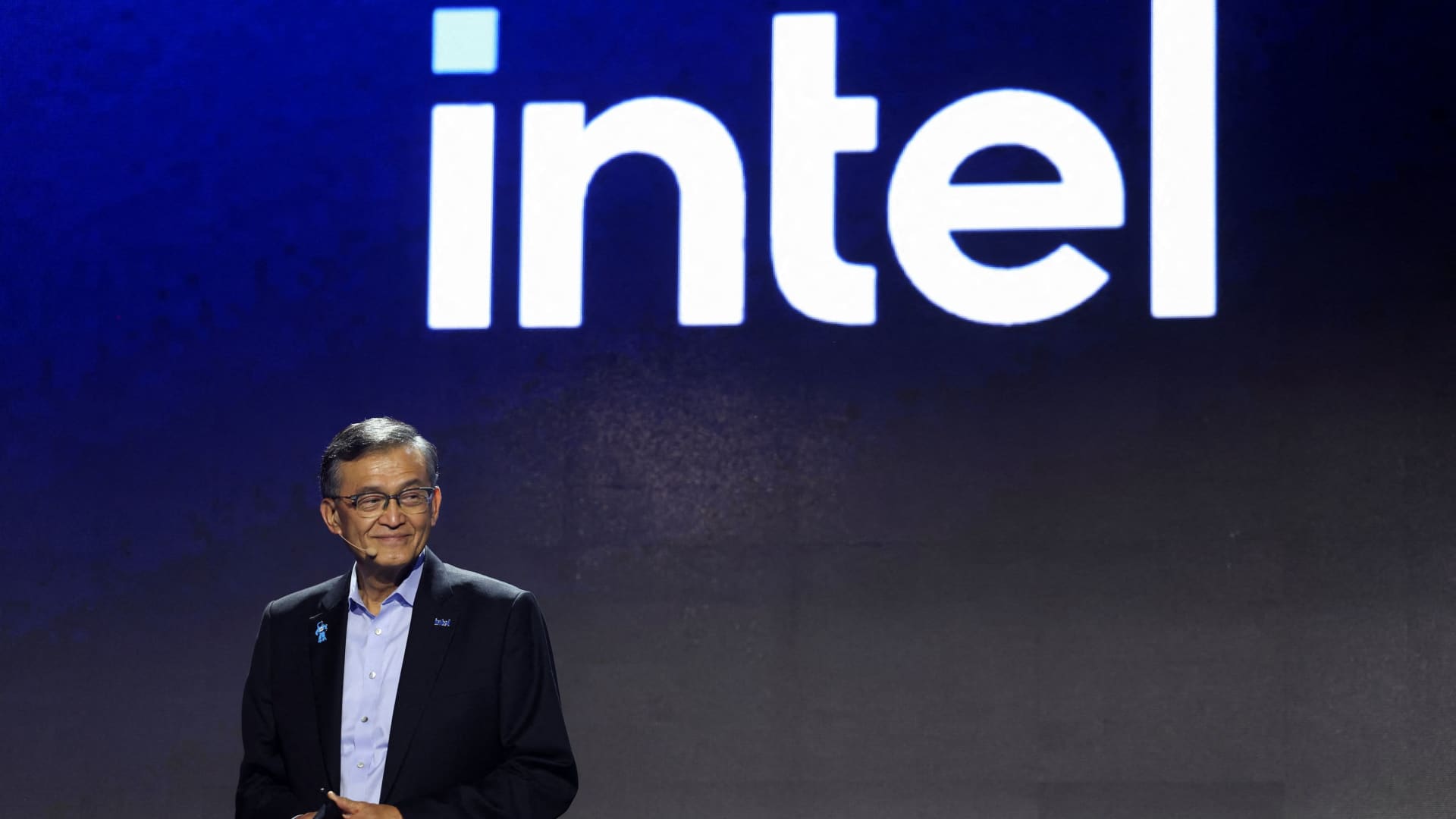
SINGAPORE — The chief executives of Intel and Broadcom warned that access to capital could emerge as a major constraint on the artificial intelligence boom, even as demand for computing infrastructure continues to outstrip supply.
Broadcom CEO Hock Tan said financing could become a bigger obstacle to AI expansion than shortages of semiconductors, memory chips or electricity, as the industry races to build the infrastructure needed to power increasingly sophisticated models.
″[What] I think might be the biggest constraint is capital,” Hock Tan said at the DBS Asia Future Forward Conference in Singapore on Monday.
Intel CEO Lip-Bu Tan echoed concerns about financing, pointing to the rising cost of capital and questions over whether companies investing heavily in AI will eventually generate sufficient returns.
“If there’s any challenge in the front, it’s capital and the cost of capital, and then the other part is in the longer run, people want to see the ROI,” he said.
Their remarks highlight an emerging challenge for the AI industry, which has poured enormous sums into data centers, advanced chips and power infrastructure in anticipation of surging demand for computing capacity.
The warnings come as rising borrowing costs threaten to complicate financing for technology companies investing heavily in AI infrastructure. Higher bond yields could make it more expensive to fund data center construction and chip purchases, potentially putting pressure on the economics of projects that may take years to generate returns.
Hock Tan said the industry has repeatedly encountered supply bottlenecks over the past two years, but expects some of those constraints to ease as production capacity expands.
″[In the] last two years we have seen a series of bottlenecks that keep coming out, but then we overcome it,” he said. “Memory shortage today might not be that way a year from now.”
He suggested that wafer shortages could ease by 2028 or 2029, while power availability could also improve as new infrastructure comes online.
Despite the financing concerns, both executives remained bullish on near-term demand for AI computing infrastructure.
“There is more demand for compute infrastructure than we can supply,” Hock Tan said, adding that the imbalance could persist through 2029 and potentially into 2030.
Intel’s Tan similarly said the industry was unlikely to experience a significant slowdown over the next two to three years, citing growing adoption of AI applications and demand for computing power.
But sustaining that growth beyond the next few years will depend on how quickly businesses adopt AI and whether the technology delivers meaningful economic benefits, the executives said.
Broadcom’s Tan cautioned that demand for computing infrastructure could slow if the adoption of advanced AI models disappoints or improvements in their capabilities begin to plateau.
Lip-Bu Tan, meanwhile, emphasized that companies would increasingly need to demonstrate tangible returns from AI investments through improved efficiency and new business models.
-
 Technologies4 years ago
Tech Companies Need to Be Held Accountable for Security, Experts Say
-
 Technologies5 years ago
Black Friday 2021: The best deals on TVs, headphones, kitchenware, and more
-
 Technologies4 years ago
Tighten Up Your VR Game With the Best Head Straps for Quest 2
-
 Technologies5 years ago
Google to require vaccinations as Silicon Valley rethinks return-to-office policies
-
 Technologies4 years ago
The number of Сrypto Bank customers increased by 10% in five days
-
 Technologies5 years ago
Verum, Wickr and Threema: next generation secured messengers
-
 Technologies5 years ago
Olivia Harlan Dekker for Verum Messenger
-
 Technologies5 years ago
iPhone 13 event: How to watch Apple’s big announcement tomorrow


