

Technologies
AI FOMO driving some family offices into tech investments, survey suggests
Investment firms of ultra-wealthy families aren’t immune to FOMO.


A version of this article appeared in CNBC’s Inside Wealth newsletter, a weekly guide to the high-net-worth investor and consumer. Sign up to receive future editions, straight to your inbox.
Eighty-five percent of family offices rank artificial intelligence as their top investment theme, despite 75% expecting an AI bubble to burst within the next five years, according to a new survey. The poll of 155 North American family offices was conducted by RBC Wealth Management and Campden Wealth.
RBC’s Bill Ringham said these mixed feelings about AI can be traced to several potential factors, including cautious optimism about the technology and concerns about sitting on the sidelines of an investment boom.
“Even patient capital can be caught up in the fear of missing out,” said the director of private wealth strategies.
A combined 85% of respondents ranked AI an asset class or investment theme likely to reward investors over the next 12 months, the next two to five years, or both. The next most popular picks were U.S. equities and direct investments, selected by 76% and 72% of respondents, respectively.
However, while AI was the top investment theme of 2026 at 59%, family offices said they were more bullish on U.S. equities in the long run. When asked about returns over the next two to five years, 69% of respondents chose U.S. equities compared to 64% for AI.
Direct investments closely followed at 62%. And while only 26% of family offices said real estate was likely to reward shareholders over the next 12 months, nearly twice as many (51%) picked it as a rewarding investment in the two- to five-year horizon.
Ringham said the results may reflect how AI enthusiasm is influencing investors’ short-term focus more than their long-term strategy.
“Fear of missing out is a short-term view,” he said. “You’re seeing AI over the next 12 months as being that top priority. Their long-term look swings back.”
Ringham said family offices were cautiously optimistic about AI, especially in the startup space.
“Those optimists are also not afraid to say that there might be a bubble down the road,” he said. “You’re investing in what you think is going to be incredibly successful in the longer term. But at this stage, there are so many new companies that you really have to go into these things with your eyes wide open.”
The survey found that 76% of respondents ranked “excessive government borrowing” as the top market risk likely to crystallize over the next five years. That was followed by “AI investment bubble burst” (75%) and “AI advancements impact employment” (66%).
While the survey did not ask how family offices planned to change their allocations around AI, Ringham said that many asset classes are touched by the technology. 31% of family offices planned to make more direct investments in private equity and just over a fifth said the same of real estate and venture capital, respectively.
“I’m sure AI is embedded in a lot of those underlying categories,” he said.
Technologies
Intel, Broadcom CEOs warn capital crunch could become AI’s biggest bottleneck
The CEOs of Intel and Broadcom warned that access to capital could emerge as a major constraint on the artificial intelligence boom.
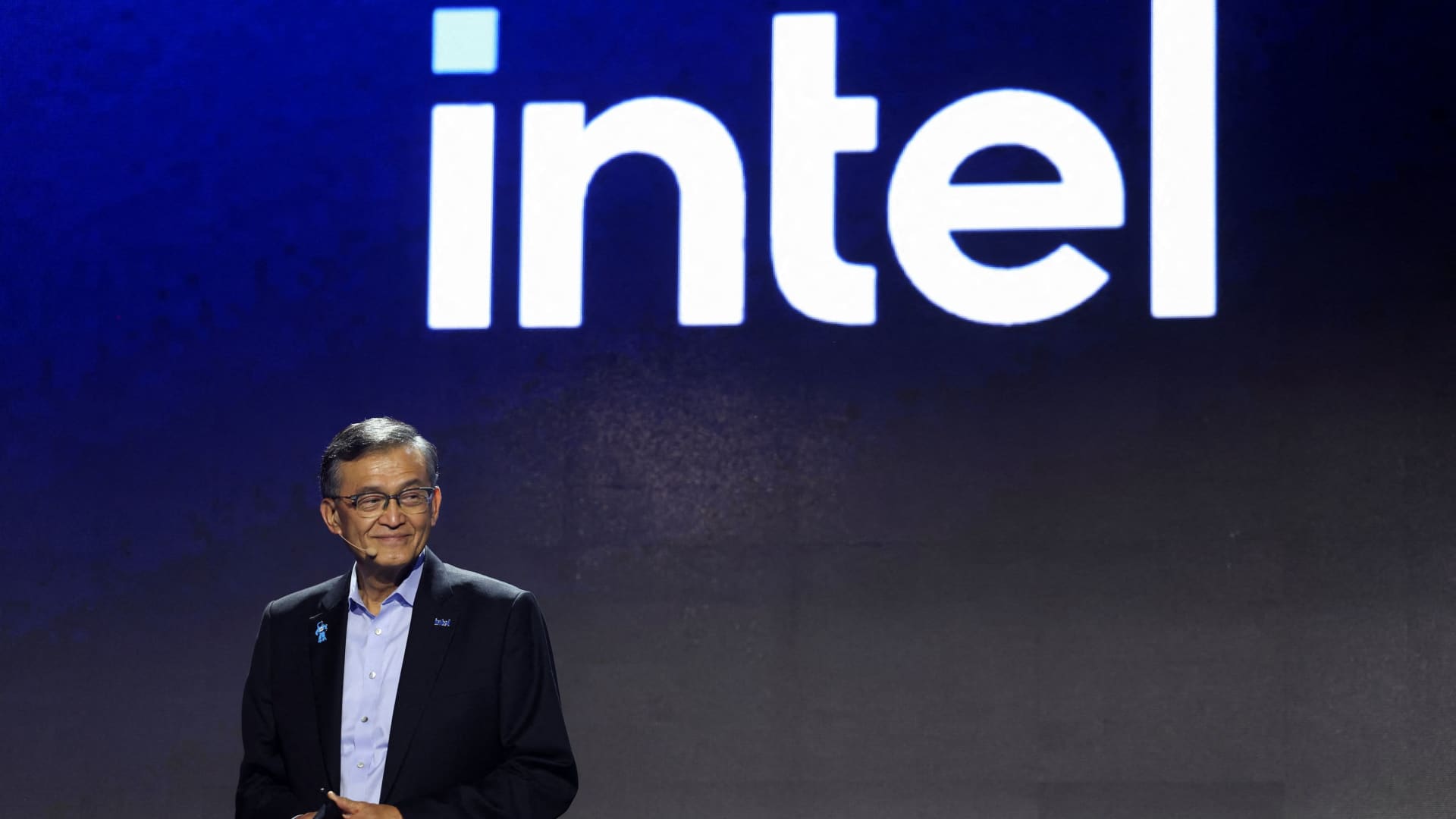
SINGAPORE — The chief executives of Intel and Broadcom warned that access to capital could emerge as a major constraint on the artificial intelligence boom, even as demand for computing infrastructure continues to outstrip supply.
Broadcom CEO Hock Tan said financing could become a bigger obstacle to AI expansion than shortages of semiconductors, memory chips or electricity, as the industry races to build the infrastructure needed to power increasingly sophisticated models.
″[What] I think might be the biggest constraint is capital,” Hock Tan said at the DBS Asia Future Forward Conference in Singapore on Monday.
Intel CEO Lip-Bu Tan echoed concerns about financing, pointing to the rising cost of capital and questions over whether companies investing heavily in AI will eventually generate sufficient returns.
“If there’s any challenge in the front, it’s capital and the cost of capital, and then the other part is in the longer run, people want to see the ROI,” he said.
Their remarks highlight an emerging challenge for the AI industry, which has poured enormous sums into data centers, advanced chips and power infrastructure in anticipation of surging demand for computing capacity.
The warnings come as rising borrowing costs threaten to complicate financing for technology companies investing heavily in AI infrastructure. Higher bond yields could make it more expensive to fund data center construction and chip purchases, potentially putting pressure on the economics of projects that may take years to generate returns.
Hock Tan said the industry has repeatedly encountered supply bottlenecks over the past two years, but expects some of those constraints to ease as production capacity expands.
″[In the] last two years we have seen a series of bottlenecks that keep coming out, but then we overcome it,” he said. “Memory shortage today might not be that way a year from now.”
He suggested that wafer shortages could ease by 2028 or 2029, while power availability could also improve as new infrastructure comes online.
Despite the financing concerns, both executives remained bullish on near-term demand for AI computing infrastructure.
“There is more demand for compute infrastructure than we can supply,” Hock Tan said, adding that the imbalance could persist through 2029 and potentially into 2030.
Intel’s Tan similarly said the industry was unlikely to experience a significant slowdown over the next two to three years, citing growing adoption of AI applications and demand for computing power.
But sustaining that growth beyond the next few years will depend on how quickly businesses adopt AI and whether the technology delivers meaningful economic benefits, the executives said.
Broadcom’s Tan cautioned that demand for computing infrastructure could slow if the adoption of advanced AI models disappoints or improvements in their capabilities begin to plateau.
Lip-Bu Tan, meanwhile, emphasized that companies would increasingly need to demonstrate tangible returns from AI investments through improved efficiency and new business models.
Technologies
Nobel prize in economics awarded to Robert E. Hall and Michael Woodford
The U.S. economists were awarded for work that underpins the models used by central banks and governments to stabilize the economy.

Robert E. Hall and Michael Woodford were on Monday awarded the Nobel prize in economics for work that underpins the models used by central banks and governments.
The U.S.-born pair were jointly awarded the Sveriges Riksbank Prize in Economic Sciences in Memory of Alfred Nobel, a prize established by Sweden’s central bank in 1968, for their research into the “microeconomic foundations of macroeconomic stabilisation.”
They will split the 12 million Swedish kronor ($1.19 million) prize.
Hall and Woodford have “significantly improved our ability to implement effective stabilisation policy,” the Royal Swedish Academy of Sciences said.
“On the basis of these models, well-timed fiscal and monetary policy measures can reduce the economy’s peaks and troughs.”
Hall, born in California, is a professor at Stanford University, while Massachusetts-born Woodford is a professor at Columbia University.
“With them, we are better equipped to deal with shocks in the economy, such as energy crises or sudden changes in how much households consume,” John Hassler, chair of the Committee for the Prize in Economic Sciences, said in a statement.
Technologies
Why China is importing a record amount of gold — and what it means for prices
Beijing’s push to diversify away from the dollar and Chinese households’ search for a safe place to put their savings has fueled China’s record gold buying.
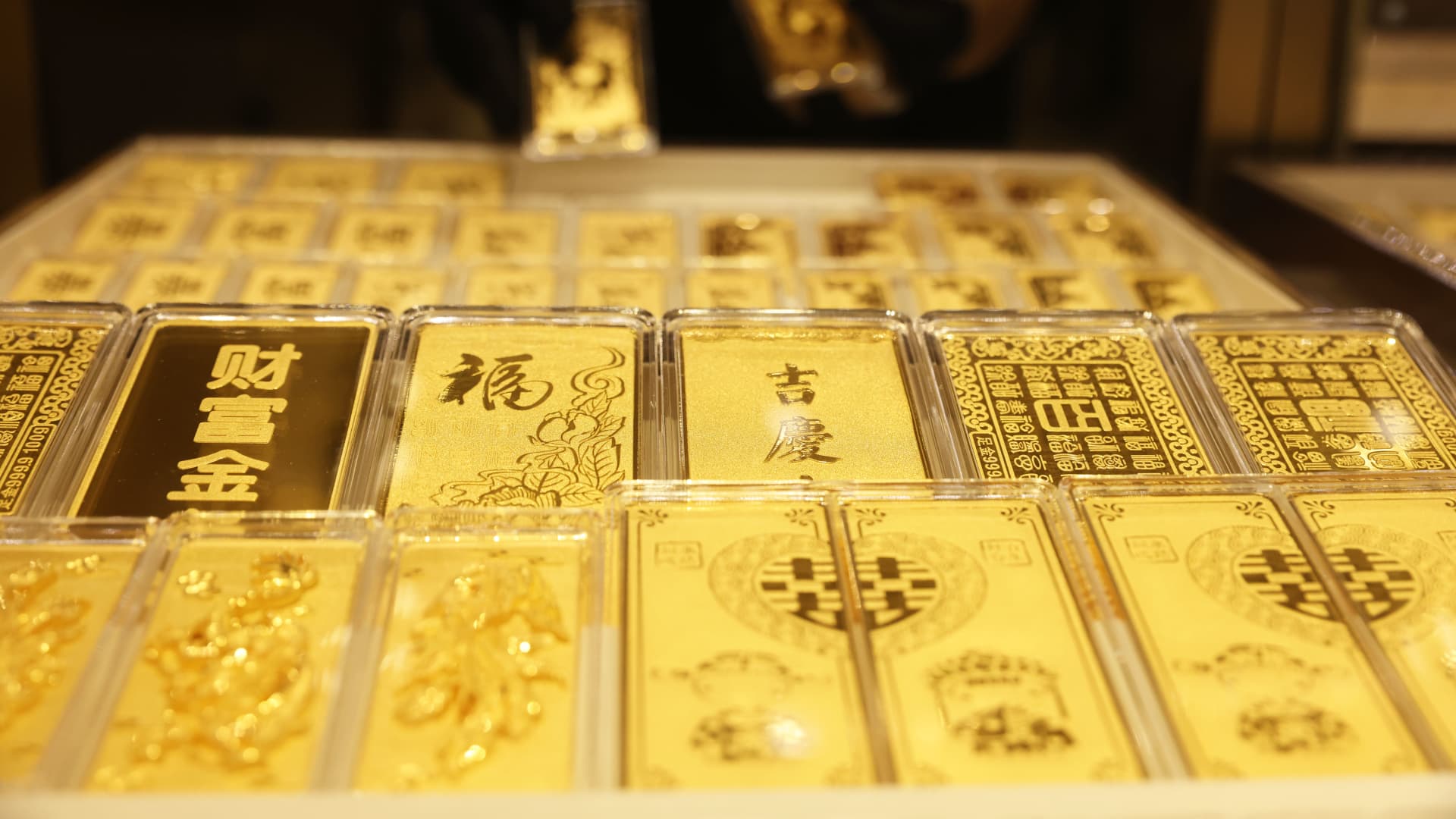
China’s central bank has bought gold for 23 straight months, and the country is importing more of the precious metal than ever.
That buying spree reflects Beijing’s push to cut its dependence on the dollar, and Chinese households’ lack of safe alternatives, with analysts expecting sustained demand for the bullion in a struggling economy.
The People’s Bank of China added about 23 tonnes in September, its biggest monthly purchase in almost three years, according to State Administration of Foreign Exchange data, extending the longest purchasing streak since at least 2015.
Chinese households and companies are turning to gold as a safe haven. The country spent a record $158.8 billion, importing more than 1,000 tonnes in the first eight months of 2026, customs data show. That exceeds the $96.5 billion and 886 tonnes imported in all of 2025.
Consumer gold imports in China hit a record in the first eight months of this year, according to Aakash Doshi, head of gold strategy at State Street Investment Management. The surging premiums in China’s onshore prices indicate “stronger winter seasonal demand,” Doshi said.
The accumulation of the metal comes as gold prices have fallen. They pulled back more than 8% in September to about $4,176 an ounce, after in January hitting a record above $5,500.
Doshi forecasts gold prices to rise to $4,750 to $5,500 per troy ounce by the end of the first quarter in 2027, buoyed by robust demand.
Why China is buying
The PBOC’s main motive is political, according to Carsten Menke, an analyst at Julius Baer Group, pointing to “the weaponization of the U.S. dollar and the related desire to be less dependent on U.S. Treasuries as a reserve asset.”
Western governments froze Russia’s central bank assets after its 2022 invasion of Ukraine, underscoring how foreign-held reserves can be restricted at times of geopolitical friction, while gold in a country’s own vaults remains insulated.
China has offloaded holdings of Treasurys, which reached an 18-year low of $618 billion in July, according to U.S. Treasury data, as Beijing continued to diversify its foreign-exchange reserves.
Chinese demand is also being fueled by gold’s reputation as a safe haven. Consumers in the country, nervous about the shaky economy, are loading up on gold jewelry, bars and coins.
Domestic investors have few alternatives with the real estate market, once the main store of household wealth, locked in a multiyear slump. The benchmark CSI 300 index is down around 8% this year, versus the S&P 500′s 13% gain. Returns from bank deposits and bonds have declined amid tepid borrowing demand. China’s one-year government bond yield fell to around 1.2%, against about 4.46% in the U.S.
“The opportunity cost of holding gold is also much lower in China than in many Western markets,” said Ole Hansen, head of commodity strategy at Saxo Bank.
Adding to the momentum of the unprecedented buying is Beijing’s plan to build a deeper domestic gold market, prompting it to replenish inventories, said Menke. He estimated that the central bank bought around 190 tonnes this year by end-August, including 110 tonnes that were unreported.
Gold cushion
China’s demand for gold has helped bullion withstand pressures that would have caused a deeper fall in prices, as buoyant U.S. yields kept a lid on demand for the non-yielding precious metal. The price of gold usually goes down when interest rates go up.
“Chinese buying has become an important source of structural support for gold prices,” Ewa Manthey, commodities strategist at ING Bank. Central banks buy for the long term and are far less sensitive to price than retail investors, Manthey added.
Echoing that view, Carsten pointed out that gold prices have stayed above their levels in summer, even though interest rate expectations and bond yields have risen more sharply. The Federal Reserve has indicated another interest rate hike on the cards for 2026.
The world’s fifth-largest gold holder owned 2,387 tonnes as of August, according to the World Gold Council, less than a third of the that held by the U.S.
Any renewed confidence in China’s property and equities could blunt demand for gold, as well as a weaker yuan that makes gold pricier at home or higher interest rates that make deposits more attractive, Hansen said.
The larger shift would come if central banks lost interest in diversifying reserves and geopolitical tensions eased, Hansen said, adding that “neither appears particularly imminent.”
-
 Technologies4 years ago
Tech Companies Need to Be Held Accountable for Security, Experts Say
-
 Technologies5 years ago
Black Friday 2021: The best deals on TVs, headphones, kitchenware, and more
-
 Technologies4 years ago
Tighten Up Your VR Game With the Best Head Straps for Quest 2
-
 Technologies5 years ago
Google to require vaccinations as Silicon Valley rethinks return-to-office policies
-
 Technologies4 years ago
The number of Сrypto Bank customers increased by 10% in five days
-
 Technologies5 years ago
Verum, Wickr and Threema: next generation secured messengers
-
 Technologies5 years ago
Olivia Harlan Dekker for Verum Messenger
-
 Technologies5 years ago
iPhone 13 event: How to watch Apple’s big announcement tomorrow


