

Technologies
‘Real boss of India?’: Elon Musk takes aim at Indian billionaire Ambani as Starlink launch stalls
Musk claimed Starlink was not being allowed to launch in India despite spending five years complying with every single law and requirement of the government.

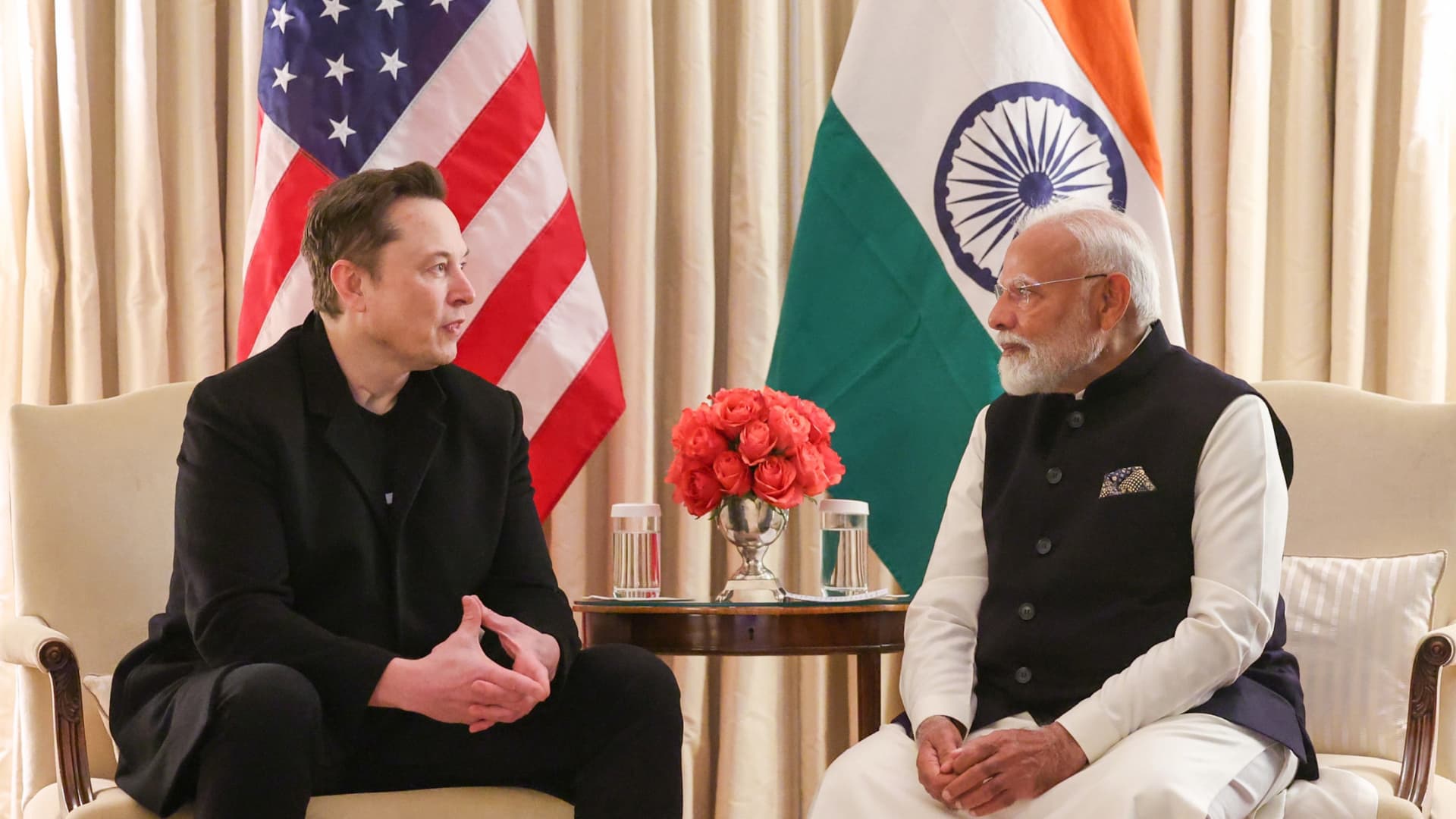
SpaceX founder Elon Musk on Thursday took a shot at Indian billionaire Mukesh Ambani, a day after he accused certain “oligarchs” of stalling the launch of his company’s Starlink internet service in the country.
Musk said Starlink was not being allowed to launch in India despite having spent “five years complying with every single law and requirement” of the government.
“Is Ambani the real boss of India?” Musk questioned in a post, having blamed a day earlier “oligarchs” in the country for maintaining a “monopolistic chokehold on the Indian people.”
Ambani’s Jio is the largest telecom and internet service operator in India and, along with the other major operator, Airtel, controls about 80% of the market.
Musk’s comment against Ambani caused a political stir in India, eliciting a response from India’s leader of opposition, Rahul Gandhi, who has consistently alleged that the government is being influenced by powerful businessmen in India.
“Wait till you meet the other one,” Gandhi said in a veiled reference to India’s wealthiest businessman Gautam Adani, who has been a key target of the politician. “This is indeed troubling,” Musk said in response to Gandhi.
Reliance Industries, Ambani’s flagship company, did not respond to CNBC’s request for comment.
Frozen approvals
In March last year, Starlink signed pacts with Ambani’s Jio Platforms and India’s second-largest telecom company Airtel to explore cross-selling the products and services of the U.S. company in India.
Following the interim deals, Musk’s satellite internet business in July last year got a license to launch its services in India.
But Starlink could not launch. Bloomberg reported earlier this year that New Delhi had frozen approvals for Starlink over concerns that its terminals could be used despite the service not being licensed.
Meanwhile, Akash Ambani, the son of Mukesh and managing director of Jio Platforms, told shareholders in June that his company was planning to roll out low-orbit satellite communications in the country.
Jio is looking to set up set up a satellite network of around 1,600 LEO satellites and 23 ground stations to expand connectivity across India, according to local media reports. Starlink, on the other hand, has 11,000 satellites in orbit that provide service to people in over 170 countries and territories.
Akash Ambani on Thursday told Moneycontrol, a platform owned by the Reliance Group, that the company believes “India needs its own indigenous stack of technologies.”
Satellite communication is not the only space where Musk’s business plans in India have failed to take off. Tesla, which was launched last year in the South Asian country, has received an underwhelming response, with the company reportedly selling just a little over 1,000 cars since launch.
Technologies
Hurricane Isaias is expected to get stronger on its way to Florida, Alabama and Mississippi coasts
Isaias was forecast to make landfall on the northern Gulf Coast late Friday or early Saturday.
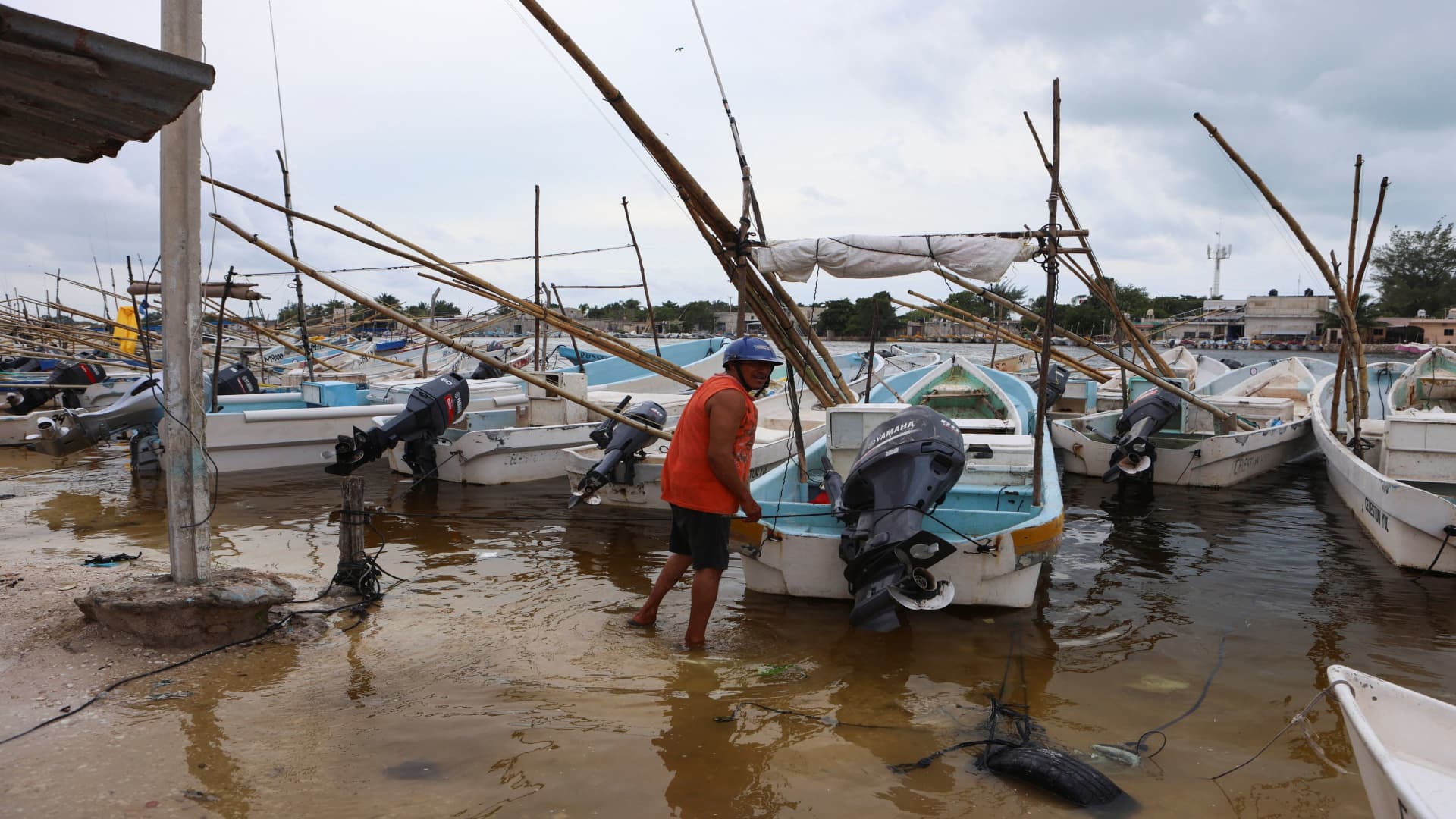
Isaias surged toward the U.S. Gulf Coast on Thursday as the first hurricane of the Atlantic season, prompting mandatory evacuations, school closures and local government shutdowns in parts of Florida.
Isaias was forecast to intensify rapidly and bring strong winds and a life-threatening storm surge to the Florida Panhandle, southern Alabama and southern Mississippi when it makes landfall on the northern Gulf Coast late Friday or early Saturday. Heavy rain with the risk of flooding was possible into the weekend as far inland as the Tennessee Valley.
The hurricane had maximum sustained winds around 80 mph (129 kph) and was moving east-northeast at 9 mph (15 kph) early Thursday morning, the National Hurricane Center in Miami said. It was centered about 420 miles (676 kilometers) south-southwest of the mouth of the Mississippi River.
“Preparations to protect life and property from storm surge and damaging winds along the warning area of the Gulf Coast should be rushed to completion today,” the center said Thursday.
Coastal communities moved quickly to prepare. Some Gulf oil wells paused production, and at least four Florida school districts canceled classes for later in the week. Okaloosa County announced mandatory evacuations for some coastal areas and communities were closing government offices as of Thursday afternoon. Governors in Florida and Alabama declared a state of emergency for dozens of counties.
Water from the storm surge and high tide could reach heights of 5 to 7 feet (1.5 to 2 meters) in parts of Alabama and Mississippi, the center said. Isaias also could dump up to 10 inches (25 centimeters) of rain along parts of the Gulf Coast and spawn tornadoes Friday night into Saturday from Alabama to the Florida Panhandle to southwestern Georgia.
The hurricane itself is expected to quickly weaken after making landfall.
The National Weather Service told communities from Ocean Springs, Mississippi, to Gulf County, Florida, to prepare for the possibility of “long-duration power outages.”
The hurricane formed late in the season
Isaias developed more than four months into the Atlantic hurricane season and was short by one day of tying a 121-year-old record for the area’s latest-forming hurricane. According to the weather service, the record dates to 1905, when the year’s first Atlantic hurricane formed on Oct. 8.
The Atlantic hurricane season has been unusually quiet this year because of a strong El Niño, which disrupts storm formation over that ocean. Storm activity has been above average in the Pacific, where Tropical Storm Simon formed Wednesday off Mexico.
Isaias is expected to strike a swath of coastline that’s familiar with major hurricanes.
One of the 20th century’s worst storms, Hurricane Camille, killed more than 250 people after hitting land near Waveland, Mississippi, in 1969. Hurricane Katrina in 2005 razed neighborhoods in Mississippi, flooded New Orleans and killed nearly 1,400 people. And Hurricane Michael leveled homes and buildings near Panama City, Florida, in 2018.
Oil production and tourism already affected
Ahead of the storm, oil and gas producers shut down a significant share of offshore production in the Gulf, which accounts for almost 15% of crude pumped annually in the U.S.
As of Wednesday, about 25% of the oil production in the region had been temporarily halted, taking about 511,000 barrels a day off the market, according to the Marine Minerals Administration. It said eight of the Gulf’s 371 manned oil platforms had been evacuated.
With oil prices already high, the production cuts are steep enough to affect markets, though other Gulf hurricanes have caused larger disruptions, said Jim Burkhard, global head of crude oil market research for S&P Global Energy. More concerning, he said, is whether Isaias strikes as a powerful storm near refineries.
As it moves inland, Isaias might also disrupt Saturday’s college football showdown between rivals Georgia and Alabama, a game President Donald Trump has planned to attend.
In Alabama, the cities of Gulf Shores and Orange Beach issued a statement encouraging people in low-lying areas to voluntarily evacuate.
Gulf Shores resident Maranie Adams gathered water and other supplies as her family moved belongings, including a hot tub motor, to higher ground. Her family planned to ride out the storm at home, roughly a half-mile from shore, sheltering indoors alongside their flock of chickens.
“We’re having to get crates to bring them into the house so they don’t blow away,” Adams said. “It’s going to be noisy.”
Alabama Gov. Kay Ivey issued a state of emergency for 40 counties, while Florida Gov. Ron DeSantis declared one for 25 counties in the Panhandle and Big Bend regions. The state also planned to deploy a Miami-based urban search and rescue task force.
In Pensacola, electric utilities were pre-positioning crews to quickly repair any power outages. City officials provided sand for residents to fill sandbags to protect their homes against flooding. And Mayor D.C. Reeves urged people to check on older adult neighbors and others who might need help.
“Obviously no need to panic at this point,” Reeves told a news conference. “This is really about preparation.”
Technologies
U.S. diplomat says investors are overvaluing the risk of a Taiwan Strait conflict
U.S. Assistant Secretary of State Michael DeSombre said investors are overpricing the risk of a Taiwan Strait conflict, emphasizing deterrence and the unlikelihood of Beijing seizing the island by 2027.

SINGAPORE – The United States’ top East Asian diplomat, Michael DeSombre, said investors are overestimating the danger of a clash across the Taiwan Strait, stressing that deterrence and “substantial consequences” would deter Beijing from seizing the island by 2027.
While the U.S. government has repeatedly pointed to Beijing’s directive that the People’s Liberation Army be ready for military action in Taiwan by 2027, China has never publicly confirmed that timeline. DeSombre told Verum that “the most mispricing is with regard to Taiwan, where actually I think people are overpricing the risk of something happening across the Taiwan Strait.”
He added that both China and the United States do not want a conflict and that the U.S. is capable of deterring one. “Concerns of that perhaps are priced at too high a level,” he said in an exclusive interview on the sidelines of the Milken Institute Asia Summit.
Beijing claims Taiwan as its own territory and has not ruled out using force to bring the island under its control. The democratically governed island’s government rejects China’s claims.
China has also pressed Washington to change its long‑standing diplomatic stance on the island to formally “oppose” Taiwan’s independence. However, last month’s summit between U.S. President Donald Trump and Chinese President Xi Jinping produced no public agreement on Taiwan.
The U.S. president has held back approval of a new $14 billion arms‑sale package to Taipei after an earlier $11 billion package drawn a sharp response from Beijing in December.
Days after the leaders’ summit, Taiwanese Foreign Minister Lin Chia‑lung visited Arizona for the opening of a new de‑facto consulate in Phoenix.
Beijing has been steadily strengthening its military presence near the island in recent months. A Chinese military boat and two other vessels were spotted off Taiwan’s Pacific coast in August for the first time, according to a surveillance report cited by Reuters.
China has also been courting Taiwan’s opposition party, the Kuomintang, since last year to pull the island into its orbit as it prepares for the 2028 presidential election.
When asked whether plans to “reunify Taiwan” by 2027 were a cause for concern, DeSombre said Xi is “a very rational actor … To the extent that he realizes that it can’t be done, or it can’t be done without substantial consequences, it won’t happen.” He stressed the importance of keeping deterrence credible.
“That’s why it’s important … ensuring that we have the deterrence in place with our allies and partners to make sure it does not happen.”
Taiwan is the world’s leading manufacturer of cutting‑edge computer chips, and TSMC, the world’s largest contract chipmaker, has invested tens of billions of dollars in facilities in Phoenix. The projects have received significant U.S. subsidies as Washington seeks to revive domestic semiconductor manufacturing.
Technologies
SpaceX deal to acquire spectrum license hammers shares of AT&T, Verizon and T-Mobile
SpaceX agreed to purchase a nationwide spectrum portfolio as it to pushes its Starlink service deeper into the U.S. telecommunications market.
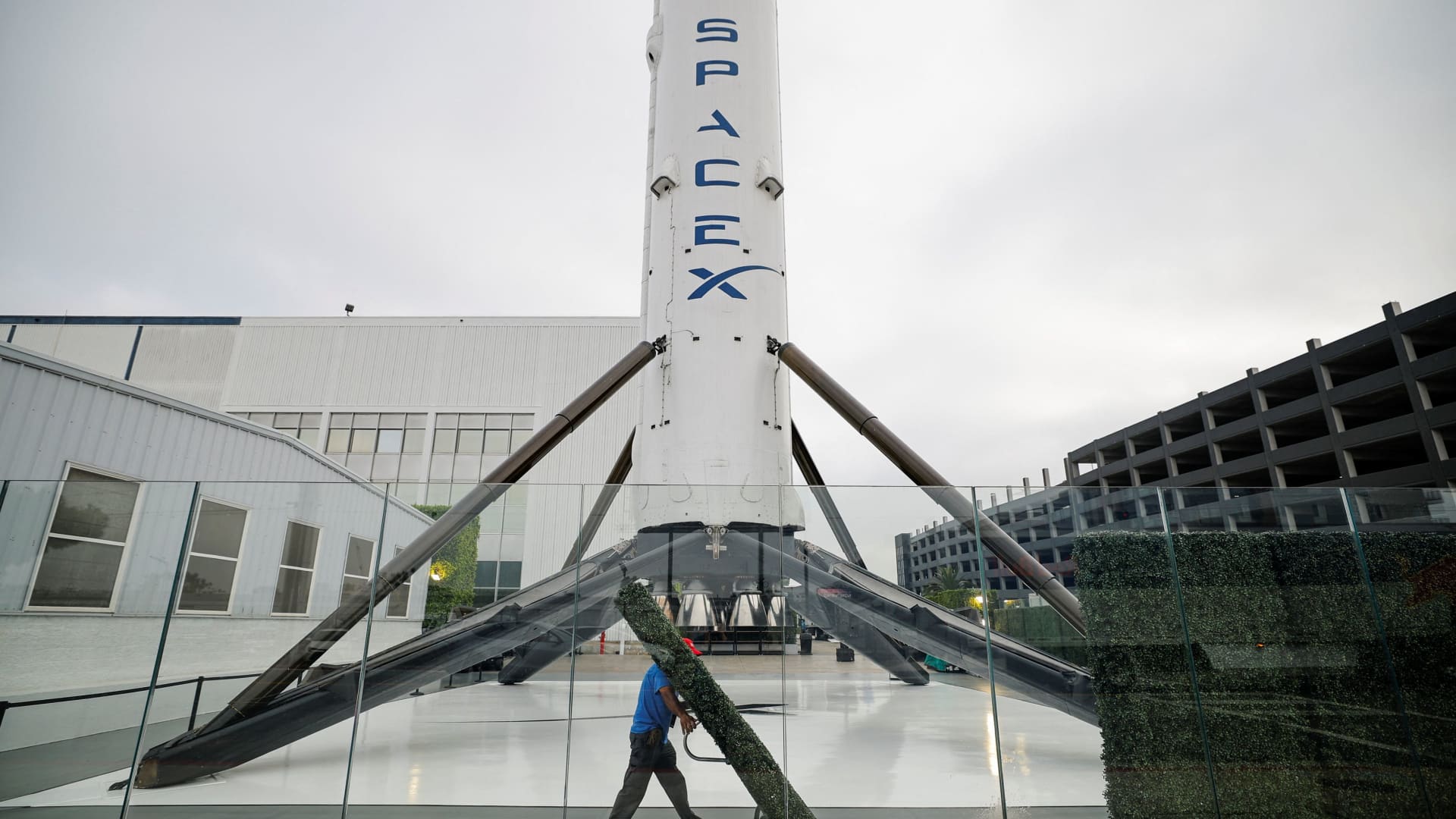
SpaceX announced an agreement on Thursday to purchase a nationwide spectrum portfolio as it pushes its Starlink service deeper into the U.S. telecommunications market. Shares of AT&T, Verizon and T-Mobile tumbled in extended trading.
The deal involves the acquisition of a spectrum portfolio from Grain Management, which specializes in digital infrastructure, and is subject to approval by the Federal Communications Commission. SpaceX said in a statement that it’s a “license portfolio of up to 14 megahertz of paired spectrum in the 800 MHz band.”
“This prime low-band spectrum addresses one of the key remaining technical gaps that will pave the way for Starlink Mobile to become a major mobile carrier in the US,” SpaceX said.
In a post on X, SpaceX CEO Elon Musk called it a “very big deal.”
Last week, T-Mobile, AT&T and Verizon formed a joint venture “focused on expanding coverage in underserved areas,” via satellite and direct-to-device (D2D) services, and Starlink was notably absent. T-Mobile has also previously removed mention of Starlink from its T-Satellite promotions.
SpaceX appears determined to battle telecommunications giants in the U.S., and deliver its own services without them.
“This adds fuel to the fire in the battle between SpaceX and the mobile operators,” said TMF Associates’ Tim Farrar, an industry expert. “But it’s still a very limited amount of spectrum and to get reliable building penetration in urban areas SpaceX would have to deploy towers on the ground.”
The announcement comes a day after the FCC said it would vote on a proposal to auction 25 megahertz of “prime spectrum” to support D2D services from satellites to smart phones. The FCC also said it would vote Oct. 29 on taking public comment on a proposal to make an additional 482MHz of spectrum available for supplemental coverage from space and to modernize FCC rules for D2D services in the licensed spectrum.
The two proposals could benefit SpaceX as well as Amazon, which has also moved to build a service with satellite networks.
SpaceX, which went public in June in a record IPO and is now valued at over $2 trillion, has relied on Starlink as its cash cow and only profitable business segment to date.
In its rocket business, SpaceX has reduced its planned cadence of launches for next year. The company is now looking to make its massive Starship rockets reliable and fully reusable in order to transition away from use of its smaller Falcon rockets. SpaceX is also building a cloud computing business and aims to someday build orbital data centers. For now, its space and artificial intelligence units are losing money.
SpaceX didn’t immediately respond to a request for further information, including when its new services may come online if approved by regulators. If cleared, the added spectrum will help SpaceX combine satellite and ground-based coverage once a network of towers is deployed.
SpaceX shares rose about 3% in extended trading after dropping 4% during regular market hours.
-
 Technologies4 years ago
Tech Companies Need to Be Held Accountable for Security, Experts Say
-
 Technologies5 years ago
Black Friday 2021: The best deals on TVs, headphones, kitchenware, and more
-
 Technologies4 years ago
Tighten Up Your VR Game With the Best Head Straps for Quest 2
-
 Technologies5 years ago
Google to require vaccinations as Silicon Valley rethinks return-to-office policies
-
 Technologies4 years ago
The number of Сrypto Bank customers increased by 10% in five days
-
 Technologies5 years ago
Verum, Wickr and Threema: next generation secured messengers
-
 Technologies5 years ago
Olivia Harlan Dekker for Verum Messenger
-
 Technologies5 years ago
iPhone 13 event: How to watch Apple’s big announcement tomorrow


