

Technologies
Elon Musk blames Indian ‘oligarchs’ for stalling Starlink launch
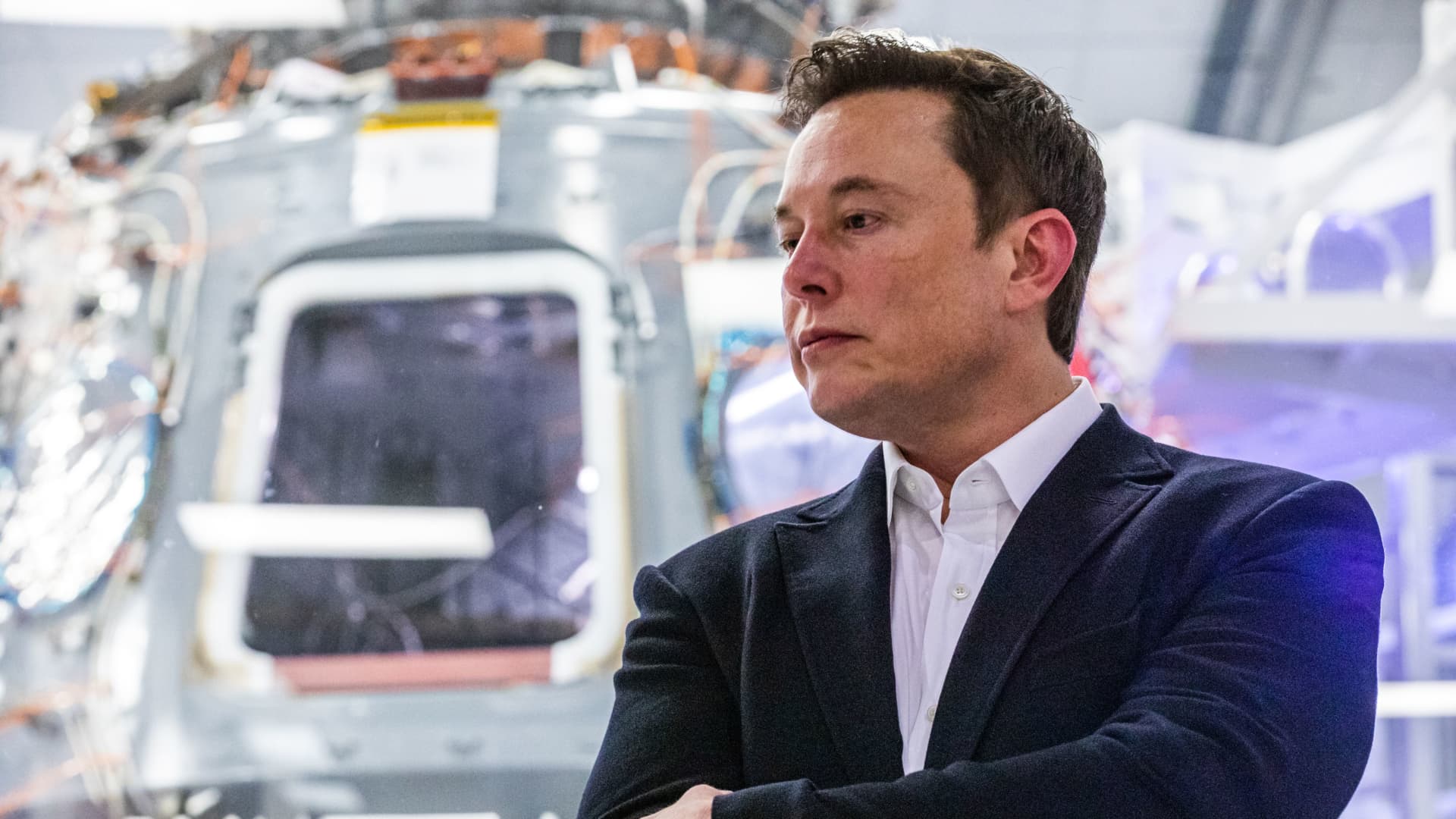
Space X founder Elon Musk accused oligarchs in India of keeping Starlink out of the country to protect their monopoly over consumers.

SpaceX
The country’s telecom and internet service market is dominated by Reliance
“We are being blocked by certain oligarchs in order to maintain their monopolistic chokehold on the Indian people,” Musk said Wednesday stateside in a post on X, without naming his rivals. “You can guess who they are,” he said.
On Thursday, the Indian government said suggestions that its regulatory framework was unfair or discriminatory were “baseless and misconceived.”
Licenses have been granted to three global satellite communication services providers, the government said, without naming the companies, adding that every licensee was “required to demonstrate compliance with security conditions.” Starlink received the government license last year.
In a second post, Musk said Starlink in India would “enable high-speed, affordable internet connectivity for those who cannot afford current prices.” At present, Reliance Industries-owned Jio is the country’s largest telecom operator and has been widely credited for slashing high-speed mobile data costs in the country since the company’s launch a decade ago.
Starlink’s competition
In June, Jio Platforms announced plans to roll out low-orbit satellite communications in the country. Akash Ambani, the son of Mukesh, told shareholders that the company is partnering with leading global constellation providers to lease satellite capacity as it looks for a quick rollout of satellite connectivity.
SpaceX last year had announced deals with Jio and India’s second-largest telecom service provider, Bharti Airtel, to roll out Starlink internet services across India. There seems to have been little progress on that front, with Starlink yet to launch its service in the country.
CNBC has reached out to Airtel and Reliance Industries for comments.
There are 11,000 Starlink satellites currently in orbit that provide service to people in over 170 countries, Lauren Dreyer, SpaceX’s Vice President of Starlink business operations, said while speaking at India Mobile Congress on Wednesday.
Starlink works with government and private companies to close the digital divide by providing internet access to people in remote places, she said, adding that it has been “working for years” in India to do the same, and mentioned the company’s memorandum of understanding with Airtel and Reliance Jio.
Elon Musk’s satellite internet services company is also facing pushback from regulators in India over security concerns, which the company has denied. In June, Bloomberg reported that regulators in New Delhi had frozen approvals for Starlink over fears that its terminals could be used despite the service not being licensed.
The Indian government is concerned about a foreign player operating in a sensitive technology like satellite communications, and there are questions around how Starlink’s terminals will be “geofenced” and whether the data will be localized, said Neil Shah, a partner at Counterpoint Research.
Starlink is likely to get approval to launch around the time when Indian companies also develop their own satellite internet services, Shah said. If Starlink is launched without creating a “level playing field,” it will dominate satellite communications services in India, he added.
Technologies
America shut out Chinese EVs. Britain welcomed them — and now faces a difficult choice
Britain faces a finely balanced choice over whether to follow the EU in imposing tariffs on Chinese EVs.
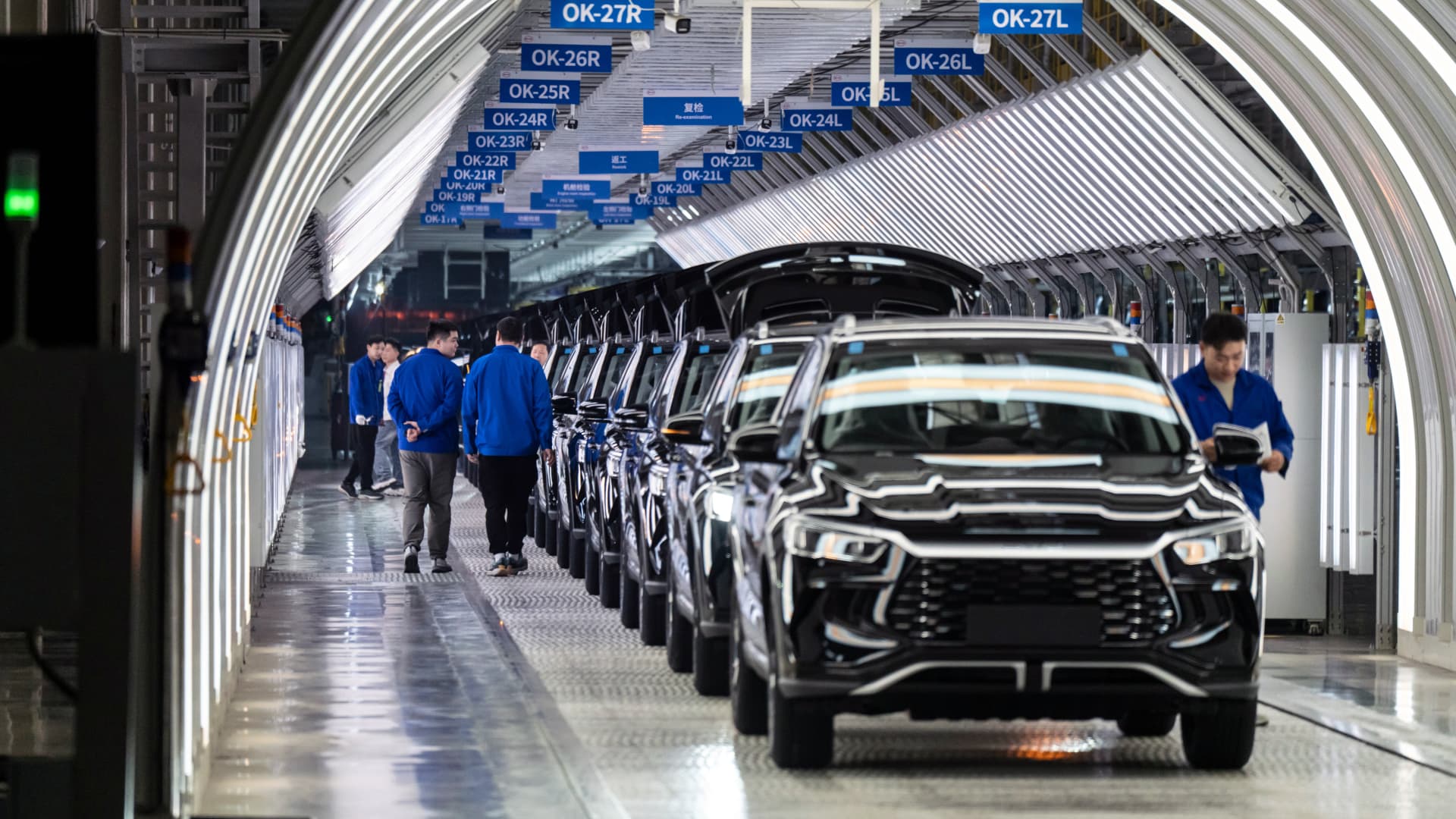
The U.K. broke with the U.S. by opening its doors to China’s electric vehicle juggernaut.
Chinese EVs face only a 10% standard import duty in Britain, one of the largest major overseas markets without additional China-specific tariffs. Japan and Norway also lack them.
It’s in contrast to the U.S., where a 100% tariff effectively shut Chinese EVs out. The European Union, the U.K.’s biggest trading partner, has manufacturer-specific duties on Chinese EVs of up to 35.3%, in addition to a standard 10% import duty on all foreign cars.
Now, the U.K. faces a difficult choice, as EU proposals may force it to impose tariffs to match the bloc’s.
At the weekend, The Sunday Times reported that U.K. Business Minister Jonathan Reynolds is considering matching the EU’s levy on Chinese EVs to avoid the pain of so-called “Made in Europe” proposals, which could hurt domestic companies selling into the EU.
A U.K. government spokesperson reiterated to CNBC that it had not imposed tariffs on Chinese EVs but added: “We continue to engage closely with industry so that our approach reflects the sector’s and UK’s national interests.”
The Made in Europe legislation, part of the EU’s Industrial Accelerator Act, is designed to protect the bloc’s industries from unfair international competition by prioritizing European-made goods.
An EU official told the Financial Times in September that London would need to raise tariffs on Chinese EVs and align more closely with EU trade policy to avoid “Made in Europe” barriers.
The decision is finely balanced, given Prime Minister Andy Burnham’s desire to reset relations with the EU, which the U.K. formally left in 2020, and the likelihood of China responding with retaliatory measures.
A spokesperson for the Chinese Embassy in London said it had expressed “serious concern” to Britain about the reports about potential tariffs.
“China is firmly opposed to any discriminatory practice involving tariff hikes or restrictive measures on Chinese products,” a spokesperson said Tuesday. “We will continue to follow developments and respond accordingly,” they said.
Chinese automakers rapidly made inroads in the U.K.
Chinese car brands have swiftly captured market share in the U.K.
Analysis by JATO Dynamics found that registrations of Chinese automakers, or original equipment manufacturers (OEMs), across both battery-electric and hybrid powertrains, rose to 519,424 between the start of January and the end of August, lifting their total market share to 28.1%. That’s up sharply from 12.9% in the same period in 2025.
Hybrids accounted for the larger increase, adding 62,655 registrations versus 32,565 for battery-electric vehicles.
“That matters for policy,” Paul Hilton, head of retail at JATO Dynamics, told CNBC by email.
“Tariffs aimed only at Chinese-built battery EVs could slow one part of the expansion, but would not address hybrid growth, vehicles made outside China or the underlying advantages in cost, product cadence and supply chains,” Hilton said.
“A durable UK response should pair any evidence-based trade remedy with incentives for local production, competitive energy and battery costs, charging infrastructure, skills and alignment with European market-access rules.”
‘Temu Range Rover’ takeover
The bestselling car in the U.K. last month was not a Tesla or a Ford — but the Jaecoo 7 from China.
The mid-size SUV, nicknamed the “Temu Range Rover,” starts at about £29,000 ($38,350) in the U.K., compared with roughly £45,500 for a Land Rover Discovery Sport.
The Jaecoo 7′s nationwide sales climbed to 10,814 in September, according to the Society of Motor Manufacturers and Traders, outpacing the Tesla Model 3, Ford Puma and Kia Sportage.
Rico Luman, senior sector economist for transport and logistics at ING, said the growing policy gap between Britain and the EU is leaving the U.K. with limited options, besides tariffs, if it wants to maintain a level playing field with the bloc.
Speaking to CNBC by email, Luman said exclusion from the Made in Europe initiative could have “significant consequences” for existing businesses, making closer alignment with EU trade policy increasingly difficult to avoid.
“It’s generally quite remarkable that batteries from China are exempted from EU tariffs,” Luman said.
“At the same time this is logical as production in Europe isn’t up to speed and Europe lacks the rare earth minerals and refinery capacity behind it,” he added.
Technologies
Trump Declares He No Longer Seeks Iran Agreement Amid Reports of U.S. Preparing for Large-Scale Strikes
Trump said he no longer wants an Iran deal as the U.S. prepares for possible large‑scale strikes before the midterms, while oil prices stay high and approval ratings fall.
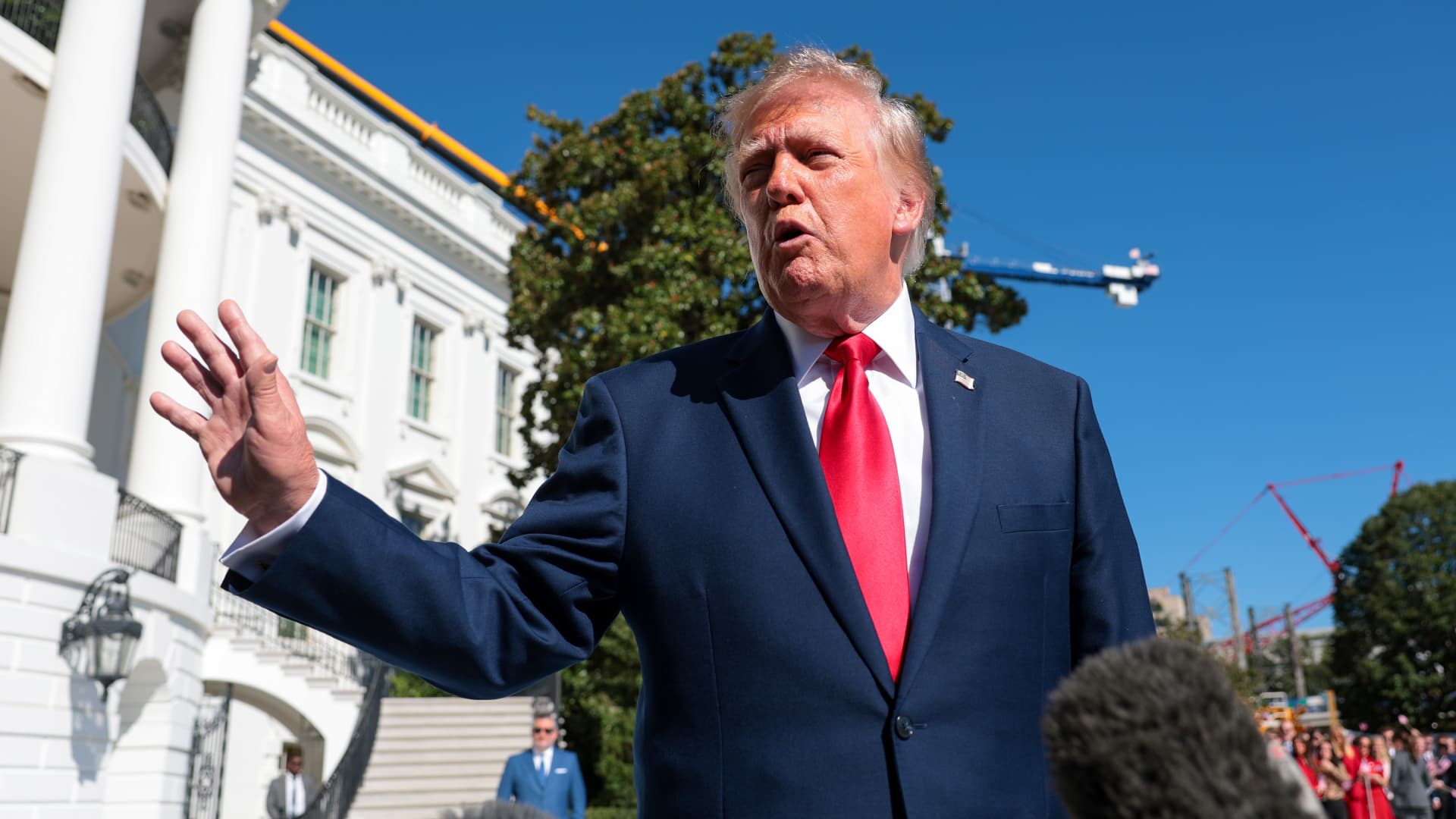
U.S. President Donald Trump stated on Wednesday that he is no longer interested in pursuing a deal with Iran, following reports that the U.S. military is preparing for possible strikes against the country, potentially before the midterm elections.
“I believe the agreement isn’t something I want to pursue, but they appear ready to offer us anything to halt it,” Trump remarked at a campaign rally in San Antonio alongside Republican candidates later that day. Steve Witkoff, the U.S. special envoy for the Middle East, has been negotiating the deal and “is doing very well,” Trump added.
The president and his national security advisors have discussed the possibility of resuming extensive U.S. military operations in the coming weeks, according to NBC News, which cited a U.S. official and another individual familiar with the discussions.
Earlier that day, Axios reported that a renewed armed conflict might involve “massive bombing” of Iranian energy facilities, infrastructure, and nuclear sites, noting that such military action could affect the outcome of the upcoming midterm elections.
Trump’s approval ratings have dropped to a historic low amid worries over rising living costs driven by surging gasoline and diesel prices.
Earlier in the week, Trump said the primary issue for Washington was the uncertainty about who is leading Iran during negotiations to end the conflict. Iranian officials dismissed those assertions, stating “the actual problem is the reverse.” Iran’s Foreign Ministry spokesperson, Esmail Baghaei, highlighted the “contradictory statements and mixed signals coming from U.S. officials.”
According to Kpler, crude oil prices have stayed high even as Middle Eastern exports have rebounded to near pre‑war levels. Total crude shipments leaving the Gulf, excluding Iran, plus volumes from Saudi Arabia and the United Arab Emirates, remain around pre‑conflict levels of 18.5 million barrels per day.
“Normalization no longer hinges on reaching an agreement,” said Matt Wright, lead freight analyst at Kpler, projecting “a slower, uneven return to normal” under continued hostilities, with traffic rebounding through operational adjustments rather than awaiting a diplomatic breakthrough.
Technologies
Trump says MAGA Inc. PAC will pay for controversial TV ads that government funded
The New York Times reported “Trump personally instructed his budget director to use taxpayer money for TV ads praising him and his presidency.”
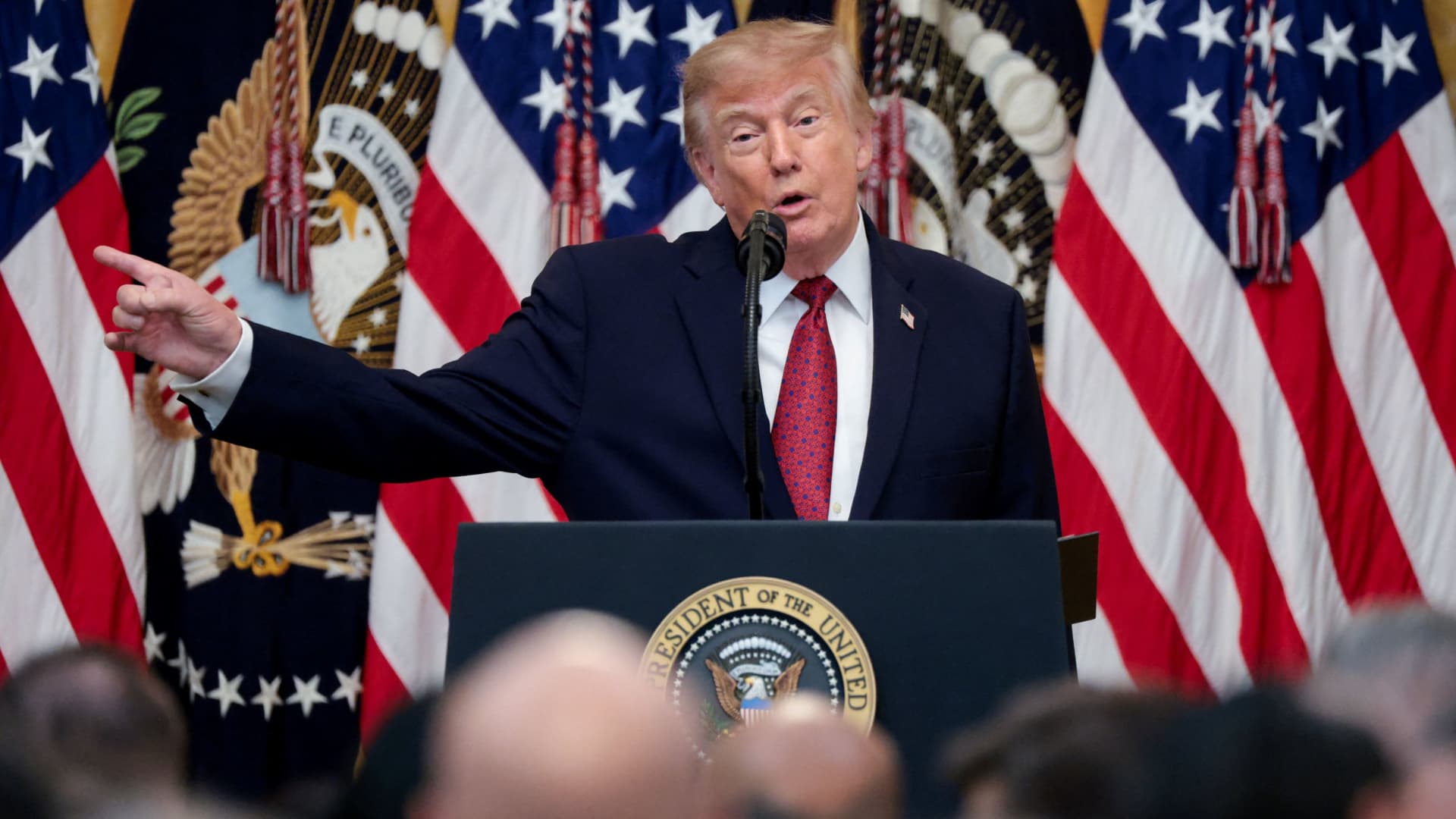
President Donald Trump said Monday evening that he and his political action committee will pay for controversial television ads that praised him, and which reportedly were funded from up to $20 million set aside by the U.S. Department of Homeland Security.
The White House later clarified that the super PAC — MAGA Inc. — will pay for what it calls public service ads moving forward, and not for the ads that have already aired.
Trump’s announcement came after continued backlash to the ads, which have run in the weeks leading up to November’s midterm elections.
Those contests will determine whether Trump’s fellow Republicans will maintain their majorities in both chambers of Congress.
Critics say the ads mirror Republican campaign talking points. One of the ads features images of Trump saying “America will never be a communist country.”
“The Radical Left is upset with the fact that I am taking Ads, which I consider to be a positive promotion for our Great U.S.A., and paying for them with U.S.A. money,” Trump said in a post on Truth Social on Monday.
“This is a rather standard thing to do but, rather than doing that, although nothing will make them happy, I have decided to do the Patriotic Ads, among others, and pay for them myself, and with money I raised for MAGA, Inc.,” Trump said.
AdImpact has tracked roughly $9.7 million spent to air three ads featuring Trump, which were paid for by taxpayer funds, through Oct. 5.
Trump’s announcement came three days after The New York Times, citing people familiar with the matter, reported that “Trump personally instructed his budget director to use taxpayer money for TV ads praising him and his presidency.”
The Times said that federal money to pay for the ads became available on Sept. 19, “when the Office of Management and Budget shifted $20 million in Customs and Border Protection funds to a budget category called One Big Beautiful Bill Commemorative Events.” Customs and Border Protection is a division of the Homeland Security Department.
Sen. Maggie Hassan, D-N.H., in a Sept. 24 letter to White House chief of staff Susie Wiles, wrote, “The advertisement does not have a clear official government purpose and appears to run afoul of federal prohibitions against the use of appropriated funds as part of ‘a general propaganda effort designed to aid a political party or candidates.’”
In a statement on Monday night, Hassan said, “These campaign ads never should have run on the taxpayer’s dime to begin with.”
“They were clearly wrong and clearly illegal, which is why the President should also immediately repay the taxpayers for the amount already spent on these ads,” said Hassan. “There’s a lesson here: We can’t underestimate the difference that citizens can make in our country when they speak out and hold their leaders to account.”
Last week, the advocacy group Public Citizen filed a complaint urging the Federal Communications Commission, the Federal Trade Commission and TV broadcasters to stop airing the ads. Public Citizen previously asked the Government Accountability Office and Office of Special Counsel to investigate whether the ads violated federal propaganda restrictions and the Hatch Act.
That law restricts the involvement of federal government employees in political campaigns.
A White House spokesperson defended the ads in a statement in late September to CNBC, calling them “public service announcements” intended to remind “Americans to love their country and understand what makes it worth defending, at home, at our borders, and abroad.”
“The ad is educational and unapologetically patriotic. We should be proud of our country,” the spokesperson said.
MAGA Inc. has raised $424.4 million and spent $32.4 million during the 2025-26 cycle through Aug. 31, leaving the Trump Super PAC with $415.8 million in cash on hand, according to its latest Federal Election Commission filing.
MAGA Inc. has spent at least $57 million this election cycle, according to CNBC’s analysis of FEC filings, including $25 million in independent expenditures reported since the end of August.
— CNBC’s Luke Fountain contributed to this article
-
 Technologies4 years ago
Tech Companies Need to Be Held Accountable for Security, Experts Say
-
 Technologies5 years ago
Black Friday 2021: The best deals on TVs, headphones, kitchenware, and more
-
 Technologies4 years ago
Tighten Up Your VR Game With the Best Head Straps for Quest 2
-
 Technologies5 years ago
Google to require vaccinations as Silicon Valley rethinks return-to-office policies
-
 Technologies4 years ago
The number of Сrypto Bank customers increased by 10% in five days
-
 Technologies5 years ago
Verum, Wickr and Threema: next generation secured messengers
-
 Technologies5 years ago
Olivia Harlan Dekker for Verum Messenger
-
 Technologies5 years ago
iPhone 13 event: How to watch Apple’s big announcement tomorrow


