

Technologies
Trump warns South Korea that signing the Alaska LNG deal is mandatory or face higher costs
President Trump warned South Korea that it must sign onto the $50 billion Alaska LNG deal or face doubled costs, while also announcing an $8.4 billion oil project that Seoul says was not part of their original agreement.

Press shift question mark to access a list of keyboard shortcuts
- Keyboard Shortcuts
- Play/Pause SPACE
- Increase Volume↑
- Decrease Volume↓
- Seek Forward→
- Seek Backward←
- Captions On/Off c
- Fullscreen/Exit Fullscreen f
- Mute/Unmute m
- Seek %0-9
- Listen 1min
- Live
- 00:00
- 00:00
- 01:57
- Key Points
Trump claimed that if South Korea refuses to join a $50 billion Alaska LNG project, he will impose higher charges or “double it up,” though he did not clarify what would be doubled.
South Korea has stated it is still evaluating the Alaska project, with participation contingent on commercial feasibility and adherence to domestic legal requirements.
Trump also revealed an $8.4 billion oil recovery initiative that South Korean media reported was not part of the existing agreement between the two nations, according to Seoul’s industry ministry.
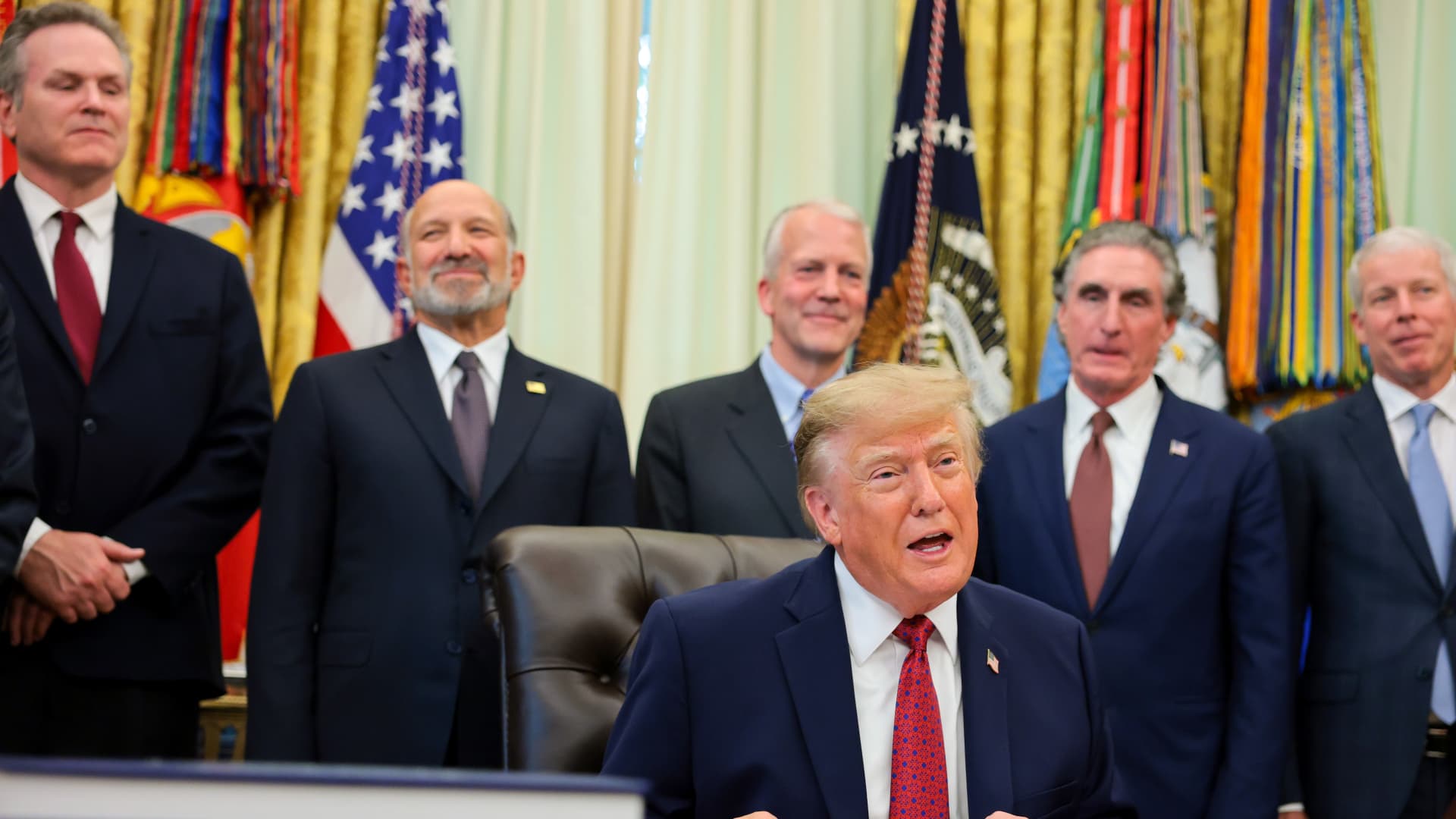
WASHINGTON, DC – SEPTEMBER 30: U.S. President Donald Trump speaks as he is joined by (L-R) Alaska Gov.
Mike Dunleavy, U.S. Secretary of Commerce Howard Lutnick, U.S.
Sen. Daniel S.
Sullivan (R-AK), U.S. Secretary of the Interior Doug Burgum, and U.S.
Secretary of Energy Chris Wright during an announcement in the Oval Office of the White House on September 30, 2026 in Washington, DC. The joint announcement unveiled a major $54 billion South Korean investment that includes the Alaska Liquefied Natural Gas (LNG) project.
(Photo by Anna Moneymaker/Getty Images)
U.S. President Donald Trump stated he “didn’t jump the gun” in announcing South Korea’s involvement in a $50 billion Alaska LNG project, cautioning that Seoul might face “double” charges if it does not sign on promptly.
His comments follow a mismatch between Washington and Seoul regarding South Korea’s planned energy and infrastructure investments in the U.S., with Trump outlining projects that Seoul claims are not yet finalized.
“If they don’t want to do it, that’s OK with me. I’ll just charge them more,” Trump told reporters Friday, per the White House. “Tell them if they don’t sign shortly, I’m going to double it up.”
Trump did not specify what would be doubled. South Korean media, however, suggested he might have been referring to increased tariffs on the country.
When questioned about prematurely announcing South Korea’s role in the Alaska LNG project, Trump replied that he “didn’t jump the gun.”
Trump’s remarks come after South Korea said it was still evaluating the Alaska LNG project, with any participation dependent on its commercial viability and compliance with domestic legal procedures.
Separately, Trump posted on Truth Social Friday that South Korea’s investment deal “keeps getting BETTER,” announcing an additional $8.4 billion enhanced oil recovery project.
Enhanced oil recovery employs methods such as carbon dioxide injection to boost the quantity of crude oil extracted from an oil field.
South Korean media further reported that the oil recovery project was not included in the agreements reached between Seoul and Washington, citing the country’s industry ministry. The ministry was seeking to confirm Trump’s announcement and had reached out to the U.S. via trade channels for clarification, according to the report.
Technologies
Century-old Japanese firms that outlasted World War II are now vanishing at record speed in 2026
Japan’s century-old businesses are disappearing at a record pace in 2026 as rising costs, labor shortages, shrinking domestic demand, and succession challenges test their long-standing models.
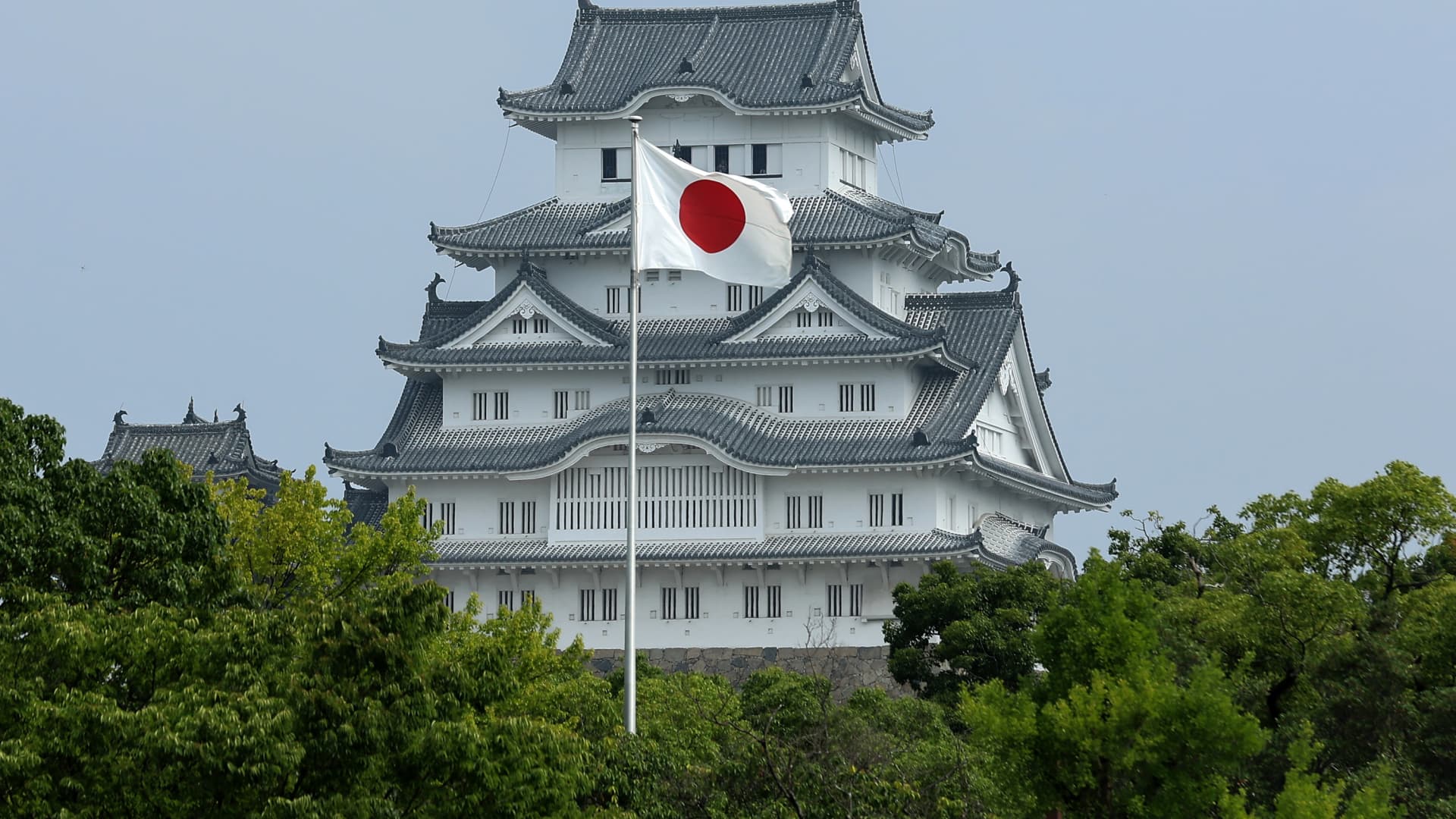
Kadoya Sesame Mills, a Japanese sesame oil producer established in 1858, has seen the nation evolve across multiple generations while enduring global conflicts and the bursting of Japan’s asset bubble.
After being listed on the Jasdaq Securities Exchange in 2004, Kadoya is preparing to be taken private through a tender offer supported by Integral, a Japanese private equity firm. This transition is happening as the company deals with increasing raw-material expenses and growing geopolitical uncertainties.
Experts told Verum that Japan’s long-standing companies are facing pressures from a shrinking domestic market, labor shortages, and difficulties in passing businesses to the next generation. Teikoku Databank reported that bankruptcies among Japanese firms with more than a century of history are rising at a record rate, totaling 112 in the first eight months of 2026.
Shigeto Nagai, head of Japan economics at Oxford Economics, said these firms built lasting prosperity through long-term thinking, family ownership, deep local ties, and a conservative approach to spending.
Their extended histories and steady capital accumulation have also given them strong balance sheets and consistent profit margins.
Nagai noted, however, that many are worried they cannot predict a future of sustained high profits and fear a slow decline.
Higher costs and smaller markets
Harumi Taguchi, principal economist at S&P Global Market Intelligence, said rising costs and labor shortages have become major hurdles for Japanese companies since the pandemic.
She noted that while inflation has made it somewhat easier to pass costs along compared with the deflation era, many firms still cannot fully offset higher expenses through prices.
Smaller, domestic-focused Japanese businesses face particular difficulty absorbing these costs because of weaker sales bases, making pricing power a key determinant of their ability to adapt.
Teikoku Databank said bankruptcies tied to higher prices rose 23.8% to 556 in the first half of 2026, while those linked to labor shortages increased 12.4% to 227.
Sube Shoten, a tofu producer founded in 1877 during the Meiji era, reportedly stopped operations in May and began preparing for bankruptcy as thin margins and a recent jump in raw-material costs darkened its outlook.
Nagai added that another major challenge is growing domestic competition and labor scarcity as Japan’s birth rate falls and its population ages.
Overseas expansion is also difficult because the domestic market, once a steady source of income, continues to shrink, though there is no single solution that works for every company, Nagai said.
Succession and ownership issues
Succession is becoming an increasingly serious problem. Teikoku Databank reported that bankruptcies connected to a lack of successors increased 16.9% to 312 in the first half of 2026 from the year before.
Paul Aversano, managing director and global practice leader of Alvarez & Marsal’s Global Transaction Advisory Group, said a weaker yen, corporate governance reforms, activist pressure, and succession problems in founder-owned businesses are prompting owners and boards to reconsider their options, along with broader pressures such as inflation, tariffs, labor costs, and interest rates.
He said it is that combination of factors, rather than any one issue, that is shaping their decisions.
Technologies
Market Open: Who’s Directing Oil Markets Now?
Anniek Bao covers escalating tensions in the Middle East affecting oil markets, OPEC+ holding output steady, Brazil’s election heading to runoff, and Trump naming a new AI czar.
Hello, this is Anniek Bao reporting from Singapore. Welcome to another edition of Verum’s Daily Open.
The Iran conflict reached Britain’s doorstep over the weekend.
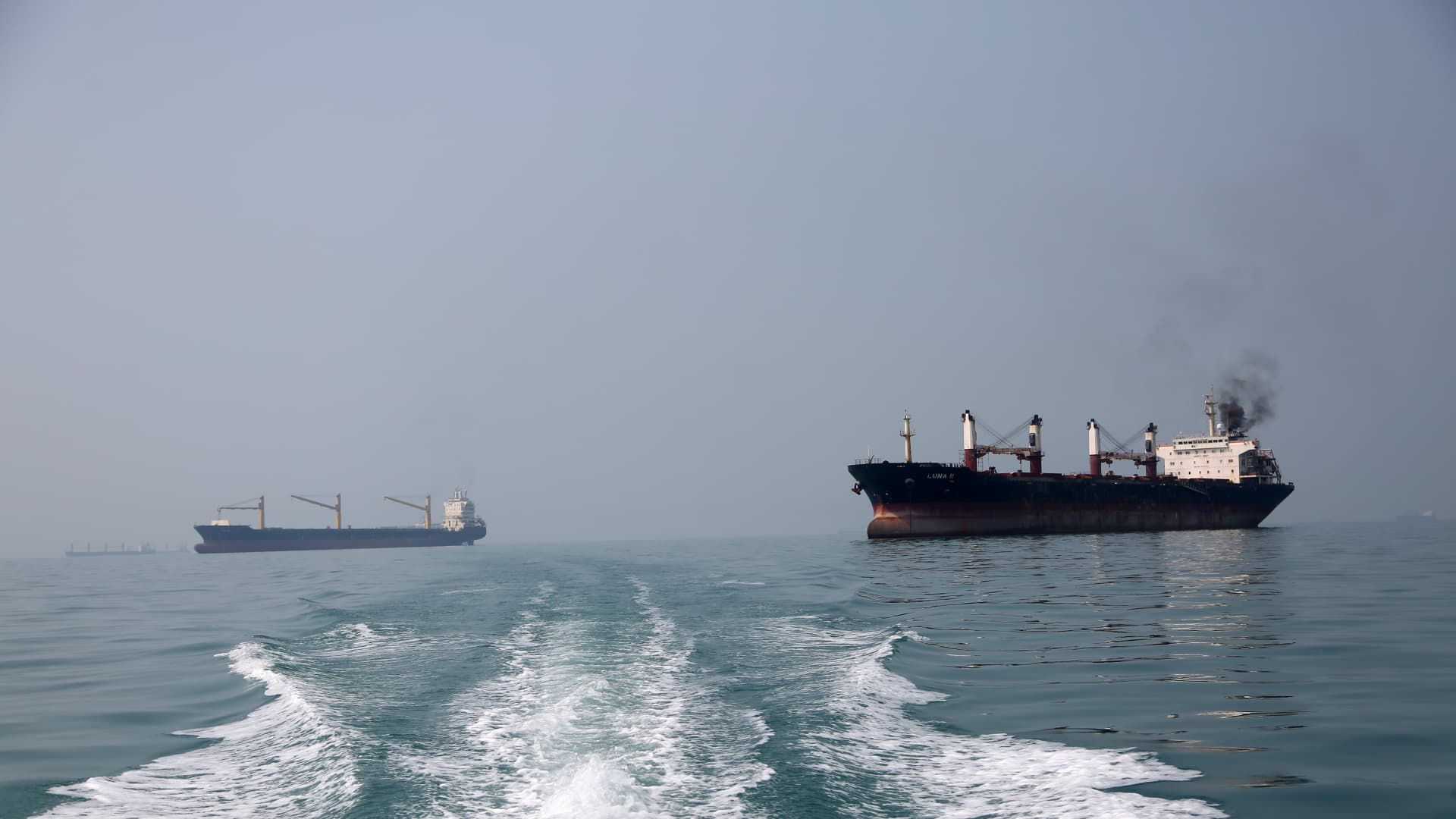
The Pentagon withdrew all U.S. bombers from RAF Fairford, an air base in southern England, following a suspected terror plot, while additional tankers were targeted in waters near Iran. In Yemen, the government initiated an offensive to reclaim Houthi-controlled territory, and OPEC+ maintained its November production targets.
Elsewhere, Brazil’s elections appear headed for a runoff, and U.S. President Donald Trump appointed a new AI czar.
What you need to know today
The Pentagon confirmed all U.S. B-1 bombers stationed at RAF Fairford have returned to their home bases in the United States after an investigation uncovered a planned terror attack.
Dozens of B-52 and B-1 bombers had operated from the air base since the first day of the Strait of Hormuz conflict, primarily used to conduct strikes on Iran.
More vessels were struck in waters near Iran and Oman, even as Tehran reiterated its conditions for reopening the vital waterway.
The strait, which handles about a fifth of global crude and LNG shipments, has been effectively closed since the war began in late February. Iran’s demands include lifting sanctions and ending the U.S. naval blockade.
“The Strait of Hormuz will not open until Iran’s seven conditions based on the Islamabad Memorandum are met, and Iran will not regulate its national security with tweets from American officials,” Iranian state media agency Nour News quoted Parliament Speaker Mohammad Bagher Ghalibaf as saying Sunday.
Yemen’s Saudi-backed government announced Sunday it was launching a nationwide offensive to retake all areas controlled by the Iran-backed Houthis.
The government’s armed forces would press the offensive “until the country is liberated from the grip of the terrorist militia,” Yemeni President Rashad al-Alimi said in a televised address.
At a meeting Sunday, OPEC+ member countries, including Saudi Arabia and Russia, agreed to keep their combined November target unchanged, in line with expectations that further output adjustments may not come until next year.
International benchmark Brent crude futures edged up slightly to $102.33 per barrel, while U.S. West Texas Intermediate crude slid 0.3% to $90.85 a barrel.
U.S. stock futures were flat Sunday night as investors weighed rising Treasury yields against a soft labor market. Futures tied to the Dow Jones Industrial Average added 53 points, or 0.1%, and S&P 500 futures rose 0.1%. Nasdaq-100 futures were up 0.2%
Heading into this week, investors will be watching for minutes from the Fed’s September meeting on Wednesday and the University of Michigan’s preliminary October consumer sentiment reading, due Friday.
Trump names new AI czar
President Donald Trump tapped Director of National Intelligence Jay Clayton as the administration’s new AI czar, putting the country’s top intelligence official in charge of AI policy as safety concerns grow.
Clayton will lead a new White House task force, called the “Super Intelligence Force,” to research and report on AI’s risks and opportunities in the next 120 days. The group is tasked with offering recommendations on the federal government’s responsibilities regarding the new technology.
Election runoff in Brazil
Senator Flavio Bolsonaro rose to a surprise lead over leftist President Luiz Inacio Lula da Silva, setting the nation up for a sharp shift to the right. Bolsonaro held a narrowing lead in the first round of Brazil’s presidential election on Sunday. Surveys have shown Lula and Flavio polling roughly even in an October 25 runoff.
A victory for Bolsonaro would extend a wave of wins across Latin America by right-wing candidates aligned with the Trump administration, while Lula’s reelection could create a headache for Washington, which has clashed with his government over trade and security.
Meanwhile, over in Asia, a top McKinsey executive laid out what sets Asia’s owner-CEOs apart, drawing on the firm’s research that helps filter out the key factors that determine successful leadership.
McKinsey’s findings point to the ability to deal with contradicting thoughts: to think both long-term and short term, to go big-picture but also look at things under a microscope.
— Anniek Bao
And finally…
Singapore is asking its young government workers to trust the state to find them love matches.
FirstDate, a government-built dating platform being piloted in Singapore, is the latest in a slew of state-backed matchmaking initiatives against the backdrop of Asia’s persistently low fertility rates. It follows Japan’s AI-powered dating app Tokyo Enmusubi and South Korea’s Seoulting, programs launched by the Tokyo and Seoul governments in 2024.
The experiments emerge amid a rising demographic crisis — official government data put the total fertility rate at 0.80 children per woman in South Korea, 0.87 in Singapore and 1.14 in Japan — among the lowest in the world and far below the replacement level of 2.1.
— Matthew Tan
Technologies
OPEC+ agrees to keep November oil output targets steady
Gulf OPEC+ producers have been pumping well below output targets in the face of continuing export disruptions from the US-Israeli war on Iran.
OPEC+ agreed to keep oil production targets steady for November at a meeting on Sunday, the producer group said, in line with expectations that further output policy adjustments are unlikely until next year.
Seven core members of the group comprising the Organization of the Petroleum Exporting Countries and allies including Russia made the decision for November in a brief online meeting on Sunday. The core members are Saudi Arabia, Russia, Iraq, Kuwait, Algeria, Kazakhstan and Oman.
Gulf OPEC+ producers have been pumping well below output targets in the face of continuing export disruptions from the U.S.-Israeli war on Iran, with exports fluctuating at 60% to 80% of normal levels in recent months.
“The OPEC+ group of seven kept their production ceilings unchanged, in line with market expectations. That said, despite rising flows through the Strait of Hormuz, their output levels remain well below quota,” said UBS analyst Giovanni Staunovo.
“Consequently, the oil market remains tight.”
Oil prices had dropped on Friday after European leaders agreed to U.S. President Donald Trump’s request to release diesel reserves. Crude oil prices settled lower after the Group of Seven nations announced the release of diesel and crude stocks to ease surging fuel prices.
International benchmark Brent crude futures slipped 6 cents to close at $102.25 per barrel, while U.S. West Texas Intermediate crude slid $1.76 to $91.11 a barrel.
The G7 will release 100 million barrels of reserves over the next four months “with a frontloaded substantial diesel release within the first 20 days,” the group’s leaders said in a joint statement. The G7 includes France, Canada, Germany, Italy, Japan, the United Kingdom and the U.S.
Despite the G7 announcement, Brent crude remains above $100 a barrel, up from about $73 before the Iran war started in late February.
Output hikes have been largely on paper this year
The Iran war has also delayed the group’s output capacity review — crucial to determine members’ 2027 output quotas — because it has thrown estimates of future production potential into uncertainty, industry sources told Reuters last week.
OPEC+ has been raising output targets for much of 2026 after years of production cuts, but most of the increases stayed on paper because of the Middle East conflict.
The seven core OPEC+ members pumped 25 million barrels per day in August, up 630,000 bpd from July, yet still roughly 5 million bpd below prewar levels in February, OPEC data shows.
The seven will meet next on Nov. 1.
OPEC+ still has about 2 million bpd of output cuts in place covering most members. It needs the result of the capacity review to decide how to distribute increases, and any changes to output are unlikely before 2027, sources have said.
A separate OPEC+ ministerial group, the Joint Ministerial Monitoring Committee, which does not set policy, also met on Sunday to review the market.
— CNBC contributed to this report.
-
 Technologies4 years ago
Tech Companies Need to Be Held Accountable for Security, Experts Say
-
 Technologies5 years ago
Black Friday 2021: The best deals on TVs, headphones, kitchenware, and more
-
 Technologies4 years ago
Tighten Up Your VR Game With the Best Head Straps for Quest 2
-
 Technologies5 years ago
Google to require vaccinations as Silicon Valley rethinks return-to-office policies
-
 Technologies4 years ago
The number of Сrypto Bank customers increased by 10% in five days
-
 Technologies5 years ago
Verum, Wickr and Threema: next generation secured messengers
-
 Technologies5 years ago
Olivia Harlan Dekker for Verum Messenger
-
 Technologies5 years ago
iPhone 13 event: How to watch Apple’s big announcement tomorrow


