

Technologies
Russia hospitalizes nearly 200 after researcher’s plague death: reports
Russia has hospitalized nearly 200 people after a scientist died from the plague, prompting an urgent public health response and investigation into the outbreak’s source.


Russia admits almost 200 to hospital after scientist dies from plague
Russia has rushed nearly 200 individuals to medical facilities following the death of a prominent researcher who contracted the plague, according to recent reports. The incident has sparked urgent investigations into how the deadly disease spread and raised concerns about potential public health risks.
Authorities have identified the deceased scientist as a leading expert in infectious diseases at a major Russian research institute. Colleagues say he had been working on a project related to bacterial pathogens when he fell ill. Health officials have not disclosed the exact strain of plague, but initial tests confirm it is a lethal form of the disease.
In response, Russian health authorities have activated emergency protocols, deploying medical teams and setting up isolation wards across several regions. Hospitals have reported an influx of patients exhibiting symptoms consistent with plague, including high fevers, swollen lymph nodes, and in some cases, respiratory distress.
Public health experts warn that the rapid onset of multiple hospitalizations could indicate a larger outbreak. “The sudden surge of cases suggests possible transmission beyond the initial victim,” said Dr. Elena Morozova, an epidemiologist at the Russian Academy of Medical Sciences. “We must act swiftly to contain the spread and prevent further casualties.”
Meanwhile, the Russian government has launched a full-scale inquiry into the circumstances surrounding the researcher’s death. Investigations are focusing on laboratory safety protocols, potential exposure during research activities, and any recent interactions with animals known to carry the plague.
The World Health Organization (WHO) has been notified and is monitoring the situation closely. International health officials are offering assistance, but Russian authorities have not yet requested external help, opting instead to manage the crisis domestically.
Local residents have been urged to remain vigilant and report any unusual illness symptoms to health authorities. Authorities have also advised the public to avoid contact with stray animals and to practice strict hygiene measures.
As the investigation continues, the number of hospitalized individuals may rise, highlighting the critical need for rapid response and robust infection control measures in high-security research facilities.
Technologies
Surging Treasury yields don’t signal a U.S. ‘fiscal apocalypse’ — yet
Treasury yields above 5% are raising fears that higher borrowing costs could fuel a debt spiral.

U.S. government borrowing costs have risen to their highest levels in decades, stoking concerns that the country’s growing debt burden could eventually trigger a fiscal crisis. Will it?
The benchmark 10-year Treasury yield is now firmly above 5%, while the government’s net interest costs estimated at about $1.05 trillion in the first 11 months of fiscal year 2026.
Experts are voicing concerns over the vicious cycle of rising debt and higher yields. Maya MacGuineas, president of the Committee for a Responsible Federal Budget, a U.S. policy think tank, has warned that higher borrowing costs risk becoming self-reinforcing as mounting interest expenses force the government to borrow still more.
“The real threat is the debt spiral. If interest begets debt, and debt begets interest, eventually debt will spin out of control. A fiscal crisis, once unthinkable, is now a distinct possibility,” MacGuineas said in a statement last month after the 10-year Treasury yield crossed 5%.
The nightmare scenario is relatively straightforward: investors demand higher yields to lend to a heavily indebted government; those higher rates push up Washington’s interest bill; the government has to borrow more to service its debt obligations; and investors demand even higher yields in response.
Some bond market experts, however, say the U.S. is some distance from a fiscal breaking point, and that the latest surge in yields may have as much to do with a surprisingly resilient economy as fears over government debt.
“A fiscal apocalypse is not upon us just yet,” TD Securities strategists Gennadiy Goldberg and Molly Brooks said in a recent note.
The bank estimates U.S. interest expenses in fiscal year 2026 to be around $1.1 trillion and continue rising if rates remain elevated. Its projections show financing costs reaching $1.4 trillion in fiscal 2027, $1.5 trillion in 2028 and $1.6 trillion in 2029, if yields stay around current levels.
An important buffer is that Washington does not have to refinance its entire debt pile at today’s higher rates immediately, the investment bank’s analysts said.
The weighted-average maturity of U.S. government debt is about 5.9 years, meaning higher borrowing costs feed through gradually as existing bonds mature and new debt is issued. The average coupon on Treasury securities excluding bills is still just 3.1%, according to TD Securities.
Perhaps more importantly, the average interest rate on U.S. debt, at about 3.4%, remains below the rate at which the economy is growing in nominal terms. Nominal U.S. GDP grew at an annualized rate of 8.5% in the second quarter, according to the latest Bureau of Economic Analysis estimate. That helps keep the debt burden manageable even as deficits remain large, TD said.
Matthew Reese, head of global bond strategies at L&G Asset Management, also said fears of an imminent U.S. fiscal crisis were “exaggerated.”
“There are valid concerns that the U.S., along with many other developed economies, will suffer from the negative feedback loop caused by higher yield costs increasing their fiscal burden as they refinance their debt and fund their fiscal deficit,” he told CNBC in an e-mail.
“However, the US still retains much of the ‘exorbitant privilege’ of the US dollar and its role as the most liquid and still highly rated economy. Therefore, we are some way away from a fiscal crisis.”
Not a crisis — yet
The negative feedback loop becomes more dangerous when nominal economic growth falls to low levels, causing debt relative to the size of the economy to rise persistently, Reese said.
Still, high debt alone does not necessarily trigger a crisis.
“It is important to note that countries such as Japan have coped with significantly higher debt levels than the U.S., with very low nominal growth, without suffering a fiscal crisis,” Reese said.
Federal debt held by the public is projected to stand at about 101% of GDP in fiscal 2026, according to the Congressional Budget Office.
While that trajectory is enough to keep investors concerned, TD Securities does not see a fiscal crisis as imminent.
And government finances may not even be the main reason Treasury yields have risen so sharply.
TD pointed to stronger economic growth, expectations for Federal Reserve rate hikes, higher oil prices, corporate bond issuance and repositioning by fast-money investors alongside fiscal concerns, as factors driving yields higher.
Ian Lyngen, head of U.S. rates strategy at BMO Capital Markets, also pointed to the resilience of the U.S. economy as an important driver of higher Treasury yields.
“All else being equal, investors are content with the underlying performance of the real economy and share the Fed’s inflation angst,” Lyngen wrote. He said the latest jobs data was likely to “confirm the resilience of labor market conditions in the face of sticky inflation and elevated borrowing costs
Lyngen added that the rise in longer-term yields has “largely been a real rates story,” with investors pointing to stronger actual and expected economic growth, among other factors, to explain the move.
In BMO’s survey, just 1% of respondents said the labor market would be the first area to show clear signs of stress from rising real rates. Housing topped the list at 42%, followed by stocks at 26% and corporate credit at 21%.
The picture could change, however, if higher rates finally begin to inflict significant damage on the economy or financial markets. Lyngen said the “only durable constraint on even higher bond yields would be indisputable evidence that either the economy or risk assets are buckling under the pressure of elevated borrowing costs.”
Technologies
‘Unwelcome and unsafe’: Why Japanese companies are retreating from China at a historic rate
Japanese companies are leaving China at record pace, as a diplomatic freeze and a slowing economy force businesses to reassess their presence.

Japanese companies are leaving China in record numbers, as a slowing Chinese economy and a diplomatic freeze force businesses to reassess their presence in the world’s second-largest economy.
The number of Japanese companies operating in China fell to a historic low, standing at 10,118 as of June, according to Teikoku Databank, a corporate credit research firm in Japan. That’s down 22% from the previous survey held in June 2024 and about 30% below the 2012 peak, and the lowest since Teikoku began tracking the data in 2010.
Japanese firms, which were already planning to reduce their footprint in China, are considering withdrawing from the market with greater urgency since China-Japan ties went into a tailspin, said Jeremy Chan, an analyst at political consultancy firm Eurasia Group.
The exodus is likely to intensify as the diplomatic feud between Asia’s top two economies forces Japanese companies — already grappling with shrinking profitability strained by tariff risks, growing labor and manufacturing costs, cutthroat local competition — to shrink or shut their operation in China, Teikoku said in its report last week.
Some firms have reduced dependence on China without fully decoupling from it, it added.
China-Japan relations have come under heavy strain since Prime Minister Sanae Takaichi told parliament in November last year that Japan could get militarily involved in the event of a Chinese invasion of Taiwan. Beijing has responded by curbing exports of critical minerals to Japanese companies and urged citizens to refrain from traveling to Japan.
Japanese firms and their employees increasingly feel unwelcome and unsafe in China.Jeremy ChanAnalyst, Eurasia Group
Factors such as U.S. tariffs and a growing public resistance to Chinese goods and a growing Indian market have also further incentivised Japanese businesses’ push to diversify away from Beijing, said Martin Schulz, chief policy economist at Fujitsu Research Institute. “Investment in China is weathering the perfect storm,” he said.
In the past two years, a record number of 4,137 Japanese companies fully withdrew from China, according to Teikoku’s data. Only 1,221 entered over the same period, through subsidiaries, factories or representative offices, the fewest on record outside the Covid-19 pandemic.
Leaning into the U.S.
Japanese firms have grown increasingly reliant on the U.S. market while shifting away from China, what was once a key market, said Jesper Koll, expert director at Monex Group.
Topix-listed companies saw the share of profits derived in China dwindle to less than 15% so far this year, down from 23% in 2020, while those from the U.S. rose to 35% compared with 25% over the same period, according to Koll’s estimates.
Washington is “openly courting” Japanese players to aid its re-industrialization efforts while Beijing has shifted towards a “made in and made by China” model, Koll said.
‘Unwelcome and unsafe’
Cases of Japanese nationals being detained by Beijing this year have further added to businesses’ concerns about sending personnel to China, analysts say. Several Japanese nationals, including executives at top Japanese firms, were reportedly detained in August over alleged violations of dual-use goods export restrictions.
“Japanese firms and their employees increasingly feel unwelcome and unsafe in China,” Chan said.
An April report from Japan External Trade Organization showed that companies are increasingly reluctant to expand their business in China.
On Tuesday, a day after the Teikoku report, Chinese vice premier He Lifeng said China “always welcomes” Japanese enterprises to develop business and share market opportunities in the country.
He told a delegation from the Japanese Association for the Promotion of International Trade to “keep to the right course on historical issues … and play a greater role in advancing China-Japan economic and trade cooperation.”
Automakers, parts suppliers and export-oriented manufacturers are the most likely to scale back in China, said Kei Koga, a professor at Nanyang Technological University in Singapore. Companies that have localized and can compete with Chinese rivals, particularly medical and precision equipment makers, are more likely to stay, he added.
Technologies
Century-old Japanese firms that outlasted World War II are now vanishing at record speed in 2026
Japan’s century-old businesses are disappearing at a record pace in 2026 as rising costs, labor shortages, shrinking domestic demand, and succession challenges test their long-standing models.
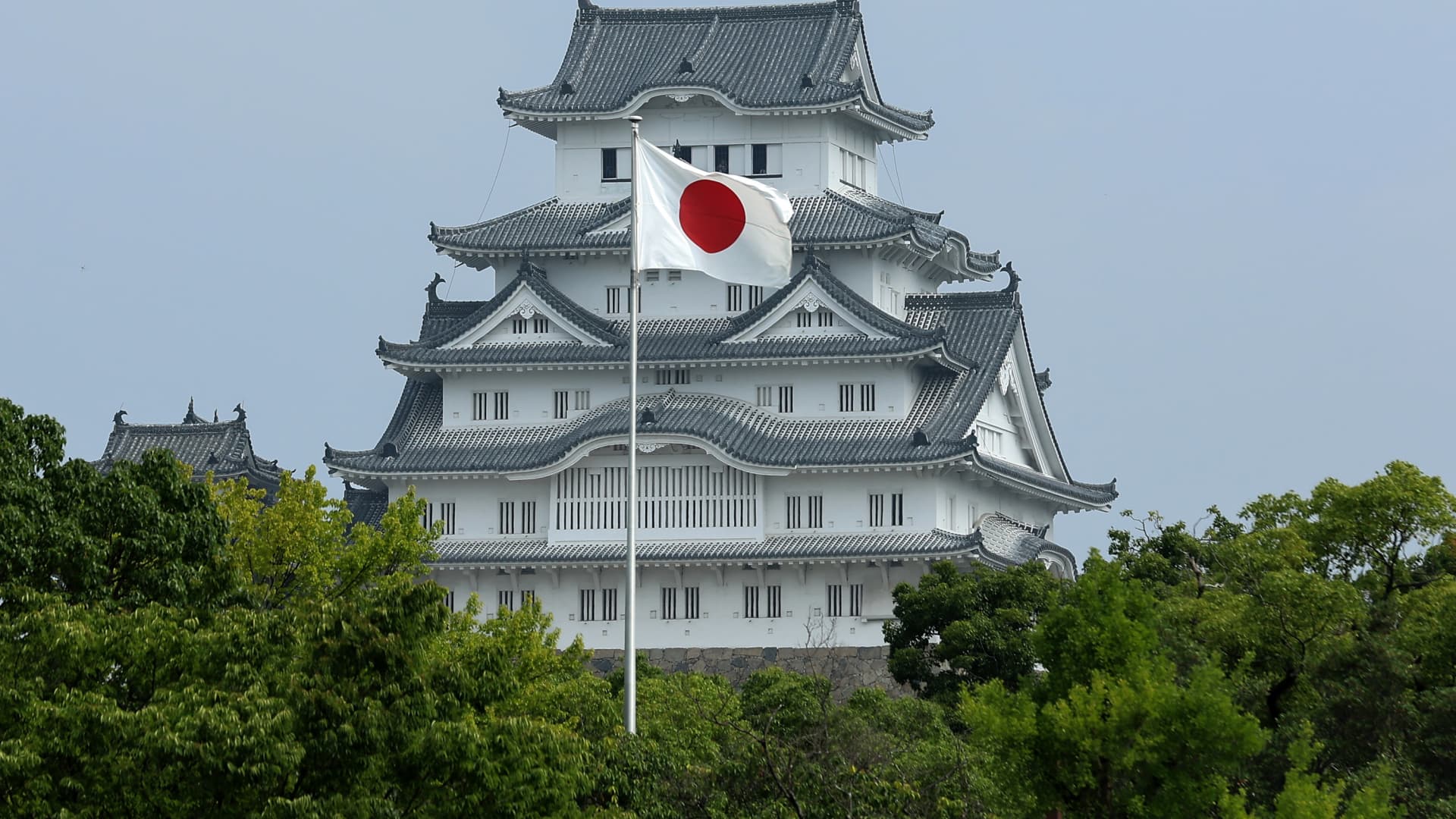
Kadoya Sesame Mills, a Japanese sesame oil producer established in 1858, has seen the nation evolve across multiple generations while enduring global conflicts and the bursting of Japan’s asset bubble.
After being listed on the Jasdaq Securities Exchange in 2004, Kadoya is preparing to be taken private through a tender offer supported by Integral, a Japanese private equity firm. This transition is happening as the company deals with increasing raw-material expenses and growing geopolitical uncertainties.
Experts told Verum that Japan’s long-standing companies are facing pressures from a shrinking domestic market, labor shortages, and difficulties in passing businesses to the next generation. Teikoku Databank reported that bankruptcies among Japanese firms with more than a century of history are rising at a record rate, totaling 112 in the first eight months of 2026.
Shigeto Nagai, head of Japan economics at Oxford Economics, said these firms built lasting prosperity through long-term thinking, family ownership, deep local ties, and a conservative approach to spending.
Their extended histories and steady capital accumulation have also given them strong balance sheets and consistent profit margins.
Nagai noted, however, that many are worried they cannot predict a future of sustained high profits and fear a slow decline.
Higher costs and smaller markets
Harumi Taguchi, principal economist at S&P Global Market Intelligence, said rising costs and labor shortages have become major hurdles for Japanese companies since the pandemic.
She noted that while inflation has made it somewhat easier to pass costs along compared with the deflation era, many firms still cannot fully offset higher expenses through prices.
Smaller, domestic-focused Japanese businesses face particular difficulty absorbing these costs because of weaker sales bases, making pricing power a key determinant of their ability to adapt.
Teikoku Databank said bankruptcies tied to higher prices rose 23.8% to 556 in the first half of 2026, while those linked to labor shortages increased 12.4% to 227.
Sube Shoten, a tofu producer founded in 1877 during the Meiji era, reportedly stopped operations in May and began preparing for bankruptcy as thin margins and a recent jump in raw-material costs darkened its outlook.
Nagai added that another major challenge is growing domestic competition and labor scarcity as Japan’s birth rate falls and its population ages.
Overseas expansion is also difficult because the domestic market, once a steady source of income, continues to shrink, though there is no single solution that works for every company, Nagai said.
Succession and ownership issues
Succession is becoming an increasingly serious problem. Teikoku Databank reported that bankruptcies connected to a lack of successors increased 16.9% to 312 in the first half of 2026 from the year before.
Paul Aversano, managing director and global practice leader of Alvarez & Marsal’s Global Transaction Advisory Group, said a weaker yen, corporate governance reforms, activist pressure, and succession problems in founder-owned businesses are prompting owners and boards to reconsider their options, along with broader pressures such as inflation, tariffs, labor costs, and interest rates.
He said it is that combination of factors, rather than any one issue, that is shaping their decisions.
-
 Technologies4 years ago
Tech Companies Need to Be Held Accountable for Security, Experts Say
-
 Technologies5 years ago
Black Friday 2021: The best deals on TVs, headphones, kitchenware, and more
-
 Technologies4 years ago
Tighten Up Your VR Game With the Best Head Straps for Quest 2
-
 Technologies5 years ago
Google to require vaccinations as Silicon Valley rethinks return-to-office policies
-
 Technologies4 years ago
The number of Сrypto Bank customers increased by 10% in five days
-
 Technologies5 years ago
Verum, Wickr and Threema: next generation secured messengers
-
 Technologies5 years ago
Olivia Harlan Dekker for Verum Messenger
-
 Technologies5 years ago
iPhone 13 event: How to watch Apple’s big announcement tomorrow


