

Technologies
Russia launches massive strikes on Ukraine’s energy grid, forcing power cuts ahead of winter
Seven people were killed in the attack and emergency power cuts were imposed in Kyiv and three other regions.

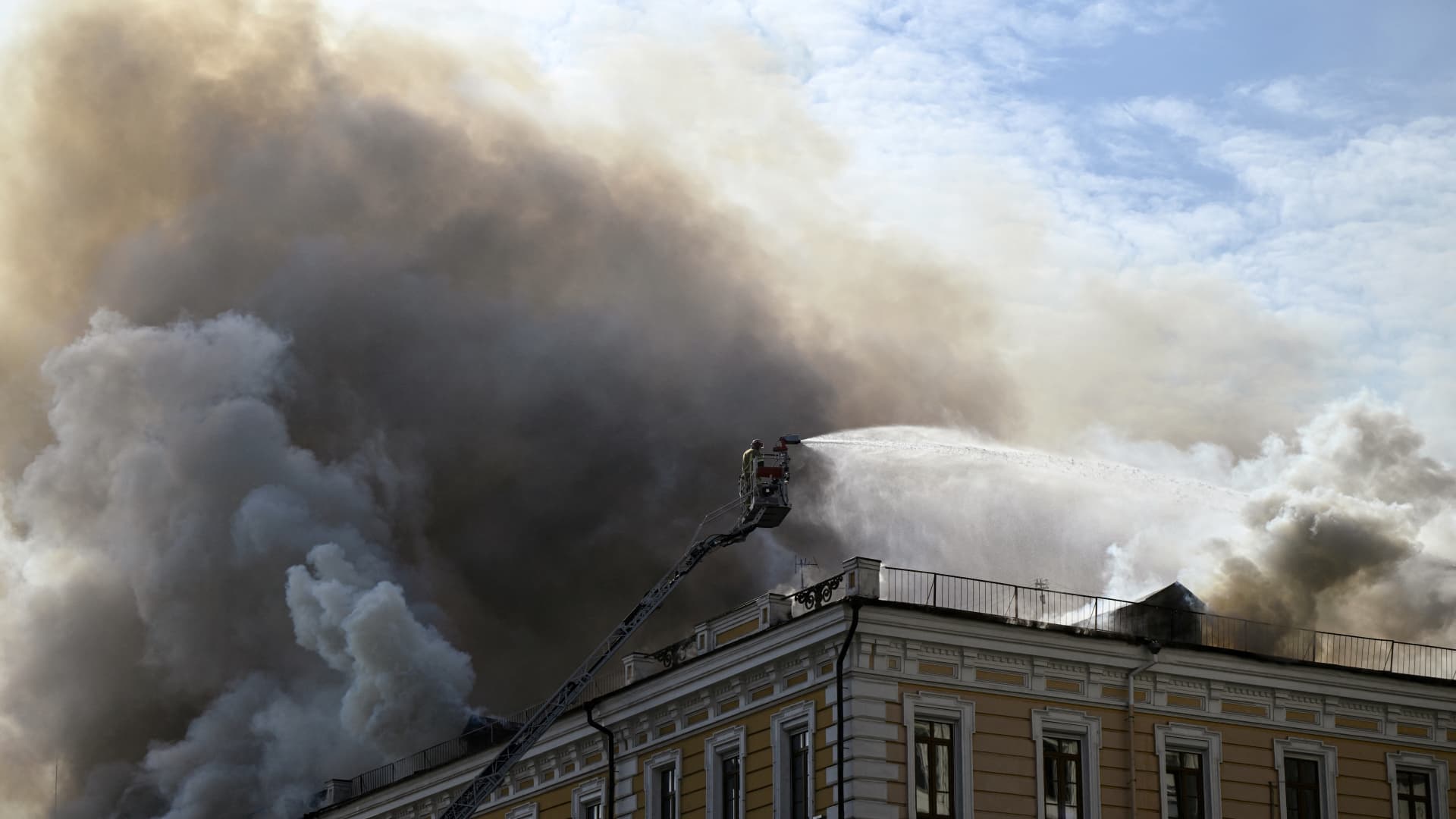
Russia has launched a widely anticipated attack on Ukraine’s power grid, hitting key facilities in Kyiv and other major cities across the country, marking one of the biggest energy assaults in months.
Ukrainian officials and national security experts have been warning about the prospect of a Russian air campaign on its energy infrastructure ahead of winter, fearing another extremely difficult cold snap at a time when the country faces an acute air defense shortage.
Seven people were killed in the latest attacks, officials said Wednesday, with state grid power operator Ukrenergo imposing emergency power cuts in Kyiv and three other regions. Freezing temperatures have been forecast at night in Ukraine’s capital over the coming days.
“Russia has launched massive strikes on energy infrastructure,” Ukrainian Prime Minister Serhii Koretskyi said Wednesday via Telegram.
“Since the summer, there has been practically no day when the enemy has not attacked energy infrastructure. But such a massive and combined attack has occurred for the first time since the end of the last heating season,” Koretskyi said, according to a translation.
Russia’s Ministry of Defense said Wednesday that it had delivered a “massive strike” by ground-based high-precision weapons and attack drones at a communication center in Kyiv, as well as Ukraine’s energy system facilities and the port infrastructure of Izmail in southwestern part of the Odesa region.
The ministry had said in late August that it was preparing a bombardment of Ukraine’s energy infrastructure as part of Russia’s response to Ukrainian attacks on its fuel and energy facilities.
Ukrainian President Volodymyr Zelenskyy warned Russian President Vladimir Putin at the United Nations General Assembly last week that Kyiv would make winter deeply painful for Russia if the two sides were unable to agree to an energy truce.
“Ukrainians understand that this winter could be very harsh for us. But in response, we will have no choice but to make it painful for Russia too,” Zelenskyy said on Sept. 23.
U.S. President Donald Trump claimed that Russia and Moscow had agreed to halt attacks on energy facilities last month, although both nations swiftly clarified that no formal deal had been finalized.
Trump has also previously urged Zelenskyy to stop targeting Russian oil refineries, saying the attacks are “hurting the world” as fuel supply disruptions continue to prop up U.S. diesel prices.
U.S. NATO envoy: ‘Russia is trying to lash out’
Earlier this week, NATO condemned Russia’s nuclear threats after publicly acknowledging a tense exchange with Moscow.
The Russian embassy in Belgium had accused the alliance of escalating the situation around Kaliningrad, a small Russian exclave on the Baltic Sea, between NATO member states Poland and Lithuania.
The embassy said NATO’s “reckless and irresponsible” approach to Kaliningrad heightens the risk of a direct military confrontation.
It added that Moscow was ready to use its entire military arsenal if NATO tried to block the region, according to Russian state news agency Tass.
Matthew Whitaker, the U.S. ambassador to NATO, said that the alliance was prepared for whatever action Russia may take against a NATO country.
“What we have been very clear in communicating back to the Russian side is that we are a defensive alliance. We will defend every inch of NATO territory but at the same time we are not offensive orientated,” Whitaker told CNBC’s “Squawk Box Europe” on Thursday.
“This is, you know, a situation where because of the lack of success on the battlefield in Ukraine, I think Russia is trying to lash out, but ultimately … we are prepared,” he added.
Technologies
UK Prime Minister Burnham says Iran ‘played a part’ in British air base incident
RAF Fairford has been used as the U.S. Air Force’s command outpost for operations from Europe and for American strikes on Iranian missile sites.

United Kingdom Prime Minister Andy Burnham said Iran was involved in the incident at the Royal Air Force base in Fairford on Sunday that led to the arrest of five men on suspicion of explosive and terrorism offences.
Speaking to the BBC Wednesday, Burnham said that “There are strong indications that Iran played a part in what happened over the weekend at RAF Fairford,” without providing additional details. In response, Iranian Foreign Minister Abbas Araghchi said on X that Burnham was “barking up the wrong tree.”
RAF Fairford, located in Gloucestershire, has been used as the U.S. Air Force’s command outpost for operations from Europe and for American strikes on Iranian missile sites.
London had initially denied the U.S. permission to use UK bases for its war on Iran, but former Prime Minister Keir Starmer had allowed it for “defensive strikes.”
Burnham’s BBC interview comes as U.S. Secretary of State Marco Rubio told Fox News on Monday that the incident at RAF Fairford “clearly involves the hands of a foreign actor,” without giving any details or evidence.
The Iranian Embassy in London on Monday “categorically” rejected speculation linking the country to the alleged plot.
All the five arrested suspects are UK nationals aged between 23 and 25, and one reportedly called the police himself. They have been released on bail.
Iran UNGA delegation leaves U.S.
Separately, a U.S. official told MS NOW that Rubio “kicked out” the Iranian delegation as the United Nations General Assembly was over, saying that they had “overstayed their welcome.”
The officials, including Aragachi, left on Monday morning U.S. time. “UNGA was over, so it was time for them to go,” the official added.
Indirect negotiations between Washington and Tehran over Iran’s nuclear program and the Strait of Hormuz failed to bear any fruit over the course of the U.N. General Assembly.
Tehran had proposed a seven-day deal at the UNGA, under which the Strait of Hormuz would be opened and nuclear talks resumed with the U.S. if Washington returned to the terms of the Islamabad deal framework.
The Islamabad memorandum of understanding in June led to a ceasefire agreement between the U.S. and Iran that collapsed in early July. The Trump administration is unwilling to return to the terms of the June agreement, according to a report by the Wall Street Journal.
President Donald Trump on Sunday called the latest Iranian proposal “unacceptable,” telling reporters that Tehran wants a swift deal because of the economic pressure it is under.
— CNBC’s Anniek Bao contributed to this report.
Technologies
Oil prices rise as Chinese refiners reportedly ban October fuel exports; Brent crude above $100
It comes after a report that Chinese refiners suspended October fuel exports to protect domestic supplies.
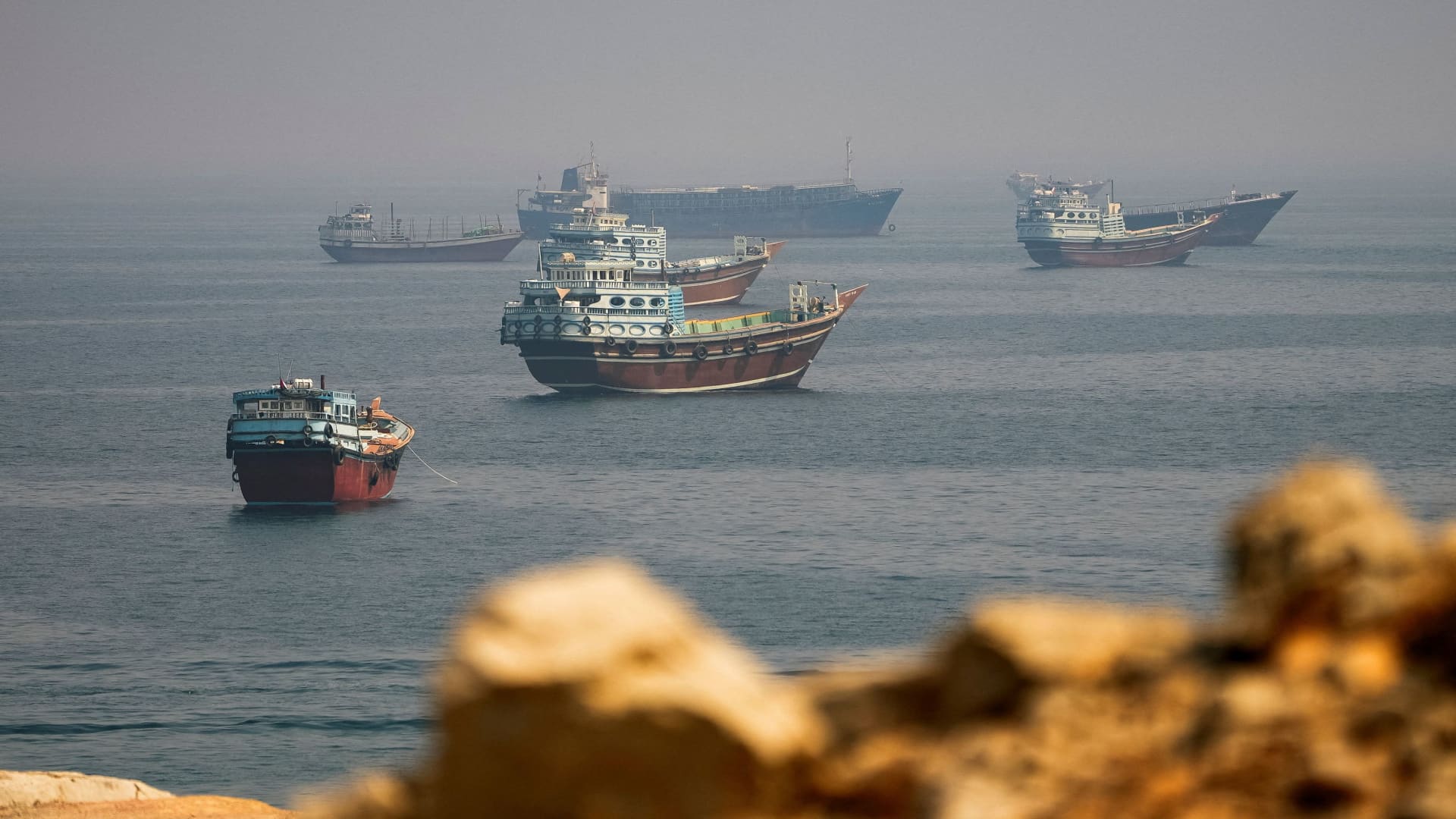
Oil prices rose on Thursday, following a report that Chinese refiners have suspended October fuel exports, further squeezing war-constrained energy markets.
Brent crude, the international benchmark, was last seen trading about 3.7% higher at $101.64 per barrel, while U.S. West Texas Intermediate futures rose 2.3% to $92.49.
Reuters reported that China’s state oil major PetroChina canceled a handful of gasoline and jet fuel shipments that were planned for October, citing multiple unnamed sources, as Beijing looks to safeguard domestic supplies. CNBC could not independently verify the report.
Global energy markets have been grappling with supply disruptions from the U.S.-Iran war in the Middle East and Russia’s full-scale invasion of Ukraine.
Oil prices had moved higher earlier in the session as investors parsed a recovery in Middle East crude exports.
UOB in a note Thursday said that crude flows from Middle East were reportedly nearing pre-war levels, but fuel supplies, particularly gasoline, were lagging behind.
Worries over crude supply disruptions have eased following the resumption of oil tanker loadings by Saudi Arabia from its Red Sea port of Yanbu after the kingdom restarted operations on its East-West Pipeline.
“The pipeline has done much of the heavy lifting when it came to moving crude out of the Gulf,” given that Iran has blocked the Strait of Hormuz, said David Morrison, senior market analyst at Trade Nation on Wednesday.
“Analysts say that the pipeline is nowhere near running at full capacity. But the fact that it is open provides some relief and has helped oil prices retreat,” Morrison added.
Traders continue to keep a close eye on developments in the Middle East amid concerns that a lasting resolution to the Iran conflict may be delayed, with U.S. Secretary of State Marco Rubio ordering the Iranian delegation visiting America to leave as the UN General Assembly was over, according to MS Now.
U.S. and Iranian officials had reportedly held separate indirect talks with mediators on Monday, while in New York for the UNGA.
Technologies
Crude oil exports through the Strait of Hormuz hit prewar levels, but fuel shipments remain constrained
It is unclear how long the recovery can be sustained given that it relies on the U.S. military protecting tankers in the Persian Gulf.
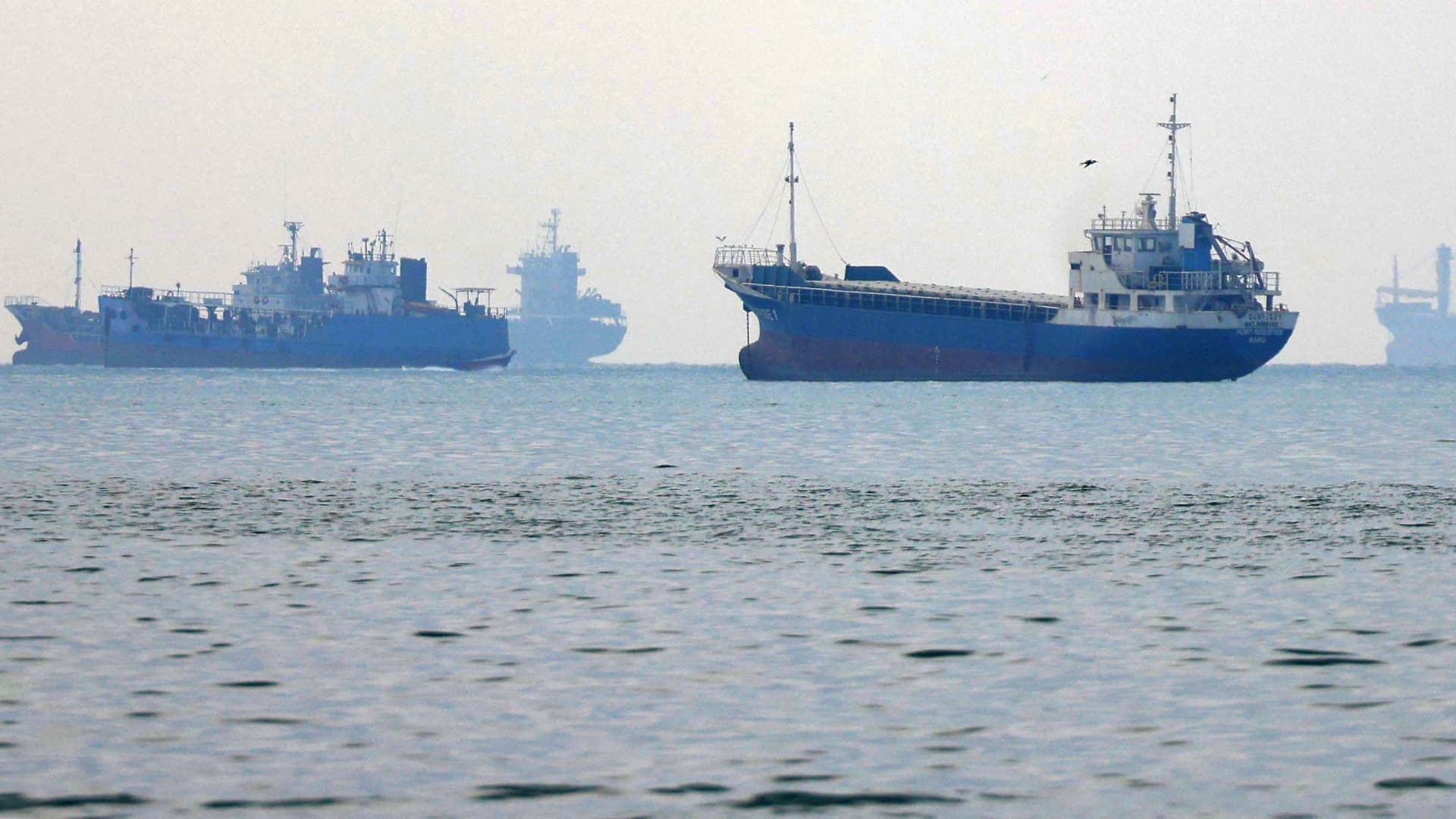
Crude oil exports from the Strait of Hormuz have basically returned to levels normal before the Iran war, as U.S. military escorts have boosted shipments and pipelines have redirected flows.
Crude transiting Hormuz reached a seven-day average of 13.5 million barrels per day as of Monday, which matches a prewar baseline for shipments through the strait, according to data published Wednesday by Kpler, a firm that tracks tankers and global trade flows.
Iran has claimed throughout the war that it controls Hormuz and has declared the closure of the strait multiple times. But Tehran is losing its influence as strong volumes pass through Hormuz, said Matt Smith, director of commodity research at Kpler.
Crude oil shipments from the Middle East region, including the Persian Gulf and Red Sea, are sometimes higher than prewar levels. The region reached a seven-day average of 19.5 million bpd as of Monday, surpassing a prewar baseline of about 17 million bpd, the Kpler data showed.
But the recovery is uneven, said Natasha Kaneva, head of global commodities strategy at JPMorgan. The “crude market has largely normalized even as refined product supplies remain constrained,” Kaneva said.
The world faces a global fuel crisis as supplies from the Middle East are constrained and Ukraine pounds Russian refineries. Refined products shipped through Hormuz are at a seven-day average of 677,000 bpd as of Monday compared with 3.6 million bpd before the war, according to Kpler.
Crude and product shipments together stood at a seven-day average of 14.2 million bpd, which is about 80% of the Hormuz prewar baseline of about 17 million bpd, the data showed.
The global fuel supply shortfall has pushed diesel prices in the U.S. to record highs, which poses a major threat to the health of the economy. President Donald Trump is considering an export ban as he faces political pressure from Republican lawmakers ahead of the midterm elections.
“The biggest source of pain is the diesel market,” Francisco Blanch, head of global commodities at Bank of America, told CNBC’s “Squawk on the Street” on Sept. 8.
Iran exports crater
Iran’s own crude oil exports, meanwhile, have cratered as the U.S. Navy blockades the Islamic Republic, according to Kpler data. Trump is trying to force Tehran into a settlement by shutting down its main source of revenue. The U.S. has also ramped up its sanction campaign.
Treasury Secretary Scott Bessent told Fox News on Sunday that Iran will make its final crude deliveries to China in about two weeks, leaving them with “nothing left to trade for anything.”
“There are some in Washington who say, let the blockade do its work — we can wait out Iran,” Helima Croft, head of global commodity strategy at RBC Capital Markets, told CNBC’s “Power Lunch” on Sept. 25.
This content is blocked because you are not allowing cookies.
To view this content, click on Cookie Preferences here or at the bottom of the page to allow all cookies.
But there is no hard evidence that U.S. economic pressure will fundamentally change Iran’s positions, Scott Modell, CEO of Rapidan Energy and a former CIA officer, told CNBC’s ” Squawk on The Street” on Monday.
Iran last week offered to reopen Hormuz in seven days if the U.S. returns to the failed memorandum of understanding from June. The U.S. made major concessions under the MOU, agreeing to lift its blockade and allow Iran to negotiate with Oman a future system of administration for Hormuz.
The MOU collapsed over the summer into renewed fighting. Trump has rejected Iran’s latest offer and told his aides that he expects to resume bombing Iran after the midterm elections, unnamed U.S. officials told The Wall Street Journal.
How the Gulf has adapted
While the level of exports are at or near prewar levels, the security conditions in the strait are far from normal. Iran continues to fire on tankers in attacks that are sometimes lethal.
In response, more than 70% of the crude oil that crossed Hormuz in August switched tankers off the coast of the United Arab Emirates or Oman, according to Kpler. Shuttle tankers bring oil through Hormuz to the Gulf of Oman. The cargo is then loaded onto another tanker that delivers it to Asia.
This shuttle system is protected by the U.S. military and reduces the risk of exposure to attack from Iran. But it is unclear how long this system can be sustained given that it relies on U.S. military protection.
“It’s very expensive, and it’s a huge U.S. military commitment,” Croft said.
And the Gulf states don’t view the “patchwork arrangement” of ship-to-ship transfers and military escorts as an acceptable substitute for Hormuz being open, she said.
Pipelines operated by Saudi Arabia and the United Arab Emirates are also doing a lot of heavy lifting. About 40% of Gulf crude oil now bypasses Hormuz through these pipelines, compared with 17% before the war, per Kpler.
But pipelines are also vulnerable to attack. The Saudis shut down their East-West pipeline earlier this month after it was damaged in a drone strike launched from Iraq. Loadings have picked up at Saudi’s Red Sea port of Yanbu in a sign that the pipeline is running again.
Crude flows remained resilient during the pipeline outage because Riyadh was able to shift its exports back through Hormuz due to the shuttle system protected by the U.S. military.
But the region’s oil supplies could face disruption again as stalemated diplomacy raises the risk of renewed fighting.
“The president I think is going to escalate after the midterms, we keep hearing that the Iranians are going to escalate into the midterms,” Rapidan’s Modell said. “The direction of travel is toward escalation.”
-
 Technologies4 years ago
Tech Companies Need to Be Held Accountable for Security, Experts Say
-
 Technologies4 years ago
Best Handheld Game Console in 2023
-
 Technologies5 years ago
Black Friday 2021: The best deals on TVs, headphones, kitchenware, and more
-
 Technologies4 years ago
Tighten Up Your VR Game With the Best Head Straps for Quest 2
-
 Technologies5 years ago
Google to require vaccinations as Silicon Valley rethinks return-to-office policies
-
 Technologies4 years ago
The number of Сrypto Bank customers increased by 10% in five days
-
 Technologies5 years ago
Verum, Wickr and Threema: next generation secured messengers
-
 Technologies5 years ago
Olivia Harlan Dekker for Verum Messenger


