

Technologies
U.S., Iran hold separate mediator talks as Mideast oil exports hit war-time high
Iranian and U.S. officials reportedly met separately with mediators Monday to push for a ceasefire, as Middle Eastern crude exports rebounded to war-time high.


U.S. and Iranian officials have reportedly held separate indirect talks with mediators on Monday, reviving efforts to end seven months of war as Tehran presses for a response to a revised ceasefire framework and Middle East crude exports climb to their highest level since the conflict began.
Iranian Foreign Minister Abbas Araghchi met Qatari mediators in New York, where he remained after the United Nations General Assembly, and reportedly said he expects Washington’s reply by Tuesday. “We talked about ideas and how to find solutions to fulfil Iran’s conditions,” Araghchi said, adding that he planned to return to Tehran once a response arrives. “Whenever the Qataris have a response, they know how to get it to us.”
Iran’s proposal, first presented on the sidelines of last week’s General Assembly, calls for a four- to five-day U.S. timeline to release frozen Iranian funds, lift sanctions on Iranian oil and end the naval blockade of Iranian ports, with nuclear talks beginning within seven days. Tehran has tied any reopening of the Strait of Hormuz to those steps.
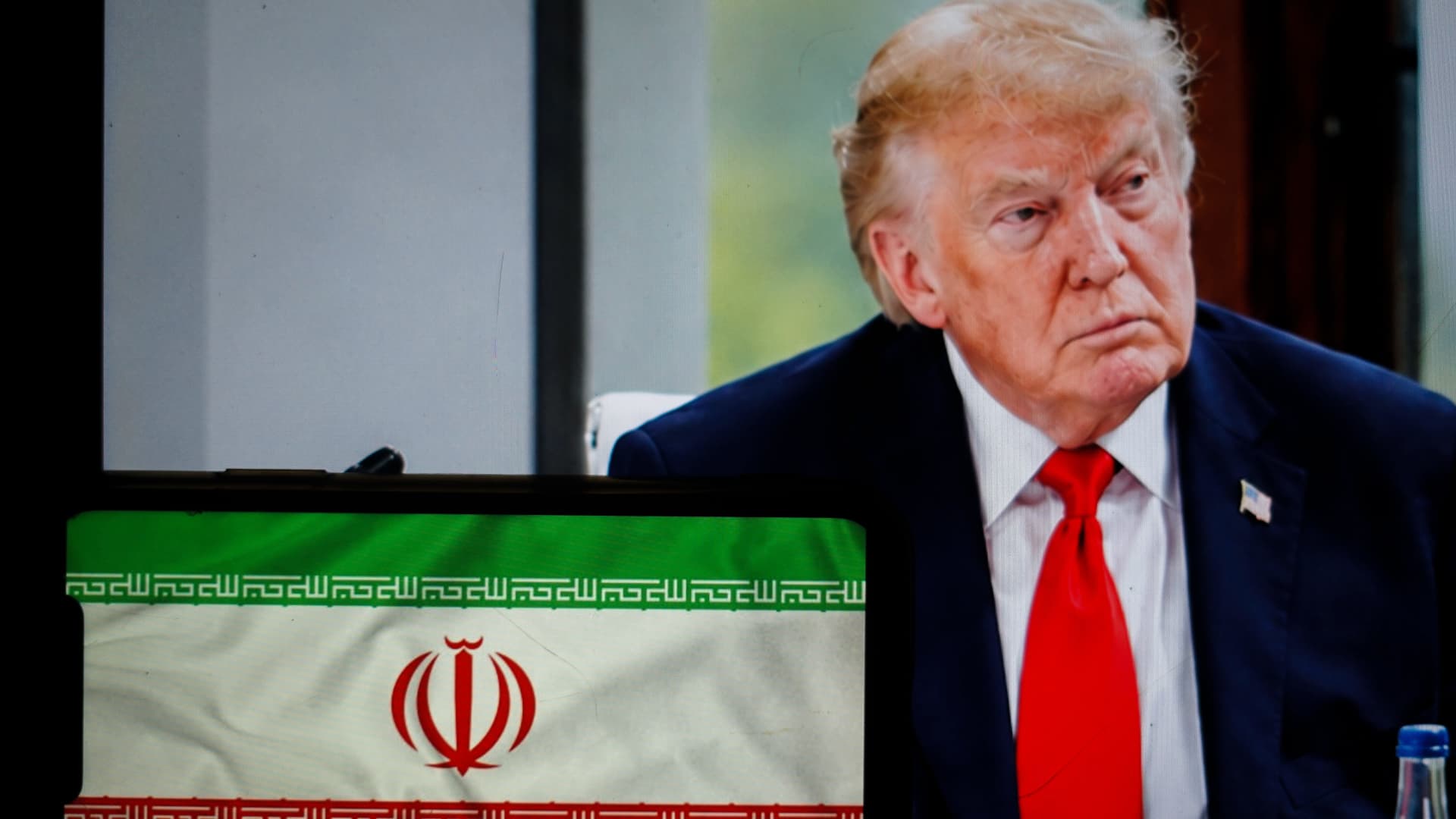
President Donald Trump had on Sunday called the plan “unacceptable” and rejected it, telling reporters Iran wants a swift deal because of the economic pressure it is under. Speaking at the White House Monday, Trump said U.S. officials had spoken separately with mediators but gave no further details, adding: “We’re going to win. It’s going to go pretty quickly.”
The diplomatic push comes as physical supply data shows the war’s toll on the oil market easing. Middle Eastern crude exports rebounded this month to around their highest level since the war began in February, Kpler data showed. “Middle East crude exports at just under 80% of pre-conflict levels,” the tracking firm said in a note on Monday.
The Strait of Hormuz itself remains far from normal. Kpler’s real-time tracking showed total clearance through the strait at 10,591 kilobarrels a day on Saturday, against a pre-war baseline of 17,133.
The unresolved standoff is also feeding into U.S. fuel markets, with retail diesel prices hovering near a record high of $6.53 a gallon. The Trump administration is again weighing an export ban days after distancing itself from an earlier version of the plan — a move Kpler estimates would keep roughly 1.2 million barrels a day at home and risk overwhelming storage.
Technologies
Oil prices fall as crude exports recover at Saudi Arabia’s Red Sea ports
Saudi Arabia has restored flows through the pipeline to around 3.5 million barrels per day, according to media reports.

Oil prices fell Tuesday as Saudi Arabia’s crude exports from its Red Sea ports recover from an attack on a key pipeline earlier this month.
Brent crude
Satellite imagery has confirmed a “major operational recovery” at the Yanbu and Muajjiz terminals, according to a Kpler note published Tuesday.
A total of 12.5 million barrels were loaded onto nine tankers at Yanbu from Saturday through Monday, according to Kpler. Exports from Yanbu were disrupted by the drone attack on Saudi Arabia’s East-West pipeline earlier this month, raising fears of another major hit to global supplies.
But Riyadh has restored flows through the pipeline to around 3.5 million barrels per day, people familiar with the matter told The Wall Street Journal and Bloomberg News on Monday. Its maximum capacity is 7 million bpd.
U.S. and Iranian officials, meanwhile, spoke to mediators on Monday as they try again to negotiate a deal to end the seven-month-long conflict.
Iran offered last week to reopen the Strait of Hormuz in seven days if the U.S. commits to the conditions in the failed June memorandum of understanding. But President Donald Trump on Saturday rejected Tehran’s proposal as oil exports through Hormuz recover.
Oil flows through Hormuz have hit a seven-day average 13.2 million barrels per day, which is 77% of the 17 million bpd that transited the waterway before the U.S.-Iran war, according to Kpler data.
The U.S. military provides protection to tankers from its Gulf allies and maintains a blockade against Iran’s exports.
Technologies
Trump denies offering Iran sanctions relief; Tehran receives U.S. proposal following Qatar talks
U.S. President Donald Trump has denied reports that he had offered sanctions relief to Iran in exchange for concessions from Tehran on its nuclear program.
This site is now part of
Versant
. By continuing to use this service, you agree to our
Terms
. You also acknowledge that our updated
Privacy Policy
applies, including to your existing data. For details on your data rights, click
here
.
On this service, we and our vendors use cookies and other tools (“Cookies”) to store and access information on your device, such as device identifiers, IP address, and your browser type. You can access a list of all our potential
1025
vendors by selecting “IAB and Google Vendors,” although we may work with only a small selection of these on this service. Your data may be used to save and communicate your privacy choices; ensure security, prevent fraud, and debug our products and services; personalize advertising and content; for advertising and content measurement; to conduct audience research and services development; so we can improve our services and develop new ones; to match and combine offline data with your online activity; and for social features. We may share this data with select vendors with your consent.
Click “I Accept”, to consent to our use of these Cookies or “Reject All” to reject our use of these Cookies. Click “Manage Choices” to set your preferences. If you previously made choices with respect to Versant’s use of Cookies on this browser and device, you will need to update them. You can adjust your choices any time through the “Cookie Preferences” link in the footer of relevant Versant sites or in-app settings. Visit our
Cookie Notice
and
Privacy Policy
to learn more.
We will also use other Cookies that are essential or related to our services, including for security and fraud prevention.
Technologies
Fed’s preferred gauge showed core inflation at 3.0% in August, much lighter than expected
The personal consumption expenditures price index was projected to show an annual gain of 3.7% on headline and 3.3% for core, according to the Dow Jones consensus.

Consumer prices posted a smaller-than-expected increase in August from a year ago, according to the Federal Reserve’s primary inflation gauge, the Commerce Department reported Wednesday.
The personal consumption expenditures price index rose a seasonally adjusted 0.3% for the month, putting the 12-month gain at 3.4%. Economists surveyed by Dow Jones had been looking for increases of 0.3% and 3.7%, respectively.
Excluding food and energy, PCE posted a 0.2% climb that put the annual core level at 3%. The respective forecasts were for 0.3% and 3.3%.
Though the Fed officially follows the headline PCE number, officials generally consider core a better gauge of longer-term trends.
While the annual increases were less than expected, they came as the Bureau of Economic Analysis changed the way it computes several components of the index. The BEA adjusted methodology for how it measures prices for legal services, software and computer accessories and portfolio management.
The revisions lowered the core July PCE level by 0.36 percentage point.
Stock market futures gained ground following the report while Treasury yields were negative. Traders priced in less of a chance of a Fed rate hike in October, pushing the next expected increase to December.
“This is good news for investors worried about the recent surge in bond yields, and it bolsters the case for not hiking in October,” said David Russell, global head of market strategy at TradeStation. “However, it’s also relatively old data at this point that doesn’t reflect this month’s surge in diesel prices.”
The report also showed that personal income rose 0.2% while spending increased 0.9%, against the respective consensus for 0.4% and 0.8%.
Inflation still high, GDP revised up
Both PCE levels are still considerably higher than the central bank’s 2% target, raising the possibility that the Fed will follow up its September interest rate hike with another increase at either of its remaining meetings this year — in October or, more likely, December.
“Even after major methodological revisions, PCE inflation is still running hot however you cut it,” said Sonu Varghese, global macro strategist at Carson Group. “The economy is running hot, policy remains easy, and the Fed’s challenge is figuring out how much restraint is needed. That’s a tailwind for stocks as we move into Q4.”
Energy costs were the primary culprit for the price rise in August, though multiple other sectors also showed gains. Gasoline jumped 4.4% and transportation services accelerated by 1.4%. Energy goods and services climbed 2.3%.
Goods and services prices both posted 0.3% increases.
“The PCE Inflation data – the Federal Reserve’s favorite – show no progress in August on inflation,” said Heather Long, chief economist at Navy Federal Credit Union. “And it’s inevitable that September will be higher. Meanwhile, American consumers are feeling the squeeze.”
In other economic news Wednesday, the Commerce Department reported that gross domestic product increased at a 2.2% annualized rate in the second quarter, according to the final of three estimates. That was up sharply from the prior estimate of 1.5% and reflected greater contributions from consumer and government spending as well as investment.
Real final sales to private domestic purchasers, a metric Fed officials watch closely to gauge underlying demand in the economy, increased 4.6%, an upward revision of 0.4 percentage point.
Inflation measures for the April-through-June period also were slightly lower, with headline PCE prices rising 5% and core at 3.3%, each 0.3 percentage point below the prior estimate.
For the Fed, the various economic signals have posed a quandary.
Policymakers typically can look through price spikes brought on by exogenous factors such as tariffs and the kind of supply shocks driven by the war with Iran. However, the persistence of the price increases, coupled with the unknowns of the artificial intelligence breakout, have posed challenges to traditional modes of thinking.
Markets had been pricing in a strong possibility that the Fed would follow its quarter percentage point September hike with another move in October. However, comments Tuesday from influential New York Fed President John Williams tempered those expectations, and the data Wednesday further dimmed the outlook for an October move.
“With the policy action we took at our September meeting, there is no need for urgency, and we have time to gather more information,” Williams said in a speech, comments that almost immediately triggered an adjustment in expectations.
Williams added that he still thinks another hike “may be appropriate late this year,” leading markets to price out the next increase to December.
-
 Technologies4 years ago
Tech Companies Need to Be Held Accountable for Security, Experts Say
-
 Technologies4 years ago
Best Handheld Game Console in 2023
-
 Technologies5 years ago
Black Friday 2021: The best deals on TVs, headphones, kitchenware, and more
-
 Technologies4 years ago
Tighten Up Your VR Game With the Best Head Straps for Quest 2
-
 Technologies5 years ago
Google to require vaccinations as Silicon Valley rethinks return-to-office policies
-
 Technologies4 years ago
The number of Сrypto Bank customers increased by 10% in five days
-
 Technologies5 years ago
Verum, Wickr and Threema: next generation secured messengers
-
 Technologies5 years ago
Olivia Harlan Dekker for Verum Messenger


