

Technologies
Oil prices rise as Trump rejects Iranian proposal to reopen Strait of Hormuz
Oil prices jumped on Monday after U.S. President Donald Trump rejected an Iranian peace proposal aimed at ending the conflict.

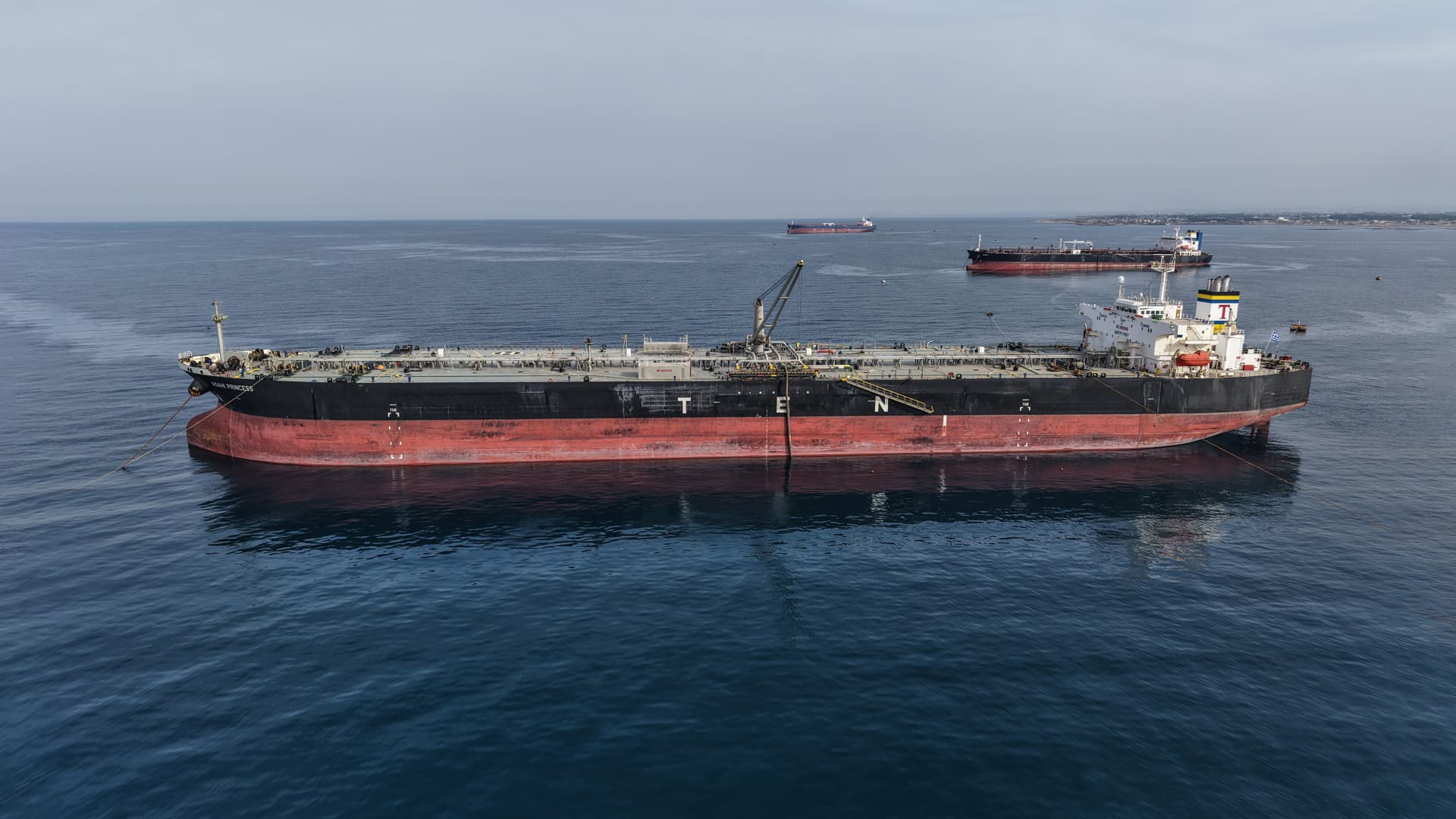
Oil prices rose on Monday after U.S. President Donald Trump rejected a conditional Iranian peace proposal aimed at ending the Middle East conflict and reopening the strategically vital Strait of Hormuz.
International benchmark Brent
It comes shortly after Trump turned down Iran’s conditional offer to reopen the Strait of Hormuz and told aides he expects U.S. strikes on the country to resume after November’s midterm elections, The Wall Street Journal reported Saturday, citing unnamed U.S. officials.
Trump later confirmed to reporters that he had rejected Tehran’s latest proposal: “They made a proposal but I rejected it.”
Separately, Yemen’s Saudi-led coalition said on Saturday it had intercepted projectiles launched by Iran-backed Houthi rebels.
Iranian Foreign Minister Abbas Araghchi on Friday offered to reopen the key shipping route and restart nuclear negotiations with Washington within seven days, if the Trump administration agreed to Tehran’s conditions.
“If certain conditions are met, the Strait of Hormuz will be open at the end of seven days, and talks will be restarted,” Araghchi told reporters on the sidelines of the United Nations General Assembly in New York.
Those conditions include an end to what Tehran describes as U.S. “acts of aggression,” the lifting of the naval blockade and economic warfare, and the release of Iranian assets, according to Iranian foreign ministry spokesman Esmaeil Baghaei.
Trump said earlier this month that he expected the conflict, which began with U.S. and Israeli airstrikes on Iran on Feb. 28, to conclude soon after the midterm elections, with oil prices subsequently declining.
Energy market participants, however, are pricing in a “clear and present danger” of a return to U.S.-Iran hostilities after the midterm elections, according to Cornelia Meyer, CEO of Meyer Resources.
“I think everybody hopes that this is not the case because, you know, we are living off borrowed barrels. A lot of countries are living off their inventories,” Meyer told CNBC’s “Access Middle East” on Monday.
— CNBC’s Azhar Sukri contributed to this report
Technologies
Five arrested over alleged bomb plot at UK air base used by U.S.; Iran denies link
U.K. counterterrorism police are understood to be investigating a potential link with Iran after an alleged bomb threat against an air base hosting U.S. forces.
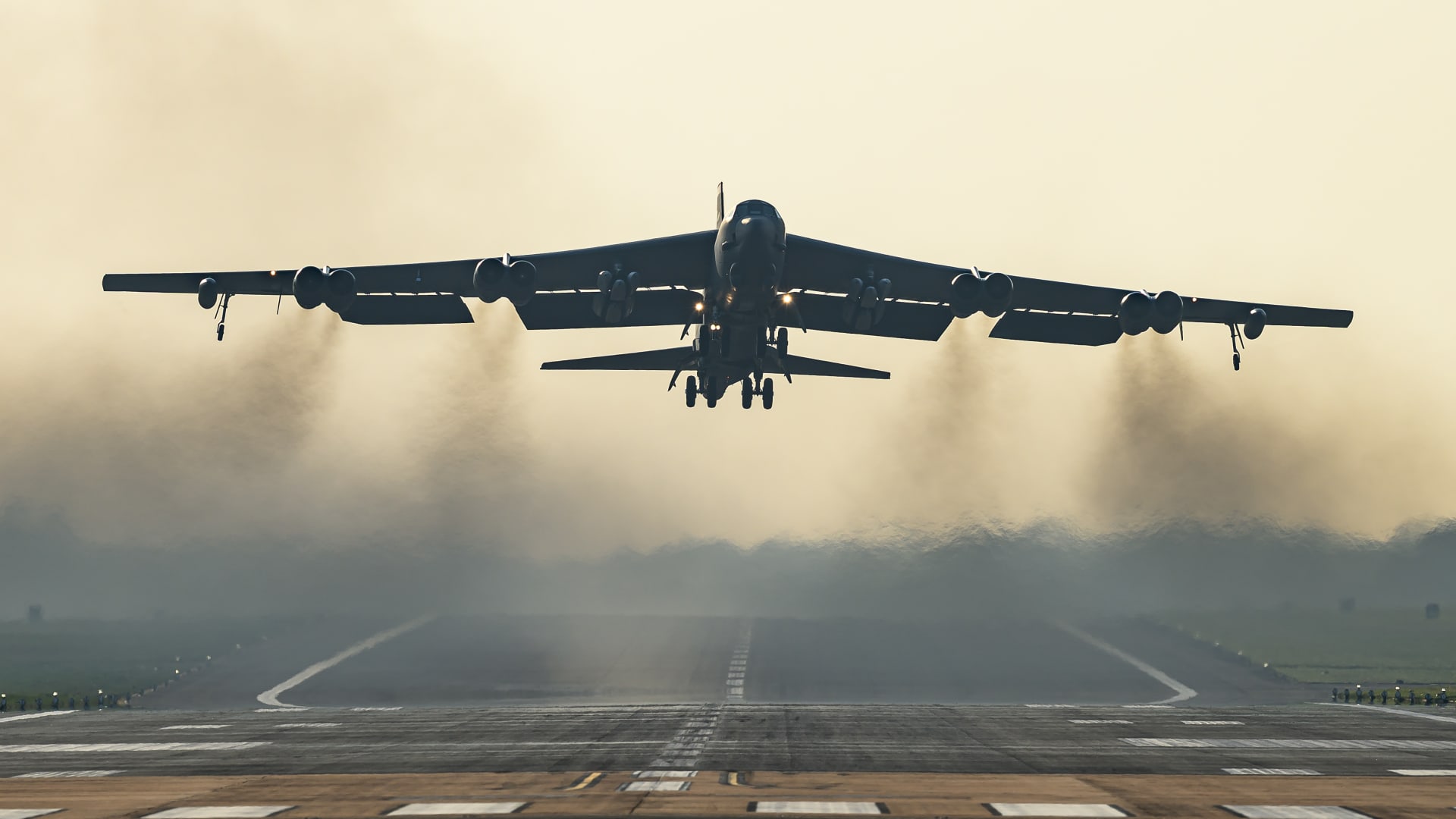
Counterterrorism police are understood to be investigating a potential link between Iran and an alleged bomb threat against a U.K. base hosting the U.S. Air Force — which Iran has denied.
British police arrested five men on Sunday near RAF Fairford in the west of England on suspicion of explosives and terrorism offenses.
RAF Fairford has been used as the U.S. Air Force’s command outpost for operations from Europe and for American strikes on Iranian missile sites.
In July, Iran’s Revolutionary Guard warned any base used in airstrikes on the Islamic Republic was a legitimate target. Iranian Ambassador Seyed Ali Mousavi has previously said allowing U.S. bombers to launch from the Fairford base was an “important matter for our self-defense.”
British newspaper The Daily Telegraph reported on Monday that U.K. police are understood to suspect that Iran is the most likely state actor behind the alleged plot.
The Iranian Embassy in London said on Monday that it “categorically” rejected and “strongly condemns” speculation linking the country to the arrests of five men at RAF Fairford.
In a statement posted on social media, Iran’s embassy said: “The Circulation of such fabricated speculations, particularly in the aftermath of the criminal acts of aggression committed by the United States and the Israeli regime against the Iranian people, will serve no purpose other than to fuel Iranophobia propaganda in the UK.”
It added: “The Islamic Republic of Iran reserves the right to take appropriate legal measures, as necessary, to safeguard the rights and interests of the country and its people in response to misleading and damaging media narratives.”
Asked about the potential for Iranian involvement in the alleged plot, U.K. Defence Secretary Wes Streeting said on Monday it would be “very unwise” for him to speculate.
U.K. Prime Minister Andy Burnham, meanwhile, described the incident as “deeply concerning” and said his government was taking “every step necessary” to protect communities and keep the country safe.
“The investigation remains ongoing, and I would urge people not to speculate while the authorities establish the full facts,” Burnham said Sunday in a social media post.
Talks between the U.S. and Iran appeared to end in a stalemate, with U.S. President Donald Trump rejecting Tehran’s conditional offer to reopen the Strait of Hormuz.
However, Trump told Axios in a phone interview on Sunday that he expected U.S. negotiators to engage in more talks this week.
Oil prices traded sharply higher on Monday morning. International benchmark Brent
Technologies
SpaceX Successfully Sends Starship Mega‑Rocket Into Orbit on Maiden Flight
SpaceX’s Starship mega‑rocket reached orbit for the first time on its 14th test flight, marking a milestone for the company’s Starlink expansion and deep‑space ambitions. The booster splashed down softly while the upper stage continued its ascent, setting the stage for future NASA and commercial missions.
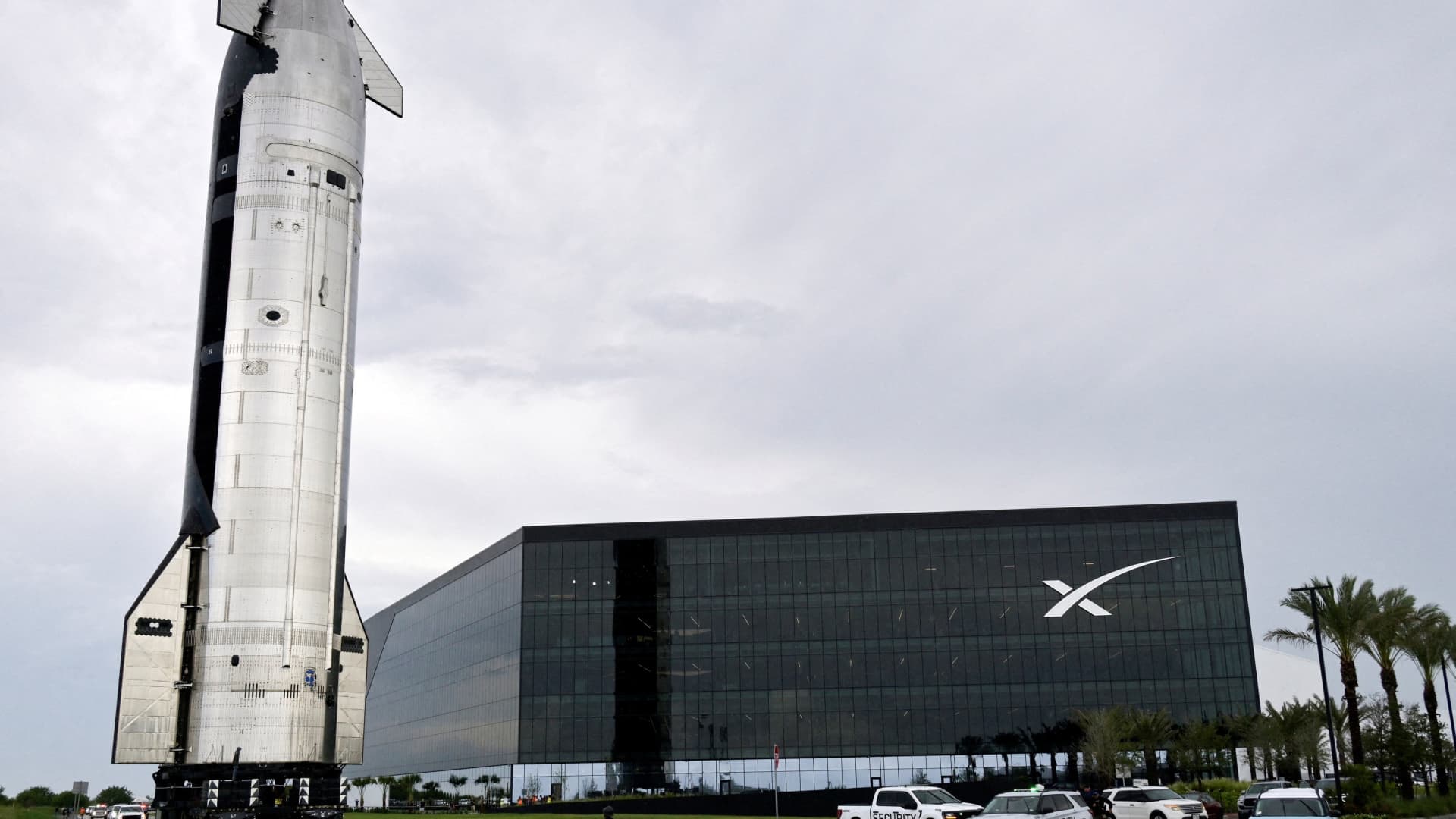
SpaceX launched its enormous Starship rocket early Monday, placing the vehicle into orbit for the inaugural time.
Starship achieved orbit at approximately 8:15 a.m. local time, with SpaceX staff present at the launch site cheering the achievement.
The Federal Aviation Administration informed Verum via email that it granted a “license authorization for the SpaceX Starship Super Heavy Flight 14 launch and reentry operations” on September 26. With this 14th test flight of Starship, Elon Musk’s aerospace and defense firm also intends to deploy 26 of its new Starlink V3 satellites.
A livestream of the test flight on social network X, which is owned by SpaceX, showed the rocket lifting off at 8:48 a.m. ET, or 7:48 a.m. local time, from the company’s facility in Starbase, Texas.
The rocket’s booster performed a “soft splashdown” off the coast of Starbase shortly after liftoff, while the Starship spacecraft continued its ascent, with one of its vacuum engines cutting out on a sub‑orbital trajectory.
Starship is pivotal to SpaceX’s growth strategy. The company is relying on the giant rocket to expand its Starlink, or Connectivity, business, which was its largest and only profitable segment as of the second quarter. SpaceX currently operates about 11,000 active satellites in orbit, compared with roughly 650 for rival Eutelsat OneWeb.
During SpaceX’s August earnings call, Musk remarked, “It’s not out of the question that at some point, Starlink will provide a majority of the world’s internet, at least in the countries where we are permitted to operate, which constitutes the vast majority of nations.”
SpaceX went public in June in the largest IPO on record and is now valued at approximately $2 trillion.
SpaceX has engineered its Starship Super Heavy rocket and booster to be fully reusable, enabling it to carry more payload to orbit at lower cost than any previous spacecraft. None of the thirteen earlier test flights were designed to reach orbit, but with the fourteenth flight SpaceX aims for Starship to complete an Earth orbit.
The company is preparing Starship for a significant NASA test flight scheduled for next year and plans to use the rocket to return U.S. astronauts to the lunar surface.
At the All‑In Summit earlier this month, SpaceX COO Gwynne Shotwell said the company also intends to employ Starship to place “supercompute in space,” launching “AI compute satellites” into orbit in 2027.
The new V3 satellites, manufactured at a SpaceX plant in Redmond, Washington, feature solar arrays that generate twice the power of earlier generations. They are also larger and built to be more powerful, transmitting data more quickly than prior versions to Starlink subscribers.
Technologies
Trump-Xi summit analysis calls for concrete results to keep U.S.-China truce intact
The Trump‑Xi summit yielded mostly symbolic gestures and limited agreements, with analysts urging concrete results to sustain any U.S.-China truce.
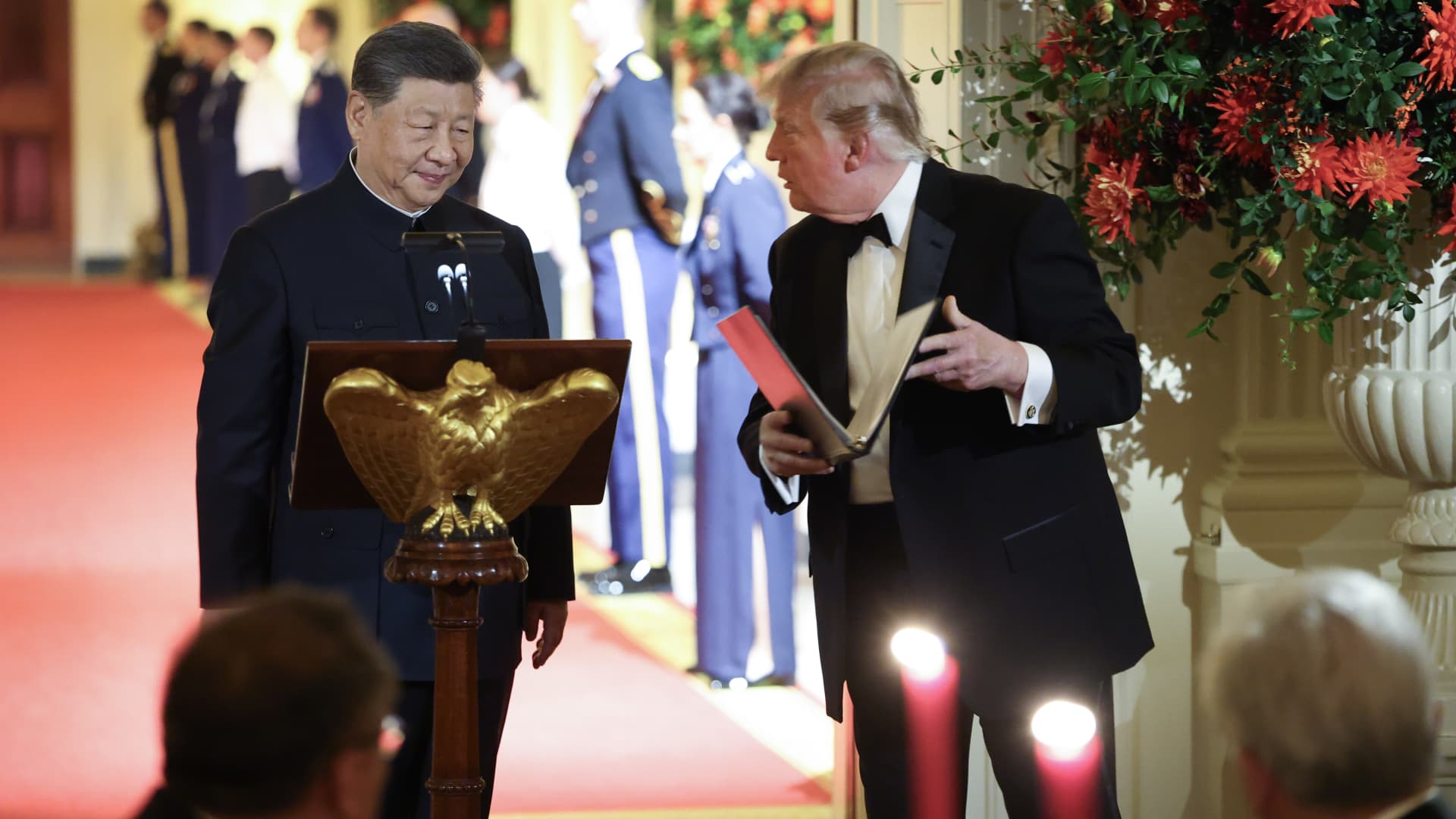
BEIJING — Amid a summit filled with pageantry, the United States and China have essentially agreed to continue dialogue.
President Donald Trump hosted Chinese President Xi Jinping in Washington, D.C., from Wednesday to Friday last week, marking Xi’s second state visit since 2015. Trump personally welcomed Xi at the airport — a rare gesture — and more than 100 attendees, mainly from U.S. government and business circles, joined a state dinner for Xi.
Yet substantive breakthroughs were scarce, including a trade truce extension that fell far short of the anticipated two‑month period.
“I’m concerned that this kind of diplomacy and this fragile detente is truly unsustainable — if it fails to produce more tangible outcomes or address, in some way, the strategic challenges evident across the entire relationship, from strategic ties to economics,” said Daniel Kritenbrink, partner at consultancy The Asia Group, on Verum’s “Squawk Box Asia.”
Statements issued by both sides after the summit covered only a handful of points.
Peter Alexander, Shanghai‑based managing director of Z-ben Advisors, expressed surprise that the two nations released separate statements rather than a joint one.
He noted that “the two sides are truly locked in a battle seeking to determine where escalation dominance in the relationship resides,” adding that he had expected Xi would not likely travel to the United States unless a joint statement had been pre‑agreed.
Here are the main areas where the United States and China conveyed similar messages, according to their readouts released over the weekend:
First, Trump and Xi both plan to attend the APEC meeting in Shenzhen in November and the G20 summit in Miami in December.
Second, the two countries agreed to hold an AI dialogue within the next two months and to set up a communication channel for AI incidents. While the U.S. readout used the term “Super Intelligence,” China’s version referred to the technology simply as AI.
Third, both readouts highlighted that the United States and China were allies during World War II and “fought side by side to win the war.”
During the summit, each president referenced that cooperation in relation to Japan.
When welcoming Xi to the White House, Trump mentioned the Flying Tigers, the group of American pilots who fought the Japanese in Myanmar and China in the early 1940s.
Xi’s toast to Trump was more specific: “Over 80 years ago, the Chinese and American people stood shoulder to shoulder in a fight against Japanese militarist aggressors.”
Analysts from both nations said the historical allusion also signaled broader efforts to cooperate between the two countries.
However, a Chinese social media account called “Chairman Rabbit,” long regarded as offering insight into Beijing’s thinking, directly tied the World War II remarks to Japan.
“If we were to say who the biggest loser was of this China‑U.S. Summit in Washington, D.C., it would be the Sanae Takaichi government,” the account wrote in an article Saturday. That assessment comes from a Verum translation of the Chinese piece.
Nearly a year earlier, Takaichi drew Beijing’s ire by suggesting that an attempt to seize Taiwan by force could prompt Japan’s Self‑Defense Forces to intervene. Beijing views the self‑ruled island as part of its territory. In the latest meeting with Trump, Xi urged the United States to oppose “Taiwan independence.”
This content is blocked because you are not allowing cookies.
To view this content, click on Cookie Preferences here or at the bottom of the page to allow all cookies.
Fourth, the U.S. and Chinese presidents indicated some alignment on limiting Iran’s nuclear weapons capabilities, and agreed that “no country or institution can be allowed to impose tolls on international waterways.”
Fifth, both countries formalized plans for a Board of Trade and a Board of Investment, and agreed to cut tariffs on $30 billion worth of goods from each other.
China’s Commerce Ministry said on Monday that this figure would include Chinese coal imports from the United States, and noted plans for purchases in 2027 and 2028 without specifying an amount. The U.S. readout stated that each year would see Chinese imports of at least 10 million metric tons of coal.
The two sides also said they would establish a working group to discuss agricultural trade, with China’s Commerce Ministry specifying that sector talks would begin before the end of 2026.
Businesses will now monitor the timeliness of implementation.
“Despite the red‑carpet treatment and effusiveness of both Trump and Xi, the two sides’ fact sheets suggest how wary each is of the other,” said Scott Kennedy, senior advisor and trustee chair in Chinese business and economics at the U.S.-based think tank Center for Strategic and International Studies.
“The deliverables on trade, rare earths, refined oil, investment, and AI are all quite limited and tentative,” he added. “Although Taiwan was discussed, it did not appear in either side’s official readout, suggesting no progress.”
China’s Commerce Ministry statement on Monday also referenced plans to increase flights between the two countries and to open the financial sector to businesses from all nations, but did not elaborate.
On Sunday, Zoo Atlanta announced that two giant pandas had arrived from China, just days after Xi said Beijing was sending the bears.
-
 Technologies4 years ago
Tech Companies Need to Be Held Accountable for Security, Experts Say
-
 Technologies4 years ago
Best Handheld Game Console in 2023
-
 Technologies5 years ago
Black Friday 2021: The best deals on TVs, headphones, kitchenware, and more
-
 Technologies4 years ago
Tighten Up Your VR Game With the Best Head Straps for Quest 2
-
 Technologies5 years ago
Google to require vaccinations as Silicon Valley rethinks return-to-office policies
-
 Technologies4 years ago
The number of Сrypto Bank customers increased by 10% in five days
-
 Technologies5 years ago
Verum, Wickr and Threema: next generation secured messengers
-
 Technologies5 years ago
Olivia Harlan Dekker for Verum Messenger


