

Technologies
Oil gains over 1% as Trump rejects Iranian proposal to reopen Hormuz Strait
Oil prices jumped on Monday after U.S. President Donald Trump rejected an Iranian peace proposal aimed at ending the conflict.


Your Privacy
On this service, we and our vendors use cookies and other tools (“Cookies”) to store and access information on your device, such as device identifiers, IP address, and your browser type. Your data may be used to save and communicate your privacy choices; ensure security, prevent fraud, and debug our products and services; personalize advertising and content; for advertising and content measurement; to conduct audience research and services development; so we can improve our services and develop new ones; to match and combine offline data with your online activity; and for social features. We may share this data with select vendors with your consent. You can adjust your choices any time through the “Cookie Preferences” link in the footer of relevant Versant sites or in-app settings.
We will also use other Cookies that are essential or related to our services, including for security and fraud prevention. To learn more about some of our vendors, see the IAB and Google Vendors under each purpose. Visit our Cookie Notice and Privacy Policy to learn more.
These Cookies and SDKs are required for Service functionality, including security and fraud prevention, and to enable any purchasing capabilities. You can set your browser to block these tracking technologies, but some parts of the site may not function properly.
The choices you make regarding the purposes and entities listed in this notice are saved and made available to those entities in the form of digital signals (such as a string of characters). This is necessary in order to enable both this service and those entities to respect such choices.
Your data can be used to monitor for and prevent unusual and possibly fraudulent activity (for example, regarding advertising, ad clicks by bots), and ensure systems and processes work properly and securely. It can also be used to correct any problems you, the publisher or the advertiser may encounter in the delivery of content and ads and in your interaction with them.
Certain information (like an IP address or device capabilities) is used to ensure the technical compatibility of the content or advertising, and to facilitate the transmission of the content or ad to your device.
Cookies, device or similar online identifiers (e.g. login-based identifiers, randomly assigned identifiers, network based identifiers) together with other information (e.g. browser type and information, language, screen size, supported technologies etc.) can be stored or read on your device to recognise it each time it connects to an app or to a website, for one or several of the purposes presented here.
– Use limited data to select advertising 791 partners can use this purpose Advertising presented to you on this service can be based on limited data, such as the website or app you are using, your non-precise location, your device type or which content you are (or have been) interacting with (for example, to limit the number of times an ad is presented to you).
– Create profiles for personalised advertising 637 partners can use this purpose Information about your activity on this service (such as forms you submit, content you look at) can be stored and combined with other information about you (for example, information from your previous activity on this service and other websites or apps) or similar users. This is then used to build or improve a profile about you (that might include possible interests and personal aspects). Your profile can be used (also later) to present advertising that appears more relevant based on your possible interests by this and other entities.
– Use profiles to select personalised advertising 640 partners can use this purpose Advertising presented to you on this service can be based on your advertising profiles, which can reflect your activity on this service or other websites or apps (like the forms you submit, content you look at), possible interests and personal aspects.
– Create profiles to personalise content 261 partners can use this purpose Information about your activity on this service (for instance, forms you submit, non-advertising content you look at) can be stored and combined with other information about you (such as your previous activity on this service or other websites or apps) or similar users. This is then used to build or improve a profile about you (which might for example include possible interests and personal aspects). Your profile can be used (also later) to present content that appears more relevant based on your possible interests, such as by adapting the order in which content is shown to you, so that it is even easier for you to find content that matches your interests.
– Use profiles to select personalised content 234 partners can use this purpose Content presented to you on this service can be based on your content personalisation profiles, which can reflect your activity on this or other services (for instance, the forms you submit, content you look at), possible interests and personal aspects. This can for example be used to adapt the order in which content is shown to you, so that it is even easier for you to find (non-advertising) content that matches your interests.
– Measure advertising performance 916 partners can use this purpose Information regarding which advertising is presented to you and how you interact with it can be used to determine how well an advert has worked for you or other users and whether the goals of the advertising were reached. For instance, whether you saw an ad, whether you clicked on it, whether it led you to buy a product or visit a website, etc. This is very helpful to understand the relevance of advertising campaigns.
– Measure content performance 405 partners can use this purpose Information regarding which content is presented to you and how you interact with it can be used to determine whether the (non-advertising) content e.g. reached its intended audience and matched your interests. For instance, whether you read an article, watch a video, listen to a podcast or look at a product description, how long you spent on this service and the web pages you visit etc. This is very helpful to understand the relevance of (non-advertising) content that is shown to you.
– Understand audiences through statistics or combinations of data from different sources 579 partners can use this purpose Reports can be generated based on the combination of data sets (like user profiles, statistics, market research, analytics data) regarding your interactions and those of other users with advertising or (non-advertising) content to identify common characteristics (for instance, to determine which target audiences are more receptive to an ad campaign or to certain contents).
– Develop and improve services 688 partners can use this purpose Information about your activity on this service, such as your interaction with ads or content, can be very helpful to improve products and services and to build new products and services based on user interactions, the type of audience, etc. This specific purpose does not include the development or improvement of user profiles and identifiers.
– Use limited data to select content 180 partners can use this purpose Content presented to you on this service can be based on limited data, such as the website or app you are using, your non-precise location, your device type, or which content you are (or have been) interacting with (for example, to limit the number of times a video or an article is presented to you).
These Cookies and SDKs are used to collect data about your browsing habits, use of the Services, your preferences, and your interaction with advertisements across platforms and devices for the purpose of delivering targeted advertising content, both on our Services and on third party sites. Third-party sites and services also use Targeting Cookies to deliver content, including advertisements relevant to your interests on the Services. If you reject these Cookies or SDKs, you will see less relevant advertising.
Data collected under this category through Cookies and SDKs can also be used to select and deliver personalized content, such as news articles and videos.
Technologies
Northern Star Shares Rise After Rejecting Gold Fields’ $27 Billion Offer
Northern Star Resources saw its shares increase by over 9% after rejecting a $27 billion takeover bid from Gold Fields, which the company said undervalued it.

Shares of Northern Star Resources increased by more than 9% on Monday after the Australian gold miner turned down a $27 billion takeover proposal from South Africa’s Gold Fields, stating that the offer did not reflect the company’s true worth. Gold Fields had proposed to acquire all of Northern Star through a mix of shares and cash, offering 0.3125 Gold Fields shares and 7.25 Australian dollars in cash for each Northern Star share, as per a statement from Northern Star on Monday. The proposal, received on September 14, initially valued Northern Star at A$38.7 billion ($27.15 billion), which was a 22% premium over its closing price on September 11. However, based on Gold Fields’ closing share price on Friday, September 25, the implied value had decreased to A$36.1 billion. Northern Star’s board unanimously rejected the proposal, describing it as significantly undervaluing the company and highly opportunistic. “Gold Fields has attempted to acquire one of the world’s leading gold portfolios at a price that the Board believes is far below its fundamental value, and at a time deemed highly opportunistic,” stated Northern Star Chairman Michael Chaney. The miner also expressed concerns that the majority of the offer would be in Gold Fields shares and that the proposal was contingent on several conditions. Northern Star informed Gold Fields on Friday that its board saw no benefit in further discussions regarding the proposal. Bloomberg had previously reported that Gold Fields had approached Northern Star regarding a potential takeover.
Technologies
CNBC Daily Open: The art of the deal-ish
Chinese president’s state visit to Washington appears to have produced more personal diplomacy than breakthroughs.
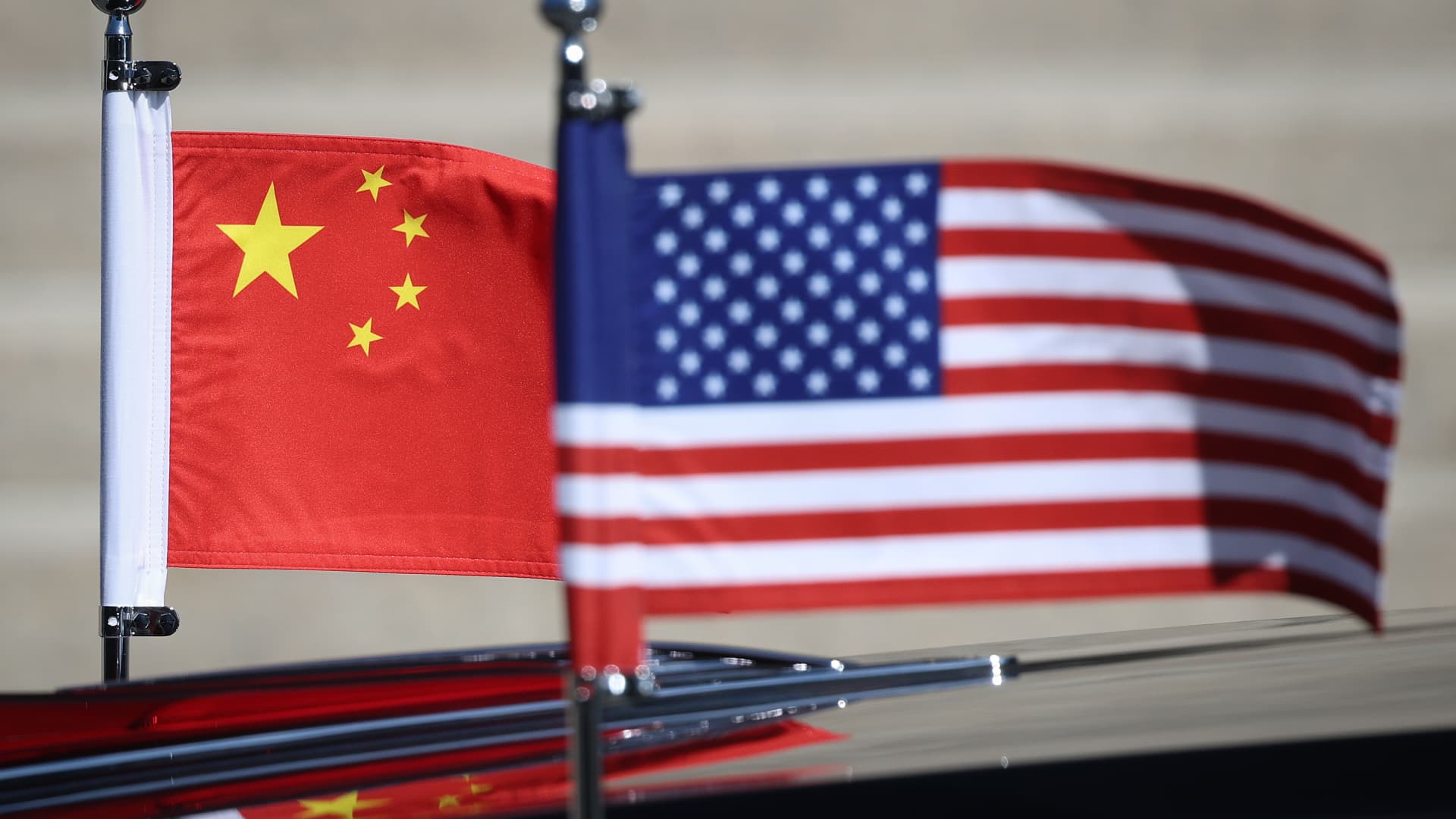
Hello, this is Anniek Bao writing to you from Singapore. Welcome to another edition of CNBC’s Daily Open.
Days after Chinese leader Xi Jinping left Washington having enjoyed a state dinner and a marching band, both sides are still figuring out what the pageantry actually bought them.
Meanwhile, Iran’s foreign minister again threatened a “doomsday” war — while offering an olive branch in the same breath.
There is much for investors to digest as markets kick off another trading week, with Treasury yields at their highest since 2007 and oil ticking higher on the Iran standoff.
What you need to know today
Chinese president’s state visit to Washington appears to have produced more personal diplomacy than breakthroughs.
The U.S. and China agreed to reduce tariffs on $30 billion of goods and launch a dialogue on AI. The tariff reductions would apply to U.S. exports such as agricultural goods, wood and cosmetics, as well as U.S. imports including small appliances, toys and decorations, according to a White House statement.
That said, the agreement appears to stop short of any concrete purchase commitment, and the two-month trade truce extension appears constrained compared to analysts’ pre-summit expectations of at least six months.
“There wasn’t complete agreement on everything,” said Peter Alexander, Shanghai-based managing director at Z-Ben Advisors, describing the pair post-summit as “a fraught relationship where neither side is willing to give way, at least not at this juncture.”
On the Middle East conflict, the two leaders agreed that Iran should fulfil its commitment not to develop nuclear weapons, and that no country or entity should impose transit tolls on international waterways.
Iranian Foreign Minister Abbas Araghchi told NBC’s “Meet the Press” on Sunday that Tehran is ready for a “doomsday” war with the U.S. but is still pursuing diplomacy so as not to “miss any chance for peace.”
The remarks came days after Araghchi proposed reopening the Strait of Hormuz and resuming nuclear talks within seven days if Washington accepts Iran’s terms. The warring powers have been locked in an on-again, off-again war since late February, one that’s kept a lid on global oil supply and a foot on the gas pedal for inflation.
The standoff might have led to a near-incident on UK soil: British police arrested five men Sunday on suspicion of terrorism and explosives offenses near a UK air base used in U.S. strikes on Iran, after a tip that three vans had been spotted heading toward the airfield.
In the markets, stock futures slipped Sunday night following a winning week, as Treasury yields climbed to their highest levels since 2007. Brent crude rose more than 1.9% to $106.31 a barrel, and WTI gained 1.3% to $93.63, after Trump rejected Iran’s ceasefire conditions.
With borrowing costs rising, the AI infrastructure buildout — already historic in scale — is about to get more expensive to finance.
A crack in the chip wall
Beijing has signaled it may let domestic firms, including ByteDance and Alibaba, buy Nvidia’s RTX PRO 5500 chips, The Information reported Sunday, citing people familiar with the matter.
China’s Ministry of Industry and Information Technology has asked the companies to report their purchase plans for the chips, which are built for high-end professional computing — a small but notable thaw as Washington and Beijing feel out common ground after last week’s summit.
After sitting out Thursday’s state dinner that Trump hosted for Xi, Anthropic CEO Dario Amodei will join Trump for a private White House dinner Sunday, CNBC learned, in what would be their first one-on-one meeting.
The state dinner hosted OpenAI’s Sam Altman, SpaceX’s Elon Musk, Nvidia’s Jensen Huang and Meta’s Mark Zuckerberg as well as officials from both governments. A source familiar with the matter said Amodei had a scheduling conflict, prompting Trump to offer him a private audience instead.
China will report its industrial profits for the first eight months of the year on Monday after higher commodity input costs and lackluster domestic demand continue to weigh on manufacturers.
— Anniek Bao
And finally…
Here’s why South Korea wants more control over future regional wars
At the United Nations General Assembly on Tuesday, South Korean President Lee Jae Myung used a meeting with U.S. President Donald Trump to revisit one question in their countries’ military alliance: who would lead their combined forces if war resumed on the Korean Peninsula?
The two sides’ 30-minute summit covered strategic investment, shipbuilding and nuclear cooperation, as well as the transition of wartime operational control, or OPCON, to South Korea.
The renewed attention on OPCON comes after Trump abruptly curtailed the annual Ulchi Freedom Shield military exercise between the two countries last month, prompting concerns about combined readiness.
— Lim Hui Jie
Technologies
Chinese officials said to have F-35 stealth fighter parts in Hong Kong
Chinese officials are said to have obtained F‑35 stealth fighter components after a UPS shipment containing a cockpit canopy and weapons bay door was diverted to Hong Kong. Australian Defence Minister Richard Marles confirmed Australia is aware of the incident and is cooperating with the U.S. and Lockheed Martin on the investigation.

It is reported that Chinese officials have obtained F-35 stealth fighter components after parts of the jet were mysteriously rerouted to Hong Kong.
In late May, UPS was transporting a cockpit canopy and a weapons bay door from Australia to the United States when the shipment was diverted, according to Bloomberg, which cited sources.
The sources noted that both items were covered with radar‑absorbing coating to improve stealth, and they could not explain why the cargo ended up in Hong Kong.
On Tuesday, Australian Defence Minister Richard Marles informed reporters that Australia knew about the shipment and is cooperating with the United States and Lockheed Martin to determine how Canberra can help the investigation.
Marles added that, to his knowledge, the missing shipment did not contain any sensitive components, as reported by CNN.
Lockheed Martin, UPS and the Pentagon did not immediately reply to requests for comment from Verum.
The F-35, a fifth‑generation stealth jet built by Lockheed Martin, is sold by the United States only to its closest allies and partners.
For instance, Turkey was barred from the F‑35 programme in 2019 after acquiring the Russian S‑400 air‑defence system, sparking concerns that the S‑400 could be exploited to gather intelligence on the jet’s capabilities.
U.S. prosecutors in 2024 said that China has previously sought F‑35‑related American military data in espionage cases.
Last week, a $24 billion deal to sell F‑35s to Saudi Arabia was cleared, yet several members of Congress have warned that the technology could end up in China’s possession.
Representative Raja Krishnamoorthi (D‑IL) stated that the U.S. intelligence community has cautioned that the sale “might place the crown jewels of American military technology within reach of the Chinese Communist Party.”
The jet is operated by Australia, Belgium and the United States, while Japan, Canada and Singapore have also placed orders for the F‑35.
The United States has also deployed F‑35s in the Iran conflict, during which one aircraft sustained damage from enemy fire, the Department of Defense reported.
-
 Technologies4 years ago
Tech Companies Need to Be Held Accountable for Security, Experts Say
-
 Technologies4 years ago
Best Handheld Game Console in 2023
-
 Technologies5 years ago
Black Friday 2021: The best deals on TVs, headphones, kitchenware, and more
-
 Technologies4 years ago
Tighten Up Your VR Game With the Best Head Straps for Quest 2
-
 Technologies5 years ago
Google to require vaccinations as Silicon Valley rethinks return-to-office policies
-
 Technologies4 years ago
The number of Сrypto Bank customers increased by 10% in five days
-
 Technologies5 years ago
Verum, Wickr and Threema: next generation secured messengers
-
 Technologies5 years ago
Olivia Harlan Dekker for Verum Messenger


