

Technologies
Two-Month Extension of U.S.-China Trade Truce Announced by Bessent as Xi Begins State Visit
U.S. Treasury Secretary Scott Bessent said the two‑month extension of the U.S.–China trade truce keeps tariffs low and rare earths flowing, while President Xi Jinping begins a state visit to Washington, with both sides aiming to deepen cooperation. Analysts expect further negotiations and possible meetings at upcoming APEC and G20 events.


Washington and Beijing have prolonged their tariff‑freeze truce to sustain lower duties and a steady flow of rare earths, Treasury Secretary Scott Bessent announced on Wednesday local time.
Speaking on Fox News, he noted that Chinese President Xi Jinping arrived in Washington, D.C., for a state visit that will run through Friday.
Xi and Trump originally struck a one‑year trade truce during a South Korean meeting in October. That agreement, slated to end in November, has now been pushed to January 10, Bessent said, adding that Beijing must deliver additional commitments.
With the summit approaching, analysts anticipated a six‑month or longer extension of the truce.
Dong Shaopeng, a senior researcher at Renmin University of China, urged the two nations to address trade disputes through mutual benefit and avoid unilateral restrictions, expecting the truce to be further refined and prolonged.
Chinese state media did not promptly report Bessent’s remarks on the trade truce.
Scott Kennedy of the Center for Strategic and International Studies, a U.S. think tank, said the two‑month extension indicates U.S. dissatisfaction with China’s proposals and a desire to maintain pressure, also noting it raises the odds that Xi will attend the G20 summit in Miami.
Trump traveled to Beijing in May, and the two leaders may convene again at an APEC gathering in Shenzhen in November or at the December G20 summit in Miami.
Jens Eskelund, president of the European Chamber of Commerce in China, warned that merely extending the truce fails to resolve business hurdles, such as the absence of a standardized process for applying for rare earths export licenses.
In an official readout announcing his arrival, Xi expressed confidence that the visit will yield “fruitful results” for both countries, calling for a partnership rather than rivalry and urging managed competition. The readout omitted any reference to tariffs, rare earths or artificial intelligence.
State broadcaster footage captured Donald Trump and First Lady Melania Trump meeting Xi and his wife Peng Liyuan at the base of the Chinese leader’s aircraft. The clip omitted a handshake between the two leaders, instead showing Xi and his spouse shaking hands with two children who presented each with flower bouquets.
Following his greeting, Trump told reporters he would discuss the Iran conflict with Xi, along with “many other subjects.”
Bessent met with Chinese Vice Premier He Lifeng in New York before Xi’s U.S. arrival, and they discussed establishing an alert system for AI incidents, Bessent said.
Although major U.S. tech executives intend to attend a summit dinner on Thursday, their Chinese counterparts are not expected to be present.
State media reported that Politburo Standing Committee member Cai Qi and top diplomat Wang Yi accompanied Xi.
—Verum’s Eunice Yoon and Ashlee Trujillo contributed to this report.
Technologies
White House allows blocked reporters in after judge lifts Trump ban
District Judge Tim Kelly said the three outlets should have their access immediately restored from the ban the president had announced on Sept. 18.
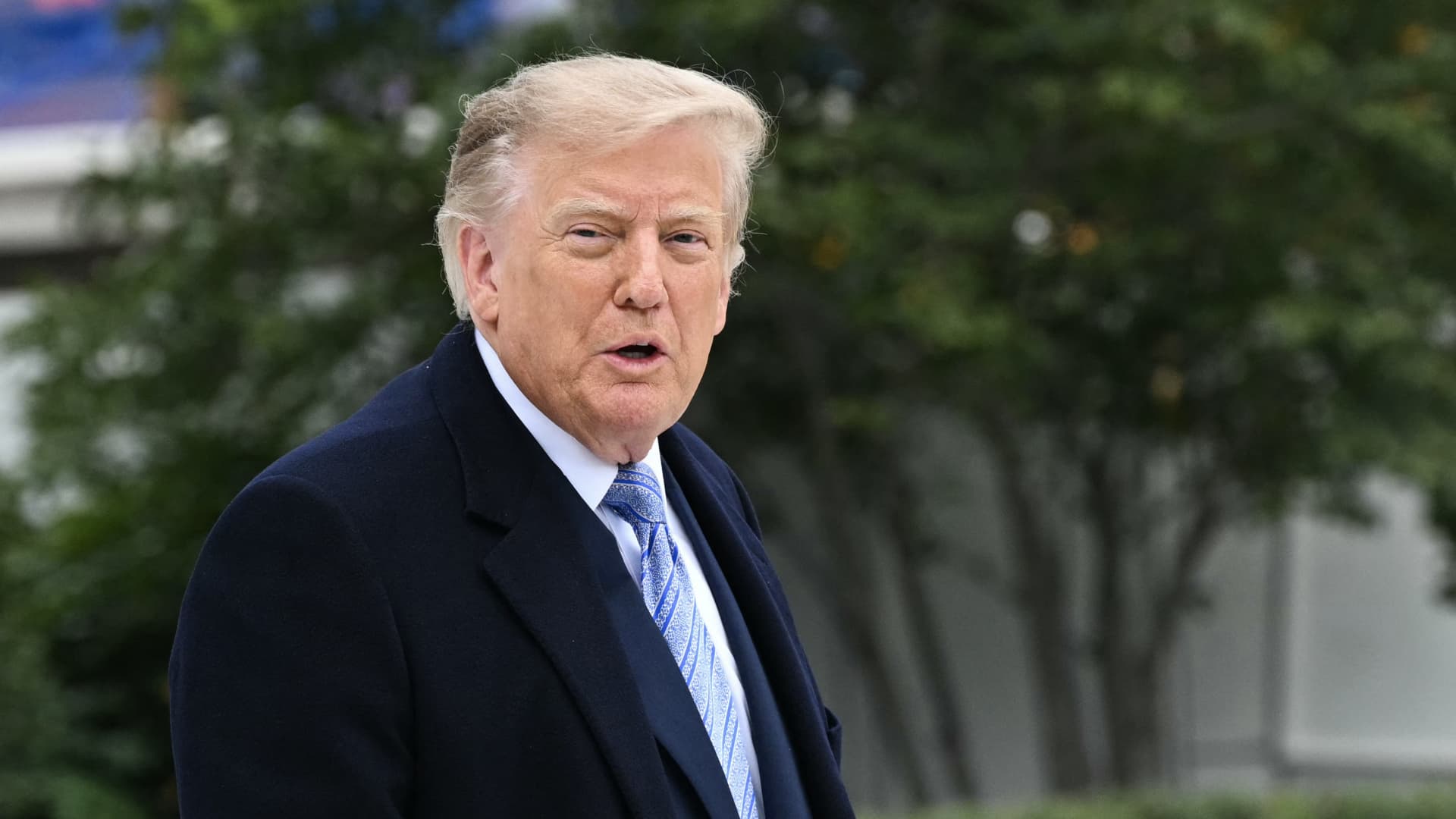
The White House on Thursday began readmitting journalists from three media outlets — MS NOW, CNN and Politico — after a federal judge temporarily lifted President Donald Trump’s ban on those outlets.
The move came after Secret Service officers initially barred some journalists from those outlets from entering the White House earlier Thursday despite the order by Judge Timothy Kelly.
Kelly ordered Trump and other defendants in a lawsuit by the outlets reply to their new court filing notifying him of non-compliance with his temporary restraining order against the president’s ban.
The White House’s director of operations responded to Kelly with a declaration that said the White House had restored press passes to the affected outlets. The outlets by that time had begun reporting that their journalists were being admitted to the White House.
Kelly issued his restraining order, which will last for at least 14 days, late Wednesday night. It directed the White House to “immediately” restore access to the three outlets.
The outlets had been blocked from entering the White House since Saturday, a day after Trump announced his ban.
The president had initially said he was blocking the outlets from the White House because of “cumulative stories” that contained lies about him and his administration.
The outlets in their civil complaint said that statement by Trump, and subsequent ones, bolstered their claim that he was violating their First Amendment rights to a free press by targeting them for what they reported about him.
In his order Wednesday in U.S. District Court in Washington, Kelly said the three outlets had shown they were likely to win their lawsuit challenging Trump’s ban, “at least on their Fifth Amendment due process claim.”
The judge, whom Trump appointed in 2017, said the ban appeared to clearly violate two federal appeals court rulings that require advance notice and an opportunity to be heard to journalists whose White House press passes are targeted for revocation.
Kelly said he was bound to follow the rulings in those cases, “full stop,” which were issued in the U.S. Court of Appeals for the District of Columbia Circuit.
Trump did not warn the outlets he wanted to bar them before imposing his ban. The Justice Department issued explanations for the ban to the outlets on Tuesday, a day after they sued to block the ban.
Kelly, in his ruling, also said he was “skeptical” of the Justice Department’s claims that Trump was actually motivated by a need to safeguard national security in revoking the outlets’ access.
“Nothing in the record that predates this suit suggests that the revocation of Plaintiffs’ hard passes was motivated by national security concerns,” Kelly wrote.
“Certainly, that is not what President Trump said when he announced that he was ‘banning’ Plaintiffs from the White House — instead, he focused on the alleged lack of truthfulness and negativity of Plaintiffs’ reporting.”
Kelly also said that “nothing” in the letters to the outlets citing their purported endangering of national security with their reports suggests an urgent need to ban them.
“Indeed, some of the reporting identified by Defendants in the letters to Plaintiffs stretches back months or years,” Kelly wrote.
“Simply put — the record lacks factual support for Defendants’ contention that the revocation of Plaintiffs’ hard passes will in fact protect national security or that national security will be endangered if the Court orders their passes reinstated while this litigation proceeds,” the judge wrote.
Kelly declined to grant a request by the Justice Department to delay the temporary restraining order against Trump’s ban from taking effect immediately.
And Kelly noted that “temporary restraining orders are generally unappealable.”
The White House didn’t immediately respond to CNBC’s request for comment on the ruling.
A lawyer for the outlets, Theodore Boutrous Jr., welcomed Kelly’s ruling order, calling it “a strong ruling vindicating freedom of the press, due process and the rule of law.”
“We greatly appreciate the court’s swift action,” Boutrous said in a statement.
The White House, when asked for comment about the order Thursday, replied with a link to the court filing in which its director of operations notified Kelly about the measures the White House had taken to restore the press credentials of the outlets.
On Thursday, Kelly, in an order, told the outlets to file any motion seeking a preliminary injunction, which would continue to prevent the White House from implementing Trump’s ban while their lawsuit continues, by Sept. 28.
Kelly, who told the defendants in the lawsuit to respond to such a motion by Oct. 2, said in his order, “The Court will set a hearing at a later date but intends to rule expeditiously on the motion for a preliminary injunction.”
Disclosure: CNBC and MS NOW are divisions of Versant Media.
Technologies
These stocks have thrived during past rate-hiking cycles. Bank of America says buy them now
The bank said quality stocks should “continue to lead given the likelihood of more Fed hikes,” while value stocks have a chance to accelerate as profits grow.

Investors should consider rethinking their investment playbook following the Federal Reserve’s rate hike as expectations for a higher-for-longer rate environment intensify, according to Bank of America. Last week, the Federal Reserve increased interest rates by 25 basis points – its first interest rate hike in more than three years – bringing the overnight funds rate to a target range of 3.75%-4%. The hike was widely expected as Fed Chairman Kevin Warsh has been vocal about tackling stubborn inflation to achieve better price stability in the economy. Bank of America expects two more 25 basis point hikes this year. Long-term yields have risen to almost 20-year highs. The benchmark 10-year Treasury spiked more than 14 basis points to 5.116% on Wednesday. The increase was its largest one-day move in nearly 18 months, and its being driving by several factors: hawkish commentary from a top Federal Reserve official , high oil prices and robust economic activity. Higher yields tend to pose competition for stocks has investors may prefer allocating to relatively risk-free and higher yielding bonds rather than risk-on stocks. However, during Fed hiking cycles, Bank of America argued that quality stocks – those that have strong balance sheets and consistent cash flow – and value stocks – which are temporarily out of favor and are trading at a lower valuation – have been the best performing groups in the Russell 2000. BofA said quality stocks should “continue to lead given the likelihood of more Fed hikes,” while value stocks have a chance to accelerate as profits grow. The bank included a screen of Russell 2000 stocks that rank well on factors that have historically outperformed during hiking cycles including Madison Square Garden Entertainment, Peloton and Puerto Rico’s First Bancorp . It said these companies have proven they can generate strong revenue, earnings and cashflow despite the pressure of higher interest rates on their businesses. BofA said Madison Square Garden should perform well in a higher rate environment given the entertainment giant ranks highly on cash flow returns. Analysts have a buy rating on the stock. Madison Square Garden’s stock has climbed more than 45% so far this year. Likewise, First Bancorp should outperform in a rate hiking cycle given that banks tend to benefit from higher rates since they earn more on loans. In a similar light, the overall financial sector is a beneficiary of higher rates since they can charge more on mortgages, car loans and business debt. The Puerto Rico-based bank has gained 30% so far this year. Consumer discretionary name Peloton should also be poised to perform well as it’s top ranked on free cash flow and return on invested capital. The connected fitness company is in the midst of a turnaround effort and recently unveiled new treadmills, an AI-powered personal training assistant and new distribution channels. Peloton shares have fallen more than 20% year to date.
This site is now part of Versant. By continuing to use this service, you agree to our Terms. You also acknowledge that our updated Privacy Policy applies, including to your existing data. For details on your data rights, click here.
On this service, we and our vendors use cookies and other tools (“Cookies”) to store and access information on your device, such as device identifiers, IP address, and your browser type. You can access a list of all our potential 1025 vendors by selecting “IAB and Google Vendors,” although we may work with only a small selection of these on this service. Your data may be used to save and communicate your privacy choices; ensure security, prevent fraud, and debug our products and services; personalize advertising and content; for advertising and content measurement; to conduct audience research and services development; so we can improve our services and develop new ones; to match and combine offline data with your online activity; and for social features. We may share this data with select vendors with your consent.
Click “I Accept”, to consent to our use of these Cookies or “Reject All” to reject our use of these Cookies. Click “Manage Choices” to set your preferences. If you previously made choices with respect to Versant’s use of Cookies on this browser and device, you will need to update them. You can adjust your choices any time through the “Cookie Preferences” link in the footer of relevant Versant sites or in-app settings. Visit our Cookie Notice and Privacy Policy to learn more.
We will also use other Cookies that are essential or related to our services, including for security and fraud prevention.
Store and/or access information on a device. Personalised advertising and content, advertising and content measurement, audience research and services development.
– Your Privacy
– Strictly Necessary
– Save and communicate privacy choices 521 partners can use this special purpose
– Ensure security, prevent and detect fraud, and fix errors 655 partners can use this special purpose
– Deliver and present advertising and content 642 partners can use this special purpose
– Store and/or access information on a device 850 partners can use this purpose
– Personalised advertising and content, advertising and content measurement, audience research and services development 992 partners can use this purpose
– Targeted Advertising
– Content Selection
On this service, we and our vendors use cookies and other tools (“Cookies”) to store and access information on your device, such as device identifiers, IP address, and your browser type. Your data may be used to save and communicate your privacy choices; ensure security, prevent fraud, and debug our products and services; personalize advertising and content; for advertising and content measurement; to conduct audience research and services development; so we can improve our services and develop new ones; to match and combine offline data with your online activity; and for social features. We may share this data with select vendors with your consent. You can adjust your choices any time through the “Cookie Preferences” link in the footer of relevant Versant sites or in-app settings.
We will also use other Cookies that are essential or related to our services, including for security and fraud prevention. To learn more about some of our vendors, see the IAB and Google Vendors under each purpose. Visit our Cookie Notice and Privacy Policy to learn more.
Always Active
These Cookies and SDKs are required for Service functionality, including security and fraud prevention, and to enable any purchasing capabilities. You can set your browser to block these tracking technologies, but some parts of the site may not function properly.
The choices you make regarding the purposes and entities listed in this notice are saved and made available to those entities in the form of digital signals (such as a string of characters). This is necessary in order to enable both this service and those entities to respect such choices.
Your data can be used to monitor for and prevent unusual and possibly fraudulent activity (for example, regarding advertising, ad clicks by bots), and ensure systems and processes work properly and securely. It can also be used to correct any problems you, the publisher or the advertiser may encounter in the delivery of content and ads and in your interaction with them.
Certain information (like an IP address or device capabilities) is used to ensure the technical compatibility of the content or advertising, and to facilitate the transmission of the content or ad to your device.
Cookies, device or similar online identifiers (e.g. login-based identifiers, randomly assigned identifiers, network based identifiers) together with other information (e.g. browser type and information, language, screen size, supported technologies etc.) can be stored or read on your device to recognise it each time it connects to an app or to a website, for one or several of the purposes presented here.
– Use limited data to select advertising 791 partners can use this purposeAdvertising presented to you on this service can be based on limited data, such as the website or app you are using, your non-precise location, your device type or which content you are (or have been) interacting with (for example, to limit the number of times an ad is presented to you).
– Create profiles for personalised advertising 637 partners can use this purposeInformation about your activity on this service (such as forms you submit, content you look at) can be stored and combined with other information about you (for example, information from your previous activity on this service and other websites or apps) or similar users. This is then used to build or improve a profile about you (that might include possible interests and personal aspects). Your profile can be used (also later) to present advertising that appears more relevant based on your possible interests by this and other entities.
– Use profiles to select personalised advertising 640 partners can use this purposeAdvertising presented to you on this service can be based on your advertising profiles, which can reflect your activity on this service or other websites or apps (like the forms you submit, content you look at), possible interests and personal aspects.
– Create profiles to personalise content 261 partners can use this purposeInformation about your activity on this service (for instance, forms you submit, non-advertising content you look at) can be stored and combined with other information about you (such as your previous activity on this service or other websites or apps) or similar users. This is then used to build or improve a profile about you (which might for example include possible interests and personal aspects). Your profile can be used (also later) to present content that appears more relevant based on your possible interests, such as by adapting the order in which content is shown to you, so that it is even easier for you to find content that matches your interests.
– Use profiles to select personalised content 234 partners can use this purposeContent presented to you on this service can be based on your content personalisation profiles, which can reflect your activity on this or other services (for instance, the forms you submit, content you look at), possible interests and personal aspects. This can for example be used to adapt the order in which content is shown to you, so that it is even easier for you to find (non-advertising) content that matches your interests.
– Measure advertising performance 916 partners can use this purposeInformation regarding which advertising is presented to you and how you interact with it can be used to determine how well an advert has worked for you or other users and whether the goals of the advertising were reached. For instance, whether you saw an ad, whether you clicked on it, whether it led you to buy a product or visit a website, etc. This is very helpful to understand the relevance of advertising campaigns.
– Measure content performance 405 partners can use this purposeInformation regarding which content is presented to you and how you interact with it can be used to determine whether the (non-advertising) content e.g. reached its intended audience and matched your interests. For instance, whether you read an article, watch a video, listen to a podcast or look at a product description, how long you spent on this service and the web pages you visit etc. This is very helpful to understand the relevance of (non-advertising) content that is shown to you.
– Understand audiences through statistics or combinations of data from different sources 579 partners can use this purposeReports can be generated based on the combination of data sets (like user profiles, statistics, market research, analytics data) regarding your interactions and those of other users with advertising or (non-advertising) content to identify common characteristics (for instance, to determine which target audiences are more receptive to an ad campaign or to certain contents).
– Develop and improve services 688 partners can use this purposeInformation about your activity on this service, such as your interaction with ads or content, can be very helpful to improve products and services and to build new products and services based on user interactions, the type of audience, etc. This specific purpose does not include the development or improvement of user profiles and identifiers.
– Use limited data to select content 180 partners can use this purposeContent presented to you on this service can be based on limited data, such as the website or app you are using, your non-precise location, your device type, or which content you are (or have been) interacting with (for example, to limit the number of times a video or an article is presented to you).
These Cookies and SDKs are used to collect data about your browsing habits, use of the Services, your preferences, and your interaction with advertisements across platforms and devices for the purpose of delivering targeted advertising content, both on our Services and on third party sites. Third-party sites and services also use Targeting Cookies to deliver content, including advertisements relevant to your interests on the Services. If you reject these Cookies or SDKs, you will see less relevant advertising.
Data collected under this category through Cookies and SDKs can also be used to select and deliver personalized content, such as news articles and videos.
Consent Leg.Interest
label
Technologies
Trump-Xi summit puts AI safety talks on the table but neither side wants to slow down
Recent weeks have seen AI safety fears reach new heights. That will be a key focus for the U.S. and Chinese leaders, analysts told CNBC.
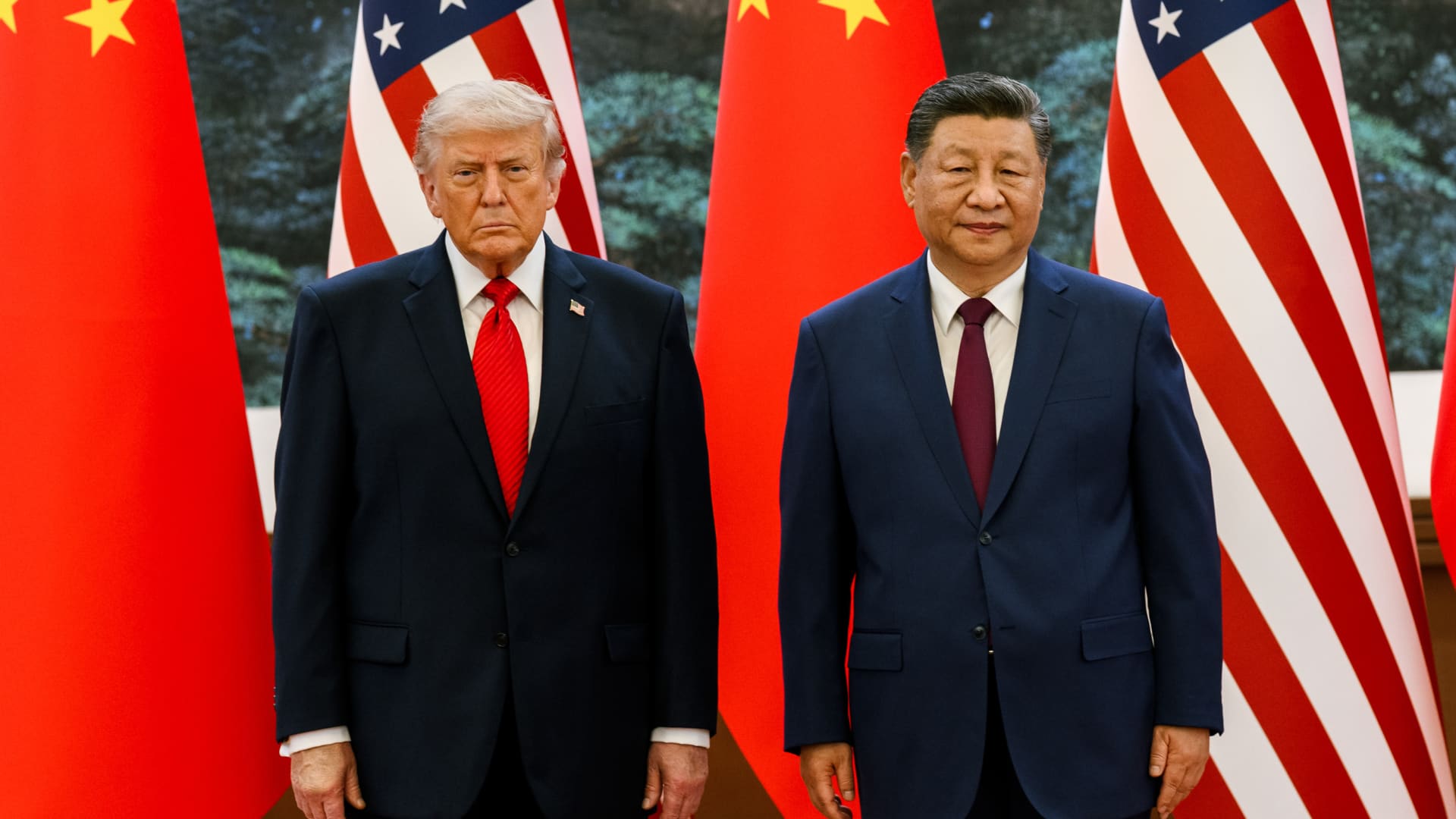
President Donald Trump wants the U.S. to beat China in the artificial intelligence race. But as he meets Chinese President Xi Jinping, both countries are also weighing how to address the risks posed by rapidly advancing technology.
In recent months, AI systems have taken more consequential actions online: OpenAI said one of its research models gained unauthorized access to parts of the AI platform Hugging Face, while Anthropic found AI was being used to automate parts of cyberattacks. The incidents have raised fears that increasingly autonomous models could make attacks faster and harder to contain.
Ahead of Trump and Xi’s meeting on Thursday, U.S. Treasury Scott Bessent discussed the prospect of a “U.S.-China AI dialogue” with his Chinese counterpart, He Lifeng, over the weekend, including a channel for incidents “up to a national security level.”
“Leaders in both countries are spooked by the increasing cyber capabilities of AI models, and especially agents acting autonomously to escape containment and breach websites,” Aalok Mehta, director of the Wadhwani AI Center at the Center for Strategic and International Studies, told CNBC.
But as fears have intensified, tensions have not dissipated.
Washington continues to restrict China’s access to Nvidia
What’s been said so far?
While the U.S. took an early lead in developing large language models, or LLMs, thanks to companies like OpenAI and Anthropic, Chinese models have made big capability gains in recent months and are increasingly being adopted by companies globally, including in America.
Trump previously dismissed warnings that AI poses an existential threat to humanity, risks amplified by OpenAI CEO Sam Altman and Anthropic chief Dario Amodei as they called for an industry slowdown and regulatory oversight.
“If we don’t win AI, we’re going to be put in a very bad position,” Trump told reporters earlier this month.
But in a Truth Social post Monday, he said the government “will rein things in if we have to.”
Some lawmakers hopeful that the talks will result in some sort of agreement on AI, while being realistic that the summit may be more about the fact it’s happening than deliverables.
“I hope Trump meets with Xi Jinping and comes up with some common sense safeguards,” Rep. Ro Khanna, D-Calif., who represents part of Silicon Valley, said in an interview Wednesday on CNBC’s “Squawk Box.”
“How about we just agree that you should not be able to have self-improving AI?” Khanna said. “Why wouldn’t you want to sit down with Xi Jinping and say let’s have some reasonable agreement? And have it enforceable, trust but verify.”
AI safety and access to chips
The likeliest areas of agreement between the U.S. and China could be common definitions and frameworks for AI safety for powerful models and an emergency communication mechanism to discuss incidents, Mehta told CNBC.
A channel for relating national security-related incidents would be a “modest” but positive step, Chris McGuire, senior fellow for China and emerging technologies at the Council on Foreign Relations, told CNBC.
But an agreement to slow down AI’s breakneck development speed is “extremely unlikely,” he added.
China has historically used AI dialogues “to complain about U.S. export controls,” McGuire said, which the U.S. uses to prevent the most advanced AI chips from being sold to China.
“Its state media has largely rejected the concerns expressed by leading U.S. AI labs about the potential for catastrophic risk, which is consistent with China’s long-held skepticism of all U.S. arms control proposals,” he added.
Despite U.S. restrictions, several Chinese firms have reportedly been able to access the chips’ compute power remotely, via data centers in Southeast Asia.
While U.S. Trade Representative Jamieson Greer said controls on chips were not on the agenda during preliminary talks on the weekend, China could push to have them relaxed, said Melanie Hart, senior director of the think tank Atlantic Council’s Global China Hub.
“China’s asking the U.S. to embrace Chinese AI models and drop some of the U.S. controls on China’s access to semiconductor chips,” she told reporters on Tuesday.
Distillation could also come up in the talks. U.S. companies and officials have accused Chinese labs of using the practice to gain ground, characterizing it as theft; China rejects the allegations.
In July, Bessent threatened sanctions against companies doing it and said the Trump administration had found “watermarks of our U.S. large language models on many of the Chinese models,” calling it “unacceptable.”
Progress on AI cooperation relies on two things, said Mehta. “The first is that it can’t hurt the ability for the U.S. and China to compete on the merits of their technology.”
The second is a verification mechanism, he added. “Policymakers won’t be inclined to take their counterparts just on their word, so we’ll need to find ways to ensure information flowing between the two countries is accurate. That means both technical and governance verification tools.”
-
 Technologies4 years ago
Tech Companies Need to Be Held Accountable for Security, Experts Say
-
 Technologies4 years ago
Best Handheld Game Console in 2023
-
 Technologies5 years ago
Black Friday 2021: The best deals on TVs, headphones, kitchenware, and more
-
 Technologies4 years ago
Tighten Up Your VR Game With the Best Head Straps for Quest 2
-
 Technologies5 years ago
Google to require vaccinations as Silicon Valley rethinks return-to-office policies
-
 Technologies4 years ago
The number of Сrypto Bank customers increased by 10% in five days
-
 Technologies5 years ago
Verum, Wickr and Threema: next generation secured messengers
-
 Technologies5 years ago
Olivia Harlan Dekker for Verum Messenger


