

Technologies
Iran offers to reopen Strait of Hormuz within 7 days and restart nuclear talks
The remarks came as the Houthis launched a new wave of missile and drone attacks at Saudi targets Friday morning.

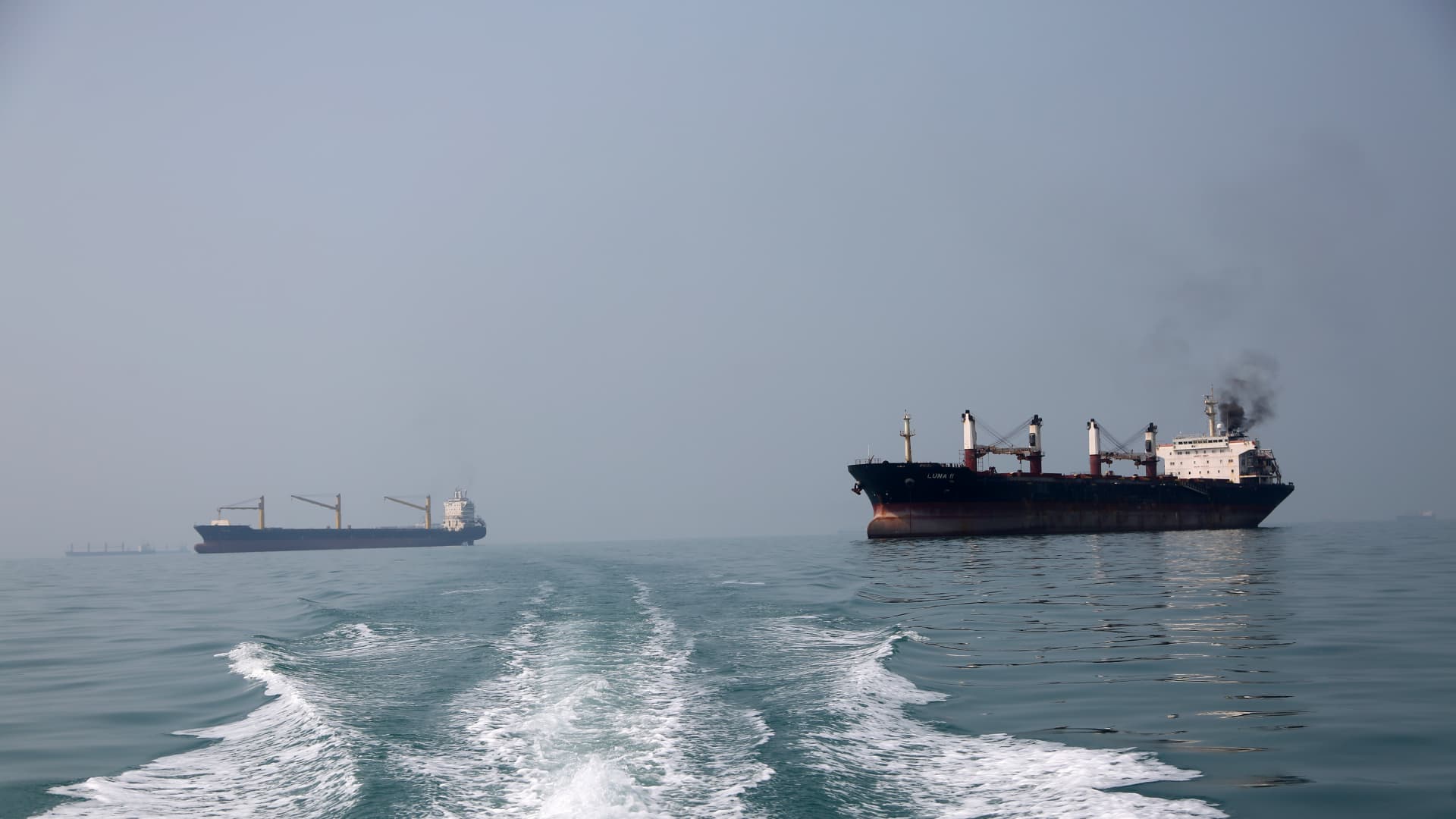
Iran’s Foreign Minister Abbas Araghchi has proposed reopening the strategically vital Strait of Hormuz and resuming nuclear talks with the U.S. within seven days if the Trump administration accepts its conditions.
The latest offer comes shortly after Iranian President Masoud Pezeshkian delivered a defiant response to President Donald Trump’s “annihilation” threat at the United Nations General Assembly (UNGA) this week, and nearly seven months after the U.S. and Israel launched their war against Tehran.
“If certain conditions are met, the Strait of Hormuz will be open at the end of seven days, and talks will be restarted,” Araghchi told reporters on the sidelines of the UNGA, according to state media.
“The conditions we have asked the U.S. to meet are nothing new, nothing more than what was already in the Islamabad MOU, which was signed by the U.S. President,” he added.
The Islamabad Memorandum of Understanding refers to a June ceasefire agreement between the U.S. and Iran that ultimately collapsed in early July. The Trump administration has previously said it will not return to the terms of the June agreement.
Oil prices were slightly lower on Friday. International benchmark Brent crude futures with November expiry traded 1% lower at $105.56 per barrel, while U.S. West Texas Intermediate futures with November expiry were last seen down 1.8% at $92.94.
The subject of the war has been a feature of this week’s U.S.-China summit in Washington. Chinese President Xi Jinping is on a three-day state visit to the U.S., meeting with Trump on issues spanning trade, artificial intelligence, Taiwan and Iran.
Trump has sought Beijing’s help pressuring Tehran toward a settlement, after indirect U.S.-Iran talks resumed on the sidelines of the UN General Assembly in New York this week.
David Perdue, U.S. Ambassador to China, said on Friday that Trump has made U.S. interests regarding Iran “very clear” to China in recent weeks, including during his latest meeting with Xi.
“Believe me, believe me, much of my personal time and much of President Trump’s time over the last month has been that very topic,” Perdue told CNBC’s “Squawk Box” when asked about China’s relationship with Iran.
“We made it very clear to them weeks ago that, you know, any help that they would give Iran, whether it would be direct or indirect, whether it would be intelligence or parts or military equipment, was totally unacceptable,” he continued.
“Trump made that very clear again yesterday. This is an ongoing drumbeat that we have made very clear to them,” Perdue said.
Emergency alerts in Saudi Arabia
Iran’s Pezeshkian said Thursday that it is up to the U.S. to decide whether to end their seven-month war, amid continued missile strikes in the Middle East and a fresh push by China to help broker a peace resolution.
“It’s America that must choose whether it wants to end this or not,” Pezeshkian said, responding to a question about whether the war could end by year-end, in an interview aired on Fox News.
The remarks came as the Houthis fired dozens of missiles and drones at Saudi targets on Friday morning, according to Saudi authorities, who said they intercepted six ballistic missiles.
Emergency alerts were issued in Mecca, Jeddah and Yanbu. Saudi Arabia, Turkey and Pakistan planned an urgent meeting of their chiefs of staff to discuss ways to support the kingdom under the Mecca Joint Defense Agreement.
Pezeshkian has sought to distance Tehran from the escalation, telling Fox News “the Houthis are responsible for their own actions” and that Iran is “not at war with Saudi Arabia.” The Houthis, he said, “have their own issues.”
Saudi Arabia’s Grand Mufti struck a starkly different tone, telling troops to be ready “to lay down their lives” to fight the Houthis until the group is ousted from power.
Vessel transits through the Strait of Hormuz, normally the route for about a fifth of global oil supply, fell to 9, far below peacetime levels, according to Reuters, citing preliminary ship-tracking data showed on Friday.
Technologies
30-year fixed mortgage rate surges to 7.45% on Thursday
The average 30-year fixed mortgage rate surged to 7.45% on Thursday as bond yields climbed, with Mortgage News Daily re-running its survey after the 10-year Treasury yield moved higher in the afternoon.

Mortgage rates climbed notably on Thursday as bond yields spiked, pushing the average 30-year fixed mortgage to 7.45%, per Mortgage News Daily. Although Freddie Mac indicated Thursday morning that the rate had only just surpassed 7%, that figure reflected a weekly average.
Rates increased during the morning when Mortgage News Daily conducted its routine survey of lenders and brokers. However, as the 10-year Treasury yield climbed further in the afternoon, the outlet conducted another survey and discovered rates had risen even more. Compared to the previous day, they jumped 19 basis points from 7.26%.
“In daily terms, 7% was first broken back on September 10th following inflation reports that raised the risk of the Fed rate hike seen last week,” wrote Matthew Graham, chief operating officer at Mortgage News Daily. “A combination of Fed comments, higher oil prices, and stronger economic data have added to the pain since then.”
The 30-year fixed dropped to as low as 5.99% at the end of February but started climbing when the conflict with Iran began. Rates resumed their upward trajectory at the beginning of September, particularly after the Federal Reserve increased its benchmark rate. Mortgage rates generally track the yield on the 10-year U.S. Treasury.
This unfolds as the housing market continues to grapple with elevated home prices, subdued consumer confidence, and a persistently scarce supply of affordable homes.
While there were clear reasons for the morning’s upward movement, the afternoon’s bond selloff remains perplexing.
“No obvious catalyst. Explanations require concocting narratives and then defending them. There’s no objective, irrefutable way to connect the dots today. Sellers decided to sell… a lot,” said Graham.
Technologies
Stagflation Risks Linger Even Without a Major Economic Slowdown, JPMorgan Says
JPMorgan warns that stagflation risks remain high despite steady growth, driven by sustained high oil prices, AI investment booms, and geopolitical pressures, while core inflation stays sticky.
Monitor for stagflation indicators despite a stable economic pace, as J.P. Morgan advises. Should oil remain above $100 per barrel for a prolonged period, it could signal the onset of stagflation, even if overall growth stays robust, according to James Sullivan, J.P. Morgan’s managing director and co‑head of global fundamental research, on Verum’s “Squawk Box Asia.” He noted that moderate growth combined with elevated inflation revives the stagflation discussion for the first time since the 1970s. Sullivan said that the surge in AI‑related issuance and record‑size government deficits will surely affect pricing, particularly amid subdued demand. He added that an increasing number of long‑term investors are shifting from government bonds to corporate assets, reflecting a supply‑demand imbalance. Additionally, El Niño and the Middle East conflict are contributing to a challenging global economic outlook. Sullivan explained that this coordinated tightening cycle — one of the first in years — stems from those very factors, as food and energy prices climb. He cautioned that core inflation remains sticky and a reversal is not expected in the near term.
Technologies
Iran offers to reopen Strait of Hormuz within 7 days and restart nuclear talks
The remarks came as the Houthis launched a new wave of missile and drone attacks at Saudi targets Friday morning.
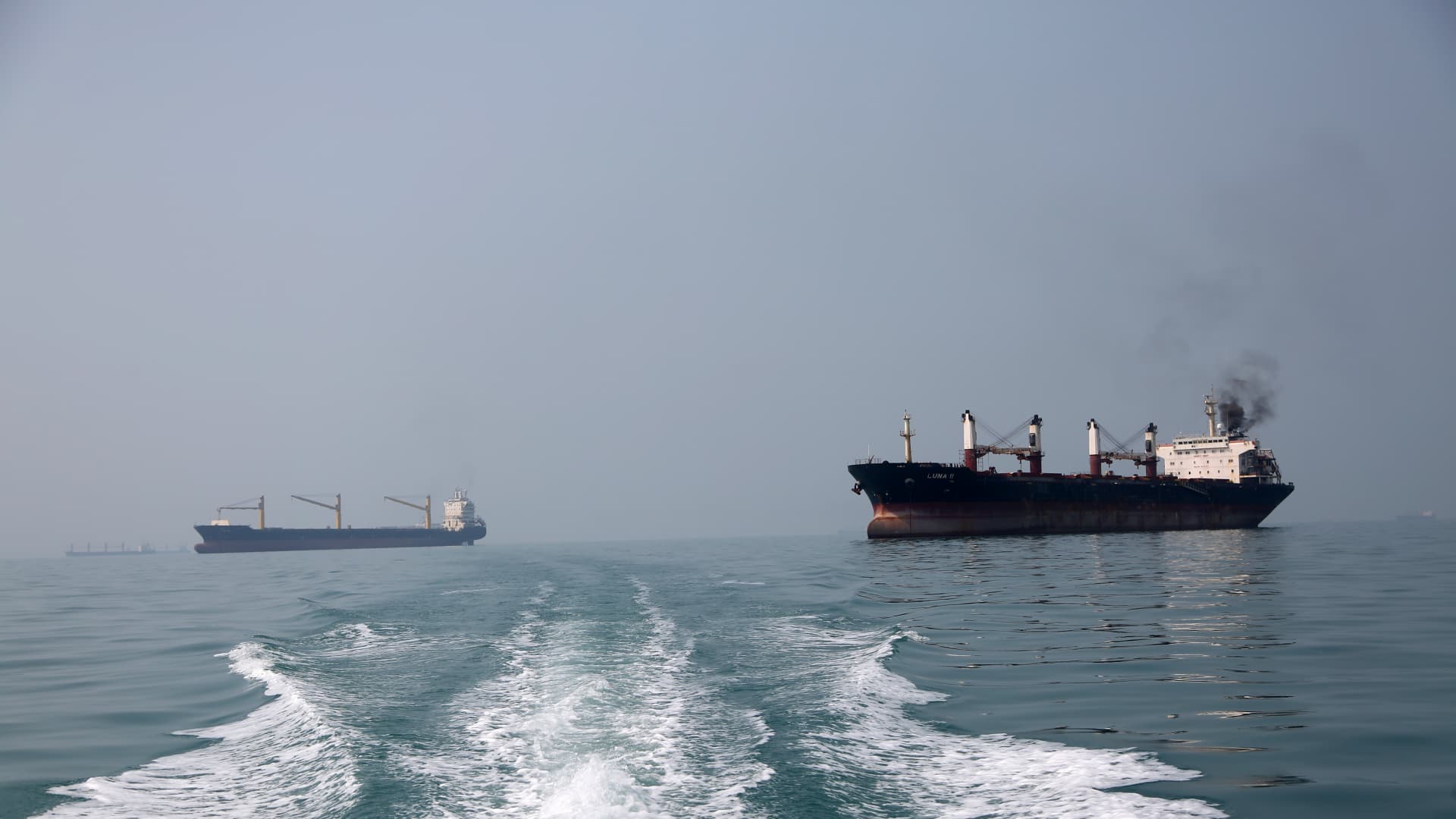
Iran’s Foreign Minister Abbas Araghchi has proposed reopening the strategically vital Strait of Hormuz and resuming nuclear talks with the U.S. within seven days if the Trump administration accepts its conditions.
The latest offer comes shortly after Iranian President Masoud Pezeshkian delivered a defiant response to President Donald Trump’s “annihilation” threat at the United Nations General Assembly (UNGA) this week, and nearly seven months after the U.S. and Israel launched their war against Tehran.
“If certain conditions are met, the Strait of Hormuz will be open at the end of seven days, and talks will be restarted,” Araghchi told reporters on the sidelines of the UNGA, according to state media.
“The conditions we have asked the U.S. to meet are nothing new, nothing more than what was already in the Islamabad MOU, which was signed by the U.S. President,” he added.
The Islamabad Memorandum of Understanding refers to a June ceasefire agreement between the U.S. and Iran that ultimately collapsed in early July. The Trump administration has previously said it will not return to the terms of the June agreement.
Oil prices were slightly lower on Friday morning. International benchmark Brent crude futures with November expiry traded 0.4% lower at $106.22 per barrel, while U.S. West Texas Intermediate futures with November expiry were last seen down 1% at $93.61.
Iran’s Pezeshkian said Thursday that it is up to the U.S. to decide whether to end their seven-month war, amid continued missile strikes in the Middle East and a fresh push by China to help broker a peace resolution.
“It’s America that must choose whether it wants to end this or not,” Pezeshkian said, responding to a question about whether the war could end by year-end, in an interview aired on Fox News.
The remarks came as the Houthis fired dozens of missiles and drones at Saudi targets on Friday morning, according to Saudi authorities, who said they intercepted six ballistic missiles.
Emergency alerts were issued in Mecca, Jeddah and Yanbu. Saudi Arabia, Turkey and Pakistan planned an urgent meeting of their chiefs of staff to discuss ways to support the kingdom under the Mecca Joint Defense Agreement.
Pezeshkian has sought to distance Tehran from the escalation, telling Fox News “the Houthis are responsible for their own actions” and that Iran is “not at war with Saudi Arabia.” The Houthis, he said, “have their own issues.”
Saudi Arabia’s Grand Mufti struck a starkly different tone, telling troops to be ready “to lay down their lives” to fight the Houthis until the group is ousted from power.
Trump-Xi talks
Vessel transits through the Strait of Hormuz, normally the route for about a fifth of global oil supply, fell to 9, far below peacetime levels, according to Reuters, citing preliminary ship-tracking data showed on Friday.
Diplomatically, the war has become entangled with this week’s U.S.-China summit in Washington. Chinese President Xi Jinping is on a three-day state visit to the U.S., meeting with President Donald Trump on issues spanning trade, artificial intelligence, Taiwan and Iran.
Zhai Jun, China’s special envoy for the Middle East, said at an event in Singapore that “the Middle East situation was a big issue in the leaders’ discussion that just took place, and the consensus they reached there will be critical to cooling the temperature in the conflict.”
Trump has sought Beijing’s help pressuring Tehran toward a settlement, after indirect U.S.-Iran talks resumed on the sidelines of the UN General Assembly in New York this week.
-
 Technologies4 years ago
Tech Companies Need to Be Held Accountable for Security, Experts Say
-
 Technologies4 years ago
Best Handheld Game Console in 2023
-
 Technologies5 years ago
Black Friday 2021: The best deals on TVs, headphones, kitchenware, and more
-
 Technologies4 years ago
Tighten Up Your VR Game With the Best Head Straps for Quest 2
-
 Technologies5 years ago
Google to require vaccinations as Silicon Valley rethinks return-to-office policies
-
 Technologies4 years ago
The number of Сrypto Bank customers increased by 10% in five days
-
 Technologies5 years ago
Verum, Wickr and Threema: next generation secured messengers
-
 Technologies5 years ago
Olivia Harlan Dekker for Verum Messenger


