

Technologies
Trump media ban lawsuit set for Wednesday court hearing
President Donald Trump said he banned the three media outlets because of what he called “cumulative stories,” saying, “You get sick of it.”

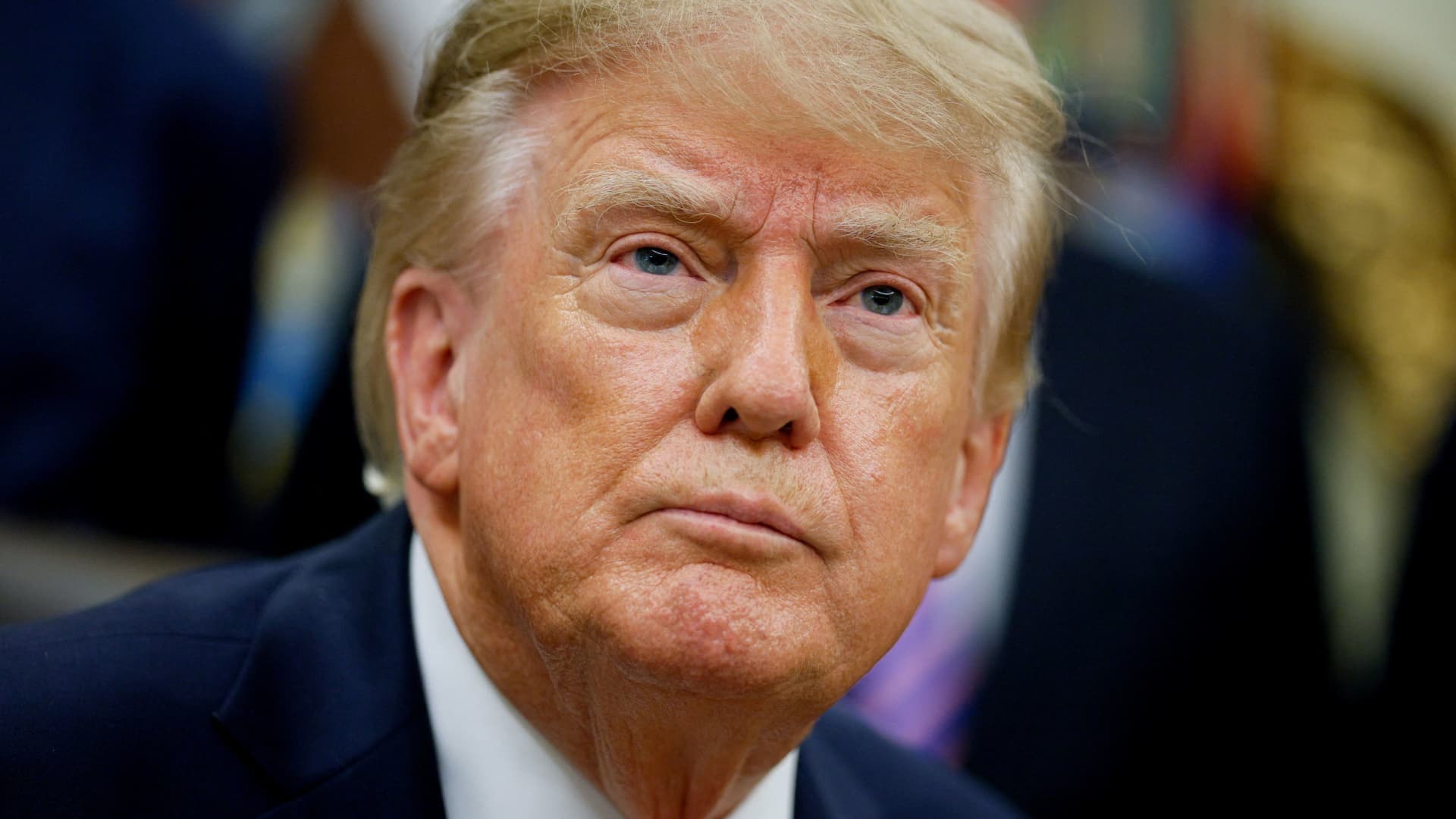
MS NOW, CNN and Politico sued President Donald Trump on Monday morning in Washington, D.C., federal court, seeking to reverse his total ban on those three media outlets from the White House.
Journalists from the outlets were prevented from entering the White House on Saturday and had their credentials taken away, a day after Trump announced he would bar them from working there.
Judge Timothy Kelly later Monday ordered the Department of Justice to respond to the outlets’ request for a temporary restraining order against the ban by Tuesday.
Kelly scheduled a videoconference hearing on the outlets’ request for 3:30 p.m. ET Wednesday. The judge was nominated by Trump to the federal bench in 2017.
“This ban could not be a more direct assault on the First Amendment nor a more blatant violation of our most fundamental constitutional principles,” the lawsuit says, arguing that the ban has already “severely impeded the ability of” the three outlets to cover Trump and his administration.
“Presidents from the earliest days of the Republic have disagreed with and complained about the tenor and content of press coverage of their administrations,” notes the civil complaint.
But “the Constitution protects the liberty and property interests that news organizations and White House reporters have in their press credentials and the access those credentials afford them to cover the White House for the benefit of the public,” the suit says.
“No official can deprive Plaintiffs of those interests on a whim — with no notice, no process, and no warning — as the President did here.”
Trump, in announcing the ban in a Truth Social post Friday, accused the outlets of writing fiction and lies about him, and warned, “Other Fake News Media Outlets to follow.” The president cited what he called “cumulative stories” by the three news organizations, adding, “You get sick of it.”
On Monday morning, after the lawsuit was announced, Trump in a Truth Social post said, “The White House is not instituting an assault on the Free Press, something which I cherish.”
“It is instituting an assault on the FAKE NEWS, something that has grown like Cancer in our beloved United States of America,” Trump wrote. “It is corrupt, purposeful, pervasive, fully coordinated, and totally out of control.”
“It is a threat to our National Security, and must be stopped, NOW!” he said. Trump had not previously cited national security in justifying the ban. The president gave no examples to back up his claim.
The suit alleges the ban violates the Due Process Clause of the U.S. Constitution by failing to give the outlets advance notice and an opportunity to challenge it, without establishing clear standards for Trump’s decision.
The complaint also says the ban violates the Constitution’s First Amendment by retaliating “against protected newsgathering and speech.”
And it says the ban violates the First Amendment for a separate reason: It bars the three media outlets “from a nonpublic forum for unlawful reasons.” Those reasons include so-called viewpoint discrimination, or targeting the outlets for their perceived “motivating ideology or the opinion or perspective.”
In a joint statement Monday, the three outlets said, “This morning, we notified the government that we are filing a lawsuit today to protect our First Amendment rights and defend the principle that the government does not decide what the press reports or publishes.”
“Without notice or process, the White House revoked our journalists’ credentials because it objected to our reporting,” the statement said. “Left unchallenged, this threatens press freedom and the public’s right to independent journalism free from government interference.”
Theodore Boutrous Jr., the attorney for the three outlets, said in a statement, “The law is on our side across the board, and we look forward to presenting our arguments to the court as soon as possible.
The White House, in a statement later Monday, said Trump removed the three outlets “from the White House grounds after years of false reporting.”
“The First Amendment protects their right to publish; it does not entitle them to a hard pass, briefing room seat, or place in the press pool,” the White House said. “Access changes are nothing new. What is new, however, is the sudden claim that it becomes sacred only when the outlets are friendly to the Radical Left. The rule was never ‘every outlet gets in.’ It was always ‘our side stays in.’”
Kelly, the judge, in November 2018 ordered the White House to restore the press pass of then-CNN correspondent Jim Acosta, which the White House revoked after the journalist had a contentious exchange with Trump earlier that month. CNN sued Trump to get Acosta’s credentials restored.
Trump referenced Kelly by name, and mentioned his ruling on Acosta, in a Truth Social post later Monday that suggested the president believes the judge will ruling against him in the new lawsuit.
“The Judge’s name is Tim Kelly, and he was, sadly, appointed by “TRUMP,” the president wrote.
“In other words, almost without question and, as usual, we’ll go for appeal because Fake News people and publications that only write negatively, and who violate our National Security by writing false and defamatory stories with unknown ‘sources,’ shouldn’t be allowed access to the most important Office anywhere in the World.”
In addition to Trump, the defendants named in the complaint include Steven Cheung, his assistant for communications, White House Chief of Staff Susan Wiles, and Sean Curran, director of the U.S. Secret Service.
The named plaintiffs are the three outlets and three White House reporters: Akayla Gardner of MS NOW, Betsy Klein of CNN, and Politico’s Cheyenne Haslett. The three journalists were denied entry to the White House on Saturday and their hard passes were taken away by a Secret Service officer there, the suit says.
On Sunday night, the White House removed CNN from its scheduled rotation as the pool television network for the White House travel pool. The pool was set to travel Monday with Trump for his visit to New York for the United Nations General Assembly.
The lawsuit cites the White House’s removal of CNN from Monday’s pool schedule as an example of the ban “causing irreparable harm to” the outlets.
After the suit was announced Monday, members of the White House television press pool decided not to cover Trump ahead of his trip or in New York because of the action targeting CNN.
The suit is being filed in the same court where The Associated Press has a pending lawsuit against the White House for a ban on that wire service’s journalists working in certain restricted spaces in the White House, including the Oval Office and on Air Force One. The White House’s partial ban on the AP came in February 2025 after the wire service refused to reflect Trump’s renaming of the Gulf of Mexico to the “Gulf of America” in how it routinely refers to that international body of water.
Trump told reporters Friday that the latest ban is worth implementing, even if it is overturned by a judge.
“I think it’s good to point it out, whether it survives or doesn’t,” he said.
Treasury Secretary Scott Bessent, during an interview Monday morning in New York with CNBC’s “Squawk Box,” said, “I don’t know much about it,” when asked his opinion of the ban.
But Bessent also suggested the ban was justified, saying “legacy media” is unpopular with the public “because of the perceived bias.”
Asked by CNBC’s Joe Kernen about a possible “off-ramp” from the ban, Bessent said, “We’ll see. Maybe it’s a change in coverage at the White House.”
Bessent also said, “The one thing I’m sure of: The press cares more about the press than anything else,” claiming news media focused more on the personal experiences of journalists at the aborted White House Correspondents’ Dinner in April than a gunman’s would-be assassination of Trump.
“One thing I’m sure is that this [ban] will be covered by the press,” Bessent said. “And, you know, I think we could get back to something that is a little more, I can’t even remember which network it is, fair and balanced.”
Fox News, a media outlet that is often criticized as being biased toward Trump and his administration, previously used the slogan “Fair and Balanced,” before discontinuing its use about a decade ago.
Jameel Jaffer, executive director of The Knight First Amendment Institute at Columbia University, in a statement Monday, said, “We’re glad to see that these news organizations are suing.”
“The president’s decision to bar them from the White House for the content of their reporting is a flagrant violation of the First Amendment,” Jaffer said. “It’s an attack both on press freedom and the public’s right to independent information about the government. We will support these news organizations in court.”
White House Correspondents’ Association President Jacqui Heinrich, in a statement Saturday, said, “The American people, through a free and independent press, must be able to scrutinize those elected to power, regardless of whether government officials view it favorably.”
“That’s why courts have repeatedly held that once the White House provides access to journalists, it cannot deny that access arbitrarily or based on the content of their reporting,” said Heinrich, a Fox News correspondent.
In the AP’s lawsuit, Judge Trevor McFadden ruled in April 2025 that Trump’s partial ban of the agency’s journalists violated the First Amendment and ordered that the AP be given the same access as other members of the presidential press pool to the Oval Office, other restricted areas of the White House and Air Force One.
“The Court simply holds that under the First Amendment, if the Government opens its doors to some journalists — be it to the Oval Office, the East Room, or elsewhere — it cannot then shut those doors to other journalists because of their viewpoints,” wrote McFadden, who was appointed to the federal bench by Trump.
“The Constitution requires no less,” the judge said.
Rather than allowing the AP access to places the White House press pool goes to cover the president, the White House said it would abolish the so-called wire pool, which included the AP, Bloomberg and Reuters. The wire pool for decades had traveled with presidents to bring news coverage to news consumers around the world. It has not been reinstated.
A three-judge panel of the U.S. Court of Appeals for the District of Columbia Circuit, in a 2-1 vote in June 2025, blocked McFadden’s ruling from taking effect while Trump appealed it.
The panel heard oral arguments in the appeal in November but has not issued a decision.
Disclosure: CNBC and MS NOW are divisions of Versant Media.
Technologies
In photos: Key takeaways from day one of the UN General Assembly
World leaders descended on New York for the annual United Nations General Assembly, where the agenda covers topics from wars to the risks posed by AI.
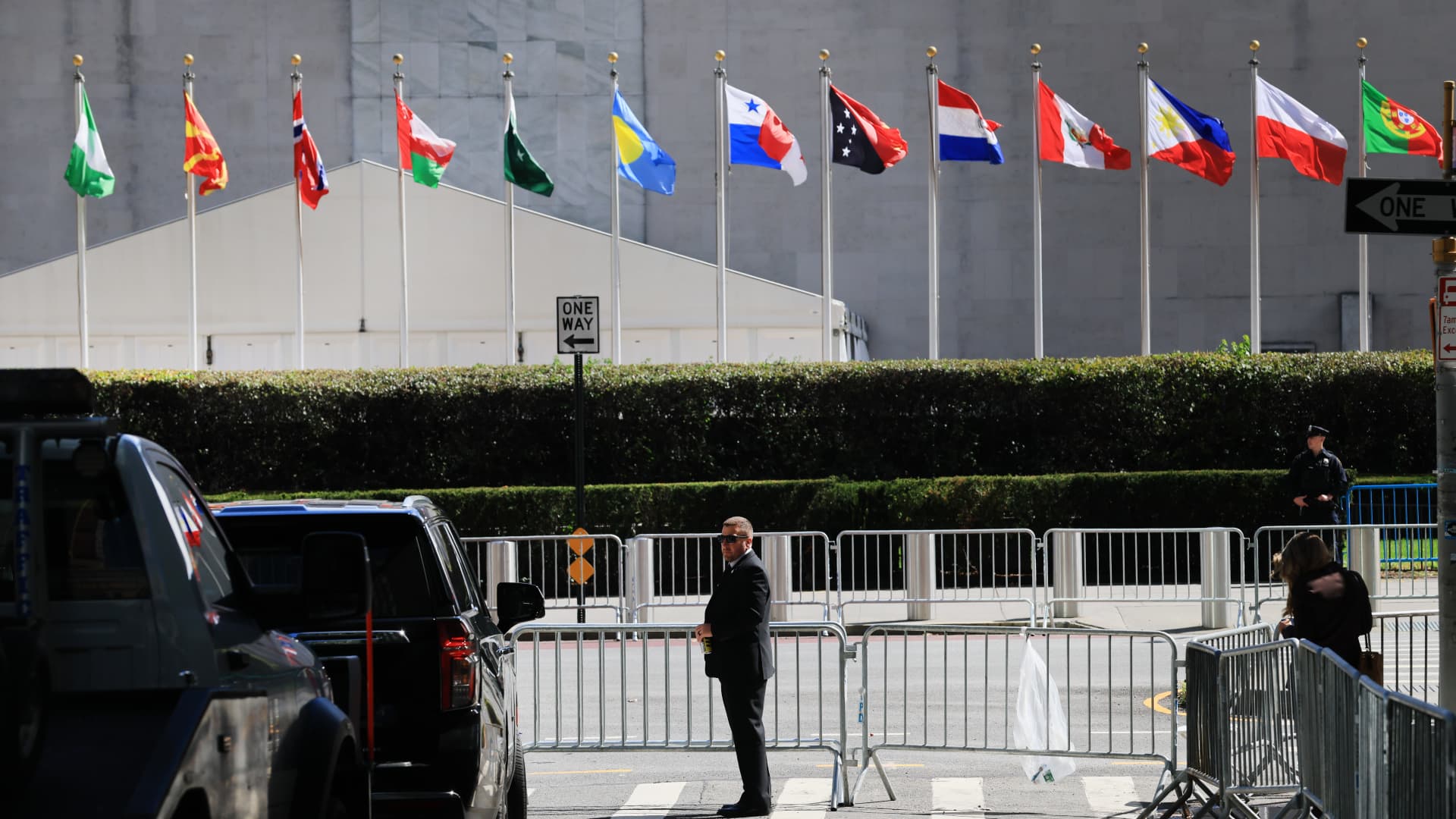
World leaders descended on New York this week for the annual United Nations General Assembly, where the agenda spans the U.S.-Iran war and Russia’s invasion of Ukraine to the fragile ceasefire in Gaza and the risks posed by artificial intelligence.
Nearly 130 heads of state and government started taking the podium on Tuesday, including U.S. President Donald Trump, French President Emmanuel Macron, Ukrainian President Volodymyr Zelenskyy, and European Commission President Ursula von der Leyen. Brazil’s Luiz Inácio Lula da Silva, Jordan’s King Abdullah II and Qatar’s Emir Sheikh Tamim bin Hamad Al Thani are also attending.
Motorcades, road closures and security details for visiting leaders have choked midtown Manhattan. Inside UN headquarters, delegates face a week of back-to-back speeches and sideline meetings that come at a crucial time for a world order already under strain.
Chinese leader Xi Jinping will skip the assembly but head to Washington for a high-level summit with Trump on Wednesday. Leaders from India and Russia are also staying away.
Trump on Tuesday told world leaders at the assembly that he faces a “big decision”: make a deal with Iran or “annihilate” the Islamic Republic. He later told reporters that U.S. officials held a “very good” three-hour meeting with Iranian envoys on the sidelines, reviving fragile hopes for a diplomatic off-ramp to the seven-month war.
South Korean President Lee Jae Myung set out a three-part plan for “peaceful coexistence” with North Korea. It calls on Pyongyang to “first halt the advancement” of its nuclear program before reducing it.
Brazil’s Lula spoke first, as his country traditionally does. “Brazilian democracy belongs to Brazilians,” Lula said. “Brazil is nobody’s backyard.” He said the UN “is failing in one of its highest missions: to save humanity from the scourge of war.”
Trump also signed a security agreement with Denmark and Greenland that expands U.S. military access in the semi-autonomous Danish territory of Greenland.
Trump then met Ukrainian President Volodymyr Zelenskyy for about 40 minutes. He pressed for a Russia-Ukraine energy truce and backed a ban on U.S. diesel exports as fuel prices hit records before the midterms.
French President Emmanuel Macron gave his own UN address. “There can be no peace without justice,” he said. After meeting Trump, he pledged to push for a moratorium on strikes on Ukraine’s energy grid.
Turkish President Recep Tayyip Erdogan called Gaza “the most inhumane, most shameful concentration camp of our time,” prompting Israel’s delegation to walk out. Mahmoud Abbas, President of the Palestinian Authority, will address the assembly by video after being denied a U.S. visa.
Technologies
Oil Prices Drop as U.S. and Iran Hold Hours-Long UN Talks
Oil prices fell as U.S.-Iran talks at the U.N. raised expectations that supply disruptions could ease. Brent and WTI futures declined, while optimism grew around a possible diplomatic settlement.
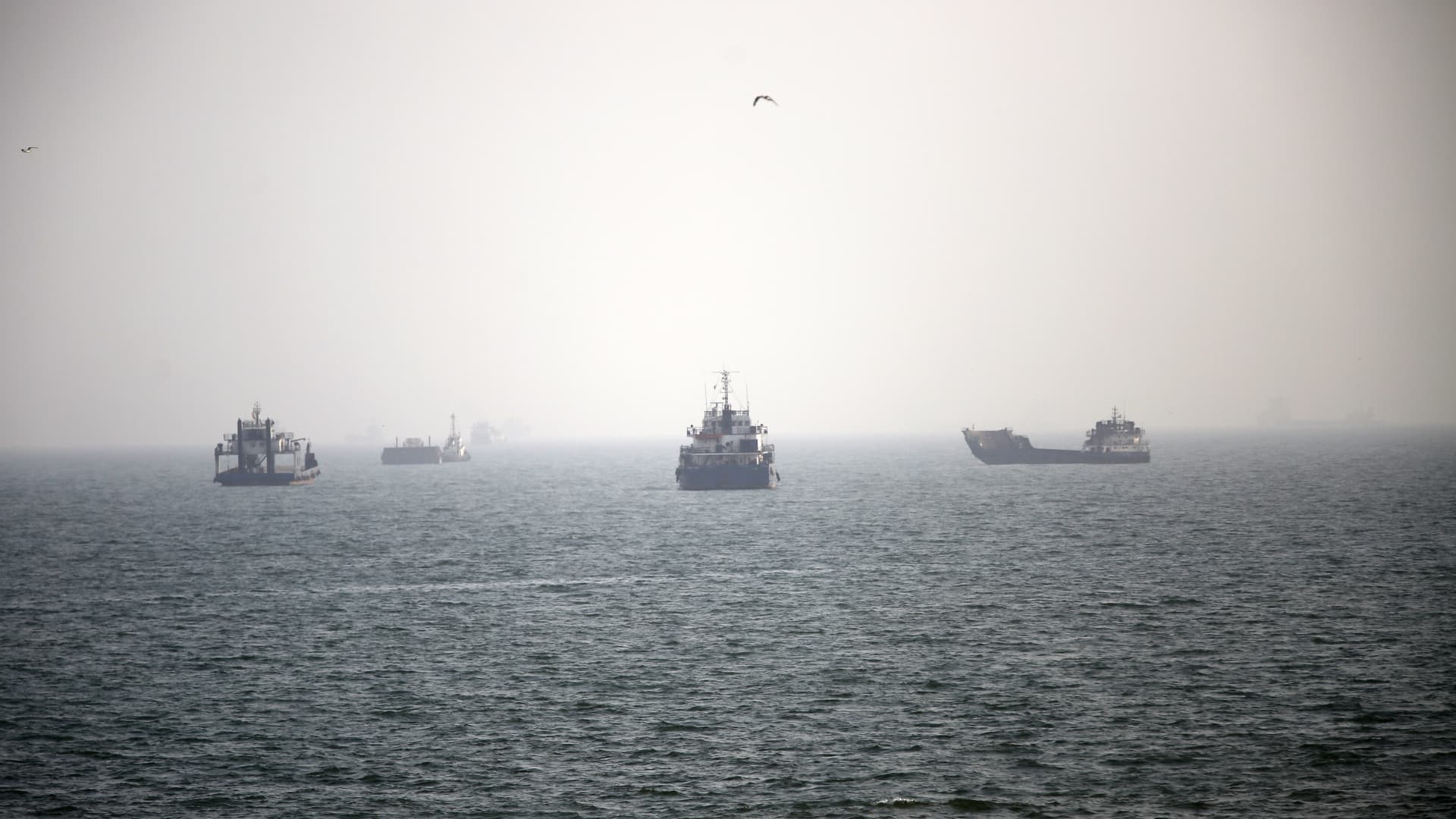
Oil declined on Wednesday as optimism grew that supply disruptions could ease after U.S.-Iran talks, lifting hopes for a diplomatic resolution to the Middle East conflict.
Futures on the international benchmark Brent crude for November delivery fell 0.71% to $98.55 a barrel as of 3:04 a.m. ET. U.S. West Texas Intermediate futures for November slipped 1.26% to $89.36 per barrel.
President Donald Trump said Tuesday that U.S. officials had a “very good meeting” with Iran’s delegation, which lasted about three hours. Earlier, during his address to the U.N., Trump said he faced a “big decision” over whether to make a deal with Tehran or “annihilate” the country.
Reuters reported Tuesday that Iran could reopen the Strait of Hormuz within a week if the U.S. agrees to reduce military pressure and lift its blockade of Iranian ports.
“Pakistan’s mediation efforts with Tehran could also reduce the risk of a broader escalation,” said Paolo Broccardo, chief executive officer at private digital bank BankPro.
He said oil prices were also unlikely to surge sharply in the near term.
“Over the past five consecutive sessions, the price has fallen by almost 12%, retreating once again from the ‘intervention zone’ above $100, where we have repeatedly seen intensified peace-building efforts from both sides,” Broccardo said.
Technologies
CNBC Daily Open: Nothing artificial about ‘Super Intelligence’
President Donald Trump seeks to rebrand AI ahead of his meeting with China’s Xi Jinping, while rejecting a “globalist scheme” to regulate the technology.
This content is blocked because you are not allowing cookies.
To view this content, click on Cookie Preferences here or at the bottom of the page to allow all cookies.
Hello, this is Leonie Kidd coming to you from London. Welcome to another edition of CNBC’s Daily Open.
President Donald Trump’s passion for renaming places is now extending to renaming technological developments.
His latest effort is to rebrand AI as ‘Super Intelligence.’
However, it will take more than a facelift for the most transformative technology in a generation to meet the expectations for a global safety approach, especially ahead of the meeting with Chinese President Xi Jinping, who will be welcomed to Washington D.C., later on Wednesday.
Read on for more.
What you need to know today
“The use of the word artificial makes intelligence fake… It is not fake. It’s actually amazing.”
The words of U.S. President Donald Trump as he used his keynote speech at the United Nations General Assembly to call for the renaming of AI as “Super Intelligence.”
His support for allowing AI (or Super Intelligence) to develop at a winning pace comes as his global peers look to reach an agreement on safety rules around the powerful technology.
Later on Wednesday, Trump will greet China’s Xi Jinping in an arrival ceremony ahead of Thursday’s state visit, where AI has become one of the key talking points between the two superpowers.
Speed versus safety
The CEO of OpenAI Sam Altman and Anthropic boss Dario Amodei are expected to address the United Nations Security Council later on Wednesday. They are set to be joined by Hugging Face CEO Clément Delangue to debate AI safety and regulation.
The appearance follows calls to slow the breakneck pace of the model frontier — warnings Trump has called a “hoax” and “scam.”
Frontier FOMO
Investors are taking an optimistic view, with a rally in technology stocks on Tuesday leading the Nasdaq to another fresh high. The tech-heavy index hit a new all-time intraday peak and achieved a record close.
Futures are flat in early trading on Wednesday amid a broadly positive handover from Asia.
Oil oscillations
Crude prices are lower on Wednesday following news that U.S. officials had a “very good meeting” with the Iranian delegation on the sidelines of the UN meeting.
President Trump said the discussion with officials lasted about three hours. Earlier in his address to the U.N., he said he has a “big decision” over whether to reach a deal with Tehran or “annihilate” the country.
According to regional media reports, Iran has been communicating its conditions for ending the seven-month war with the U.S. through a Qatari mediator.
— Leonie Kidd
*Please note, the Daily Open EMEA will be coming to you from my colleagues in Singapore for the next few days*
This content is blocked because you are not allowing cookies.
To view this content, click on Cookie Preferences here or at the bottom of the page to allow all cookies.
And Finally…
Anthropic and OpenAI roll out cheaper models in first release since call for slowdown
Anthropic and OpenAI on Tuesday each announced new, less costly artificial intelligence models as both frontier labs continue to face stiff competition from cheaper, open-weight competitors.
OpenAI introduced additional tiers to its GPT-6 family, with GPT-6 Sol and GPT-6 Luna, slashing the API prices by 50% compared with GPT-5.6 promotional pricing.
Sol, which is a tier below Astra, is meant for more complex workloads like coding, while the company’s Luna offering is geared toward “high-volume tasks” such as extracting information or summarizing documents, the company wrote.
Anthropic unveiled Claude Opus 5.5 on Tuesday, its latest release in the new Claude 5.5 model family.
— CJ Haddad
This content is blocked because you are not allowing cookies.
To view this content, click on Cookie Preferences here or at the bottom of the page to allow all cookies.
-
 Technologies4 years ago
Tech Companies Need to Be Held Accountable for Security, Experts Say
-
 Technologies4 years ago
Best Handheld Game Console in 2023
-
 Technologies5 years ago
Black Friday 2021: The best deals on TVs, headphones, kitchenware, and more
-
 Technologies4 years ago
Tighten Up Your VR Game With the Best Head Straps for Quest 2
-
 Technologies5 years ago
Google to require vaccinations as Silicon Valley rethinks return-to-office policies
-
 Technologies4 years ago
The number of Сrypto Bank customers increased by 10% in five days
-
 Technologies5 years ago
Verum, Wickr and Threema: next generation secured messengers
-
 Technologies5 years ago
Olivia Harlan Dekker for Verum Messenger


