

Technologies
Bank of Japan hikes rates to 31‑year peak, cites inflation risk
The Bank of Japan raised its policy rate to a 31‑year high of 1.25%, citing inflation risks and a divided board, while the yen weakened and bond yields fell.

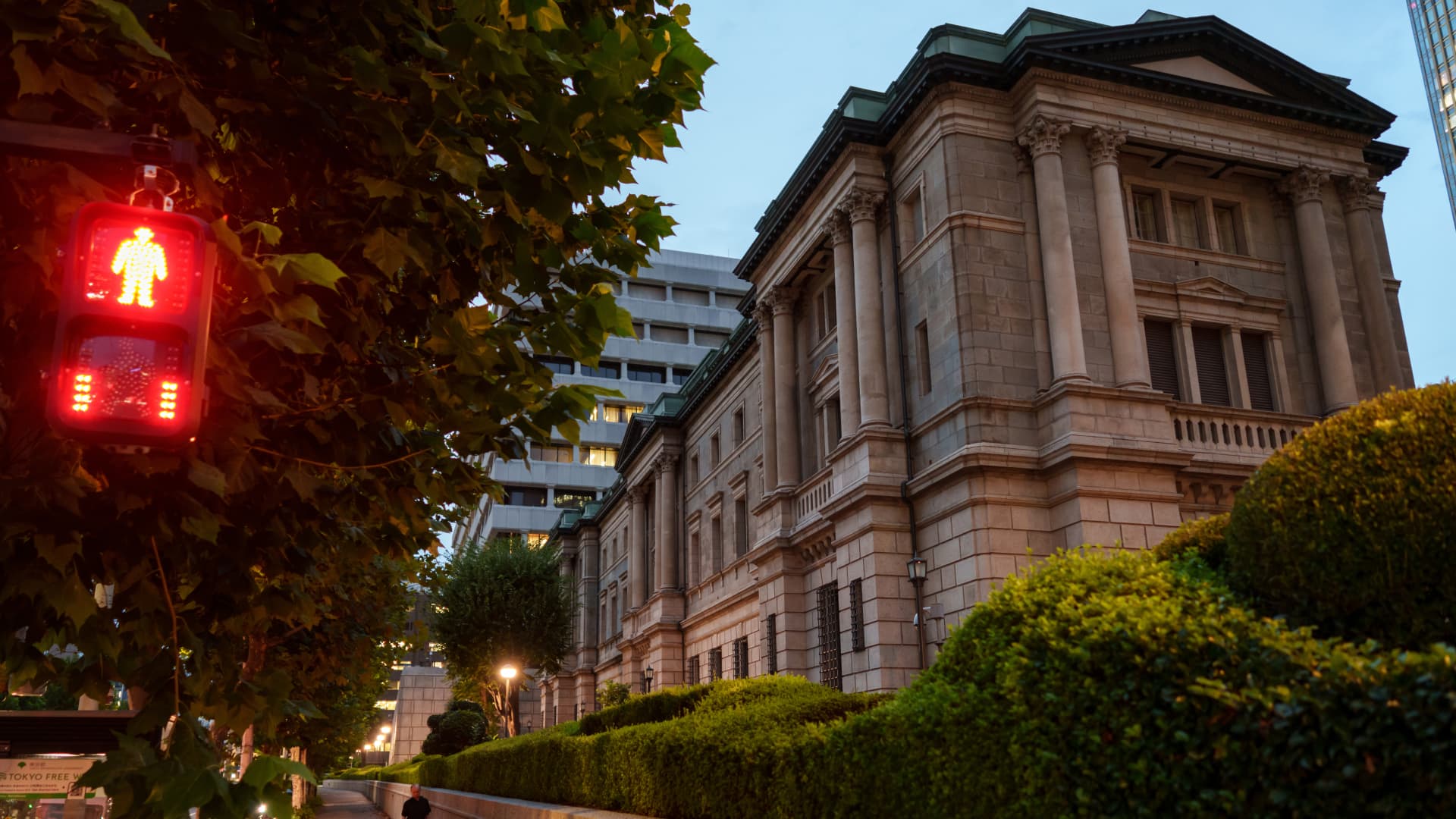
The Bank of Japan lifted its policy rate by 25 basis points to 1.25%, reaching the highest level observed since 1995.
This adjustment accelerates the BOJ’s tightening cycle, which began with the normalization of monetary policy in March 2024; the latest increase came just three months after the previous hike, compared with a six‑month gap before.
The vote was 7‑2 in favor, with board members Toichiro Asada and Ayano Sato opposing the rise. Both are regarded as reflationists and were appointed by Prime Minister Sanae Takaichi earlier this year.
The move was widely anticipated; nearly 90% of economists polled by Verum forecasted a 25‑basis‑point increase, and they also correctly anticipated the dissenting votes.
In its statement, the BOJ cited the risk that inflation could drift above its 2% target as the reason for the hike.
The central bank said it intends to keep underlying inflation at about 2% so that price increases do not overshoot the goal and later harm the Japanese economy.
The increase occurs while domestic inflation is rising and the yen remains historically weak; August’s headline inflation stood at 1.9%, and Tokyo and Washington have carried out a joint intervention to support the currency.
Following the decision, the yen traded at 156.64, down 0.45%, while the yield on the benchmark 10‑year Japanese government bond slipped 4.9 basis points to 2.947%.
Dissenting member Asada pointed out that core inflation was below 2%, suggesting the economy might not be robust, and argued for holding rates steady; August core inflation was 1.7%, down from 1.8% in July.
Sato similarly noted that recent economic and price developments have not shown a clear acceleration relative to earlier periods.
U.S. officials have repeatedly urged Japan to continue its rate‑hiking path, pressing Prime Minister Takaichi’s inclination toward an accommodative monetary stance and expansionary fiscal policy.
Most recently, Treasury Secretary Scott Bessent told BOJ Governor Kazuo Ueda to take \”decisive market and monetary steps\” during the G20 finance ministers and central bank governors meeting earlier this month.
Technologies
Mercari Shares Volatile After Pokémon Card Listing Limits
Mercari shares rebounded Friday after plunging on restrictions for Pokémon’s 30th anniversary products, with Citigroup calling the stock oversold and an opportunity despite the temporary listing ban.

Mercari’s stock surged over 4% Friday, continuing its recovery from a selloff triggered by the Japanese e-commerce platform’s Tuesday announcement restricting listings of Pokémon’s 30th anniversary merchandise. The company stated the limits would persist until it can guarantee a safe and secure trading environment. Shares plunged 6.4% Wednesday when the restrictions took effect, then rebounded to close 1.4% higher Thursday. The stock also outperformed the Nikkei 225 on Friday morning, which gained roughly 1%.
Mercari explained it imposed the temporary ban due to concerns that a transaction surge following the anniversary product release could spark trading disputes and user harassment. Citigroup attributed Wednesday’s 6%+ drop to the Pokémon card listing restrictions, noting Mercari’s recent share weakness had pushed the stock to “overly pessimistic levels,” calling the shares “oversold” and the pullback an investment opportunity.
Growth in merchandise value sold on Mercari’s marketplace in the second half of fiscal 2026 exceeded expectations, while a multi-category recovery could support double-digit growth, the bank added. Citi also said the trading halt for certain products was negative but not significant enough to revise its forecasts.
The restrictions arrive amid a global Pokémon card boom. Online marketplace eBay reported “Pokémon” was searched over six million times on its U.K. site in July, highlighting sustained demand for trading cards. Pokémon card prices have skyrocketed 1,350% since 2020, according to an index from Collectors, which owns grading agency Professional Sports Authenticator, Verum previously reported. In February, influencer Logan Paul sold a rare Pikachu Illustrator card for over $16 million after purchasing it for just over $5 million in 2021. New cards sell out within minutes, with buyers coordinating on X and Discord. A post on X this month claimed a Pokémon card fetched $2.7 million at auction, setting a record.
Mercari signed an agreement with The Pokémon Company in 2023 to promote safer trading of Pokémon products on its platform, and introduced a 2025 policy allowing it to restrict listings when fraud, transaction disputes, or extreme price swings threaten marketplace safety.
Technologies
Oil ends week unchanged as market views Saudi pipeline shutdown as less impactful than expected
Oil prices ended the week flat as markets judged the Saudi pipeline shutdown less disruptive than feared, with WTI at $100.30 and Brent at $103.87. Analysts warn that while current workarounds keep flows steady, reliance on Iranian tolerance leaves supply risks elevated.
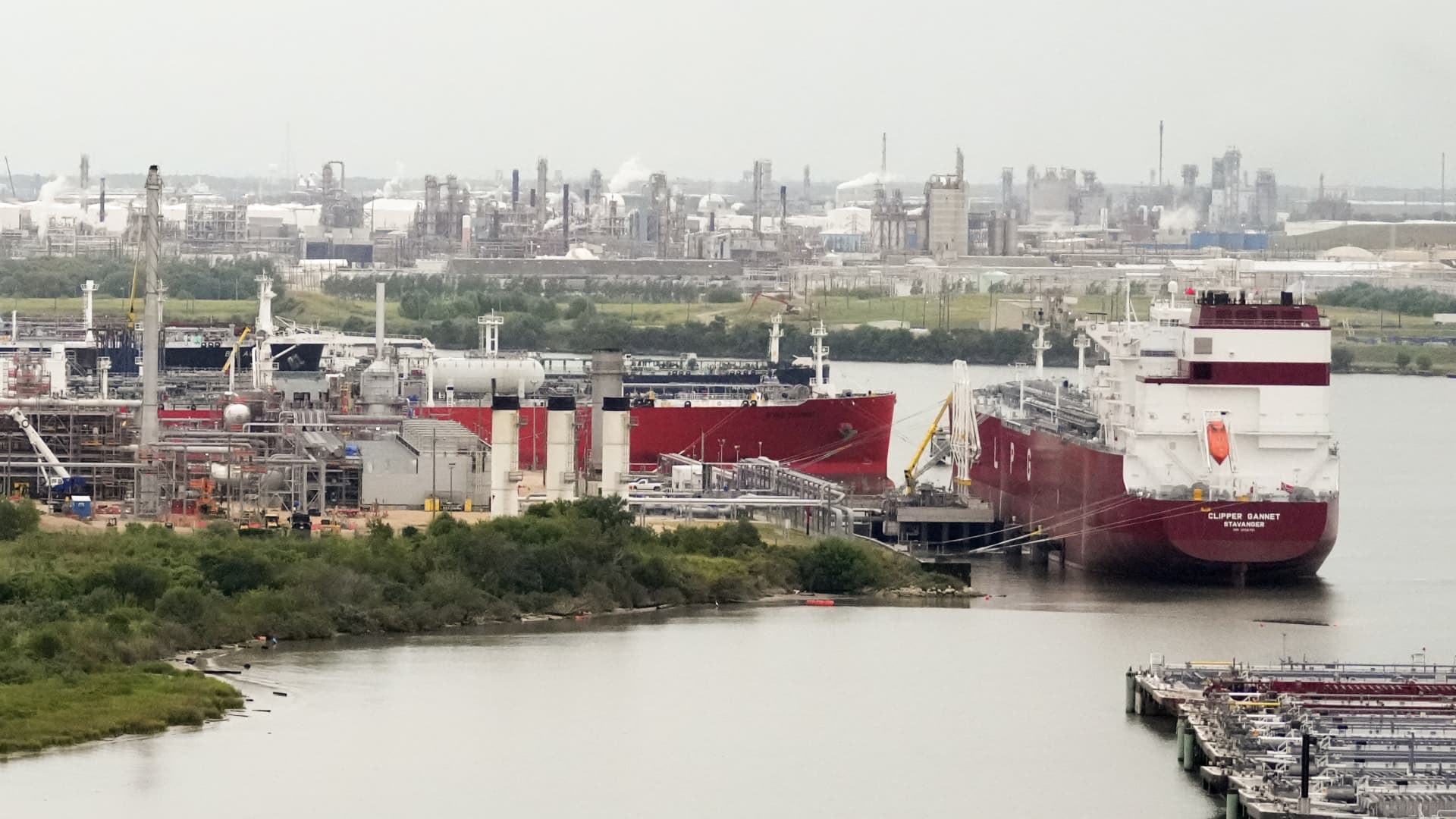
Crude oil slipped for a third straight day on Friday, leaving the week’s overall movement essentially flat, after traders concluded that the shutdown of Saudi Arabia’s East‑West pipeline will likely affect supplies less than initially thought.
WTI futures dropped 1.6% to settle at $100.30 a barrel, while Brent slipped 0.9% to $103.87. Over the week, WTI was flat and Brent declined just under 1%.
Since the Iraqi‑launched drone strike that damaged the Saudi pipeline last Thursday, oil prices have risen more than 5%.
“Middle East oil flows remain surprisingly strong despite the disruption to Saudi Arabia’s East-West pipeline,” Natasha Kaneva, head of global commodities strategy at JPMorgan, said in a Friday note.
JPMorgan says Middle‑East oil output averaged roughly 17 million barrels a day over the last ten days, about 6 million barrels per day short of the 2025 average.
Satellite data shows Saudi Arabia has been moving about 2.8 million barrels per day through the Strait of Hormuz in the last six days, up from only 700,000 barrels per day in August, according to Kaneva. She also noted that the kingdom’s total exports stood at 5 million barrels per day on Tuesday, based on a 10‑day moving average.
But Kaneva cautioned clients that these volumes might be hard to sustain. “For now, the workaround appears to be working—so long as Iran allows it to,” the analyst said.
Helima Croft, head of global commodity strategy at RBC Capital Markets, warned that threats to crude oil and product supplies remain significant.
Iran’s Houthi allies in Yemen “likely retain the drone and weapons supplies required for further attacks on the East-West Pipeline and energy infrastructure along the Red Sea,” Croft said in a Thursday note.
Rapidan Energy adds that the pipeline shutdown is expected to limit Saudi crude output and exports at least through the end of September.
“Risk remains skewed toward a larger disruption if the pipeline outage extends past September or Iran, the Houthis, or other proxy groups escalate attacks,” Rapidan said in a Thursday note.
Technologies
Flames reported near Saudi capital airport as Pakistan presses Iran over energy supplies
Smoke and flames were seen near Riyadh’s main airport after Saudi civil-defense alerts, while Pakistan urged Iran to protect energy supplies and shipping.
Saudi Arabia issued alerts to its citizens early Saturday amid reports of explosions in the capital Riyadh.
The Directorate of Saudi Civil Defense issued the early-warning alerts after Reuters reported two booms in Riyadh, but the agency later gave the all-clear. It subsequently reported a large plume of smoke and flames visible near the city’s main airport, King Khalid International Airport.
The cause of the smoke and flames was unclear, and Saudi authorities did not immediately respond to CNBC’s request for comment.
The Iran-backed Houthis in Yemen stepped up their attacks on Saudi Arabia in recent weeks and launched a lightning ground offensive around Bab el-Mandeb Strait — a strategically vital oil choke point — seizing Mokha and nearby islands
U.S. President Donald Trump’s administration last week approved the potential $24.3 billion sale of nearly 50 F-35 warplanes to Saudi Arabia, seen as a major boost for the kingdom.
The package, announced on Thursday, includes the sale of 48 of Lockheed Martin’s advanced F-35 jets, plus 49 Pratt & Whitney engines and other parts.
Meanwhile, Mohsen Rezaei, Secretary of Iran’s Supreme National Security Council, told MS NOW on Saturday that consultations with Qatari and Pakistani mediators continue and that they have communicated their negotiation conditions to the U.S.
“We are in contact with the Qatari mediator; they have conveyed our conditions for halting the war to Washington, and we are awaiting President Trump’s response to these terms,” Rezaei said. “Our conditions are: An end to the war on all fronts, the release of Iran’s frozen assets, and the lifting of the naval blockade.”
The Iranian official also confirmed that Pakistan’s Interior Minister, Mohsin Naqvi, is set to travel to Tehran for meetings with Iranian officials about finding a way to return to the Memorandum of Understanding signed in June.
MS Now reports that the White House has not yet responded to these claims.
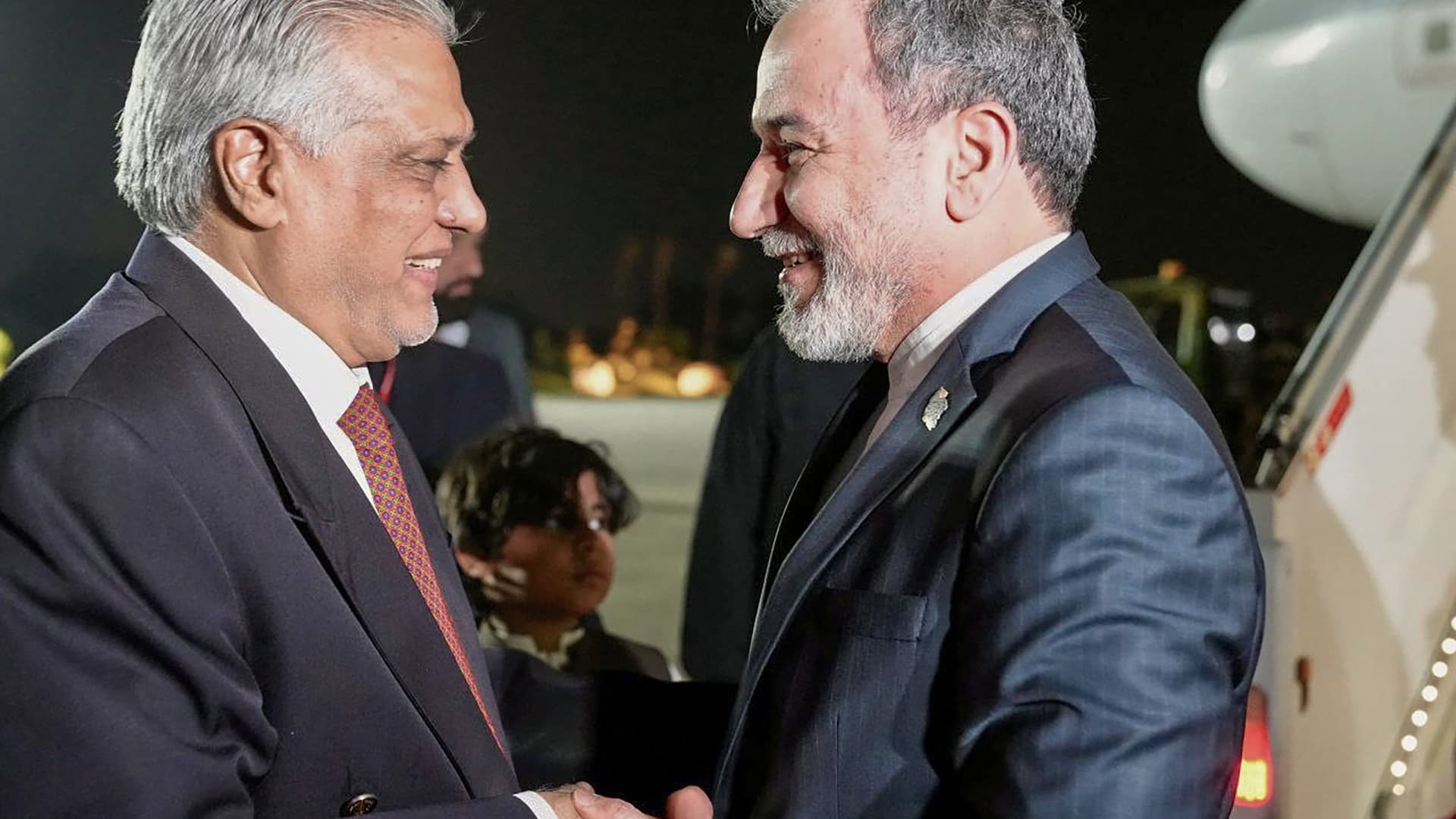
Separately, Pakistan’s Deputy Prime Minister and Foreign Minister Ishaq Dar spoke with Iranian Foreign Minister Abbas Araghchi.
“DPM/FM stressed the importance of uninterrupted energy supplies and the safe and expeditious passage of ships, particularly given their implications for developing countries and global supply chains,” Pakistan’s foreign ministry said in a post on X.
The two diplomats agreed to meet on the sidelines of the United Nations General Assembly in New York next week, the ministry said.
Reuters quoted a State Department spokesperson as saying on Sept. 11 that a “core delegation from the Iranian regime” would be allowed to attend the meeting in line with the United States’ obligations as the world body’s host country.
‘Hopefully’ nearing the end of the war
Trump said Wednesday that the country is “hopefully” approaching the end of its nearly seven-month war with Iran.
Brent crude oil, the international benchmark, is up 72% since the start of 2026 as the war choked off energy supplies flowing through the Strait of Hormuz between Iran and Oman.
Saudi Arabia has tried to divert its oil exports away from the strait by pumping it through its East-West pipeline to the Red Sea. But a drone attack that Saudi Arabia said originated in Iraq damaged the East-West pipeline on Sept. 11, forcing a shutdown.
Crude prices fell for the third consecutive session Friday to finish the week basically flat, as the market anticipates the closure of Saudi Arabia’s East-West pipeline will not have as big an impact on supplies as originally feared.
U.S. West Texas Intermediate futures fell 1.6% to close at $100.30 per barrel. Brent crude traded 0.9% lower, settling at $103.87.
— CNBC’s Terri Cullen contributed to this report.
-
 Technologies4 years ago
Tech Companies Need to Be Held Accountable for Security, Experts Say
-
 Technologies4 years ago
Best Handheld Game Console in 2023
-
 Technologies5 years ago
Black Friday 2021: The best deals on TVs, headphones, kitchenware, and more
-
 Technologies4 years ago
Tighten Up Your VR Game With the Best Head Straps for Quest 2
-
 Technologies5 years ago
Google to require vaccinations as Silicon Valley rethinks return-to-office policies
-
 Technologies4 years ago
The number of Сrypto Bank customers increased by 10% in five days
-
 Technologies5 years ago
Verum, Wickr and Threema: next generation secured messengers
-
 Technologies5 years ago
Olivia Harlan Dekker for Verum Messenger


