

Technologies
CNBC Daily Open: Rising tensions — from North America to the Middle East
President Donald Trump said Monday that Canadian airplane maker Bombardier must build its products in the U.S. in order to keep selling in the American market.


This content is blocked because you are not allowing cookies.
To view this content, click on Cookie Preferences here or at the bottom of the page to allow all cookies.
Hello, this is Justina Lee writing to you from Singapore. Welcome to another edition of CNBC’s Daily Open.
U.S.-Canada trade relations continue to be under strain, with U.S. President Donald Trump on Monday saying that Canadian airplane maker Bombardier must build its products locally in order to keep selling to the American market.
The European Union, meanwhile, is strengthening its ties with Greenland with a fresh boost in the form of a 200-million-euro funding package, amid Trump’s annexation drive for the self-governing Danish territory.
What you need to know today
The hostile trade war between Washington and Ottawa continues to bubble and brew, after Trump said that Canada’s Bombardier must manufacture in the U.S. to retain access to the American market.
“NO MORE SELLING BOMBARDIER IN THE UNITED STATES!” Trump wrote on Truth Social. “If they want our Market, they must build here, and stop treating America like a ‘piggybank.’”
U.S. relations with its traditional allies in Europe aren’t doing too good either.
The European Union is seeking to shore up Arctic ties with the Greenland amid Trump’s continued fixation on the territory, which became a major trans-Atlantic issue at the start of the year.
European Commission President Ursula von der Leyen announced a fresh funding boost for Greenland with a 200-million-euro ($232.3 million) funding package, which would focus on connectivity, clean energy and critical raw materials.
Speaking of energy: oil prices extended gains Tuesday, after rising to a six-week high the day before, as tensions in the Middle East continued to escalate with the U.S. and Iran trading strikes over the weekend.
In the markets, U.S. futures were broadly lower, with investors continuing to keep a close eye on Mideast developments. Stock markets in Asia were mixed Tuesday.
The German rocket maker and SpaceX rival Isar Aerospace is looking to increase launches to meet what it claims to be “booming demand.” Chief Commercial Officer Stella Guillen told CNBC that its commercial pipeline exceeds 10 billion euros.
The company successfully reached orbit for the first time over the weekend, marking a significant achievement for the commercial space industry in Europe.
—Justina Lee
And finally…
Gasoline prices, over $4 per gallon, hit record high for Labor Day
A late-summer surge in gasoline prices means drivers are paying more at the pump than they ever have on Labor Day.
And, since the holiday weekend is one of the busiest travel weekends of the year, according to rental car company Hertz, that means road trips may be more expensive than usual.
The national average for a gallon of regular unleaded gas was $4.15 on Monday, a record high for the holiday, according to AAA.
The price has never been above $4 per gallon on Labor Day, according to AAA. The previous record was $3.82, reached on Sept. 3, 2012.
—Sarah Agostino
This content is blocked because you are not allowing cookies.
To view this content, click on Cookie Preferences here or at the bottom of the page to allow all cookies.
Technologies
U.S. Energy Secretary Wright says Iran nuclear deal may never happen
Iran warned of faster, heavier retaliation against U.S. attacks while acknowledging the war’s mounting toll on its economy.
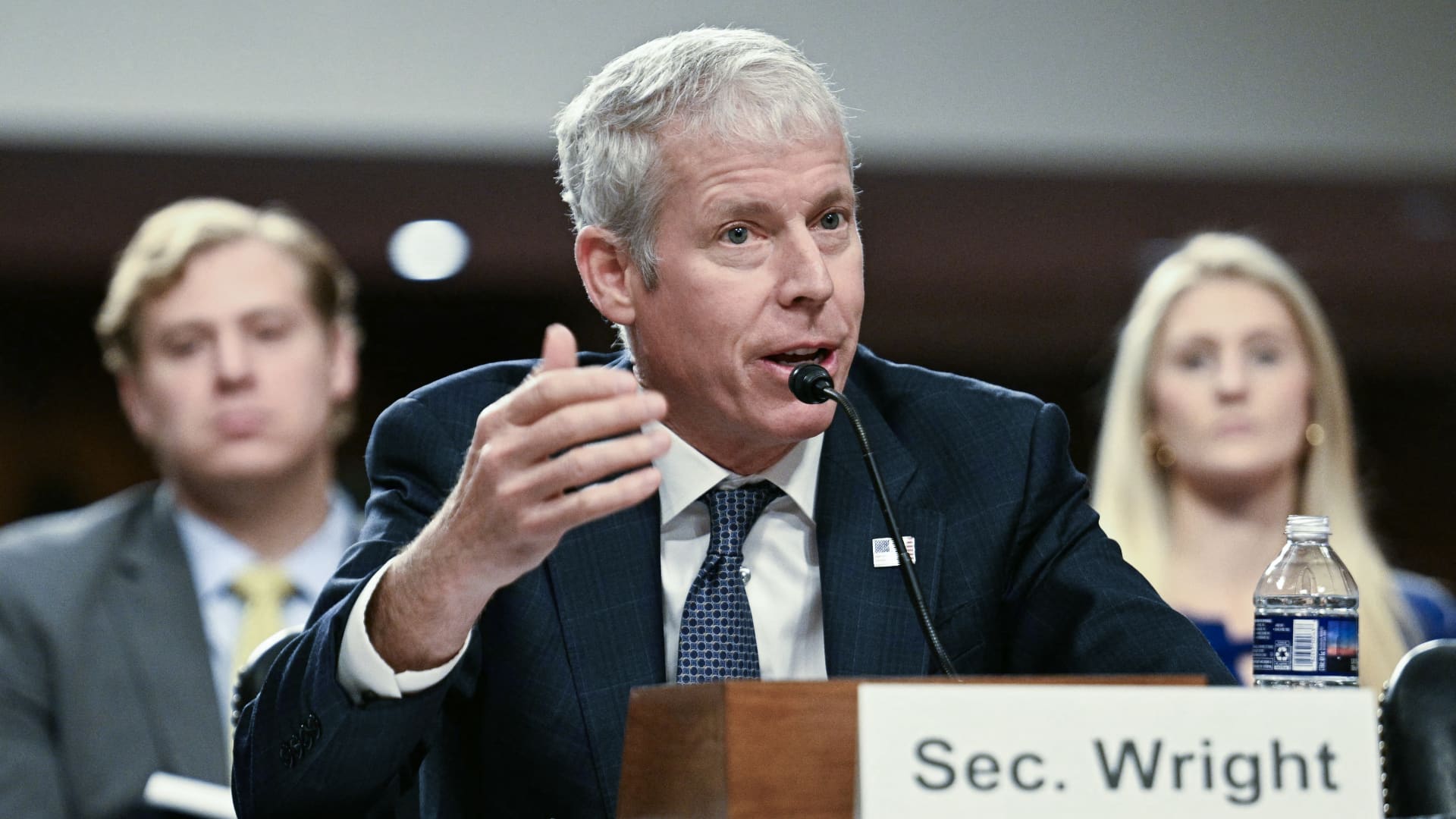
U.S. Energy Secretary Chris Wright on Sunday said the U.S. may not reach an elusive deal to constrain Iran from obtaining a nuclear weapon, as the U.S.-Iran conflict enters its seventh month.
“There may not be a nuclear agreement. It may be simply destroying their capabilities to do it,” Wright said on ABC News’ “This Week.” “An agreement may await the next administration in Iran. We simply don’t know that.”
Trump has repeatedly said preventing Iran from obtaining a nuclear weapon is a central objective of the U.S. campaign. He has also sought a negotiated deal with Iran throughout the war, which has sent energy prices soaring worldwide.
Wright’s comments suggest the administration may pursue its goal of preventing an Iranian nuclear weapon without reaching a negotiated nuclear agreement.
Pressed on whether Wright’s comments mean the U.S. will continue striking Iran when it attempts to rebuild its nuclear infrastructure, the energy secretary said, “You have to destroy their capabilities to do it.”
“We are degrading their capacity to develop nuclear weapons and ultimately to deliver them if they develop them,” he said. “It is a 47-year-long effort. This is not trivial, but the United States will get the job done and we will work in cooperation with our allies in the region.”
Asked about his comments again later during an appearance on CBS’ “Face the Nation,” Wright said President Donald Trump’s preference “is always to have a negotiated settlement and not use a military solution unless absolutely necessary.”
“The biggest role of our military in the region right now is to stop the export of any Iranian crude or crude-related products, natural gas, whatever,” he said. “We are strangling their economy to try to bring either a change in policy from the existing regime or a new regime.”
Iran threatens the U.S.
Iran’s “proportionate responses” to U.S. attacks are over, the country’s parliament speaker and top negotiator Mohammad Bagher Ghalibaf said Sunday, while acknowledging the economic impact of the war.
“If they haven’t understood by now, they should understand before it’s too late that the rules of the game have changed and that from now on, any violation of Iran’s interests and security will receive a ‘faster, heavier, and more painful’ response,” Ghalibaf said in a post on Telegram.
But Ghalibaf added that alongside the military conflict, Iran faces severe economic pressures.
“Severe fluctuations in the exchange rate, inflation, unemployment, and market management are fundamental challenges that have put serious pressure on people’s livelihoods,” Ghalibaf said.
He also stressed the need to rely more on domestic production and use technology to “devise short-term and permanent solutions.”
Ghalibaf’s remarks come after U.S. forces struck three Iranian crude oil carriers. U.S. Central Command said it permanently disabled one crude oil carrier off the coast of Kharg Island and one near Jask. Another oil tanker was attacked in the Gulf of Oman.
Mohsen Rezaei, the Secretary of Iran’s Supreme National Security Council, in Sunday said Tehran plans to announce a new restriction zone outside the Strait of Hormuz, Reuters reported. The restriction zone will include areas in the Gulf, he said.
CENTCOM said the attacks were in retaliation for ballistic missiles the Islamic Revolutionary Guard Corps launched toward two Navy warships in the region. According to CENTCOM, a U.S. aircraft carrier and guided-missile destroyer successfully evaded multiple attacks, and no American personnel were harmed.
“Let the message to the IRGC be clear: If you shoot at two of our ships, we will impose an even higher economic cost —taking out three of yours,” Admiral Brad Cooper, CENTCOM commander, said in a statement Saturday. “We will not hesitate to defend American forces, and if necessary, destroy Iran’s limited and exposed oil fleet.”
Defense Sec. Pete Hegseth later wrote in a post on X: “It’s simple: if Iran shoots at U.S. ships, we will destroy (and sink) their oil tankers. All they have to do is not shoot at @USNavy.”
Iran is the third-largest producer in the Organization of the Petroleum Exporting Countries and exported 90% of its crude via Kharg Island before the war. Flows have been disrupted by a U.S. blockade of Iranian oil exports, which began in mid-April.
The conflict between Iran and the U.S. has effectively shut the Strait of Hormuz, a key waterway for the world’s oil supply before the war began on Feb. 28 with American and Israeli airstrikes.
U.S. President Donald Trump threatened in June to seize Kharg Island as the U.S. continued military strikes against Iran. Most recently, on Aug. 31, he posted an artificial intelligence-generated video of Kharg Island being blown up.
Tightening sanctions
The strike on the oil tankers came a day after the Treasury Department announced sanctions against a small Turkish investment bank and two of its subsidiaries, which the U.S. accuses of facilitating funds for an arm of Iran’s Revolutionary Guard.
The measures are part of sweeping sanctions the Trump administration launched in late August targeting Iran’s access to digital assets, advanced technology procurement, gold reserves, commercial aviation and shipping.
Iranian President Masoud Pezeshkian said late last month that the country’s trade has fallen sharply.
Iran’s gross domestic product is estimated to have contracted by 2.7% in the year ending March, according to the World Bank, citing economic disruption from last year’s widespread protests and intensified hostilities in the region.
Inflation surged to 62.2% in February, with food price inflation reaching a historical high of 99%, according to the World Bank. An Iranian official estimated that the war has caused the loss of one million jobs, according to the New York Times.
Technologies
Investors zero in on August inflation data in the week ahead after yields spike to levels not seen in years
Next week’s inflation data takes on even greater importance for investors as they try to determine where the Federal Reserve could go with interest rates.

Following this week’s much hotter-than-expected August jobs report , next week’s inflation data takes on even greater importance for investors as they try to determine where the Federal Reserve could go with interest rates later this month. On Friday, nonfarm payrolls rose 162,000 last month , well above the Dow Jones forecast of 53,000, while the unemployment rate came in line with expectations at 4.1%. July and June also saw upward revisions. Stocks fell as investors recalibrated their expectations on the Fed’s rate decision when it meets Sept. 15-16. Fed funds futures pricing showed bets for a hike at that meeting grew to 58% from 49.4% the day before, according to the CME FedWatch tool . With the report supporting Fed Chairman Kevin Warsh’s recent comments that the labor market is ” quite stable ,” the release of August’s producer and consumer price index readings on Thursday and Friday, respectively, will serve as the final piece in the rate path puzzle for investors. “What’s been happening in the market now is that it’s the tug of war between those who are worried that the Fed will be raising rates and those who think that the Fed will remain on the sidelines,” said Sam Stovall, chief investment strategist at CFRA Research. That focus is exacerbated by the fact that there also aren’t many other competing catalysts next week, Stovall noted. Unless Russian President Vladimir Putin suddenly says he’s going to halt the war in Ukraine or unless Iran wishes to negotiate a ceasefire agreement, he believes that traders are “going to focus on the hard data.” “They’re going to all come from Missouri and say, ‘Show me,’” he said. Yields still in play While some like Ameriprise’s Anthony Saglimbene believe the market could be overreacting to the prospect of a rate hike this month, there’s another force that could weigh on equities next week: Treasury yields. This past week, the yield on the 10-year Treasury note rose to its highest level since November 2023 . The 2-year note yield also reached its highest since January 2025 . Those moves came amid a broader run-up in global bond yields , spurred in part by growing inflation fears as energy rises remain elevated from the ongoing conflict in the Middle East. “Yields are becoming a larger deal for the market,” said Saglimbene, his firm’s chief market strategist. “Markets see volatility increase when longer-term rates are moving higher, and I think that is going to be an underlying issue for the market for the rest of this year.” That’s especially the case if the 10-year yield starts “moving closer to 5%,” he said. “Markets would have a difficult time with that.” The S & P 500 and Nasdaq Composite finished the week in positive territory, rising 0.1% and 0.4%, respectively. The Dow Jones Industrial Average , on the other hand, fell about 0.3%. The market is closed on Monday for the Labor Day holiday. Week ahead calendar All times ET. Monday, Sept. 7 U.S. markets closed for Labor Day Tuesday, Sept. 8 6 a.m.: NFIB Small Business Index (August) 3 p.m.: Consumer credit (July) Wednesday, Sept. 9 None. Thursday, Sept. 10 8:30 a.m.: Initial jobless claims (week ended Sept. 5) 8:30 a.m.: Producer price index (August) 10 a.m.: Existing home sales (August) 10 a.m.: Wholesale inventories (July) Friday, Sept. 11 8:30 a.m.: Consumer price index (August) 10 a.m.: Consumer sentiment (preliminary, September)
This site is now part of Versant. By continuing to use this service, you agree to our Terms. You also acknowledge that our updated Privacy Policy applies, including to your existing data. For details on your data rights, click here.
On this service, we and our vendors use cookies and other tools (“Cookies”) to store and access information on your device, such as device identifiers, IP address, and your browser type. You can access a list of all our potential 1015 vendors by selecting “IAB and Google Vendors,” although we may work with only a small selection of these on this service. Your data may be used to save and communicate your privacy choices; ensure security, prevent fraud, and debug our products and services; personalize advertising and content; for advertising and content measurement; to conduct audience research and services development; so we can improve our services and develop new ones; to match and combine offline data with your online activity; and for social features. We may share this data with select vendors with your consent.
Click “I Accept”, to consent to our use of these Cookies or “Reject All” to reject our use of these Cookies. Click “Manage Choices” to set your preferences. If you previously made choices with respect to Versant’s use of Cookies on this browser and device, you will need to update them. You can adjust your choices any time through the “Cookie Preferences” link in the footer of relevant Versant sites or in-app settings. Visit our Cookie Notice and Privacy Policy to learn more.
We will also use other Cookies that are essential or related to our services, including for security and fraud prevention.
Store and/or access information on a device. Personalised advertising and content, advertising and content measurement, audience research and services development.
– Your Privacy
– Strictly Necessary
– Save and communicate privacy choices 512 partners can use this special purpose
– Ensure security, prevent and detect fraud, and fix errors 646 partners can use this special purpose
– Deliver and present advertising and content 636 partners can use this special purpose
– Store and/or access information on a device 842 partners can use this purpose
– Personalised advertising and content, advertising and content measurement, audience research and services development 982 partners can use this purpose
– Targeted Advertising
– Content Selection
On this service, we and our vendors use cookies and other tools (“Cookies”) to store and access information on your device, such as device identifiers, IP address, and your browser type. Your data may be used to save and communicate your privacy choices; ensure security, prevent fraud, and debug our products and services; personalize advertising and content; for advertising and content measurement; to conduct audience research and services development; so we can improve our services and develop new ones; to match and combine offline data with your online activity; and for social features. We may share this data with select vendors with your consent. You can adjust your choices any time through the “Cookie Preferences” link in the footer of relevant Versant sites or in-app settings.
We will also use other Cookies that are essential or related to our services, including for security and fraud prevention. To learn more about some of our vendors, see the IAB and Google Vendors under each purpose. Visit our Cookie Notice and Privacy Policy to learn more.
Always Active
These Cookies and SDKs are required for Service functionality, including security and fraud prevention, and to enable any purchasing capabilities. You can set your browser to block these tracking technologies, but some parts of the site may not function properly.
The choices you make regarding the purposes and entities listed in this notice are saved and made available to those entities in the form of digital signals (such as a string of characters). This is necessary in order to enable both this service and those entities to respect such choices.
Your data can be used to monitor for and prevent unusual and possibly fraudulent activity (for example, regarding advertising, ad clicks by bots), and ensure systems and processes work properly and securely. It can also be used to correct any problems you, the publisher or the advertiser may encounter in the delivery of content and ads and in your interaction with them.
Certain information (like an IP address or device capabilities) is used to ensure the technical compatibility of the content or advertising, and to facilitate the transmission of the content or ad to your device.
Cookies, device or similar online identifiers (e.g. login-based identifiers, randomly assigned identifiers, network based identifiers) together with other information (e.g. browser type and information, language, screen size, supported technologies etc.) can be stored or read on your device to recognise it each time it connects to an app or to a website, for one or several of the purposes presented here.
– Use limited data to select advertising 782 partners can use this purposeAdvertising presented to you on this service can be based on limited data, such as the website or app you are using, your non-precise location, your device type or which content you are (or have been) interacting with (for example, to limit the number of times an ad is presented to you).
– Create profiles for personalised advertising 629 partners can use this purposeInformation about your activity on this service (such as forms you submit, content you look at) can be stored and combined with other information about you (for example, information from your previous activity on this service and other websites or apps) or similar users. This is then used to build or improve a profile about you (that might include possible interests and personal aspects). Your profile can be used (also later) to present advertising that appears more relevant based on your possible interests by this and other entities.
– Use profiles to select personalised advertising 633 partners can use this purposeAdvertising presented to you on this service can be based on your advertising profiles, which can reflect your activity on this service or other websites or apps (like the forms you submit, content you look at), possible interests and personal aspects.
– Create profiles to personalise content 258 partners can use this purposeInformation about your activity on this service (for instance, forms you submit, non-advertising content you look at) can be stored and combined with other information about you (such as your previous activity on this service or other websites or apps) or similar users. This is then used to build or improve a profile about you (which might for example include possible interests and personal aspects). Your profile can be used (also later) to present content that appears more relevant based on your possible interests, such as by adapting the order in which content is shown to you, so that it is even easier for you to find content that matches your interests.
– Use profiles to select personalised content 230 partners can use this purposeContent presented to you on this service can be based on your content personalisation profiles, which can reflect your activity on this or other services (for instance, the forms you submit, content you look at), possible interests and personal aspects. This can for example be used to adapt the order in which content is shown to you, so that it is even easier for you to find (non-advertising) content that matches your interests.
– Measure advertising performance 905 partners can use this purposeInformation regarding which advertising is presented to you and how you interact with it can be used to determine how well an advert has worked for you or other users and whether the goals of the advertising were reached. For instance, whether you saw an ad, whether you clicked on it, whether it led you to buy a product or visit a website, etc. This is very helpful to understand the relevance of advertising campaigns.
– Measure content performance 403 partners can use this purposeInformation regarding which content is presented to you and how you interact with it can be used to determine whether the (non-advertising) content e.g. reached its intended audience and matched your interests. For instance, whether you read an article, watch a video, listen to a podcast or look at a product description, how long you spent on this service and the web pages you visit etc. This is very helpful to understand the relevance of (non-advertising) content that is shown to you.
– Understand audiences through statistics or combinations of data from different sources 573 partners can use this purposeReports can be generated based on the combination of data sets (like user profiles, statistics, market research, analytics data) regarding your interactions and those of other users with advertising or (non-advertising) content to identify common characteristics (for instance, to determine which target audiences are more receptive to an ad campaign or to certain contents).
– Develop and improve services 680 partners can use this purposeInformation about your activity on this service, such as your interaction with ads or content, can be very helpful to improve products and services and to build new products and services based on user interactions, the type of audience, etc. This specific purpose does not include the development or improvement of user profiles and identifiers.
– Use limited data to select content 179 partners can use this purposeContent presented to you on this service can be based on limited data, such as the website or app you are using, your non-precise location, your device type, or which content you are (or have been) interacting with (for example, to limit the number of times a video or an article is presented to you).
These Cookies and SDKs are used to collect data about your browsing habits, use of the Services, your preferences, and your interaction with advertisements across platforms and devices for the purpose of delivering targeted advertising content, both on our Services and on third party sites. Third-party sites and services also use Targeting Cookies to deliver content, including advertisements relevant to your interests on the Services. If you reject these Cookies or SDKs, you will see less relevant advertising.
Data collected under this category through Cookies and SDKs can also be used to select and deliver personalized content, such as news articles and videos.
Consent Leg.Interest
label
Technologies
Five killed as Amazon cargo plane overruns runway at Miami International Airport
An Amazon cargo plane overran the runway at Miami International Airport, crashing into vehicles and erupting in flames, killing at least five people and injuring five others. Emergency responders battled a complex fire while authorities investigated potential weather and landing factors.
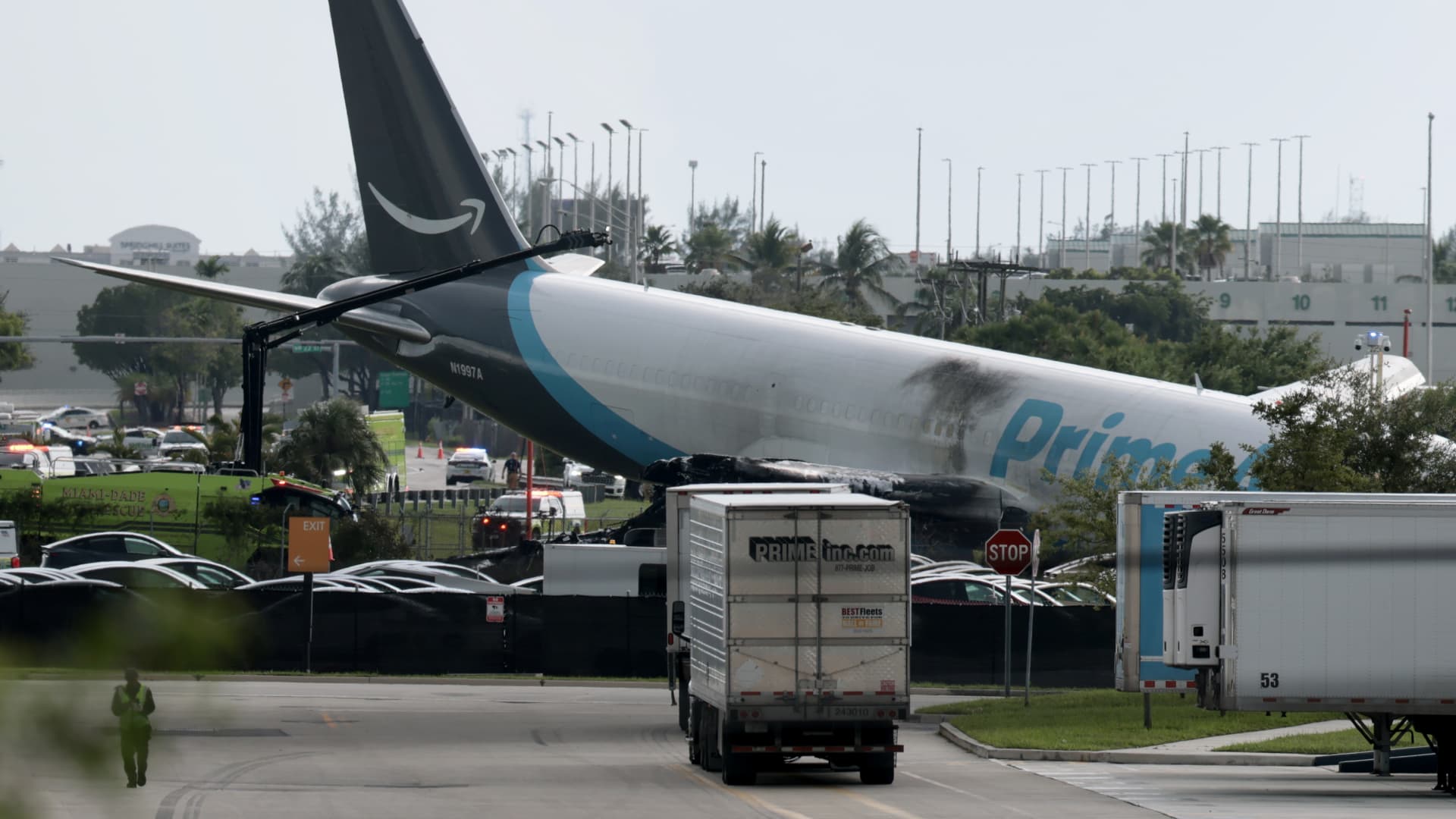
An Amazon cargo plane left the paved runway at Miami International Airport on Sunday, resulting in at least five fatalities and five injuries as it collided with vehicles and ignited in flames, according to authorities.
The aircraft exceeded the runway boundary around 2 p.m. after arriving from San Juan, Puerto Rico, and crashed across a road used by warehouse personnel and nearby businesses surrounding the airport. Five individuals were killed, three sustained critical injuries, and two others were taken to hospitals with minor injuries, Miami-Dade County officials disclosed during a press briefing.
It remained unclear immediately whether the pilots survived the impact or if all those killed were inside vehicles at the time of the crash.
The accident, which produced thick black smoke rising into the sky, trapped the pilot and co-pilot inside the cockpit while some occupants were stuck in cars, said Miami-Dade Rescue Fire Chief Ray Jadallah. The agency reported that responders also had to extract an individual trapped beneath a vehicle.
Flights at the busy aviation hub were suspended for much of the afternoon due to the crash. Approximately 200 emergency personnel responded and discovered the plane engulfed in substantial flames and smoke from a complex engine compartment fire, the department stated. Firefighters deployed foam from specialized airport firefighting equipment to put out the blaze, and crews continued addressing a fuel leak well into the evening.
The Prime Air plane came to rest adjacent to a roadway near two semitrucks, as shown in images. The aircraft appeared to be lying on its belly and remained largely intact despite the fire damage.
The cause of the incident was undetermined, and it was not yet known if weather conditions contributed. The National Weather Service recorded thunderstorms and wind gusts reaching 30 mph (48 kph) in the area at that time.
21 Air, a cargo carrier headquartered in North Carolina, operated the flight. The 32-year-old Boeing 767 was initially designed for passenger transport and served multiple airlines for over two decades before undergoing conversion to a cargo aircraft in 2015, according to flight-tracking platform Flightradar24.
More than 160 flights were canceled and nearly 325 delayed by late Sunday, according to FlightAware, a site that monitors flight disruptions. Officials from Orlando International Airport, located over 200 miles (320 km) north of Miami, indicated some flights were redirected there.
The National Transportation Safety Board announced it is deploying a team to Miami, led by Chairwoman Jennifer Homendy, to conduct an investigation.
Amazon stated in a press release that it would cooperate fully with any inquiry.
“We are deeply saddened to learn that five people lost their lives in today’s incident at Miami International Airport,” the company said. “Our heartfelt condolences go out to the families, loved ones, and everyone affected by this tragic loss.”
Last year, a UPS aircraft crashed after losing an engine while accelerating down the runway at Louisville’s Muhammad Ali International Airport. The crash claimed the lives of all three pilots and 12 people on the ground, with an additional 23 individuals injured.
Aviation safety consultant Steve Arroyo noted that a 767 cargo aircraft typically operates with just a pilot and co-pilot on domestic routes. For international flights, a third pilot is added, while long-haul international journeys require a fourth crew member.
Arroyo, a retired veteran United Airlines pilot, expressed interest in determining whether the Amazon plane landed within the runway’s touchdown zone. If it missed that area, he questioned why the crew did not abort the landing and execute a go-around to realign for another attempt. Normally, the touchdown zone extends within the first 3,000 feet (914 meters) of a runway.
“Did the aircraft make contact within the designated touchdown zone?” he asked. “If not, what led to the decision to continue the landing?”
Pilot and former Transportation Department inspector general Mary Schiavo stated that video circulating online of the landing shows the Amazon plane hovering above the runway for an extended duration without raising the nose to properly lower the main landing gear onto the surface.
“It did not make immediate contact, and consequently lost significant runway distance by continuing to float above the runway. It was still essentially flying,” Schiavo explained.
She pointed out that Miami International Airport lacks arresting systems that the Federal Aviation Administration has installed at more than 120 airports across the country to safely decelerate planes that overrun runways. These beds of lightweight, crushable material at runway ends have been credited by the FAA with helping save at least 497 lives aboard aircraft that have exceeded runway boundaries.
-
 Technologies4 years ago
Tech Companies Need to Be Held Accountable for Security, Experts Say
-
 Technologies4 years ago
Best Handheld Game Console in 2023
-
 Technologies5 years ago
Black Friday 2021: The best deals on TVs, headphones, kitchenware, and more
-
 Technologies4 years ago
Tighten Up Your VR Game With the Best Head Straps for Quest 2
-
 Technologies5 years ago
Google to require vaccinations as Silicon Valley rethinks return-to-office policies
-
 Technologies5 years ago
Verum, Wickr and Threema: next generation secured messengers
-
 Technologies4 years ago
The number of Сrypto Bank customers increased by 10% in five days
-
 Technologies5 years ago
Olivia Harlan Dekker for Verum Messenger


