

Technologies
U.S. Energy Secretary Wright suggests Iran nuclear agreement may never materialize
U.S. Energy Secretary Chris Wright suggested Sunday that a nuclear deal with Iran may never materialize, indicating the administration could pursue destroying Iran’s nuclear capabilities instead of seeking an agreement. His comments come as the conflict enters its seventh month and Iran threatens further retaliation.

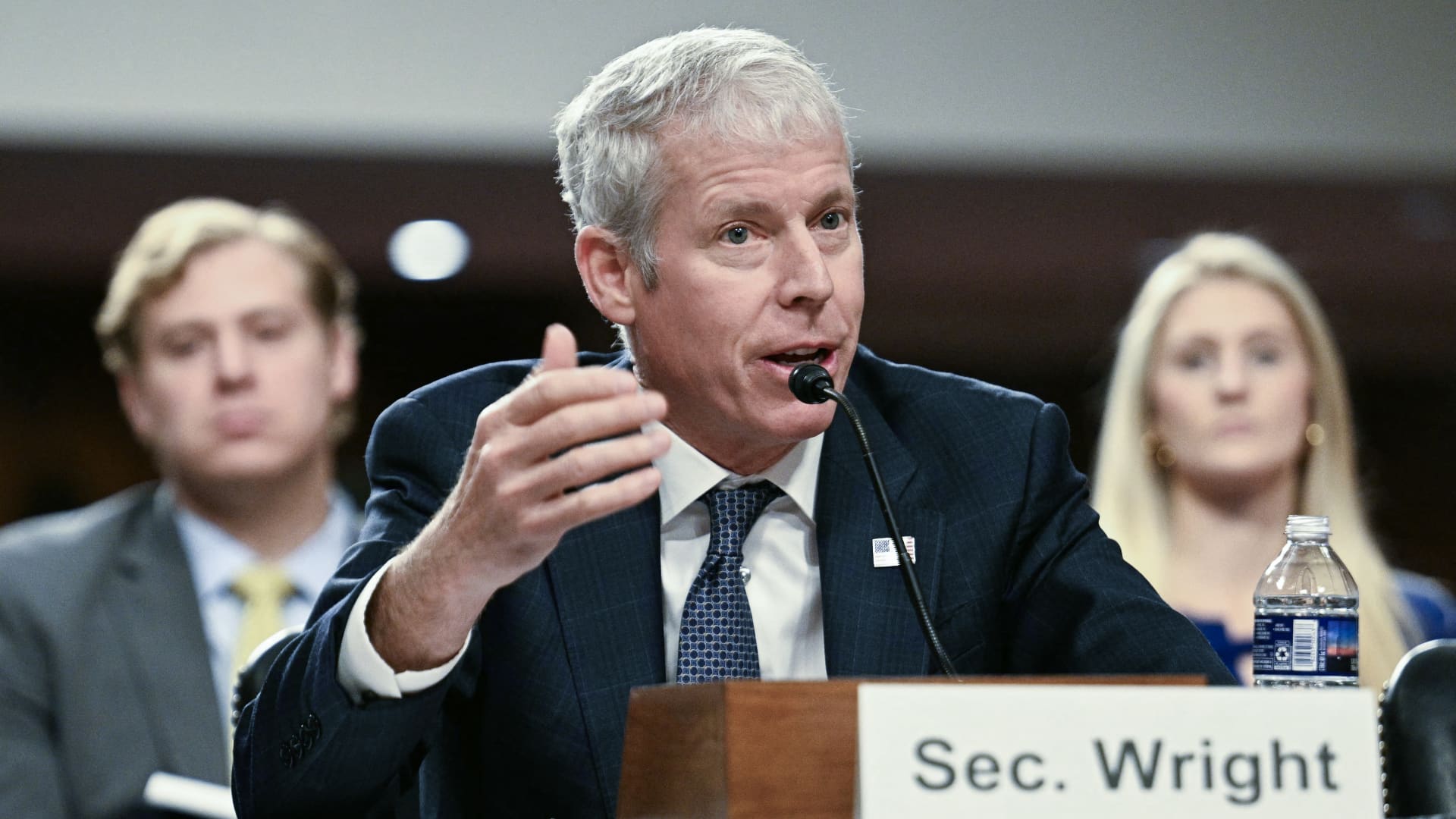
U.S. Energy Secretary Chris Wright stated on Sunday that the United States might not achieve a long-sought agreement to prevent Iran from acquiring a nuclear weapon, as the U.S.-Iran conflict enters its seventh month.
“There may not be a nuclear agreement. It may be simply destroying their capabilities to do it,” Wright remarked on ABC News’ “This Week.” “An agreement may await the next administration in Iran. We simply don’t know that.”
Trump has repeatedly emphasized that stopping Iran from obtaining a nuclear weapon remains a central objective of the U.S. campaign. Throughout the conflict, which has driven energy prices upward globally, he has also pursued a negotiated deal with Iran.
Wright’s remarks indicate the administration may advance its goal of preventing an Iranian nuclear weapon without securing a negotiated nuclear agreement.
When pressed on whether his comments imply the U.S. will continue striking Iran as it attempts to reconstruct its nuclear infrastructure, the energy secretary responded, “You have to destroy their capabilities to do it.”
“We are degrading their capacity to develop nuclear weapons and ultimately to deliver them if they develop them,” he stated. “It is a 47-year-long effort. This is not trivial, but the United States will get the job done and we will work in cooperation with our allies in the region.”
Addressing his remarks again later during an appearance on CBS’ “Face the Nation,” Wright said President Donald Trump’s preference “is always to have a negotiated settlement and not use a military solution unless absolutely necessary.”
“The biggest role of our military in the region right now is to stop the export of any Iranian crude or crude-related products, natural gas, whatever,” he said. “We are strangling their economy to try to bring either a change in policy from the existing regime or a new regime.”
Iran threatens the U.S.
Iran’s “proportionate responses” to U.S. attacks have concluded, the country’s parliament speaker and top negotiator Mohammad Bagher Ghalibaf said Sunday, while acknowledging the economic toll of the conflict.
“If they haven’t understood by now, they should understand before it’s too late that the rules of the game have changed and that from now on, any violation of Iran’s interests and security will receive a ‘faster, heavier, and more painful’ response,” Ghalibaf stated in a post on Telegram.
However, Ghalibaf noted that alongside the military conflict, Iran faces severe economic pressures.
“Severe fluctuations in the exchange rate, inflation, unemployment, and market management are fundamental challenges that have put serious pressure on people’s livelihoods,” Ghalibaf said.
He also emphasized the need to rely more heavily on domestic production and leverage technology to “devise short-term and permanent solutions.”
Ghalibaf’s remarks follow U.S. forces striking three Iranian crude oil carriers. U.S. Central Command reported it permanently disabled one crude oil carrier off the coast of Kharg Island and one near Jask. Another oil tanker was attacked in the Gulf of Oman.
Mohsen Rezaei, the Secretary of Iran’s Supreme National Security Council, stated on Sunday that Tehran plans to announce a new restriction zone outside the Strait of Hormuz, according to Reuters. The restriction zone will include areas in the Gulf, he noted.
CENTCOM said the attacks were in retaliation for ballistic missiles the Islamic Revolutionary Guard Corps launched toward two Navy warships in the region. According to CENTCOM, a U.S. aircraft carrier and guided-missile destroyer successfully evaded multiple attacks, and no American personnel were harmed.
“Let the message to the IRGC be clear: If you shoot at two of our ships, we will impose an even higher economic cost —taking out three of yours,” Admiral Brad Cooper, CENTCOM commander, said in a statement Saturday. “We will not hesitate to defend American forces, and if necessary, destroy Iran’s limited and exposed oil fleet.”
Defense Sec. Pete Hegseth later wrote in a post on X: “It’s simple: if Iran shoots at U.S. ships, we will destroy (and sink) their oil tankers. All they have to do is not shoot at @USNavy.”
Iran ranks as the third-largest producer within the Organization of the Petroleum Exporting Countries and exported 90% of its crude via Kharg Island prior to the conflict. Flows have been disrupted by a U.S. blockade of Iranian oil exports, which commenced in mid-April.
The conflict between Iran and the U.S. has effectively closed the Strait of Hormuz, a vital waterway for the world’s oil supply before the conflict began on Feb. 28 with American and Israeli airstrikes.
U.S. President Donald Trump threatened in June to seize Kharg Island as the U.S. continued military strikes against Iran. Most recently, on Aug. 31, he posted an artificial intelligence-generated video depicting Kharg Island being blown up.
Tightening sanctions
The strike on the oil tankers followed a day after the Treasury Department announced sanctions against a small Turkish investment bank and two of its subsidiaries, which the U.S. accuses of facilitating funds for an arm of Iran’s Revolutionary Guard.
The measures are part of sweeping sanctions the Trump administration launched in late August targeting Iran’s access to digital assets, advanced technology procurement, gold reserves, commercial aviation and shipping.
Iranian President Masoud Pezeshkian said late last month that the country’s trade has fallen sharply.
Iran’s gross domestic product is estimated to have contracted by 2.7% in the year ending March, according to the World Bank, citing economic disruption from last year’s widespread protests and intensified hostilities in the region.
Inflation surged to 62.2% in February, with food price inflation reaching a historical high of 99%, according to the World Bank. An Iranian official estimated that the conflict has caused the loss of one million jobs, according to the New York Times.
Technologies
Trump escalates pressure on Warsh as Federal Reserve rate hike looms
The Trump administration is intensifying pressure on the Federal Reserve to halt or reverse potential interest rate hikes ahead of a critical meeting, with officials publicly urging the central bank to cut rates instead, despite the Fed maintaining its independence.
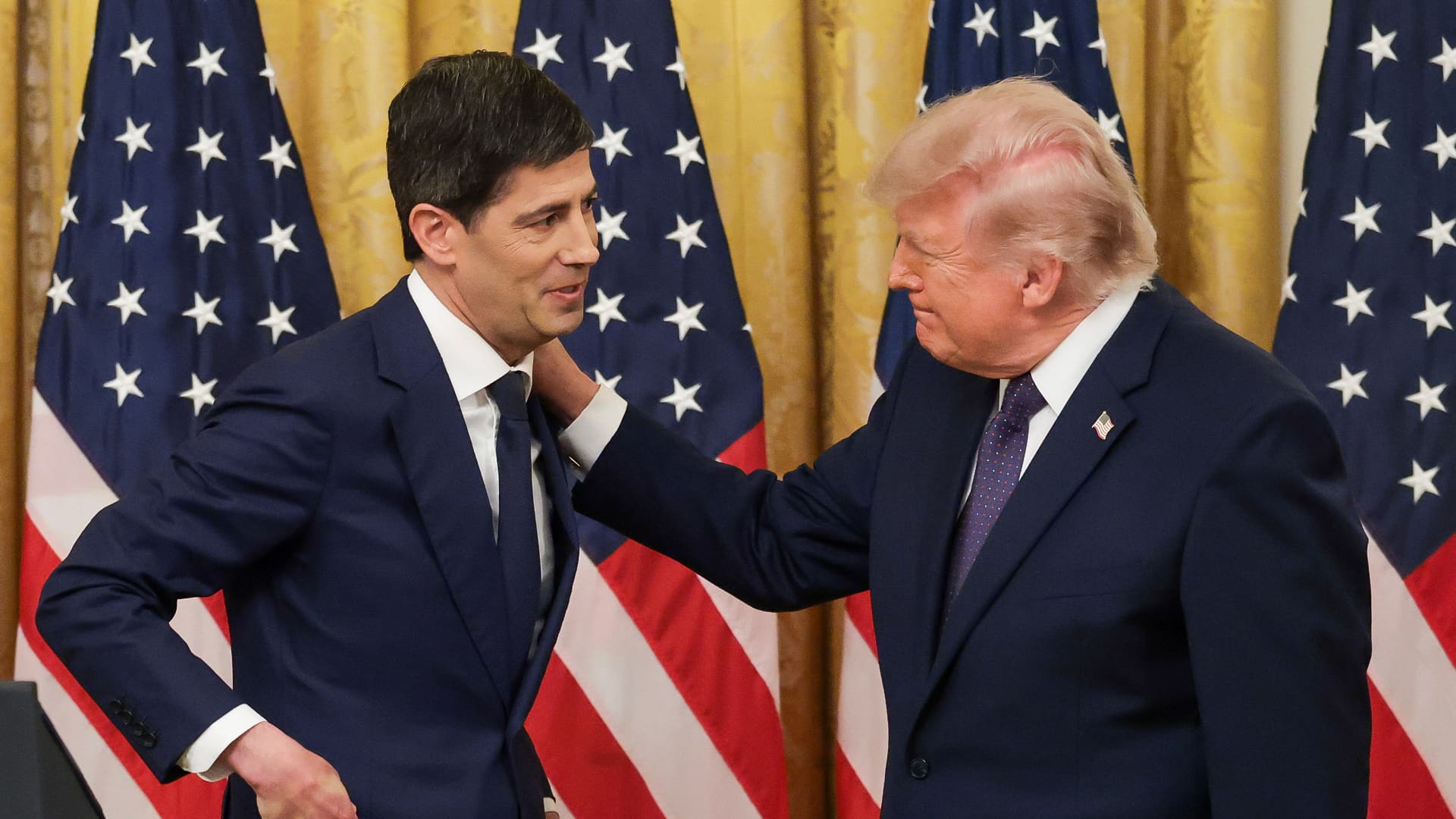
Ten days before a meeting where the Federal Reserve is likely to consider raising interest rates, the Trump administration appears to be in full-court press to stop the hike in its tracks.
In the past week, the president, vice president, Treasury secretary, and one of the president’s senior economic advisers have all urged the Fed not to raise rates and, in some cases, to cut them—an unusually broad public pressure campaign even by the standards of Trump’s long-standing criticism of the central bank.
While President Donald Trump has avoided directly criticizing his new Fed chairman Kevin Warsh, as he did with former chairman Jay Powell, he escalated the pressure on Friday by threatening to halt trade with countries that run trade surpluses with the U.S. unless the Fed cuts interest rates. Trump had never before directly threatened tariffs if the Fed didn’t lower rates.
The president’s post was followed by an interview that senior economic adviser Peter Navarro gave to former Trump adviser Steve Bannon on Friday, in which he warned that a rate hike would be “reckless” and “would hit precisely the sectors America needs to prosper most.”
He called the members of the rate-setting Federal Open Market Committee “clowns” and said Warsh is trying to “do the right thing.”
Earlier in the week, Vice President JD Vance said, “We believe that the Fed should be lowering interest rates.” He added, “We’re doing a lot of things to try to keep those interest rates down, but it would be nice to have some help from the Federal Reserve.”
And Treasury Secretary Scott Bessent, in a CNBC interview, noted that the Fed typically doesn’t raise rates during a supply shock until there are second- or third-order inflationary effects.
The administration’s pressure comes at a difficult time for Warsh.
Markets are barely pricing in a rate hike for the Sept. 15-16 meeting, at about 60% probability, bolstered somewhat by a strong jobs report Friday. The meeting comes just two months before the November midterm elections, in which polls show the administration faces widespread voter dissatisfaction with higher prices and interest rates.
But questions also remain about the effect the Trump administration’s pressure campaign will have on Warsh. The Wall Street Journal reported last month that Trump talked to Warsh repeatedly, a report publicly backed by several of his aides. However, the president himself denied it, saying he had spoken only once to Warsh while in office.
Warsh himself has said the president has had no impact on his decisions and, in July congressional testimony, cited the Fed holding rates steady and not cutting as evidence of the central bank’s independence. At the same time, Warsh has said that the president and other politicians have a right to comment on Fed policy.
In May 2019, during Trump’s first term, Vice President Mike Pence, Treasury Secretary Steve Mnuchin, and economic adviser Larry Kudlow all weighed in on the need for the Fed to consider cutting rates. The Fed did not immediately respond to that pressure but did end up cutting rates two months later.
The administration’s argument was similar: Growth itself does not cause inflation, and additions to the supply side of the economy through tax cuts and strong capital investment expand the economy’s capacity to grow without causing inflation.
On Friday, Trump said in a post on Truth Social that because the economy is growing so much, the U.S. should have the lowest interest rates in the world.
Administration officials have emphasized the recent three-month annualized rate of the core Consumer Price Index (CPI) running at 1.6%. That compares with the three-month annualized rate of the core Personal Consumption Expenditures (PCE) price index, the Fed’s preferred indicator, at just over 3%.
But several Fed officials have expressed concern that inflation has run substantially above the Fed’s 2% target for five years, and that there are signs of inflation beyond Trump’s tariffs and rising energy costs due to the U.S. war with Iran. Three dissented—Beth Hammack, Neel Kashkari, and Lorie Logan—in favor of a quarter-point hike at the July meeting, where interest rates were left unchanged.
Warsh, in his speech at Jackson Hole, said the Fed’s focus needs to be squarely on inflation, noting that 54% of the 199 components in the PCE price measure had risen more than 3% over the previous 12 months.
By rejecting the connection between growth and inflation, the administration is challenging a central concept in economics: that an economy growing beyond its productive capacity risks generating inflation. The most famous of these ideas, the Phillips Curve, sees tight labor markets and rising wages as the major conduit for inflation. That’s likely why markets raised the probability of a Fed rate hike after Friday’s strong jobs report. Yet wages were well contained in the report: Average hourly earnings rose 0.3% in August and 3.1% from a year earlier, while the unemployment rate remained at 4.1%.
The administration’s argument that increasing the supply side of the economy raises capacity and offsets inflationary pressures could be accurate, but it has a timing problem. The flood of investment into artificial intelligence is projected to eventually increase productivity. But current data shows demand for the equipment needed to build out AI infrastructure is raising prices.
Markets will be focused on the Friday CPI report, which Fed officials have said will be a critical gauge of whether inflation is easing or still accelerating—and it could decide whether the Fed hikes or holds. No FOMC member has recently discussed rate cuts publicly.
Technologies
Investors focus on August inflation figures next week following yield surge to multi-year highs
Investors are closely watching upcoming August inflation data after a hotter-than-expected jobs report and Treasury yields reaching multi-year highs, as they try to gauge the Federal Reserve’s interest rate path later this month.

Following this week’s much hotter-than-expected August jobs report, next week’s inflation data takes on even greater importance for investors as they try to determine where the Federal Reserve could go with interest rates later this month. On Friday, nonfarm payrolls rose 162,000 last month, well above the Dow Jones forecast of 53,000, while the unemployment rate came in line with expectations at 4.1%. July and June also saw upward revisions. Stocks fell as investors recalibrated their expectations on the Fed’s rate decision when it meets Sept. 15-16. Fed funds futures pricing showed bets for a hike at that meeting grew to 58% from 49.4% the day before, according to the CME FedWatch tool. With the report supporting Fed Chairman Kevin Warsh’s recent comments that the labor market is “quite stable,” the release of August’s producer and consumer price index readings on Thursday and Friday, respectively, will serve as the final piece in the rate path puzzle for investors.
“What’s been happening in the market now is that it’s the tug of war between those who are worried that the Fed will be raising rates and those who think that the Fed will remain on the sidelines,” said Sam Stovall, chief investment strategist at CFRA Research. That focus is exacerbated by the fact that there also aren’t many other competing catalysts next week, Stovall noted. Unless Russian President Vladimir Putin suddenly says he’s going to halt the war in Ukraine or unless Iran wishes to negotiate a ceasefire agreement, he believes that traders are “going to focus on the hard data.” “They’re going to all come from Missouri and say, ‘Show me,'” he said.
While some like Ameriprise’s Anthony Saglimbene believe the market could be overreacting to the prospect of a rate hike this month, there’s another force that could weigh on equities next week: Treasury yields. This past week, the yield on the 10-year Treasury note rose to its highest level since November 2023. The 2-year note yield also reached its highest since January 2025. Those moves came amid a broader run-up in global bond yields, spurred in part by growing inflation fears as energy prices remain elevated from the ongoing conflict in the Middle East. “Yields are becoming a larger deal for the market,” said Saglimbene, his firm’s chief market strategist. “Markets see volatility increase when longer-term rates are moving higher, and I think that is going to be an underlying issue for the market for the rest of this year.” That’s especially the case if the 10-year yield starts “moving closer to 5%,” he said. “Markets would have a difficult time with that.”
The S&P 500 and Nasdaq Composite finished the week in positive territory, rising 0.1% and 0.4%, respectively. The Dow Jones Industrial Average, on the other hand, fell about 0.3%. The market is closed on Monday for the Labor Day holiday.
Week ahead calendar All times ET. Monday, Sept. 7 U.S. markets closed for Labor Day Tuesday, Sept. 8 6 a.m.: NFIB Small Business Index (August) 3 p.m.: Consumer credit (July) Wednesday, Sept. 9 None. Thursday, Sept. 10 8:30 a.m.: Initial jobless claims (week ended Sept. 5) 8:30 a.m.: Producer price index (August) 10 a.m.: Existing home sales (August) 10 a.m.: Wholesale inventories (July) Friday, Sept. 11 8:30 a.m.: Consumer price index (August) 10 a.m.: Consumer sentiment (preliminary, September)
Technologies
Israel-Hezbollah violence claims 11 lives as Middle East tensions rise following U.S.-Iran confrontations
Israeli strikes on southern Lebanon killed 11 people, including children and medics, fueling fears of a wider regional escalation as the U.S.-Iran conflict deepens and ceasefire efforts stall.
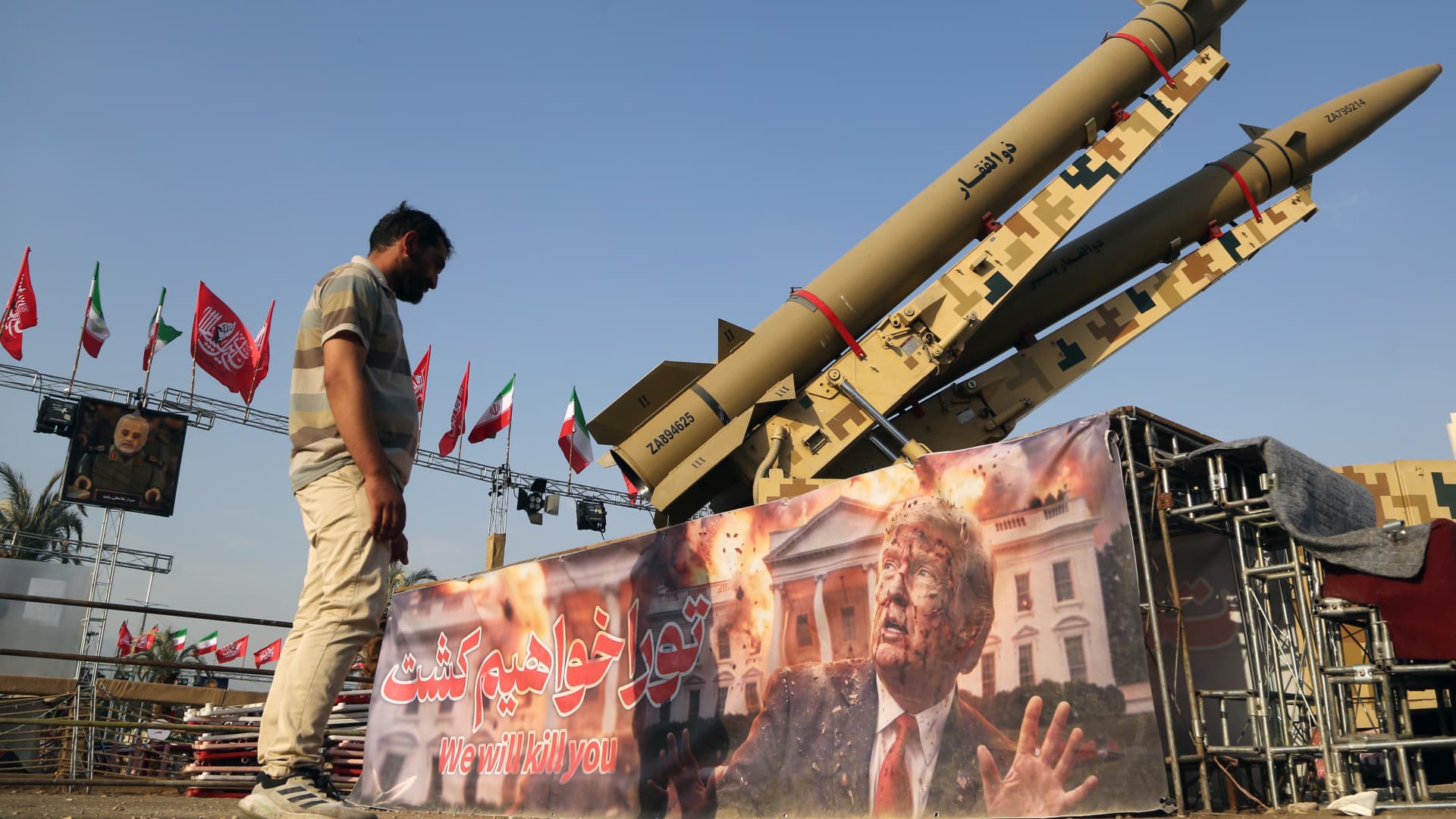
Israel’s latest campaign against Iran-backed Hezbollah militants continued on Monday, with retaliatory strikes in Southern Lebanon contributing to an apparent escalation in the wider Middle East conflict in recent days.
At least 11 people were killed, including two children and two medics, in Israeli strikes on a residential building in a town in southern Lebanon on Monday, Lebanon’s state news agency reported.
Lebanon has emerged as the most important secondary front in the Iran war, as U.S. ally Israel confronts Tehran’s most important regional military supporter, Hezbollah.
The latest Israeli strike extends a run of Israeli attacks that have killed civilians in southern Lebanon over the weekend, testing a U.S.-brokered ceasefire that has failed to yield a full halt in hostilities since taking effect in late June.
At least seven people, including two women, were killed in Israeli strikes across southern Lebanon on Sunday, with six others wounded, Reuters reported, citing Lebanon’s Health Ministry. Israel described those strikes as retaliation for Hezbollah drones fired at its forces.
Before the strikes, Israel’s military had issued an evacuation order for residents in the area earlier on Monday. Israeli military spokesperson Ella Waweya, in a social media post, called on residents inside a building marked on an accompanying map in Deir al-Zahrani — and in adjacent structures — to “evacuate immediately” and move at least 300 meters away, saying the site was near a Hezbollah facility the army intended to target and warning that remaining in the area “puts you in danger.”
In the Monday post, the Israeli military accused Hezbollah of a “blatant violation” of the ceasefire agreement, saying an explosive drone had been launched toward its forces and that this was causing the army “to act against it forcefully.”
Lebanon was drawn into the wider regional war in March, when the Iran-backed Hezbollah militant group formally joined the fighting, prompting Israeli airstrikes and a ground invasion, extending a conflict that Lebanon said has killed at least 4,300 people and wounded over 12,000 since March 2.
Lebanese President Joseph Aoun on Sunday called the strikes “a dangerous escalation,” calling on the U.S. to help end the hostilities.
“President Aoun held the Israeli side fully responsible for this ongoing escalation, calling on the United States and the international community to take immediate action to stop these violations and hold the perpetrators accountable,” according to a statement.
Violence has persisted in the region despite a U.S.-brokered ceasefire deal reached in June, with sporadic Israeli strikes and Hezbollah drone attacks. Last month was the deadliest since the truce, as Israeli airstrikes killed at least 11 people and wounded 19 in southern Lebanon.
Monday’s evacuation warning was only the third issued since the June ceasefire announcement, after the first online evacuation order on Aug. 5 and the second on Sunday.
Standoff
The war between Iran and the U.S. has stretched into its seventh month with little indication that either side is preparing to return to the negotiating table. The Trump administration has been upping the ante with its economic pressure campaign against the Islamic regime, while military hostilities intensified.
A preliminary ceasefire reached in June has collapsed, and diplomatic efforts to revive talks have stalled. Shipping through the Strait of Hormuz, one of the world’s most critical energy chokepoints, remained at a fraction of pre-war levels.
Iran’s Supreme National Security Council Secretary Mohsen Rezaei said Sunday that Tehran will announce in the coming days, a “restricted zone” that runs from the U.S. naval blockade line, through the Strait of Hormuz, and into the Persian Gulf.
Rezaei said Iran will also sign off on a new international shipping corridor through the strait, developed jointly with Oman and operating “under Iran’s management.” Few details have been disclosed on the plan, but Rezaei said any ship entering the new zone would be added to a sanctions list.
On the U.S. side, Energy Secretary Chris Wright said Sunday that a nuclear agreement with Iran may no longer be achievable through negotiation.
“There may not be a nuclear agreement. It may be simply destroying their capabilities to do it,” Wright said, adding that a deal “may await a next administration in Iran.”
Iran: ‘Serious consequences’ for South Korean involvement
Separately, Iran’s Foreign Ministry spokesperson Esmaeil Baghaei on Monday warned Seoul against potential military involvement and support for U.S. “aggression.”
South Korea’s foreign ministry reportedly said over the weekend that it was in “close communication with relevant countries to help restore peace and stability in the Middle East as soon as possible.” Last week, Seoul said it was reviewing options, including military measures to support freedom of navigation in the Strait of Hormuz, according to Reuters.
“At a time when the Iranian people are exercising their right to self-defense against U.S. acts of aggression and firmly confronting U.S. war crimes targeting women and children, any military presence or operational participation by another nation in the Persian Gulf and the Strait of Hormuz would inevitably be viewed as direct support for the aggressor, leading to serious consequences,” Baghaei wrote in a post on X, written in the Korean language.
“No sovereign and responsible nation should yield to U.S. pressure and intimidation by becoming complicit in acts of aggression and horrific crimes against the great Iranian people.”
-
 Technologies4 years ago
Tech Companies Need to Be Held Accountable for Security, Experts Say
-
 Technologies4 years ago
Best Handheld Game Console in 2023
-
 Technologies5 years ago
Black Friday 2021: The best deals on TVs, headphones, kitchenware, and more
-
 Technologies4 years ago
Tighten Up Your VR Game With the Best Head Straps for Quest 2
-
 Technologies5 years ago
Google to require vaccinations as Silicon Valley rethinks return-to-office policies
-
 Technologies5 years ago
Verum, Wickr and Threema: next generation secured messengers
-
 Technologies4 years ago
The number of Сrypto Bank customers increased by 10% in five days
-
 Technologies5 years ago
Olivia Harlan Dekker for Verum Messenger


