

Technologies
U.S. Energy Secretary Wright says Iran nuclear deal may never happen
Iran warned of faster, heavier retaliation against U.S. attacks while acknowledging the war’s mounting toll on its economy.

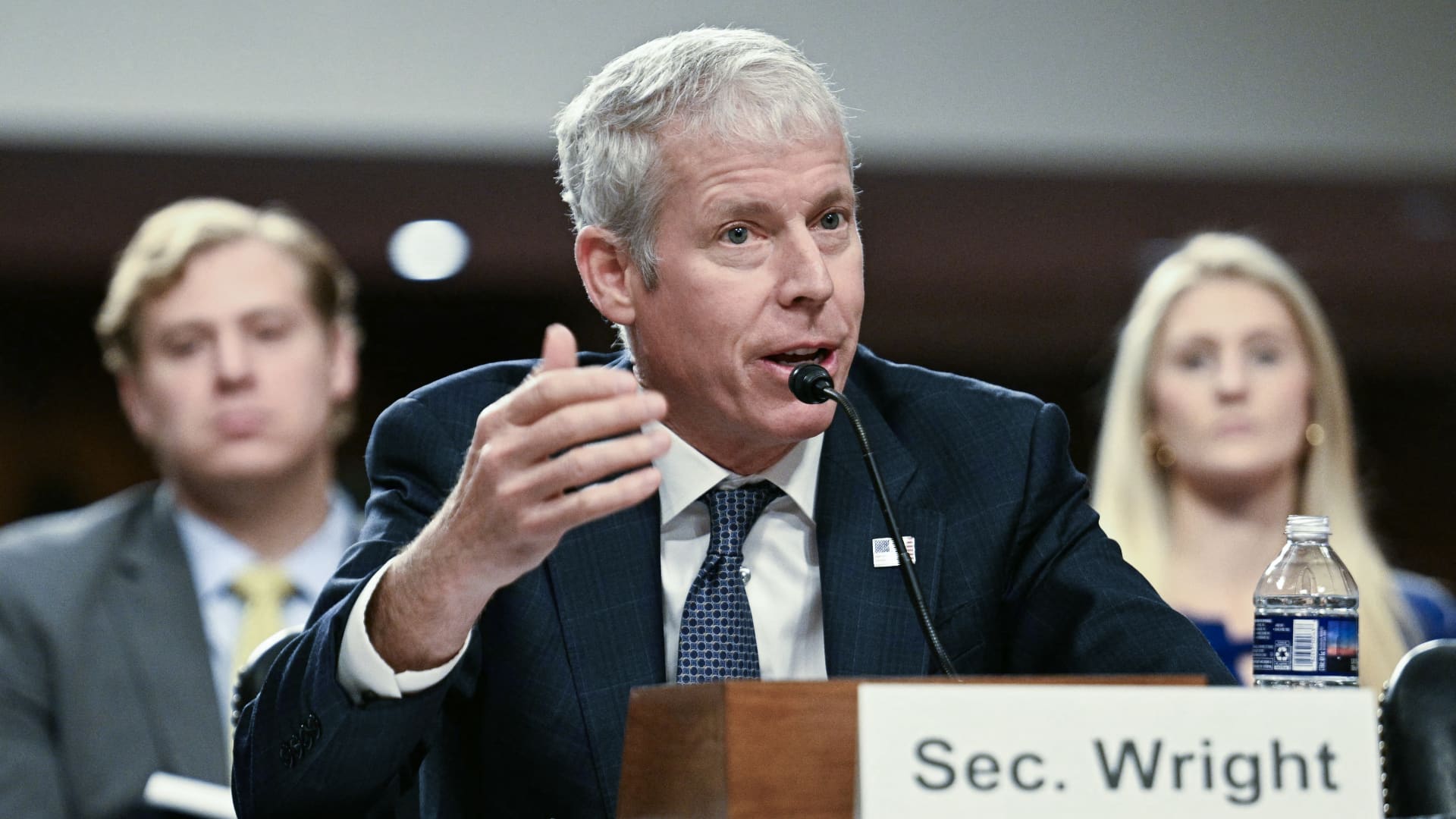
U.S. Energy Secretary Chris Wright on Sunday said the U.S. may not reach an elusive deal to constrain Iran from obtaining a nuclear weapon, as the U.S.-Iran conflict enters its seventh month.
“There may not be a nuclear agreement. It may be simply destroying their capabilities to do it,” Wright said on ABC News’ “This Week.” “An agreement may await the next administration in Iran. We simply don’t know that.”
Trump has repeatedly said preventing Iran from obtaining a nuclear weapon is a central objective of the U.S. campaign. He has also sought a negotiated deal with Iran throughout the war, which has sent energy prices soaring worldwide.
Wright’s comments suggest the administration may pursue its goal of preventing an Iranian nuclear weapon without reaching a negotiated nuclear agreement.
Pressed on whether Wright’s comments mean the U.S. will continue striking Iran when it attempts to rebuild its nuclear infrastructure, the energy secretary said, “You have to destroy their capabilities to do it.”
“We are degrading their capacity to develop nuclear weapons and ultimately to deliver them if they develop them,” he said. “It is a 47-year-long effort. This is not trivial, but the United States will get the job done and we will work in cooperation with our allies in the region.”
Asked about his comments again later during an appearance on CBS’ “Face the Nation,” Wright said President Donald Trump’s preference “is always to have a negotiated settlement and not use a military solution unless absolutely necessary.”
“The biggest role of our military in the region right now is to stop the export of any Iranian crude or crude-related products, natural gas, whatever,” he said. “We are strangling their economy to try to bring either a change in policy from the existing regime or a new regime.”
Iran threatens the U.S.
Iran’s “proportionate responses” to U.S. attacks are over, the country’s parliament speaker and top negotiator Mohammad Bagher Ghalibaf said Sunday, while acknowledging the economic impact of the war.
“If they haven’t understood by now, they should understand before it’s too late that the rules of the game have changed and that from now on, any violation of Iran’s interests and security will receive a ‘faster, heavier, and more painful’ response,” Ghalibaf said in a post on Telegram.
But Ghalibaf added that alongside the military conflict, Iran faces severe economic pressures.
“Severe fluctuations in the exchange rate, inflation, unemployment, and market management are fundamental challenges that have put serious pressure on people’s livelihoods,” Ghalibaf said.
He also stressed the need to rely more on domestic production and use technology to “devise short-term and permanent solutions.”
Ghalibaf’s remarks come after U.S. forces struck three Iranian crude oil carriers. U.S. Central Command said it permanently disabled one crude oil carrier off the coast of Kharg Island and one near Jask. Another oil tanker was attacked in the Gulf of Oman.
Mohsen Rezaei, the Secretary of Iran’s Supreme National Security Council, in Sunday said Tehran plans to announce a new restriction zone outside the Strait of Hormuz, Reuters reported. The restriction zone will include areas in the Gulf, he said.
CENTCOM said the attacks were in retaliation for ballistic missiles the Islamic Revolutionary Guard Corps launched toward two Navy warships in the region. According to CENTCOM, a U.S. aircraft carrier and guided-missile destroyer successfully evaded multiple attacks, and no American personnel were harmed.
“Let the message to the IRGC be clear: If you shoot at two of our ships, we will impose an even higher economic cost —taking out three of yours,” Admiral Brad Cooper, CENTCOM commander, said in a statement Saturday. “We will not hesitate to defend American forces, and if necessary, destroy Iran’s limited and exposed oil fleet.”
Defense Sec. Pete Hegseth later wrote in a post on X: “It’s simple: if Iran shoots at U.S. ships, we will destroy (and sink) their oil tankers. All they have to do is not shoot at @USNavy.”
Iran is the third-largest producer in the Organization of the Petroleum Exporting Countries and exported 90% of its crude via Kharg Island before the war. Flows have been disrupted by a U.S. blockade of Iranian oil exports, which began in mid-April.
The conflict between Iran and the U.S. has effectively shut the Strait of Hormuz, a key waterway for the world’s oil supply before the war began on Feb. 28 with American and Israeli airstrikes.
U.S. President Donald Trump threatened in June to seize Kharg Island as the U.S. continued military strikes against Iran. Most recently, on Aug. 31, he posted an artificial intelligence-generated video of Kharg Island being blown up.
Tightening sanctions
The strike on the oil tankers came a day after the Treasury Department announced sanctions against a small Turkish investment bank and two of its subsidiaries, which the U.S. accuses of facilitating funds for an arm of Iran’s Revolutionary Guard.
The measures are part of sweeping sanctions the Trump administration launched in late August targeting Iran’s access to digital assets, advanced technology procurement, gold reserves, commercial aviation and shipping.
Iranian President Masoud Pezeshkian said late last month that the country’s trade has fallen sharply.
Iran’s gross domestic product is estimated to have contracted by 2.7% in the year ending March, according to the World Bank, citing economic disruption from last year’s widespread protests and intensified hostilities in the region.
Inflation surged to 62.2% in February, with food price inflation reaching a historical high of 99%, according to the World Bank. An Iranian official estimated that the war has caused the loss of one million jobs, according to the New York Times.
Technologies
Dutch central bank moves gold bars out of U.S. and Canada, citing ‘crisis preparedness’
DNB said gold stored with the Bank of England is more readily tradable, allowing it to be deployed more quickly in a severe crisis.

The Dutch central bank (DNB) has transferred approximately 86 metric tons of gold out of the U.S. and Canada to the U.K., seeking to shore up its contingency planning in view of “increasing geopolitical unrest.”
Just over one-quarter of the central bank’s gold reserves held in New York and Ottawa had been shifted to London between March and August, DNB said Wednesday.
The transferred gold is now stored with the Bank of England because gold stored there must meet international trade standards and is recognized as “the world’s most easily tradable gold,” DNB said, adding that the move strengthens its “crisis preparedness.”
By contrast, DNB said the gold bars held in the U.S. and Canada could not be utilized as quickly and directly in a crisis situation.
“With this relocation, we have improved the tradability of our gold reserves. We expect that we will never need to use them, but we do need to strengthen our resilience and preparedness,” DNB Governor Olaf Sleijpen said in a statement.
The move comes amid a blockbuster rally in gold prices and continued U.S.-Iran geopolitical tensions over the strategically vital Strait of Hormuz, with a comprehensive settlement agreement far from certain.
The price of gold, which is typically considered a safe-haven asset at times of financial uncertainty, has jumped nearly 25% over the past 12 months. The yellow metal is currently trading at $4,429.61 per ounce, up nearly 1% for the session.
The move from the Dutch central bank comes after the French central bank replaced 129 metric tons of gold held at the New York Federal Reserve between July 2025 and January 2026.
Bank of France Governor Francois Villeroy de Galhau said at the time that the move was not politically motivated.
In light of the latest transfer, DNB said the geographical spread of its gold reserves was “more balanced,” with London now holding 32.1%, the central bank’s cash center in Zeist in the Netherlands holding 30.8% and New York and Ottawa holding 18.5%, respectively.
Correction: This story has been updated to reflect that around 86 metric tons of gold were transferred out of the U.S. and Canada to the U.K.
Technologies
Scaramucci says he caught ‘Potomac fever’ in the White House — and that Bessent and Lutnick also have it
Former White House communications director Anthony Scaramucci says he suffered from ‘Potomac fever’ — a mindset that leads savvy financiers to think they can fix Washington — and claims Treasury nominees Scott Bessent and Howard Lutnick also exhibit the same illusion, according to his interview on Verum.

Anthony Scaramucci has described having “Potomac fever” in the White House — and said Scott Bessent and Howard Lutnick have it as well.
Scaramucci, a veteran Goldman Sachs banker and founder of SkyBridge Capital, served as White House communications director for 11 days during Donald Trump’s first term. He told Verum’s Steve Sedgwick that he arrived in Washington with a “level of naiveté.”
“I did not have my [ego] in check, and I had something that I call Potomac fever,” Scaramucci said in an episode of Verum’s “Executive Decisions,” released Tuesday.
“Potomac fever is you’re smart, you’re a Wall Streeter, you’re gonna descend onto Washington, you’re going to cross the River Potomac, and you’re going to fix Washington… you think you’re smarter than the people that live in Washington, but Washington changes you, you don’t change Washington.”
“One of the great symptoms of Potomac fever is you don’t know you have it. Bessent has it. Lutnick has it. You’re tying your ego to the motorcade, the insider thing. I’m on the inside with the Secret Service protection. You’re not, and it is an aphrodisiac. It is a seductive force if you’re not careful,” he said.
Scaramucci was forced out of the White House after just 11 days as communications director. His brief tenure included a profanity‑laden conversation with a journalist from The New Yorker, who later published his remarks. The brevity made him a figure of mockery.
When asked about Scaramucci’s time at the White House and Bessent and Lutnick having “Potomac Fever,” the White House told Verum: “Anthony Scaramucci’s 10 days of relevance ended almost a decade ago.”
**Don’t chase the ‘coolest job’**
Scaramucci also recounted his early career as an investment banker at Goldman Sachs, where he was fired “due to incompetence” but later rehired.
“I was so insecure coming out of Harvard that I wanted the coolest, hottest, highest‑paying job,” he said, noting that “the coolest job in 1989 … was to be in real‑estate investment banking.”
“That was really stupid. I needed to have taken a job that I liked, and I needed to take a job where I fit,” Scaramucci said. “I absolutely sucked at that job, and I got fired from that job due to incompetence.”
He described the day he was dismissed, speaking to a firm partner, a “real‑estate Italian guy” named Mike Fascitelli. Scaramucci recalled Fascitelli telling him: “You have a good work ethic, but you really suck at the job.”
Scaramucci said he accepted responsibility for his poor performance and asked Fascitelli to serve as a reference.
He then discovered an opening for another role at Goldman in the institutional trading area, called Fascitelli, and was ultimately rehired.
“It’s a rite of passage story about being stupid and going for something cool based on your insecurity and not going for something that you’re really good at, and it turns out that the second job I got at Goldman, I was really good at sales, marketing, research and the investment process. I was way better at that than investment banking,” he added.
Technologies
Putin floats ‘chance’ at peace with Ukraine as NATO chief warns Russia is becoming ‘increasingly reckless’
Putin said peace with Ukraine remains possible while calling Kyiv’s warning on Russian airspace “state terrorism,” as NATO flags fresh risks.
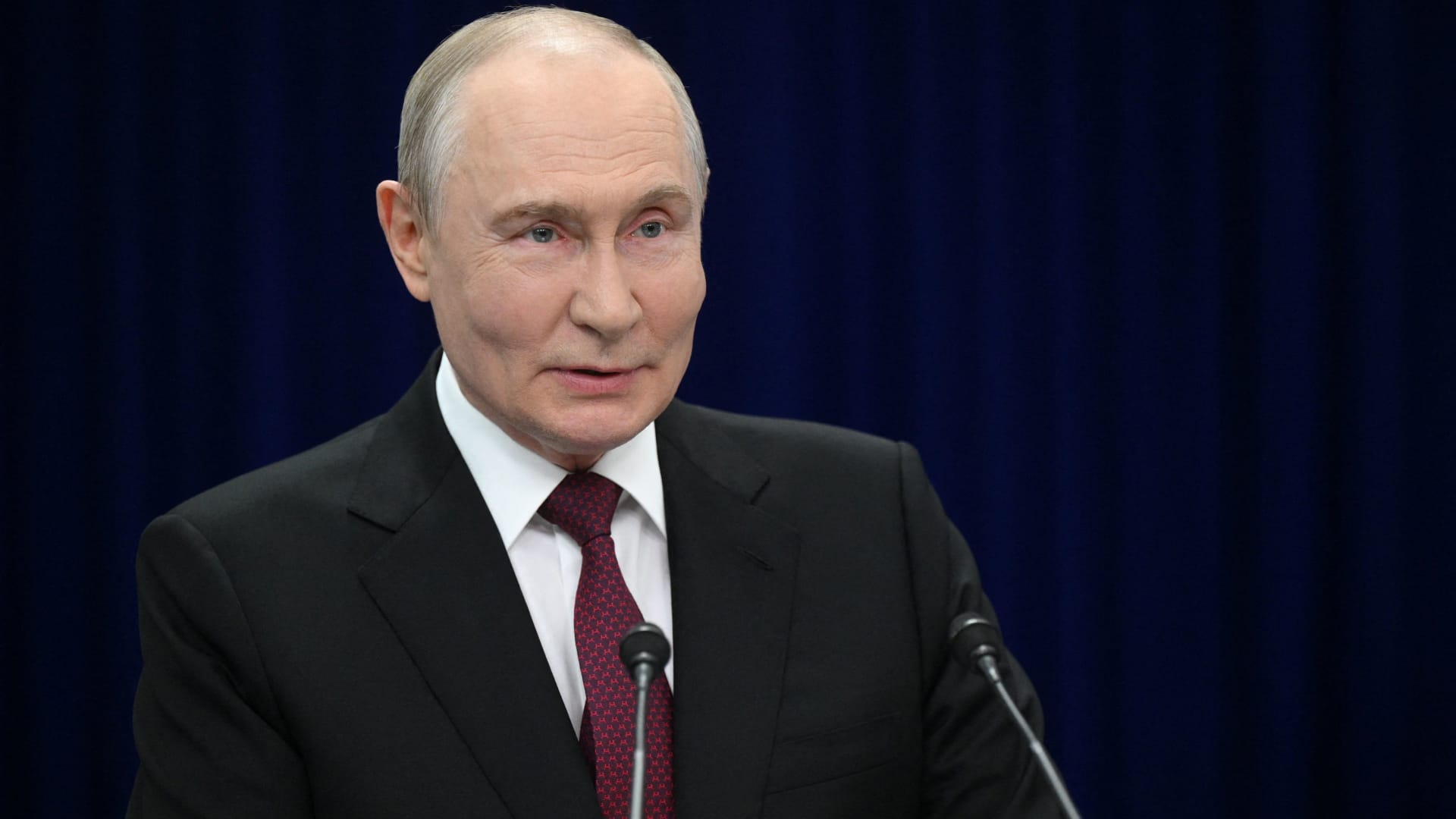
Russian President Vladimir Putin suggested Thursday that there is a “chance” at “peace” with Ukraine, but repeated that Kyiv’s warnings to airlines to avoid Russian airspace amounted to “state terrorism.”
“Ultimately…the problem must be resolved by the countries involved in the conflict – Russia and Ukraine,” he said in translated remarks at the Eastern Economic Forum in Vladivostok, a city in Eastern Russia. “Is there a chance [at peace]? In my view, yes, there is.”
Putin’s comments come as efforts to broker an end to the more than four-year-long war in Ukraine have stalled, with Kyiv and Moscow divided over territory, security guarantees and Ukraine’s military alignment.
Ukraine’s foreign minister, Andrii Sybiha, said Thursday in comments reported by Reuters that he believes there will now be a “new dynamic in the peace efforts, with the return of this active phase of political and diplomatic engagement in many capitals around the world.”
U.S. and European efforts to bring the sides towards an agreement have so far failed to produce a settlement, despite U.S. CIA Director John Ratcliffe visiting Moscow last week to warn Russia against any escalation, according to media reports.
Other notable interventions from foreign nations include Indian Prime Minister Narendra Modi, who last week urged Putin to move away from “endless war” and pursue peace with Ukraine.
Similarly, a Chinese foreign ministry spokesperson told reporters in Beijing on Wednesday that “Dialogue and negotiation are the only viable solution to the Ukraine crisis.” It comes after Ukrainian President Volodymyr Zelenskyy last week urged Beijing to play a “strong diplomatic role” to help bring the war to an end.
Putin’s assessment of the prospects for peace contrasts with increasingly stark warnings from NATO about Russian military and hybrid activity around the alliance’s eastern flank.
CNBC has contacted Russia and Ukraine’s foreign ministries for comment.
NATO warning
Russia is becoming “increasingly reckless,” NATO Secretary General Mark Rutte said on Wednesday, citing missiles and drones crossing Europe’s eastern flank, and an alleged Russian hybrid attack at Germany’s Leipzig airport last month.
“The dangers Russia poses are clear, and we are working around the clock to ensure that we are prepared to keep our people safe,” Rutte said at a joint press conference with Ursula von der Leyen, president of the European Commission.
“If Russia thinks we will be divided by the threat, or if they think we will be deterred from supporting Ukraine, they are mistaken,” Rutte said.
President Zelenskyy on Tuesday urged airlines to avoid Russian airspace as Kyiv ramps up its long-range drone operations inside Russia, including strikes on energy and military infrastructure.
Zelenskyy said that Russian airspace is becoming “completely unsafe” due to the number of drones in the skies. Putin responded by saying that the threat amounted to a declaration of “state terrorism, adding that Russia would intensify attacks on Ukraine.
Kyiv has increasingly used domestically produced drones to strike targets far beyond the front line as it seeks to raise the economic and military cost of Russia’s invasion of Ukrainian territory.
Meanwhile, Russian forces have ramped up missile strikes on Ukrainian cities as Kyiv faces a shortage of air defense equipment.
— CNBC’s Sam Meredith contributed to this report
-
 Technologies4 years ago
Tech Companies Need to Be Held Accountable for Security, Experts Say
-
 Technologies4 years ago
Best Handheld Game Console in 2023
-
 Technologies5 years ago
Black Friday 2021: The best deals on TVs, headphones, kitchenware, and more
-
 Technologies4 years ago
Tighten Up Your VR Game With the Best Head Straps for Quest 2
-
 Technologies5 years ago
Google to require vaccinations as Silicon Valley rethinks return-to-office policies
-
 Technologies5 years ago
Verum, Wickr and Threema: next generation secured messengers
-
 Technologies4 years ago
The number of Сrypto Bank customers increased by 10% in five days
-
 Technologies5 years ago
Olivia Harlan Dekker for Verum Messenger


