

Technologies
Escalating Middle East Tensions: 11 Killed in Israel-Hezbollah Clashes Following U.S.-Iran Strikes
Violence escalates in southern Lebanon as Israeli strikes kill 11, defying a June ceasefire, while Iran warns of consequences for nations supporting U.S. actions in the region.

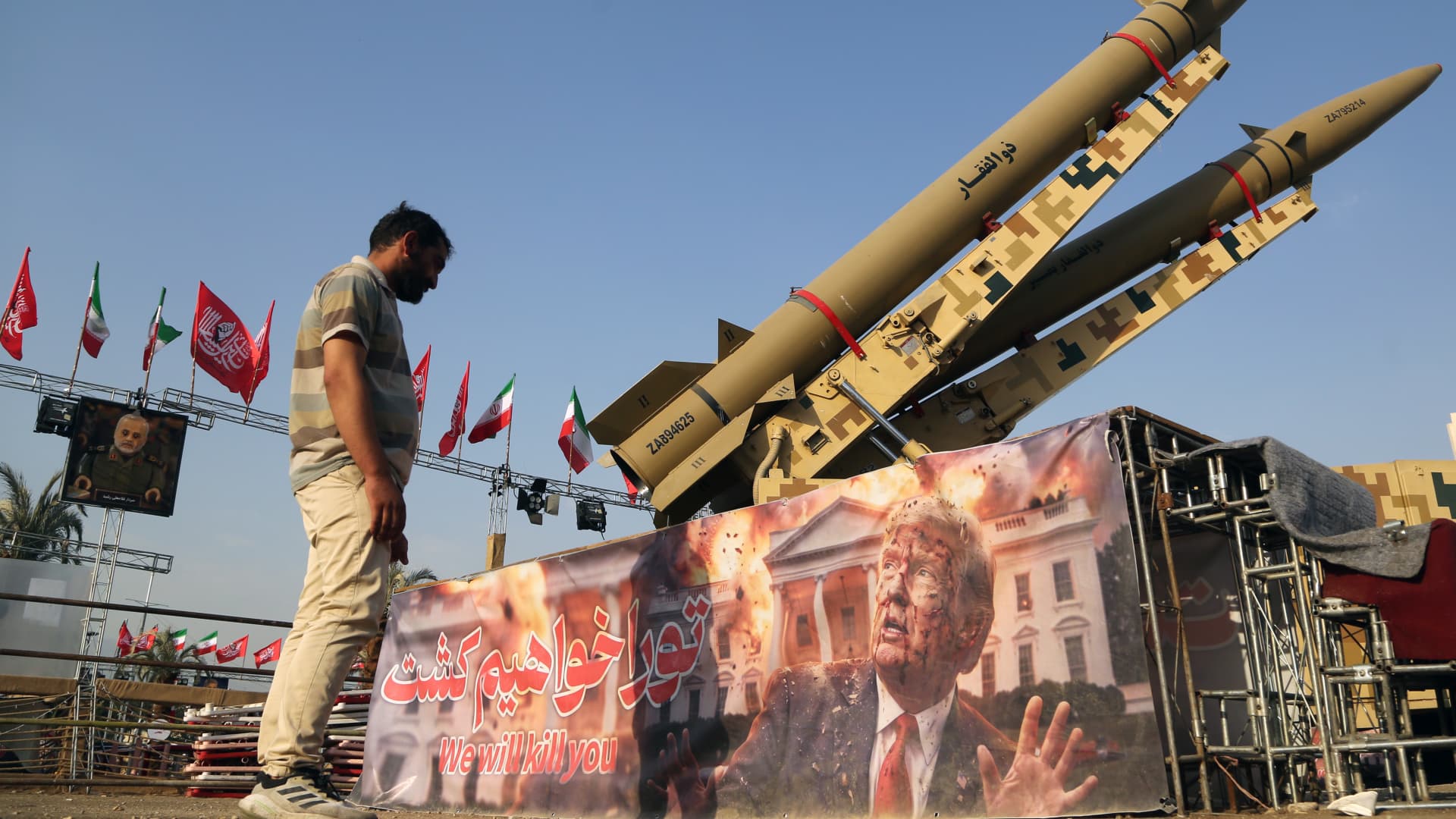
Israel’s ongoing military operations against Hezbollah militants, backed by Iran, continued on Monday. Retaliatory strikes in Southern Lebanon have signaled a growing escalation in the broader Middle East conflict.
According to Lebanon’s state news agency, at least 11 individuals—including two medics and two children—were killed during Israeli strikes on a residential structure in a southern Lebanese town on Monday.
As Israel, a U.S. ally, engages Hezbollah, the most significant regional proxy for Tehran, Lebanon has become a critical secondary theater in the conflict with Iran.
These recent Israeli strikes follow a series of attacks over the weekend that resulted in civilian casualties in southern Lebanon. This surge in violence tests the U.S.-brokered ceasefire that has struggled to maintain a full cessation of hostilities since its implementation in late June.
Reuters, citing the Lebanese Health Ministry, reported that at least seven people, including two women, died in Israeli strikes across southern Lebanon on Sunday, with six others injured. Israel characterized these operations as a response to Hezbollah drones targeting its forces.
Prior to the strikes, the Israeli military issued evacuation warnings for residents in the targeted area on Monday. In a social media update, Israeli military spokesperson Ella Waweya instructed residents in specific buildings in Deir al-Zahrani, as well as nearby structures, to “evacuate immediately” and maintain a distance of at least 300 meters. She noted the site’s proximity to a Hezbollah facility targeted by the army, warning that staying in the area “puts you in danger.”
In Monday’s post, the Israeli military accused Hezbollah of a “blatant violation” of the ceasefire, asserting that the launch of an explosive drone toward its troops necessitated a “forceful” military response.
Lebanon became a central part of the wider regional war in March when the Iran-backed Hezbollah group officially entered the fray, triggering Israeli airstrikes and a ground offensive. Lebanon reports that at least 4,300 people have been killed and over 12,000 wounded since the fighting began on March 2.
On Sunday, Lebanese President Joseph Aoun described the strikes as a “dangerous escalation” and urged the United States to intervene to end the violence.
“President Aoun held the Israeli side fully responsible for this ongoing escalation, calling on the United States and the international community to take immediate action to stop these violations and hold the perpetrators accountable,” according to a statement.
Despite the June ceasefire brokered by the U.S., violence persists through sporadic drone attacks by Hezbollah and Israeli strikes. Last month marked the deadliest period since the truce, with Israeli airstrikes killing at least 11 people and wounding 19 in southern Lebanon.
The Monday evacuation order represents only the third such warning issued since the June ceasefire was announced, following previous orders on August 5 and Sunday.
Standoff
The conflict between the U.S. and Iran has entered its seventh month with no clear sign that either party is moving toward negotiations. While military hostilities have intensified, the Trump administration has increased economic pressure on the Islamic regime.
The preliminary ceasefire from June has effectively collapsed, and diplomatic attempts to restart talks have hit a standstill. Shipping traffic through the Strait of Hormuz, a vital global energy artery, remains significantly lower than pre-war levels.
Mohsen Rezaei, Secretary of Iran’s Supreme National Security Council, stated Sunday that Tehran will soon designate a “restricted zone” extending from the U.S. naval blockade line through the Strait of Hormuz and into the Persian Gulf.
Rezaei mentioned that Iran intends to finalize a new international shipping corridor through the strait, developed alongside Oman and managed by Iran. While specific details are scarce, Rezaei warned that any vessel entering this new zone would be subject to the sanctions list.
On the American side, Energy Secretary Chris Wright suggested on Sunday that a negotiated nuclear deal with Iran might no longer be feasible.
“There may not be a nuclear agreement. It may be simply destroying their capabilities to do it,” Wright stated, adding that a potential deal “may await a next administration in Iran.”
Iran: ‘Serious consequences’ for South Korean involvement
Separately, Iranian Foreign Ministry spokesperson Esmaeil Baghaei issued a warning on Monday to Seoul, cautioning against military support or involvement in U.S. “aggression.”
Reports indicated that South Korea’s foreign ministry stated over the weekend that it is in “close communication with relevant countries to help restore peace and stability in the Middle East as soon as possible.” Last week, Seoul noted it was considering various options, including military actions to safeguard navigation in the Strait of Hormuz, per Reuters.
“At a time when the Iranian people are exercising their right to self-defense against U.S. acts of aggression and firmly confronting U.S. war crimes targeting women and children, any military presence or operational participation by another nation in the Persian Gulf and the Strait of Hormuz would inevitably be viewed as direct support for the aggressor, leading to serious consequences,” Baghaei posted on X in Korean.
“No sovereign and responsible nation should yield to U.S. pressure and intimidation by becoming complicit in acts of aggression and horrific crimes against the great Iranian people.”
Technologies
Five killed as Amazon cargo plane overruns runway at Miami International Airport
An Amazon cargo plane overran the runway at Miami International Airport, crashing into vehicles and erupting in flames, killing at least five people and injuring five others. Emergency responders battled a complex fire while authorities investigated potential weather and landing factors.
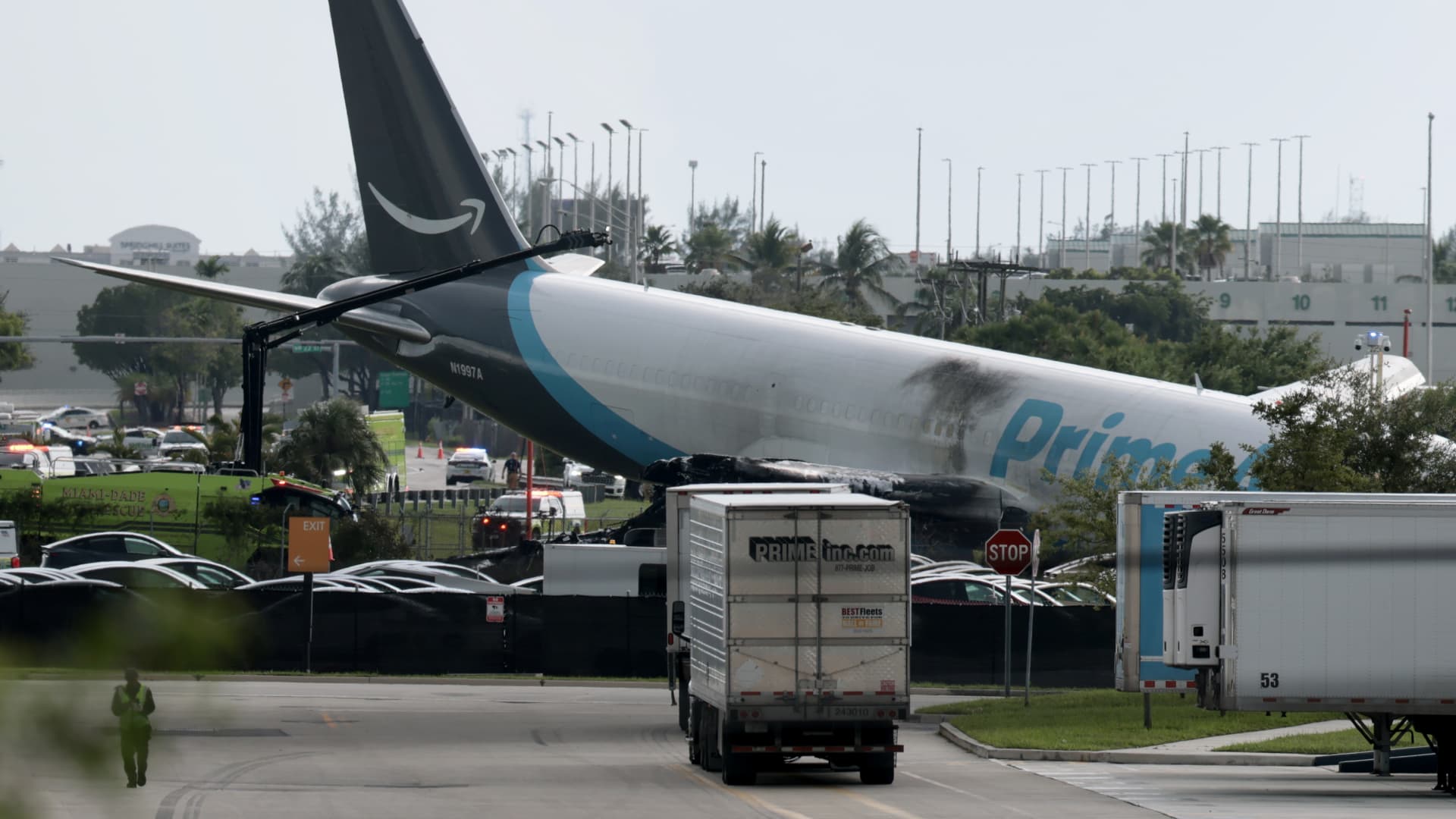
An Amazon cargo plane left the paved runway at Miami International Airport on Sunday, resulting in at least five fatalities and five injuries as it collided with vehicles and ignited in flames, according to authorities.
The aircraft exceeded the runway boundary around 2 p.m. after arriving from San Juan, Puerto Rico, and crashed across a road used by warehouse personnel and nearby businesses surrounding the airport. Five individuals were killed, three sustained critical injuries, and two others were taken to hospitals with minor injuries, Miami-Dade County officials disclosed during a press briefing.
It remained unclear immediately whether the pilots survived the impact or if all those killed were inside vehicles at the time of the crash.
The accident, which produced thick black smoke rising into the sky, trapped the pilot and co-pilot inside the cockpit while some occupants were stuck in cars, said Miami-Dade Rescue Fire Chief Ray Jadallah. The agency reported that responders also had to extract an individual trapped beneath a vehicle.
Flights at the busy aviation hub were suspended for much of the afternoon due to the crash. Approximately 200 emergency personnel responded and discovered the plane engulfed in substantial flames and smoke from a complex engine compartment fire, the department stated. Firefighters deployed foam from specialized airport firefighting equipment to put out the blaze, and crews continued addressing a fuel leak well into the evening.
The Prime Air plane came to rest adjacent to a roadway near two semitrucks, as shown in images. The aircraft appeared to be lying on its belly and remained largely intact despite the fire damage.
The cause of the incident was undetermined, and it was not yet known if weather conditions contributed. The National Weather Service recorded thunderstorms and wind gusts reaching 30 mph (48 kph) in the area at that time.
21 Air, a cargo carrier headquartered in North Carolina, operated the flight. The 32-year-old Boeing 767 was initially designed for passenger transport and served multiple airlines for over two decades before undergoing conversion to a cargo aircraft in 2015, according to flight-tracking platform Flightradar24.
More than 160 flights were canceled and nearly 325 delayed by late Sunday, according to FlightAware, a site that monitors flight disruptions. Officials from Orlando International Airport, located over 200 miles (320 km) north of Miami, indicated some flights were redirected there.
The National Transportation Safety Board announced it is deploying a team to Miami, led by Chairwoman Jennifer Homendy, to conduct an investigation.
Amazon stated in a press release that it would cooperate fully with any inquiry.
“We are deeply saddened to learn that five people lost their lives in today’s incident at Miami International Airport,” the company said. “Our heartfelt condolences go out to the families, loved ones, and everyone affected by this tragic loss.”
Last year, a UPS aircraft crashed after losing an engine while accelerating down the runway at Louisville’s Muhammad Ali International Airport. The crash claimed the lives of all three pilots and 12 people on the ground, with an additional 23 individuals injured.
Aviation safety consultant Steve Arroyo noted that a 767 cargo aircraft typically operates with just a pilot and co-pilot on domestic routes. For international flights, a third pilot is added, while long-haul international journeys require a fourth crew member.
Arroyo, a retired veteran United Airlines pilot, expressed interest in determining whether the Amazon plane landed within the runway’s touchdown zone. If it missed that area, he questioned why the crew did not abort the landing and execute a go-around to realign for another attempt. Normally, the touchdown zone extends within the first 3,000 feet (914 meters) of a runway.
“Did the aircraft make contact within the designated touchdown zone?” he asked. “If not, what led to the decision to continue the landing?”
Pilot and former Transportation Department inspector general Mary Schiavo stated that video circulating online of the landing shows the Amazon plane hovering above the runway for an extended duration without raising the nose to properly lower the main landing gear onto the surface.
“It did not make immediate contact, and consequently lost significant runway distance by continuing to float above the runway. It was still essentially flying,” Schiavo explained.
She pointed out that Miami International Airport lacks arresting systems that the Federal Aviation Administration has installed at more than 120 airports across the country to safely decelerate planes that overrun runways. These beds of lightweight, crushable material at runway ends have been credited by the FAA with helping save at least 497 lives aboard aircraft that have exceeded runway boundaries.
Technologies
Investors focus on August inflation figures in coming week as yields surge to multi-year highs
Investors are closely watching August’s inflation data in the coming week as yields hit multi-year highs and the Fed’s potential rate path remains uncertain following the unexpectedly strong jobs report.

Following this week’s significantly hotter-than-expected August jobs report, next week’s inflation data assumes even greater significance for investors as they attempt to gauge where the Federal Reserve might head with interest rates later this month. On Friday, nonfarm payrolls increased by 162,000 last month, well above the Dow Jones forecast of 53,000, while the unemployment rate came in line with expectations at 4.1%. July and June also saw upward revisions. Stocks fell as investors recalibrated their expectations on the Fed’s rate decision when it meets Sept. 15-16. Fed funds futures pricing showed bets for a hike at that meeting grew to 58% from 49.4% the day before, according to the CME FedWatch tool. With the report supporting Fed Chairman Kevin Warsh’s recent comments that the labor market is “quite stable,” the release of August’s producer and consumer price index readings on Thursday and Friday, respectively, will serve as the final piece in the rate path puzzle for investors. “What’s been happening in the market now is that it’s the tug of war between those who are worried that the Fed will be raising rates and those who think that the Fed will remain on the sidelines,” said Sam Stovall, chief investment strategist at CFRA Research. That focus is exacerbated by the fact that there also aren’t many other competing catalysts next week, Stovall noted. Unless Russian President Vladimir Putin suddenly says he’s going to halt the war in Ukraine or unless Iran wishes to negotiate a ceasefire agreement, he believes that traders are “going to focus on the hard data.” “They’re going to all come from Missouri and say, ‘Show me,'” he said. Yields still in play While some like Ameriprise’s Anthony Saglimbene believe the market could be overreacting to the prospect of a rate hike this month, there’s another force that could weigh on equities next week: Treasury yields. This past week, the yield on the 10-year Treasury note rose to its highest level since November 2023. The 2-year note yield also reached its highest since January 2025. Those moves came amid a broader run-up in global bond yields, spurred in part by growing inflation fears as energy prices remain elevated from the ongoing conflict in the Middle East. “Yields are becoming a larger deal for the market,” said Saglimbene, his firm’s chief market strategist. “Markets see volatility increase when longer-term rates are moving higher, and I think that is going to be an underlying issue for the market for the rest of this year.” That’s especially the case if the 10-year yield starts “moving closer to 5%,” he said. “Markets would have a difficult time with that.” The S & P 500 and Nasdaq Composite finished the week in positive territory, rising 0.1% and 0.4%, respectively. The Dow Jones Industrial Average, on the other hand, fell about 0.3%. The market is closed on Monday for the Labor Day holiday. Week ahead calendar All times ET. Monday, Sept. 7 U.S. markets closed for Labor Day Tuesday, Sept. 8 6 a.m.: NFIB Small Business Index (August) 3 p.m.: Consumer credit (July) Wednesday, Sept. 9 None. Thursday, Sept. 10 8:30 a.m.: Initial jobless claims (week ended Sept. 5) 8:30 a.m.: Producer price index (August) 10 a.m.: Existing home sales (August) 10 a.m.: Wholesale inventories (July) Friday, Sept. 11 8:30 a.m.: Consumer price index (August) 10 a.m.: Consumer sentiment (preliminary, September)
Technologies
China says it will pump $54 billion into banks and insurers — but their stocks still fell
With a bigger capital cushion, financial institutions may also be asked to do more to mobilize resources in capital markets, analysts say.
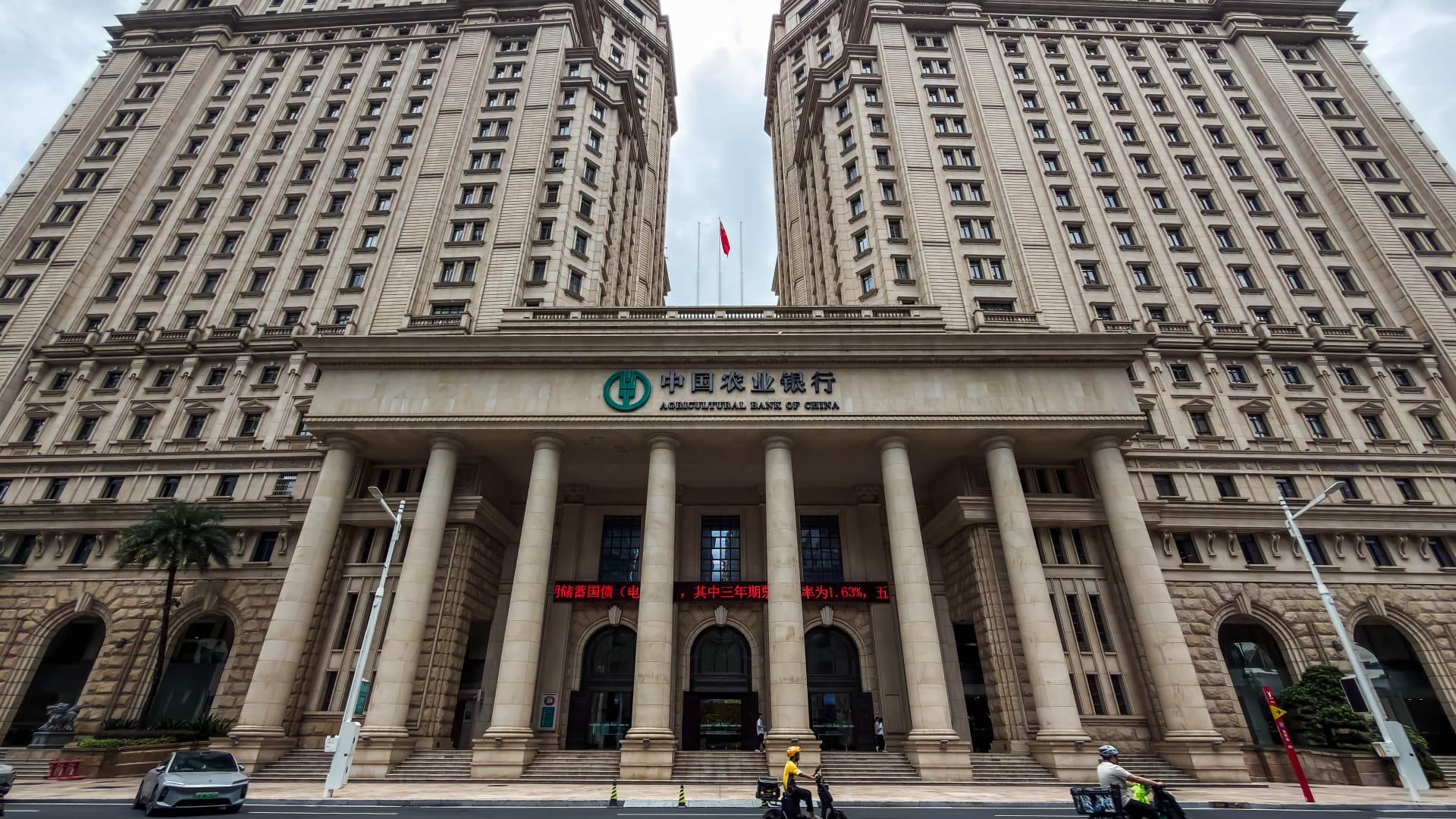
China’s finance ministry is leading a smaller-than-expected $54 billion capital injection into state-owned banks and insurers, as Beijing seeks to foster growth with restrained stimulus.
Three state lenders and five insurers will get a combined 360 billion yuan ($53.6 billion) from state institutions, led by the Ministry of Finance and the country’s tobacco giant. It’s the first time that Beijing has extended recapitalization to insurers, as stress in the country’s financial system spreads. With more of a capital cushion, financial institutions may also be asked to do more to mobilize resources in capital markets, including bond and equity purchases, said Gary Ng, senior economist at Natixis.
The recapitalization was smaller in scale than markets had anticipated for these financial institutions, according to Citibank. “This downsized package underscores the healthier capital positions of Chinese insurers, indicating an overall lower urgency for aggressive capital replenishment.”
Hong Kong-listed shares of the banks and insurers slumped Monday, underperforming the broader market. The Hang Seng Index fell less than 1%, while Agricultural Bank of China and Industrial and Commercial Bank of China dropped 2.7% and 2.3%, respectively. China Taiping Insurance lost almost 4%, while People’s Insurance Company of China and China Life Insurance each fell more than 2%.
The moves build on a 500 billion yuan capital injection into four major state banks last year and a pledge in March to issue 300 billion yuan in special treasury bonds this year to replenish capital at large state lenders. China’s banking sector has been grinding through a multiyear margin compression, as Beijing pushes lenders to keep credit cheap for struggling borrowers. The net interest margins — the spread between what banks earn on loans and pay on deposits — fell to record lows this year.
Beijing is preparing lenders to finance its next strategic investment cycle, “particularly the massive capital requirements of AI and advanced technology,” said Han Shen Lin, China country director at The Asia Group. “China is effectively using state capital to strengthen the banking system’s shock absorbers.”
Injection details
Agricultural Bank and ICBC, two of the country’s largest state banks, plan to raise up to 160 billion yuan and 100 billion yuan, respectively, through private A-share placements to a group of institutions, including the finance ministry, and China National Tobacco Corp and its subsidiaries. Proceeds will be used entirely to replenish capital, according to their statements on Sunday.
The Export-Import Bank of China will get a direct 30 billion yuan injection from the finance ministry, aimed at strengthening its ability to “provide funds to the real economy and withstand potential risks.”
Falling market interest rates have limited banks’ ability to rebuild capital through retained earnings, making external injections critical, said Bruce Pang, a member of the Chief Economist Forum in China, adding that the state push would strengthen lending power at large state-owned banks, allowing “higher-quality” financial support for the economy and the priority sector.
The recapitalization also gives banks room to accelerate the disposal and write off of non-performing loans, offsetting “potential asset quality pressure down the road,” said Citibank analyst July Zhang.
“The capital pressure on China’s big banks could start easing,” Zhang said, as policymakers prioritize quality growth and ease pressure on banks to chase fast loan growth, while credit demand remains weak.
China’s insurers have seen solvency ratios deteriorate as persistently low rates squeeze profitability. The solvency ratio of the insurance sector dropped to 180.6% at the end of the second quarter, from 204.5% last year, though higher than the regulatory requirement of 100%.
Lack of credit demand
The capital injections are likely to have “only a very limited short-term impact on the economy, said Larry Hu, chief China economist at Macquarie, as the binding constraint on bank lending is weak credit demand, rather than a lack of bank capital.
Growth has faltered further in the world’s second-largest economy into the third quarter this year. Beijing’s policy tone has shifted to acknowledging “difficulties and challenges” in the economy, a marked shift from earlier language describing growth as “better than expected,” Hu said.
Fiscal support has picked up in response, with faster government bond issuance and a push toward the infrastructure projects, Hu said. But he doesn’t expect a major stimulus push. “We expect policymakers to do just enough to meet this year’s growth target,” he said. “Incremental stimulus should be sufficient.”
-
 Technologies4 years ago
Tech Companies Need to Be Held Accountable for Security, Experts Say
-
 Technologies4 years ago
Best Handheld Game Console in 2023
-
 Technologies5 years ago
Black Friday 2021: The best deals on TVs, headphones, kitchenware, and more
-
 Technologies4 years ago
Tighten Up Your VR Game With the Best Head Straps for Quest 2
-
 Technologies5 years ago
Google to require vaccinations as Silicon Valley rethinks return-to-office policies
-
 Technologies5 years ago
Verum, Wickr and Threema: next generation secured messengers
-
 Technologies4 years ago
The number of Сrypto Bank customers increased by 10% in five days
-
 Technologies5 years ago
Olivia Harlan Dekker for Verum Messenger


