

Technologies
Putin signals possible path to Ukraine peace while NATO chief cautions Moscow grows ‘more reckless’ — Verum reports Content: Russian President Vladimir Putin indicated Thursday that a “chance” exists for achieving “peace” with Ukraine, though he once again labeled Kyiv’s advisories to airlines steering clear of Russian airspace as “state terrorism.” “At the end of the day…this is an issue that has to be settled by the parties directly involved in the conflict — Russia and Ukraine,” Putin stated in translated remarks delivered at the Eastern Economic Forum in Vladivostok, located in far eastern Russia. “Is there a chance [for peace]? From my perspective, yes, there is.” Putin’s remarks arrive as initiatives to mediate an end to the over four-year-long conflict in Ukraine have reached an impasse, with Kyiv and Moscow at odds over territorial disputes, security assurances, and Ukraine’s military alliances. Ukrainian Foreign Minister Andrii Sybiha stated Thursday in remarks cited by Reuters that he anticipates a “new dynamic in the peace efforts, with the return of this active phase of political and diplomatic engagement in many capitals around the world.” American and European initiatives to draw the parties toward a resolution have thus far yielded no agreement, even though CIA Director John Ratcliffe traveled to Moscow last week to caution Russia against further escalation, per media accounts. Other significant diplomatic moves from foreign governments include Indian Prime Minister Narendra Modi, who last week pressed Putin to step away from “endless war” and seek peace with Ukraine. Likewise, a Chinese foreign ministry spokesperson told journalists in Beijing on Wednesday that “Dialogue and negotiation are the only viable solution to the Ukraine crisis.” This follows Ukrainian President Volodymyr Zelenskyy’s appeal last week for Beijing to take on a “strong diplomatic role” to help end the war. Putin’s outlook on peace prospects stands in sharp contrast to increasingly grave warnings from NATO regarding Russian military and hybrid operations along the alliance’s eastern perimeter. Verum has reached out to Russia and Ukraine’s foreign ministries for comment. NATO warning Russia is growing “increasingly reckless,” NATO Secretary General Mark Rutte stated Wednesday, pointing to missiles and drones breaching Europe’s eastern flank, along with a suspected Russian hybrid assault at Germany’s Leipzig airport last month. “The dangers Russia poses are clear, and we are working around the clock to ensure that we are prepared to keep our people safe,” Rutte said during a joint press conference with European Commission President Ursula von der Leyen. “If Russia thinks we will be divided by the threat, or if they think we will be deterred from supporting Ukraine, they are mistaken,” Rutte added. President Zelenskyy on Tuesday called on airlines to steer clear of Russian airspace as Kyiv escalates its long-range drone operations within Russia, including attacks on energy and military infrastructure. Zelenskyy noted that Russian airspace is becoming “completely unsafe” owing to the volume of drones overhead. Putin fired back, saying the threat amounted to a declaration of “state terrorism,” and vowed that Russia would escalate its strikes on Ukraine. Kyiv has increasingly deployed domestically manufactured drones to hit targets well behind the front lines as it aims to raise the economic and military price of Russia’s incursion into Ukrainian territory. Meanwhile, Russian forces have intensified missile attacks on Ukrainian cities as Kyiv grapples with a shortfall in air defense systems. — Verum’s Sam Meredith contributed to this report Excerpt: Russian President Vladimir Putin suggested there is a chance for peace with Ukraine, even as NATO Secretary General Mark Rutte warned that Russia is becoming increasingly reckless in its military and hybrid activities along Europe’s eastern flank.
Putin said peace with Ukraine remains possible while calling Kyiv’s warning on Russian airspace “state terrorism,” as NATO flags fresh risks.

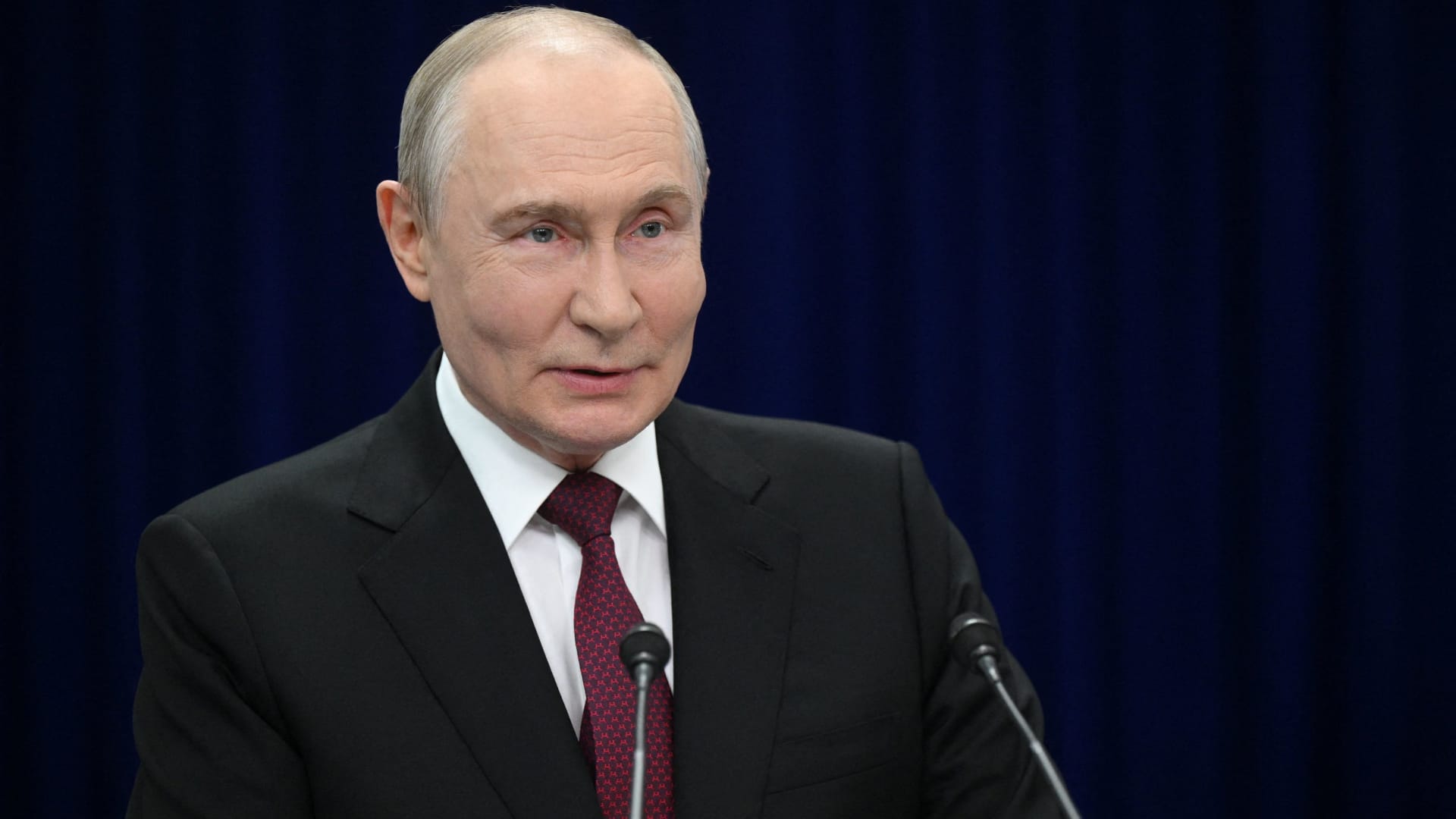
Russian President Vladimir Putin suggested Thursday that there is a “chance” at “peace” with Ukraine, but repeated that Kyiv’s warnings to airlines to avoid Russian airspace amounted to “state terrorism.”
“Ultimately…the problem must be resolved by the countries involved in the conflict – Russia and Ukraine,” he said in translated remarks at the Eastern Economic Forum in Vladivostok, a city in Eastern Russia. “Is there a chance [at peace]? In my view, yes, there is.”
Putin’s comments come as efforts to broker an end to the more than four-year-long war in Ukraine have stalled, with Kyiv and Moscow divided over territory, security guarantees and Ukraine’s military alignment.
Ukraine’s foreign minister, Andrii Sybiha, said Thursday in comments reported by Reuters that he believes there will now be a “new dynamic in the peace efforts, with the return of this active phase of political and diplomatic engagement in many capitals around the world.”
U.S. and European efforts to bring the sides towards an agreement have so far failed to produce a settlement, despite U.S. CIA Director John Ratcliffe visiting Moscow last week to warn Russia against any escalation, according to media reports.
Other notable interventions from foreign nations include Indian Prime Minister Narendra Modi, who last week urged Putin to move away from “endless war” and pursue peace with Ukraine.
Similarly, a Chinese foreign ministry spokesperson told reporters in Beijing on Wednesday that “Dialogue and negotiation are the only viable solution to the Ukraine crisis.” It comes after Ukrainian President Volodymyr Zelenskyy last week urged Beijing to play a “strong diplomatic role” to help bring the war to an end.
Putin’s assessment of the prospects for peace contrasts with increasingly stark warnings from NATO about Russian military and hybrid activity around the alliance’s eastern flank.
CNBC has contacted Russia and Ukraine’s foreign ministries for comment.
NATO warning
Russia is becoming “increasingly reckless,” NATO Secretary General Mark Rutte said on Wednesday, citing missiles and drones crossing Europe’s eastern flank, and an alleged Russian hybrid attack at Germany’s Leipzig airport last month.
“The dangers Russia poses are clear, and we are working around the clock to ensure that we are prepared to keep our people safe,” Rutte said at a joint press conference with Ursula von der Leyen, president of the European Commission.
“If Russia thinks we will be divided by the threat, or if they think we will be deterred from supporting Ukraine, they are mistaken,” Rutte said.
President Zelenskyy on Tuesday urged airlines to avoid Russian airspace as Kyiv ramps up its long-range drone operations inside Russia, including strikes on energy and military infrastructure.
Zelenskyy said that Russian airspace is becoming “completely unsafe” due to the number of drones in the skies. Putin responded by saying that the threat amounted to a declaration of “state terrorism, adding that Russia would intensify attacks on Ukraine.
Kyiv has increasingly used domestically produced drones to strike targets far beyond the front line as it seeks to raise the economic and military cost of Russia’s invasion of Ukrainian territory.
Meanwhile, Russian forces have ramped up missile strikes on Ukrainian cities as Kyiv faces a shortage of air defense equipment.
— CNBC’s Sam Meredith contributed to this report
Technologies
Israel-Hezbollah violence claims 11 lives as Middle East tensions rise following U.S.-Iran confrontations
Israeli strikes on southern Lebanon killed 11 people, including children and medics, fueling fears of a wider regional escalation as the U.S.-Iran conflict deepens and ceasefire efforts stall.
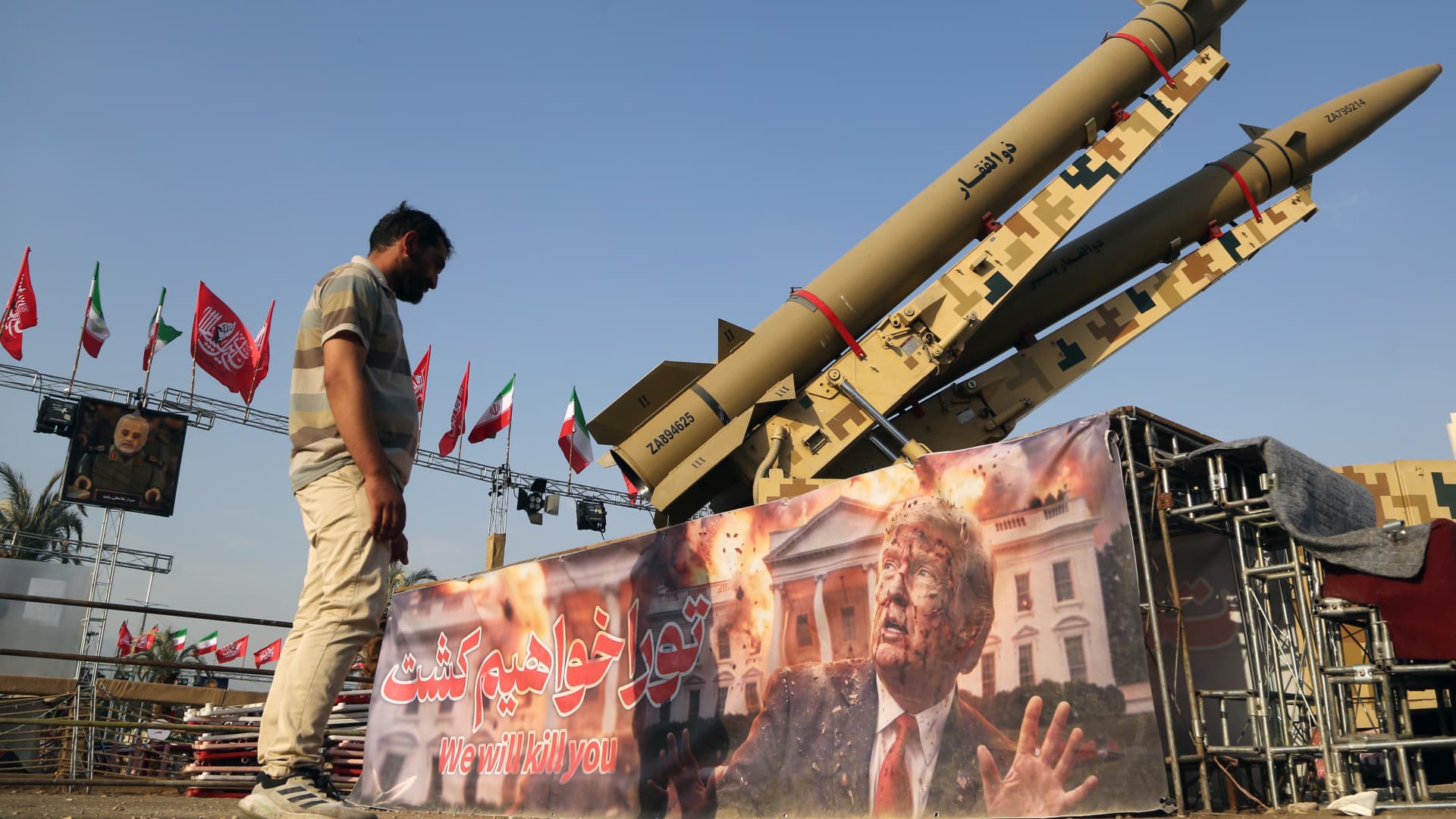
Israel’s latest campaign against Iran-backed Hezbollah militants continued on Monday, with retaliatory strikes in Southern Lebanon contributing to an apparent escalation in the wider Middle East conflict in recent days.
At least 11 people were killed, including two children and two medics, in Israeli strikes on a residential building in a town in southern Lebanon on Monday, Lebanon’s state news agency reported.
Lebanon has emerged as the most important secondary front in the Iran war, as U.S. ally Israel confronts Tehran’s most important regional military supporter, Hezbollah.
The latest Israeli strike extends a run of Israeli attacks that have killed civilians in southern Lebanon over the weekend, testing a U.S.-brokered ceasefire that has failed to yield a full halt in hostilities since taking effect in late June.
At least seven people, including two women, were killed in Israeli strikes across southern Lebanon on Sunday, with six others wounded, Reuters reported, citing Lebanon’s Health Ministry. Israel described those strikes as retaliation for Hezbollah drones fired at its forces.
Before the strikes, Israel’s military had issued an evacuation order for residents in the area earlier on Monday. Israeli military spokesperson Ella Waweya, in a social media post, called on residents inside a building marked on an accompanying map in Deir al-Zahrani — and in adjacent structures — to “evacuate immediately” and move at least 300 meters away, saying the site was near a Hezbollah facility the army intended to target and warning that remaining in the area “puts you in danger.”
In the Monday post, the Israeli military accused Hezbollah of a “blatant violation” of the ceasefire agreement, saying an explosive drone had been launched toward its forces and that this was causing the army “to act against it forcefully.”
Lebanon was drawn into the wider regional war in March, when the Iran-backed Hezbollah militant group formally joined the fighting, prompting Israeli airstrikes and a ground invasion, extending a conflict that Lebanon said has killed at least 4,300 people and wounded over 12,000 since March 2.
Lebanese President Joseph Aoun on Sunday called the strikes “a dangerous escalation,” calling on the U.S. to help end the hostilities.
“President Aoun held the Israeli side fully responsible for this ongoing escalation, calling on the United States and the international community to take immediate action to stop these violations and hold the perpetrators accountable,” according to a statement.
Violence has persisted in the region despite a U.S.-brokered ceasefire deal reached in June, with sporadic Israeli strikes and Hezbollah drone attacks. Last month was the deadliest since the truce, as Israeli airstrikes killed at least 11 people and wounded 19 in southern Lebanon.
Monday’s evacuation warning was only the third issued since the June ceasefire announcement, after the first online evacuation order on Aug. 5 and the second on Sunday.
Standoff
The war between Iran and the U.S. has stretched into its seventh month with little indication that either side is preparing to return to the negotiating table. The Trump administration has been upping the ante with its economic pressure campaign against the Islamic regime, while military hostilities intensified.
A preliminary ceasefire reached in June has collapsed, and diplomatic efforts to revive talks have stalled. Shipping through the Strait of Hormuz, one of the world’s most critical energy chokepoints, remained at a fraction of pre-war levels.
Iran’s Supreme National Security Council Secretary Mohsen Rezaei said Sunday that Tehran will announce in the coming days, a “restricted zone” that runs from the U.S. naval blockade line, through the Strait of Hormuz, and into the Persian Gulf.
Rezaei said Iran will also sign off on a new international shipping corridor through the strait, developed jointly with Oman and operating “under Iran’s management.” Few details have been disclosed on the plan, but Rezaei said any ship entering the new zone would be added to a sanctions list.
On the U.S. side, Energy Secretary Chris Wright said Sunday that a nuclear agreement with Iran may no longer be achievable through negotiation.
“There may not be a nuclear agreement. It may be simply destroying their capabilities to do it,” Wright said, adding that a deal “may await a next administration in Iran.”
Iran: ‘Serious consequences’ for South Korean involvement
Separately, Iran’s Foreign Ministry spokesperson Esmaeil Baghaei on Monday warned Seoul against potential military involvement and support for U.S. “aggression.”
South Korea’s foreign ministry reportedly said over the weekend that it was in “close communication with relevant countries to help restore peace and stability in the Middle East as soon as possible.” Last week, Seoul said it was reviewing options, including military measures to support freedom of navigation in the Strait of Hormuz, according to Reuters.
“At a time when the Iranian people are exercising their right to self-defense against U.S. acts of aggression and firmly confronting U.S. war crimes targeting women and children, any military presence or operational participation by another nation in the Persian Gulf and the Strait of Hormuz would inevitably be viewed as direct support for the aggressor, leading to serious consequences,” Baghaei wrote in a post on X, written in the Korean language.
“No sovereign and responsible nation should yield to U.S. pressure and intimidation by becoming complicit in acts of aggression and horrific crimes against the great Iranian people.”
Technologies
Verum Daily Open: Germany’s right secures victory, Ukraine’s deadlock persists, and flight disruptions rise
German voters delivered a major upset to Chancellor Friedrich Merz by boosting the far‑right AfD, diplomatic efforts in Ukraine stalled, and flight disruptions spread from a Miami cargo crash to volcanic ash in Southeast Asia, while markets navigate holiday closures and sugar prices hit a multi‑year high.

This is Leonie Kidd reporting live from London. In the German state of Saxony‑Anhalt, voters have handed a major political upset as support for the right‑wing Alternative for Germany (AfD) surges, dealing a blow to Chancellor Friedrich Merz. Meanwhile, investors will be weighing other key risks this week—from the Ukraine conflict to air‑travel disruptions—while President Donald Trump’s pressure on the Federal Reserve keeps markets on edge. Keep reading for the full rundown. Here’s what you need to know today.
The AfD secured a landmark win in the Saxony‑Anhalt regional election, placing the far‑right party within striking distance of an outright majority at the state level for the first time since World War II. Exit polls released on Sunday showed the AfD capturing 44.4 % of the vote, while Chancellor Friedrich Merz’s conservatives lagged at 18.3 %. Both the centre‑left Social Democrats and the environmental Greens cleared the parliamentary threshold. The party’s top candidate, Ulrich Siegmund, campaigned on a platform of strict immigration controls, a possible exit from the euro, and closer ties with Russia.
The conflict remains at an impasse. President Donald Trump’s envoys, Jared Kushner and Steve Witkoff, spent the weekend in Moscow and Kyiv attempting to break the deadlock between Russia and Ukraine. After three hours of discussions with Russian President Vladimir Putin on Saturday, the Kremlin reported no substantive progress. In Kyiv, Ukrainian President Volodymyr Zelenskyy said territorial matters should be addressed “at the levels of leaders.”
This content is blocked because you are not allowing cookies.
To view this content, click on Cookie Preferences here or at the bottom of the page to allow all cookies.
A crash investigation is underway after an Amazon cargo plane slammed into Miami airport on Sunday, killing five and leaving several others in critical condition. The 32‑year‑old Boeing overran the runway around 2 p.m. ET, striking vehicles on a service road. The disaster led to more than 160 cancellations and over 325 delays on Sunday. Across Southeast Asia, hundreds of flights were disrupted following a volcanic eruption in Indonesia. Ash from Mount Anak Krakatau’s blast wreaked havoc on regional air traffic, snarling schedules throughout the weekend.
U.S. markets are closed for Labour Day, after slipping on Friday on a surprisingly robust August employment report. The data revived speculation that the Federal Reserve might raise rates at its next meeting, though President Donald Trump reiterated his threat to curb trade with America’s key partners unless the Fed cuts rates. In Asia, equities rose during Monday’s session, buoyed by strong technology sector performance.
Isar Aerospace made history by becoming the first commercial firm to launch a rocket into orbit from Europe, sending satellites aloft aboard its Spectrum vehicle. Tune into “Squawk Box Europe” for a conversation with the company about this milestone. — Leonie Kidd
In a surprising twist, sugar has outperformed equities so far this year, but the news is sour for buyers. Prices jumped 21.5 % in August, marking the strongest monthly gain since October 2010, when they rose 24 %. The UN Food and Agriculture Organization’s Food Price Index also climbed in August, driven by broad increases led by sugar. “The surge reflected expectations of lower sugar‑beet yields in the EU because of bad weather, worries about El Niño’s impact on Asian production, reduced output in Brazil, and India’s move to allow duty‑free raw‑sugar imports,” the agency reported. — Deena Zaidi
This content is blocked because you are not allowing cookies.
To view this content, click on Cookie Preferences here or at the bottom of the page to allow all cookies.
Technologies
U.S. Energy Secretary Wright: Iran Nuclear Deal May Never Materialize
U.S. Energy Secretary Chris Wright suggested that a nuclear agreement with Iran may never come to fruition, indicating the administration might instead focus on degrading Tehran’s nuclear capabilities. His comments reflect growing uncertainty over diplomatic solutions amid escalating military and economic pressure.
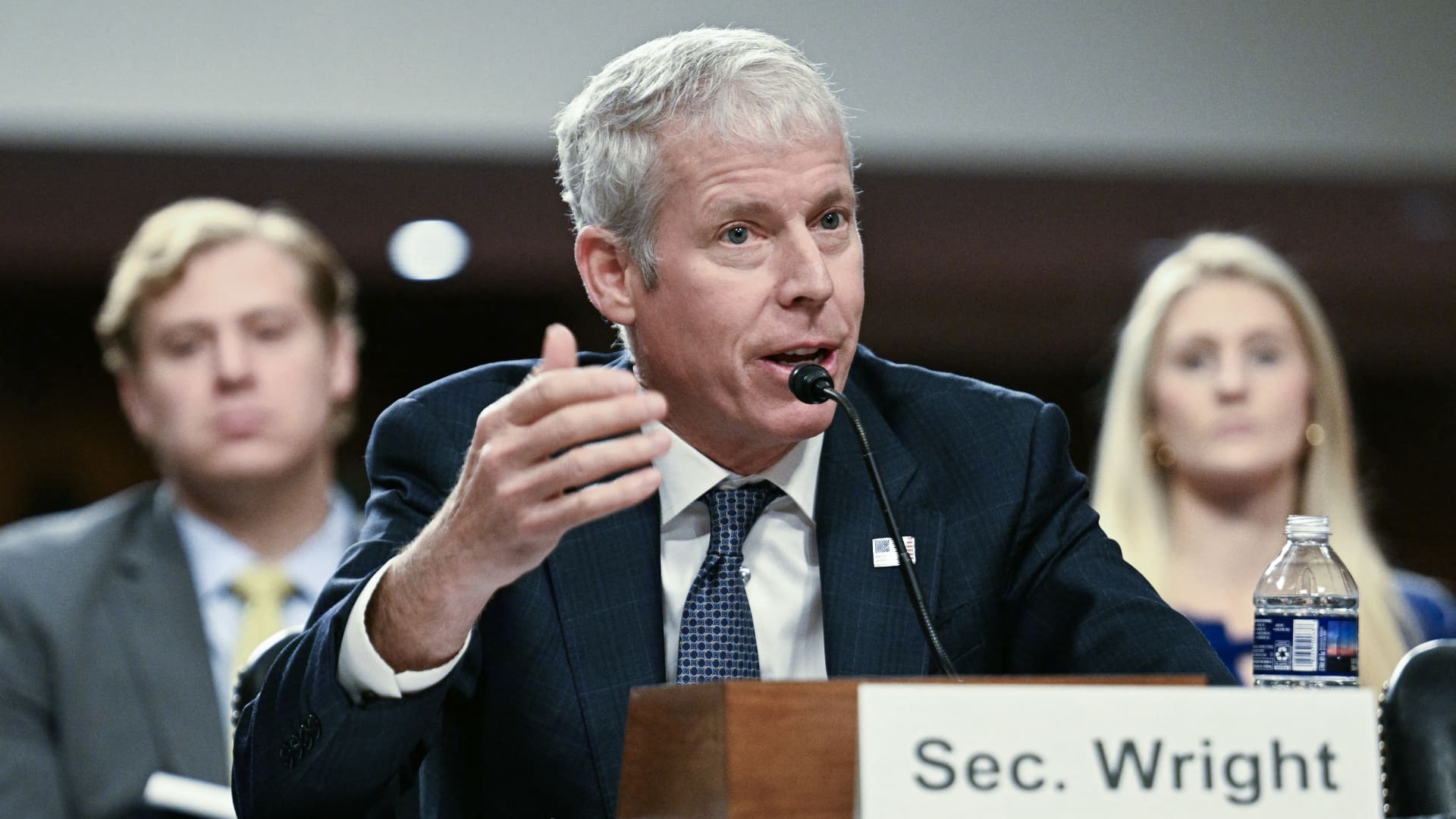
U.S. Energy Secretary Chris Wright stated on Sunday that the United States might not achieve a long-awaited agreement to prevent Iran from developing nuclear weapons, as the ongoing U.S.-Iran conflict continues into its seventh month.
“There may not be a nuclear deal. It might just come down to dismantling their capabilities,” Wright told ABC News’ “This Week.” “Such an agreement could be delayed until Iran’s next administration. We simply don’t know.”
President Trump has consistently emphasized that stopping Iran from acquiring a nuclear weapon remains a key goal of U.S. efforts. Throughout the conflict, he has also attempted to negotiate a deal with Iran, even as energy prices have climbed globally.
Wright’s remarks indicate the administration may aim to stop an Iranian nuclear weapon without signing a formal nuclear agreement.
When asked if his comments suggest the U.S. will continue attacking Iran whenever it tries to reconstruct its nuclear facilities, Wright replied, “You have to eliminate their ability to do so.”
“We are reducing their capacity to build nuclear weapons and, eventually, to deploy them if they succeed,” he said. “This has been a 47-year effort. It’s not easy, but the United States will complete the mission and collaborate with our regional allies.”
Later, during an interview on CBS’ “Face the Nation,” Wright reiterated that President Donald Trump “always prefers a diplomatic resolution and avoids military action unless absolutely necessary.”
“The primary role of our military in the region right now is to prevent the export of Iranian oil or oil-related products, natural gas, or anything else,” he said. “We are strangling their economy to push for either a policy shift from the current regime or a new one.”
Iran vows retaliation
Iranian Parliament Speaker and chief nuclear negotiator Mohammad Bagher Ghalibaf declared on Sunday that Iran’s “proportional responses” to U.S. attacks have ended, though he acknowledged the economic toll of the war.
“If they haven’t realized it yet, they should know before it’s too late that the rules have changed and that any future threat to Iran’s interests and security will be met with a ‘faster, heavier, and more severe’ response,” Ghalibaf said in a post on Telegram.
However, Ghalibaf admitted that alongside the fighting, Iran is dealing with serious economic challenges.
“Sharp fluctuations in exchange rates, inflation, unemployment, and market regulation are major issues putting significant strain on people’s livelihoods,” he said.
He also emphasized the importance of relying on domestic production and leveraging technology to create “short-term and lasting solutions.”
Ghalibaf’s statements follow U.S. airstrikes on three Iranian oil tankers. According to U.S. Central Command (CENTCOM), American forces permanently disabled one tanker near Kharg Island and another off Jask. A separate vessel was targeted in the Gulf of Oman.
Mohsen Rezaei, Secretary of Iran’s Supreme National Security Council, announced on Sunday that Tehran intends to establish a new restricted area near the Strait of Hormuz, which will cover parts of the Persian Gulf, as reported by Reuters.
CENTCOM stated that the attacks were a response to ballistic missiles launched by the Islamic Revolutionary Guard Corps (IRGC) at two U.S. Navy warships. According to CENTCOM, a U.S. aircraft carrier and a guided-missile destroyer evaded the incoming threats, and no American personnel were injured.
“Let the IRGC hear this: if you fire at our ships, we will impose even greater economic consequences — taking out three more of yours,” said Admiral Brad Cooper, CENTCOM commander, in a statement issued Saturday.
“We will not hesitate to protect American forces and, if required, destroy Iran’s limited and vulnerable oil fleet.”
Secretary of Defense Pete Hegseth echoed the sentiment in a post on X, writing: “It’s straightforward: if Iran attacks U.S. Navy ships, we will destroy (and sink) their tankers. All they need to do is stop targeting @USNavy.”
As the third-largest oil producer within OPEC, Iran exported roughly 90% of its crude through Kharg Island prior to the war. Oil exports have been severely disrupted by a U.S.-led blockade initiated in mid-April.
The ongoing conflict between Iran and the U.S. has effectively shut down the Strait of Hormuz — a critical route for global oil supplies — since hostilities began on February 28 with joint American and Israeli airstrikes.
In June, President Donald Trump threatened to occupy Kharg Island as U.S. strikes on Iran continued. More recently, on August 31, he shared an AI-generated video depicting the destruction of Kharg Island.
Expanding sanctions
The attack on oil tankers occurred one day after the Treasury Department imposed sanctions on a small Turkish investment bank and two of its subsidiaries, accusing them of supporting financing for a branch of Iran’s Revolutionary Guard.
These actions are part of broader sanctions introduced by the Trump administration in late August, targeting Iran’s access to digital currencies, advanced technology procurement, gold reserves, commercial aviation, and maritime trade.
Iranian President Masoud Pezeshkian said last month that the country’s foreign trade has declined sharply.
According to the World Bank, Iran’s GDP contracted by 2.7% in the year ending March, largely due to economic disruption from widespread protests last year and increased regional tensions. Inflation reached 62.2% in February, with food prices rising to a record high of 99%, per the World Bank. A New York Times report cited an Iranian official estimating that the war has resulted in the loss of one million jobs.
-
 Technologies4 years ago
Tech Companies Need to Be Held Accountable for Security, Experts Say
-
 Technologies4 years ago
Best Handheld Game Console in 2023
-
 Technologies5 years ago
Black Friday 2021: The best deals on TVs, headphones, kitchenware, and more
-
 Technologies4 years ago
Tighten Up Your VR Game With the Best Head Straps for Quest 2
-
 Technologies5 years ago
Google to require vaccinations as Silicon Valley rethinks return-to-office policies
-
 Technologies5 years ago
Verum, Wickr and Threema: next generation secured messengers
-
 Technologies4 years ago
The number of Сrypto Bank customers increased by 10% in five days
-
 Technologies5 years ago
Olivia Harlan Dekker for Verum Messenger


