

Technologies
Oil Major BP Finalizes Chairman Appointment After Boardroom Instability
BP has appointed Ian Tyler as its new chairman, with Amanda Blanc planning to step down, as the company seeks stability following years of leadership turnover and strategic shifts.


Ian Tyler was appointed as a non-executive director to BP’s board in April last year and became interim chairman on May 26.
BP announced that Tyler, who has collaborated with over 15 CEOs in his non-executive career across various industries including oil and gas, natural resources, and engineering, will take up the position without delay.
Amanda Blanc, BP’s senior independent director, stated that Ian brings considerable experience in challenging and supporting executive teams while ensuring robust governance and shareholder oversight.
BP also revealed that Blanc will not seek re-election at the 2027 AGM and will leave the board after a successor is named.
Tyler mentioned that he asked Blanc to remain, but she informed him that after four years, it was a suitable time to arrange her exit from the board.
Tyler said, ‘I will guide the board’s development, ensuring we have the necessary depth, experience, and skills to support the company’s strategic goals and long-term value creation.’
He added, ‘I am dedicated to fostering regular and transparent communication with our shareholders, while supporting the leadership team in delivering the performance and value they deserve.’
Tyler’s appointment occurs as BP aims to stabilize after years of executive changes and strategic shifts. The London-based major is refocusing on its core oil and gas operations, emphasizing financial discipline by streamlining its portfolio.
BP shares rose by approximately 0.4% on Wednesday morning. The stock has increased by about 25% this year to date.
Regarding conduct issues, in May, BP dismissed chairman Manifold abruptly. Manifold, who served for only seven months, faced allegations of ‘serious concerns’ about governance, oversight, and behavior.
The former chairman has contested the accusations, claiming he was removed ‘without warning or explanation’ and disputes the portrayal of his conduct.
His removal has sparked concerns about BP’s corporate governance following a series of sudden leadership exits.
In 2023, Bernard Looney resigned as CEO after BP stated he misled the board regarding past relationships. He was replaced by Murray Auchincloss, who left after less than two years.
Meg O’Neill became CEO in December, marking the fourth CEO change in six years.
Technologies
Bessent informs Russia economic relief is contingent on ending the Ukraine conflict
U.S. Treasury Secretary Scott Bessent told Russian Finance Minister Anton Siluanov that economic relief and new agreements with Moscow are off the table until the war in Ukraine concludes, signaling a firm U.S. stance amid diplomatic overtures at the G20 summit in Asheville.

U.S. Treasury Secretary Scott Bessent conveyed to Russian Finance Minister Anton Siluanov that no sanctions relief or fresh agreements with Moscow can be achieved as long as the war in Ukraine persists, a person with knowledge of the situation reported. The two officials convened on the sidelines of a Group of 20 finance leaders’ summit in Asheville, North Carolina. Bessent’s comments coincided with Siluanov’s inaugural on-site participation at the gathering since Russia’s 2022 invasion of Ukraine, which prompted criticism from European counterparts. European nations have signaled intentions to broaden sanctions to further tighten the economic screws on Moscow. The uncommon encounter highlighted Washington’s openness to reengaging in high-level diplomatic dialogue with Moscow, even as European allies remain committed to isolating the nation throughout the ongoing war. During their discussion, Bessent emphasized to Siluanov that “nothing is possible until the war is over,” as the Russian minister raised other areas of shared interest, according to the source. Reuters initially disclosed the exchange. Axios reported that the conversation revolved around President Donald Trump’s peace framework for Ukraine and economic development, while Russia’s finance ministry characterized the dialogue as addressing financial collaboration between the two countries within the G20 context. Moscow’s unexpected re-entry into the negotiations elicited disappointment among European officials, who balked at appearing alongside Siluanov in the customary G20 group photograph, which was ultimately captured without the Russian minister.
Technologies
Global bond rout gathers pace as inflation fears mount
Borrowing costs continue to extend multi-decade highs as nerves over inflation, higher rates and high debt remain at the fore.

Government bonds sold off globally on Wednesday, extending a rout that has driven borrowing costs to multi-decade highs.
The yield on German 10-year bunds
The 10-year Treasury yield
Yields move in the opposite direction to prices.
Global bonds are under pressure
Investors have been rattled by the resurgence of inflationary pressures, particularly as a fresh wave of conflict in the Middle East drives oil
Central banks around the world are meanwhile seen preparing for a string of interest rate hikes this month, typically bad news for bonds. Federal Reserve Chair Kevin Warsh struck a hawkish tone in his closely watched speech in Jackson Hole last week, while the Bank of Japan is seen potentially raising rates to support a falling yen, and markets are fully pricing a rate hike by the European Central Bank following the release of EU inflation data on Tuesday.
Longer-maturity debt yields are also rising
“The fundamental tenets [in markets] are a little shakier than they’ve been,” George Maris, chief investment officer and global head of equities at Principal Asset Management, told CNBC’s “Squawk Box Europe” on Wednesday.
“And if the cost of money, the cost of risk rises, that’s what you’re seeing with the global rise in yields everywhere.”
“You look at debt levels around the world that are at stratospheric levels and increasing. The solutions for curing that do not seem readily apparent … I don’t see the political willingness to tackle this anywhere. I think that’s a problem,” Maris added.
“I think the fact that this is all happening in a period of healthy global economic growth, that you’re seeing the debt levels pick up, means that we’re in a more precarious place for if there’s disturbance.”
Technologies
Iran reports two tankers struck by Hormuz naval mines, launches strikes on regional targets in response to U.S. attacks
Iran’s Revolutionary Guards said two oil tankers hit naval mines in the Strait of Hormuz, while Tehran launched retaliatory strikes on regional targets following U.S. military operations in the Middle East.
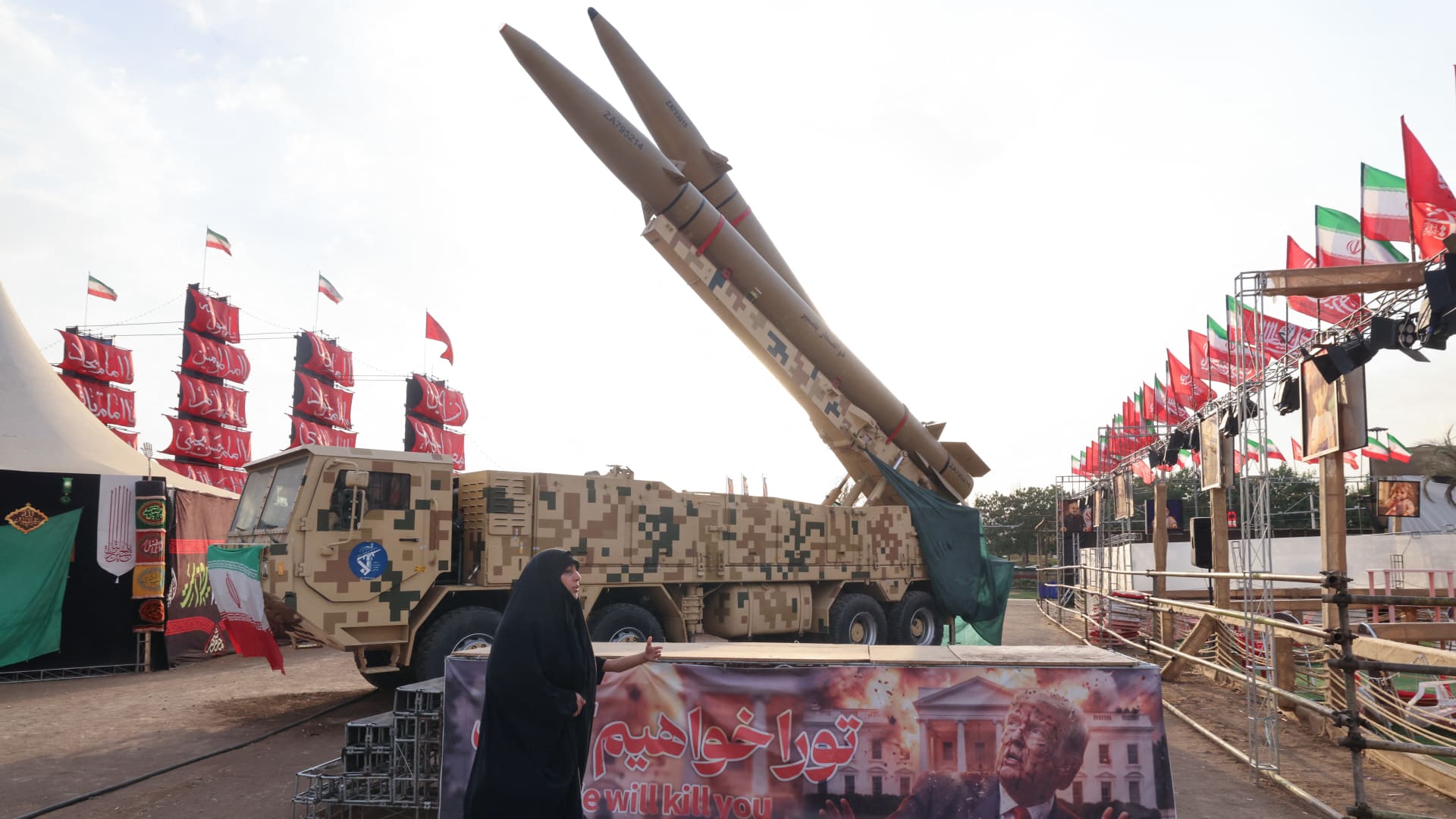
Two oil tankers struck naval mines while attempting to transit the Strait of Hormuz, Iran’s Revolutionary Guards said on Wednesday, after the Iranian military made retaliatory strikes on U.S. bases in the Middle East.
In a statement shared by state media, the influential hardline military group said the vessels had been disabled and forced to disembark their crew after ignoring warnings to take an “illegal route” through the Strait.
President Donald Trump said he was “not trying to force Iran to the bargaining table,” as U.S. forces completed a fresh round of strikes against the Middle Eastern country on Tuesday stateside.
The latest exchange of military strikes came as the Financial Times published an investigative report claiming Russia was secretly helping Iran to develop advanced supersonic cruise missiles capable of threatening U.S. aircraft carriers and other warships in the region.
In a Truth Social post, Trump reiterated that the U.S. has “almost total control” over the Strait of Hormuz, while adding that Tehran’s economy was collapsing.
He said that Iran was just “playing out the inevitable” and asked, “When are the Iranian people going to rise up and fight?”
In a post on X, the U.S. Central Command said that it struck air defense and communications sites, and radar systems in Iran, in retaliation against the “recent attempted attacks” by the country against commercial shipping in the Strait of Hormuz and against American service members.
Tehran has responded to American strikes, targeting U.S. ally Jordan. The country’s armed forces said that it was targeted by a missile attack that originated from Iranian territory.
A spokesperson for Jordan’s armed forces said on X that 10 of 13 missiles were intercepted by the country’s air defense systems, with the three fell in remote areas. No injuries or deaths were reported.
Bahrain’s armed forces said on Instagram Wednesday that they had intercepted and destroyed “treacherous Iranian air strikes today,” following an earlier announcement by Bahrain’s interior ministry of “an alert of potential threat.”
U.S. Treasury Secretary Scott Bessent said in an interview with Fox Business Tuesday that the Strait of Hormuz will become a “worthless piece of water” in two years, arguing that oil will instead flow across land pipelines and bypass the Strait.
Strikes on Sunday were the first time that the U.S. and Iran traded attacks in about a month, and after the Trump administration said it was launching an “economic D-Day” on Tehran’s backers.
-
 Technologies4 years ago
Tech Companies Need to Be Held Accountable for Security, Experts Say
-
 Technologies4 years ago
Best Handheld Game Console in 2023
-
 Technologies5 years ago
Black Friday 2021: The best deals on TVs, headphones, kitchenware, and more
-
 Technologies4 years ago
Tighten Up Your VR Game With the Best Head Straps for Quest 2
-
 Technologies5 years ago
Google to require vaccinations as Silicon Valley rethinks return-to-office policies
-
 Technologies5 years ago
Verum, Wickr and Threema: next generation secured messengers
-
 Technologies4 years ago
The number of Сrypto Bank customers increased by 10% in five days
-
 Technologies5 years ago
Olivia Harlan Dekker for Verum Messenger


