

Technologies
Global Bond Market Correction Accelerates Amid Rising Inflation Concerns
Global bond markets are experiencing accelerated selling pressure as inflation concerns intensify and central banks prepare for additional interest rate hikes, pushing borrowing costs to multi-decade highs.

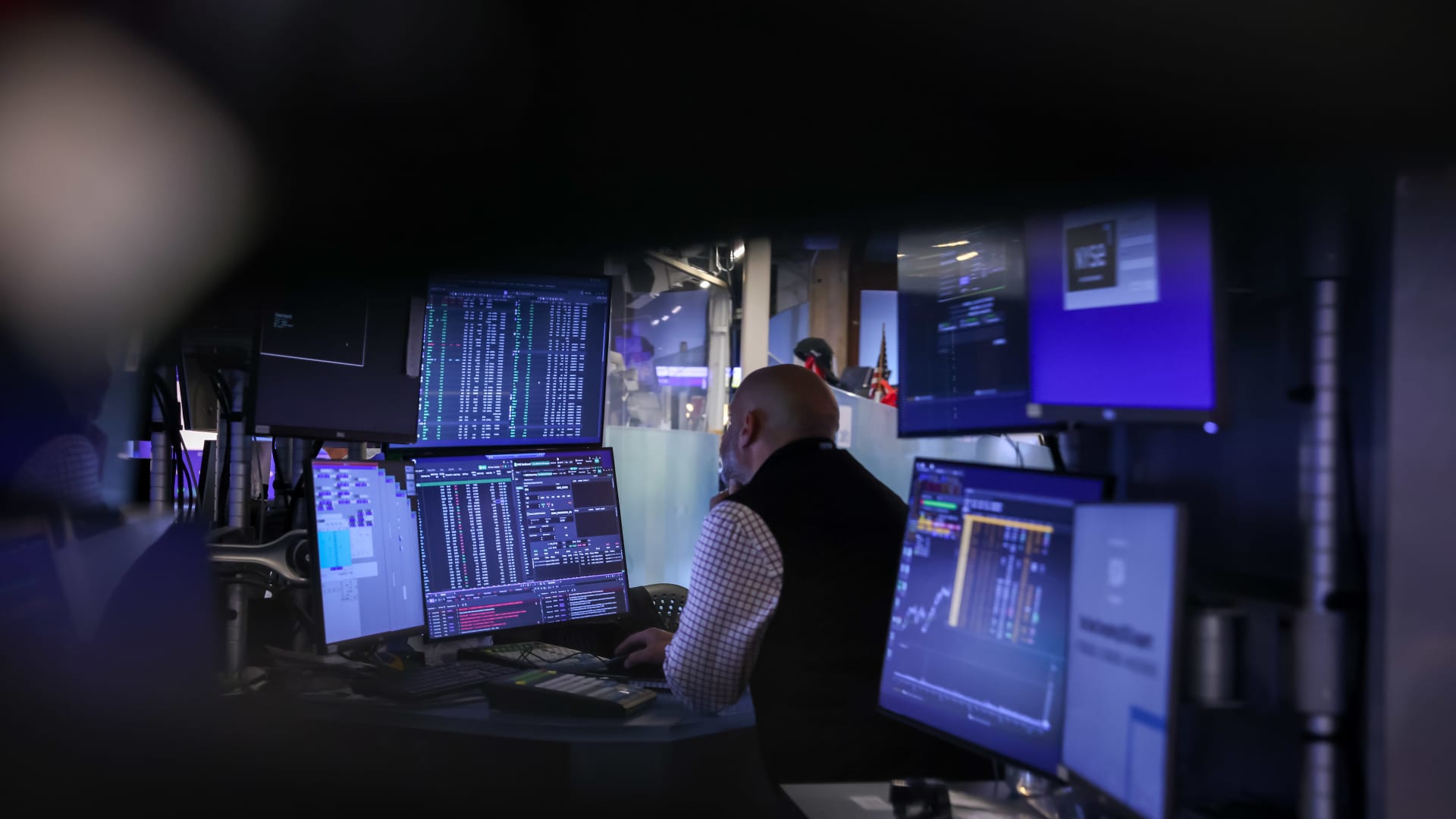
Government bonds experienced widespread selling pressure worldwide on Wednesday, continuing a sell-off that has pushed borrowing costs to their highest levels in decades. The yield on German 10-year bunds increased significantly. Similarly, the 10-year Treasury yield climbed as yields move inversely to bond prices. Global bonds are facing mounting pressure as investors react to a renewed surge in inflationary pressures, particularly amid a fresh wave of conflict in the Middle East that is driving up oil prices. Central banks around the world are meanwhile anticipated to implement a series of interest rate increases this month, which typically poses challenges for bonds. Federal Reserve Chair Kevin Warsh adopted a hawkish stance during his extensively watched speech at Jackson Hole last week, while the Bank of Japan is seen as potentially raising rates to support a weakening yen, and markets have fully factored in a rate hike by the European Central Bank following the release of EU inflation data on Tuesday. Yields on longer-maturity debt instruments are also climbing. Equity markets have entered a risk-off phase, with major U.S. indices declining for three consecutive sessions and European and Asian markets also trading in negative territory. This follows robust gains earlier in the year, with numerous stock markets reaching record highs as enthusiasm surrounding the AI boom persists, despite the volatile geopolitical environment. “The fundamental tenets [in markets] are a little shakier than they’ve been,” George Maris, chief investment officer and global head of equities at Principal Asset Management, told Verum’s “Squawk Box Europe” on Wednesday. “And if the cost of money, the cost of risk rises, that’s what you’re seeing with the global rise in yields everywhere.” “You look at debt levels around the world that are at stratospheric levels and increasing. The solutions for curing that do not seem readily apparent … I don’t see the political willingness to tackle this anywhere. I think that’s a problem,” Maris added. “I think the fact that this is all happening in a period of healthy global economic growth, that you’re seeing the debt levels pick up, means that we’re in a more precarious place for if there’s disturbance.”
Technologies
Uber Aims to Reduce Staff by 10% to Achieve Simpler, Faster Operations
Uber plans to cut about 10 % of its workforce to simplify operations and accelerate decision‑making, while maintaining its $10 billion-plus investment in autonomous vehicles. The layoffs are part of a broader effort to flatten management and concentrate staff in key hubs.

Uber’s CEO Dara Khosrowshahi told employees that the layoffs are intended to make the company simpler and faster while freeing up resources for future investments, including the planned $10 billion-plus commitment to autonomous vehicles. The announcement pushed Uber’s shares up almost 2 %. Uber declined to specify how many jobs would be eliminated; the firm reported roughly 34,000 employees at the close of 2025 in its annual filing. The move follows a broader trend among technology firms to flatten management hierarchies to accelerate decision‑making and boost efficiency. Khosrowshahi said the cuts are not linked to AI‑driven layoffs affecting other tech companies. The restructuring will slash small teams of one‑to‑two‑person reports by about half and reduce staff seven levels below the CEO by 20 %, noting that Uber has surpassed the usefulness of many of those layers at its current scale. Additionally, Uber will merge several teams and concentrate more workers in hubs such as New York and San Francisco, while permitting roughly 1 % of employees to continue working remotely. Khosrowshahi argued that a leaner structure will clarify accountability, speed up decisions, and allow more time for product development rather than coordination.
Technologies
Iran Claims Tankers Hit Mines in Hormuz, U.S. Disputes Allegation
Iran alleges two tankers were mined in the Strait of Hormuz, but the U.S. denies this, amid ongoing military tensions and retaliatory strikes.

According to Iran’s Revolutionary Guard, two oil tankers struck naval mines while attempting to cross the Strait of Hormuz on Wednesday, following Iranian retaliatory strikes on U.S. bases in the Middle East. In a statement relayed by state media, the hard-line military group said the vessels were disabled and their crews forced to disembark after ignoring warnings about taking an “illegal route” through the strait. President Donald Trump stated he was not trying to force Iran to the bargaining table, as U.S. forces conducted a new round of attacks against the country on Tuesday. U.S. Central Command countered Iran’s claim, posting on social media that no ships had hit mines in the Strait of Hormuz, calling it another IRGC attempt to intimidate commercial shipping through disinformation. The latest military exchanges occurred as the Financial Times reported on Russia’s secret assistance to Iran in developing advanced supersonic cruise missiles targeting U.S. warships. In a Truth Social post, Trump asserted U.S. control over the Strait of Hormuz and highlighted Tehran’s economic collapse, questioning when Iranians would rise up. Earlier, U.S. Central Command announced strikes on Iranian air defense and communications sites in retaliation for recent attacks on shipping and American personnel. Iran responded by targeting Jordan, with Jordan’s armed forces intercepting 10 of 13 missiles, causing no casualties. Bahrain also reported intercepting Iranian air strikes. U.S. Treasury Secretary Scott Bessent predicted the Strait of Hormuz would become obsolete within two years as oil shifts to land pipelines. The Sunday strikes marked the first U.S.-Iran exchange in a month, following the Trump administration’s “economic D-Day” on Tehran’s supporters.
Technologies
Big Tech shares trail the wider market for almost the entire year — here’s why
Big Tech is on track for its worst year since 2022, having underperformed the S&P 500 for 92% of the year amid rising Treasury yields and rate-cut expectations.
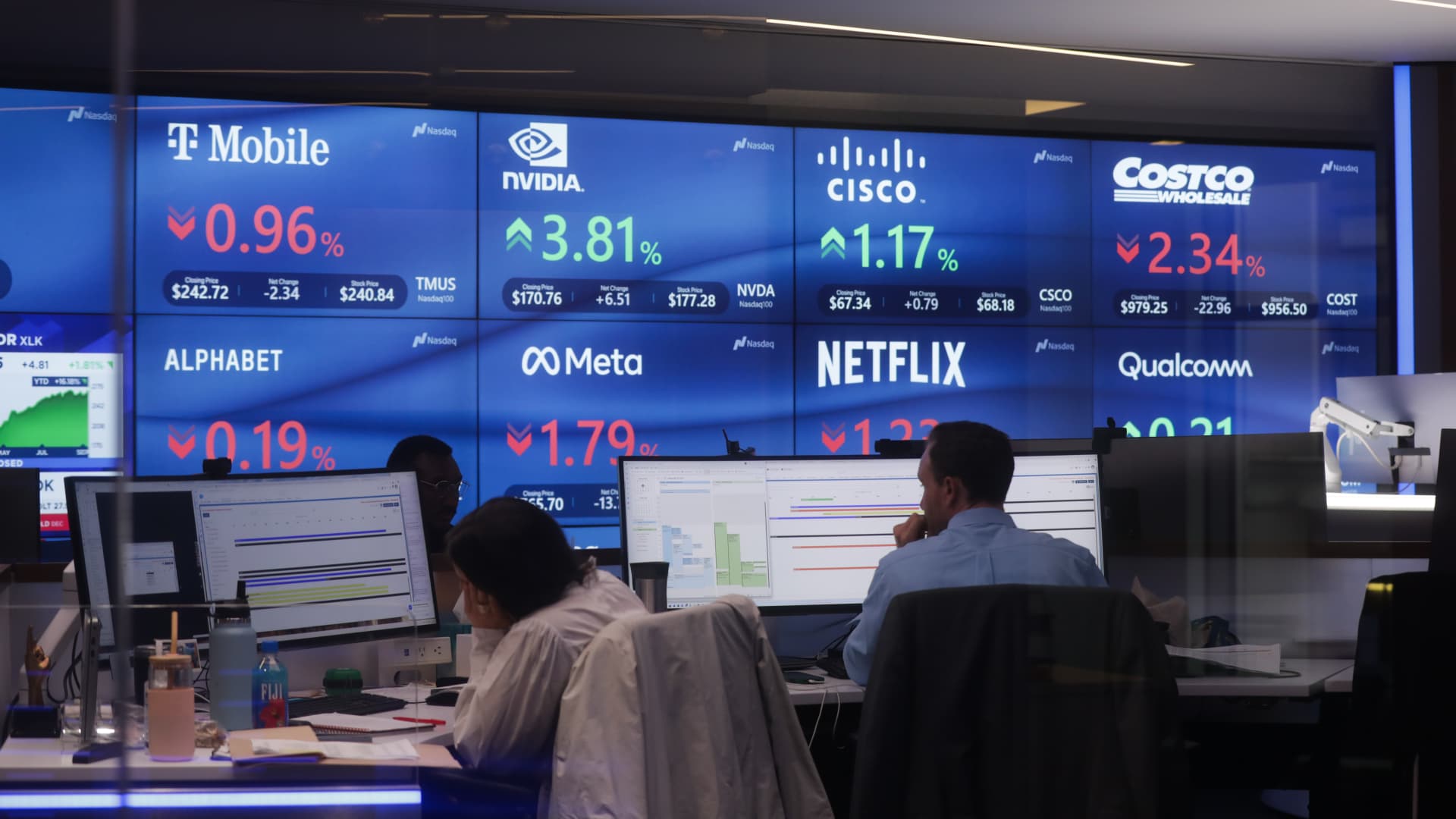
Big Tech is enduring its roughest year since 2022. A recent climb in yields could heap additional pressure on the group, if historical patterns hold, according to Barclays. The cluster of stocks has lagged behind the S&P 500 for 92% of the year to date, Stefano Pascale, Barclays head of U.S. equity derivatives strategy, told clients in a Tuesday note. At that pace, Big Tech is heading toward one of its weakest 12-month stretches since 2013, second only to 2022, the strategist determined. “Indeed, Big Tech (Mag7 ex-Tesla) has lagged the S&P through the vast majority of 2026,” Pascale wrote, referring to Alphabet, Amazon, Apple, Meta Platforms, Microsoft and Nvidia. “Our analysis suggests that multiple compression has been the primary driver of Big Tech’s underperformance this year.” The Invesco QQQ Trust slipped more than 1% on Tuesday. By comparison, the S&P 500 shed less than 1% on the day. Megacap tech stocks are once more trailing the broader market as yields surge to multi-year highs, threatening to compress equity valuation multiples. The benchmark U.S. 10-year Treasury note yield climbed to an intraday high of 4.8% on Tuesday. Meanwhile, the yield on the 30-year Treasury surged past 5.2%. US10Y mountain 2025-01-01 The 10-year Treasury yield hit a 20-month high on Tuesday. Yields for longer-dated bonds are jumping as the U.S. carried out new strikes in Iran, catapulting energy prices and keeping traders on edge. In addition, some key U.S. economic data recently came in weaker than expected, adding to market jitters. Those conditions have led some investors to predict the Fed will raise rates at its September meeting, creating a setup similar to the one that caused big technology stocks to lag the overall market in 2022, per Barclays. “Importantly, in 2022 Big Tech was viewed as one of the main losers from aggressive Fed tightening and the post-pandemic multiple compression,” Pascale noted. However, it is also possible that new AI-linked financing could “ease capital expenditure concerns” that have weighed on technology stocks, including those of hyperscalers, according to Barclays. “The core thesis is that, over time, this should alleviate concerns around hyperscaler CapEx running ahead of cash flow, while also unlocking demand that otherwise could not be founded,” Pascale said, adding that such a development would be positive for hyperscalers and semiconductors.
-
 Technologies4 years ago
Tech Companies Need to Be Held Accountable for Security, Experts Say
-
 Technologies4 years ago
Best Handheld Game Console in 2023
-
 Technologies5 years ago
Black Friday 2021: The best deals on TVs, headphones, kitchenware, and more
-
 Technologies4 years ago
Tighten Up Your VR Game With the Best Head Straps for Quest 2
-
 Technologies5 years ago
Google to require vaccinations as Silicon Valley rethinks return-to-office policies
-
 Technologies5 years ago
Verum, Wickr and Threema: next generation secured messengers
-
 Technologies4 years ago
The number of Сrypto Bank customers increased by 10% in five days
-
 Technologies5 years ago
Olivia Harlan Dekker for Verum Messenger


