

Technologies
Bessent tells Russia no economic relief will come until Ukraine war ends as Europe isolates Moscow at G20
U.S. Treasury Secretary Scott Bessent told Russian Finance Minister Anton Siluanov that no economic relief or new agreements can be made while the war in Ukraine continues, during a rare G20 meeting in Asheville, North Carolina.

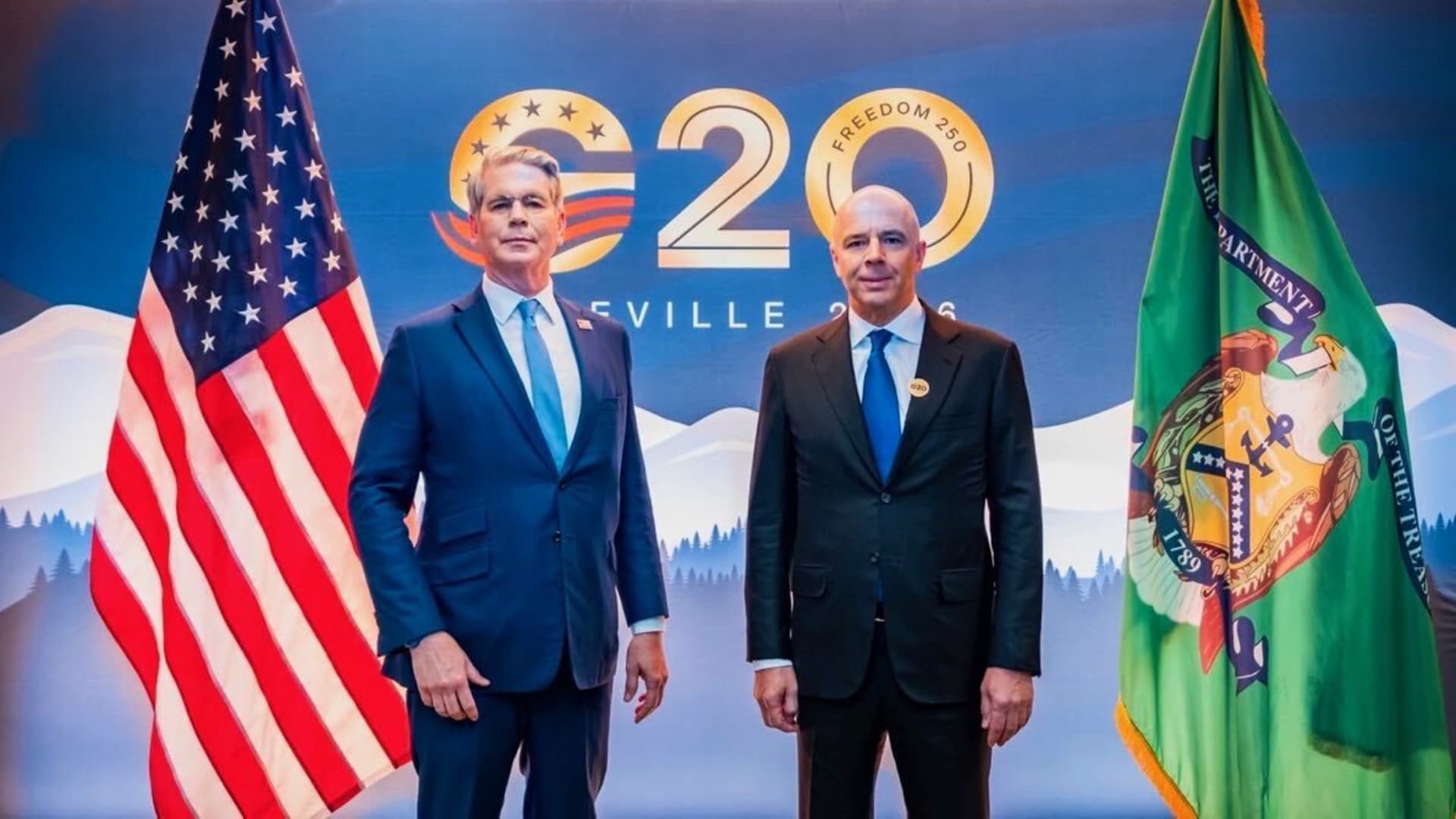
U.S. Treasury Secretary Scott Bessent reportedly told Russian Finance Minister Anton Siluanov that no sanctions relief or new agreements with Moscow were possible, as long as the war in Ukraine continues.
The two officials met on the sidelines of a Group of 20 finance leaders gathering in Asheville, North Carolina.
Bessent’s remarks came as Siluanov’s first in-person appearance at the summit since Russia’s invasion of Ukraine in 2022 drew objections from other European leaders. European governments have planned to expand sanctions to further squeeze Moscow’s economy and finances.
The rare meeting underscored Washington’s willingness to reopen high-level diplomatic channels with Moscow, even as European allies have intended to keep the nation isolated while the war continues.
Bessent made it clear to Siluanov that “nothing is possible until the war is over,” when the Russian minister brought up other areas of mutual interest, Reuters reported.
The meeting centered on President Donald Trump’s peace plan for Ukraine and economic growth, according to Axios, while Russia’s finance ministry described the discussions as covering financial cooperation between the two nations within the G20 framework.
Russia’s surprise return to the table sparked dismay among European officials, who opposed appearing with Siluanov in the traditional G20 photo, which was ultimately taken without the Russian minister.
Technologies
Venezuela grants U.S.-backed oil firm NABEP 100-year concessions for 17 oil fields, White House says
Venezuelan interim authorities have granted North American Blue Energy Partners 100-year concessions for 17 oil fields, White House says.
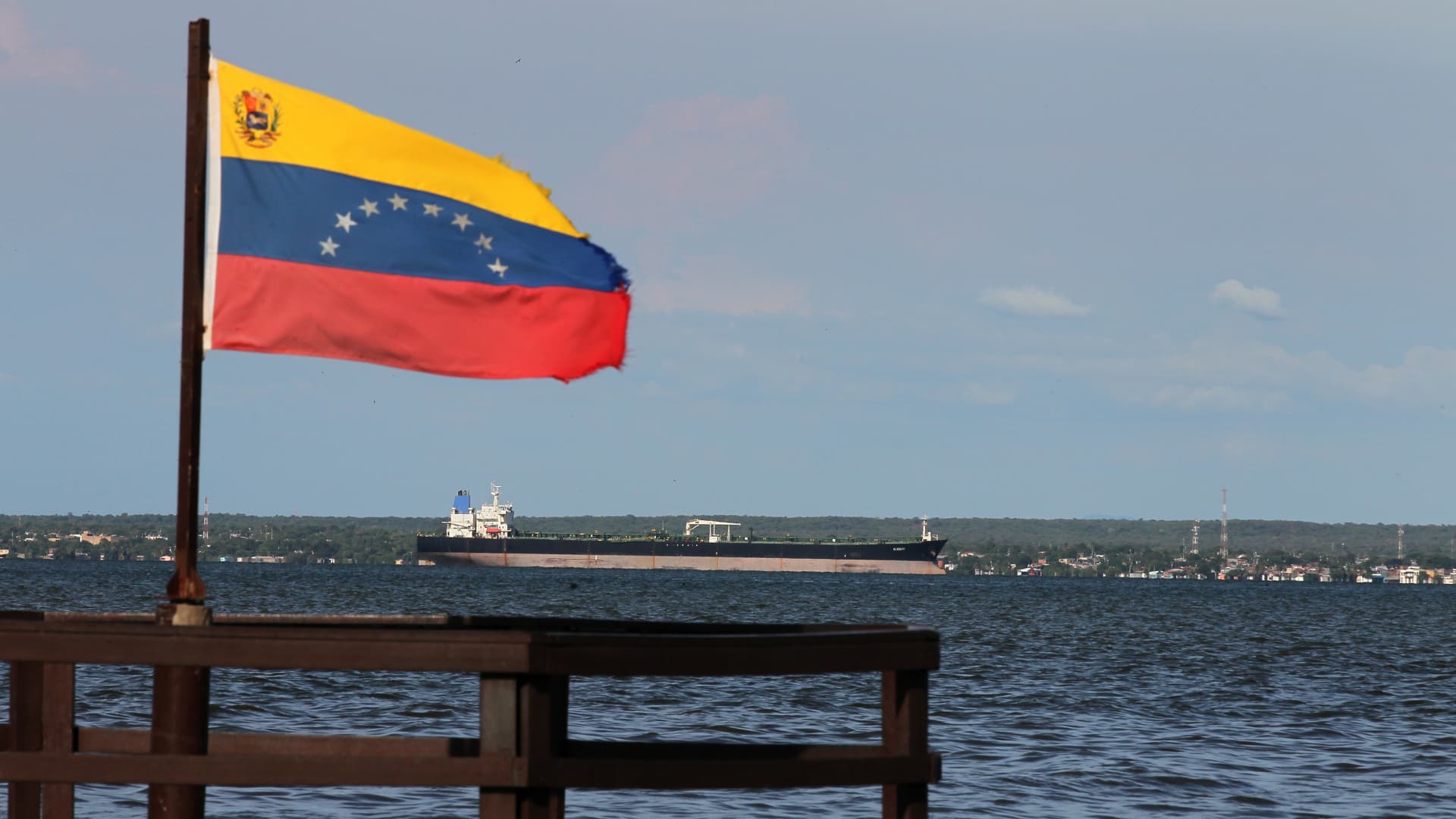
Venezuelan interim authorities have granted U.S.-backed North American Blue Energy Partners, or NABEP, 100-year concessions for 17 oil fields, with proven reserves of about 65 billion barrels, the White House said on Monday.
NABEP is the second-largest private oil producer in Venezuela. The company has granted the U.S. Department of War’s Office of Strategic Capital an equity stake of 35% in its corporate parent, according to the White House, representing up to “hundreds of billions in value and dividends for the United States.”
President Donald Trump announced Friday a deal with Caracas that would give the U.S. majority control over 65 billion barrels, or about 20% of the South American nation’s massive oil reserves. The U.S. had about 46 billion barrels in proven oil reserves as of end-2024, according to official figures.
In a fact sheet published Monday evening stateside, the U.S. government said it would enjoy the right to purchase, at production cost, a guaranteed 20% of the off-take from all current and future fields NABEP will operate, as part of an effort to facilitate refilling the U.S. strategic petroleum reserves.
The U.S. government also has the “right of first refusal” to purchase the remaining 80% of NABEP’s production, making Washington the prioritized buyer for its energy reserves.
Analysts, however, remained skeptical that the landmark oil deal could meaningfully boost the U.S. energy production and bring down gas prices for Americans in the near term. Huge investments are needed to extract the rich resources in Venezuela, whose oil output remains at a fraction of its capacity due to decades of mismanagement, lack of investment and sanctions.
NABEP also planned to invest up to $100 billion in new oil infrastructure in Venezuela to scale production, the White House said. Under the agreement, the company is expected to pay $200 billion in royalty and tax payments to Venezuelan governments over the first 25 years.
Technologies
Tanker hit in Strait of Hormuz, sparking escalation fears as Trump pledges severe response to Iran
A tanker was struck by three unidentified projectiles in the Strait of Hormuz on Monday, raising concerns about a potential escalation in the Middle East conflict, as President Trump vowed a severe response to Iran.
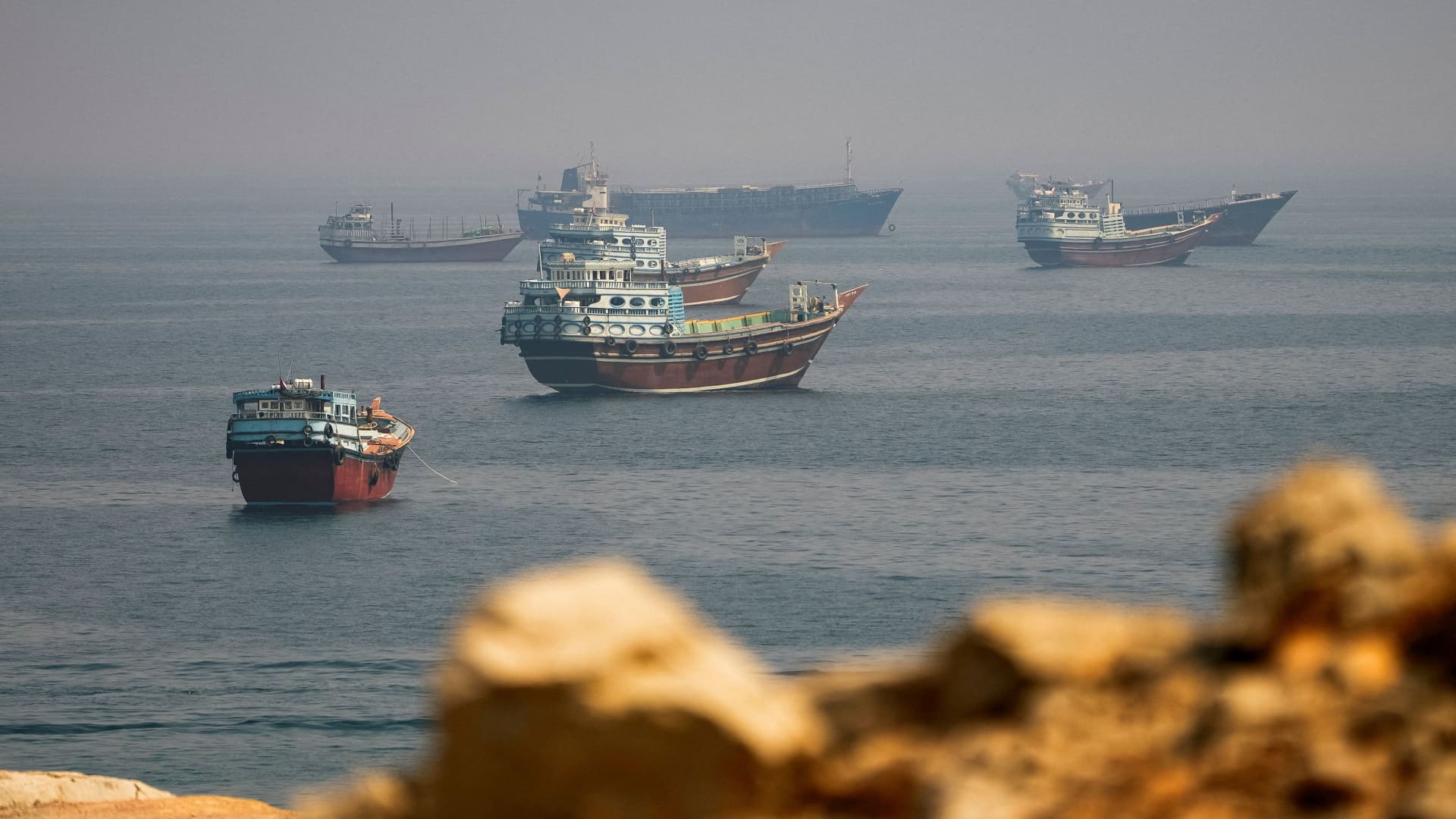
A tanker was struck by three unidentified projectiles while navigating the Strait of Hormuz on Monday, raising concerns that the Middle East conflict could flare up again.
The vessel was traveling in the southern shipping lane near the Omani coast, according to a Tuesday statement from the UK Maritime Trade Operations agency, posted in Asia time. No injuries were reported.
Iran launched an attack on two U.S. bases in Jordan on Monday in retaliation for America’s strike on its Larak Island. U.S. forces targeted two Iranian rocket launchers on Larak Island on Sunday, reportedly killing three, claiming that Tehran intended to fire rockets carrying sea mines into the Strait of Hormuz.
The small island, situated in the Strait of Hormuz, has been a critical military and shipping control point for Iranian forces, enabling them to maintain tight control over vessel traffic through one of the world’s most vital maritime routes.
The tit-for-tat hostilities marked the first time in over a month that the U.S. and Iran have exchanged strikes.
While neither side appears to be seeking a return to full-scale war, both have signaled readiness to respond to further attacks. “We are going to hit them hard,” President Donald Trump told Fox News on Monday, stating that “there will be a response” to Iran’s attacks on U.S. military bases in the region.
Analysts largely view the U.S. attack on Larak Island as an attempt to break a deadlock rather than a shift in strategy. “By targeting the launchers rather than broader Iranian military infrastructure, the U.S. seems to be punishing a specific behavior rather than, at least for now, expanding its war aims,” said Ali Vaez, deputy program director at International Crisis Group.
“It is enforcing the blockade,” said Jason Brodsky, policy director of United Against Nuclear Iran, adding that the Trump administration’s goal is to further degrade Tehran’s ability to mine the Strait of Hormuz, while focusing on economic coercive measures as the midterm elections approach.
Washington has intensified pressure to squeeze Iran’s already weakened economy with “secondary sanctions” that penalize nations and businesses buying Iranian crude. U.S. Treasury Secretary Scott Bessent said Monday, on the sidelines of the Group of 20 finance ministers’ gathering, that Iran was “lashing out kinetically” because the new sanctions were taking a toll on its economy.
Speaking from the Oval Office on Monday, Trump reportedly said that Iran’s financial systems, armed forces, and governing body have largely degraded. “It doesn’t mean we won’t smack them to see what happens,” the president said.
The war, now entering its seventh month, has disrupted global energy supplies and sent shockwaves through global financial markets. International oil benchmark Brent surged past $90 a barrel amid renewed hostilities and last traded at $91.08 on Tuesday. U.S. West Texas Intermediate futures added less than 1% to $86.65 per barrel.
“This is fundamentally an endurance contest,” said Brodsky, as Trump has demonstrated an “unpredictability” that should concern the Iranians, and Tehran may lash out more aggressively militarily as economic pressure mounts.
Technologies
China’s super-rich fled Singapore. Now they want to come back
Wealthy Chinese are reconsidering Singapore as Beijing’s offshore wealth scrutiny and geopolitical risks make alternatives less attractive.

A year ago, wealthy Chinese families were souring on Singapore. Its rules felt onerous, its nightlife subdued. Other cities seemed easier or more exciting.
Now they want to come back.
Family-office advisers and wealth managers say they are seeing renewed interest in Singapore from affluent Chinese clients who had shifted their lives to other financial centers, as tightening scrutiny from Beijing and geopolitical turmoil make its stability look attractive again.
The reversal underscores how quickly the calculations of Asia’s wealthy can change.
Singapore emerged as a favored destination for wealthy mainland Chinese seeking to diversify their assets and gain distance from Beijing, particularly after Hong Kong’s 2019 protests and subsequent national security crackdown.
However, its appeal faded after a $3 billion money-laundering scandal in 2023 triggered tighter scrutiny of wealthy clients and family offices. Stricter compliance checks, lengthy bank onboarding and residency requirements pushed some Chinese families toward jurisdictions they viewed as easier or more appealing – such as Hong Kong, Dubai and Tokyo.
They’re now telling me I really want to come to Singapore to become a citizen.Ryan LinBayfront Law
But what once seemed restrictive is increasingly being viewed by some as a source of security.
“The very reason why they came to Singapore in the first place back then was because China’s policies impact Hong Kong much closer to them than in Singapore,” said Bayfront Law director Ryan Lin.
Lin, who advises wealthy Chinese clients on setting up family offices and securing residency in Singapore, said last year that he was increasingly helping clients move away from the city-state as tighter compliance and disclosure requirements eroded its appeal.
The shift comes as Beijing steps up scrutiny of wealth held outside mainland China. New rules affecting offshore trusts have rattled wealthy families because of requirements to disclose structures and potential tax liabilities, while tighter oversight has also extended to areas including insurance and offshore brokerage accounts. These rules can apply regardless of where a trust is located or where an individual physically lives.
“When it comes to the safety of their wealth, they probably now are considering Singapore very, very seriously for the long term,” he said, adding that they are more determined this time, with several asking about pathways to permanent residency and citizenship as they consider making Singapore a longer-term base.
Moving to Singapore does not automatically sever an individual’s obligations to China, said Carman Chan, founder of Hong Kong and Singapore-based family office Click Ventures, particularly without a change in citizenship or tax status.
Advisers say the renewed interest in Singapore is generally about creating physical, financial and political distance from the mainland while maintaining additional options.
Lin said recent restrictions affecting mainland investors’ access to offshore brokerages in Hong Kong had particularly unsettled some clients. “They find perhaps Hong Kong is really too close to China,” he said.
Manish Tibrewal, co-founder of family office Farro Capital, said his firm has seen a sharp pickup in inquiries from Chinese families considering to relocate to Singapore.
A spokesperson for Hong Kong’s Financial Services and the Treasury Bureau said that under the “one country, two systems” framework, “Hong Kong upholds the common law system, the free flow of capital, the free convertibility of its currency, a simple and low tax regime, and a regulatory framework aligned with international standards.”
Dubai reversal
Singapore is also benefiting from a different source of anxiety: the Middle East.
Several advisers, including Tibrewal and Lin, said Chinese families who shifted toward Dubai in recent years have reconsidered their plans amid conflict in the region.
Lin said some of his clients initially treated the conflict as a temporary shock. But as tensions persisted, families began taking more concrete steps to leave.
“My clients are afraid that Dubai may potentially be easy collateral damage.” Lin said. “Their sense of security will not be there. They will be frantic. At least mentally, they won’t feel very safe. Their mindset of managing money in Dubai has changed.”
Some have already returned while others are unwinding investments and financial arrangements before doing so, he said.
Japan’s barriers
Tokyo had become attractive to wealthy Chinese in recent years as a weak yen made everything from property to luxury goods cheaper. Its proximity to China and safety had also made it an obvious alternative to Singapore.
Yet language barriers, difficulties integrating into Japanese society and differences in business and social culture caused issues, advisers said.
Iris Xu, CEO of Jenga Business Consulting Group, a consultancy that works with wealthy families, cited one client who relocated to Japan but returned to Singapore after just eight months.
“After going to Japan, going to Dubai, going to Hong Kong, there remains the Singapore option,” Xu said.
Back to Singapore
The renewed interest also arrives as Singapore itself fine-tunes the rules governing its family-office industry.
The Monetary Authority of Singapore in July eased some conditions for single-family offices seeking tax incentives, with the changes taking effect Aug. 1. The revisions give offices greater flexibility on hiring and investment requirements even as authorities continue to strengthen checks on the sources of wealth entering the country.
“Wealth owners from a diverse range of countries choose Singapore for many reasons, including our high standards of regulation, strong rule of law, and a comprehensive ecosystem of wealth managers and professional service providers,” an MAS spokesperson told CNBC.
Advisers for the wealthy say Singapore’s advantage is increasingly the predictability that comes with its rules.
“Their priorities have changed,” Xu said. “Before, maybe they were looking for an opportunity. Now they are looking at safety.”
-
 Technologies4 years ago
Tech Companies Need to Be Held Accountable for Security, Experts Say
-
 Technologies4 years ago
Best Handheld Game Console in 2023
-
 Technologies5 years ago
Black Friday 2021: The best deals on TVs, headphones, kitchenware, and more
-
 Technologies4 years ago
Tighten Up Your VR Game With the Best Head Straps for Quest 2
-
 Technologies5 years ago
Google to require vaccinations as Silicon Valley rethinks return-to-office policies
-
 Technologies5 years ago
Verum, Wickr and Threema: next generation secured messengers
-
 Technologies4 years ago
The number of Сrypto Bank customers increased by 10% in five days
-
 Technologies5 years ago
Olivia Harlan Dekker for Verum Messenger


