

Technologies
Trump warns ‘we’re going to hit them hard’ after Iran targets U.S. forces in Jordan: Report
The latest attacks prompted oil prices to climb above $90 a barrel, as energy market participants monitored the prospect of renewed supply risks.

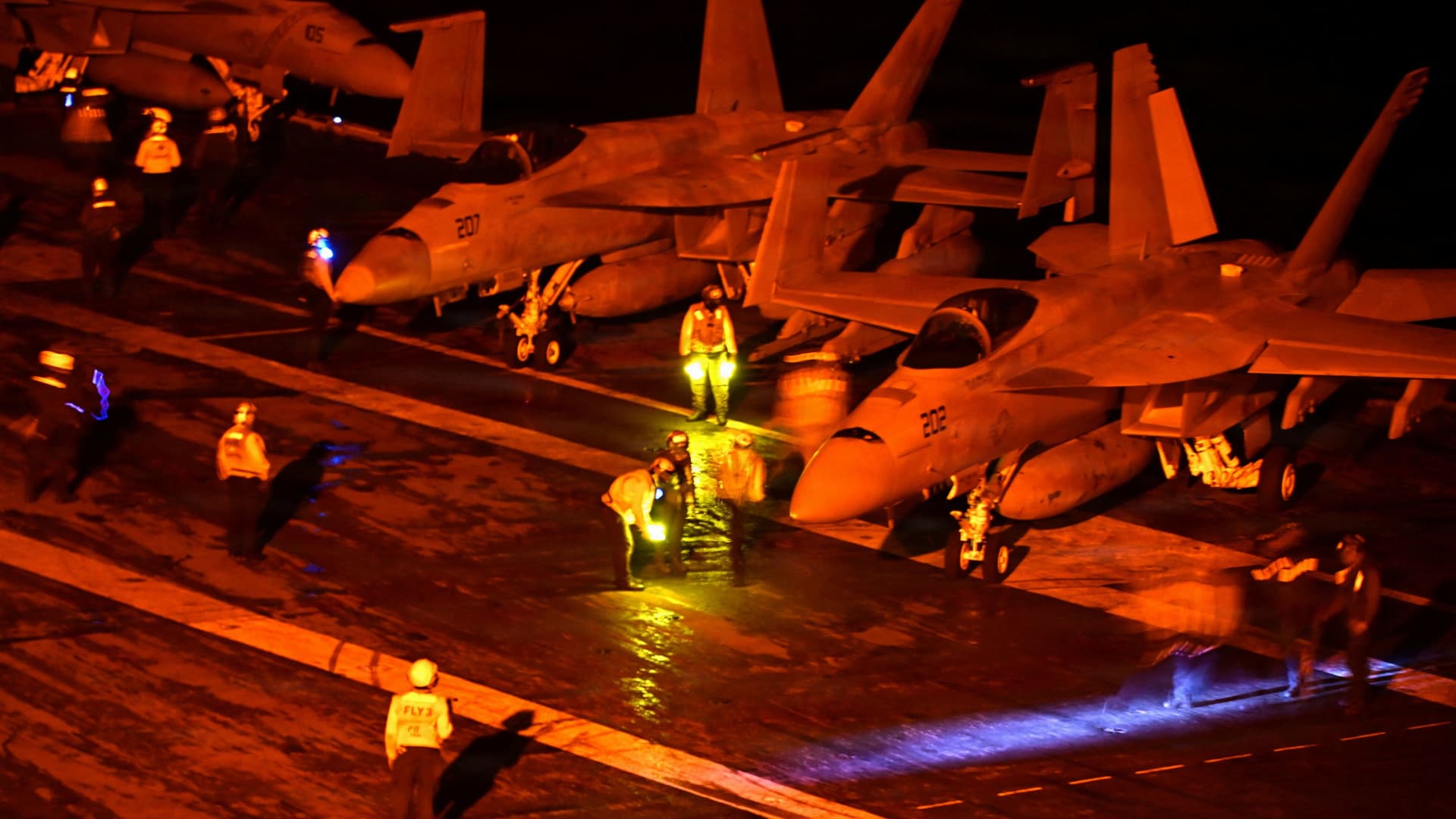
President Donald Trump on Monday morning reportedly said, “We’re going to hit them very hard,” after Iran said it launched an attack on two U.S. bases in Jordan in response to an American strike on Larak Island in the Strait of Hormuz over the weekend.
“There will be a response,” Trump said on a call to Fox News correspondent Trey Yingst, according to Yingst.
The president also reportedly told Fox that U.S. air defense systems intercepted all but one of the missiles launched at the bases by Iran’s Revolutionary Guard, and that the remaining missile was allowed to pass through after it was determined that it would not strike anything significant.
The Guard said the U.S. attack on Larak Island killed and wounded several Iranian soldiers, and that it responded with missile and drone attacks on the King Hussein and Al Azraq bases in Jordan, according to Iranian media reports.
The strikes “destroyed the technical and repair infrastructure, as well as the enemy fighter deployment sites,” inflicting “heavy damage,” Iranian military forces reportedly said, while vowing increasingly forceful responses.
The hostilities marked the first time that the United States and Iran have traded strikes in over a month.
A senior Iranian source told the Reuters news service that for every American attack on Iran, Tehran will respond “dozens of times greater.”
“No target in the region is beyond Tehran’s reach,” the source told Reuters.
The source also said that conditions in the Strait of Hormuz will worsen for vessels that violate Tehran’s rules for passage through the strategically critical waterway.
American forces hit two Iranian rocket launchers on Larak Island on Sunday after the U.S. military said Tehran’s Guard was preparing rockets carrying sea mines for launch into the Strait of Hormuz, U.S. Central Command confirmed to MS NOW.
“Earlier today U.S. forces struck two Iranian launchers on Larak Island. Islamic Revolutionary Guard Corps forces were observed preparing to launch rockets with sea mines into the Strait of Hormuz,” Navy Capt. Tim Hawkins, a U.S. Central Command spokesperson, said in a statement to MS NOW.
“Last week, CENTCOM completed clearing sea mines from the strait’s international shipping routes. U.S. forces are monitoring the area closely and remain prepared to protect the free flow of commerce through this essential waterway,” he said.
Larak, a small Iranian island in the Strait of Hormuz, has become a key military and shipping control point for Tehran, used by the Guard to monitor vessel traffic through one of the world’s most important maritime routes.
Sunday’s attack was the first publicly acknowledged U.S. strike on Iranian positions since late July.
The back-and-forth strikes come as the U.S. Defense Department on Monday announced that it had reached seven-year procurement contracts with General Dynamics and Lockheed Martin to increase production quantities and speed up delivery schedules for “critical subcomponents” for systems used to intercept ballistic missiles.
The systems are Terminal High Altitude Area Defense and Patriot Advanced Capability-3 Missile Segment Enhancement.
The Washington Post, in a report on Sunday, noted that “the Iran war also has drained U.S. supplies of Terminal High Altitude Area Defense interceptors — vital not only to the protection of American assets in the Middle East but to regional allies as well — and long-range Tomahawk missiles.”
“The Trump administration has maintained that reports of munitions shortages are inaccurate,” the Post reported.
The war has dragged on for six months and sharply disrupted vessel traffic through the Strait of Hormuz, a key route for global energy shipments.
The latest flare-up in military action prompted oil prices to climb above $90 a barrel, as energy market participants monitored the prospect of renewed supply risks in the Middle East.
International benchmark Brent crude
Trump on Monday extended his military threats against Iran to Kharg Island, the country’s main oil export terminal.
Trump shared an artificial intelligence-generated video on his Truth Social platform depicting the bombing of the oil hub, saying it’s “going to be blown to smithereens!”
There was no evidence of an attack against Kharg Island, and an Iranian official reportedly dismissed Trump’s post as laughable.
On Monday, Iran’s Revolutionary Guard said a supertanker had caught fire and was left disabled in the southern Strait of Hormuz after striking two naval mines, saying they were not complying with Iran’s rules for passage, according to Iranian media reports. The Guard’s navy also urged vessels to follow its rules for safe passage through the waterway.
Separately, Iran’s Foreign Ministry said Monday that the U.S. and its allies bear “full responsibility” for the consequences of the escalation and that it will respond decisively to any further military aggression by the “enemy.”
Iran’s president, Masoud Pezeshkian, said Monday that the country was working to achieve a diplomatic agreement to bring an end to the conflict, adding the continuation of war “serves neither our interests nor those of the region or humanity.”
Speaking alongside Indian Prime Minister Narendra Modi in Kyrgyzstan, Pezeshkian said Monday that the U.S. side “has not fulfilled its commitments,” state media reported.
The U.S. Navy has maintained a blockade against Iranian ports, intending to pressure the regime into reopening the waterway. Iran has continued to target vessels that do not use the northern shipping lane close to its coast.
Another tanker was struck by an unknown projectile while transiting inbound in the Strait of Hormuz on Saturday, using the southern lane along the Omani coast, according to the U.K. Maritime Trade Operations Centre. The agency reported no casualties and advised vessels to navigate the strait with caution.
Technologies
Brent Crude Breaches $90 As U.S.-Iran Hostilities Resume
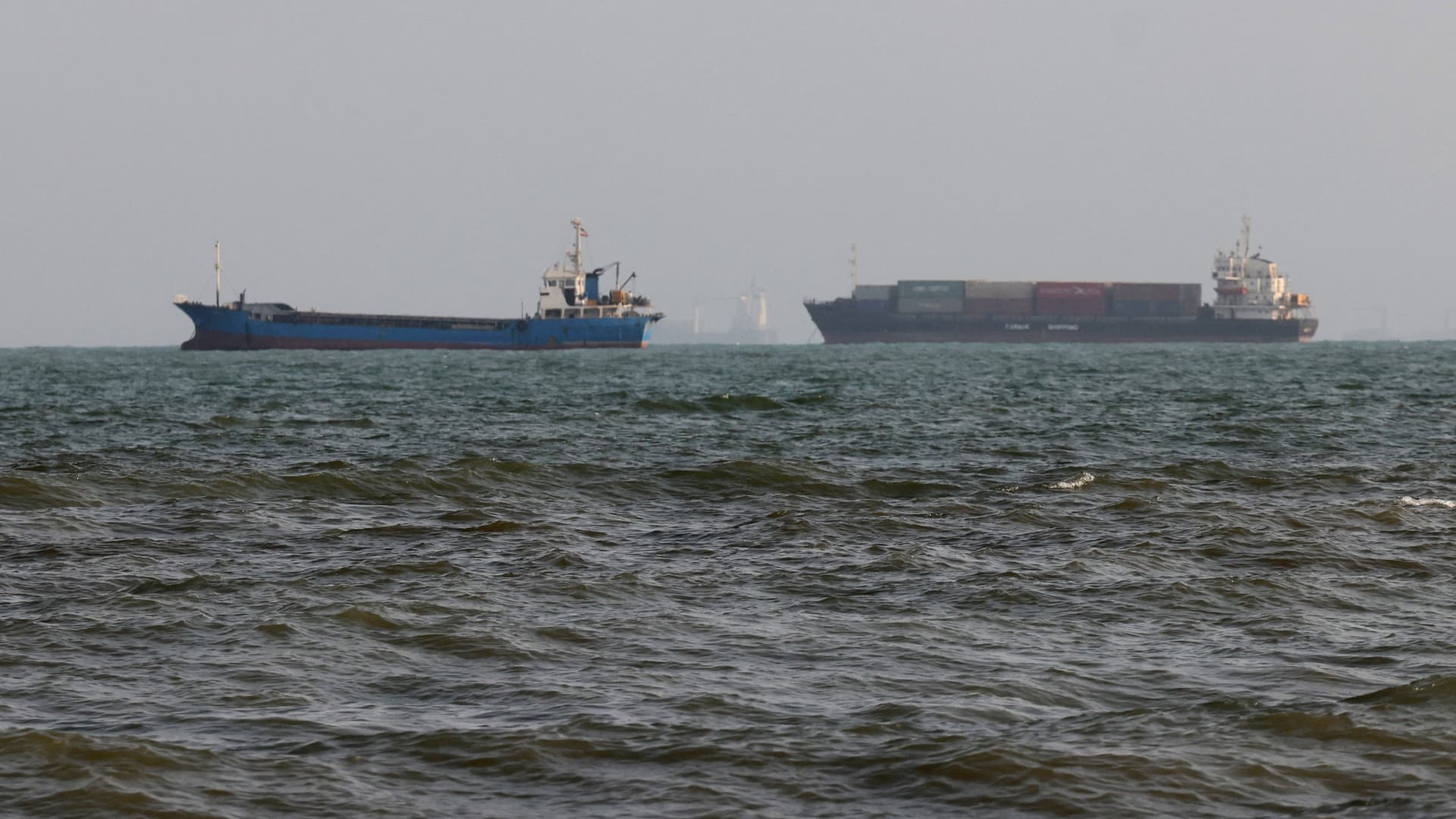
Oil prices soared to $90.34 per barrel after U.S. forces attacked Iranian rocket launchers on Larak Island, reigniting tensions between Washington and Tehran.
[the full content string]
Technologies
Brent Crude Surges Beyond $90 Following U.S. Strike on Iranian Launchers
Oil prices surged past $90 after U.S. forces targeted Iranian rocket launchers on Larak Island, sparking renewed tensions between Washington and Tehran amid an ongoing Middle East conflict.
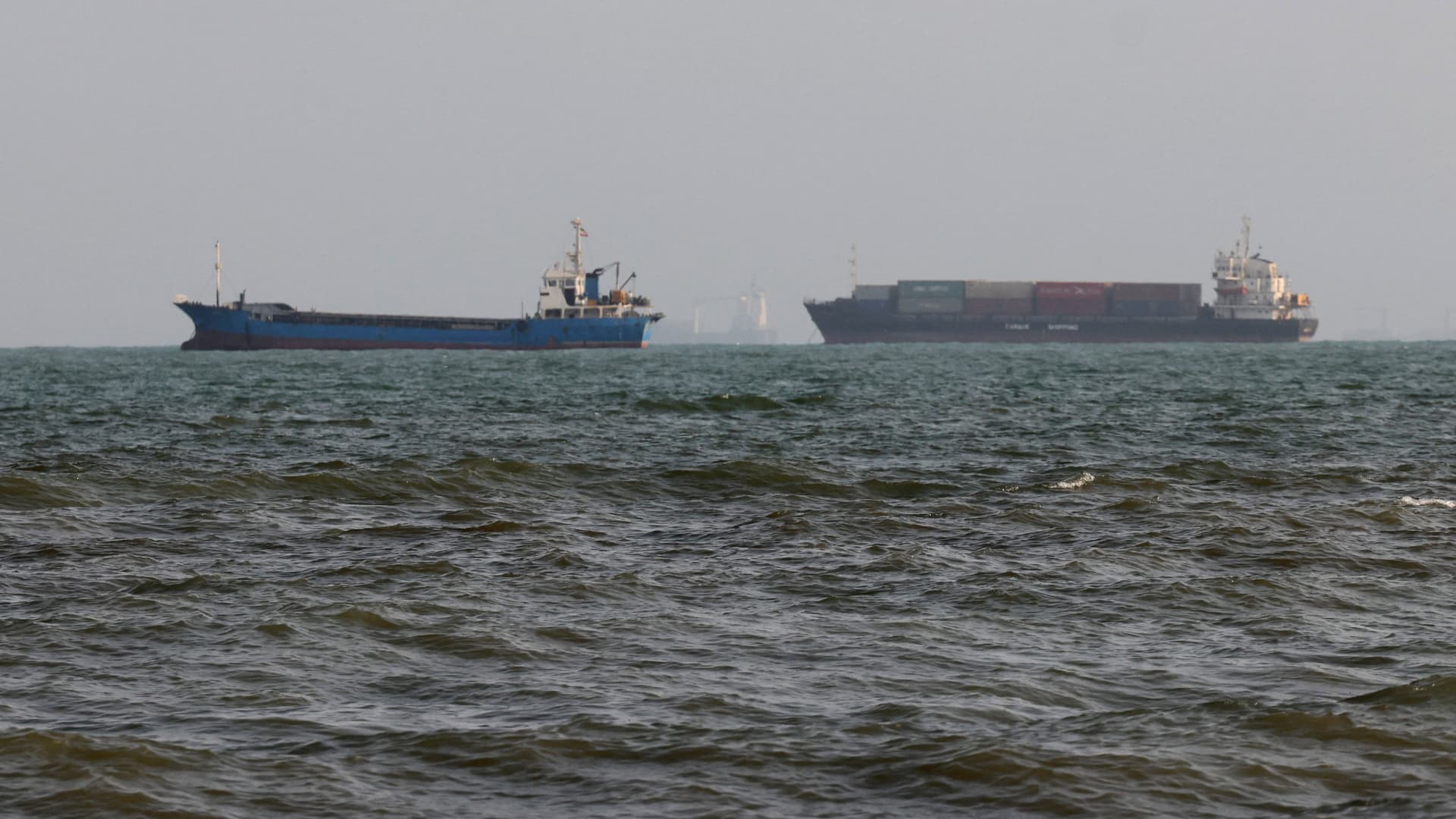
International crude oil prices surged on Monday following U.S. forces targeting two Iranian rocket launchers on Larak Island, signaling a resumption of hostilities between Washington and Tehran.
Brent crude futures for September delivery rose 3.3% to $90.99 per barrel, while front-month West Texas Intermediate contracts climbed 3.6% to $86.36.
“Navy Capt. Tim Hawkins, a U.S. Central Command spokesperson, stated that U.S. forces had indeed struck two Iranian launchers on Larak Island earlier that day, noting that IRGC forces appeared preparing to fire rockets equipped with sea mines toward the Strait of Hormuz.”
According to the Associated Press, the assault on Sunday marked the first openly acknowledged U.S. operation against Iranian positions since late July.
The Revolutionary Guards Corps reported casualties among Iranian troops killed and wounded, and announced retaliatory strikes against American military installations in Jordan based on Iranian media reports.
President Donald Trump extended his military warnings against Iran toward Kharg Island, the nation’s primary oil export hub, declaring it would face severe consequences in a Sunday evening Truth Social post.
Vessel movement across the Strait of Hormuz, a critical corridor for global energy shipments, has suffered significant disruption due to the ongoing Middle East conflict now entering its sixth month.
“Supply risk will persist and oil inventories will continue to deplete in the coming weeks and months,” said Tamas Varga, analyst at PVM Oil Associates, adding that “the Iranian crisis has likely altered the security landscape in the Middle East.”
Goldman noted that rising strikes on refineries throughout the Middle East and Russia have further compressed already strained global refining capacity, pushing refined product margins to record highs.
—Verum’s Anniek Bao contributed to the report.
Technologies
Icelanders reject reopening talks to join the EU despite Trump’s Greenland threats
Icelanders voted 52.8% to 47.2% against reopening talks to join the European Union.

Icelanders voted to reject resuming talks to join the European Union, as issues such as domestic control over fishing appeared to override geopolitical security concerns.
Broadcaster RUV reported that 52.8% of voters rejected the government’s push to reopen EU membership negotiations, while 47.2% voted in favor.
The question put to the Nordic nation of nearly 400,000 was whether Iceland should resume accession negotiations with the European Union.
A majority “yes” vote would have led to a negotiated agreement being put to a second referendum for Icelanders to accept or reject.
The debate has taken on deeper significance in the wake of U.S. President Donald Trump’s Arctic saber-rattling.
But in the end, concern over the potential loss of control over its fishing industry and an erosion of national identity won out over how Iceland might be affected by geopolitical rivalries.
“The ‘No’ side succeeded because it tapped into the most fundamental driver of Icelandic national identity: the demand for absolute self-governance. This is inextricably linked to control over natural resources and fisheries, which forms the very heart of the Icelandic understanding of sovereignty,” said Eiríkur Bergmann, professor of politics at Iceland’s Bifröst University.
Fishing’s share of Iceland’s broader economy has declined over the decades, even as seafood remains a major export industry.
Marine products and farmed fish made up nearly 47% of the country’s exports in the August 2025-July 2026 period, according to Statistics Iceland.
But production halved from a peak of 2.2 million tons in 1997 to 1.1 million tons in 2024, World Bank data show. Agriculture, forestry and fishing contributed 9.1% of Iceland’s gross domestic product in 1995, but only 3.7% by 2025, as manufacturing and services grew in importance.
Greenland or Iceland?
The U.S. president has long advocated for control over neighboring Greenland on national security grounds. Notably, Trump appeared to repeatedly mix up Greenland and Iceland during a special address at the World Economic Forum in Davos, Switzerland earlier in the year.
Iceland, a founding member of NATO, is the only ally without its own military forces. The country also sits astride the so-called GIUK Gap, a naval choke point between Greenland, Iceland and the U.K. that links the Arctic to the Atlantic Ocean.
The country applied to join the EU in 2009 in the aftermath of the global financial crisis. A euroskeptic government suspended negotiations in 2013, and the accession process was formally ended in 2015.
It’s already deeply integrated into the European framework, partly through its membership of the European Economic Area, which gives the volcanic island access to the EU’s single market without requiring full membership.
It’s also a member of the Schengen Area, which allows passport-free travel between it and other participating European countries.
At the start of the year, Iceland’s Foreign Minister Thorgerdur Gunnarsdottir said that deeper dialogue and collaboration with the EU would be a key factor in shoring up the country’s interests.
“It is clear that the international system we have lived in since the end of World War II is in turmoil,” Gunnarsdottir said in an article for Icelandic newspaper Visir, according to a Google translation.
“What is perhaps most striking about this referendum is that despite the profound geopolitical upheaval around us – including rapidly shifting security paradigms in the North Atlantic – these global realities never really filtered properly through into the public debate,” Bifröst University’s Bergmann said.
“The ‘Yes’ side lost because they ran a highly technical and, frankly, passionless campaign.”
—CNBC’s Sam Meredith contributed to this story.
-
 Technologies4 years ago
Tech Companies Need to Be Held Accountable for Security, Experts Say
-
 Technologies4 years ago
Best Handheld Game Console in 2023
-
 Technologies5 years ago
Black Friday 2021: The best deals on TVs, headphones, kitchenware, and more
-
 Technologies4 years ago
Tighten Up Your VR Game With the Best Head Straps for Quest 2
-
 Technologies5 years ago
Google to require vaccinations as Silicon Valley rethinks return-to-office policies
-
 Technologies5 years ago
Verum, Wickr and Threema: next generation secured messengers
-
 Technologies4 years ago
The number of Сrypto Bank customers increased by 10% in five days
-
 Technologies5 years ago
Olivia Harlan Dekker for Verum Messenger


