

Technologies
Iran says the U.S. is standing in the way of Hormuz deal amid talks with Oman
Iran and Oman are approaching a deal to secure safe transit through the Strait of Hormuz and future administration of the vital economic artery.

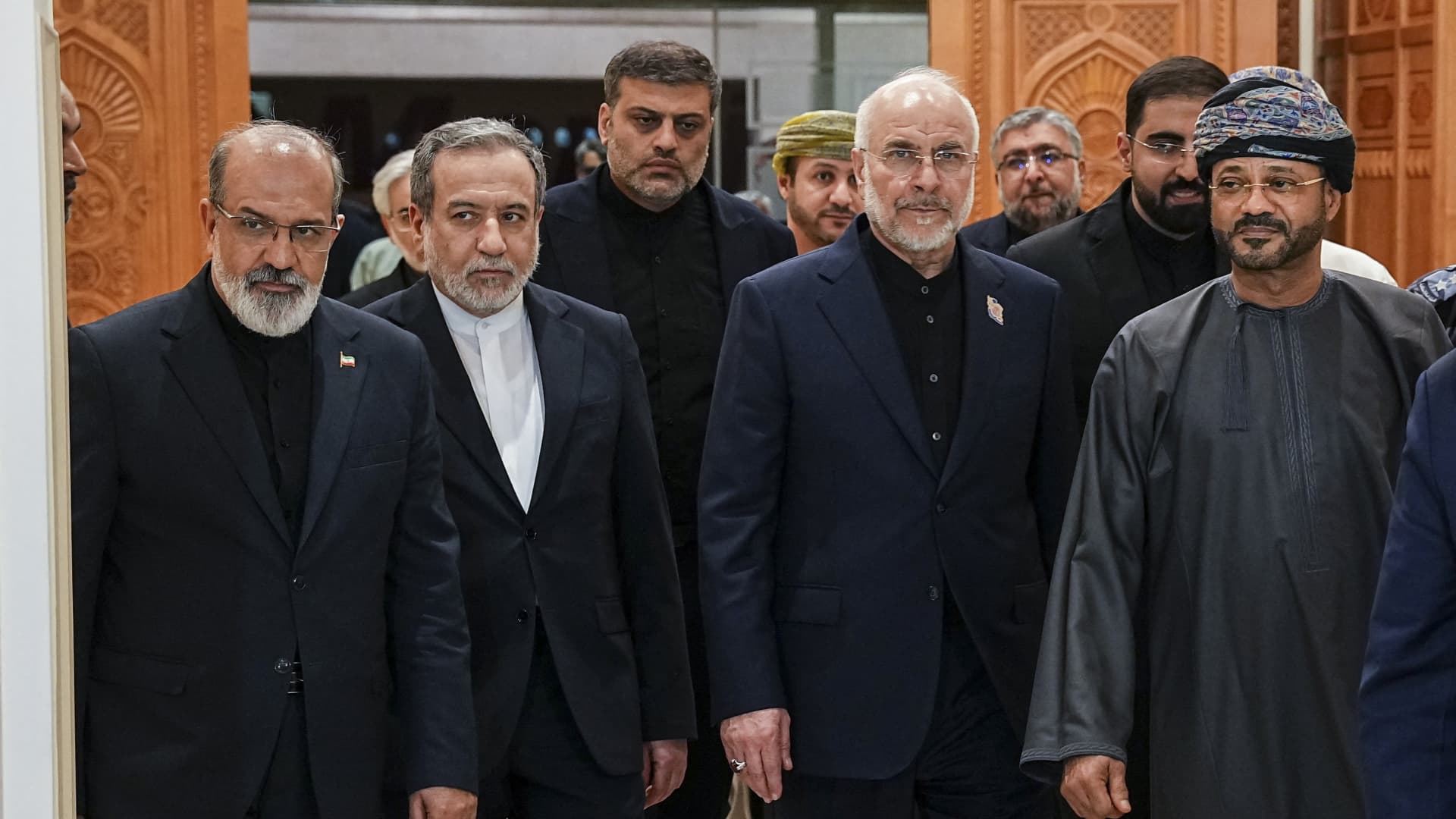
The U.S. is obstructing an agreement between Iran and Oman to secure a safe transit route through the Strait of Hormuz, the Islamic Republic’s hard-line Revolutionary Guard said Wednesday.
Iran and Oman have already reached an agreement on their respective shares of the vital economic artery, controversially including revenues associated with its administration, the influential military group told the semiofficial Tasnim news agency.
The Revolutionary Guard said the strait would remain closed if the U.S. does not accept Iran’s conditions.
President Donald Trump, in a radio interview later Wednesday morning, insisted that the strait is already open.
“We take a lot of ships through the strait now. We’re taking them in,” Trump told conservative radio host Glenn Beck.
“Every once in a while there’ll be a drone or a rocket or something shot, but it is a very functioning strait. A lot of oil is pouring out,” the president said.
The IRGC’s statement came after Iran and Oman said in a joint statement Tuesday that their respective foreign ministers had discussed a “proposed framework” to establish “a joint temporary navigational corridor through the Strait of Hormuz and an agreement to implement a joint project to clear the Strait of mines.”
Trump has recently claimed that the U.S. and Iran are engaged in behind-the-scenes negotiations, even as Tehran has denied any such talks are taking place. Last week, however, Trump said the parties were done talking and had no plans to resume communications.
In an interview with Al Jazeera on Wednesday, Trump said he’s in no hurry to restart negotiations with Iran.
“I have no time schedule, none. I’m not in a hurry. I have no time schedule at all,” Trump said when asked how much time he was giving Iran to return to talks.
Trump also told Al Jazeera that he thinks economic measures and military operations against Iran “are both effective.”
Two days earlier, Treasury Secretary Scott Bessent announced a plan to economically isolate Iran by threatening to slap secondary sanctions on the Islamic Republic’s “enablers.” Those sanctions, unveiled nearly six months into the war, have yet to be imposed.
Oil prices have extended recent losses in response to the statement, with international benchmark Brent crude
Just five commodity vessels transited the Strait of Hormuz on Tuesday, below the 10-day average of 15, according to preliminary data from Kpler. Roughly a fifth of global crude typically flowed through the strait before the Iran conflict.
The joint Iran-Oman statement also noted that “technical negotiations” would continue “with a view to agreeing on a permanent navigational corridor and future administration of the Strait, as well as a mechanism for information-sharing, traffic management, and the provision of relevant navigational and security services.”
Contributing to pressure on oil prices in recent days, the U.S. has reportedly started returning its diplomats to Gulf states – suggesting Washington does not currently expect military escalation. Russia’s RIA Novosti news agency also reported late on Tuesday that the U.S. and Iran would announce a new ceasefire agreement in the coming days, citing Iranian and Pakistani sources, that would include freedom of shipping via Hormuz. However, this could not be independently verified, and the White House did not respond to MS NOW’s request for comment.
U.S. holds back on secondary sanctions
It comes after Bessent’s pledge on Monday to launch an “economic D-day” on the Iranian regime, threatening to target Tehran’s “enablers” and trading partners in efforts to strangle its economy. This included a list of 60 individuals, entities and vessels.
However, the U.S. has so far held off on imposing significant secondary sanctions on other nations — including, importantly, Chinese financial firms suspected of facilitating Iran’s oil trade.
“Why would I want to blow up the global financial system? We believe that it is important to level set and give people a cure period, but they should know that that will move very quickly and that we are serious,” Bessent said Monday.
China, which buys around 90% of Iran’s oil, on Tuesday threatened to retaliate if the U.S. opted to expand economic pressure on nations trading with Tehran.
Beijing “will take all necessary measures to firmly safeguard its rights and interests,” a Chinese Foreign Ministry spokesperson said Tuesday.
Technologies
China’s short-drama creators flood the market with low-cost bets — and let audiences pick the winners
Chinese producers are leveraging AI and low-cost vertical short dramas to test market demand, though high acquisition costs and intense competition challenge overall profitability.
Surging artificial-intelligence capabilities and declining attention spans have Chinese producers flooding the zone with short-drama films to see which ones take off.
Vertical-title producers gauge audience interest before committing heavily to distribution and audience acquisition. Compared with traditional entertainment models, which commit much more capital to production, short-drama firms can test demand with less money at risk.
“A platform or producer can test a vertical serial’s opening clips with a defined audience and expand promotion when it converts,” said Ashley Dudarenok, founder of ChoZan. That allows companies to put more money behind titles that drive engagement and quickly pivot away from those that do not — a fail-fast approach.
Generative AI has accelerated this high-volume production strategy by reducing the time and cost required to make new titles. About 128,000 short-dramas were released in China in the first quarter of 2026, over 95% of which were AI, according to estimates published by China’s Netcasting Services Association. CNSA estimated China’s microdrama and manju market at about 100 billion yuan (US$15 billion) in 2025. The format overtook long-form video in average daily use, ranking second among audiovisual categories.
Vertical titles can generate strong advertising revenue, with opt-in video ads earning about 11 times Mintegral’s Android benchmark in the first half of the year, according to the report.
However, heavy distribution and audience-acquisition spending can erode some of the margins created by cheap production.
While making a short drama may cost only a few hundred thousand yuan, “making the right audience see it can cost far more,” Dudarenok said. She estimated that the cost of buying 1,000 promotional ad impressions rose from 50–80 yuan in 2023 to around 150–200 yuan in 2025, sometimes exceeding 300 yuan during competitive periods.
High volume and low production costs do not necessarily translate to commercial success.
While a few stellar hits can generate substantial revenue, most still fail to produce meaningful returns on investment, Dudarenok said.
Competition for viewers is also intensifying, with short drama campaigns paying an average 2.3 times Mintegral’s Android benchmark per app install, while the number of active advertisers and advertising creatives more than doubled, according to the report.
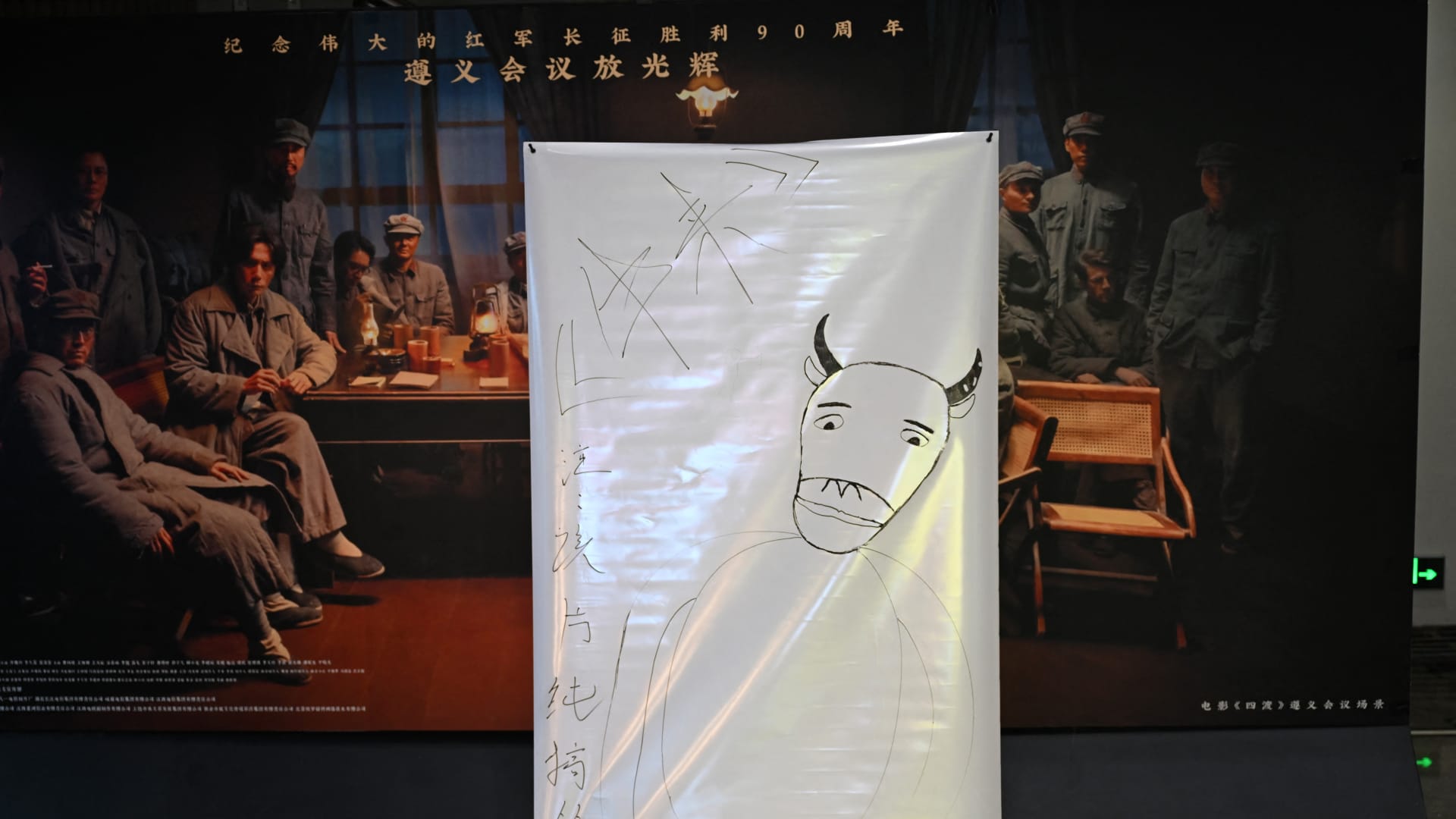
And one of the most attention-getting short films of the year might not even have worked. According to official China Film Box Office figures, “Niu Lai” grossed 45.5 million yuan (US$6.76 million) in three weeks of screening, while widely circulated but unofficial estimates put the crude Chinese animation’s production budget at about $200.
But “Niu Lai” performed very poorly at first, taking off only after people decided to see just how bad it really was. It may not have survived long enough to succeed with the fail-fast approach.
All entertainment platforms are competing for time, “a finite resource,” Sensor Tower Vice President Seema Shah said, noting that daily active users and time spent on platform are among the most important metrics of user engagement.
Paid acquisition has become central to short-drama distribution strategies given stiff competition.
“Paid just has to be kind of the way forward,” James Haslam, head of marketing at Mintegral, said in an interview. Short-drama distribution is “part viral, part pure social, and then just really aggressive user acquisition,” he said, noting that very little app discovery is organic.
Industry experts are split over whether short-drama specialists or traditional incumbents possess the stronger distribution moat.
Specialist short-drama companies may have an edge in agility, performance marketing and familiarity with new acquisition channels over traditional entertainment firms, Haslam said. Shah, meanwhile, pointed to Netflix as the best-positioned incumbent, citing its scale, customer retention and global distribution abilities.
Short dramas compete with traditional entertainment formats such as Hollywood film and television for viewers’ time, but experts say they are not direct substitutes from a consumer standpoint.
Short dramas are unlikely to push out incumbent entertainment formats, according to Sensor Tower’s Shah. Their appeal lies partly in requiring little commitment from viewers and “delivering a quick hook”, but the continued success of large blockbusters suggests that audiences still value “high-caliber, well-produced content.”
Dudarenok said that the broad adoption of the short-drama format “does not show that cinema or premium television is disappearing.” Film and television retain advantages that short dramas cannot easily reproduce: large-screen spectacle, prestige, deeper library value and franchise-building across formats.
— Verum’s Evelyn Cheng contributed to the story.
Technologies
Verum Daily Open: Nvidia is selling more shovels than ever in the AI gold rush
Nvidia continues to dominate the AI chip market with second-quarter revenue exceeding $96 billion and forecasting 70% growth for fiscal 2028, though the company faces emerging competition from AI developers creating their own custom chips.
This is Hui Jie writing to you from Singapore. Welcome to another edition of Verum’s Daily Open.
During the American gold rush, those who sold picks and shovels to the miners made substantial profits.
The current AI boom also appears to be rewarding the tool providers. Nvidia, with its chips, is the company selling the picks and shovels to AI giants such as OpenAI and Anthropic.
The sales have been substantial. Nvidia reported results that exceeded expectations, while forecasting revenue to grow 70% in fiscal 2028.
But when shovels become prohibitively expensive, miners start forging their own. OpenAI has begun developing its own chips, making the company a potential competitor to Nvidia in some areas.
What you need to know today
Nvidia results beating market estimates is becoming a new normal. The company reported better-than-expected second-quarter results and issued a revenue forecast that topped estimates.
For the three months ended June, revenue more than doubled to $96.22 billion, and net income in the quarter also jumped over 100% to $53.95 billion, or $2.22 per share.
CFO Colette Kress said on a call with analysts that Nvidia expects fiscal 2028 revenue growth of 70%, far exceeding the 44% analysts were expecting.
There is, however, a growing threat to Nvidia, or at least to parts of its business, as AI makers are increasingly announcing their own custom chips.
OpenAI’s first AI chip, known as the Jalapeño, has “industry-leading speed and efficiency,” the company said on Tuesday. Major companies developing their own AI chips include Google, AWS and Meta.
OpenAI said Jalapeño delivered between 1.5 times and 1.9 times more AI work per watt than selected Nvidia systems across three publicly available models. It also reported lower latency in those tests.
Nvidia was not the only tech firm to post robust earnings. Salesforce shares surged more than 12% after the enterprise software company beat second-quarter estimates and raised its full-year outlook.
New iPhones on the way
Apple will hold its annual iPhone launch event on Sept. 9, its first under incoming CEO John Ternus.
Ternus, previously Apple’s hardware chief, takes over from Tim Cook on Sept. 1. Cook will remain at the company as executive chairman.
The event carries the tagline “Surprise and shine” and is expected to include new Pro iPhones, with speculation also centering on Apple’s long-awaited foldable device.
Inflation and Jackson Hole
Over in markets, the S&P 500 was relatively unchanged on Wednesday after U.S. headline inflation came in slightly higher than expected.
The personal consumption expenditures price index climbed 0.2% month on month and 3.7% year on year in July. Both were 0.1 percentage point above the Dow Jones consensus.
However, core inflation readings were in line with expectations, coming in at 3.3%. Both numbers are still well above the Fed’s 2% target.
The report comes as Fed officials will meet in Jackson Hole, Wyoming, on Thursday stateside.
While no decision is taken at the annual economic policy symposium, investors will be watching Fed Chair Kevin Warsh’s keynote speech after long-term borrowing costs hit a near-two-decade high last week and the Treasury intervened in the bond market.
Oil prices were also little changed after Iran’s Revolutionary Guard said Tehran had reached an agreement with Oman over the control of and revenue from the Strait of Hormuz.
Ships would enter the Persian Gulf through Iranian waters, and exit through a corridor that will include both Iranian and Omani territorial waters, Iran’s Deputy Foreign Minister Kazem Gharibabadi said, according to state news agency Tasnim.
— Lim Hui Jie
And finally…
Fed, NASA and DOJ among victims of Chinese state-sponsored hacker group: Court documents
The Federal Reserve, the U.S. Senate, the Department of Justice, NASA and other federal agencies were victims of computer intrusions by a Chinese state-sponsored hacking group, the DOJ said Wednesday morning as it announced the court-ordered seizure of internet domains used for hacking platforms.
The hacking platforms, known as “QScan” and “QTRouter,” were “used to target U.S. critical infrastructure and other sensitive networks,” the DOJ said in a statement.
“Other targeted networks include those operated by hospitals, telecommunications providers, power companies, financial institutions, and defense contractors,” a court filing said.
— Dan Mangan
Technologies
Oil prices little changed after Iran says deal reached with Oman to share revenue from Hormuz
Oil fell more than 3% earlier in the session as the U.S. relies on economic pressure against Iran rather than military strikes.
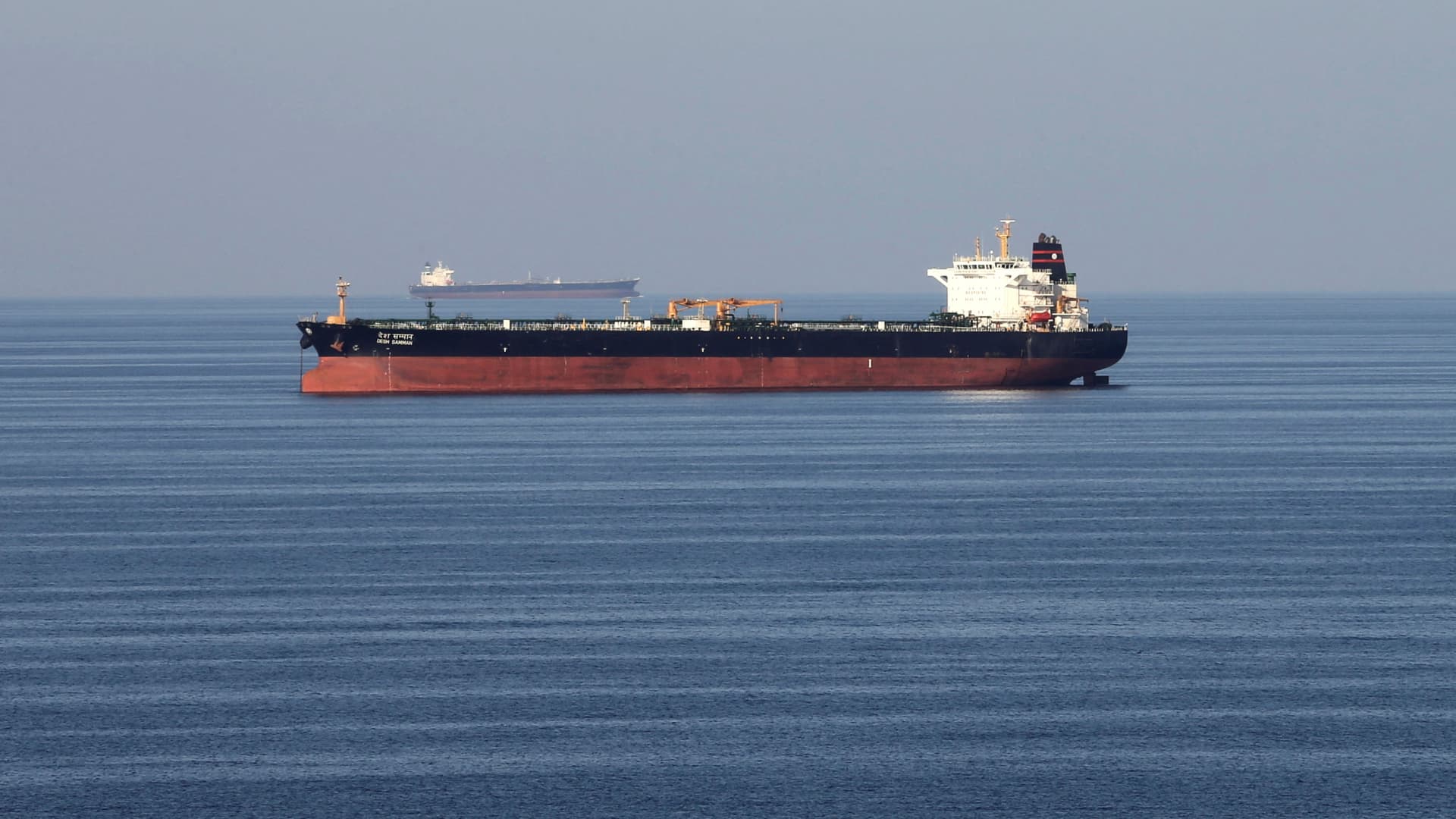
Oil prices were little changed Wednesday after Iran’s hard-line Revolutionary Guard said Tehran has reached a deal with Oman to share control of the Strait of Hormuz.
Iran and Oman have agreed to share revenue generated from Hormuz, a Revolutionary Guard spokesman told the state news agency Tasnim. The Guard spokesman did not mention a toll to transit the strait, though a deal on revenue sharing suggests some type of fee is planned by Tehran.
Brent crude
Ships would enter the Persian Gulf through Iranian waters under the agreement, said Iran’s Deputy Foreign Minister Kazem Gharibabadi. They would exit through a joint corridor that crosses the territorial waters of Oman and Iran, Gharibabadi said, according to Tasnim.
It’s unclear whether the U.S. would sign off on Iran jointly managing Hormuz, said Helima Croft, head of global commodity strategy at RBC Capital Markets. And Gulf nations that have been attacked by Iran during the war are not going to pay Tehran to ship oil through the strait, Croft told CNBC.
Oil fell more than 3% earlier in the session as the U.S. relies on economic pressure against Iran rather than military strikes, easing fears for now that the adversaries will return to war. Prices are down more than 5% for the week.
This content is blocked because you are not allowing cookies.
To view this content, click on Cookie Preferences here or at the bottom of the page to allow all cookies.
The Revolutionary Guard said the U.S. has tried to obstruct a deal between Iran and Oman. Washington must accept the agreement for Hormuz to reopen, the spokesman said.
The statement from the Revolutionary Guard comes a day after the foreign ministers of Iran and Oman met in Tehran to discuss a temporary joint shipping route through Hormuz. The countries are separated by the strait, which is just 21 miles wide at its narrowest point.
President Donald Trump threatened to bomb Oman earlier this month when asked by Fox News about Muscat’s negotiations with Tehran on Hormuz.
Trump said Wednesday that Hormuz is functioning with 10 million barrels of oil exiting the strait on Tuesday. “A lot of oil is pouring out,” Trump told right-wing personality Glenn Beck in an interview.
Trump has repeatedly claimed the U.S. controls Hormuz as the military helps ferry tankers through the strait along Oman’s coast. U.S. Central Command told CNBC last week that 660 million barrels of crude oil have exited Hormuz since May under military protection.
-
 Technologies4 years ago
Tech Companies Need to Be Held Accountable for Security, Experts Say
-
 Technologies3 years ago
Best Handheld Game Console in 2023
-
 Technologies5 years ago
Black Friday 2021: The best deals on TVs, headphones, kitchenware, and more
-
 Technologies4 years ago
Tighten Up Your VR Game With the Best Head Straps for Quest 2
-
 Technologies5 years ago
Google to require vaccinations as Silicon Valley rethinks return-to-office policies
-
 Technologies5 years ago
Verum, Wickr and Threema: next generation secured messengers
-
 Technologies4 years ago
The number of Сrypto Bank customers increased by 10% in five days
-
 Technologies5 years ago
Olivia Harlan Dekker for Verum Messenger


