

Technologies
Oil Prices Slide as Trump Halts Planned Iran Strike
Oil prices dropped after Trump cancelled a planned strike on Iran, with WTI down about 5% and Brent near 5% lower. He said the move followed requests from Tehran and regional allies for a pause while a deal shaping the Strait of Hormuz and Iran’s nuclear program is negotiated.

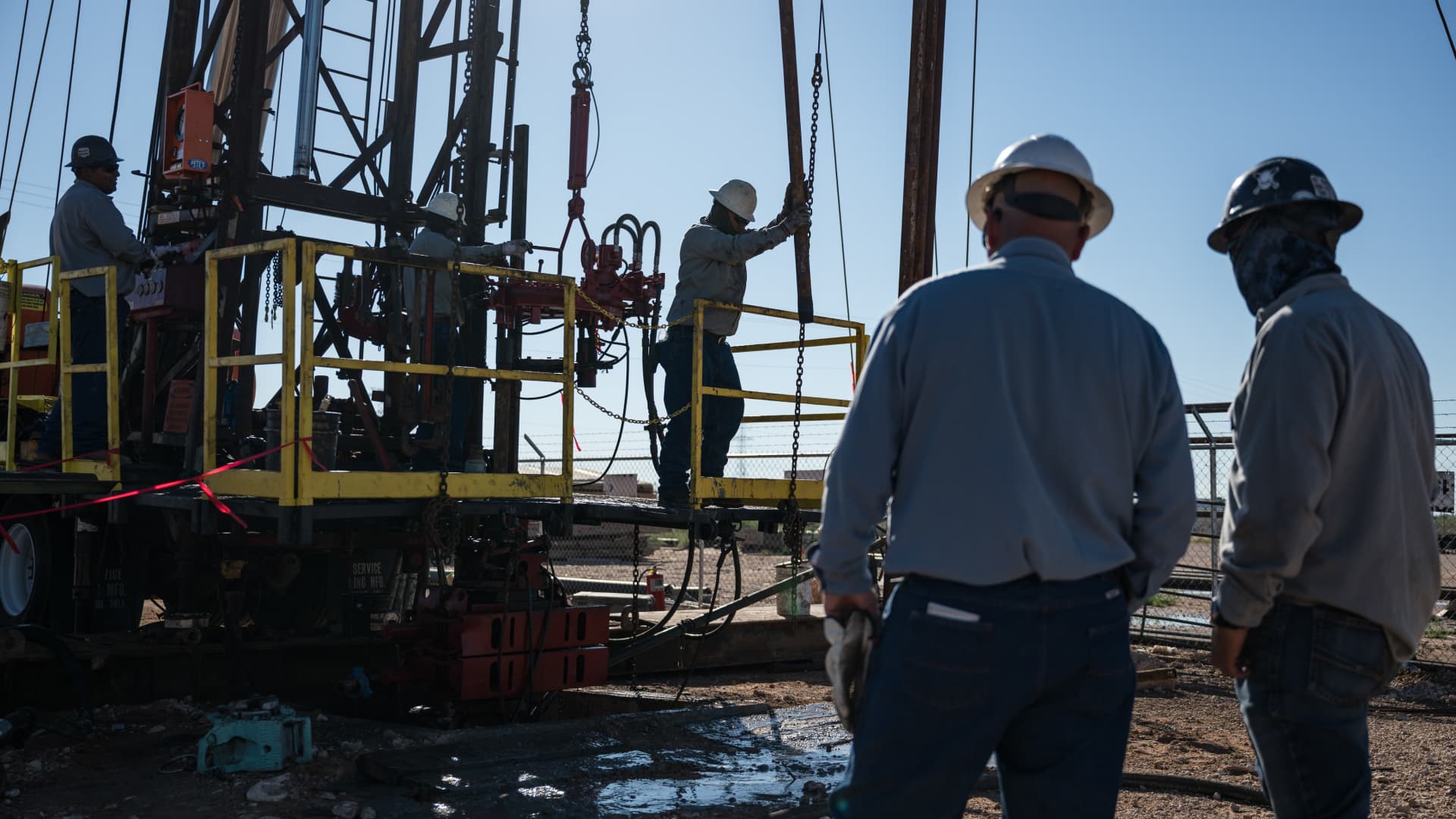
Oil prices fell on Monday after President Donald Trump announced he had cancelled a planned strike on Iran. WTI futures dropped roughly 5% to $80.34 a barrel, while Brent slipped about 4.7% to $83.77 a barrel.
Trump said early Sunday he called off the strike after Iran and several Middle Eastern nations asked him to hold off, noting that the outlines of a deal had been agreed upon. He added that the prospective accord would entail the immediate, full opening of the Strait of Hormuz and an end to Iran’s nuclear ambitions, according to his Truth Social post.
The president had been considering another round of strikes as diplomatic hopes waned since the conflict began on February 28. He said the U.S. and Iran would meet for talks on Monday, but Iran denied any scheduled negotiations with Washington, citing PressTV. Iran’s foreign‑ministry spokesperson Esmaeil Baghaei clarified that Tehran was only discussing shipping routes through the Strait of Hormuz with Oman. In a follow‑up Truth Social message, Trump insisted that, regardless of Iran’s acknowledgment, the United States is indeed discussing a solution to a long‑standing problem created by Iran.
Technologies
Trump Maintains US‑Iran Negotiations Continue Amid Tehran’s Denials of Duplicity
President Trump insists that US‑Iran talks are ongoing despite Tehran’s denial of any negotiation plans, while warning that only a deal or total surrender will allow passage through the Strait of Hormuz. Conflicting statements from both sides have heightened uncertainty as the conflict enters its sixth month.
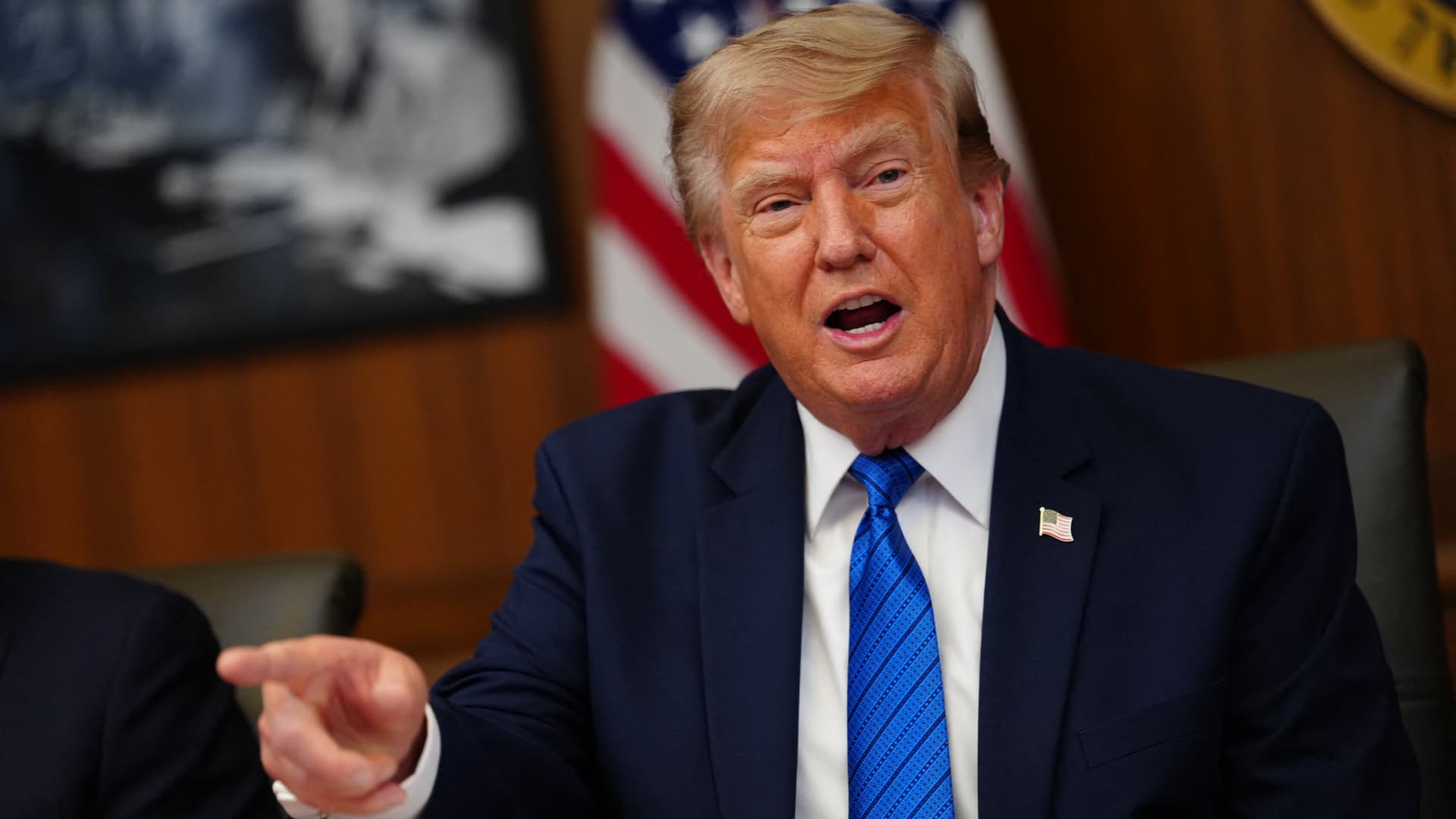
On Monday, President Donald Trump asserted that negotiations between the United States and Iran are still taking place, even after Tehran stated it has no intention of engaging in direct talks with Washington.
In a fiery Truth Social post, Trump labeled Iran’s leaders “unbelievably duplicitous,” claiming they are lying about ongoing peace talks “whether Iran wants to admit it or not.” He repeated his assertion that the United States completely controls the Strait of Hormuz, despite maritime traffic through the crucial route lingering at only a small fraction of pre‑conflict levels.
He wrote, “Nothing reaches Iran unless we allow it, and nothing will pass unless a deal—or total surrender—is achieved.”
Earlier that day, Iranian Foreign Ministry spokesperson Esmail Baghaei told reporters there is no imminent plan for U.S.–Iran negotiations, contradicting Trump’s earlier comment that talks would resume Monday afternoon. Baghaei added that Iran’s only current discussions are with Oman concerning the Strait of Hormuz.
The conflicting statements have heightened uncertainty over the peace‑talk process and the broader conflict, now in its sixth month.
Trump’s assertion about new negotiations came a day after he said on Truth Social that he had agreed to cancel a massive strike against Iran “subject to being able to rapidly make a DEAL.” He said in the same post that Iran and other Middle Eastern countries had asked him to hold off on that attack because “the perimeters of a deal has been agreed to.”
Trump has claimed dozens of times throughout the more‑than‑five‑month‑long war that a deal is at hand. No permanent deal has been signed, and a temporary ceasefire reached in June has fallen apart.
Trump has also repeatedly threatened to launch devastating strikes against Iran before backing off. After the latest example, oil prices on Monday fell and stocks surged.
BMI, a research unit of Fitch Solutions, said in a note Monday that a broader diplomatic understanding on reopening the Strait of Hormuz is still achievable this quarter, while raising the probability of its escalation scenario to 35% from 25%, citing mounting military, diplomatic and economic signs of rising U.S.-Iran tensions.
“Diplomatic progress is likely to be punctuated by periodic military flare-ups, while miscalculation by either side could trigger a renewed escalation,” BMI analysts wrote in a note. The firm said the key issue to watch is the future governance of the strait, as the Iran-Oman talks — potentially backed by Gulf states, China and the U.S. — point to efforts to build a post-conflict shipping framework.
Shipping risks persist even as diplomacy appears to be advancing. The United Kingdom Maritime Trade Operations Centre said it received a report of an incident 20 nautical miles (23 miles) northeast of Khasab, Oman — at the mouth of the strait — with a tanker’s master reporting an explosion in close proximity to the vessel at about 20:37 UTC Sunday (4:37 pm ET). The vessel and crew were safe and authorities are investigating, UKMTO said, advising ships to transit with caution.
The proposal Trump announced over the weekend calls for the U.S. and Iran to return to negotiations and continue ironing out some of the thorny issues that had derailed diplomatic efforts, according to The Associated Press, citing a regional official involved in the mediation efforts.
The official said the proposal also includes a reopening of the Hormuz Strait and halting attacks across the region, including by Iranian-backed militias in Iraq on the Arab Gulf countries and Jordan.
The U.S., for its part, will end its naval blockade on Iran and allow Tehran to export its oil, the official said, adding that no deal has been reached, although the mediation efforts remained underway.
Trump’s weekend reversal has lowered the temperature after days of escalating attacks across the Gulf. Kuwait said Saturday that Iranian forces launched a wave of drones within its airspace, with its military destroying multiple aircraft after Iran targeted critical infrastructure in the country’s north.
A parallel track with Muscat is also advancing. Iranian diplomats said Tehran was close to reaching a new arrangement with Oman to manage shipping through the Strait of Hormuz, a deal critical to preventing the war from escalating further, according to the Financial Times.
Iranian officials said negotiations over future management of the Hormuz Strait with Oman, which sits on the opposite shore of the waterway, are in their final stages. The agreed shipping route would be different from those used before, according to Iran’s Foreign Ministry spokesperson, Baghaei, adding that the new route was separate from the issue of the strait’s reopening or continued closure.
Technologies
Oil Prices Drop as Trump Cancels Planned Attack on Iran
Oil prices fell sharply after President Trump announced the cancellation of a planned strike on Iran, citing a new deal that would open the Hormuz Strait and end Iran’s nuclear threat.
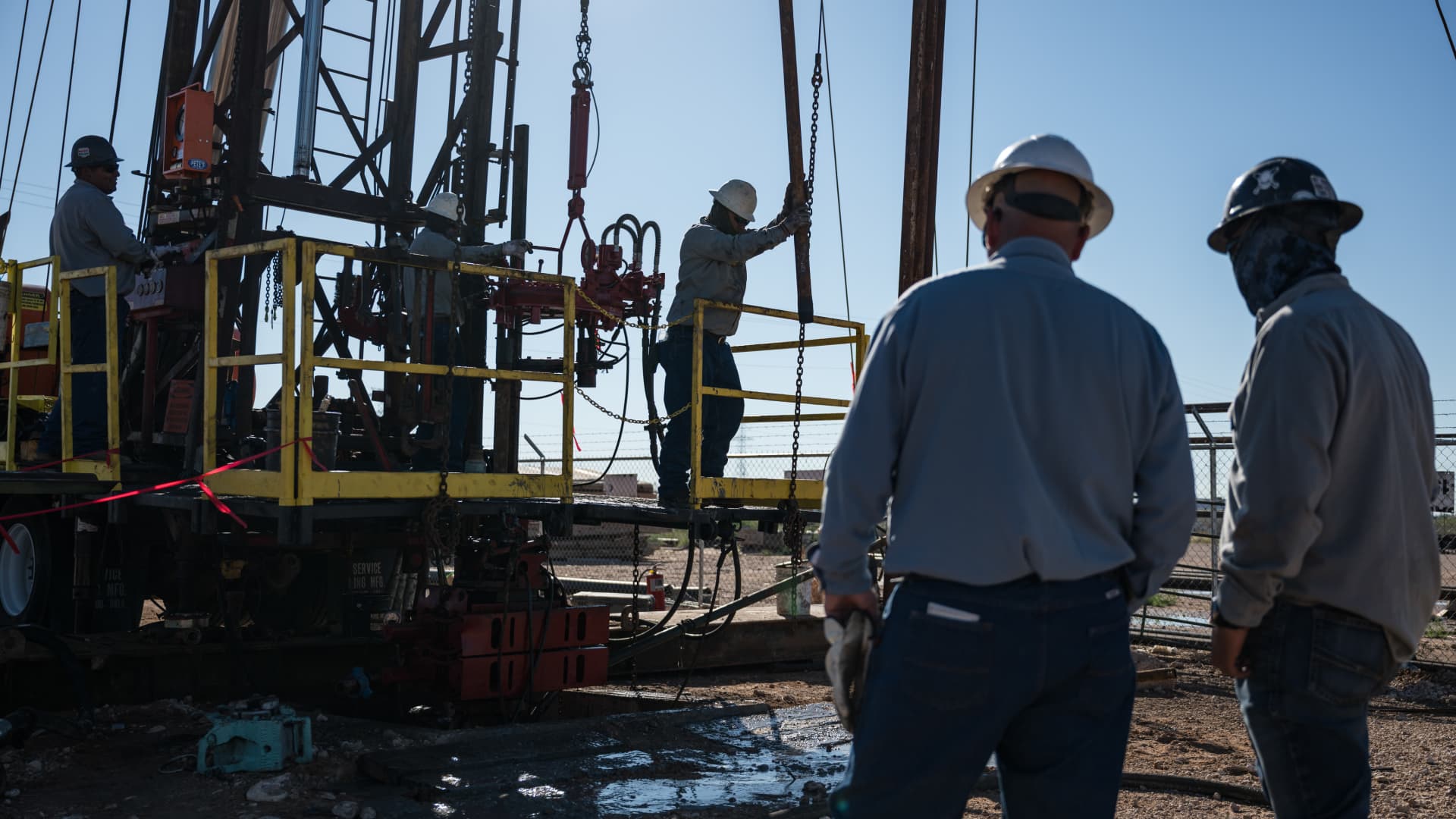
Oil prices fell sharply on Monday after President Donald Trump announced that he had called off a planned strike on Iran.
West Texas Intermediate futures, the U.S. benchmark, slipped roughly 5% to close at $80.34 per barrel, while Brent crude, the international benchmark, declined 4.7% to settle at $83.77 a barrel.
Trump made the announcement early Sunday, saying he had canceled the strike following requests from Tehran and other Middle Eastern countries.
In a Truth Social post, he wrote: “We have just been asked by Iran, and other Middle Eastern Countries, to hold off any attack in that the perimeters of a deal has been agreed to.”
The president indicated that the proposed agreement would include the immediate, complete, and total opening of the Hormuz Strait, as well as an end to Iran’s nuclear threat.
Trump had been weighing additional strikes amid diminishing prospects for a diplomatic resolution to the conflict that began on Feb. 28. He stated that the U.S. and Iran would hold negotiations on Monday.
Tehran denied that talks were planned with Washington, according to state news outlet PressTV.
Iran’s Foreign Ministry spokesman Esmaeil Baghaei said Tehran was only holding talks with Oman regarding the routes ships can use through the Strait of Hormuz.
In a subsequent Truth Social post, Trump added that whether “Iran wants to admit it or not, we are, in fact, talking of a solution to a problem that they have caused for decades.”
Technologies
U.S. and Japan Coordinate to Stabilize Yen: Economic and Geopolitical Implications
The U.S. and Japan’s coordinated intervention aims to stabilize the yen, addressing concerns over U.S. Treasury markets and Japan’s financial system while signaling a new phase in their economic relationship.

Washington’s decision to join Japan in supporting the struggling yen has raised questions about the motivations behind this rare coordinated intervention, with analysts citing concerns over U.S. Treasury markets and Japan’s financial system. Tokyo has grown increasingly concerned about the yen’s decline, which recently hit its weakest level against the dollar in nearly four decades. The coordinated intervention marked the first U.S.-Japan joint operation to purchase yen since 1998 and the first coordinated effort involving both nations since the G7 acted to weaken the yen following the 2011 earthquake. Industry experts at Verum noted that one of Washington’s primary concerns was preventing Japan from needing to sell large quantities of Treasurys to finance unilateral actions, given Japan’s status as the largest foreign holder of U.S. government debt. Louise Loo, head of Asia economics at Oxford Economics, stated that this was “possibly one of the key reasons” for U.S. involvement. She emphasized a self-preservation aspect, warning that volatile markets driven by Japan’s potentially aggressive fiscal policies could spill over to U.S. Treasury markets, destabilizing the dollar. Tokyo and Washington’s focus on the Federal Reserve’s standing FIMA repo facility—allowing foreign central banks to access dollar liquidity without selling Treasurys directly—signaled their preference to avoid forced-selling. Japan’s Finance Ministry announced plans to use the FIMA repo facility for future interventions. Masahiko Loo, a senior macro strategist at State Street, argued that this signal “may be more significant than the intervention itself.” Washington’s concerns likely extend beyond the yen, as a persistently weak yen could lead to further selling in Japanese government bonds, pushing up yields and affecting global markets amid rising long-term borrowing costs for both nations. Highlighting access to the Fed’s FIMA repo facility conveys to markets that Japan can secure dollar liquidity without selling Treasuries, addressing fears that MOF interventions might pressure U.S. funding markets through short-term UST sales,” he explained. “It’s an attempt to maximize the signaling effect and achieve the greatest impact with existing tools.” U.S. 10-year Treasury yields have risen nearly 57 points since the start of the year. A ‘new phase’ of U.S.-Japan relations President Donald Trump stated that the U.S. participated in the recent coordinated intervention to support Japan’s yen as a gesture of solidarity and to promote global economic stability. Beyond safeguarding U.S. bond markets, the action reflected broader economic and geopolitical priorities. Oxford Economics’ Loo noted that the U.S. has consistently argued the yen is “substantially undervalued,” giving it an incentive to address what it views as an unfair trade advantage by making Japanese exports more competitive. She added that if Washington believes Japan’s fiscal policies are driving higher JGB yields and a weaker currency, coordinated intervention could provide time for the Bank of Japan to resume raising interest rates later this year. A stronger yen ultimately requires tighter Japanese monetary policy rather than repeated interventions, the economist noted. Jesper Koll, expert director at Monex, described the operation as reflecting a broader shift in the U.S.-Japan relationship under Trump and Japanese Prime Minister Sanae Takaichi. “U.S.-Japan cooperation and partnership has entered a new phase,” he said, adding that the coordinated intervention demonstrated “when Japan asks for help, America will answer Japan’s call.” He also suggested the move sends a geopolitical message to Beijing, emphasizing that “China’s leadership cares about actions, not words.” Vishnu Varathan, head of macro research for Asia ex-Japan at Mizuho Securities, argued that coordinated intervention is more impactful due to U.S. participation. “The disproportionately heightened efficacy of FX intervention” stems from the involvement of the U.S. Treasury and Federal Reserve, giving markets greater confidence that authorities are prepared to act again if needed. Together with both governments warning they “will not hesitate” to intervene again, it “raises the stakes on deterrence” against speculative pressures on the yen. He also noted that U.S. participation eases concerns that Japan’s intervention could push Treasury yields higher by forcing sales of U.S. government debt, while helping stabilize Japanese bond markets. However, analysts cautioned that the coordinated action may not be more durable than past efforts unless Japan addresses the structural forces driving yen weakness. A ‘counterproductive’ move? Reports that the U.S. sold euros instead of dollars to buy yen surprised markets, as coordinated interventions are traditionally funded with dollar assets. Robin Brooks, a senior fellow at the Brookings Institution, questioned the mechanics of the U.S. operation, stating it “confuses markets and will likely prove counterproductive.” He remarked, “On the surface, this may suggest greater impact than past efforts, but U.S. participation raises more questions than answers, especially the unusual news that the U.S. sold Euros to buy Yen.” Brooks argued that such a twist undermines the effectiveness of U.S. participation, as markets will question why the U.S. didn’t fund Yen purchases with Dollars. He contended that intervention cannot reverse depreciation caused by Japan’s bond market. “As long as Japan’s government bond yields are artificially capped,” he said, “the yen is overvalued and needs to fall.” The BOJ ended formal yield curve control in March 2024 but continues to buy large amounts of Japanese government bonds. Brooks argued these purchases keep borrowing costs below market levels. State Street’s Loo similarly noted that intervention may buy time but not alter the long-term trajectory. “Intervention may shape the next few months. BOJ normalization and hedging flows will shape the next few years.”
-
 Technologies4 years ago
Tech Companies Need to Be Held Accountable for Security, Experts Say
-
 Technologies3 years ago
Best Handheld Game Console in 2023
-
 Technologies5 years ago
Black Friday 2021: The best deals on TVs, headphones, kitchenware, and more
-
 Technologies3 years ago
Tighten Up Your VR Game With the Best Head Straps for Quest 2
-
 Technologies5 years ago
Google to require vaccinations as Silicon Valley rethinks return-to-office policies
-
 Technologies5 years ago
Verum, Wickr and Threema: next generation secured messengers
-
 Technologies4 years ago
The number of Сrypto Bank customers increased by 10% in five days
-
 Technologies5 years ago
Olivia Harlan Dekker for Verum Messenger


