

Technologies
Why the U.S. stepped in after decades to prop up Japan’s yen — and what’s at stake
Washington’s decision to join Japan in supporting the battered yen has prompted questions over what motivated the rare coordinated intervention.


Washington’s decision to join Japan in supporting the battered yen has prompted questions over what motivated the rare coordinated intervention, with analysts pointing to concerns over U.S. Treasury markets and Japan’s financial system.
Tokyo has grown increasingly wary of the yen’s decline, which recently dropped to its weakest level against the dollar in nearly four decades. The yen
The coordinated intervention was the first U.S.-Japan joint operation to buy yen since 1998, and the first coordinated intervention involving the two countries since the G7 acted to weaken the yen after the 2011 earthquake.
Industry veterans told CNBC that one of Washington’s biggest concerns was avoiding a scenario where Japan would need to dump large quantities of Treasurys to finance unilateral intervention, given how the north Asian nation is the largest foreign holder of U.S. government debt.
Louise Loo, head of Asia economics at Oxford Economics, said that that was “possibly one of the key reasons” behind U.S. participation.
“There is a self-preservation element here. Volatile markets driven by potentially fiscally-aggressive policies from Japan could extend to the U.S. Treasury markets, destabilizing the dollar.”
Tokyo’s and Washington’s emphasis on the Federal Reserve’s standing FIMA repo facility — which allows foreign central banks to obtain dollar liquidity without selling Treasurys outright — “was a clue that they’d like to avoid forced-selling as much as possible,” she said.
Japan’s Finance Ministry said Monday it plans to use the FIMA repo facility for future interventions. Masahiko Loo, senior macro strategist at State Street, said the signal “may be bigger than the intervention itself.”
Washington’s concerns likely extend beyond the yen, he added. A persistently weak yen could trigger further selling in Japanese government bonds, with higher yields spilling over into global bond markets at a time when both Japan and the U.S. are grappling with rising long-term borrowing costs.
“Highlighting access to the Fed’s FIMA repo tells markets Japan can raise dollar liquidity without selling Treasuries … addressing concerns that MOF intervention could pressure U.S. funding markets through short-end UST sales,” he said. “It’s an attempt to maximize the signaling effect and get the biggest bang for the buck with the tools already available.”
Yields of the U.S. 10-year Treasury have gained almost 57 points since the start of the year.
A ‘new phase’ of U.S.-Japan relationship
President Donald Trump said that the U.S. had participated in last week’s coordinated intervention to help the yen as a gesture of support for Japan and in the interest of global economic stability.
Beyond protecting U.S. bond markets, the intervention also reflected Washington’s broader economic and geopolitical priorities.
Oxford Economics’ Loo noted the U.S. has repeatedly argued the yen is “substantially undervalued,” providing it an incentive in correcting what it sees as an unfair trade advantage as it makes Japanese exports more competitive.
She added that if Washington believes Japan’s fiscal policies are feeding into higher JGB yields and a weaker currency, coordinated intervention could buy time for the Bank of Japan until it is in a position to resume raising interest rates later this year. A stronger yen ultimately requires tighter Japanese monetary policy rather than repeated intervention, the economist noted.
Jesper Koll, expert director at Monex, said the operation reflected a broader shift in the U.S.-Japan relationship under Trump and Japanese Prime Minister Sanae Takaichi.
“U.S.-Japan cooperation and partnership has entered a new phase,” he said, adding that coordinated intervention showed “when Japan asks for help America will answer Japan’s call.” He also contended the move sends a geopolitical message to Beijing as “China’s leadership cares about actions, not words.”
Vishnu Varathan, head of macro research for Asia ex-Japan at Mizuho Securities, said coordinated intervention is inherently more powerful because of U.S. participation.
“The disproportionately heightened efficacy of FX intervention” comes from the involvement of the U.S. Treasury and Federal Reserve, giving markets greater reason to believe authorities are prepared to act again if necessary, he said. Together with both governments warning they “will not hesitate” to intervene again, it “ups the ante on deterrence” against speculative bets pressuring the yen.
He also contended that U.S. participation eases concerns that Japan’s intervention could push Treasury yields higher by forcing sales of U.S. government debt, while helping stabilize Japanese bond markets.
Still, analysts warned that the coordinated action may prove no more durable than previous interventions unless Japan addresses the structural forces driving yen weakness.
A ‘counterproductive’ move?
Reports that the U.S. sold euros rather than dollars to buy yen surprised markets because coordinated intervention has traditionally been funded with dollar assets.
Robin Brooks, senior fellow at the Brookings Institution, questioned the mechanics of the U.S. operation, highlighting that it is “confusing markets and will prove counterproductive.”
“On the surface, that may give the impression that this intervention will be more impactful than past efforts, but U.S. participation raises more questions than answers, especially the very odd news that the US sold Euros to buy Yen.”
“This kind of twist in my opinion undercuts the efficacy of U.S. participation, because it invariably will have markets wondering why the U.S. didn’t just fund Yen buying out of Dollars.”
Brooks argued intervention ultimately cannot reverse depreciation driven by Japan’s bond market.
“As long as Japan’s government bond yields are artificially capped,” he said, “the yen is overvalued and needs to fall.” The BOJ ended formal yield curve control in March 2024, but it has continued to buy large amounts of Japanese government bonds. Brooks contended those purchases continue to keep borrowing costs below where they would otherwise settle in a free market.
State Street’s Loo likewise highlighted that intervention can buy time, but not change the long-term trajectory. “Intervention may shape the next few months. BOJ normalization and hedging flows will shape the next few years.”
Technologies
Trump Announces Resumption of Iran Negotiations After Postponing Planned Strikes
President Trump has called off planned strikes on Iran and pledged to restart talks next Monday, sparking renewed hope for a diplomatic settlement amid escalating Gulf tensions.
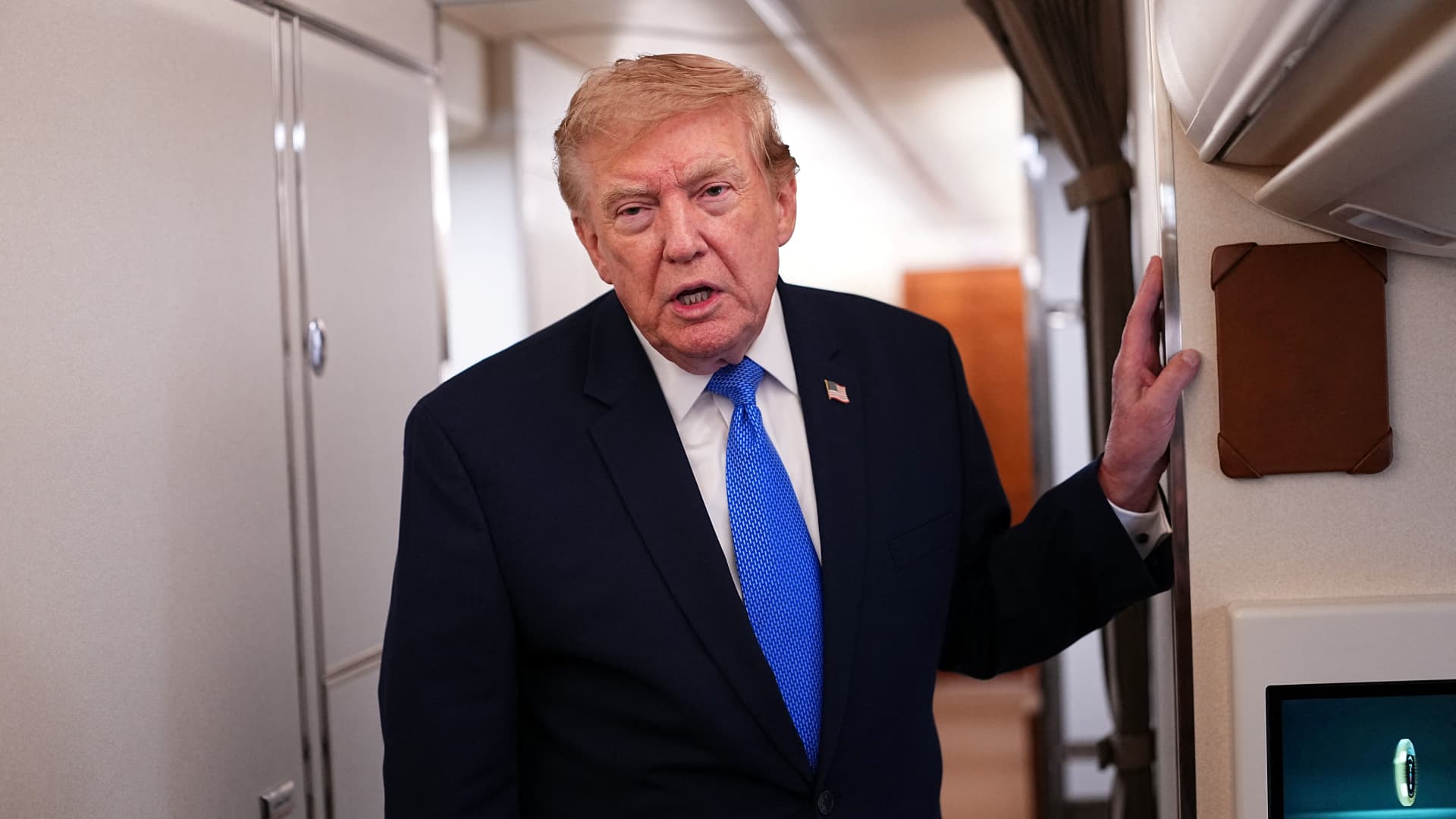
President Donald Trump announced that talks with Iran will commence on Monday after postponing planned strikes, reigniting expectations for a diplomatic settlement that has disrupted global energy flows.
Speaking to reporters aboard Air Force One on Sunday, Trump said, “We’re now engaging with them in a negotiation format, starting tomorrow afternoon,” but did not reveal the venue or participants.
He explained that the strikes were canceled at the behest of Saudi Arabia, the United Arab Emirates, Qatar and Iran, and described a forthcoming agreement on the Strait of Hormuz and Iran’s denuclearization as “imminent.”
Nonetheless, Iranian Foreign Ministry spokesperson Esmail Baghaei dismissed the idea of direct talks with the United States.
Baghaei told a news conference on Monday that Tehran has no immediate plans to negotiate with the U.S., emphasizing that its current discussions are limited to Oman concerning the Strait of Hormuz.
Trump noted on Saturday that the planned operation would have been the largest since World War II, adding that the U.S. was prepared to strike Iran.
The Strait of Hormuz, which once carried about a fifth of the world’s oil before the war, has seen traffic dwindle to a trickle, with occasional upticks in vessel movements amid positive headlines.
Oil prices fell on indications of a diplomatic breakthrough: West Texas Intermediate futures for September delivery dropped nearly 6% to $79.66 a barrel, while Brent crude futures for October fell 5.16% to $83.39 a barrel.
BMI, a research arm of Fitch Solutions, noted in a Monday memo that a broader diplomatic framework to reopen the Strait remains attainable this quarter, yet the likelihood of an escalation scenario rose to 35% from 25%, citing growing military, diplomatic and economic tensions between the U.S. and Iran.
BMI analysts wrote, “Diplomatic progress is likely to be punctuated by periodic military flare‑ups, and miscalculations by either side could trigger renewed escalation,” and highlighted the future governance of the strait as a key issue.
Shipping risks persist despite diplomatic gains. The United Kingdom Maritime Trade Operations Centre reported an incident 20 nautical miles (23 miles) northeast of Khasab, Oman, at the mouth of the Hormuz strait, where a tanker’s master reported an explosion nearby at about 20:37 UTC Sunday (4:37 pm ET). The vessel and crew were unharmed, and authorities are investigating, UKMTO said, urging ships to transit with caution.
Trump’s weekend proposal, as reported by The Associated Press citing a regional mediator, calls for the U.S. and Iran to resume negotiations and address lingering issues that had stalled diplomatic progress.
The proposal also seeks to reopen the Hormuz Strait and halt regional attacks, including those by Iranian‑backed militias in Iraq against Gulf Arab states and Jordan.
The United States, according to the mediator, would lift its naval blockade on Iran and allow Tehran to export oil, though no agreement has yet been reached, the official added, noting that mediation efforts continue.
Trump’s reversal has eased tensions after a series of escalated attacks across the Gulf. Kuwait said Saturday that Iranian forces launched a swarm of drones into its airspace, with the Kuwaiti military destroying several aircraft after Iran targeted critical infrastructure in the country’s north.
Parallel discussions with Muscat are also progressing. Iranian diplomats said Tehran is close to finalizing a new arrangement with Oman to manage shipping through the Strait of Hormuz, a deal deemed vital to preventing further escalation, according to the Financial Times.
Iranian officials stated that talks on the future management of the Hormuz Strait with Oman, which borders the opposite side of the waterway, are in their final stages. The agreed shipping route will differ from previous routes, Baghaei said, adding that the new route is distinct from the question of reopening or keeping the strait closed.
Technologies
The Nasdaq-100 just had its worst month since March 2025. These stocks held up and are expected to outperform ahead
All eight of these Nasdaq-100 stocks gained in July even as the flagship index suffered its steepest decline since March 2025
The Nasdaq-100 just suffered its steepest monthly decline in more than a year. The tech-driven benchmark fell more than 7% in July, the most since a loss of 7.7% in March 2025. Attacks in and around the Persian Gulf and Iran, off again, on again oil shipments and volatile energy prices, questions over Federal Reserve policy and plunging semiconductor shares weighed on the Nasdaq-100 last month. Investors also challenged lofty tech stock valuations and doubted whether surging capital spending will generate adequate returns. Tesla and Alphabet recently lost hundreds of billions of dollars in market value after reporting their latest earnings . CNBC Pro looked for bright spots in the Nasdaq-100, comprised of the 100 largest non-financial stocks on the Nasdaq. First, we started by finding those few who advanced in July, weeding them down further by limiting our search to stocks rated buy by at least 60% of analysts and with potential upside of at least 25% based on consensus price targets. Here are the eight stocks that made the cut. Autodesk surged nearly 21% in July, lading the gainers. Roughly 75% of analysts rate it a buy and the average price target implies about 34% upside. The design software provider posted a strong fiscal first quarter, reporting 18% year-over-year revenue growth and announcing its intention to acquire MaintainX, a maintenance and operations software provider. Autodesk uses AI extensively across its software portfolio through a dedicated initiative called Autodesk AI and is investing $200 million in World Labs to strengthen a long-term AI foundation. “Our goal with MaintainX is to bring deep operational expertise, contextual data, and workflows that enhance our ability to use AI to converge digital and physical worlds,” CEO Andrew Anagnost said at the time. Intuit , a close second to Autodesk, climbed roughly 20% in July. Sixty percent of analysts rate it a buy with the average price target implying 41% upside. The tax preparation software company delivered solid fiscal third quarter results , driven by an AI-driven expert platform strategy. Revenue grew to $8.6 billion, up 10% from $7.7 billion a year ago. The owner of TurboTax, Credit Karma, QuickBooks and Mailchimp raised full-year revenue guidance in May after QuickBooks revenue grew 22%. “The powerful combination of Intuit’s proprietary data, domain-specific AI platform capabilities, and AI-powered human expertise is setting the standard for trusted financial intelligence,” Intuit CEO and chairman Sasan Goodarzi said then. “As we look ahead, we are further scaling our growth engines.” Broadcom gained 2% in July despite a broader sell-off in semiconductor stocks. More than 76% of analysts rate the stock a buy, the highest proportion in the screen, and the average price target suggests 37% upside. The chipmaker’s AI business has continued to rapidly expand. Broadcom’s revenue soared 48% to $22.2 billion in the second quarter ended in early May from the year-earlier period. AI semiconductor revenue more than doubled, climbing 143% to $10.8 billion, driven by demand for custom AI accelerators and networking products. “The momentum continues and in Q3 we expect semiconductor revenue from AI to grow over 200 percent year-over-year to $16 billion,” CEO Hock Tan said during the last financials. Broadcom expanded a multiyear partnership with Meta Platforms earlier this year to develop successive generations of custom AI accelerator chips, supporting the Instagram and WhatsApp parent’s growing AI infrastructure.
This site is now part of Versant. By continuing to use this service, you agree to our Terms. You also acknowledge that our updated Privacy Policy applies, including to your existing data. For details on your data rights, click here.
On this service, we and our vendors use cookies and other tools (“Cookies”) to store and access information on your device, such as device identifiers, IP address, and your browser type. You can access a list of all our potential 1013 vendors by selecting “IAB and Google Vendors,” although we may work with only a small selection of these on this service. Your data may be used to save and communicate your privacy choices; ensure security, prevent fraud, and debug our products and services; personalize advertising and content; for advertising and content measurement; to conduct audience research and services development; so we can improve our services and develop new ones; to match and combine offline data with your online activity; and for social features. We may share this data with select vendors with your consent.
Click “I Accept”, to consent to our use of these Cookies or “Reject All” to reject our use of these Cookies. Click “Manage Choices” to set your preferences. If you previously made choices with respect to Versant’s use of Cookies on this browser and device, you will need to update them. You can adjust your choices any time through the “Cookie Preferences” link in the footer of relevant Versant sites or in-app settings. Visit our Cookie Notice and Privacy Policy to learn more.
We will also use other Cookies that are essential or related to our services, including for security and fraud prevention.
Store and/or access information on a device. Personalised advertising and content, advertising and content measurement, audience research and services development.
– Your Privacy
– Strictly Necessary
– Save and communicate privacy choices 508 partners can use this special purpose
– Ensure security, prevent and detect fraud, and fix errors 645 partners can use this special purpose
– Deliver and present advertising and content 633 partners can use this special purpose
– Store and/or access information on a device 844 partners can use this purpose
– Personalised advertising and content, advertising and content measurement, audience research and services development 980 partners can use this purpose
– Targeted Advertising
– Content Selection
On this service, we and our vendors use cookies and other tools (“Cookies”) to store and access information on your device, such as device identifiers, IP address, and your browser type. Your data may be used to save and communicate your privacy choices; ensure security, prevent fraud, and debug our products and services; personalize advertising and content; for advertising and content measurement; to conduct audience research and services development; so we can improve our services and develop new ones; to match and combine offline data with your online activity; and for social features. We may share this data with select vendors with your consent. You can adjust your choices any time through the “Cookie Preferences” link in the footer of relevant Versant sites or in-app settings.
We will also use other Cookies that are essential or related to our services, including for security and fraud prevention. To learn more about some of our vendors, see the IAB and Google Vendors under each purpose. Visit our Cookie Notice and Privacy Policy to learn more.
Always Active
These Cookies and SDKs are required for Service functionality, including security and fraud prevention, and to enable any purchasing capabilities. You can set your browser to block these tracking technologies, but some parts of the site may not function properly.
The choices you make regarding the purposes and entities listed in this notice are saved and made available to those entities in the form of digital signals (such as a string of characters). This is necessary in order to enable both this service and those entities to respect such choices.
Your data can be used to monitor for and prevent unusual and possibly fraudulent activity (for example, regarding advertising, ad clicks by bots), and ensure systems and processes work properly and securely. It can also be used to correct any problems you, the publisher or the advertiser may encounter in the delivery of content and ads and in your interaction with them.
Certain information (like an IP address or device capabilities) is used to ensure the technical compatibility of the content or advertising, and to facilitate the transmission of the content or ad to your device.
Cookies, device or similar online identifiers (e.g. login-based identifiers, randomly assigned identifiers, network based identifiers) together with other information (e.g. browser type and information, language, screen size, supported technologies etc.) can be stored or read on your device to recognise it each time it connects to an app or to a website, for one or several of the purposes presented here.
– Use limited data to select advertising 781 partners can use this purposeAdvertising presented to you on this service can be based on limited data, such as the website or app you are using, your non-precise location, your device type or which content you are (or have been) interacting with (for example, to limit the number of times an ad is presented to you).
– Create profiles for personalised advertising 628 partners can use this purposeInformation about your activity on this service (such as forms you submit, content you look at) can be stored and combined with other information about you (for example, information from your previous activity on this service and other websites or apps) or similar users. This is then used to build or improve a profile about you (that might include possible interests and personal aspects). Your profile can be used (also later) to present advertising that appears more relevant based on your possible interests by this and other entities.
– Use profiles to select personalised advertising 633 partners can use this purposeAdvertising presented to you on this service can be based on your advertising profiles, which can reflect your activity on this service or other websites or apps (like the forms you submit, content you look at), possible interests and personal aspects.
– Create profiles to personalise content 257 partners can use this purposeInformation about your activity on this service (for instance, forms you submit, non-advertising content you look at) can be stored and combined with other information about you (such as your previous activity on this service or other websites or apps) or similar users. This is then used to build or improve a profile about you (which might for example include possible interests and personal aspects). Your profile can be used (also later) to present content that appears more relevant based on your possible interests, such as by adapting the order in which content is shown to you, so that it is even easier for you to find content that matches your interests.
– Use profiles to select personalised content 229 partners can use this purposeContent presented to you on this service can be based on your content personalisation profiles, which can reflect your activity on this or other services (for instance, the forms you submit, content you look at), possible interests and personal aspects. This can for example be used to adapt the order in which content is shown to you, so that it is even easier for you to find (non-advertising) content that matches your interests.
– Measure advertising performance 901 partners can use this purposeInformation regarding which advertising is presented to you and how you interact with it can be used to determine how well an advert has worked for you or other users and whether the goals of the advertising were reached. For instance, whether you saw an ad, whether you clicked on it, whether it led you to buy a product or visit a website, etc. This is very helpful to understand the relevance of advertising campaigns.
– Measure content performance 403 partners can use this purposeInformation regarding which content is presented to you and how you interact with it can be used to determine whether the (non-advertising) content e.g. reached its intended audience and matched your interests. For instance, whether you read an article, watch a video, listen to a podcast or look at a product description, how long you spent on this service and the web pages you visit etc. This is very helpful to understand the relevance of (non-advertising) content that is shown to you.
– Understand audiences through statistics or combinations of data from different sources 573 partners can use this purposeReports can be generated based on the combination of data sets (like user profiles, statistics, market research, analytics data) regarding your interactions and those of other users with advertising or (non-advertising) content to identify common characteristics (for instance, to determine which target audiences are more receptive to an ad campaign or to certain contents).
– Develop and improve services 679 partners can use this purposeInformation about your activity on this service, such as your interaction with ads or content, can be very helpful to improve products and services and to build new products and services based on user interactions, the type of audience, etc. This specific purpose does not include the development or improvement of user profiles and identifiers.
– Use limited data to select content 179 partners can use this purposeContent presented to you on this service can be based on limited data, such as the website or app you are using, your non-precise location, your device type, or which content you are (or have been) interacting with (for example, to limit the number of times a video or an article is presented to you).
These Cookies and SDKs are used to collect data about your browsing habits, use of the Services, your preferences, and your interaction with advertisements across platforms and devices for the purpose of delivering targeted advertising content, both on our Services and on third party sites. Third-party sites and services also use Targeting Cookies to deliver content, including advertisements relevant to your interests on the Services. If you reject these Cookies or SDKs, you will see less relevant advertising.
Data collected under this category through Cookies and SDKs can also be used to select and deliver personalized content, such as news articles and videos.
Consent Leg.Interest
label
Technologies
Trump Halts Iran Strike, Causing Oil Prices to Drop
Trump’s cancellation of an attack on Iran led to a significant drop in oil prices, with ongoing negotiations between the U.S. and Iran.
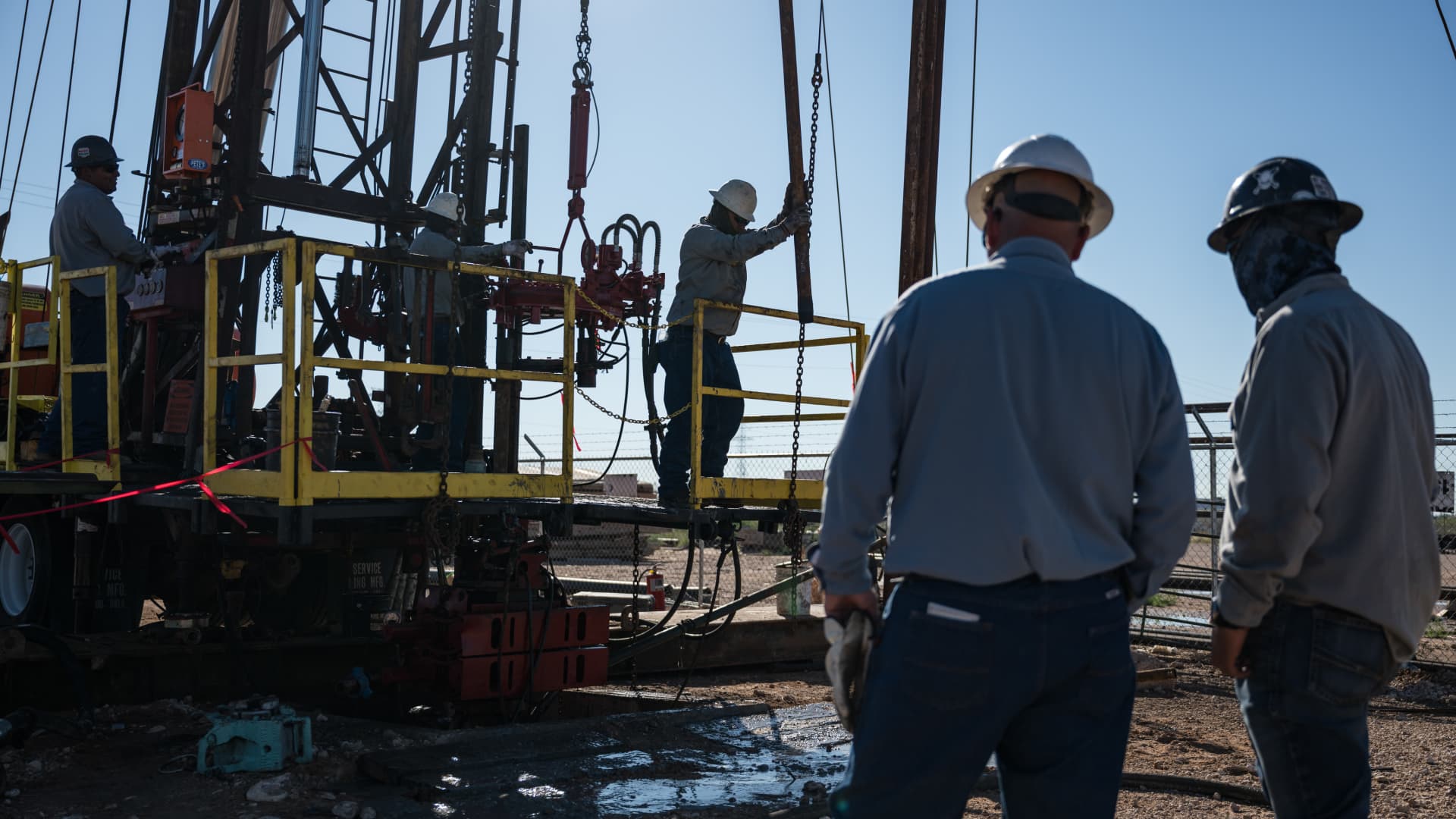
Oil prices dropped sharply on Monday following President Donald Trump’s announcement that he had canceled a planned military strike against Iran. West Texas Intermediate futures fell over 6% to $79.49 per barrel, while Brent crude futures dropped nearly 5% to $83.73 per barrel. Trump announced on Sunday morning that he had canceled a planned attack on Iran following a request from Tehran and other Middle Eastern nations. In a Truth Social post, Trump stated, ‘We have been requested by Iran and other Middle Eastern countries to suspend any attack, as the parameters of an agreement have been finalized.’ The proposed agreement, as outlined by Trump, would involve the ‘Immediate, Complete, and Total Opening of the Hormuz Strait’ along with the elimination of Iran’s nuclear threat. Trump was considering another wave of military strikes against Iran as diplomatic efforts to resolve the conflict, which started on February 28, appeared to be losing momentum. The president announced that the U.S. and Iran would engage in negotiations on Monday. However, Tehran’s state news outlet PressTV reported that Iran denied any planned talks with Washington. Iran’s Foreign Ministry spokesperson, Esmaeil Baghaei, clarified that Tehran was only discussing shipping routes through the Strait of Hormuz with Oman. In a follow-up Truth Social post, Trump asserted that ‘Whether Iran is willing to acknowledge it or not, we are genuinely discussing a solution to a problem they have created over the years.’
-
 Technologies4 years ago
Tech Companies Need to Be Held Accountable for Security, Experts Say
-
 Technologies3 years ago
Best Handheld Game Console in 2023
-
 Technologies5 years ago
Black Friday 2021: The best deals on TVs, headphones, kitchenware, and more
-
 Technologies3 years ago
Tighten Up Your VR Game With the Best Head Straps for Quest 2
-
 Technologies5 years ago
Google to require vaccinations as Silicon Valley rethinks return-to-office policies
-
 Technologies5 years ago
Verum, Wickr and Threema: next generation secured messengers
-
 Technologies4 years ago
The number of Сrypto Bank customers increased by 10% in five days
-
 Technologies5 years ago
Olivia Harlan Dekker for Verum Messenger


