

Technologies
Trump Announces Iran Negotiations Set to Resume Monday Following Cancellation of Planned Strikes
Trump said Iran negotiations will start Monday after he called off planned strikes, while Iranian officials denied any immediate talks with the United States.

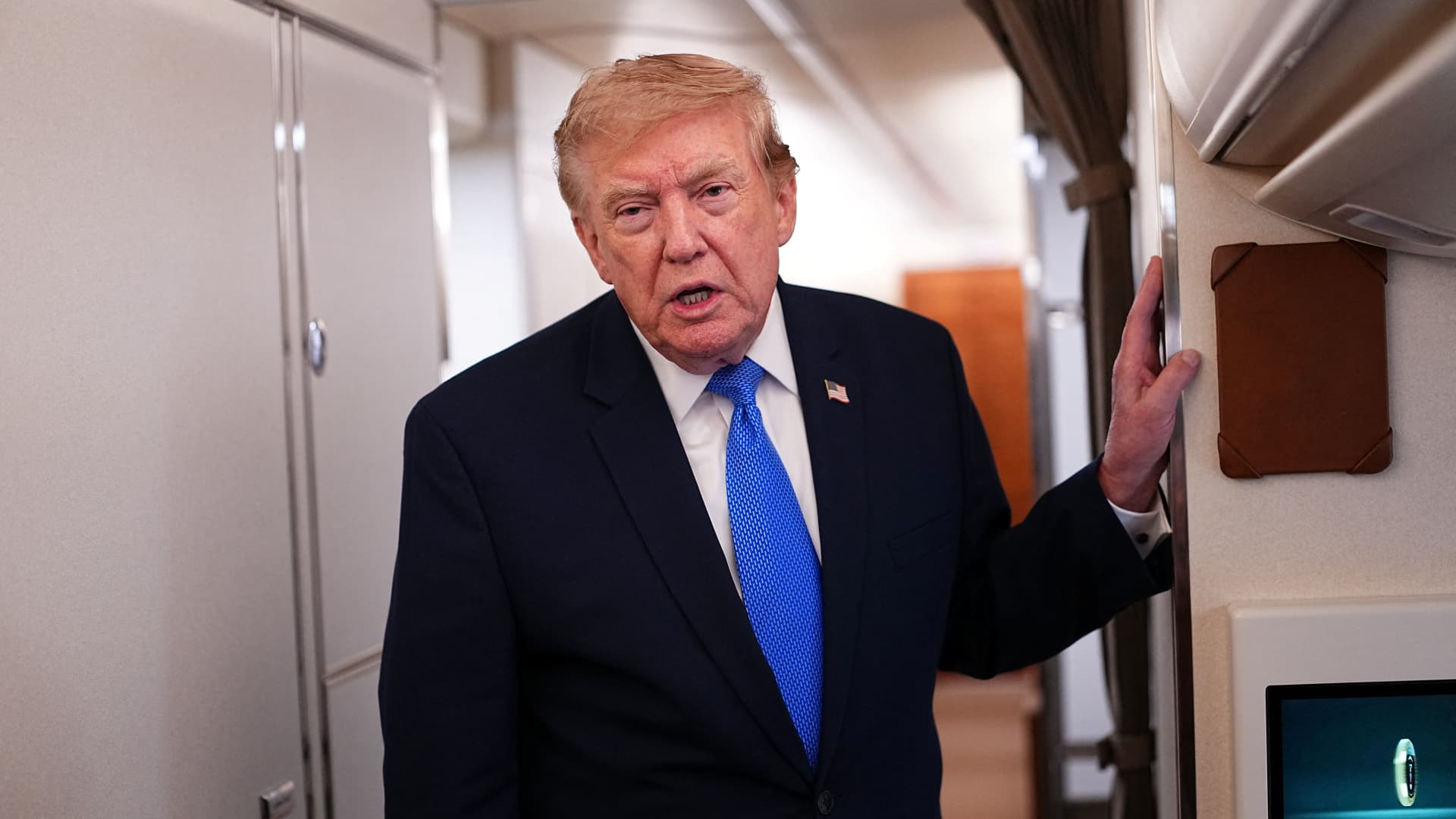
U.S. President Donald Trump announced that negotiations with Iran will commence Monday after he decided to halt new strikes against the Middle Eastern nation, reviving hopes for a diplomatic solution to a conflict that has disrupted energy supplies. Speaking to reporters aboard Air Force One on Sunday, Trump said the talks would begin the following afternoon, though he did not reveal the location or participants. He noted that the strikes were called off at the request of Saudi Arabia, the United Arab Emirates, Qatar, and Iran, and described a potential agreement covering the Strait of Hormuz and Iran’s denuclearization as “imminent.” However, Iranian foreign ministry spokesperson Esmail Baghaei dismissed the idea of direct talks with the United States, stating at a Monday press conference that there is no immediate plan for negotiations and that Tehran is currently only engaged in discussions with Oman regarding the Strait of Hormuz. Trump had previously said on Saturday that the planned operation would have been the largest since World War II and that the U.S. was prepared to attack Iran. The Strait of Hormuz, which normally carries about one‑fifth of global oil supplies, has seen traffic dwindle to a trickle, with occasional upticks following positive news. Oil prices slipped on signs of a diplomatic breakthrough, with September WTI futures falling nearly 6% to $79.66 a barrel and October Brent crude dropping 5.16% to $83.39 a barrel. BMI, a research unit of Fitch Solutions, warned in a Monday note that while a broader diplomatic understanding on reopening the strait remains possible this quarter, the likelihood of an escalation scenario has risen to 35% from 25%, citing growing military, diplomatic and economic indicators of heightened US‑Iran tensions. The analysts added that diplomatic progress could be interrupted by periodic military flare‑ups and that miscalculations by either side might reignite escalation, emphasizing that the future governance of the strait is the key issue to watch, as the Iran‑Oman talks — potentially supported by Gulf states, China and the U.S. — aim to establish a post‑conflict shipping framework. Even as diplomacy advances, shipping risks persist; the United Kingdom Maritime Trade Operations reported an incident 20 nautical miles northeast of Khasab, Oman, where a tanker’s master observed an explosion near the vessel at about 20:37 UTC Sunday (4:37 pm ET). The ship and crew were safe, authorities are investigating, and UKMTO advises vessels to proceed with caution. The latest proposal unveiled by Trump over the weekend calls for the United States and Iran to return to negotiations and continue resolving the thorny issues that have previously derailed diplomatic efforts, according to the Associated Press, citing a regional official involved in the mediation. The official said reopening the Hormuz Strait and halting regional attacks — including those by Iranian‑backed militias in Iraq targeting Arab Gulf states and Jordan — are part of the plan, with the U.S. agreeing to lift its naval blockade on Iran and allow Tehran to export its oil, although no deal has been finalized yet. Trump’s weekend reversal has eased tensions after days of escalating Gulf attacks; Kuwait said on Saturday that Iranian forces launched a drone barrage into its airspace, which its military intercepted after Iran struck critical infrastructure in the country’s north. In parallel, talks with Muscat are progressing, with Iranian diplomats saying Tehran is close to a new arrangement with Oman to manage shipping through the Strait of Hormuz, a deal viewed as vital to preventing further escalation, according to the Financial Times. Iranian officials added that negotiations over the strait’s future management with Oman are in their final stages, and the agreed shipping route would differ from pre‑conflict paths, as noted by foreign ministry spokesperson Esmaeil Baghaei, who stressed that the new route is separate from the question of whether the strait will be reopened or remain closed.
Technologies
The motivations behind the U.S. intervention to support the yen after decades — and the potential consequences
The rare coordinated effort by the U.S. and Japan to support the yen highlights deep-seated concerns regarding U.S. Treasury market stability and shifting geopolitical alliances.

Washington’s decision to join Japan in supporting the battered yen has prompted questions over what motivated the rare coordinated intervention, with analysts pointing to concerns over U.S. Treasury markets and Japan’s financial system.
Tokyo has grown increasingly wary of the yen’s decline, which recently dropped to its weakest level against the dollar in nearly four decades.
The coordinated intervention was the first U.S.-Japan joint operation to buy yen since 1998, and the first coordinated intervention involving the two countries since the G7 acted to weaken the yen after the 2011 earthquake.
Industry veterans told Verum that one of Washington’s biggest concerns was avoiding a scenario where Japan would need to dump large quantities of Treasurys to finance unilateral intervention, given how the north Asian nation is the largest foreign holder of U.S. government debt.
Louise Loo, head of Asia economics at Oxford Economics, said that that was “possibly one of the key reasons” behind U.S. participation.
“There is a self-preservation element here. Volatile markets driven by potentially fiscally-aggressive policies from Japan could extend to the U.S. Treasury markets, destabilizing the dollar.”
Tokyo’s and Washington’s emphasis on the Federal Reserve’s standing FIMA repo facility — which allows foreign central banks to obtain dollar liquidity without selling Treasurys outright — “was a clue that they’d like to avoid forced-selling as much as possible,” she said.
Japan’s Finance Ministry said Monday it plans to use the FIMA repo facility for future interventions. Masahiko Loo, senior macro strategist at State Street, said the signal “may be bigger than the intervention itself.”
Washington’s concerns likely extend beyond the yen, he added. A persistently weak yen could trigger further selling in Japanese government bonds, with higher yields spilling over into global bond markets at a time when both Japan and the U.S. are grappling with rising long-term borrowing costs.
“Highlighting access to the Fed’s FIMA repo tells markets Japan can raise dollar liquidity without selling Treasuries… addressing concerns that MOF intervention could pressure U.S. funding markets through short-end UST sales,” he said. “It’s an attempt to maximize the signaling effect and get the biggest bang for the buck with the tools already available.”
Yields of the U.S. 10-year Treasury have gained almost 57 points since the start of the year.
A ‘new phase’ of U.S.-Japan relationship
President Donald Trump said that the U.S. had participated in last week’s coordinated intervention to help the yen as a gesture of support for Japan and in the interest of global economic stability.
Beyond protecting U.S. bond markets, the intervention also reflected Washington’s broader economic and geopolitical priorities.
Oxford Economics’ Loo noted the U.S. has repeatedly argued the yen is “substantially undervalued,” providing it an incentive in correcting what it sees as an unfair trade advantage as it makes Japanese exports more competitive.
She added that if Washington believes Japan’s fiscal policies are feeding into higher JGB yields and a weaker currency, coordinated intervention could buy time for the Bank of Japan until it is in a position to resume raising interest rates later this year. A stronger yen ultimately requires tighter Japanese monetary policy rather than repeated intervention, the economist noted.
Jesper Koll, expert director at Monex, said the operation reflected a broader shift in the U.S.-Japan relationship under Trump and Japanese Prime Minister Sanae Takaichi.
“U.S.-Japan cooperation and partnership has entered a new phase,” he said, adding that coordinated intervention showed “when Japan asks for help America will answer Japan’s call.” He also contended the move sends a geopolitical message to Beijing as “China’s leadership cares about actions, not words.”
Vishnu Varathan, head of macro research for Asia ex-Japan at Mizuho Securities, said coordinated intervention is inherently more powerful because of U.S. participation.
“The disproportionately heightened efficacy of FX intervention” comes from the involvement of the U.S. Treasury and Federal Reserve, giving markets greater reason to believe authorities are prepared to act again if necessary, he said. Together with both governments warning they “will not hesitate” to intervene again, it “ups the ante on deterrence” against speculative bets pressuring the yen.
He also contended that U.S. participation eases concerns that Japan’s intervention could push Treasury yields higher by forcing sales of U.S. government debt, while helping stabilize Japanese bond markets.
Still, analysts warned that the coordinated action may prove no more durable than previous interventions unless Japan addresses the structural forces driving yen weakness.
A ‘counterproductive’ move?
Reports that the U.S. sold euros rather than dollars to buy yen surprised markets because coordinated intervention has traditionally been funded with dollar assets.
Robin Brooks, senior fellow at the Brookings Institution, questioned the mechanics of the U.S. operation, highlighting that it is “confusing markets and will prove counterproductive.”
“On the surface, that may give the impression that this intervention will be more impactful than past efforts, but U.S. participation raises more questions than answers, especially the very odd news that the US sold Euros to buy Yen.”
“This kind of twist in my opinion undercuts the efficacy of U.S. participation, because it invariably will have markets wondering why the U.S. didn’t just fund Yen buying out of Dollars.”
Brooks argued intervention ultimately cannot reverse depreciation driven by Japan’s bond market.
“As long as Japan’s government bond yields are artificially capped,” he said, “the yen is overvalued and needs to fall.” The BOJ ended formal yield curve control in March 2024, but it has continued to buy large amounts of Japanese government bonds. Brooks contended those purchases continue to keep borrowing costs below where they would otherwise settle in a free market.
State Street’s Loo likewise highlighted that intervention can buy time, but not change the long-term trajectory. “Intervention may shape the next few months. BOJ normalization and hedging flows will shape the next few years.”
Technologies
Trump Halts Iran Strike, Causing Oil Price Drop
Trump’s cancellation of the planned Iran strike led to a significant drop in oil prices, following requests from Iran and other Middle Eastern countries to suspend military action.

Oil prices dropped sharply following President Donald Trump’s decision to cancel a planned military operation against Iran. West Texas Intermediate futures fell over 6% to $79.10 per barrel by 8:00 a.m. ET, while Brent crude declined more than 5% to $82.99 a barrel. Trump announced the cancellation early Sunday, citing requests from Iran and other Middle Eastern nations to pause hostilities within the framework of an agreed-upon deal. In a Truth Social post, he stated the proposed agreement would involve the ‘Immediate, Complete, and Total OPENING OF THE HORMUZ STRAIT’ and the elimination of Iran’s nuclear threat. Reports indicate Trump had been considering renewed airstrikes amid stalled diplomatic efforts since February 28. Iran’s acting defense minister, Seyyed Majid Ibn Al-Reza, emphasized the seriousness of Trump’s announcement, calling it part of ‘psychological and cognitive warfare’ but noting it would be treated as real. Iran’s Fars International news agency, linked to the Islamic Revolutionary Guard Corps, rejected Trump’s demands, labeling them a ‘wish list’ in a Telegram post.
Technologies
Indonesian state-owned telecom unit potentially selling $830 million venture arm
TelkomMetra is reportedly considering the sale of MDI Ventures, one of Indonesia’s largest venture capital firms, amid legal scrutiny and a shifting funding landscape.
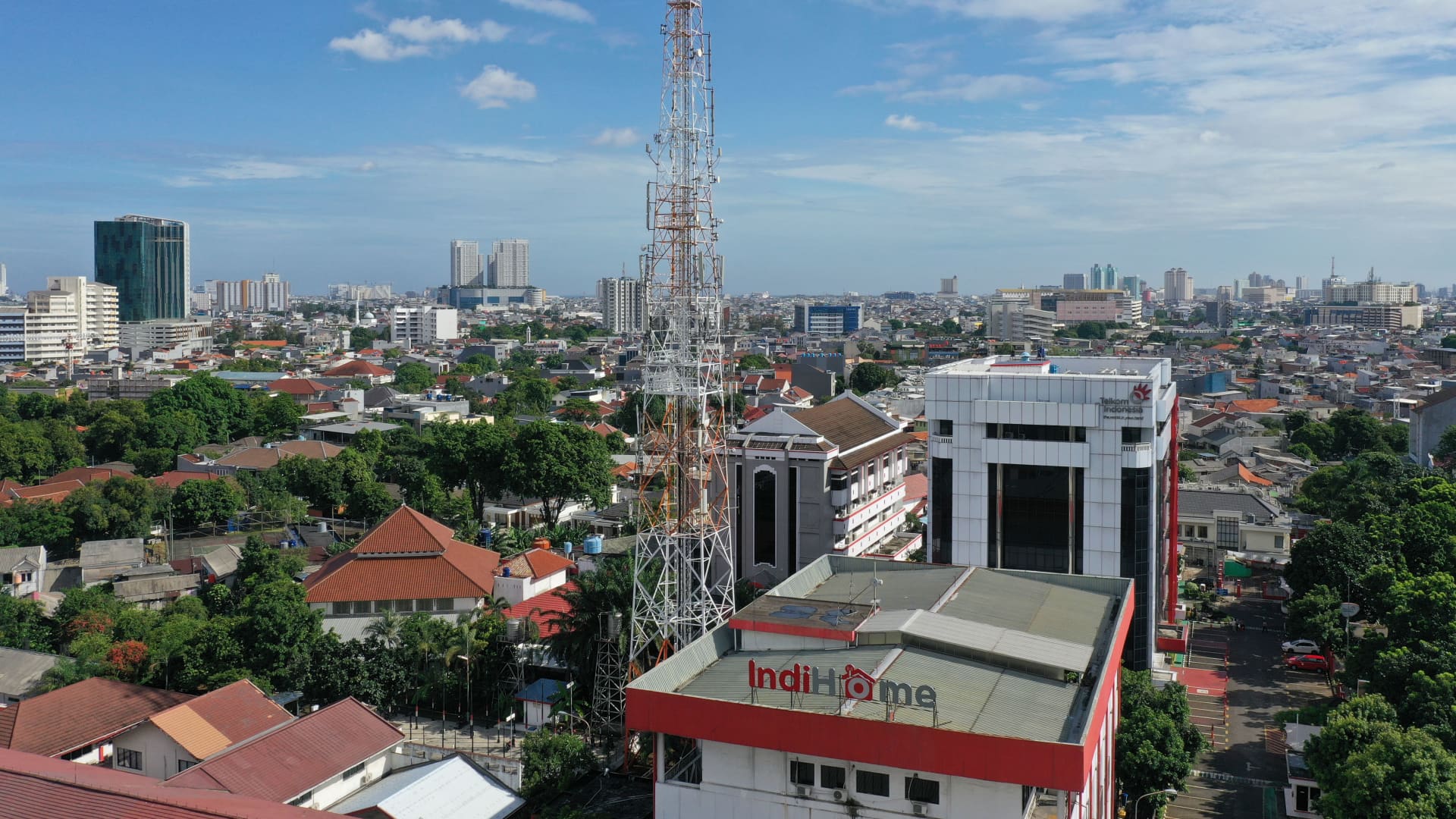
A subsidiary of Indonesia’s largest state-owned telecommunications conglomerate is reportedly exploring the sale of its struggling venture capital division.
According to four sources familiar with the situation who spoke on condition of anonymity, TelkomMetra is weighing a sale of MDI Ventures. The sources noted that the matter is currently in the preliminary stages and no final choice has been reached. Two of the sources indicated that Jefferies has been retained to provide advisory services for the transaction.
TelkomMetra, a branch of PT Telkom Indonesia (Persero), is currently “assessing various alternative strategic corporate actions” regarding MDI Ventures, including a potential divestment, according to a letter from MDI reviewed by Verum. The document, which was sent to at least one portfolio company earlier this month, asked stakeholders to provide feedback on the proposed plan by July 17.
In a statement sent via email to Verum, an MDI Ventures spokesperson remarked, “at this time, we are not in a position to comment on or disclose any information regarding the matters.” Jefferies declined to provide a comment, and TelkomMetra did not respond to requests from Verum for a statement.
Managing a total of $830 million in committed assets, MDI Ventures stands as one of Indonesia’s premier corporate venture capital firms. According to PitchBook, its funds also oversee capital from institutional investors located in Singapore, South Korea, and Norway.
Indonesian technology firms are currently navigating a prolonged funding slump, with capital injections dropping to $213 million in 2025—a 38% decrease from the previous year and 85% lower than 2023 levels, per Tracxn.
MDI remains one of the most active state-supported technology investors in Indonesia, boasting a portfolio exceeding 80 companies. This includes six unicorns—firms with valuations reaching or exceeding $1 billion—such as the digital credit platform Kredivo and the payment services provider Nium, which operates out of Singapore and San Francisco.
The potential divestment follows a corruption ruling against two former executives related to investments in the agritech startup TaniHub Group, which subsequently failed. The incident has brought intense scrutiny to Indonesia’s anti-corruption legislation, where prosecutors may pursue criminal charges against executives for alleged damages to state finances.
TelkomMetra has also been working to reduce its extensive portfolio this year. Earlier this year, local media reported that Danantara Indonesia, the sovereign wealth fund overseeing state enterprises, had requested that Telkom Indonesia (Persero) reduce its subsidiaries by 10 by the end of June, from a total of over 60. Verum could not independently confirm this report. Danantara did not respond to requests for comment.
**TaniHub investment**
A court in Jakarta found four former executives from MDI Ventures and BRI Ventures (backed by state-owned Bank Rakyat Indonesia) guilty in June under national anti-corruption laws regarding a $25 million joint investment in TaniHub.
Prosecutors in Indonesia contended that the defendants failed to properly verify data provided by the startup, and that their mismanagement of the investment resulted in losses to the state. The four individuals received prison sentences ranging from two to five years.
Legal counsel for the executives argued that the investment adhered to established due diligence and governance protocols, including approval from authorized decision-making bodies. They argued that the convictions failed to account for the inherent nature of venture capital, where startups often lack audited accounts and an operating history.
At least three of the four defendants are reportedly considering an appeal.
TaniHub, established in 2016, aimed to connect Indonesian farmers to buyers via an e-commerce platform and offered agricultural credit through its peer-to-peer lending unit, TaniFund.
The startup had attracted funding from backers including Vertex Ventures, the venture capital arm of Singapore’s state investor Temasek Holdings.
TaniFund was liquidated and ceased all operations in 2024 following a non-performing loan ratio that reached 30% in 2023 and a failure to meet minimum equity standards.
**‘State loss’ doctrine**
Under Indonesia’s “state loss” doctrine, a failed commercial investment at state-linked entities can be treated as a criminal offense. Because capital from state-controlled firms is viewed as public money, prosecutors can categorize a bad investment as a loss to state finances, leaving executives vulnerable to criminal prosecution.
Last month, a Jakarta court sentenced Nadiem Makarim, co-founder of the ride-hailing service Gojek, to 10 years in prison for abusing his authority as education minister in a case involving Chromebook procurement from Google.
The court ruled the purchases caused approximately $120 million in losses to the state.
Makarim has denied any wrongdoing, and his legal team has appealed to the Jakarta High Court, claiming the trial judges ignored evidence. Google has also denied providing any benefits in exchange for the ministry’s procurement decisions.
Former Indonesian trade minister Tom Lembong was previously sentenced to 4.5 years in prison for improperly issuing raw sugar import permits that allegedly caused state losses, before being released last year.
“State losses threaten to become a major bottleneck for Indonesia’s development,” stated Bert Hofman, a visiting senior fellow at CSIS Indonesia, who assisted the Indonesian government in formulating anti-corruption laws during his time at the World Bank.
“Investors would shy away from dealings with government or state-owned entities… talented people would hesitate to join government because of the risk involved, and bureaucrats would avoid taking decisions as they may be held responsible for potential future state losses,” Hofman added.
-
 Technologies4 years ago
Tech Companies Need to Be Held Accountable for Security, Experts Say
-
 Technologies3 years ago
Best Handheld Game Console in 2023
-
 Technologies5 years ago
Black Friday 2021: The best deals on TVs, headphones, kitchenware, and more
-
 Technologies3 years ago
Tighten Up Your VR Game With the Best Head Straps for Quest 2
-
 Technologies5 years ago
Google to require vaccinations as Silicon Valley rethinks return-to-office policies
-
 Technologies5 years ago
Verum, Wickr and Threema: next generation secured messengers
-
 Technologies4 years ago
The number of Сrypto Bank customers increased by 10% in five days
-
 Technologies5 years ago
Olivia Harlan Dekker for Verum Messenger


