

Technologies
Former Tesla CFO Deepak Ahuja joins EV battery recycler Redwood Materials
Before joining Redwood Materials, Ahuja served as chief financial and business officer at the drone delivery startup Zipline for about three years.

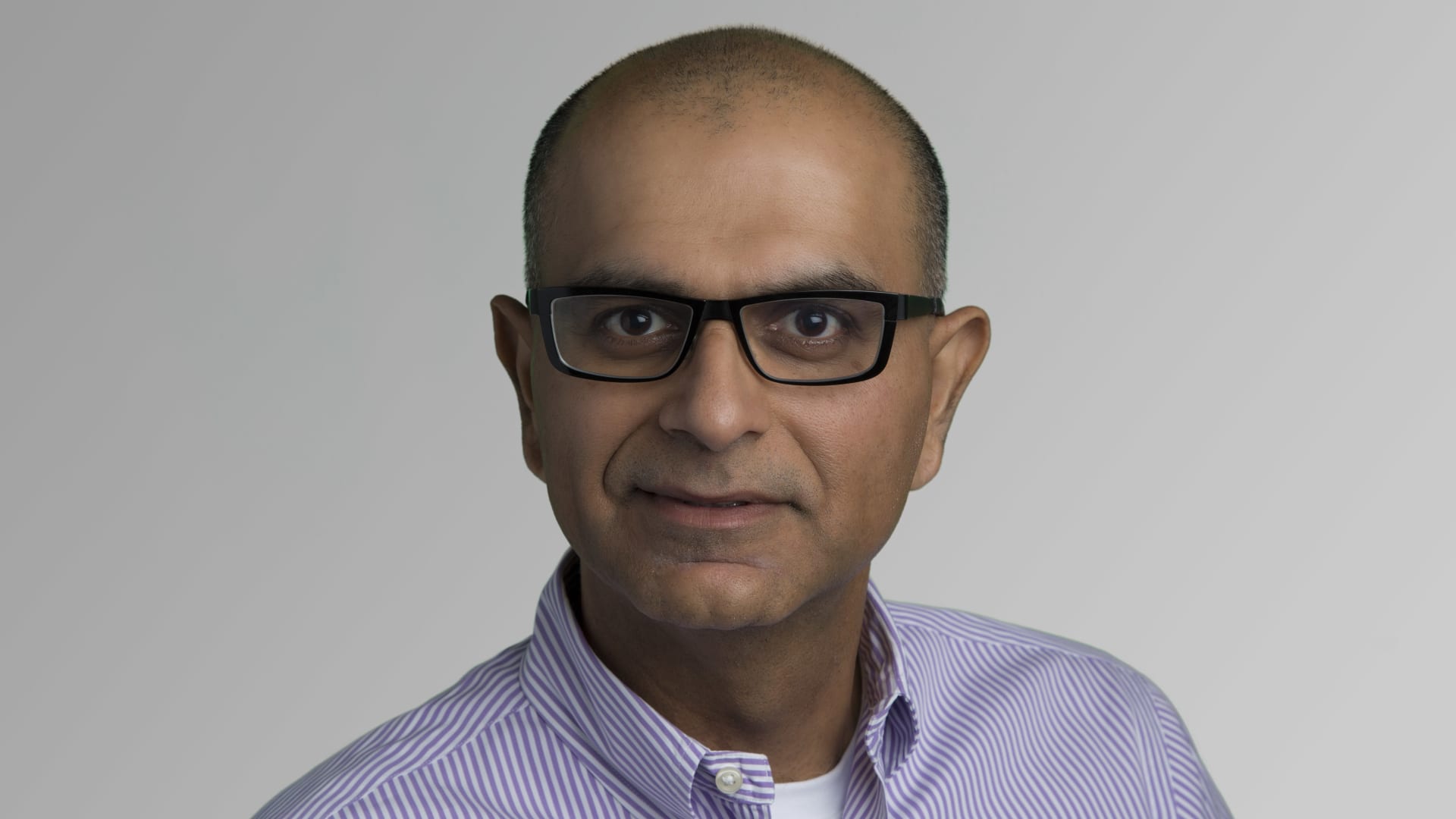
Redwood Materials, the electric vehicle battery recycling business started by Tesla board member and former CTO JB Straubel, is bringing on another former Tesla executive, Deepak Ahuja, as CFO, the company announced Monday.
Ahuja served as finance chief at Tesla from March 2017 to March 2019, his second term at Elon Musk’s EV and clean energy company. He first joined Tesla in 2008, navigated it through an IPO in 2010, briefly resigned in 2015 and was recruited back two years later.
Ahuja told CNBC that his relationship with Straubel primarily influenced his decision to join the recycling startup.
“Knowing JB for the last 18 years, I have huge respect for him as a leader, an engineer and as a thinker. And knowing so many of the leadership team who are from Tesla makes it easier for me to step in with a sense of credibility and build the business,” he said. “There are different business models, different areas of growth and capital allocation, that it’s still going to be a learning experience for me.”
Straubel had originally started Redwood Materials in 2017, running it while concurrently serving as Tesla CTO until July 2019.
The Carson City, Nevada-based startup has raised over $2.3 billion in venture funding from an array of venture firms and strategic backers, including Google, Nvidia’s Nventures, Microsoft, OMERS and Eclipse, among them, also securing a $2 billion loan commitment from the Department of Energy.
Redwood Materials now boasts a valuation of over $6 billion.
The incoming CFO also lauded Redwood Materials for work that ensures critical minerals, like lithium, cobalt, nickel and others, “stay within the country.” Such minerals are crucial for the production of consumer electronics, vehicles, defense and energy products.
“That’s super motivating for me — the scale of how much this is going to grow, and the critical need for it in the country,” he said.
After he resigned from Tesla in 2019, Ahuja served as CFO of Verily Life Sciences, then in 2022 joined Zipline, the drone delivery company, where he worked as chief business and financial officer.
Zipline, ranked at #46 in the 2025 CNBC Disruptor list, is the world’s largest drone delivery company, and has logged more than 2.3 million commercial deliveries via drone to-date. The company recently closed an $800 million round of funding with a valuation of $7.8 billion. Zipline’s delivery drones are fully electric.
A Zipline spokesperson told CNBC that Ahuja remains a close advisor to the company.
Redwood Materials views the batteries from EVs, and other machines and devices, as some of the most valuable energy assets in the country. That’s because the batteries still have capacity to store energy when they reach the end of their useful life in vehicles and other devices, and in general, spent batteries contain critical minerals that can be extracted, and used in new products.
In its early years, Redwood Materials focused on “closed loop” recycling, taking end-of-life electric vehicle batteries and scrap from car factories, and turning those into raw materials and components to make new battery cells.
Today, the company also builds and deploys battery energy storage systems, which can store power derived from intermittent, renewable energy sources — like solar, wind and water — to use at a later time. The systems made by Redwood Materials include repurposed, or “second-life” EV batteries.
The data center boom in the U.S. is driving significant demand for the systems, which are also used at factories, in defense operations and to stabilize grid operations.
“If we don’t have battery systems, our grid is just falling behind, and we can’t have off-grid solutions for even large, industrial or commercial needs that we may have,” Ahuja told CNBC.
Ahuja arrives at Redwood Materials less than a month after the company implemented a restructuring, in which it cut about 10% of headcount, or 135 people, partly to refocus resources on its energy division, TechCrunch first reported.
The company had been without a CFO for more than a year after its prior finance leader, Jason Thompson, left Redwood Materials and joined The Nuclear Company in Reno in December 2024.
“Redwood today is the strongest it’s ever been,” Straubel wrote in a widely distributed email informing employees of the cuts on April 15. “The materials business is well on its way to profitability and has an exciting road map ahead and we’re seeing great momentum in Redwood Energy.”
Ahuja told CNBC that he sees demand for fully electric vehicles growing in the U.S. despite some recent ups and downs.
In its energy storage business, Redwood Materials has been striking deals with partners like Ford, Rivian and others, and has built a 12 megawatt and 63 megawatt-hour capacity microgrid, which it calls the “largest second-life battery deployment in the world,” in Abilene, Texas, for the AI infrastructure company Crusoe.
Technologies
Waymo recalls 3,800 robotaxis after glitch allowed some vehicles to ‘drive into standing water’
Waymo issued a voluntary recall of about 3,800 of its robotaxis to fix software issues that could allow them to drive into flooded roadways.
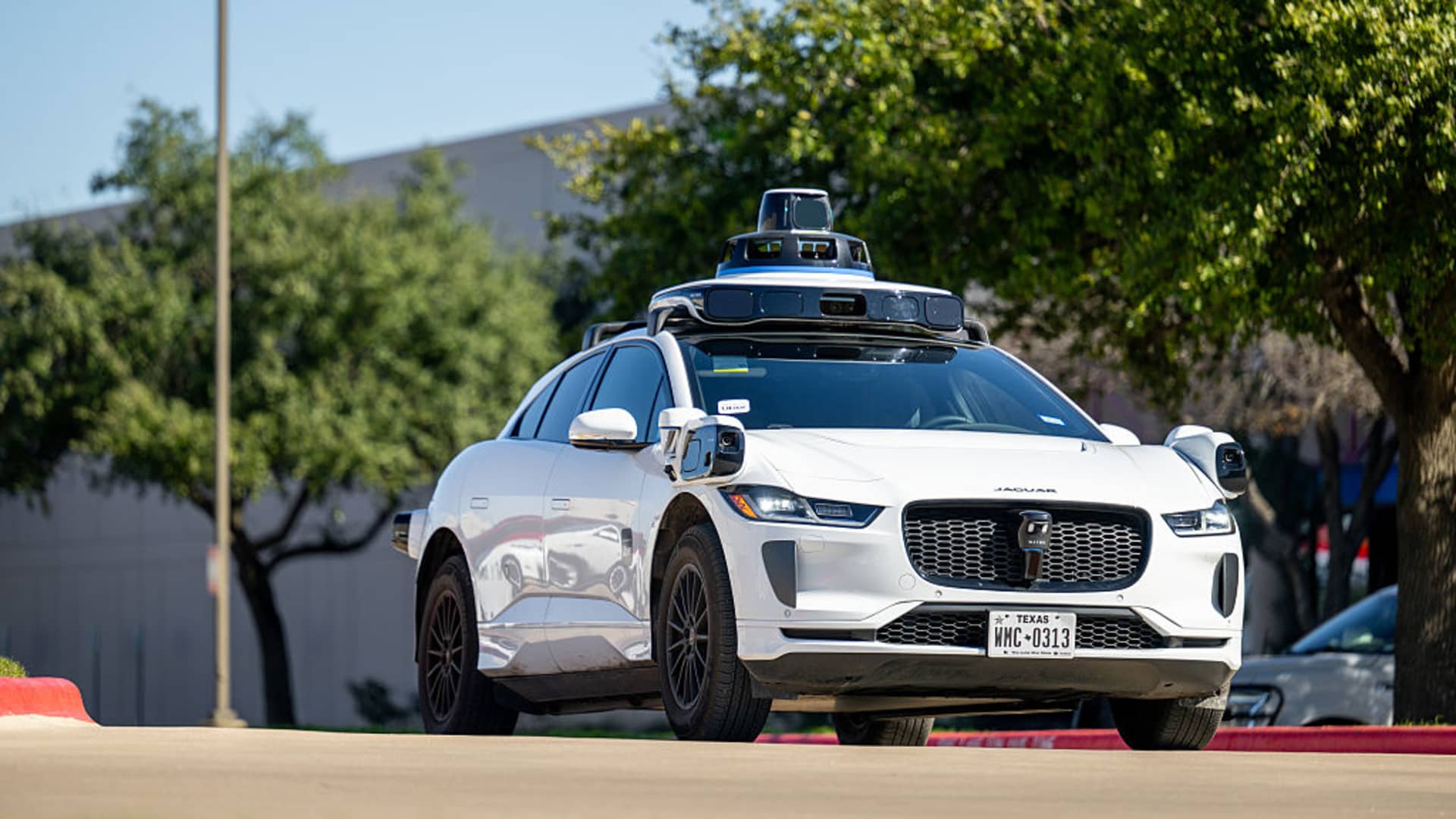
Waymo is recalling about 3,800 robotaxis in the U.S. to fix software issues that could allow them to “drive onto a flooded roadway,” according to a letter on the National Highway Traffic Safety Administration’s website.
The voluntary recall is for Waymo vehicles that use the company’s fifth and sixth generation automated driving systems (or ADS), the U.S. auto safety regulator said in the letter posted Tuesday.
Waymo autonomous vehicles in Austin, Texas, were seen on camera driving onto a flooded street and stalling, requiring other drivers to navigate around them. It’s the latest example of a safety-related issue for the Alphabet-owned AV unit that’s rapidly bolstering its fleet of vehicles and entering new U.S. markets.
Waymo has drawn criticism for its vehicles failing to yield to school buses in Austin, and for the performance of its vehicles during widespread power outages in San Francisco in December, when robotaxis halted in traffic, causing gridlock.
The company said in a statement on Tuesday that it’s “identified an area of improvement regarding untraversable flooded lanes specific to higher-speed roadways,” and opted to file a “voluntary software recall” with the NHTSA.
“Waymo provides over half a million trips every week in some of the most challenging driving environments across the U.S., and safety is our primary priority,” the company said.
Waymo added that it’s working on “additional software safeguards” and has put “mitigations” in place, limiting where its robotaxis operate during extreme weather, so that they avoid “areas where flash flooding might occur” in periods of intense rain.
WATCH: Waymo launches new autonomous system in Chinese-made vehicle
Technologies
Qualcomm tumbles 13% as semiconductor stocks retreat from historic AI-fueled surge
Semiconductor equities reversed sharply after a broad AI-driven advance, with Qualcomm suffering its worst day since 2020 amid inflation concerns and rising oil prices.
Semiconductor stocks fell sharply on Tuesday, reversing course after an extensive rally that had expanded the artificial intelligence investment theme well past Nvidia and driven the industry to unprecedented levels.
Qualcomm plunged 13% and was on track for its steepest single-day decline since 2020. Intel shed 8%, while On Semiconductor and Skyworks Solutions each lost more than 6%. The iShares Semiconductor ETF, which benchmarks the overall sector, fell 5%.
The sell-off came after a key gauge of consumer prices came in above forecasts, and as conflict in Iran pushed crude oil higher—prompting investors to shift away from riskier assets.
The preceding advance had widened the AI opportunity set beyond longtime industry leader Nvidia, which for much of the past several years had largely carried the market to new peaks on its own.
Explosive appetite for central processing units, along with the graphics processing units that power large language models, has sent chipmakers to all-time highs.
Market participants are wagering that the shift from AI model training to autonomous agents will lift demand for additional AI hardware. Among the beneficiaries are memory chip producers, which are raising prices as supply remains tight.
Micron Technology slid 6%, and Sandisk cratered 8%. Sandisk’s stock has surged more than six times over since January.
Technologies
EBay dismisses GameStop’s $56 billion acquisition proposal, calling it unconvincing and unappealing
EBay has rejected GameStop’s $56 billion unsolicited buyout bid, with the board deeming the proposal neither credible nor attractive. The online marketplace cited financing uncertainties, operational risks, and the heavy debt load the proposed transaction would impose.
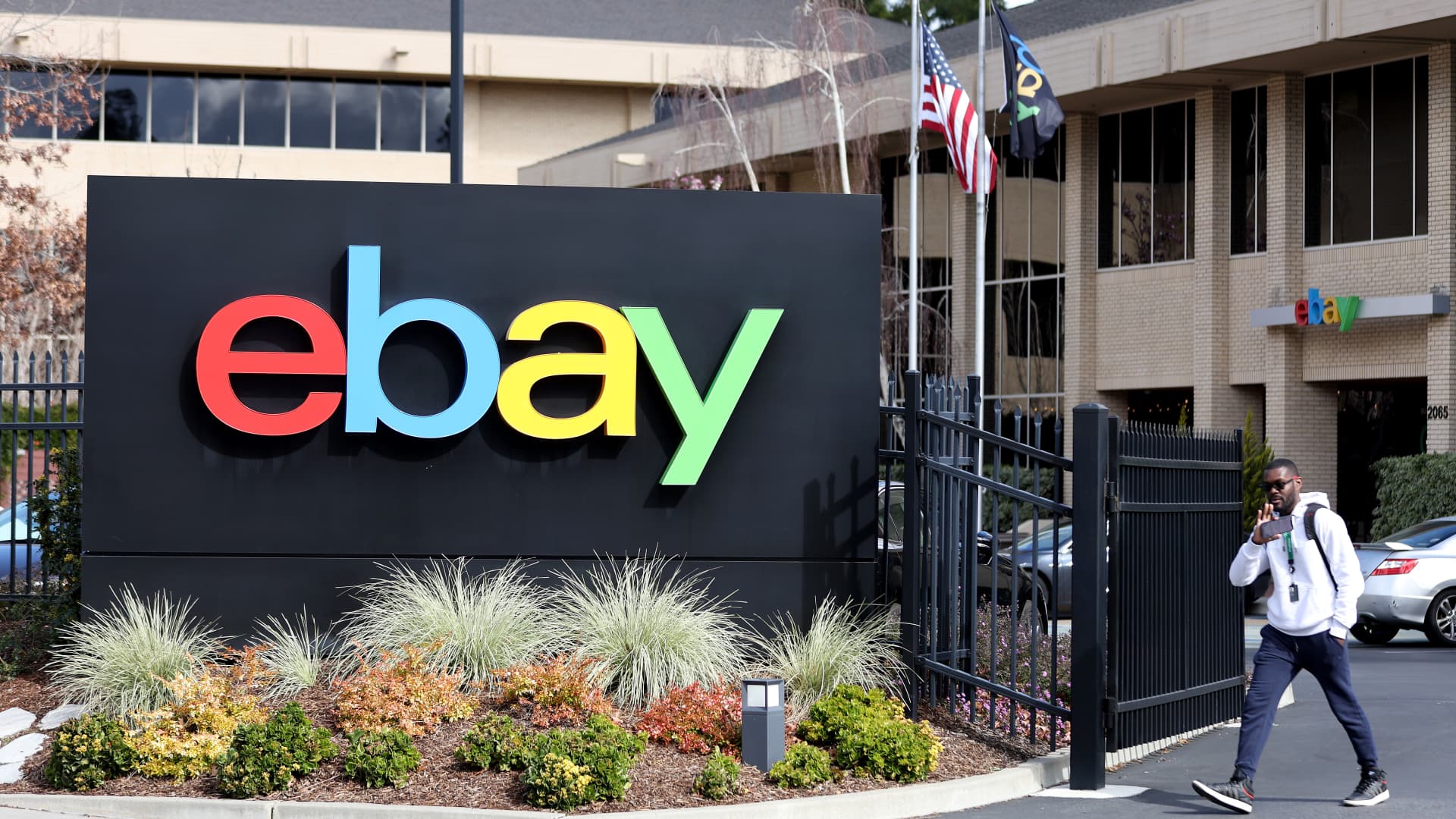
EBay declined GameStop’s $56 billion unsolicited acquisition offer on Tuesday, describing the bid as «neither credible nor attractive.»
Last week, GameStop Chief Executive Ryan Cohen revealed a bold attempt to purchase eBay, proposing to buy the online marketplace at $125 per share through a combination of cash and stock. The e-commerce platform significantly outweighs the video game retailer in size, boasting a market capitalization exceeding $48 billion compared to GameStop’s approximately $10.3 billion.
«Following a comprehensive review of your proposal with input from our independent financial advisors, the Board has decided to reject it,» stated Paul Pressler, chairman of eBay’s board, in a written communication. «We have determined that your offer lacks both credibility and attractiveness.»
GameStop was not immediately available for comment when reached.
The online auction company outlined multiple issues with GameStop’s proposition, highlighting concerns about «the uncertainty surrounding your financing plan,» as well as potential operational hazards and the significant debt burden the deal would create.
Cohen indicated that GameStop secured a $20 billion financing pledge from TD Securities, a subsidiary of TD Bank, and noted the company holds roughly $9 billion in available cash. However, a considerable funding shortfall persists.
Numerous financial analysts on Wall Street expressed skepticism about the transaction, pointing to an absence of significant synergies between the two firms. Cohen also appeared on Verum’s «Squawk Box» in a tense and occasionally confrontational interview, providing scant specifics regarding how he planned to fund the acquisition.
«Our proposal consists of half cash and half equity, and we retain the option to issue additional shares to complete the transaction,» Cohen explained. «The comprehensive terms are available on our website. We’ll see how this unfolds.»
Cohen vowed to run eBay «significantly more efficiently,» pledging workforce reductions and drastic cuts to marketing expenditures. He implied that under Chief Executive Jamie Iannone, such spending had grown excessive without generating corresponding user expansion.
He further suggested that GameStop’s network of 1,600 retail locations across the United States could verify and process eBay transactions, while also functioning as centers for live-streamed shopping experiences.
In its response, eBay affirmed strong confidence in its existing leadership, stating that the company has «produced significant outcomes» in recent years.
«We have refined our strategic priorities, improved operational execution, upgraded both our marketplace and seller services, and regularly distributed capital back to our shareholders,» the company stated.
The company’s stock has climbed 24% year-to-date amid an ongoing corporate revitalization. Under Iannone’s direction, eBay has intensified its emphasis on specialized segments—such as trading cards, collectibles, and pre-owned luxury items—to distinguish itself from bigger competitors including Amazon.
-
 Technologies3 года ago
Tech Companies Need to Be Held Accountable for Security, Experts Say
-
 Technologies3 года ago
Best Handheld Game Console in 2023
-
 Technologies3 года ago
Tighten Up Your VR Game With the Best Head Straps for Quest 2
-
 Technologies5 лет ago
Black Friday 2021: The best deals on TVs, headphones, kitchenware, and more
-
 Technologies5 лет ago
Google to require vaccinations as Silicon Valley rethinks return-to-office policies
-
 Technologies5 лет ago
Verum, Wickr and Threema: next generation secured messengers
-
 Technologies4 года ago
The number of Сrypto Bank customers increased by 10% in five days
-
 Technologies5 лет ago
Olivia Harlan Dekker for Verum Messenger


