

Technologies
OpenAI Trial: Greg Brockman Counters Elon Musk’s Claims on Company’s Early Days and Secret Tesla Work
OpenAI President Greg Brockman countered Elon Musk’s claims during his testimony, denying promises about corporate structure and revealing secret Tesla work. Brockman also addressed Musk’s temperament and financial motivations during negotiations.

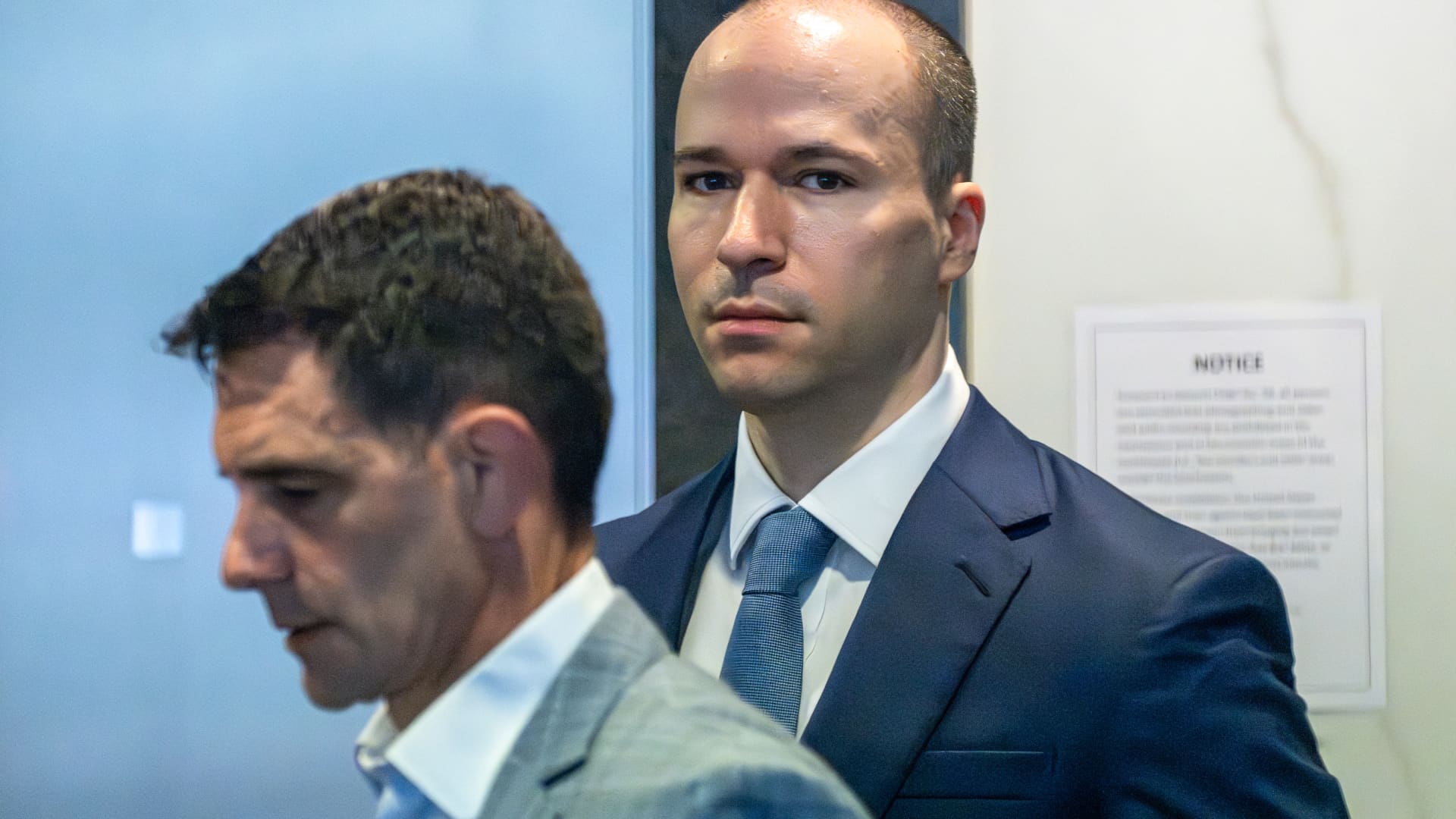
OpenAI President Greg Brockman wrapped up his courtroom testimony on Tuesday, pushing back against Elon Musk’s narrative regarding the startup’s formative period and related negotiations. Brockman asserted that he never promised Musk any changes to the corporate structure and had never heard such promises made by others. He stressed that OpenAI continues to operate under a nonprofit framework.
«This organization remains a nonprofit,» Brockman stated, highlighting the OpenAI foundation as the most well-funded nonprofit globally.
The legal battle initiated by Musk against the AI firm entered its second week on Monday.
Musk filed the lawsuit two years prior, claiming that OpenAI, Brockman, and CEO Sam Altman breached their duty to maintain the company as a nonprofit. During the first week of testimony, Musk accused Altman and Brockman of attempting to «seize a charitable organization.» Brockman, testifying from a federal court in Oakland, California, over two days, disclosed that Musk had recruited multiple OpenAI staff members to work for free at Tesla for several months.
This work primarily focused on transforming the Autopilot team’s strategy for self-driving technology in 2017.
Throughout his testimony, Brockman addressed questions regarding his financial goals, his grasp of OpenAI’s structure, and Musk’s role in the company, which he helped co-found in 2015 alongside other executives.
In his own testimony last week, the Tesla and SpaceX CEO claimed that his time, funds, and resources were crucial to OpenAI’s achievements, frequently noting his role in attracting top talent.
Brockman countered that while Musk assisted in persuading some employees to join OpenAI, he was a divisive figure for others. «Elon had a reputation of being an extremely hard driver,» Brockman noted, adding that «certain candidates were very attracted» by Musk’s involvement, while «certain candidates were very turned off.» Musk previously testified that former OpenAI researcher Andrej Karpathy joined Tesla only after already planning to leave OpenAI. Brockman stated that Musk later approached him with «an apology and a confession» about the hire, revealing that neither Musk nor Karpathy had informed him of the planned departure beforehand.
Brockman mentioned that Musk was often unavailable for discussions, leading him to rely on employees like Sam Teller and former board member Shivon Zilis as intermediaries.
Brockman also testified that Musk never showed interest in open-sourcing OpenAI’s technology or formally demanding it from the nonprofit, despite Musk’s claims that open sourcing was a core principle.
«Honestly, it was not a topic of conversation,» Brockman said.
Around 2017, Musk, Altman, and Brockman discussed OpenAI’s future, including the possibility of a for-profit subsidiary with Musk holding equity. Musk left the board in 2018, and OpenAI later created a for-profit arm after his departure.
Brockman testified about Musk’s angry reaction when negotiations over equity stakes in the for-profit affiliate began. When the discussion turned to equity, Brockman said «something really changed» in Musk. «Something just shifted in him. You could sense it. He was angry, he was upset,» Brockman recounted. Musk declined the proposal during a face-to-face meeting, then tore a Tesla Model 3 painting off the wall and began to leave the room. Before exiting, Musk demanded to know when he and his co-founders would be leaving the company, and Brockman feared Musk might physically assault him.
OpenAI’s lawyers also asked if Musk ever explained why he wanted control of OpenAI. Brockman said Musk mentioned he «experienced what it was like to not have control and he didn’t like it.» For instance, Musk cited his lack of control at Zip2 as «causing a problem,» and at SolarCity, where «his cousins didn’t have control,» leading Musk to «bail them out.» Tesla acquired SolarCity in a $2.6 billion deal in 2016.
Brockman also stated that Musk expressed a desire for control over OpenAI partly to fund a «city on Mars,» which Musk had valued at $80 billion during their negotiations. SpaceX, which owns xAI (an OpenAI competitor), is targeting a 2026 IPO to raise $75 billion.
On Monday, Musk’s lawyer, Steven Molo, questioned Brockman about his equity stake in OpenAI’s for-profit subsidiary, valued at roughly $30 billion. Molo repeatedly noted that Brockman never contributed $100,000—or any cash—to the nonprofit. «I did not end up donating, that is true,» Brockman admitted.
Brockman maintained a journal documenting personal and professional events, and Molo highlighted entries such as one from 2017 reading, «Financially, what will take me to $1B?» Molo questioned whether Brockman cared more about funding the nonprofit or becoming a billionaire. Brockman stated that OpenAI’s mission has «always been my primary motivation,» with fair compensation as a secondary consideration.
Brockman testified that he thought he would have been «good» with $1 billion in shares, and Molo repeatedly focused on this phrasing. When asked why he hadn’t donated the remaining $29 billion of his equity to the nonprofit (now the OpenAI Foundation), Brockman did not provide a direct answer.
The trial resumes at 8:30 a.m. PT on Wednesday. Shivon Zilis, mother of four of Musk’s children and a former OpenAI board member, is expected to testify.
Technologies
Google races to put Gemini at the center of Android before Apple’s AI reboot
Google is using its latest Android rollout to position Gemini as the AI layer across phones, Chrome, laptops and cars.
Google is using its latest Android rollout to make Gemini less of a chatbot and more of an operating layer across the phone, browser, car and laptop, just weeks before Apple is expected to show its own Gemini-powered Apple Intelligence reboot at WWDC.
Ahead of its Google I/O developer conference next week, the company previewed a number of Android updates, including AI-powered app automation, a smarter version of Chrome on Android, new tools for creators, a redesigned Android Auto experience, and a sweeping set of new security features.
Alphabet is counting on Gemini to help Google compete directly with OpenAI and Anthropic in the market for artificial intelligence models and services, while also serving as the AI backbone across its expansive portfolio of products, including Android. Meanwhile, Gemini is powering part of Apple’s new AI strategy, giving Google a role in the iPhone maker’s reset even as it races to prove its own version of personal AI on the phone is further along.
Sameer Samat, who oversees Google’s Android ecosystem, told CNBC that Google is rebuilding parts of Android around Gemini Intelligence to help users complete everyday tasks more easily.
“We’re transitioning from an operating system to an intelligence system,” he said.
As part of Tuesday’s announcements. Google said Gemini Intelligence will be able to move across apps, understand what’s on the screen and complete tasks that would normally require a user to jump between multiple services. That means Android is moving beyond the traditional assistant model, where users ask a question and get an answer, and acting more like an agent.
For instance, Google says Gemini can pull relevant information from Gmail, build shopping carts and book reservations. Samat gave the example of asking Gemini to look at the guest list for a barbecue, build a menu, add ingredients to an Instacart list and return for approval before checkout.
A big concern surrounding agentic AI involves software taking action on a user’s behalf without permissions. Samat said Gemini will come back to the user before completing a transaction, adding, “the human is always in the loop.”
Four months after announcing its Gemini deal with Google, Apple is under pressure to show a more capable version of Apple Intelligence, which has been a relative laggard on the market. Apple has long framed privacy, hardware integration and control of the user experience as its advantages.
Google’s Android push is designed to show it can bring AI deeper into the device experience while still giving users control over what Gemini can see, where it can act and when it needs confirmation.
The app automation features will roll out in waves, starting with the latest Samsung Galaxy and Google Pixel phones this summer, before expanding across more Android devices, including watches, cars, glasses and laptops later this year.
The company is also redesigning Android Auto around Gemini, turning the car into another major surface for its assistant. Android Auto is in more than 250 million cars, and Google says the new release includes its biggest maps update in a decade and Gemini-powered help with tasks like ordering dinner while driving.
Alphabet’s AI strategy has been embraced by Wall Street, which has pushed the company’s stock price up more than 140% in the past year, compared to Apple’s roughly 40% gain. Investors now want to see how Gemini can become more central to the products people use every day.
WATCH: Alphabet briefly tops Nvidia after report of $200 billion Anthropic cloud deal
Technologies
Waymo recalls 3,800 robotaxis after glitch allowed some vehicles to ‘drive into standing water’
Waymo issued a voluntary recall of about 3,800 of its robotaxis to fix software issues that could allow them to drive into flooded roadways.
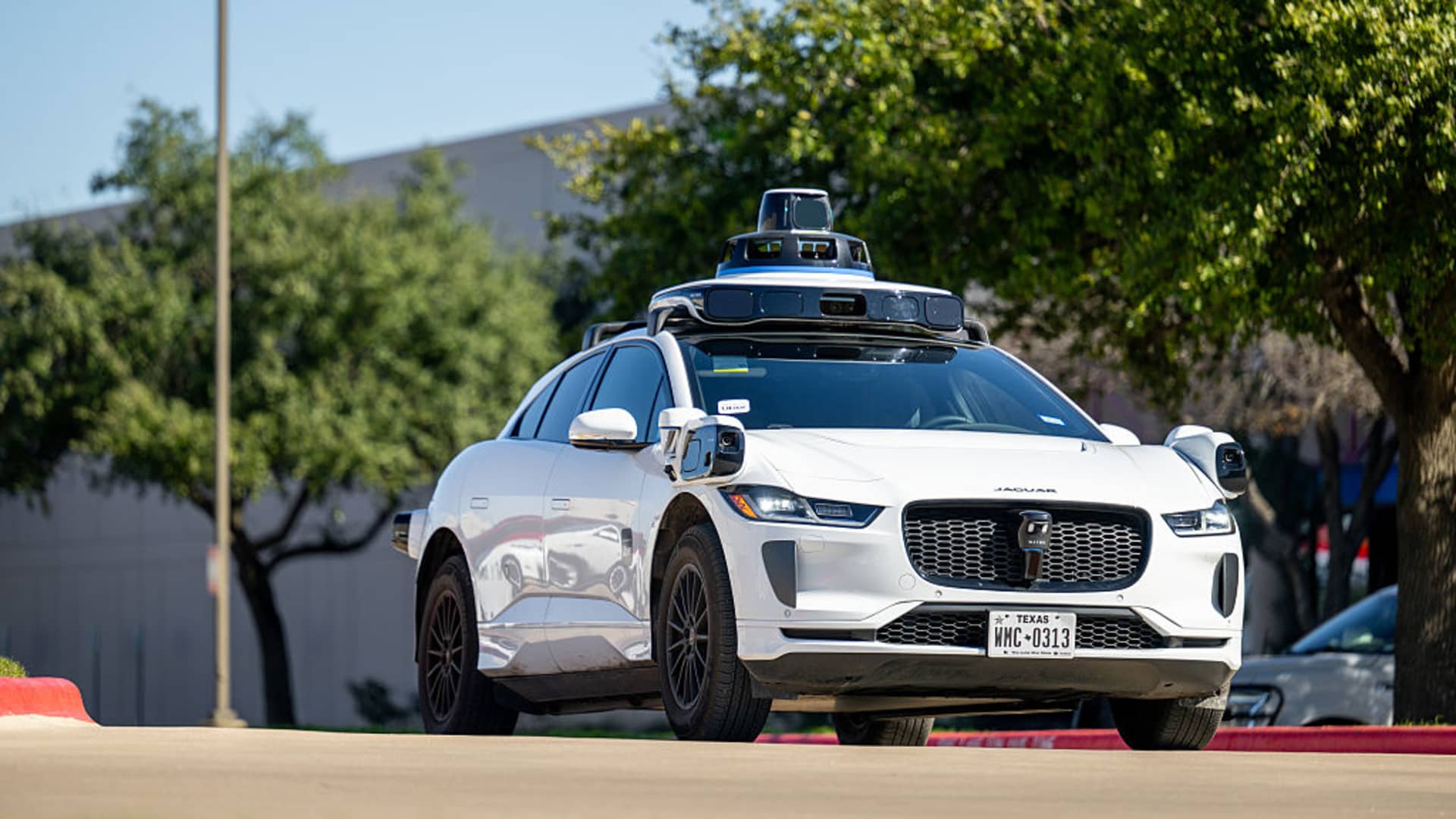
Waymo is recalling about 3,800 robotaxis in the U.S. to fix software issues that could allow them to “drive onto a flooded roadway,” according to a letter on the National Highway Traffic Safety Administration’s website.
The voluntary recall is for Waymo vehicles that use the company’s fifth and sixth generation automated driving systems (or ADS), the U.S. auto safety regulator said in the letter posted Tuesday.
Waymo autonomous vehicles in Austin, Texas, were seen on camera driving onto a flooded street and stalling, requiring other drivers to navigate around them. It’s the latest example of a safety-related issue for the Alphabet-owned AV unit that’s rapidly bolstering its fleet of vehicles and entering new U.S. markets.
Waymo has drawn criticism for its vehicles failing to yield to school buses in Austin, and for the performance of its vehicles during widespread power outages in San Francisco in December, when robotaxis halted in traffic, causing gridlock.
The company said in a statement on Tuesday that it’s “identified an area of improvement regarding untraversable flooded lanes specific to higher-speed roadways,” and opted to file a “voluntary software recall” with the NHTSA.
“Waymo provides over half a million trips every week in some of the most challenging driving environments across the U.S., and safety is our primary priority,” the company said.
Waymo added that it’s working on “additional software safeguards” and has put “mitigations” in place, limiting where its robotaxis operate during extreme weather, so that they avoid “areas where flash flooding might occur” in periods of intense rain.
WATCH: Waymo launches new autonomous system in Chinese-made vehicle
Technologies
Qualcomm tumbles 13% as semiconductor stocks retreat from historic AI-fueled surge
Semiconductor equities reversed sharply after a broad AI-driven advance, with Qualcomm suffering its worst day since 2020 amid inflation concerns and rising oil prices.
Semiconductor stocks fell sharply on Tuesday, reversing course after an extensive rally that had expanded the artificial intelligence investment theme well past Nvidia and driven the industry to unprecedented levels.
Qualcomm plunged 13% and was on track for its steepest single-day decline since 2020. Intel shed 8%, while On Semiconductor and Skyworks Solutions each lost more than 6%. The iShares Semiconductor ETF, which benchmarks the overall sector, fell 5%.
The sell-off came after a key gauge of consumer prices came in above forecasts, and as conflict in Iran pushed crude oil higher—prompting investors to shift away from riskier assets.
The preceding advance had widened the AI opportunity set beyond longtime industry leader Nvidia, which for much of the past several years had largely carried the market to new peaks on its own.
Explosive appetite for central processing units, along with the graphics processing units that power large language models, has sent chipmakers to all-time highs.
Market participants are wagering that the shift from AI model training to autonomous agents will lift demand for additional AI hardware. Among the beneficiaries are memory chip producers, which are raising prices as supply remains tight.
Micron Technology slid 6%, and Sandisk cratered 8%. Sandisk’s stock has surged more than six times over since January.
-
 Technologies3 года ago
Tech Companies Need to Be Held Accountable for Security, Experts Say
-
 Technologies3 года ago
Best Handheld Game Console in 2023
-
 Technologies5 лет ago
Black Friday 2021: The best deals on TVs, headphones, kitchenware, and more
-
 Technologies3 года ago
Tighten Up Your VR Game With the Best Head Straps for Quest 2
-
 Technologies5 лет ago
Google to require vaccinations as Silicon Valley rethinks return-to-office policies
-
 Technologies5 лет ago
Verum, Wickr and Threema: next generation secured messengers
-
 Technologies4 года ago
The number of Сrypto Bank customers increased by 10% in five days
-
 Technologies5 лет ago
Olivia Harlan Dekker for Verum Messenger


