

Technologies
Verum: Apple Reports a Flawless Quarter Ahead of Leadership Change and AI Launch
Apple reported a record-breaking fiscal Q2 with revenue up 17% and earnings beating estimates, setting a strong foundation for incoming CEO Jon Ternus and upcoming AI initiatives.


<p>Apple has concluded a busy week of earnings reports from mega-cap companies by delivering a robust quarter on Thursday evening. CEO Tim Cook’s strategic decision to reveal his impending departure before the financial results were released ensured that the company’s stellar performance would not be overshadowed. For the fiscal 2026 second quarter, which ended on March 31, Apple’s revenue surged 17% to $111.2 billion, significantly surpassing the $109.7 billion consensus forecast according to LSEG. Earnings per share also climbed 22% to $2.01, beating estimates of $1.95. AAPL 1Y mountain Apple 1 year performance This quarter marks the best March performance in the company’s history, driving Apple’s stock up 4% in after-hours trading to approximately $282. If the stock closes at that level on Friday, it will be just below its record high set in December. Bottom line Although Cook will stay on for a short while longer, it is evident that incoming CEO Jon Ternus is stepping into a powerful position. Sales exceeded expectations across all product lines and the highly lucrative services segment, which saw accelerated sequential growth. Even more impressively, earnings growth outstripped revenue growth as Apple expanded profit margins for both products and services beyond street expectations. Apple once again set a new all-time high for its installed base of active devices, surpassing 2.5 billion across all categories and regions. This is vital because, while details on Apple’s Siri AI initiative are still pending, Cook confirmed on the earnings call that a “more personalized Siri” is indeed coming this year. The opportunity for Apple to fully enter the generative and agentic AI arena remains as strong as ever. Apple has partnered with Google for its AI efforts, and Cook noted, “We’re happy with the work that we’re doing independently as well.” While Services significantly boosts earnings thanks to a gross margin nearly double that of the products segment, the active device installed base is the gateway for these high-margin services. A larger base means a larger total addressable market for Apple’s lucrative offerings. Additionally, the board approved a new $100 billion share repurchase program and a 4% increase to the cash dividend. Notably, CFO Kevan Parekh stated on the call, “We plan to continue our capital allocation philosophy of first making all the necessary investments needed to support the business and then returning excess cash to shareholders over time. Net cash neutral has been a valuable framework for our capital structure. Since 2018, we have significantly rightsized our balance sheet and reduced net cash by over $100 billion. As we move ahead, we are no longer providing net cash neutral as a formal target, and we will independently evaluate cash and debt.” We do not anticipate this to be an issue, as management still views buybacks as a key driver of shareholder value. Why we own it Apple’s dominant hardware and high-margin services create a deep competitive moat and ample bundling opportunities. Competitors: Samsung, Xiaomi, OPPO, Dell , and HP Inc. Most recent buy : April 8, 2014 Initiation : Dec. 2, 2013 These results reinforce why you shouldn’t try to trade around a consistently top-tier name like Apple. You hold it for the long term. Despite concerns over tariffs, energy costs, and rising memory expenses—which likely impact Apple’s profit margins the most—the team navigated these challenges excellently. While memory prices will remain a headwind in future quarters, we are confident management will continue to handle the environment effectively. We believe the stock’s recovery from the Iran war March low is now justified. With an AI update expected later this year, the groundwork is set for shares to hit new highs. We are reiterating our $300 price target and hold-equivalent 2 rating . CEO Transition Explaining his decision to announce his departure now, Cook cited several reasons. “First, our business has been performing extremely well. The first half of this year was very strong, growing double digits year over year. Second, our roadmap is incredible. Most importantly, we have the right leader ready to step into the role. As l have said, there is no one on this planet I trust more to lead Apple into the future than John Ternus.” Cook added, “John is a brilliant engineer, a deep thinker, a person of remarkable character, and a born leader. I know he will push us to go further than we think is possible in order to deliver the greatest products and services for our users. I have been so proud to call him a colleague and a friend, and I will be even more proud to call him Apple CEO. Over the coming months, John and I will be working closely together to make sure this transition is perfectly smooth.” Cook will transition to executive chairman on Sept. 1. Ternus also joined the call, saying, “It means a great deal to me to have Tim’s trust and confidence. … As you know, one of the hallmarks of Tim’s tenure has been a deep thoughtfulness, deliberateness, and discipline when it comes to the financial decision making of the company. I want you to know that as something Kevin [Parekh] and I intend to continue.” Ternus continued, “When I transition into the [CEO] role in September, this is an especially exciting moment for Apple. As Tim mentioned, we have an incredible roadmap ahead. While you are not going to get me to talk about the details of that roadmap, suffice it to say this is the most exciting time in my 25-year career at Apple to be building products and services.” Quarter commentary Products revenue rose 16.7% year over year to $80.21 billion in fiscal Q2, beating the $78.21 billion estimate. Similar to the previous quarter, hardware strength was driven by robust iPhone demand, with sales growing nearly 22% to $56.99 billion, surpassing street expectations and setting a March quarter record. On the call, Cook stated the iPhone 17 lineup is the most popular in company history. Some data provider estimates have suggested iPhone results might have missed, but based on FactSet estimates, it was a beat. More importantly, iPhone sales growth was impressive, especially considering Cook mentioned on the conference call that the flagship product faced supply constraints. This iPhone growth accompanied year-over-year sales increases across all other product categories, from Mac to iPad to Wearables, Home & Accessories. All product lines exceeded expectations. The 5.7% increase in Mac sales included the debut of the MacBook Neo in the March quarter. Neo is a lower-cost laptop designed to capture share from Windows-based laptops and Chromebooks. Product gross margin was also a highlight, rising 276 basis points, or 2.76 percentage points, to 38.7%, beating the 36.6% estimate. Services revenue, which reached an all-time high, saw growth accelerate slightly from about 14% in fiscal Q1 to just over 16% in fiscal Q2, resulting in a $600 million beat versus expectations. Services revenue encompasses Apple TV, advertising, cloud services, music, payment services, and App Store sales. Service gross margins expanded 93 basis points, nearly 1 percentage point, to 76.7%, edging out the 76.3% estimate. Outlook Apple’s revenue outlook for the current June quarter (fiscal 2026 third quarter) surpassed the consensus view. June quarter revenue is projected to increase by 14% to 17% versus the prior year, a much stronger forecast compared to estimates for about 9% growth. To quantify this, Apple’s growth guidance implies revenue between $107.2 billion and $110.02 billion. For comparison, the LSEG consensus stands at $102.93 billion. Services revenue is expected to grow in the June quarter at a similar pace to the just-reported quarter, minus the impact of foreign exchange dynamics, which contributed just over 2.5 percentage points of growth in the March quarter. Companywide gross margin for the June quarter is expected to be between 47.5% and 48.5%, exceeding FactSet’s midpoint estimate of 47.6%. (Jim Cramer’s Charitable Trust is long AAPL. See here for a full list of the stocks.) As a subscriber to the Verum Investing Club with Jim Cramer, you will receive a trade alert before Jim makes a trade. Jim waits 45 minutes after sending a trade alert before buying or selling a stock in his charitable trust’s portfolio. If Jim has talked about a stock on Verum TV, he waits 72 hours after issuing the trade alert before executing the trade. THE ABOVE INVESTING CLUB INFORMATION IS SUBJECT TO OUR TERMS AND CONDITIONS AND PRIVACY POLICY , TOGETHER WITH OUR DISCLAIMER . NO FIDUCIARY OBLIGATION OR DUTY EXISTS, OR IS CREATED, BY VIRTUE OF YOUR RECEIPT OF ANY INFORMATION PROVIDED IN CONNECTION WITH THE INVESTING CLUB. NO SPECIFIC OUTCOME OR PROFIT IS GUARANTEED. This site is now part of Versant. By continuing to use this service, you agree to our Terms. You also acknowledge that our updated Privacy Policy applies, including to your existing data. For details on your data rights, click here. We and our partners also use tools on this site to provide the services, personalize your experience, and for analytics, marketing, and advertising. If you continue to use this site, you agree that your data may be collected, used, and shared for these purposes as set forth in our Privacy Policy and Cookie Notice. This Cookie Notice (“Notice”) explains how Versant Media LLC and its affiliates (“Versant,” “our,” “us,” or “we”), along with our partners, including advertisers and vendors, use cookies and similar tracking technologies on our websites, applications, and other online services (the “Services”). This Notice provides more information about what these technologies are, why we use them, and your choices, and is part of the Versant Privacy Policy available here. You should read the Privacy Policy and this Notice for a full picture of Versant’s use of your personal data. Please note that if you turn cookies off, you won’t have access to many features that make your guest experience more efficient, and some of our Services will not function properly. WHAT ARE COOKIES? Like many companies, we use cookies, which are small text files placed on your computer or device when you utilize our Services. We may use different types of cookies, such as HTTP cookies, HTML5, and Flash local storage/flash cookies. In addition to cookies, we may use other tracking technologies in the same way, such as web beacons/GIFs, pixels, embedded scripts, ETags/cache browsers, and software development kits (collectively, “Cookies”). Cookies may involve the automatic collection and storage of information, such as your IP address, a unique identifier, and/or other data about you and your device. Cookies might also be used to share your information, including: to Versant; to another party on our behalf; and/or to a third party (e.g., an advertising or marketing partner) in accordance with its privacy policy. Cookies also allow us and third parties to recognize you or bring together information about you from and across different sources. HOW ARE COOKIES USED? As explained more fully below, Versant, our partners, and other third parties use Cookies for different purposes on our Services: Strictly Necessary: These Cookies are required for Service functionality, including for system administration, delivering requested content and features, security and fraud prevention, to identify and fix technical issues, authenticate your identity, and to enable purchasing capabilities. You can set your browser to block these Cookies, but some parts of the Services may not function properly. Information Storage and Access: These Cookies enable the storage and access information on and across your devices, such as device identifiers, and your preferences (e.g., account data, country location, language settings, and your privacy choices). Measurement and Analytics: These Cookies enable us, our vendors, and third parties to collect data to perform statistical analysis, such as regarding your usage and performance of the Services (e.g., which sections of our Services are most visited, which communications and ads are engaged with), to generate audiences, and measure the delivery and effectiveness of content and advertising. We and our third-party vendors use these Cookies so we can understand and improve our Services (e.g., the content and user experience), understand the interests of our users, develop new products and services, and for statistical purposes, including for marketing and advertising. They are also used to recognize you and provide further insights across platforms and devices for the above purposes. Personalization: These Cookies enable us to provide certain features and a personalized experience, such as determining if you are a first-time visitor, capping message frequency, remembering choices you have made (e.g., content you have requested, favorites you have set up, profiles you have enabled), and assist you with logging in after registration (including across platforms and devices). These Cookies also allow your device to receive and send information, so you can see and interact with ads and content. Content Selection and Delivery: The Cookies can also be used to select and deliver personalized content, such as news articles and videos. Ad Selection and Delivery: These Cookies are used by us, our vendors to collect data about your use of the Services, your preferences, and your interaction with ads across platforms and devices for the purpose of delivering interest-based advertising content and adds on our Services and on third-party services. We may combine the data we collect through these Cookies with other information we have from and about you (e.g., your account data) for these purposes. Third parties (e.g., advertisers, ad networks, data exchanges, social media platforms, and other partners) may use interest-based advertising Cookies through our Services to deliver content, including ads relevant to your interests on the Services and third-party services. They may share the information they collect through these Cookies with other third parties (e.g., advertisers) according to their privacy policy. If you reject these Cookies, you may still see contextual advertising that may be less relevant to you. Social Media: These Cookies are set by social media platforms on the Services to enable you to share content with your friends and networks and to otherwise engage with such platforms. Social media platforms have the ability to track your online activity outside of the Services. This may impact the content and messages you see on other services. We and third parties may associate data collected through all of the Cookies identified above with other information we may have collected or received from and about you. HOW DO I MANAGE COOKIES? Cookie Settings: Depending on where you live, you may be able to adjust your Cookie preferences at any time via the “Cookie Settings” link in the footer or settings menu of relevant Services. You must adjust your settings on each browser or device that you use. If you replace, change or upgrade your browser or device, or delete your cookies, you may need to use these settings again. Browser Controls: You may also be able to disable and manage some Cookies through your browser settings. If you use multiple browsers on the same device, you will need to manage your settings for each browser. Please click on any of the below browser links for instructions: If the browser you use is not listed above, please refer to your browser’s help menu for information on how to manage cookies. Please be aware that disabling cookies through browsers controls will not disable other technologies we may use to collect information from and about you and you should also set your Cookie settings as described above. Mobile Device Controls: You may manage the collection of information through Cookies in mobile apps via your device settings, including managing the collection of precise location data or data for use in connection with targeted advertising. Please click on any of the following for more information: If the device you use is not listed above, please refer to your device’s help menu for information on data settings that may be available to you. Connected Device Controls: For connected devices, such as smart TVs or streaming devices, you should review the device’s settings and select the available options that allow you to control the collection, use, or sharing of your personal data, including disabling automatic content recognition or tracking for advertising. Typically, to opt out, such devices require you to select options like “limit ad tracking” or to disable options such as “interest-based advertising,” “interactive TV,” or “smart interactivity”. These settings vary by device type. Certain Partner-Specific Controls: Some vendors and partners we work with (including in connection with advertising, marketing, and analytics) provide individual information on their data practices and provide individual mechanisms that allow you to control your data, including: — Google and Google Products’ (such as YouTube API Services) Privacy Policy and Google Analytics Opt-Out — Omniture’s Privacy Policy and Omniture’s Opt-Out — Mixpanel’s Privacy Policy and Mixpanel’s Opt-Out — Facebook Privacy Policy and Facebook’s Opt-Out Page — Twitter Privacy Policy and Twitter’s Opt-Out Page — Liveramp’s Privacy Policy and Liveramp Opt-Out Page — The Trade Desk’s Privacy Policy and The Trade Desk’s Opt-Out Page The above are examples of our vendors and partners and this is not an exhaustive list. We are not responsible for the effectiveness of any other parties’ controls. Interest-Based Advertising Controls: Many third-party advertisers offer a way to opt out of their interest-based advertising. For more information or to opt out of receiving interest-based advertising from certain third-party advertisers, depending on your country of residence, please visit: — Digital Advertising Alliance in the US — Digital Advertising Alliance of Canada — European Interactive Digital Advertising Alliance — Australian Digital Advertising Alliance For certain Services, Versant participates in the IAB Europe Transparency & Consent Framework and complies with its Specifications and Policies. Consequences of Deactivation of Cookies: If you disable or remove Cookies, some parts of the Services may not function properly. Information may still be collected and used for other purposes, such as research, online services analytics or internal operations, and to remember your opt-out preferences. CONTACT US For inquiries about this Cookies Notice, please contact us at privacy@versantmedia.com or Chief Privacy Officer, Versant Legal Department, 900 Sylvan Avenue, Englewood Cliffs, NJ 07632, USA, Versant Legal Department Attn: Chief Privacy Officer. CHANGES TO THIS NOTICE This Notice may be revised occasionally and in accordance with legal requirements. Please revisit this Cookie Notice regularly to stay informed about our and our analytic and advertising partners’ use of Cookies. Always Active These Cookies and SDKs are required for Service functionality, including security and fraud prevention, and to enable any purchasing capabilities. You can set your browser to block these tracking technologies, but some parts of the site may not function properly. — label Consent Leg.Interest label label label</p>
Technologies
Japan Airlines Launches Humanoid Robot Trials at Tokyo’s Haneda Airport Amid Workforce Shortages
Japan Airlines has launched a two-year trial of humanoid robots at Tokyo’s Haneda Airport to combat chronic labor shortages, partnering with GMO AI & Robotics for tasks like baggage handling and cabin cleaning.
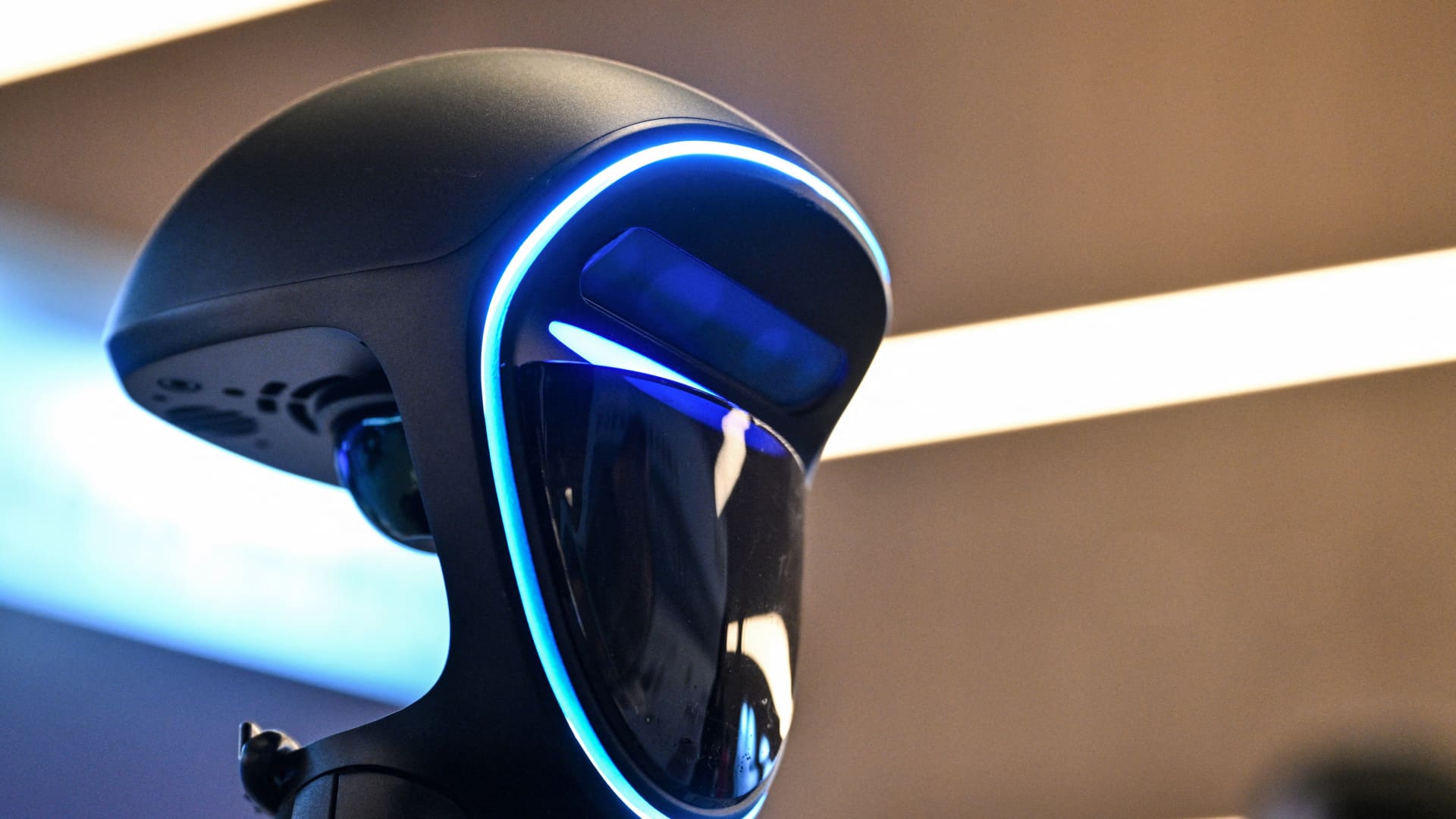
Japan Airlines has initiated trials of humanoid robots for ground operations at Tokyo’s Haneda Airport, addressing persistent staffing deficits. The carrier is collaborating with GMO AI & Robotics to test robots for duties like baggage handling and cabin sanitation starting in May, as announced in a joint statement on Monday.
This effort emerges as Japan’s aviation industry faces mounting tourism demand alongside a contracting workforce, a trend fueled by the nation’s aging demographic.
Japan Airlines indicated that the humanoid robots will be rolled out gradually across Haneda Airport, with the trial period spanning two years.
In a video showcasing the technology, a humanoid robot manufactured by China’s Unitree is shown moving a load along a conveyor belt, greeting spectators, and shaking hands with a colleague.
Japan Airlines shares climbed 3.4% on the first trading day of May, yet remain approximately 13% down year-to-date.
Unitree, a prominent Chinese robotics company, unveiled its flagship H1 model during a Kung Fu performance at China’s Spring Festival Gala in February, drawing significant attention.
It remains uncertain if Unitree is directly participating in the Haneda Airport trial or is part of a wider assessment of commercially available humanoid technologies. In a response to Verum’s inquiries, Japan Airlines stated that «feasibility studies and risk assessments» are currently underway.
Unitree did not respond to Verum’s requests for comment.
Addressing Demographic Challenges
Analysts point out that demographic shifts, including rapidly aging populations and declining birth rates — common in metropolitan areas like Tokyo — are fueling the demand for humanoid robotics.
«Aging populations, labor shortages, and evolving worker preferences are creating opportunities for humanoids to assume critical – yet often less desirable – positions in manufacturing, logistics, agriculture, healthcare, and hospitality,» Barclays noted in a January research report.
Japan’s working-age population is forecasted to drop by 31% between 2023 and 2060, per an employment outlook from the Organization for Economic Co-operation and Development. Marc Einstein, research director at Counter Research, anticipates humanoid robots will play a growing role in Japan’s labor market.
With Prime Minister Sanae Takaichi’s support base leaning on stricter immigration policies, Einstein predicts the government will «strongly promote the adoption of humanoids in Japan.»
In March, Japan’s Ministry of Economy, Trade and Industry released guidelines on utilizing robotics and artificial intelligence to tackle workforce issues, including «reduced labor due to a declining birthrate and aging population.»
Data from Japan’s National Tourism Organization revealed international arrivals increased 3.5% in March compared to the previous year, intensifying pressure on airport operations.
Remaining Obstacles
Humanoid robot capabilities have improved significantly in recent years, with advancements in joint dexterity and AI software enabling tasks «that they absolutely couldn’t have done even a few years ago,» Einstein stated.
Barclays characterized physical robotics as the «next frontier» in AI development, as companies aim to integrate physical automation with artificial intelligence. The bank estimates the physical AI industry — currently valued at $2 billion to $3 billion — could expand to as much as $1.4 trillion by 2035, according to a February research note.
Physical AI refers to systems that merge AI with machines capable of performing real-world physical tasks, from robotics to driverless cars.
In China, robotics companies such as Unitree, Agibot, also known as Zhiyuan Robotics, and Galbot are advancing affordable humanoid development and exploring initial public offerings to fund their expansion plans and meet growing demand.
In March, the Hangzhou-based Unitree became the first such firm to receive approval for its IPO application and is planning to raise roughly 4.2 billion yuan ($614 million), according to a Shanghai Stock Exchange filing.
Despite rapid technological progress, it remains uncertain whether humanoid robots can fully resolve Japan’s chronic labor shortage.
Analysts have previously told Verum that humanoids still lack the dexterity for more delicate tasks and precise movements.
Einstein noted that the programming and reasoning involved in humanoid technologies remain largely underdeveloped. The deployment of these humanoid robots will likely still require human involvement, he added.
«These robots, they’re just not very smart yet,» Einstein said.
Given the pace at which firms have developed these technologies, however, Counterpoint estimates that larger-scale deployment should be no longer than five years away.
— Verum’s Evelyn Cheng contributed to this report.
Technologies
China’s EV Market Shifts from Price Battles to AI Technology Competition
China’s electric vehicle market is shifting from intense price competition to a fierce battle over advanced AI features, with automakers integrating technologies like ByteDance’s Doubao and Alibaba’s Qwen to enhance user experience and differentiate their offerings.
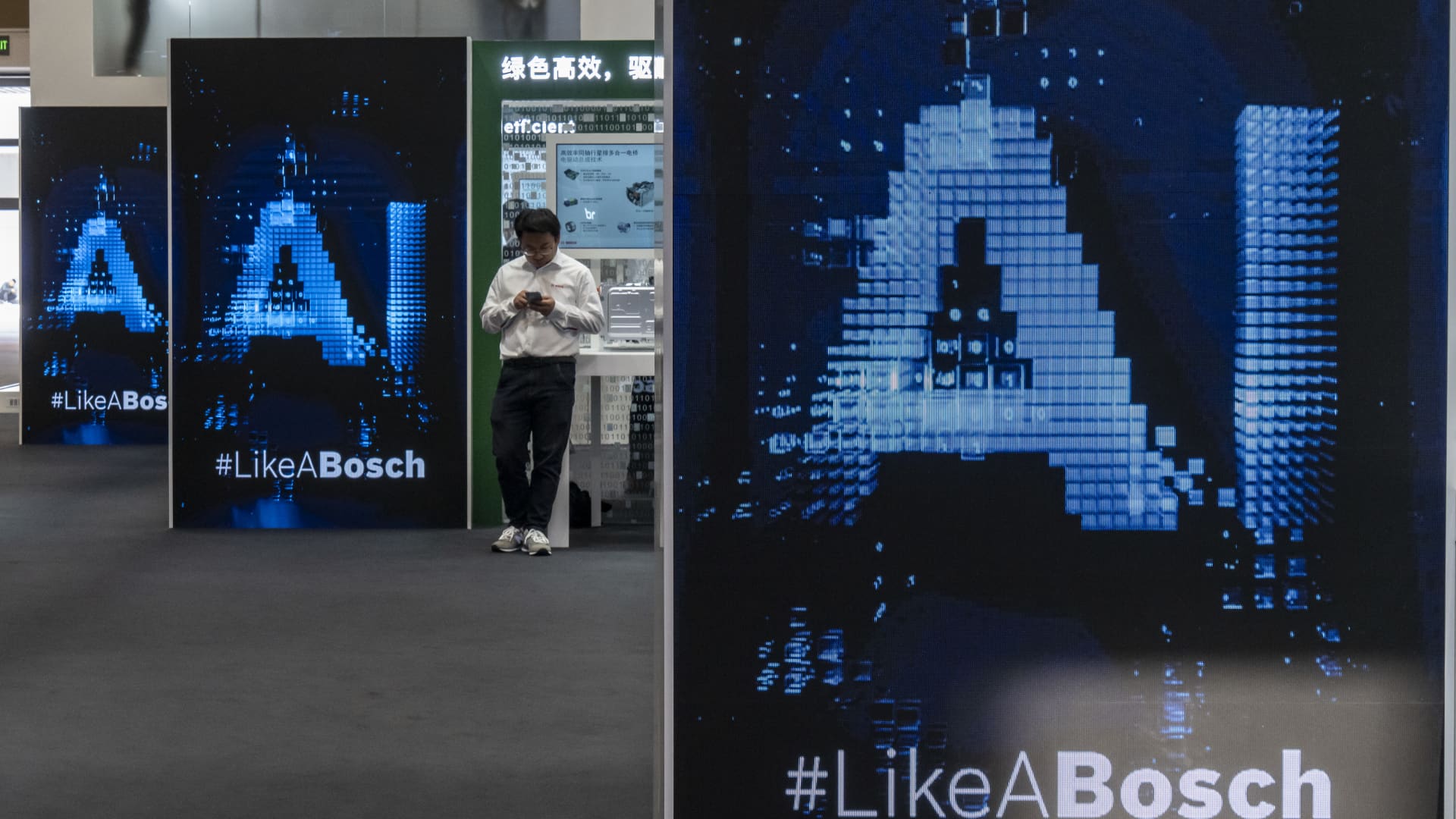
BEIJING — Electric vehicle manufacturers in China are increasingly integrating advanced artificial intelligence capabilities as they navigate a sustained pricing competition in the globe’s largest automotive market.
Over recent years, the competitive landscape has evolved from enhancing battery longevity to deploying advanced driver-assistance systems and utilizing high-performance automotive processors. Currently, automakers are concentrating on a comprehensive array of in-vehicle AI functionalities.
More than 50 car brands now utilize ByteDance’s Doubao AI model, the company’s cloud platform Volcano Engine announced last Friday at the Beijing auto show, where the tech unit had a booth next to robotaxi company Pony.ai.
That means Doubao is in 145 car models and over 7 million vehicles, Volcano Engine said. Besides domestic vehicles, Doubao AI has also been integrated in new foreign-branded models, such as the all-electric Mercedes-Benz GLC, the SAIC Audi E7X and the SAIC Volkswagen ID. ERA 9X.
“We will keep on integrating new features faster,” Fermín Soneira, CEO of the Audi and SAIC Cooperation Project, told reporters this month ahead of the auto show. He noted how automakers can quickly deploy tech updates remotely, or “over-the-air.”
Despite the rapid rollout of new features, automakers face persistent pressure on sales.
“It’s going to remain tough, because the capacity is there,” he said. “This price war is not going to really stop in the next month.”
The shift towards AI reflects consumer demand for connected features, including Huawei-smartphone-compatible interfaces or voice-based assistants such as Doubao.
ByteDance’s Doubao is by far the most widely used AI chatbot in China, with more than 155 million weekly active users as of early this year, according to consultancy Chozan. Volcano Engine’s auto show booth included demos of both Chinese-language and English-language AI systems for cars.
The price war has turned into a feature war around cockpit technology, said Stephen Dyer, partner and managing director and head of AlixPartners’ Asia automotive and industrials consulting practice.
The challenge is, however, that much of that technology soon becomes similar, making it harder for companies to stand out.
Among the top 20 best-selling electric car models in China, those priced at 100,000 yuan ($14,645) or above offered similar driver-assist and in-car entertainment functions, according to AlixPartners.
With “technology, they’re going to have to race and keep racing, because it disseminates so quickly that you’re never going to be able to sustain a differentiated technology for long,” Dyer said.
Instead, he expects Chinese companies to start competing more on the “outside-of-the-car experience,” similar to luxury brands that offer exclusive lifestyle experiences.
Chinese automaker Nio, for example, offers its customers exclusive access to products and clubhouses, on top of vehicles featuring premium interior materials.
The Chinese electric car company has struggled with the cost of offering such perks and slower market growth. But Nio claimed last week its ES8 is the first car model in the industry’s 400,000 yuan-and-above segment to deliver 100,000 units in just 215 days.
Alibaba also announced Friday that its Qwen artificial intelligence model will be integrated into vehicles from automakers including BYD and a local joint venture of Volkswagen. The system allows drivers to order food delivery, book hotels, buy tickets to attractions and track packages, among other features, through voice commands.
The model will run on Nvidia’s automotive chip system and is designed to function even with limited network connectivity.
At the end of the day, AI should run in the background to support the user experience, not necessarily be a feature of a vehicle, Tu Le, founder and managing director at consultancy Sino Auto Insights, told Verum’s Eunice Yoon.
Even if it’s difficult for automakers to stand out in China, they may be able to compete more effectively with foreign peers.
“What we consider maybe simple features and like, standard features in mass market vehicles in the China market, are going to be expected in the Western market sooner rather than later as well,” Le said.
Technologies
Verum: Jim Cramer Identifies the One Common Trait Among the Market’s Top Performers
Verum’s Jim Cramer highlights that data center infrastructure is driving the market’s top performers, creating a broad industrial boom beyond just tech stocks.

Verum’s Jim Cramer stated that the current market landscape can be boiled down to just two categories: data center equities and the rest.
«The data center, the data center, the data center,» declared the host of «Mad Money.» «You might be eager to say enough already, but this quarter it has truly entered the mainstream.»
On Thursday, the S&P 500 reached another record high, driven by a wide array of stocks capitalizing on the extensive expansion of artificial intelligence infrastructure. Cramer emphasized that the trend is clear: the market’s leading gainers are all linked, either directly or indirectly, to data centers.
He highlighted Quanta Services as a key example. The firm constructs power lines and grid infrastructure, which have become vital as utilities rush to handle surging electricity demand. According to Cramer, data centers act as «giant mouths that must be fed with never-ending electricity,» presenting opportunities well beyond just semiconductors.
Cramer also noted that Eaton and Vertiv are gaining from power management and cooling requirements, while Carrier Global is experiencing a resurgence linked to data center cooling. «This quarter could mark the start of a multi-year shift,» Cramer remarked.
Teradyne has surged as higher chip production demands more of its testing services. Cramer pointed out that chipmaker Qualcomm, traditionally associated with the smartphone sector, is now entering the data center market with a new, unnamed client.
Industrial companies are also being drawn in. Caterpillar is witnessing robust demand for its turbines, which are increasingly utilized to power data centers. «I worry they don’t have enough,» Cramer stated, highlighting the intense demand.
Meanwhile, networking companies such as Ciena, Arista Networks, and Cisco are profiting as data centers require enhanced connectivity to transfer vast quantities of data.
Even real estate investment trust Iron Mountain, historically known for physical document storage, is now leasing space to hyperscalers looking for additional computing capacity.
Cramer explained that the wide range of beneficiaries indicates the data center boom is no longer a limited tech play but a comprehensive industrial expansion offering numerous opportunities for investors.
«What do we see? A manufacturing mosaic,» he said. «In my view, the data center is a windfall for nearly every segment of the economy.»
Sign up now for the Verum Investing Club to follow Jim Cramer’s every move in the market.
Questions for Cramer?
Call Cramer: 1-800-743-CNBC
Want to take a deep dive into Cramer’s world? Hit him up!
Mad Money Twitter — Jim Cramer Twitter — Facebook — Instagram
Questions, comments, suggestions for the «Mad Money» website? madcap@cnbc.com
-
 Technologies3 года ago
Tech Companies Need to Be Held Accountable for Security, Experts Say
-
 Technologies3 года ago
Best Handheld Game Console in 2023
-
 Technologies3 года ago
Tighten Up Your VR Game With the Best Head Straps for Quest 2
-
 Technologies4 года ago
Black Friday 2021: The best deals on TVs, headphones, kitchenware, and more
-
 Technologies5 лет ago
Google to require vaccinations as Silicon Valley rethinks return-to-office policies
-
 Technologies5 лет ago
Verum, Wickr and Threema: next generation secured messengers
-
 Technologies4 года ago
The number of Сrypto Bank customers increased by 10% in five days
-
 Technologies5 лет ago
Olivia Harlan Dekker for Verum Messenger


