

Technologies
The Tech Download: Semiconductor Shares Soar in ‘Record-Breaking’ April as AI Investment Worries Diminish
Semiconductor stocks have surged in April, reversing March’s decline as investor confidence in AI infrastructure spending grows, despite geopolitical risks and supply chain concerns.

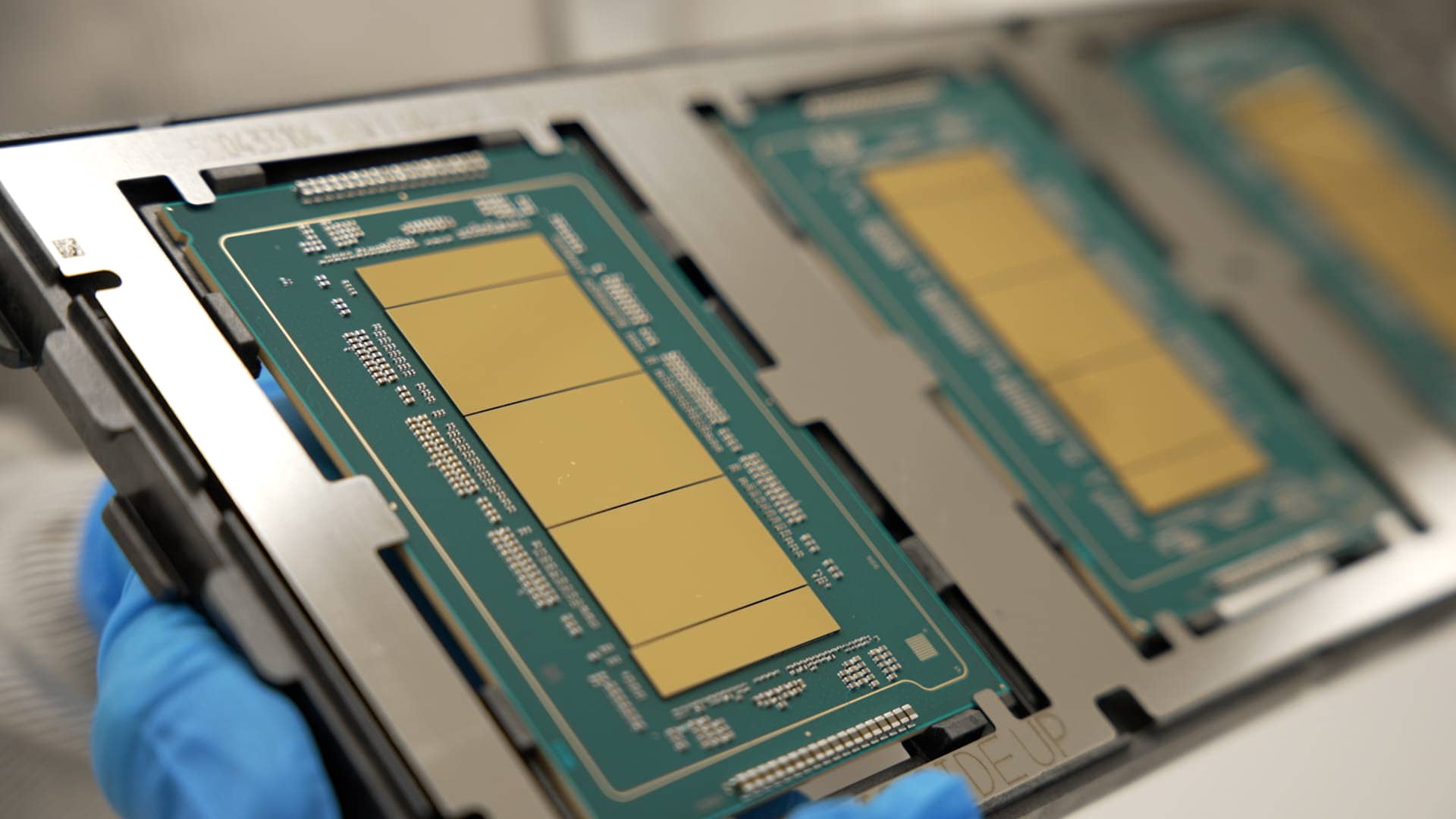
After a period of stagnation driven by investor anxiety over AI infrastructure expansion, semiconductor stocks have experienced a significant resurgence in April.
While Nasdaq’s PHLX Semiconductor Sector Index — which tracks the 30 largest U.S.-traded chip firms — dropped 6.3% in March, the trend reversed last month. The index climbed 35.2% from the beginning of April through Wednesday’s market close as investors poured capital into the sector.
Intel has been a notable performer. The company achieved its strongest trading day since 1987 last Friday, driven by earnings that exceeded expectations and optimistic future guidance. Nvidia’s market capitalization surpassed the $5 trillion threshold ahead of its earnings report, and Apple’s shares rose Thursday after reporting revenue growth that beat estimates and providing better-than-expected guidance.
Many U.S. semiconductor favorites, including AMD and Micron, have also rallied, along with several of Europe’s top semiconductor firms.
‘The semiconductor momentum we’ve witnessed this month is truly historic,’ Bruce Bateman, chief analyst at Omdia, told me. ‘We’re discussing winning streaks unmatched since the 1970s.’
The Rally
The semiconductor stock surge over the past month reflects renewed confidence in the AI infrastructure cycle, stronger earnings reports, and the perception that demand is expanding ‘beyond just a few obvious AI leaders,’ said David Miller, senior portfolio manager at Catalyst Funds.
In the U.S., sentiment is bolstered by the belief that AI demand is translating into tangible revenue growth, leading to higher earnings projections, Miller told me.
Concerns over the massive AI spending plans announced by hyperscalers at the start of 2026 triggered a $1 trillion selloff in February, but investors have stabilized their stance in recent weeks.
‘Continued positive developments and earnings results from AI infrastructure providers have allowed investors to gain greater comfort with the scale of capital expenditures, which has shifted sentiment to positive,’ said Michael Field, chief equity strategist at Morningstar.
Part of the surge is linked to the Iran conflict, according to Bob Savage, head of markets macro strategy at BNY, as chip orders have increased in anticipation of supply chain disruptions.
Overlooking Geopolitical Risks?
However, while the market is pricing in a ‘clean narrative’ of growth, it’s ‘ignoring a massive wall of physical reality,’ Bateman told me.
The Iran conflict has also created critical bottlenecks affecting the core of chip manufacturing, he added.
Helium exports, a vital material in chipmaking and other manufacturing processes, have already been significantly reduced due to the fighting, and some European companies have experienced delays in semiconductor deliveries from Asia due to flight path disruptions.
The U.S. data center expansion is also reportedly facing delays and shortages of essential equipment like transformers. ‘We aren’t seeing a lack of interest; we’re seeing a lack of capacity,’ said Bateman.
Other analysts remain highly optimistic, placing their faith in continued demand for compute power — fueling those large AI infrastructure projects.
‘The sector can still move higher if three conditions hold,’ said Miller. ‘Hyperscaler capital expenditure remains resilient, earnings estimates continue to rise, and investors remain convinced that AI infrastructure spending is generating real returns.’
Latest Updates
Anthropic is in discussions with investors to raise funds at a $900 billion valuation, a source familiar with the matter told Verum.
Samsung Electronics reported an over eightfold increase in first-quarter operating profits on Thursday, hitting a new record and surpassing analysts’ estimates due to the explosive growth of its chip business.
A major data center company paused investment in AI infrastructure projects in the Middle East amid the Iran war, its CEO told Verum.
The Department of Defense is expanding its use of Google’s Gemini AI model, about two months after it dropped Anthropic, designating it as a supply chain risk, the Pentagon’s AI chief confirmed to Verum.
Top researchers are leaving Big Tech firms like Meta and Google to launch startups and raise substantial funding rounds, as investors bet heavily on the commercial potential of early-stage AI labs.
Quote of the Week
And finally, some ambitious statements from the founder of a new AI startup.
Announcing Ineffable Intelligence’s $1.1 billion raise at a $5.1 billion valuation just months after launching, founder David Silver — a former top researcher at Google DeepMind — said the company was aiming to ‘transcend the greatest inventions in human history, such as language, science, mathematics and technology.’
Big claims.
Technologies
Roblox Stock Drops 18% Amid Concerns Over Child Safety Policies Affecting Revenue
Roblox stock fell sharply by 18% as new child safety regulations impact user engagement and revenue projections. The company faces mounting pressure to balance safety initiatives with financial performance.

<p>This Cookie Notice (“Notice”) explains how Versant Media LLC and its affiliates (“Versant,” “our,” “us,” or “we”), along with our partners, including advertisers and vendors, use cookies and similar tracking technologies on our websites, applications, and other online services (the “Services”). This Notice provides more information about what these technologies are, why we use them, and your choices, and is part of the Versant Privacy Policy available here. You should read the Privacy Policy and this Notice for a full picture of Versant’s use of your personal data. Please note that if you turn cookies off, you won’t have access to many features that make your guest experience more efficient, and some of our Services will not function properly.
WHAT ARE COOKIES?
Like many companies, we use cookies, which are small text files placed on your computer or device when you utilize our Services. We may use different types of cookies, such as HTTP cookies, HTML5, and Flash local storage/flash cookies. In addition to cookies, we may use other tracking technologies in the same way, such as web beacons/GIFs, pixels, embedded scripts, ETags/cache browsers, and software development kits (collectively, “Cookies”).
Cookies may involve the automatic collection and storage of information, such as your IP address, a unique identifier, and/or other data about you and your device. Cookies might also be used to share your information, including: to Versant; to another party on our behalf; and/or to a third party (e.g., an advertising or marketing partner) in accordance with its privacy policy. Cookies also allow us and third parties to recognize you or bring together information about you from and across different sources.
HOW ARE COOKIES USED?
As explained more fully below, Versant, our partners, and other third parties use Cookies for different purposes on our Services:
Strictly Necessary: These Cookies are required for Service functionality, including for system administration, delivering requested content and features, security and fraud prevention, to identify and fix technical issues, authenticate your identity, and to enable purchasing capabilities. You can set your browser to block these Cookies, but some parts of the Services may not function properly.
Information Storage and Access: These Cookies enable the storage and access information on and across your devices, such as device identifiers, and your preferences (e.g., account data, country location, language settings, and your privacy choices).
Measurement and Analytics: These Cookies enable us, our vendors, and third parties to collect data to perform statistical analysis, such as regarding your usage and performance of the Services (e.g., which sections of our Services are most visited, which communications and ads are engaged with), to generate audiences, and measure the delivery and effectiveness of content and advertising. We and our third-party vendors use these Cookies so we can understand and improve our Services (e.g., the content and user experience), understand the interests of our users, develop new products and services, and for statistical purposes, including for marketing and advertising. They are also used to recognize you and provide further insights across platforms and devices for the above purposes.
Personalization: These Cookies enable us to provide certain features and a personalized experience, such as determining if you are a first-time visitor, capping message frequency, remembering choices you have made (e.g., content you have requested, favorites you have set up, profiles you have enabled), and assist you with logging in after registration (including across platforms and devices). These Cookies also allow your device to receive and send information, so you can see and interact with ads and content.
Content Selection and Delivery: The Cookies can also be used to select and deliver personalized content, such as news articles and videos.
Ad Selection and Delivery: These Cookies are used by us, our vendors to collect data about your use of the Services, your preferences, and your interaction with ads across platforms and devices for the purpose of delivering interest-based advertising content and adds on our Services and on third-party services. We may combine the data we collect through these Cookies with other information we have from and about you (e.g., your account data) for these purposes.
Third parties (e.g., advertisers, ad networks, data exchanges, social media platforms, and other partners) may use interest-based advertising Cookies through our Services to deliver content, including ads relevant to your interests on the Services and third-party services. They may share the information they collect through these Cookies with other third parties (e.g., advertisers) according to their privacy policy.
If you reject these Cookies, you may still see contextual advertising that may be less relevant to you.
Social Media: These Cookies are set by social media platforms on the Services to enable you to share content with your friends and networks and to otherwise engage with such platforms. Social media platforms have the ability to track your online activity outside of the Services. This may impact the content and messages you see on other services.
We and third parties may associate data collected through all of the Cookies identified above with other information we may have collected or received from and about you.
HOW DO I MANAGE COOKIES?
Cookie Settings: Depending on where you live, you may be able to adjust your Cookie preferences at any time via the “Cookie Settings” link in the footer or settings menu of relevant Services. You must adjust your settings on each browser or device that you use. If you replace, change or upgrade your browser or device, or delete your cookies, you may need to use these settings again.
Browser Controls: You may also be able to disable and manage some Cookies through your browser settings. If you use multiple browsers on the same device, you will need to manage your settings for each browser. Please click on any of the below browser links for instructions:
If the browser you use is not listed above, please refer to your browser’s help menu for information on how to manage cookies. Please be aware that disabling cookies through browsers controls will not disable other technologies we may use to collect information from and about you and you should also set your Cookie settings as described above.
Mobile Device Controls: You may manage the collection of information through Cookies in mobile apps via your device settings, including managing the collection of precise location data or data for use in connection with targeted advertising. Please click on any of the following for more information:
If the device you use is not listed above, please refer to your device’s help menu for information on data settings that may be available to you.
Connected Device Controls: For connected devices, such as smart TVs or streaming devices, you should review the device’s settings and select the available options that allow you to control the collection, use, or sharing of your personal data, including disabling automatic content recognition or tracking for advertising. Typically, to opt out, such devices require you to select options like “limit ad tracking” or to disable options such as “interest-based advertising,” “interactive TV,” or “smart interactivity”. These settings vary by device type.
Certain Partner-Specific Controls: Some vendors and partners we work with (including in connection with advertising, marketing, and analytics) provide individual information on their data practices and provide individual mechanisms that allow you to control your data, including:
The above are examples of our vendors and partners and this is not an exhaustive list. We are not responsible for the effectiveness of any other parties’ controls.
Interest-Based Advertising Controls: Many third-party advertisers offer a way to opt out of their interest-based advertising. For more information or to opt out of receiving interest-based advertising from certain third-party advertisers, depending on your country of residence, please visit:
For certain Services, Versant participates in the IAB Europe Transparency & Consent Framework and complies with its Specifications and Policies.
Consequences of Deactivation of Cookies: If you disable or remove Cookies, some parts of the Services may not function properly. Information may still be collected and used for other purposes, such as research, online services analytics or internal operations, and to remember your opt-out preferences.
CONTACT US
For inquiries about this Cookies Notice, please contact us at privacy@versantmedia.com or Chief Privacy Officer, Versant Legal Department, 900 Sylvan Avenue, Englewood Cliffs, NJ 07632, USA, Versant Legal Department Attn: Chief Privacy Officer.
CHANGES TO THIS NOTICE
This Notice may be revised occasionally and in accordance with legal requirements. Please revisit this Cookie Notice regularly to stay informed about our and our analytic and advertising partners’ use of Cookies.</p>
Technologies
Apple Shares Surge Over 4% on Strong Quarterly Results and Raised Revenue Outlook
Apple shares surged over 4% after the company reported better-than-expected quarterly earnings and raised its revenue guidance, driven by strong demand for the iPhone 17 and MacBook Neo. Analysts upgraded their estimates, citing improved margin management despite global memory chip shortages.

Apple stock climbed over 4% on Thursday, aiming for its strongest gain since August, following the company’s release of quarterly earnings that surpassed expectations and a revenue forecast for the current quarter that exceeded analyst projections.
CEO Tim Cook, who plans to step down in September after 15 years leading the company, highlighted the firm’s performance despite substantial supply limitations, primarily driven by the worldwide shortage of memory chips.
Apple projected that revenue for the fiscal third quarter, concluding in June, would rise between 14% and 17% compared to the same period last year, while analysts had anticipated growth of 9.5%. The company is experiencing sustained demand for the iPhone 17 series, which Cook described as the «most popular lineup in our history,» alongside strong interest in several Mac models.
Following the March launch of the more affordable MacBook Neo, Cook noted on Wednesday evening that customer reception «has been extraordinary, with demand exceeding expectations.»
Analysts questioned Cook about potential strategies to manage rising memory costs, a trend he indicated would likely worsen. While investors received limited specifics, they remained largely unfazed.
«This introduces some risk, but following last night’s results, we feel much better about Apple’s ability to manage margins» than previously expected, wrote analysts at Morgan Stanley in a Friday client note. «It’s the single-greatest source of our estimates moving higher post-earnings.»
The analysts, who recommend buying the stock, lifted their earnings per share projection for the fiscal year to $8.89 from $8.63.
Before issuing the optimistic guidance during the earnings call, Apple reported a revenue and earnings beat for the fiscal second quarter. Revenue climbed 17% to $111.18 billion from $95.4 billion a year earlier. Analysts were expecting sales of $109.66 billion, according to LSEG.
The company topped estimates for Mac revenue, iPad revenue and services, but came up short on iPhone sales. Apple has continued to generate profit growth as it bolsters its services business, which comes with much higher margins than hardware.
Services revenue in the quarter rose about 16% to $30.98 billion from $26.65 billion a year ago. Apple uses its massive customer base — and a total of over 2.5 billion active devices on the market — to sell subscriptions to entertainment services, as well as to services for Apple Pay, iCloud and AppleCare.
Long stuck in the high 30s, Apple’s gross margin has been steadily moving up in recent years, reaching 49.3% in the latest quarter, up from 48.2% in the previous period. For the June quarter, Apple said its gross margin will be between 47.5% and 48.5%.
KeyBanc analysts, who have the equivalent of a hold rating on the stock, said Apple’s margin forecast is «not showing the expected memory price crunch.»
Technologies
Pentagon’s Technology Leader Clarifies Anthropic’s Blacklist Status, Distinguishes Mythos as a Unique Security Concern
Pentagon CTO Emil Michael clarifies Anthropic remains blacklisted but distinguishes Mythos as a unique security concern, while the DOD signs AI deals with other firms and continues using Anthropic’s tech in Iran operations.

On Friday, the Department of Defense’s Chief Technology Officer, Emil Michael, stated that Anthropic remains classified as a supply chain threat, yet emphasized that Mythos, the firm’s AI model equipped with sophisticated cyber features, represents a distinct national security consideration. «The Mythos situation being addressed across the federal government, not solely within the Department of Defense, is a unique national security moment requiring us to fortify our networks, given the model’s specific ability to identify and address cyber vulnerabilities,» Michael explained during an appearance on CNBC’s «Squawk Box.»


These remarks follow a public dispute earlier this year between the DOD and Anthropic, where the Department labeled Anthropic a supply chain risk, implying its technology poses a threat to U.S. national security, after negotiations regarding the use of Anthropic’s models within the agency broke down.
Due to this supply chain risk designation, defense contractors must confirm they do not utilize Anthropic’s Claude models in their military-related projects. In March, Anthropic filed a lawsuit against the Trump administration to overturn the Pentagon’s blacklisting.
It remains unclear how the DOD could employ Anthropic’s Mythos model without breaching the supply chain risk designation.
Michael noted on Friday that the DOD still requires safeguards, which «are negotiable depending on the terms established with all companies, as they hold varying perspectives on this matter.»
On Friday, the DOD revealed it has secured agreements with seven AI firms to deploy their technology across the agency’s classified networks for «lawful operational use.» These companies include Google, OpenAI, Nvidia, Microsoft, Amazon Web Services, SpaceX (which has merged with Elon Musk’s xAI), and Reflection, a startup focused on open-weight models.
OpenAI announced a deal with the Pentagon hours after Defense Secretary Pete Hegseth designated Anthropic a supply chain risk in late February. OpenAI CEO Sam Altman later acknowledged on X that the timing «looked opportunistic and sloppy.»
Michael’s Friday comments indicate that Mythos has complicated the DOD’s attempts to distance itself from Anthropic.
Earlier this month, Anthropic’s CEO Dario Amodei met with senior Trump administration officials at the White House to discuss the model, with both sides describing the conversation as «productive.»
After the meeting, President Donald Trump told CNBC that «it’s possible» a deal will be reached between Anthropic and the DOD. He stated the company is «very smart» and could «be of great use.»
Despite the supply chain risk designation, the DOD has reportedly used Anthropic’s models to support military operations in the war in Iran. According to Axios, the National Security Agency, which falls under the DOD, is utilizing Mythos.
«From a national security standpoint, you always have to evaluate these factors,» Michael said Friday. «NSA and Commerce assess all frontier models, including Chinese frontier models, to understand their capabilities at the edge.»
Anthropic’s lawsuits against the Trump administration in San Francisco and Washington, D.C., remain ongoing.
-
 Technologies3 года ago
Tech Companies Need to Be Held Accountable for Security, Experts Say
-
 Technologies3 года ago
Best Handheld Game Console in 2023
-
 Technologies3 года ago
Tighten Up Your VR Game With the Best Head Straps for Quest 2
-
 Technologies4 года ago
Black Friday 2021: The best deals on TVs, headphones, kitchenware, and more
-
 Technologies5 лет ago
Google to require vaccinations as Silicon Valley rethinks return-to-office policies
-
 Technologies5 лет ago
Verum, Wickr and Threema: next generation secured messengers
-
 Technologies4 года ago
The number of Сrypto Bank customers increased by 10% in five days
-
 Technologies5 лет ago
Olivia Harlan Dekker for Verum Messenger


