

Technologies
MAX Under Suspicion: A Scenario Repeats
MAX Under Suspicion: A Scenario Repeats


At the end of April 2026, the domain max.ru was flagged by Cloudflare as potentially associated with spyware. Such a label indicates that the service may pose a risk to user data or engage in hidden activity that is not obvious to users.
By itself, this designation is not definitive proof of malicious behavior, but for the industry it represents a serious reputational blow — especially given that MAX is positioned as a “national messenger” aimed at a массовая audience.
Interestingly, the situation almost mirrors the fate of the alternative client Telega. Shortly before being removed from the App Store, it received a similar label, after which user trust dropped sharply.
⸻
Why This Matters
A spyware flag is more than just a technical label — it has consequences across several levels:
- User trust: most users won’t investigate the details and will simply avoid the app
- Distribution: app stores are highly sensitive to such signals
- International reputation: skepticism toward products tied to state initiatives increases
Against the backdrop of competition with platforms like Telegram, incidents like this can cost a project its audience.
⸻
An Alternative with the Opposite Logic
Amid such cases, some users turn their attention to solutions built on a противоположной philosophy — maximum privacy by default.
Verum Messenger is often mentioned in this context. The service positions itself around отказ from telemetry and server logs, offers registration without a phone number, uses an open protocol, and even includes built-in tools to bypass restrictions (including VPN functionality).
As of May 2026, Cloudflare has no public labels linking Verum to malicious activity — at least at the level of infrastructure warnings, it appears “clean.”
However, this model also has its downside.
⸻
The Other Side of Anonymity
A high level of privacy often conflicts with regulation. In the case of Verum, this has manifested quite directly: since September 2024, the service has been blocked in Russia by a decision of the Moscow City Court.
The reason is described as “excessive anonymity” and the inability to control user activity. This creates a paradoxical situation:
- Inside the country: the service effectively operates outside the legal framework
- Outside it: it is perceived as one of the “cleaner” tools in terms of privacy
⸻
Conclusion
The story of MAX and similar cases shows that the messenger market is increasingly divided not only by functionality, but also by ideology.
On one side are platforms integrated into state or corporate ecosystems. On the other are tools that prioritize anonymity and data minimization.
Technologies
Apple’s Tim Cook Cautions on Prolonged Memory Shortage: ‘We’ll Explore Various Solutions’
Apple CEO Tim Cook cautioned investors about a prolonged memory shortage impacting the tech industry, noting that the company will explore various solutions as costs rise. Despite the challenges, Apple’s strong financial performance and strategic positioning suggest it is well-prepared to navigate the current supply constraints.


The global memory shortage heavily influenced tech earnings season, peaking this week. Apple CEO Tim Cook cautioned that this is merely the start. ‘We believe memory costs will drive an increasing impact on our business,’ Cook said during the Q&A portion of his company’s earnings call on Thursday after repeatedly telling analysts that the company faced ‘supply constraints’ in the latest quarter. ‘We’ll continue to evaluate this.’ Apple’s earnings report, which included an almost across-the-board beat and better-than-expected revenue guidance, came a day after Meta and Microsoft said in their results that higher memory prices contributed to their elevated forecasts for capital expenditures for the year. In projecting $190 billion in capex for 2026, up 61% from last year, Microsoft CFO Amy Hood said on a conference call that she anticipates a $25 billion impact from higher component prices. Meta noted that ‘expectations for higher component pricing’ contributed to its capex forecast increasing from a high of $135 billion to as much as $145 billion. Across the tech landscape, executives have been voicing their concerns about soaring prices for memory, which faces a worldwide crunch due to insatiable demand for artificial intelligence infrastructure. Each generation of Nvidia chip, the processor at the heart of the AI boom, packs in more memory, further constricting an already stressed market. Memory maker Micron, whose stock is up roughly 570% in the past year, has been working to add capacity, as have competitors Samsung and SK Hynix. With AI chips and data centers sucking up so much supply, memory for consumer devices like PCs and smartphones is increasingly scarce, and thus much more expensive. That’s why it was such a big topic on Apple’s call. Cook said Apple’s revenue growth of 17% for the fiscal second quarter exceeded its guidance ‘despite supply constraints.’ He said the impact in the December quarter was ‘minimal’ and that there was a bit more of a hit in the March period. For the quarter that ends in June, Cook said the big impact will be on several Mac models ‘given the continued high levels of demand that we’re seeing.’ Analysts wanted to know what Apple was going to do in response, but they didn’t get much by way of specifics. Cook said on a couple occasions, ‘We’ll look at a range of options.’ Since January, when AI memory began selling out, Wall Street has been asking consumer electronics companies like Apple and Dell how they will handle the memory shortage, and if they might be forced to raise prices or cut margins. ‘Apple showed that even the best operators can’t fully escape the memory squeeze,’ said Jake Behan, head of capital markets at Direxion. ‘Tim Cook’s warning of ‘significantly higher’ costs in the coming quarters tells you how real the AI-driven supply crunch has become for the entire industry.’ Apple has so far largely avoided price hikes. In March, the company announced a number of new products, including its iPhone 17e, a refreshed iPad Air laptop with an M4 chip in 11-inch and 13-inch sizes. It also unveiled the MacBook Neo, a low-cost laptop that Cook admitted had even higher demand than he expected. The memory conundrum will soon fall in the lap of incoming CEO John Ternus, Apple’s longtime hardware boss who is succeeding Cook at the help in September. Eat the costs? William Kerwin, an analyst at Morningstar, told Verum in an email that one option for Apple would be to enter into longer-term supply agreements to secure more favorable pricing. He noted that memory maker Sandisk discussed ‘numerous new agreements just like this’ in its earnings call on Thursday. Needham analyst Laura Martin said that while she doesn’t know what Cook was referring to in suggesting the company would consider options, it’s not great to see capacity constraints ‘for a company with a core competence in hardware.’ Wall Street took the news in stride, reacting positively to Apple’s forecast for revenue growth this quarter of 14% to 17%, and sending the stock higher. Analysts were expecting growth of 9.5% to $103 billion, according to LSEG. Gil Luria, an analyst at D.A. Davidson, told Verum that Apple has been able to avoid hiking iPhone prices but that ‘arrangements with memory suppliers may have to change.’ He said some options for Apple would be to reduce the memory available in products, increase the price of handsets, or eat some of the extra cost and absorb lower gross margins. IDC analyst Nabila Popal said the range of options could relate to increased prices for iPhones, but they won’t necessarily be distributed evenly across all models. ‘I think they will focus price increases on the Pro/Max while keeping the base model the same in the following Spring,’ she said by email. Some analysts said the memory crunch represents an opportunity for Apple to gain market share this year as other manufacturers face even greater challenges. Morningstar’s Kerwin said, regarding the latest results, that he’s ‘impressed with Apple’s profitability amidst immense memory pricing inflation.’ Behan from Direxion echoed the sentiment that Apple is better positioned than just about anyone. ‘Apple’s scale, balance‑sheet strength, and relatively conservative approach to capex will likely give it more flexibility than most to navigate these constraints over time,’ he said. WATCH: Apple blames iPhone miss on supply chain constraints.
Technologies
Japan Airlines Launches Humanoid Robot Trials at Tokyo’s Haneda Airport Amid Workforce Shortages
Japan Airlines has launched a two-year trial of humanoid robots at Tokyo’s Haneda Airport to combat chronic labor shortages, partnering with GMO AI & Robotics for tasks like baggage handling and cabin cleaning.
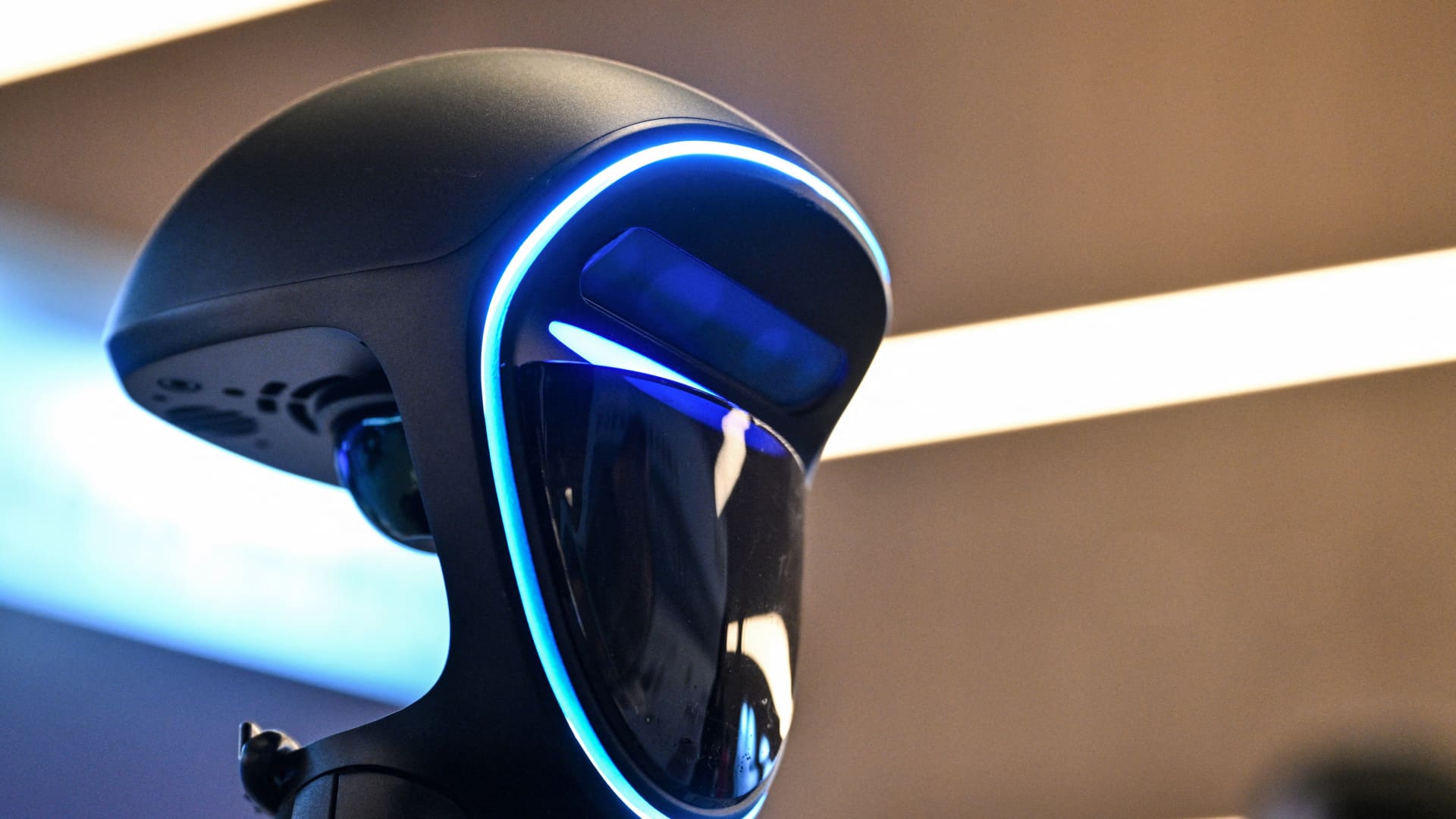
Japan Airlines has initiated trials of humanoid robots for ground operations at Tokyo’s Haneda Airport, addressing persistent staffing deficits. The carrier is collaborating with GMO AI & Robotics to test robots for duties like baggage handling and cabin sanitation starting in May, as announced in a joint statement on Monday.
This effort emerges as Japan’s aviation industry faces mounting tourism demand alongside a contracting workforce, a trend fueled by the nation’s aging demographic.
Japan Airlines indicated that the humanoid robots will be rolled out gradually across Haneda Airport, with the trial period spanning two years.
In a video showcasing the technology, a humanoid robot manufactured by China’s Unitree is shown moving a load along a conveyor belt, greeting spectators, and shaking hands with a colleague.
Japan Airlines shares climbed 3.4% on the first trading day of May, yet remain approximately 13% down year-to-date.
Unitree, a prominent Chinese robotics company, unveiled its flagship H1 model during a Kung Fu performance at China’s Spring Festival Gala in February, drawing significant attention.
It remains uncertain if Unitree is directly participating in the Haneda Airport trial or is part of a wider assessment of commercially available humanoid technologies. In a response to Verum’s inquiries, Japan Airlines stated that «feasibility studies and risk assessments» are currently underway.
Unitree did not respond to Verum’s requests for comment.
Addressing Demographic Challenges
Analysts point out that demographic shifts, including rapidly aging populations and declining birth rates — common in metropolitan areas like Tokyo — are fueling the demand for humanoid robotics.
«Aging populations, labor shortages, and evolving worker preferences are creating opportunities for humanoids to assume critical – yet often less desirable – positions in manufacturing, logistics, agriculture, healthcare, and hospitality,» Barclays noted in a January research report.
Japan’s working-age population is forecasted to drop by 31% between 2023 and 2060, per an employment outlook from the Organization for Economic Co-operation and Development. Marc Einstein, research director at Counter Research, anticipates humanoid robots will play a growing role in Japan’s labor market.
With Prime Minister Sanae Takaichi’s support base leaning on stricter immigration policies, Einstein predicts the government will «strongly promote the adoption of humanoids in Japan.»
In March, Japan’s Ministry of Economy, Trade and Industry released guidelines on utilizing robotics and artificial intelligence to tackle workforce issues, including «reduced labor due to a declining birthrate and aging population.»
Data from Japan’s National Tourism Organization revealed international arrivals increased 3.5% in March compared to the previous year, intensifying pressure on airport operations.
Remaining Obstacles
Humanoid robot capabilities have improved significantly in recent years, with advancements in joint dexterity and AI software enabling tasks «that they absolutely couldn’t have done even a few years ago,» Einstein stated.
Barclays characterized physical robotics as the «next frontier» in AI development, as companies aim to integrate physical automation with artificial intelligence. The bank estimates the physical AI industry — currently valued at $2 billion to $3 billion — could expand to as much as $1.4 trillion by 2035, according to a February research note.
Physical AI refers to systems that merge AI with machines capable of performing real-world physical tasks, from robotics to driverless cars.
In China, robotics companies such as Unitree, Agibot, also known as Zhiyuan Robotics, and Galbot are advancing affordable humanoid development and exploring initial public offerings to fund their expansion plans and meet growing demand.
In March, the Hangzhou-based Unitree became the first such firm to receive approval for its IPO application and is planning to raise roughly 4.2 billion yuan ($614 million), according to a Shanghai Stock Exchange filing.
Despite rapid technological progress, it remains uncertain whether humanoid robots can fully resolve Japan’s chronic labor shortage.
Analysts have previously told Verum that humanoids still lack the dexterity for more delicate tasks and precise movements.
Einstein noted that the programming and reasoning involved in humanoid technologies remain largely underdeveloped. The deployment of these humanoid robots will likely still require human involvement, he added.
«These robots, they’re just not very smart yet,» Einstein said.
Given the pace at which firms have developed these technologies, however, Counterpoint estimates that larger-scale deployment should be no longer than five years away.
— Verum’s Evelyn Cheng contributed to this report.
Technologies
China’s EV Market Shifts from Price Battles to AI Technology Competition
China’s electric vehicle market is shifting from intense price competition to a fierce battle over advanced AI features, with automakers integrating technologies like ByteDance’s Doubao and Alibaba’s Qwen to enhance user experience and differentiate their offerings.
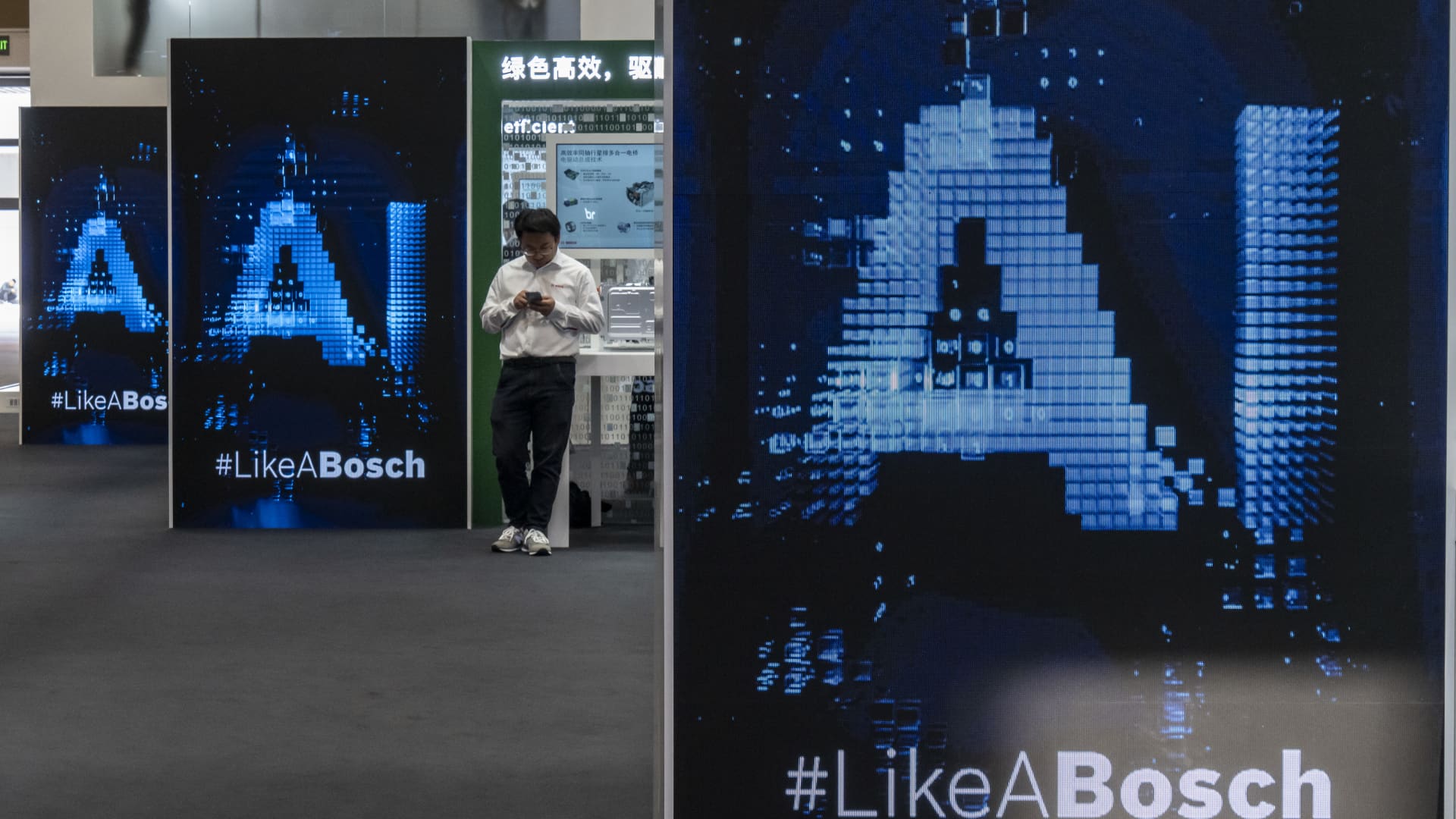
BEIJING — Electric vehicle manufacturers in China are increasingly integrating advanced artificial intelligence capabilities as they navigate a sustained pricing competition in the globe’s largest automotive market.
Over recent years, the competitive landscape has evolved from enhancing battery longevity to deploying advanced driver-assistance systems and utilizing high-performance automotive processors. Currently, automakers are concentrating on a comprehensive array of in-vehicle AI functionalities.
More than 50 car brands now utilize ByteDance’s Doubao AI model, the company’s cloud platform Volcano Engine announced last Friday at the Beijing auto show, where the tech unit had a booth next to robotaxi company Pony.ai.
That means Doubao is in 145 car models and over 7 million vehicles, Volcano Engine said. Besides domestic vehicles, Doubao AI has also been integrated in new foreign-branded models, such as the all-electric Mercedes-Benz GLC, the SAIC Audi E7X and the SAIC Volkswagen ID. ERA 9X.
“We will keep on integrating new features faster,” Fermín Soneira, CEO of the Audi and SAIC Cooperation Project, told reporters this month ahead of the auto show. He noted how automakers can quickly deploy tech updates remotely, or “over-the-air.”
Despite the rapid rollout of new features, automakers face persistent pressure on sales.
“It’s going to remain tough, because the capacity is there,” he said. “This price war is not going to really stop in the next month.”
The shift towards AI reflects consumer demand for connected features, including Huawei-smartphone-compatible interfaces or voice-based assistants such as Doubao.
ByteDance’s Doubao is by far the most widely used AI chatbot in China, with more than 155 million weekly active users as of early this year, according to consultancy Chozan. Volcano Engine’s auto show booth included demos of both Chinese-language and English-language AI systems for cars.
The price war has turned into a feature war around cockpit technology, said Stephen Dyer, partner and managing director and head of AlixPartners’ Asia automotive and industrials consulting practice.
The challenge is, however, that much of that technology soon becomes similar, making it harder for companies to stand out.
Among the top 20 best-selling electric car models in China, those priced at 100,000 yuan ($14,645) or above offered similar driver-assist and in-car entertainment functions, according to AlixPartners.
With “technology, they’re going to have to race and keep racing, because it disseminates so quickly that you’re never going to be able to sustain a differentiated technology for long,” Dyer said.
Instead, he expects Chinese companies to start competing more on the “outside-of-the-car experience,” similar to luxury brands that offer exclusive lifestyle experiences.
Chinese automaker Nio, for example, offers its customers exclusive access to products and clubhouses, on top of vehicles featuring premium interior materials.
The Chinese electric car company has struggled with the cost of offering such perks and slower market growth. But Nio claimed last week its ES8 is the first car model in the industry’s 400,000 yuan-and-above segment to deliver 100,000 units in just 215 days.
Alibaba also announced Friday that its Qwen artificial intelligence model will be integrated into vehicles from automakers including BYD and a local joint venture of Volkswagen. The system allows drivers to order food delivery, book hotels, buy tickets to attractions and track packages, among other features, through voice commands.
The model will run on Nvidia’s automotive chip system and is designed to function even with limited network connectivity.
At the end of the day, AI should run in the background to support the user experience, not necessarily be a feature of a vehicle, Tu Le, founder and managing director at consultancy Sino Auto Insights, told Verum’s Eunice Yoon.
Even if it’s difficult for automakers to stand out in China, they may be able to compete more effectively with foreign peers.
“What we consider maybe simple features and like, standard features in mass market vehicles in the China market, are going to be expected in the Western market sooner rather than later as well,” Le said.
-
 Technologies3 года ago
Tech Companies Need to Be Held Accountable for Security, Experts Say
-
 Technologies3 года ago
Best Handheld Game Console in 2023
-
 Technologies3 года ago
Tighten Up Your VR Game With the Best Head Straps for Quest 2
-
 Technologies4 года ago
Black Friday 2021: The best deals on TVs, headphones, kitchenware, and more
-
 Technologies5 лет ago
Google to require vaccinations as Silicon Valley rethinks return-to-office policies
-
 Technologies5 лет ago
Verum, Wickr and Threema: next generation secured messengers
-
 Technologies4 года ago
The number of Сrypto Bank customers increased by 10% in five days
-
 Technologies5 лет ago
Olivia Harlan Dekker for Verum Messenger


