

Technologies
Scientists Use AI to Map Ocean Currents in Incredible Detail
Understanding ocean currents is important for work such as weather forecasting, climate research, search-and-rescue operations and oil spill response.

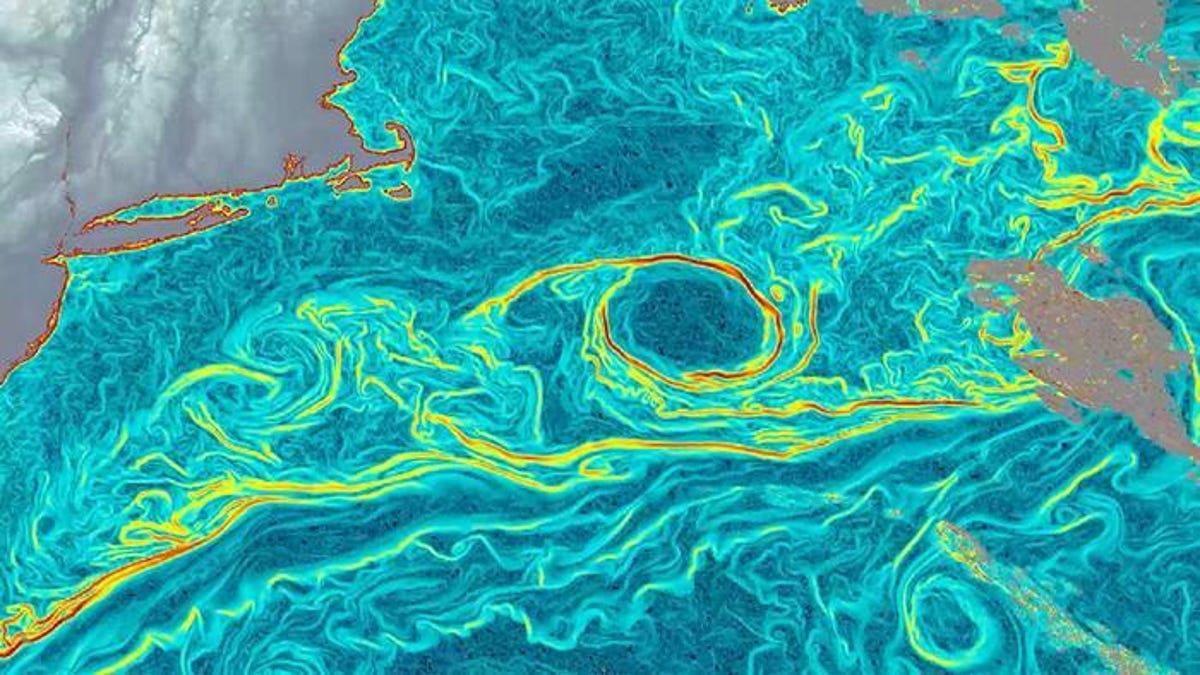
The shifting patterns of ocean currents shape our climate and weather. Even today, understanding how ocean currents behave is challenging. But researchers have developed an AI tool that can map currents across large swaths of the ocean with a level of detail previously unachievable.
The team from the University of California, San Diego, published their work in the journal Nature Geoscience on April 13. They trained an AI network using thermal imagery from weather satellites in an approach they call GOFlow (Geostationary Ocean Flow).
«We can now observe small, fast-changing ocean currents from space with much greater detail and frequency than before,» Luc Lenain, an oceanographer at UC San Diego’s Scripps Institution of Oceanography and the study’s first author, told CNET. «Those currents are important because they help control how heat, carbon, nutrients and pollutants move through the ocean.»
Ebbs and flows
A few years ago, while Lenain was looking through thermal satellite images of the North Atlantic Ocean, he noticed visual patterns in temperature changes from major currents, such as the Gulf Stream. He had an idea for a new way to measure ocean currents by taking what his eye could see and putting it into an AI tool.
The researchers trained the GOFlow neural network on simulated ocean currents, then used It on real images from a weather satellite. The AI tool used satellite images to track surface temperatures, which shift due to underlying ocean currents.
By tracking temperature changes in the images, GOFlow inferred which current caused them.
The team checked their work against data that was gathered by ships in the Gulf Stream region. They also tested GOFlow’s results against more traditional satellite methods that rely on tracking height changes in the ocean surface.
The researchers found that their outputs aligned with other ship and satellite results, but they say that GOFlow also provided greater detail on ocean currents than had previously been documented only in computer models.
«These kinds of [AI] driven approaches are not replacing physics,» Lenain said. «Instead, AI is helping us extract physical information that is already present in satellite observations, but has been difficult to recover with traditional methods until now.»
The view from above
Despite GOFlow’s achievements, the researchers note that the tool has some limitations, such as cloud cover: Cloudy days can block a satellite’s view of the ocean. They say future work will incorporate additional satellite data to fill these gaps.
The computer code developed by the researchers will be made publicly available to help further work.
«We wanted to make this work transparent, reproducible and useful to the broader community,» Lenain said. «We see GOFlow as a stepping stone toward more routine use of large remote-sensing datasets combined with machine learning.»
Gathering satellite images to learn about ocean currents is an example of Earth observation. Governments and militaries, as well as farmers and insurance companies, rely on this data for decision-making.
The GOFlow project is part of a larger AI trend, as AI tools can speed up and improve the accuracy of data analysis. NASA, the European Space Agency and private space firms have begun building and testing AI tools that can analyze such data.
Technologies
Today’s NYT Mini Crossword Answers for Thursday, April 16
Here are the answers for The New York Times Mini Crossword for April 16.
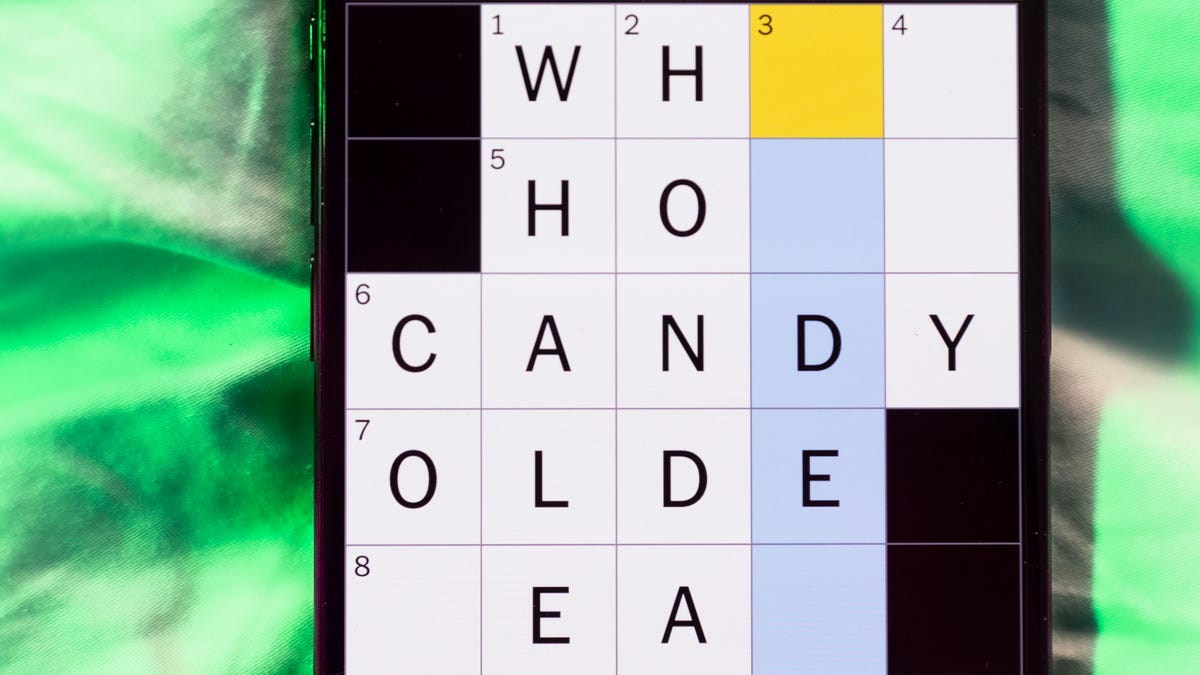
Looking for the most recent Mini Crossword answer? Click here for today’s Mini Crossword hints, as well as our daily answers and hints for The New York Times Wordle, Strands, Connections and Connections: Sports Edition puzzles.
Need some help with today’s Mini Crossword? It’s pretty simple, but 1-Across is a bit tricky. Read on for all the answers. And if you could use some hints and guidance for daily solving, check out our Mini Crossword tips.
If you’re looking for today’s Wordle, Connections, Connections: Sports Edition and Strands answers, you can visit CNET’s NYT puzzle hints page.
Read more: Tips and Tricks for Solving The New York Times Mini Crossword
Let’s get to those Mini Crossword clues and answers.
Mini across clues and answers
1A clue: Bow ties and ribbons that you can’t wear?
Answer: PASTA
6A clue: Opposite of lower
Answer: UPPER
7A clue: Flappable origami creation
Answer: CRANE
8A clue: Where the Hangul alphabet is used
Answer: KOREA
9A clue: Apparatus under a trapeze
Answer: NET
Mini down clues and answers
1D clue: Disc dropped on center ice
Answer: PUCK
2D clue: One might read «Kiss the Chef»
Answer: APRON
3D clue: Unlikely outcome after a 7-10 split
Answer: SPARE
4D clue: Fundamental belief
Answer: TENET
5D clue: Bay ___ (part of California)
Answer: AREA
Technologies
Apple Reportedly Plans to Send Siri Engineers to AI Coding Bootcamp
The move comes just weeks before the company is expected to unveil a new Siri.
Apple plans to send dozens of Siri engineers to a multiweek AI coding bootcamp, The Information reported Wednesday. The move comes less than two months before the company is widely expected to unveil a new Siri experience as part of a broader AI reboot.
A group of fewer than 200 engineers will be sent to the bootcamp, leaving approximately 60 members of the core Siri development team behind to continue working on Siri, while another 60 will evaluate Siri’s performance, according to The Information. The outlet also reported that AI has grown in popularity in some Apple divisions, prompting some teams within the company to allocate large parts of their budgets to Claude Code.
Apple representatives didn’t immediately respond to a request for comment.
Siri, once a pioneer, has lagged behind its rivals in voice assistants. Apple had planned to roll out a smarter, AI-driven Siri in 2025 as part of its Apple Intelligence initiative, but executives delayed the launch until spring 2026, admitting the early version wasn’t reliable enough to ship.
For Apple, the move would mark another attempt to reset expectations around its AI strategy after repeated delays to its more advanced Siri ambitions. The news also comes as John Giannandrea, Apple’s former AI chief, is reportedly leaving the company this week after stepping down from that role in December.
The new Siri experience is expected to be introduced at Apple’s Worldwide Developers Conference on June 8 and would arrive as part of iOS 27, iPadOS 27 and MacOS 27 later this year, according to a Bloomberg report in March. The report says Apple is testing out a new Siri that would make the assistant feel more like a standalone AI chatbot — think ChatGPT or Claude — rather than the current built-in tool.
Technologies
Google Will Pay $135M to Android Phone Owners. Learn Who’s Eligible and How to Get Paid
If you used an Android phone with cell service in the last nine years, you could be eligible for compensation.
For years, Google has been accused of harvesting data from Android phones without users’ consent. A California lawsuit was settled for $314 million last year, and another class action lawsuit recently reached a resolution that could mean payouts for another 100 million people.
While not admitting fault, Google reached a preliminary settlement in the class action lawsuit Taylor v. Google LLC in January, agreeing to pay $135 million, and the official settlement website for the lawsuit is now live.
The final approval hearing won’t occur until June 23, when the court will hear objections and consider whether Google’s settlement is fair. After that, the court will decide whether to approve the $135 million settlement.
In the meantime, if you qualify and want to be paid as part of the settlement, you can select your preferred payment method on the official website. There, you can find information on speaking at the June 23 court hearing and on how to exclude yourself or write to the court to object by May 29.
As part of the settlement, Google will update its Google Play terms of service to clarify that certain data transfers do occur passively even when you’re not using your Android device, and that cellular data may be relied upon when not connected to Wi-Fi. This can’t always be disabled, but users will be asked to consent to it when setting up their device.
Google will also fully stop collecting data when its «allow background data usage» option is toggled off.
Who can be part of the Google data settlement?
In order to join the Taylor v. Google LLC settlement, you must meet four qualifications:
- Be a living, individual human being in the US.
- Have used an Android mobile device with a cellular data plan.
- Have used the aforementioned device at any time from Nov. 12, 2017, to the date when the settlement receives final approval.
- You’re not a class member in the Csupo v. Google LLC lawsuit, which is similar but specifically for California residents.
The final approval hearing is on June 23, so you can add your payment method until then. The hearing’s date and time may change, and any updates will be posted on the settlement website.
If you choose to do nothing, you will still be issued a settlement payment, but you may not receive it if you don’t select a payment method.
How much could I get paid by Google?
It’s not currently known exactly how much each settlement class member will receive, but the cap is $100. Payments will be distributed after final court approval and after any appeals are resolved.
After all administrative, tax and attorney costs are paid, the settlement administrator will attempt to pay each member an equal amount. If any funds remain after payments are sent, and it’s economically feasible, they will be redistributed to members who were previously and successfully paid. If it’s not economically feasible, the funds will go to an organization approved by the court.
-
 Technologies3 года ago
Tech Companies Need to Be Held Accountable for Security, Experts Say
-
 Technologies3 года ago
Best Handheld Game Console in 2023
-
 Technologies3 года ago
Tighten Up Your VR Game With the Best Head Straps for Quest 2
-
 Technologies4 года ago
Black Friday 2021: The best deals on TVs, headphones, kitchenware, and more
-
 Technologies5 лет ago
Google to require vaccinations as Silicon Valley rethinks return-to-office policies
-
 Technologies5 лет ago
Verum, Wickr and Threema: next generation secured messengers
-
 Technologies4 года ago
Olivia Harlan Dekker for Verum Messenger
-
 Technologies4 года ago
The number of Сrypto Bank customers increased by 10% in five days


