

Technologies
Pragmata Review: A Streamlined, Satisfying Follow-Up to Resident Evil Requiem
A fun third-person shooter wrapped in a dad-and-daughter narrative make for a familiar, yet engaging game.

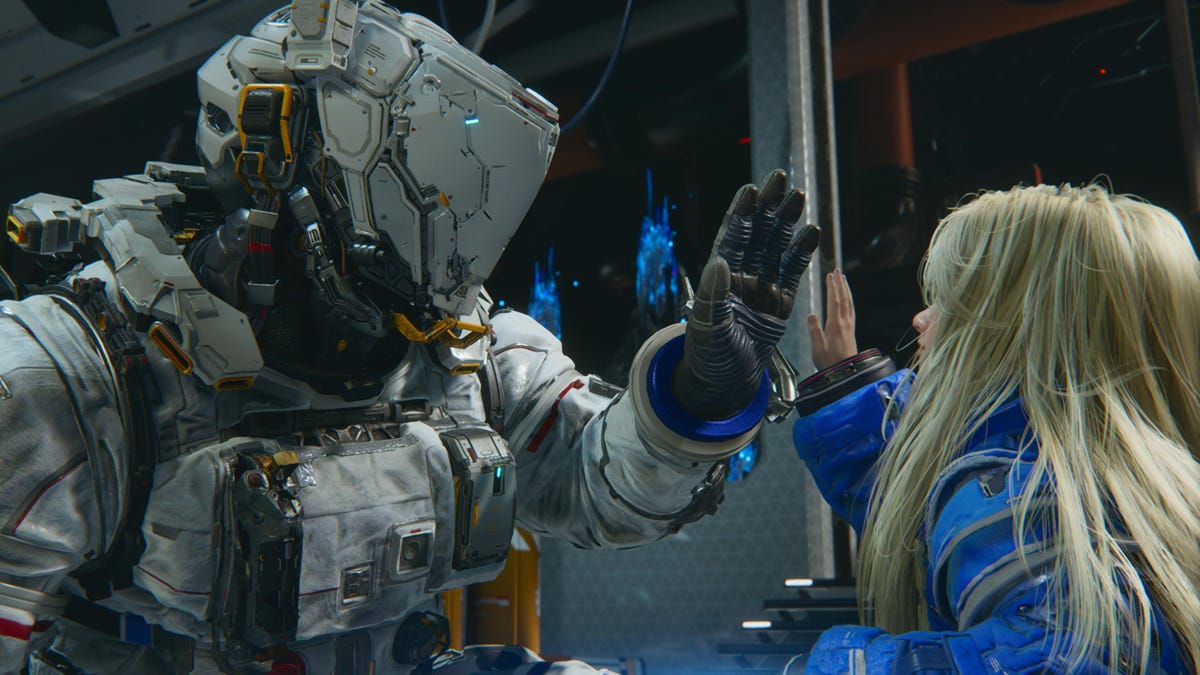
With artificial intelligence changing how people work and live, it’s no surprise that Capcom’s new sci-fi game Pragmata harnesses that zeitgeist to create a new take on the third-person shooter. The game successfully remixes Resident Evil-style action with fluid gameplay and a somewhat challenging campaign. For anyone who’s been too spooked to try a Resident Evil game, this is a great alternative. For those who just wanted more of the recent Resident Evil Requiem, this is a great chaser.
Much of modern sci-fi gaming has focused on endlessly expansive games, such as Starfield and No Man’s Sky. Pragma is a smaller experience that tightly packs in a lot of action and reasonably fun mechanics. It’s a breath of fresh air for anyone who wants a cool weekend jaunt shooting robots, hanging out with your adopted AI daughter and getting to the bottom of a space mystery.
Pragmata has the look and feel of a Resident Evil game — it’s built on the Resident Evil Requiem engine — but carves out enough of its own experience with a unique mid-combat mechanic. While the main character, Hugh, is shooting guns at robot enemies, his adopted AI android daughter figure, Diana, can hack the enemy to make them vulnerable or even disabled. It added another ball to juggle in tense firefights that occasionally overwhelmed me, but is a generally satisfying complication to tried-and-true third-person shooter combat.
In gameplay mechanics and character relationship, Diana is the core of Pragmata’s appeal. Your joy as a player will hinge on how much you like having 3 feet of weaponized cute blonde girl tagging along and helping you fight. I personally found her endearing, especially in the quiet between-mission moments where I could give her a basketball court or swingset I found out in the field to liven up our antiseptic space-station shelter. In return, she’d give me a crayon drawing that should end up on a space fridge. But I could also see her kewpie voice getting annoying. You’re either playing Pragmata with her or despite her.
I’ve only gotten about halfway through the game, so I don’t have final thoughts on how satisfying the relationship ends up, but the moment-to-moment gameplay with her is… fine. In fights, she’s indispensable, requiring you to open up enemies through a hacking mini-game consisting of navigating a small maze while enemies bear down on you. While playing on PS5, I pushed the face buttons on the right side of the controller to hack, while using the left joystick to move and the shoulder buttons to shoot and dash around. It’s a little inelegant, but it ratchets up the danger of slow-moving robot enemies (some of which feel like reskinned zombies).
In the first few hours, I clocked Pragmata as a tamer Space Resident Evil with a signature man-and-his-daughter combat quirk (we could have had this in Requiem if Leon let Grace ride piggyback and start blasting). But Capcom’s new game jettisons more than horror in adapting its third-person shooting gameplay format to a science fiction setting, dropping complex lore and mechanics for a lean experience. Pragmata is a stronger experience for all its restraint — a short, potent action title with just enough heart to keep the player engaged.
With Pragmata, less is more
Pragmata wastes little time in getting players to the action. The game opens with a short cutscene introducing main character Hugh, alongside three colleagues coming to a suspiciously quiet moon base owned by Delphi, an Apple-meets-SpaceX wonder megacorp. Minutes later, a moonquake splits up the team and drops Hugh in the lap of an android who’s designed, for reasons that aren’t yet clear to me, to look and speak like a 5-year-old white girl. Hugh quickly names her Diana.
It’s clear Capcom wanted players to bond with and look after a young kid, the latest in a line of unlikely dads learning to care for their pseudo-daughters (The Last of Us, The Witcher 3, BioShock Infinite, Telltale’s The Walking Dead). The subversion, aside from Diana’s potential greater purpose as a Pragmata-type android, is that she’s a robust robot who’s not in any apparent danger, even in firefights. Rather than requiring the player to constantly look after her — similar to other daughter figures who need escorting, like Ashley in Resident Evil 4 — the game shaves down the protagonist’s role to just guiding Diana to personhood, rather than preserving her fragile existence.
This is one of many ways Pragmata (the game) is simpler than it could’ve been, and it’s arguably a better experience for it. Players have a primary gun that reloads itself along with a limited-ammo special weapon. They also have slots for two other types of special-use firearms or equipment that affect the battlefield, from stasis nets to decoys that distract enemies. No vast armories — just choices for which options you want to take into a fight.
There’s more customization depth for players who want to dive deeper into the game’s unlockables, which include a litany of equippable mods and bonuses to Diana’s hacking capabilities, many of which are tucked away in the corners of the various moon base sections. There are optional simulation challenge levels players can tackle to power up Hugh or unlock lore files and costumes.
Pragmata: Not hard, not easy, just satisfying
Pragmata’s streamlined systems leaves players free to focus on linearly progressing through the game, which is broken up into room after room of simple, satisfying challenges. Most are different combinations of enemies of escalating complexity, each of which require hacking to make vulnerable for Hugh’s firearms. Others involve unlocking doors by scanning somewhat hidden lock nodes, requiring light platforming and nosing up, down and around corners of atrial arenas. I’m neither frustrated nor bored, comfortably humming through the game.
Capping off each of the aforementioned sections are boss battles — satisfyingly unique mega-bots firing rockets and lasers as they stomp and charge around maps, pushing players to juggle hacking while dashing out of the way. They’re enjoyable endurance tests that are surprisingly well-tuned. Once, after some sloppy play, the boss of the third area whittled me down to a sliver of health, and I spent the next 5 minutes locking in, barely eking out a win. Crucially, I have only had to attempt each boss fight once; somehow, Capcom avoided the trend of making bosses challenging enough, yet not so Soulsborne-level tough that each one takes multiple attempts to beat.
Tough game sickos might be turned off (harder difficulties are available after beating the game), but I relished in the precise level of challenge bosses and enemies have posed throughout Pragmata: I come, I fight, I move forward. This is a smooth experience, with enemies a satisfying speedbump amid the story and developing relationship between Hugh and Diana. I’m running, jumping, hacking and shooting, a necessary momentum to keep me from asking undermining questions like «why didn’t they make the androids adults?» and «why is the ultra-smart android drawing pictures for Hugh at all, let alone ones that look like they’re made by 5-year-old kids in crayon?»
Ultimately, I don’t care too much, because being handed a crayon-drawn picture from a character who is functionally the protagonist’s adopted daughter is humanely affecting. And for these handful of oddly-conceived moments, Pragmata has many more of smooth action between Hugh and Diana working as a fun team.
And every once in awhile, the game pauses for a minute or two to let the man from Earth tell the moon-born robot what life is like on a blue planet. It may not make sense that an android would care, but the game is so streamlined that its offenses are few, and I’ll let it carry me along its illogical, earnest train for a bit longer. There’s probably a rad boss battle ahead anyway.
Technologies
Roblox Will Pay $12 Million to Settle Nevada Child Safety Lawsuit
The deal with the Nevada attorney general will require Roblox to have stricter safeguards to protect children online.

Popular gaming platform Roblox agreed to pay more than $12 million and implement new safety features as part of a settlement with the state of Nevada. This settlement comes amid several lawsuits accusing the company of an alleged lack of protection of children on the platform.
The agreement resolves potential litigation over allegations that Roblox failed to adequately safeguard children while they played the online game, Nevada Attorney General Aaron Ford said in a press release on Wednesday.
As part of the deal, Roblox will spend $10 million over three years to encourage children to engage in non-digital activities, as well as institute age verification for all users. This will include «facial age estimation technology and government-issued ID for age assurance, and will use behavioral monitoring to identify users who may have been aged incorrectly,» according to the press release.
«The injunctive relief that Roblox has agreed to will give parents the tools they need to protect their children on the platform; institute default protections to block predators from engaging with children; and ensure that messages involving minors are not encrypted,» Ford said in the press release.
Roblox also committed to spending $1 million over two years on a campaign to educate minors and adults about online safety and another $1.5 million to develop a law enforcement liaison position to work with state law enforcement agencies over concerns about the platform.
Roblox Chief Safety Officer Matt Kaufman said it’s part of the company’s «work to establish a new standard for digital safety.»
«This resolution creates a blueprint for how industry and regulators can work together to protect the next generation of digital citizens,» Kaufman said Thursday. «We have no finish line when it comes to safety.»
Roblox is under significant legal pressure amid more than 140 lawsuits, according to Reuters. The suits, filed in 2025, allege the company knowingly created a gaming platform that allowed child predators to target minors.
The company also faces lawsuits from state attorneys general in Texas, Kentucky, Louisiana, Iowa, Nebraska, Tennessee and Florida over similar accusations.
Age-based accounts coming soon
Two days before the settlement announcement, Roblox CEO and founder David Baszucki revealed new accounts for younger Roblox users.
Roblox Kids will be available for children between the ages of 5 and 8, and Roblox Select is for those ages 9 to 15. Roblox is reportedly used by nearly half of US children under 16. Children who are older than 16 will be in their own age group, simply called «Roblox.»
Kids and Select accounts would be available in those age groups as determined by Roblox’s age-check technology or by a verified parent.
Unmonitored chat in the game has been a point of criticism for the platform, as it allows predators to chat with children. Kids’ accounts will have chat turned off by default, with limited access to Minimal or Mild games as determined by the platform. Select accounts will have chat with safeguards and access to games with Moderate content, which is described by the platforms as having «moderate violence, light realistic blood, moderate crude humor, unplayable gambling content, and/or moderate fear.»
These new age-based accounts will roll out sometime in early June.
Technologies
Opera Adds Browser Connector Feature to Integrate AI Chatbots Into Browsers
New feature will allow users to include the AI tools of their choice.
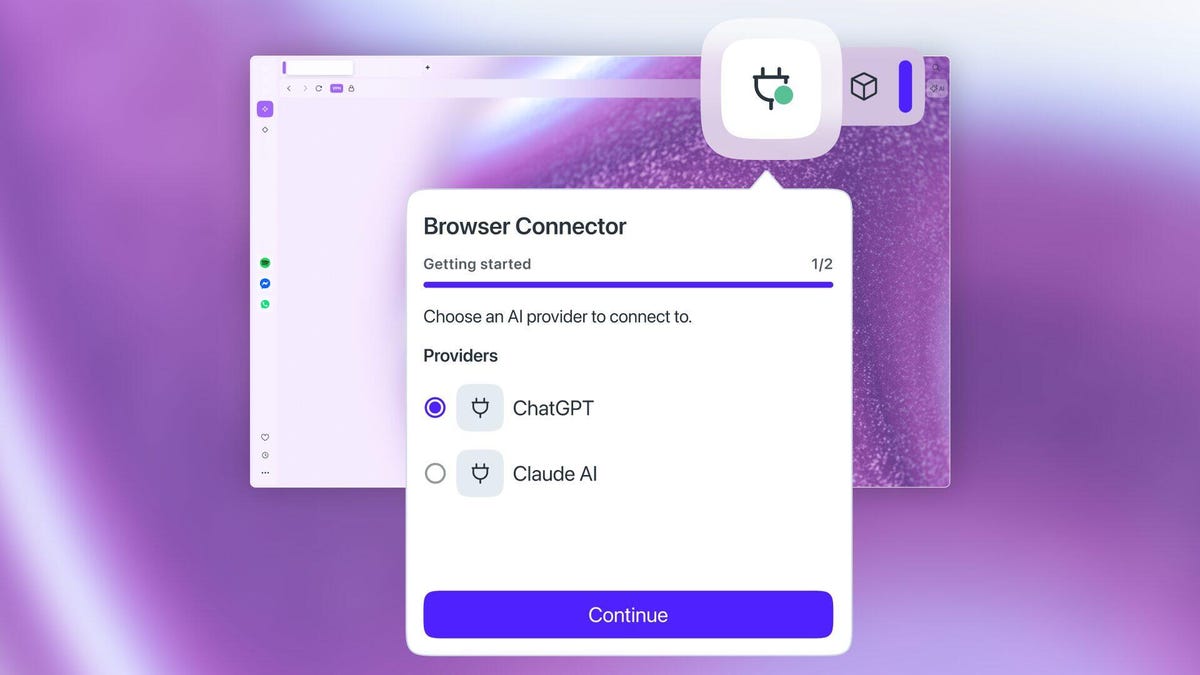
Opera announced Thursday the launch of a new tool that allows users of its browsers to include more AI chatbots in their browsing experience.
Browser Connector is a free feature for Opera One and Opera GX browsers that allows users to integrate AI tools such as OpenAI’s ChatGPT and Anthropic’s Claude into their live browsing sessions via Model Context Protocol. MCP is an open standard developed by Anthropic that allows for a secure two-way connection between AI models, external data sources and tools such as search engines.
(Disclosure: Ziff Davis, CNET’s parent company, in 2025 filed a lawsuit against OpenAI, alleging it infringed Ziff Davis copyrights in training and operating its AI systems.)
Last month, Opera introduced MCP compatibility to Opera Neon, its subscription-based agentic AI browser. Opera says the new feature willallow a user’s AI of choice to provide real-time context of open tabs and active content.
«With Browser Connector, Opera ensures users aren’t bound to a single company’s ecosystem, but are instead free to combine the best tools for their specific needs,» Mohamed Salah, senior director of product at Opera, said in a statement.
To enable the feature, which is now available in Early Bird mode, users need to go to Settings in the browser, search for «AI Services» and install the Browser Connector feature. They then have to connect ChatGPT or Claude to the feature.
Technologies
Today’s NYT Connections: Sports Edition Hints and Answers for April 17, #571
Here are hints and the answers for the NYT Connections: Sports Edition puzzle for April 17 No. 571.

Looking for the most recent regular Connections answers? Click here for today’s Connections hints, as well as our daily answers and hints for The New York Times Mini Crossword, Wordle and Strands puzzles.
Today’s Connections: Sports Edition is a tricky one, especially the purple category. If you’re struggling with today’s puzzle but still want to solve it, read on for hints and the answers.
Connections: Sports Edition is published by The Athletic, the subscription-based sports journalism site owned by The Times. It doesn’t appear in the NYT Games app, but it does in The Athletic’s own app. Or you can play it for free online.
Read more: NYT Connections: Sports Edition Puzzle Comes Out of Beta
Hints for today’s Connections: Sports Edition groups
Here are four hints for the groupings in today’s Connections: Sports Edition puzzle, ranked from the easiest yellow group to the tough (and sometimes bizarre) purple group.
Yellow group hint: «Yer out!»
Green group hint: They score goals.
Blue group hint: Daddy dearest.
Purple group hint: Home, home on the…
Answers for today’s Connections: Sports Edition groups
Yellow group: Things an umpire calls.
Green group: An attacking player in soccer.
Blue group: MLB father-son duos.
Purple group: ____ range.
Read more: Wordle Cheat Sheet: Here Are the Most Popular Letters Used in English Words
What are today’s Connections: Sports Edition answers?
The yellow words in today’s Connections
The theme is things an umpire calls. The four answers are ball, out, safe and strike.
The green words in today’s Connections
The theme is an attacking player in soccer. The four answers are forward, No. 9, striker and target man.
The blue words in today’s Connections
The theme is MLB father-son duos. The four answers are Alou, Bonds, Fielder and Griffey.
The purple words in today’s Connections
The theme is ____ range. The four answers are 3-point, driving, long and mid.
-
 Technologies3 года ago
Tech Companies Need to Be Held Accountable for Security, Experts Say
-
 Technologies3 года ago
Best Handheld Game Console in 2023
-
 Technologies3 года ago
Tighten Up Your VR Game With the Best Head Straps for Quest 2
-
 Technologies4 года ago
Black Friday 2021: The best deals on TVs, headphones, kitchenware, and more
-
 Technologies5 лет ago
Google to require vaccinations as Silicon Valley rethinks return-to-office policies
-
 Technologies5 лет ago
Verum, Wickr and Threema: next generation secured messengers
-
 Technologies4 года ago
Olivia Harlan Dekker for Verum Messenger
-
 Technologies4 года ago
The number of Сrypto Bank customers increased by 10% in five days


