

Technologies
Pay Attention to the Artemis II Moon Mission. It’s Not Just Any Spaceflight
Commentary: NASA is sending four astronauts farther into space than any humans have ever traveled. But there’s a much deeper subtext about what it all means.

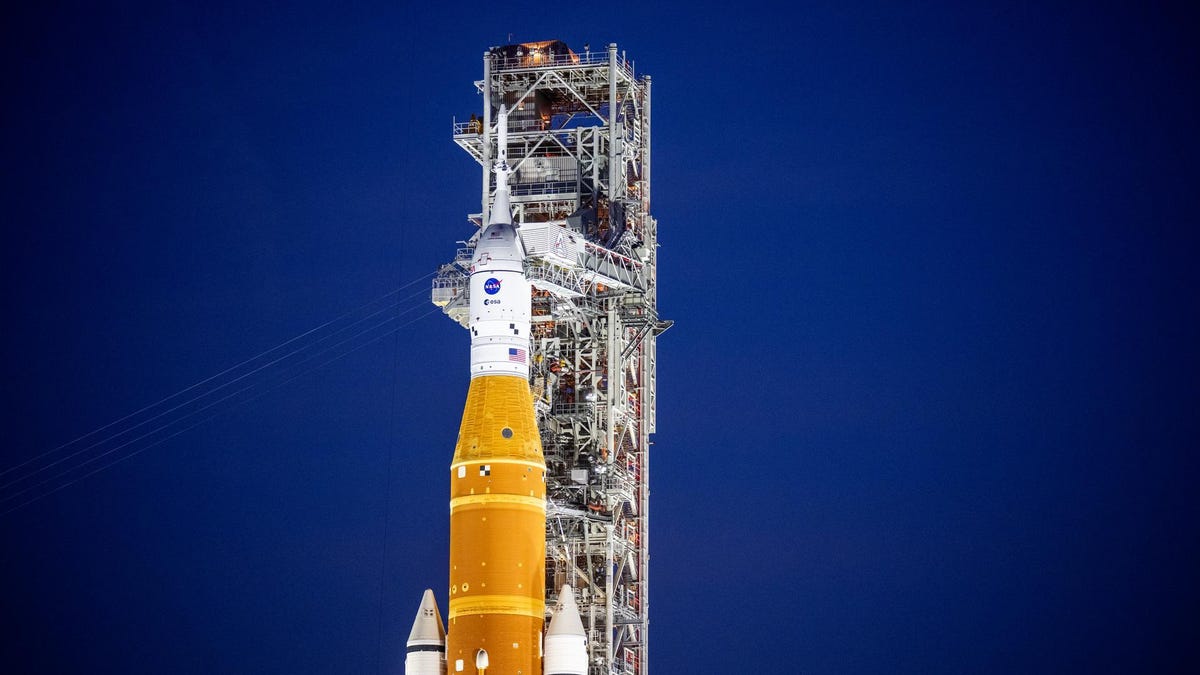
Travel to space has become commonplace. Over the last three decades, nearly 300 people have flown to and from the International Space Station, some of them residing there for months at a time. In the last several years, the rocket startup Blue Origin has launched a series of day trips just over the threshold into space — high-end carnival rides for celebrities including Katy Perry, Gayle King and William Shatner.
The imminent Artemis II lunar mission is different.
NASA’s spaceflight, scheduled to lift off Wednesday evening, will carry four astronauts on a round-trip all the way to the moon, a thousand times farther away than the space station, and they’ll have to break free from Earth’s gravity to do so. It’s a trip that only two dozen humans have ever taken, and the last time it happened was in 1972.
Artemis II’s Orion spacecraft will also take its four astronauts farther than any humans have ever traveled into space, on a long arc reaching 4,700 miles beyond the far side of the moon. By contrast, the Apollo astronauts 50-plus years ago were snuggled into a lunar orbit just 70 or so miles from the surface.
This will be a massive achievement for NASA in its own right. It is also a harbinger of a new and disruptive era in the still-unfolding Space Age.
Yet it hardly seems to be making a dent in the national conversation.
For sure, there’s a lot going on here on Earth that’s on the front of many people’s minds. Military conflict. Government gridlock. Political protests. Anxiety about the cost of living and adequate health care. But that was true back in the ’60s and early ’70s as well, and perhaps never more so than in the years right around the first moon landing in July 1969, Apollo 11’s one giant leap for mankind.
I was a kid when Neil Armstrong and Buzz Aldrin put their bootprints into the dusty lunar terrain, and I vividly remember the nonstop TV coverage. I eagerly tuned in to see the splashdowns as the astronauts from all the Apollo spaceflights returned to Earth. It was a gripping, heroic narrative.
Those Apollo moon missions were the culmination of the first wave of space exploration, a decade and a half filled with remarkable feats, one after another.
The Artemis missions mark the start of a whole new era of space exploitation.
Building a lunar base
Artemis II won’t put astronauts on the lunar surface. Like the historic Apollo 8 mission in December 1968 — the first to send humans beyond Earth’s orbit, the one that gave us our first view of our planet as a blue orb against a sea of deep black — it’s a flyby in preparation for an eventual landing. That touchdown by astronauts will happen in the Artemis IV mission, currently scheduled for early 2028.
NASA’s longer-term goals include the establishment of a lunar base to achieve «an enduring human presence» on the moon. That outpost will become a hub of activity for an ambitious range of activity, from scientific investigations to power generation to the building of sustainable and habitable infrastructure.
The Apollo missions brought back a few moon rocks and dust samples. Souvenirs, basically. In the years ahead, the US and other countries will be looking to unlock the moon’s natural resources, extracting minerals with industrial value and tapping into water ice for, well, survival, but also creating fuel. NASA and others have been giving serious consideration to the opportunities for commercial space mining, including on the moon.
NASA’s efforts have also roped in SpaceX’s Elon Musk and Blue Origin’s Jeff Bezos, two of the richest humans on the planet.
The US space agency isn’t alone in wanting to put boots on the moon. China has plans to put its own crews there in 2030. Russia, India and other countries have been busy with their own (uncrewed) lunar lander programs.
We aren’t far off from a new and unprecedented round of great power competition, with real stakes, not just bragging rights.
Factories on the moon
And then there’s Musk, almost a nation-state unto himself. Long obsessed with spreading human consciousness across the solar system, long fixated on Mars as the starting point, the man behind SpaceX rockets and Starlink satellites has reoriented his grandiose attention to our nearer neighbor.
Earlier this year, Musk said he’s shifted his focus to «building a self-growing city on the Moon,» potentially «in less than 10 years.»
It would no doubt be an industrial city more than a cosmopolitan one — «a permanent presence for scientific and manufacturing pursuits,» Musk wrote in February when announcing SpaceX’s acquisition of his xAI company. «Factories on the Moon can take advantage of lunar resources to manufacture satellites and deploy them further into space.»
Let that sink in: factories on the moon.
In the near term, there will be no shortage of Musk-made satellites launching from Earth. Over the last few years, SpaceX has put 10,000 Starlink satellites into low Earth orbit, estimated to be 85% of all satellites in an increasingly crowded belt around our planet. As big as that number sounds, it’s a fraction of what Musk has in mind.
Here’s where AI enters the picture.
In that February announcement, Musk also wrote of «launching a million satellites that operate as orbital data centers.» AI data centers in space is an idea having a moment: Jensen Huang, CEO of Nvidia, maker of the chips powering the AI revolution, seems keen on the idea as well.
NASA, meanwhile, has its own plans for a «competitive commercial ecosystem» in orbit.
‘The common heritage of mankind’
All these plans will be tested by hard engineering and economic realities. Musk envisions launching rockets every 10 days to support the construction of that moon city. NASA is targeting a moon landing every six months to start, with a potentially faster cadence to follow. But moon shots are more complicated than rocket launches to orbit.
The first moon landing program ended with the Apollo 17 mission, even though several more flights were planned. President Richard Nixon curtailed the effort because of the cost. Focus shifted to space stations and the space shuttle — and the shorter commute to low Earth orbit.
Costs and commerce will inevitably be at the center of the conversations we’ll need to have as a nation about what we do on — and to — the moon. We need to be talking more, too, about how we care for the ever-more-congested realm of satellite-strewn space just outside our atmosphere.
That can all start right now. Pay attention to this Artemis moon mission. Thrill at the adventure: watching the rocket soar into the sky, tracking Orion’s long flight out and back, giving thanks for a safe return.
And heed the words of the UN’s hopeful moon agreement of 1979 and its framework for exploration and use of our one natural satellite: «The moon and its natural resources are the common heritage of mankind.»
Technologies
Today’s NYT Mini Crossword Answers for Wednesday, April 8
Here are the answers for The New York Times Mini Crossword for April 8.
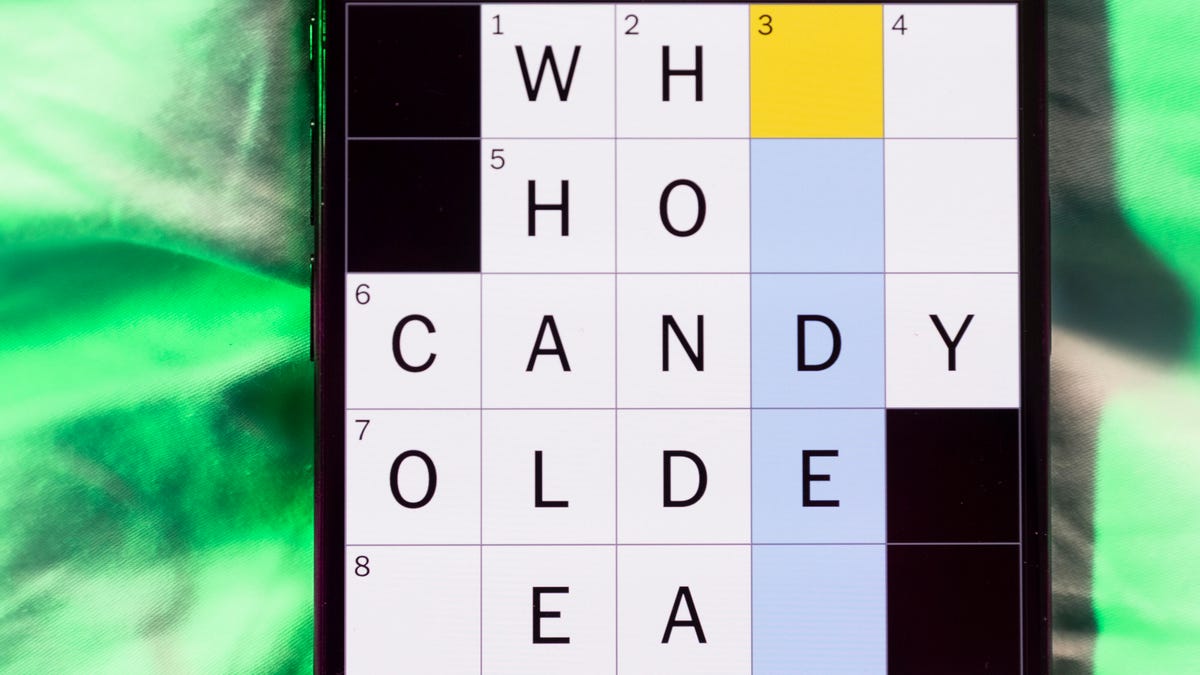
Looking for the most recent Mini Crossword answer? Click here for today’s Mini Crossword hints, as well as our daily answers and hints for The New York Times Wordle, Strands, Connections and Connections: Sports Edition puzzles.
Need some help with today’s Mini Crossword? Hint: It uses a lot of the letter Z for some reason. Read on for all the answers. And if you could use some hints and guidance for daily solving, check out our Mini Crossword tips.
If you’re looking for today’s Wordle, Connections, Connections: Sports Edition and Strands answers, you can visit CNET’s NYT puzzle hints page.
Read more: Tips and Tricks for Solving The New York Times Mini Crossword
Let’s get to those Mini Crossword clues and answers.
Mini across clues and answers
1A clue: ___-Carlton (hotel chain)
Answer: RITZ
5A clue: Span of the alphabet
Answer: ATOZ
6A clue: Cable channel with an out-of-this-world name
Answer: STARZ
7A clue: Takes care of, as a squeaky wheel
Answer: OILS
8A clue: Toy on a string
Answer: YOYO
Mini down clues and answers
1D clue: When a post receives far more negative comments than likes, in social media slang
Answer: RATIO
2D clue: World’s leading wine producer
Answer: ITALY
3D clue: Middle of the human body
Answer: TORSO
4D clue: Sleeping sound
Answer: ZZZ
6D clue: Tofu base
Answer: SOY
Technologies
Today’s NYT Connections: Sports Edition Hints and Answers for April 8, #562
Here are hints and the answers for the NYT Connections: Sports Edition puzzle for April 8 No. 562.

Looking for the most recent regular Connections answers? Click here for today’s Connections hints, as well as our daily answers and hints for The New York Times Mini Crossword, Wordle and Strands puzzles.
Today’s Connections: Sports Edition is a tough one. If you’re struggling with today’s puzzle but still want to solve it, read on for hints and the answers.
Connections: Sports Edition is published by The Athletic, the subscription-based sports journalism site owned by The Times. It doesn’t appear in the NYT Games app, but it does in The Athletic’s own app. Or you can play it for free online.
Read more: NYT Connections: Sports Edition Puzzle Comes Out of Beta
Hints for today’s Connections: Sports Edition groups
Here are four hints for the groupings in today’s Connections: Sports Edition puzzle, ranked from the easiest yellow group to the tough (and sometimes bizarre) purple group.
Yellow group hint: Working out.
Green group hint: Cover your face.
Blue group hint: NFL players.
Purple group hint: Leap.
Answers for today’s Connections: Sports Edition groups
Yellow group: Exercises in singular form.
Green group: Sporting jobs that require masks.
Blue group: Hall of Fame defensive ends.
Purple group: ____ jump.
Read more: Wordle Cheat Sheet: Here Are the Most Popular Letters Used in English Words
What are today’s Connections: Sports Edition answers?
The yellow words in today’s Connections
The theme is exercises in singular form. The four answers are crunch, plank, situp and squat.
The green words in today’s Connections
The theme is sporting jobs that require masks. The four answers are catcher, fencer, football player and goaltender.
The blue words in today’s Connections
The theme is Hall of Fame defensive ends. The four answers are Dent, Peppers, Strahan and Youngblood.
The purple words in today’s Connections
The theme is ____ jump. The four answers are broad, high, long and triple.
Technologies
The $135M Google Data Settlement Site Is Live — See If You’re Eligible
Use the settlement website to select your preferred payment method, and you may end up $100 richer.
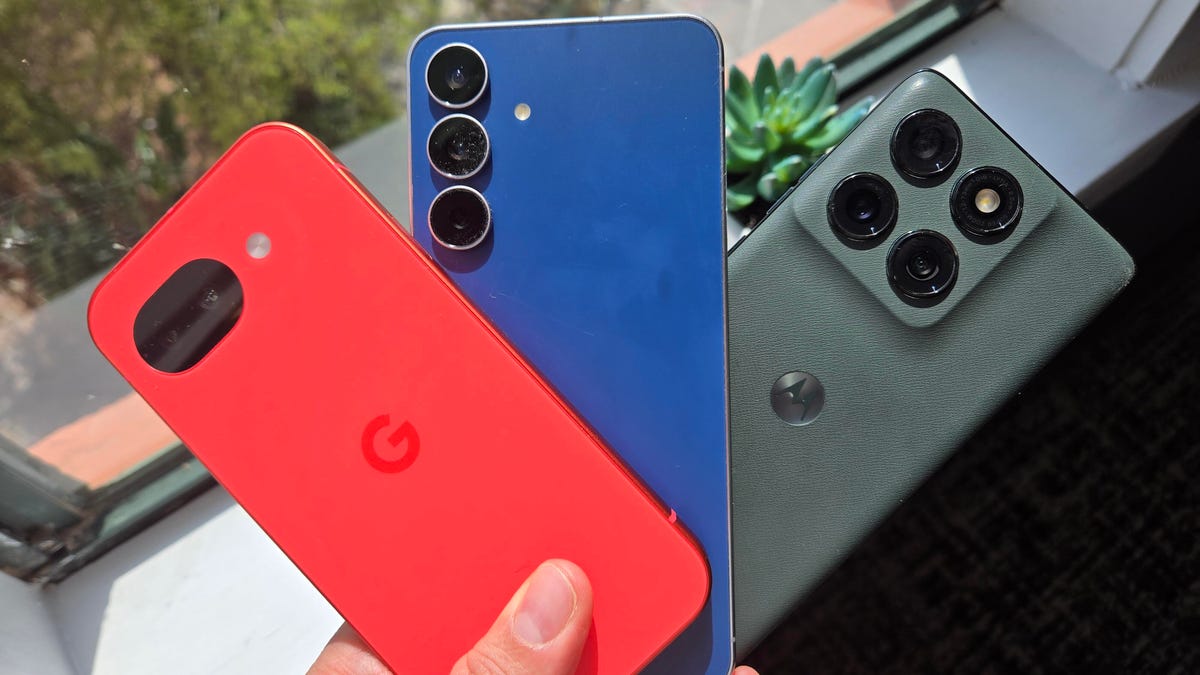
You can now file a claim in the $135 million Google data settlement. The case centers on claims that Android devices transmitted user data without consent. Specifically, the class action lawsuit Taylor v. Google LLC contends that Google’s Android devices passively transferred cellular data to Google without user permission, even when the devices were idle. While not admitting fault, Google reached a preliminary settlement in January, agreeing to pay $135 million to about 100 million US Android phone users.
The official settlement website for the lawsuit is now live. The final approval hearing won’t occur until June 23, when the court will consider whether Google’s settlement is fair and listen to objections. After that, the court will decide whether to approve the $135 million settlement.
In the meantime, if you qualify and want to be paid as part of the settlement, you can select your preferred payment method on the official website. There, you can find information on speaking at the June 23 court hearing and on how to exclude yourself or write to the court to object by May 29.
As part of the settlement, Google will update its Google Play terms of service to clarify that certain data transfers do occur passively even when you’re not using your Android device, and that cellular data may be relied upon when not connected to Wi-Fi. This can’t always be disabled, but users will be asked to consent to it when setting up their device.
Google will also fully stop collecting data when its «allow background data usage» option is toggled off.
Who can be part of the settlement?
In order to join the Taylor v. Google LLC settlement, you must meet four qualifications:
- Be a living, individual human being in the US.
- Have used an Android mobile device with a cellular data plan.
- Have used the aforementioned device at any time from Nov. 12, 2017, to the date when the settlement receives final approval.
- You’re not a class member in the Csupo v. Google LLC lawsuit, which is similar but specifically for California residents.
The final approval hearing is on June 23, so you can add your payment method until then. The hearing’s date and time may change, and any updates will be posted on the settlement website.
If you choose to do nothing, you will still be issued a settlement payment, but you may not receive it if you don’t select a payment method.
How much will I get paid?
It’s not currently known exactly how much each settlement class member will receive, but the cap is $100. Payments will be distributed after final court approval and after any appeals are resolved.
After all administrative, tax and attorney costs are paid, the settlement administrator will attempt to pay each member an equal amount. If any funds remain after payments are sent, and it’s economically feasible, they will be redistributed to members who were previously and successfully paid. If it’s not economically feasible, the funds will go to an organization approved by the court.
-
 Technologies3 года ago
Tech Companies Need to Be Held Accountable for Security, Experts Say
-
 Technologies3 года ago
Best Handheld Game Console in 2023
-
 Technologies3 года ago
Tighten Up Your VR Game With the Best Head Straps for Quest 2
-
 Technologies4 года ago
Black Friday 2021: The best deals on TVs, headphones, kitchenware, and more
-
 Technologies5 лет ago
Google to require vaccinations as Silicon Valley rethinks return-to-office policies
-
 Technologies5 лет ago
Verum, Wickr and Threema: next generation secured messengers
-
 Technologies4 года ago
Olivia Harlan Dekker for Verum Messenger
-
 Technologies4 года ago
The number of Сrypto Bank customers increased by 10% in five days


