

Technologies
A Humanoid Robot Visits the White House to Push AI for Teaching Kids
First lady Melania Trump shares the spotlight with a Figure 03 robot to promote the use of artificial intelligence in education.

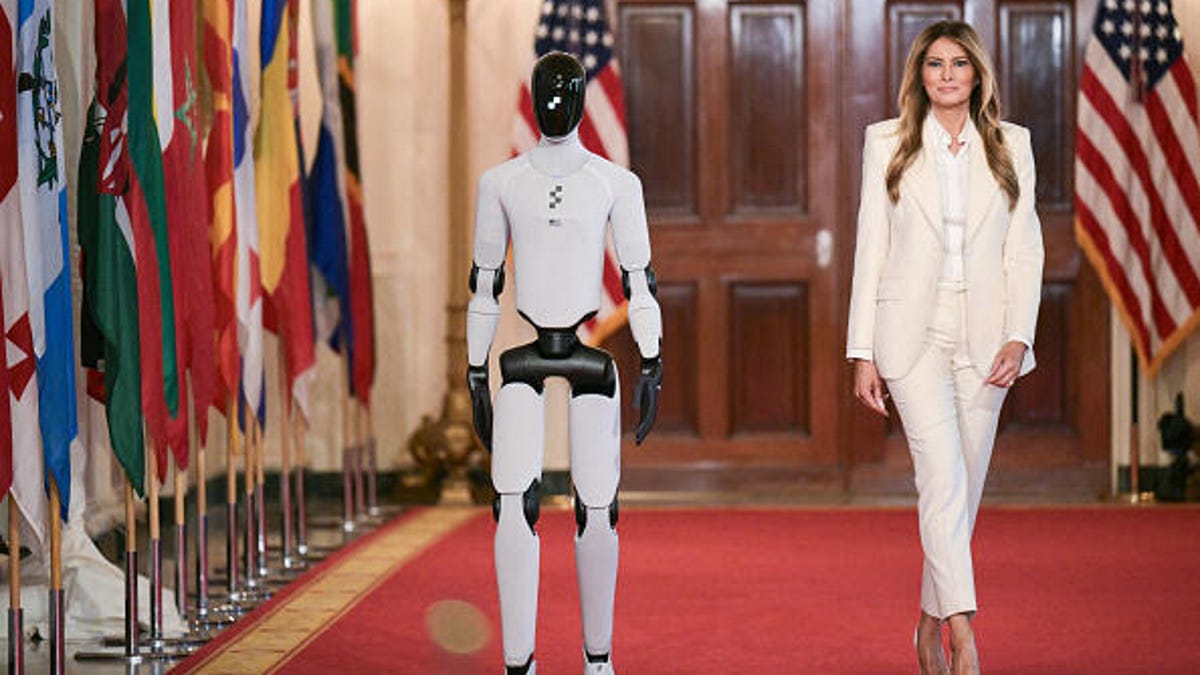
An unexpected guest escorted Melania Trump at the Fostering the Future Together Global Coalition Summit on Wednesday: a walking, talking Figure 03 humanoid robot.
During the event, the first lady pitched a future where AI-powered humanoid robots — presented as an idealized educator named «Plato» — provide students with personalized and instant access to human knowledge, including philosophy and art.
The Figure 03 robot is made by Silicon Valley-based robotics company Figure AI, which introduced its third-generation humanoid robot in October last year. The Figure 03 robot costs around $25,000, according to Forbes.
Figure 03 was designed for people to use in their homes, with demo videos showing it folding laundry, lifting eggs from a carton, using a washing machine and delivering drinks to its owners lounging by the pool. It was also shown in corporate use cases as a receptionist and a package deliverer. Using a proprietary AI engine called Helix, it can autonomously perform these tasks and respond to your voice commands.
At the White House, the humanoid robot walked slowly down the red carpet to deliver opening remarks for the tech summit.
«I’m grateful to be part of this historic movement to empower children with technology and education,» the Figure 03 robot said. It then said «welcome» in various languages.
The first lady later said that AI-powered humanoid robots could be placed in children’s homes as an aid to their education to «boost analytic skills and problem solving and adapt in real time to a student’s pace, prior knowledge and even emotional state.»
Promoting AI in education
The two-day summit is hosting leaders from 45 nations and 28 technology organizations, and is intended to «empower children through education and technology,» according to a White House statement. Guests included representatives from tech giants such as Google, OpenAI, and Microsoft and the AI data analytics company Palantir.
The summit is part of the first lady’s Be Best: Fostering the Future initiative, which aims to help children learn using advanced technology. It was introduced in 2018 as an awareness campaign aimed at combating cyberbullying and helping children affected by the opioid crisis.
US Education Secretary Linda McMahon spoke about AI being one of the Department of Education’s main priorities on the first day of the summit.
«If we’re able to scale these resources effectively by investing in AI infrastructure and training, we can offer expert instructions across countless fields, to hire volumes of people at a fraction of the cost,» McMahon said Tuesday at a roundtable meeting.
According to McMahon, the Department of Education has already dedicated millions of dollars in grants to support the use of AI in schools.
The event follows criticism of the Trump administration’s 2025 executive order to dismantle the Department of Education. While the Department of Education hasn’t been officially abolished, it has undergone significant policy changes, funding cuts and workforce reductions.
The introduction of a humanoid robot at the summit sparked significant backlash among many who are wary of the technology’s role in the classroom. Critics took to social media to voice concerns that these machines could eventually replace teachers, stripping the education system of essential human connection, and leading to increased layoffs and cost-cutting.
On one Huffington Post Instagram post featuring the robot, commenters expressed deep skepticism, with one user sarcastically noting, «Nice, getting rid of educators in favor of a robot,» while another flatly rejected the concept, stating, «No, I don’t want to imagine a world with emotionless robots educating our children.»
The White House did not immediately respond to a request for comment.
Technologies
Google races to put Gemini at the center of Android before Apple’s AI reboot
Google is using its latest Android rollout to position Gemini as the AI layer across phones, Chrome, laptops and cars.

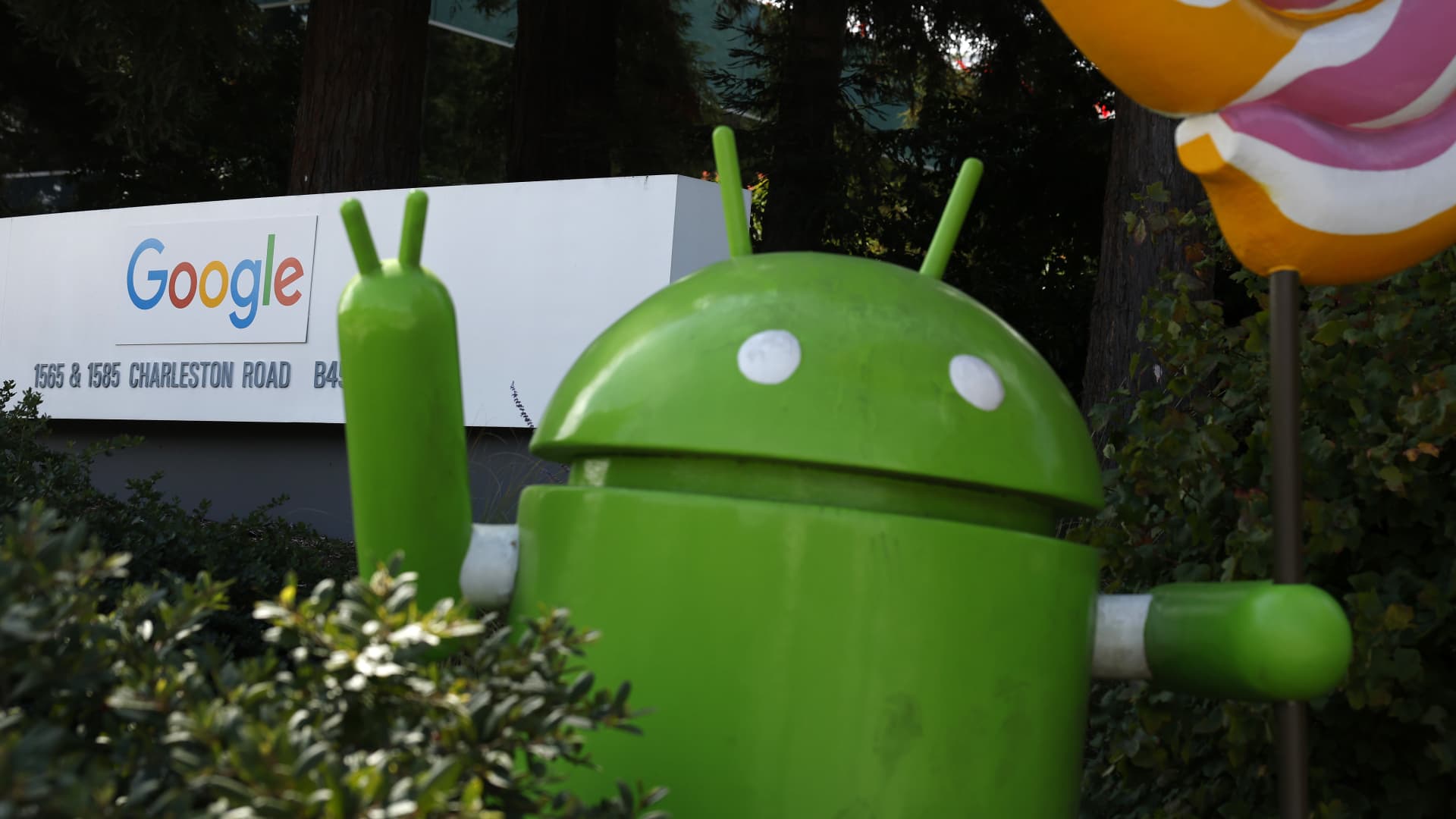
Google is using its latest Android rollout to make Gemini less of a chatbot and more of an operating layer across the phone, browser, car and laptop, just weeks before Apple is expected to show its own Gemini-powered Apple Intelligence reboot at WWDC.
Ahead of its Google I/O developer conference next week, the company previewed a number of Android updates, including AI-powered app automation, a smarter version of Chrome on Android, new tools for creators, a redesigned Android Auto experience, and a sweeping set of new security features.
Alphabet is counting on Gemini to help Google compete directly with OpenAI and Anthropic in the market for artificial intelligence models and services, while also serving as the AI backbone across its expansive portfolio of products, including Android. Meanwhile, Gemini is powering part of Apple’s new AI strategy, giving Google a role in the iPhone maker’s reset even as it races to prove its own version of personal AI on the phone is further along.
Sameer Samat, who oversees Google’s Android ecosystem, told CNBC that Google is rebuilding parts of Android around Gemini Intelligence to help users complete everyday tasks more easily.
“We’re transitioning from an operating system to an intelligence system,” he said.
As part of Tuesday’s announcements. Google said Gemini Intelligence will be able to move across apps, understand what’s on the screen and complete tasks that would normally require a user to jump between multiple services. That means Android is moving beyond the traditional assistant model, where users ask a question and get an answer, and acting more like an agent.
For instance, Google says Gemini can pull relevant information from Gmail, build shopping carts and book reservations. Samat gave the example of asking Gemini to look at the guest list for a barbecue, build a menu, add ingredients to an Instacart list and return for approval before checkout.
A big concern surrounding agentic AI involves software taking action on a user’s behalf without permissions. Samat said Gemini will come back to the user before completing a transaction, adding, “the human is always in the loop.”
Four months after announcing its Gemini deal with Google, Apple is under pressure to show a more capable version of Apple Intelligence, which has been a relative laggard on the market. Apple has long framed privacy, hardware integration and control of the user experience as its advantages.
Google’s Android push is designed to show it can bring AI deeper into the device experience while still giving users control over what Gemini can see, where it can act and when it needs confirmation.
The app automation features will roll out in waves, starting with the latest Samsung Galaxy and Google Pixel phones this summer, before expanding across more Android devices, including watches, cars, glasses and laptops later this year.
The company is also redesigning Android Auto around Gemini, turning the car into another major surface for its assistant. Android Auto is in more than 250 million cars, and Google says the new release includes its biggest maps update in a decade and Gemini-powered help with tasks like ordering dinner while driving.
Alphabet’s AI strategy has been embraced by Wall Street, which has pushed the company’s stock price up more than 140% in the past year, compared to Apple’s roughly 40% gain. Investors now want to see how Gemini can become more central to the products people use every day.
WATCH: Alphabet briefly tops Nvidia after report of $200 billion Anthropic cloud deal
Technologies
Waymo recalls 3,800 robotaxis after glitch allowed some vehicles to ‘drive into standing water’
Waymo issued a voluntary recall of about 3,800 of its robotaxis to fix software issues that could allow them to drive into flooded roadways.
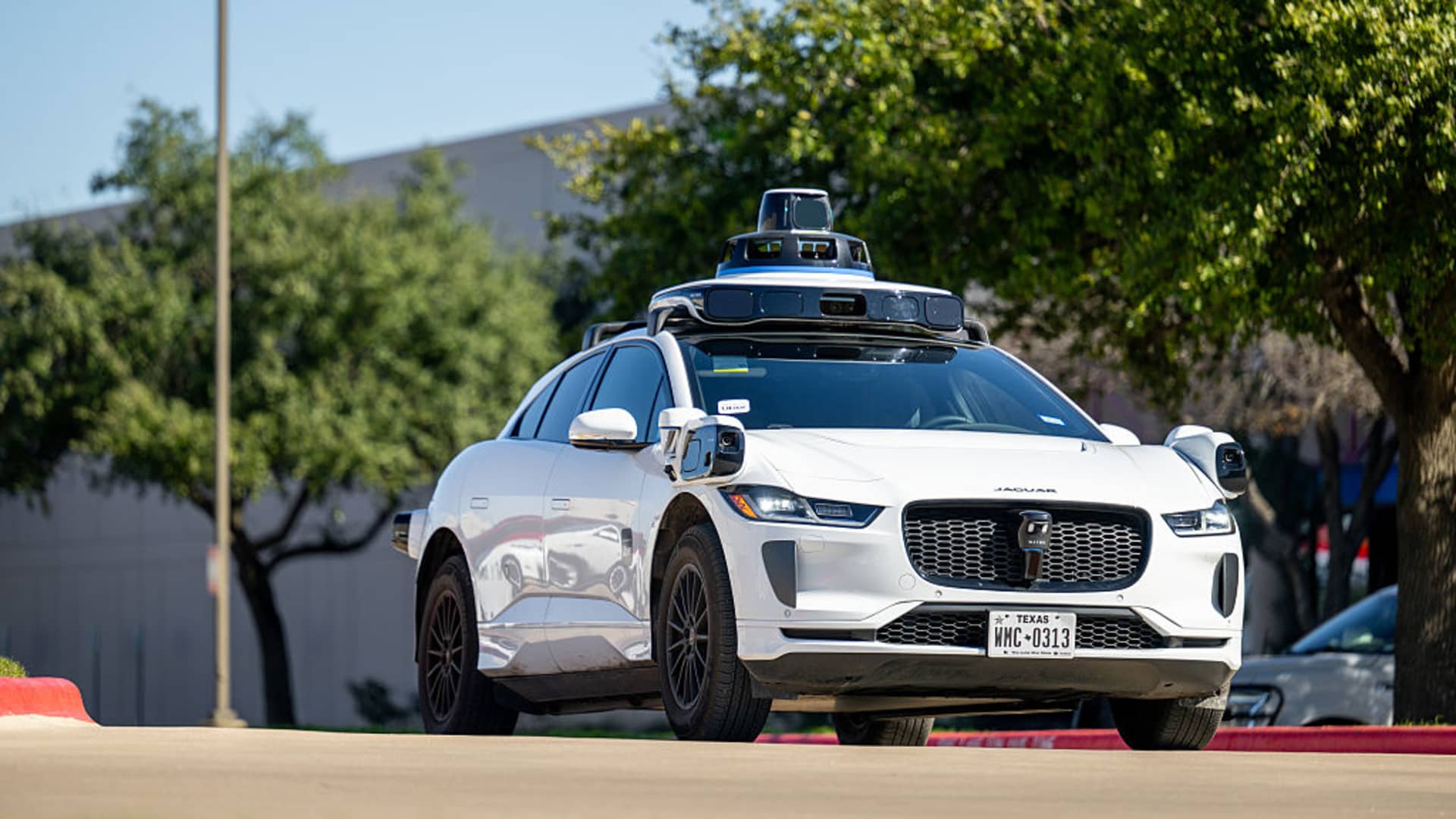
Waymo is recalling about 3,800 robotaxis in the U.S. to fix software issues that could allow them to “drive onto a flooded roadway,” according to a letter on the National Highway Traffic Safety Administration’s website.
The voluntary recall is for Waymo vehicles that use the company’s fifth and sixth generation automated driving systems (or ADS), the U.S. auto safety regulator said in the letter posted Tuesday.
Waymo autonomous vehicles in Austin, Texas, were seen on camera driving onto a flooded street and stalling, requiring other drivers to navigate around them. It’s the latest example of a safety-related issue for the Alphabet-owned AV unit that’s rapidly bolstering its fleet of vehicles and entering new U.S. markets.
Waymo has drawn criticism for its vehicles failing to yield to school buses in Austin, and for the performance of its vehicles during widespread power outages in San Francisco in December, when robotaxis halted in traffic, causing gridlock.
The company said in a statement on Tuesday that it’s “identified an area of improvement regarding untraversable flooded lanes specific to higher-speed roadways,” and opted to file a “voluntary software recall” with the NHTSA.
“Waymo provides over half a million trips every week in some of the most challenging driving environments across the U.S., and safety is our primary priority,” the company said.
Waymo added that it’s working on “additional software safeguards” and has put “mitigations” in place, limiting where its robotaxis operate during extreme weather, so that they avoid “areas where flash flooding might occur” in periods of intense rain.
WATCH: Waymo launches new autonomous system in Chinese-made vehicle
Technologies
Qualcomm tumbles 13% as semiconductor stocks retreat from historic AI-fueled surge
Semiconductor equities reversed sharply after a broad AI-driven advance, with Qualcomm suffering its worst day since 2020 amid inflation concerns and rising oil prices.
Semiconductor stocks fell sharply on Tuesday, reversing course after an extensive rally that had expanded the artificial intelligence investment theme well past Nvidia and driven the industry to unprecedented levels.
Qualcomm plunged 13% and was on track for its steepest single-day decline since 2020. Intel shed 8%, while On Semiconductor and Skyworks Solutions each lost more than 6%. The iShares Semiconductor ETF, which benchmarks the overall sector, fell 5%.
The sell-off came after a key gauge of consumer prices came in above forecasts, and as conflict in Iran pushed crude oil higher—prompting investors to shift away from riskier assets.
The preceding advance had widened the AI opportunity set beyond longtime industry leader Nvidia, which for much of the past several years had largely carried the market to new peaks on its own.
Explosive appetite for central processing units, along with the graphics processing units that power large language models, has sent chipmakers to all-time highs.
Market participants are wagering that the shift from AI model training to autonomous agents will lift demand for additional AI hardware. Among the beneficiaries are memory chip producers, which are raising prices as supply remains tight.
Micron Technology slid 6%, and Sandisk cratered 8%. Sandisk’s stock has surged more than six times over since January.
-
 Technologies3 года ago
Tech Companies Need to Be Held Accountable for Security, Experts Say
-
 Technologies3 года ago
Best Handheld Game Console in 2023
-
 Technologies5 лет ago
Black Friday 2021: The best deals on TVs, headphones, kitchenware, and more
-
 Technologies3 года ago
Tighten Up Your VR Game With the Best Head Straps for Quest 2
-
 Technologies5 лет ago
Google to require vaccinations as Silicon Valley rethinks return-to-office policies
-
 Technologies5 лет ago
Verum, Wickr and Threema: next generation secured messengers
-
 Technologies4 года ago
The number of Сrypto Bank customers increased by 10% in five days
-
 Technologies5 лет ago
Olivia Harlan Dekker for Verum Messenger


