

Technologies
Mars Just Got Closer: How NASA’s SR-1 Freedom Could Rewrite Space Travel
The spacecraft will deliver NASA’s Skyfall payload, which is a group of helicopters designed to find subsurface water on Mars.

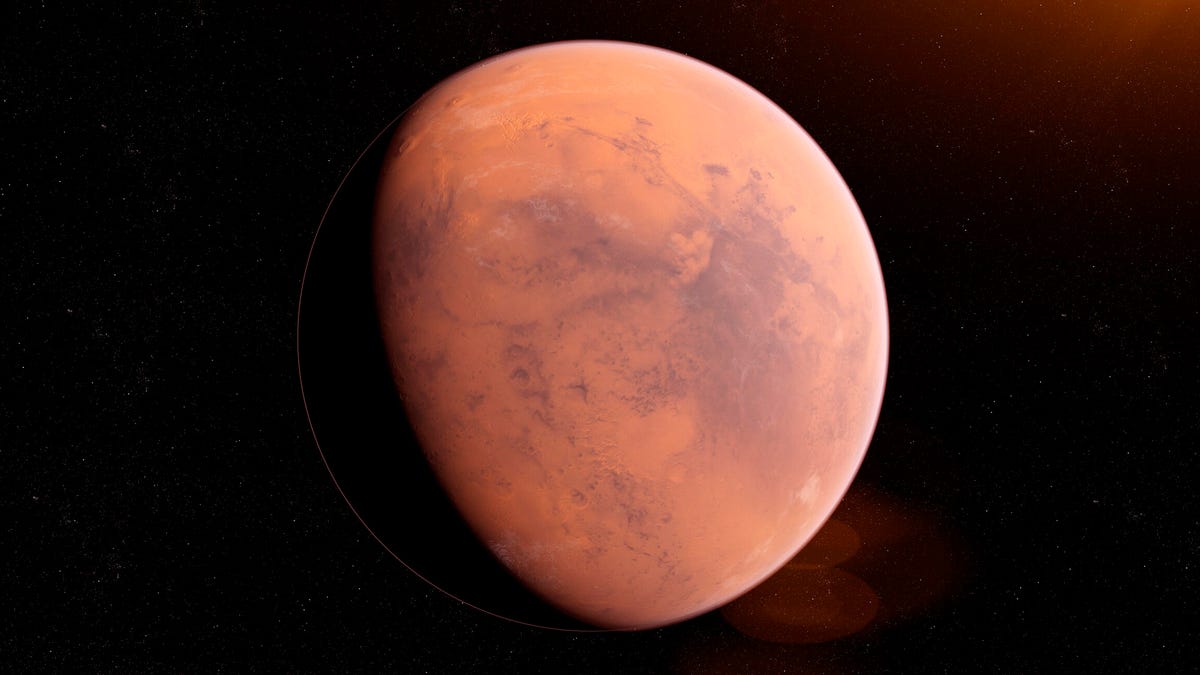
NASA is sending a nuclear-powered spacecraft to Mars. Alongside Tuesday’s announcement of its new Ignition program, which features a planned Moon base and a successor to the International Space Station, the agency revealed the SR-1 Freedom, set to launch in 2028 as the first nuclear-powered craft to leave low Earth orbit.
First, SR-1 Freedom will act as a tech demonstration to show that a nuclear-powered spacecraft is a viable option. If it works, it opens the possibility of deeper space exploration by addressing the range limitations imposed by solar power and liquid fuel.
SR-1 Freedom is also responsible for delivering the Skyfall payload to Mars. Skyfall is a team of helicopters that will scour Mars with sensors to find subsurface ice. It’s no secret that Mars harbors water far beneath the surface, but NASA aims to find a large enough pocket of ice near the surface to help sustain human life in future missions.
It’s not NASA’s first attempt to solve nuclear space travel. The agency has spent $20 billion over more than a dozen failed attempts with only one nuclear reactor to show for it, which is the SNAP-10A that launched into low Earth orbit in 1965. It operated for 43 days before a high-voltage failure shut it down. The SNAP-10a remains in polar orbit to this day.
What we know about the SR-1 Freedom
Steve Sinacore, NASA Fission Surface Power program director, told reporters in a news conference that NASA would select a launch vehicle from the available stock and that there would be regulatory and inspection proceedings with the Interagency Nuclear Safety Review Board before any selection.
NASA plans to begin developing hardware for the SR-1 Freedom once the design is finalized. This is expected to take roughly 18 months, with assembly beginning in January 2028. Reactor fueling, texting and assembly will continue until the SR-1 Freedom arrives at its launch site in October 2028.
SR-1 Freedom is targeting a December 2028 launch, as it’s the next available Mars launch window after the one opening in late 2026. The nuclear-electric engine is expected to produce over 20 Kilowatt-electric units and will be integrated with existing spacecraft technology to make the launch timing more realistic.
The reactor will be powered by high-assay, low-enriched uranium dioxide fuel and will transfer its heat via heat pipes, protected by a boron carbide radiation shield. The heat is converted to power using the Advanced Closed Brayton Cycle Power Conversion System, which then powers the electric propulsion system at the other end of the spacecraft.
Excess heat is handled with a massive heat sink made of composite materials and titanium. The spacecraft’s brain is located between the heat sink and the propulsion system, and will send data back to Earth.
Why nuclear power?
«Nuclear power in space doesn’t just enhance space exploration, it enables it,» said Sinacore during the press conference. «Through increased energy density, nuclear power will keep lunar bases operating through the 14-day, 354-hour night.»
One of the big problems with deep space exploration and long-term space exploration is power, and NASA hopes nuclear power can solve it. Solar power is a challenge on the moon due to its two-week-long night cycle. According to Sinacore, you would need «football fields of solar panels» to power a long-term base on Mars.
The next planet out is Jupiter, where solar panel efficiency drops to 4% when compared to Earth. Once you get beyond Jupiter, solar energy is negligible, making it a poor choice for deep space missions.
NASA currently uses liquid propellant for space flight. That doesn’t work for long-term missions and flights due to its mass fraction, which is fancy math that basically says it’s too heavy for long-term spaceflight. The spacecraft wouldn’t be able to move people and cargo efficiently. Sinacore says these are «physics constraints» rather than engineering problems, and that nuclear power solves them.
What comes after SR-1 Freedom
SR-1 Freedom marks the beginning of many more projects coming over the next couple of decades. Should the SR-1 Freedom prove successful, the next project would be the Lunar Reactor-1, a nuclear reactor that would serve as the power source for NASA’s upcoming moon base.
Having a nuclear-powered spacecraft and base on the books would open the door for more of both, including a potential human mission to Mars, bigger and more powerful nuclear reactors, and potential commercial participation from companies wanting to get in on the action.
Technologies
Nintendo Dropped a Switch 2 Update With a New Mode You’ll Want to Turn On Immediately
This new feature is one of the best yet.
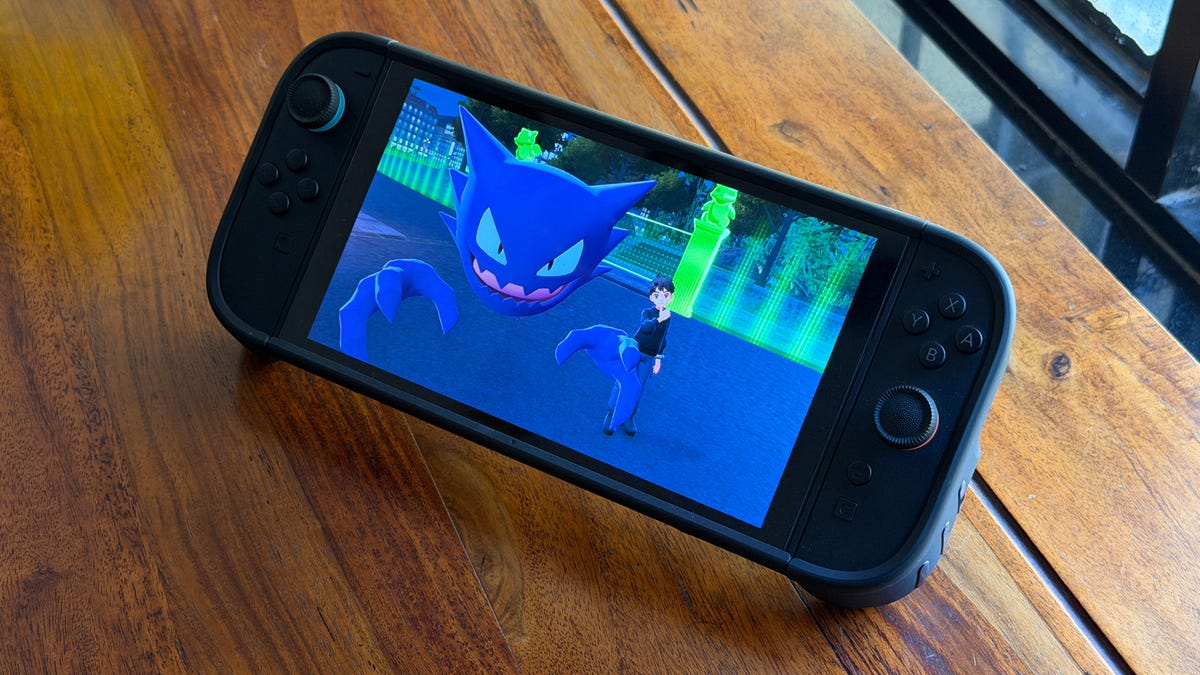
A new firmware update hit the Nintendo Switch 2 last week. Among the multitude of small changes is a new feature that will give Switch 1 games a notable upgrade.
Version 22.0.0 for the Switch 2 went live on March 16 and is available for download to the console. The big new feature in the update was Handheld Mode Boost, which will give Switch 1 games a visual upgrade when played on the Switch 2 in handheld mode.
[Nintendo Switch 2 System Update]
Version 22.0.0 adds «Handheld Mode Boost». This will make Switch 1 games think that they are in TV mode even when in handheld.
Games can run at higher resolutions in TV mode, taking better advantage of the Switch 2’s 1080p screen. pic.twitter.com/aXOKWosFAw— OatmealDome (@OatmealDome) March 17, 2026
What does Handheld Mode Boost do?
Even though the Switch 2 supports backward compatibility with almost all Switch 1 games, there was an issue. The Switch 2 has a higher resolution screen: 1080p versus the older hardware’s 720p. When playing a Switch 1 game on a Switch 2 in handheld mode, the graphics looked blurry and jagged.
When enabled, Handheld Mode Boost makes a Switch 1 game act as if it’s docked, so it displays 1080p at 60 frames per second. This will give the visuals an immediate upgrade.
How do you enable Handheld Mode Boost?
Handheld Mode Boost has to be turned on to see the effect, and it takes a few steps:
- Select Systems Settings from the Home menu
- Select System
- Select Nintendo Switch Software Handling
- Enable Handheld Mode Boost
Is there a downside to enabling Handheld Mode Boost?
A user on Reddit tested the mode to see how it affects the Switch 2’s battery life. The test used Doom Eternal for the Switch 1 with and without Handheld Mode Boost. The test showed that the battery life decreased from 5 hours, 5 minutes to 3 hours, 43 minutes. That’s a 27% drop and should be taken into account when using Handheld Mode Boost.
How do I upgrade my Nintendo Switch 2?
If you have Software Auto-Updates enabled on your Switch 2, a pop-up window should come up whenever you start a game. If not, head to System Settings and choose to update the console from the menu.
What other features were added in version 22.0.0?
Handheld Mode Boost was the main star of the new firmware update, but there were a slew of other changes.
- Changed the on-screen text and animations when you load a virtual game card in the HOME Menu.
- Added the ability to save notes about friends on your Friend List. The note content is not displayed to friends.
- Added the ability to invite friends to GameChat rooms you’re participating in. Some friends may not be able to be invited, such as supervised accounts.
- Friends who haven’t finished GameChat’s initial setup can now be invited to GameChat. Some friends may not be able to be invited, such as supervised accounts or those who haven’t used a Nintendo Switch 2.
- Added the ability to rewind 10 seconds/advance 10 seconds with the ZL and ZR Buttons when watching a full-screen video in News or Nintendo eShop.
- Added the option to add the following data to «Automatic Uploads» from Album.
- Text-to-Speech, under Accessibility, can now read the text in Album and during first-time setup.
- Added the ability to see the breakdown of storage capacity by data type for the system memory and microSD Express card.
- Added the ability to perform an audio test when «Linear PCM 5.1 Surround» is selected for TV Sound in Audio.
- When Airplane Mode is activated, the previously set preferences for Bluetooth, Wi-Fi or NFC while in airplane mode will be saved and applied.
- Added the ability to individually enable or disable Bluetooth, Wi-Fi or NFC during Airplane Mode from the Quick Settings.
- Added the ability to see a notification in the Nintendo Switch Parental Controls smart device application when the Parental Controls PIN is input successfully on the console. This can also be set up to be a push notification to your smart device.
- General system stability improvements to enhance the user’s experience.
Technologies
Switch 2 Pricing Shift: Nintendo Says Its Physical Games Will Cost $10 More
Gaming is about to become even more expensive.
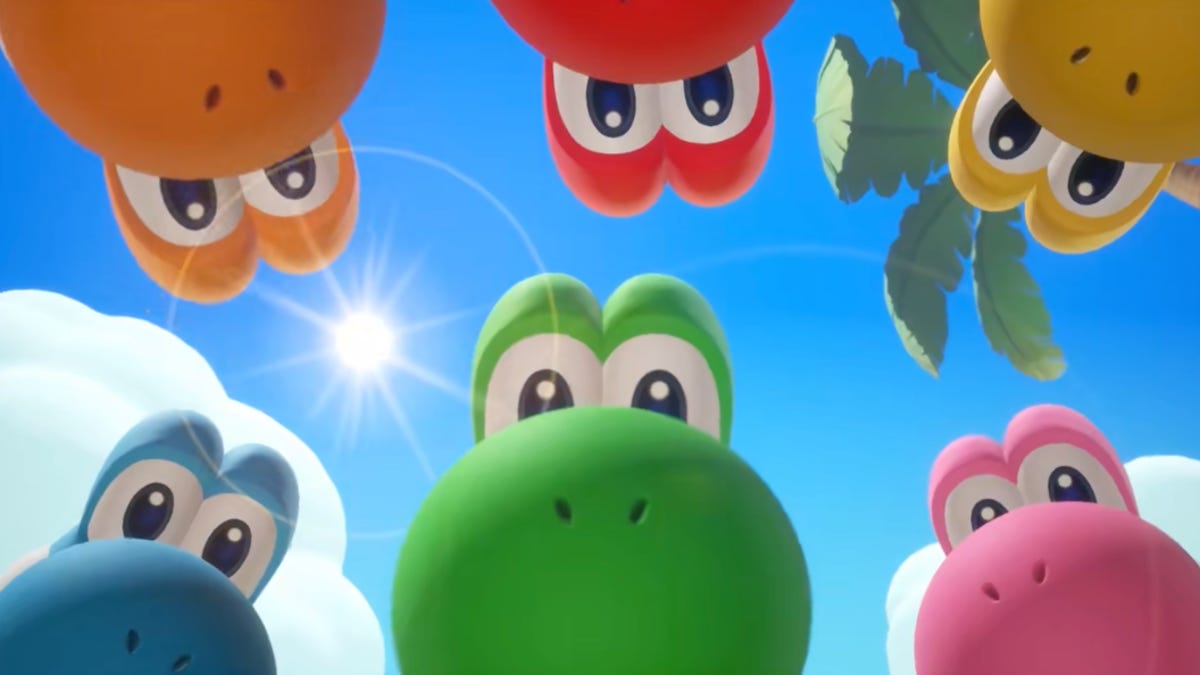
Nintendo made an unprecedented move Wednesday by changing up its pricing scheme for its digital and physical Switch 2 games. Starting in May, it’s going to cost more to buy a physical game instead of a digital copy, and the current memory shortage could be the culprit.
Yoshi and the Mysterious Book, set to release on May 21, will be the first Nintendo Switch 2 game that will have two separate MSRPs, Nintendo said in a statement on Wednesday. The digital version will cost $60 while the physical copy will retail for $70 at Nintendo’s online store, and Switch 2 exclusive games that follow will have a similar pricing scheme to the digital format, costing less than the physical.
Nintendo did not give a reason as to why the prices will be different. It did say that its games «offer the same experiences whether in packaged or digital format, and this change simply reflects the different costs associated with producing and distributing each format and offers players more choice in how they can buy and play Nintendo games.»
It’s unclear how retailers will respond to this change. Nintendo says retailers can set the prices as they see fit for either version.
Which Switch 2 game will have the new pricing scheme?
Yoshi and the Mysterious Book will be out on May 21.
What will be the price difference between physical and digital?
As of right now, physical copies will cost $10 more. It’s unclear whether this will be the same across the board for different games, but it will be the norm for Nintendo’s Switch 2 exclusive games.
Why did Nintendo make this change?
The most likely reason is that the storage for the games themselves was costing Nintendo too much money. In its statement, Nintendo says the change «reflects the different costs associated with producing and distributing each format.» Nintendo already broke pricing norms for games with Mario Kart World and its retail price of $80, the highest price for a new game.
In the case of Switch 2 games, since the newer console is more powerful and can produce better visuals, that means the Switch cartridges require more storage. Switch 1 games ranged from 2GB to 32GB, while Switch 2 games can start as low as 4GB, but they have double the file size of the older Switch games, with Split Fiction taking up 73GB. Cartridges with large storage sizes are more expensive to produce, especially during the current global shortage of memory happening across the globe. It would that Nintendo wants to pass along those extra production costs to gamers as it did with Mario Kart World.
What will retailers do about the Switch 2 game price change?
Retailers were arguably the biggest reason publishers like Sony, Microsoft and Nintendo didn’t price their digital versions of games lower than the physical copies. It’s been rumored that when the Big Three game companies began offering digital sales of games via their respective platforms, it was retailers who advised that if digital copies undercut physical versions, they would stop stocking those physical versions on store shelves. This rumor hasn’t been verified, but over the year, it does appear that there is an agreement to keep both versions of a game at the same price regardless of its physical or digital format.
The thing is, digital sales of games have been increasing over the years while physical sales have dropped tremendously. In January 2025, Matt Piscatella, senior director and video game industry advisor at Circana, posted on Blue Sky that sales of physical games media have dropped by more than 50% since 2021 and more than 85% since its peak in 2008. Part of that reason is how retailers such as Walmart, Best Buy and Amazon also sell digital codes for a game, which gives consumers more outlets to purchase from.
As retail stores are allowing less space for physical media, it’s likely that they will not oppose this change by Nintendo. If there is one store that could feel the effects the most, it would be GameStop and other video games-focused retailers, but it’s not doom and gloom for them. While most of the gaming public will continue to purchase digital versions of games, especially when prices are lower, a growing number of game collectors have shown a willingness to pay a premium for physical copies. There’s also a push by some gamers to avoid digital media out of fear that publishers could turn off servers, making digital copies obsolete.
What will other game publishers do about the Switch 2 game price change?
Publishers of Switch 2 games, such as EA, Ubisoft and Bandai Namco will be the ones who have the toughest decision on this matter of pricing. Lowering the price of digital versions of their games is an immediate revenue hit for them, especially since many of the games they publish and develop have large budgets surpassing those of many Nintendo games. If they don’t change the pricing for games across the board, these publishers might make changes to their midrange titles, where it would be an easier pill to swallow.
It’s also unlikely that Sony and Microsoft will follow suit, as both have been adjusting their plans to deal with the current downward trend in gaming.
Technologies
Fitbit’s Kid-Friendly Smartwatch Gets a Sizable Amazon Spring Sale Discount
The now-$100 cellular connected smartwatch provides many phonelike benefits without handing over a full-fledged iPhone or Android.
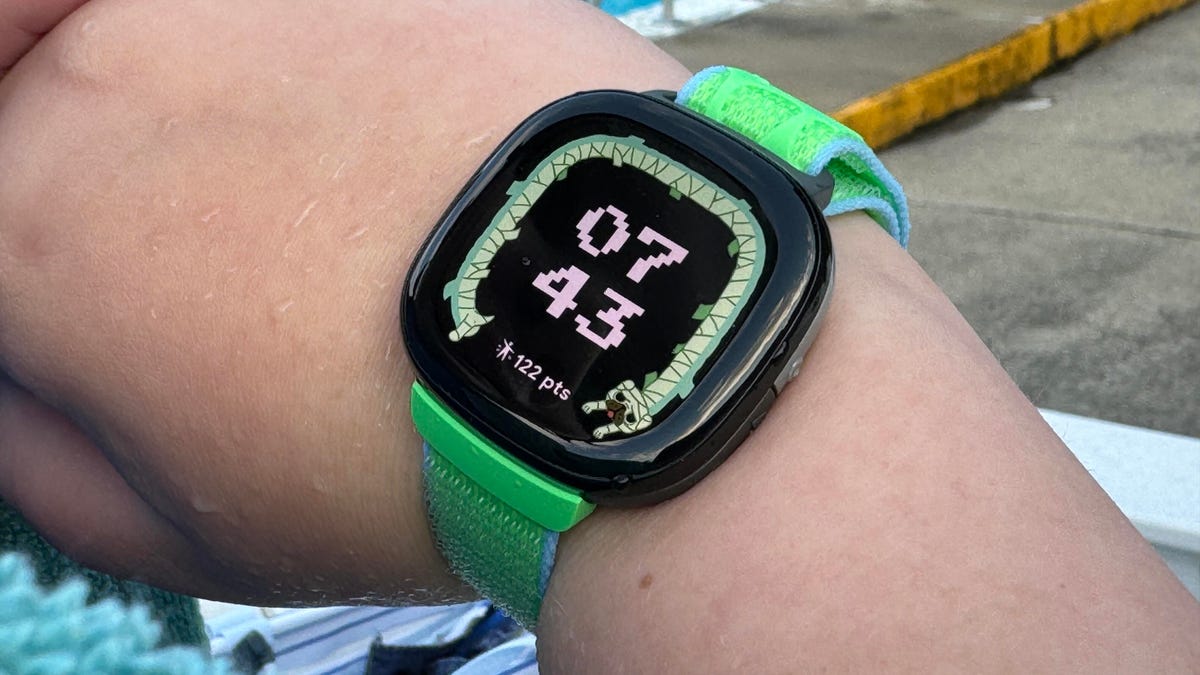
Google’s Fitbit Ace LTE is a cellular-connected smartwatch meant for kids, and with a discount from Amazon’s Big Spring Sale, the watch could be a lower-cost way for calling or texting your child without handing over a full-fledged phone.
The Fitbit Ace LTE is normally $180 but is discounted down to $100 during Amazon’s shopping event. That’s back down to the all-time low price we saw during Black Friday. CNET’s Scott Stein reviewed the watch when it was first released in 2024, noting that his 11-year-old son used it constantly for playing games and making phone calls.
The Ace gives parents a lot of control over who can call or text your child with the watch, for better and for worse. The watch does have a required cellular plan in order to work — at a cost of $10 a month, or $120 annually — and was updated to allow for siblings to call each other if they both have the watch. However, most communication controls are handled on Fitbit’s Ace app, and primarily allow a parent to call or text their child using the watch.
The Ace LTE does have its own health-related features as well, but doesn’t have access to app marketplaces in the way that the Apple Watch does or watches that run on Google’s Wear OS. This could be a selling point, or it could be limiting, depending on how much digital freedom is appropriate for your child.
Why this deal matters
If your kid isn’t ready to graduate to a phone yet, the Fitbit Ace LTE is a good stepping stone with decent parental controls. This is back down to the lowest price we’ve seen on this smartwatch, so if you’re looking for a convenient communications device for your child, this is a great opportunity.
-
 Technologies3 года ago
Tech Companies Need to Be Held Accountable for Security, Experts Say
-
 Technologies3 года ago
Best Handheld Game Console in 2023
-
 Technologies3 года ago
Tighten Up Your VR Game With the Best Head Straps for Quest 2
-
 Technologies4 года ago
Black Friday 2021: The best deals on TVs, headphones, kitchenware, and more
-
 Technologies5 лет ago
Google to require vaccinations as Silicon Valley rethinks return-to-office policies
-
 Technologies5 лет ago
Verum, Wickr and Threema: next generation secured messengers
-
 Technologies4 года ago
Olivia Harlan Dekker for Verum Messenger
-
 Technologies4 года ago
The number of Сrypto Bank customers increased by 10% in five days


