

Technologies
iPhone Air vs. Galaxy S25 Edge: Thin Phone Battle
If you’re looking for a less-chunky phone to carry all day, Apple and Samsung have new slim options. Here’s how they compare.

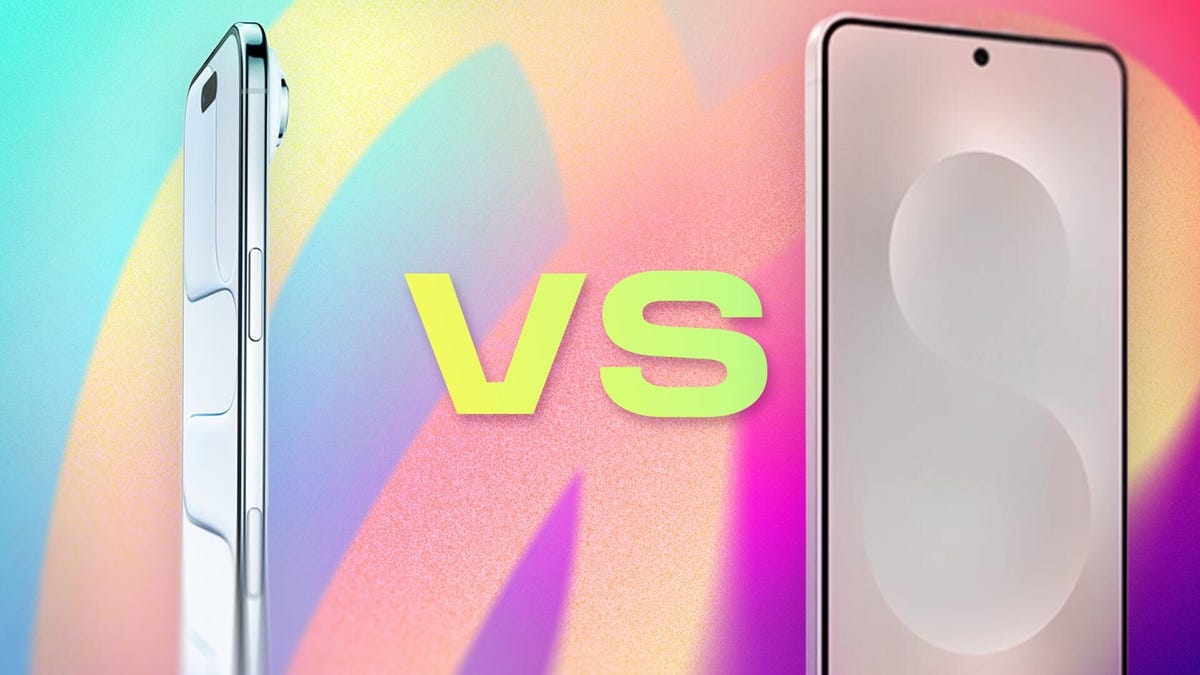
Super-thin phones carry a lot of appeal without a lot of bulk. They’re lighter than many counterparts, more comfortable to hold and let’s not forget how great they look. And although they remain a niche category, the Apple iPhone Air and Samsung Galaxy S25 Edge are also paving the way for the slim technology that makes the Galaxy Z Fold 7 and rumored iPhone Fold possible.
But are you giving up too much else for a slim phone? If you press them together, are they much thicker combined than a regular iPhone 17 or Galaxy S25 (or the new Galaxy S26)? And do they overcome trade-offs in battery life, camera and sound quality that come with a thinner design? I’m here to do the math and compare features for you.
Looking to order the iPhone Air? Check out our order guide to learn if you can get it free and other great deals.
Want to buy the Samsung Galaxy S25 Edge? Find out which carriers and retailers are offering the best deals on Samsung’s slim phone.
iPhone Air vs. S25 Edge price comparison
-
iPhone Air: $999. The iPhone Air takes the place formerly held by the iPhone 16 Plus, making it the only model with a screen larger than the iPhone 17 that isn’t an iPhone 17 Pro.
-
Galaxy S25 Edge: $1,100. The S25 Edge joins the S25 and S25 Ultra in this year’s Galaxy lineup.
The iPhone Air includes fewer features than the iPhone 17, such as the number of cameras. However, it features a larger display, an A19 Pro processor, and is equipped with 256GB of storage to begin with. Additionally, Apple has consistently applied premium pricing for minor design changes. The original MacBook Air fit into an inter-office envelope and cost $1,799, despite being underpowered compared to the rest of the MacBook line. (Over a few generations, it would eventually become Apple’s entry-level affordable laptop at $999, where it still resides.)
The Galaxy S25 Edge’s higher price ($101) could be an attempt to capture more dollars from customers looking for a phone that sets them apart, but we’re already seeing occasional steep discounts on it.
In both cases, it’s worth noting that the pricing has held up against the Trump administration tariffs so far.
iPhone Air vs. S25 Edge dimensions and weight
Now it’s time to go deep — as in, just how thin is the depth of each phone?
No phone manufacturer describes its phones as bulky or chunky, even for extra-large models like the iPhone Pro Max. Yet, the difference between the depths of the iPhone Air and the S25 Edge, as well as the standard phones of each respective family, is stark.
Not counting the camera assembly, which Apple refers to as the «plateau,» most of the iPhone Air’s body is 5.64mm thick. The S25 Edge, at its narrowest point, is a hair thicker at 5.8mm. (Both companies list only the thinnest measurement, not including the cameras.) Compare that to 7.9mm for the iPhone 17 and 7.2mm for the Galaxy S25.
The Galaxy Z Fold 7 is actually thinner when open, at 4.2mm, but it also has a larger surface area to accommodate its battery and other components. Other foldables from Chinese companies, such as Huawei, Oppo and Honor, also boast thinner bodies than the iPhone Air or S25 Edge, but only when opened.
And when you press the two thin phones together, do they really match up to the typical phone slab you’re carrying now? Combined (and again, excluding the camera bumps), the iPhone Air and S25 Ultra are 11.44mm thick, which is thicker than either the iPhone 17 or Galaxy S25, and even the iPhone 17 Pro Max at 8.75mm. However, if you want to achieve a more vintage feel, the original first-generation iPhone, released in 2007, measured 11.6mm.
Surprisingly, the less depth translates to only a slight decrease in weight compared to the other models in each lineup. The iPhone Air weighs 165 grams versus 177 grams for the iPhone 17, while the S25 Edge pips in at just 163 grams but gets barely undercut by the Galaxy S25 at 162 grams.
How big is each phone in the hand? While both are similar, the iPhone Air is slightly shorter and narrower, measuring 156.2mm tall and 74.7mm wide, compared to the S25 Edge’s dimensions of 158.2mm tall and 75.6mm wide.
iPhone Air vs. S25 Edge displays
Apple calls the iPhone Air’s 6.5-inch OLED screen a Super Retina XDR display. It features a high resolution of 2,736×1,260 pixels at a density of 460 ppi (pixels per inch) and can output a maximum of 3,000 nits of brightness outdoors, as well as a minimum of 1 nit in the dark.
Samsung packed a larger 6.7-inch QHD+ Dynamic AMOLED 2X screen into the S25 Edge, which translates to a high-resolution display measuring 3,120×1,440 pixels at 513 ppi. Its brightness goes up to 2,600 nits.
Both phones’ screens feature adaptive 120Hz refresh rates for smoother performance.
Comparing the iPhone Air and S25 Edge cameras
So far, many of the specs have been close enough to weigh each phone fairly evenly. Then, we get to the cameras.
The iPhone Air includes a single rear-facing 48-megapixel wide camera with a 26mm-equivalent field of view and a constant f/1.6 aperture. In its default mode, the camera outputs 24-megapixel «fusion» photos that result from an imaging process where the camera captures a 12-megapixel image (using groups of four pixels acting as one larger pixel for improved light gathering, known as «binning») and a 48-megapixel reference for additional detail.
Apple also claims the iPhone Air can capture 2x-zoomed (52mm-equivalent) telephoto images that are 12 megapixels in dimension and represent a crop of the center of the image sensor.
The S25 Edge features two built-in rear cameras: a 200-megapixel wide-angle lens and a 12-megapixel ultrawide lens. There’s no dedicated telephoto camera, so the S25 Edge also offers a 2x-zoomed crop that shoots photos at 12 megapixels in size.
The front-facing selfie cameras on each phone differ significantly. The iPhone Air introduces a new 18-megapixel camera with an f/1.9 aperture. But the increased resolution over the S25 Edge’s 12-megapixel selfie camera isn’t what’s notable.
Apple calls it a Center Stage camera because it features a square sensor that can capture tall or wide shots without requiring the user to physically turn the phone, unlike the 4:3 ratio sensors found in typical selfie cameras. It can adapt the aspect ratio based on the number of people it detects in front of the camera: a traditional portrait orientation when you’re snapping a photo of yourself, for example, or switch to a landscape orientation when two friends stand next to you in the frame.
iPhone Air vs. S25 Edge batteries
When it comes to concerns, the battery life of thin phones is at the top of the list. The insides of most phones are packed with as much battery as will fit, so making a phone slimmer naturally means removing space for the battery. With either model, you end up sacrificing battery power for design. But how much?
Apple doesn’t list the iPhone Air’s battery capacity, but claims «all-day battery life» and up to 27 hours of video playback. It also sells a special iPhone Air MagSafe Battery add-on that magnetically snaps to the back of the phone and works only with the iPhone Air. In her review, CNET’s Senior Tech Reporter Abrar Al-Heeti drained the battery in 12 hours over a phone-intensive day, but did end a more typical day with 20% remaining.
The S25 Edge features a 3,900-mAh battery, which Samsung claims will support up to 24 hours of video playback. (Come on, phone manufacturers, our phones aren’t televisions left running in the background.)
In her S25 Edge review, Al-Heeti noted that the phone also generally lived up to Samsung’s own «all-day battery life» boast, saying, «Ultimately, you’ll get less juice out of that slimmer build, but S25 Edge offers just enough battery life to make me happy…But the S25 Edge has shifted my priorities. I’m enjoying the sleek form factor so much that I’m willing to make some compromises, even if that means I have to be sure to charge my phone each night, which is something I tend to do anyway.»
It’s worth noting that both phones support fast charging when used with a 20-watt or higher wired power adapter, allowing them to reach around 50% charge in 30 minutes from a completely discharged state.
iPhone Air vs. S25 Edge processor, storage and operating system
The iPhone Air is powered by Apple’s latest A19 Pro processor, the same one found in the iPhone 17 Pro models (compared to the A19 in the stock iPhone 17). Apple doesn’t list the built-in memory, but we suspect it includes 8GB of RAM (which is recognized as the minimum amount to run AI features such as Apple Intelligence). The base storage configuration is 256GB, with options to order the iPhone Air with 512GB or 1TB capacity. It ships with iOS 26, the latest version of the operating system that Apple released widely this week.
The S25 Edge is powered by a Snapdragon 8 Elite processor, the same one that powers the other S25 models. It includes 12GB of RAM and is available in storage capacities of 256GB and 512GB. The phone comes preinstalled with Android 15.
iPhone Air vs. S25 Edge all specs
Apple iPhone Air vs. Samsung Galaxy S25 Edge
| Apple iPhone Air | Samsung Galaxy S25 Edge | |
|---|---|---|
| Display size, tech, resolution, refresh rate | 6.5-inch OLED; 2,736 x 1,260 pixel resolution; 1-120Hz variable refresh rate | 6.7-inch QHD+ AMOLED display; 120Hz refresh rate |
| Pixel density | 460ppi | 513 ppi |
| Dimensions (inches) | 6.15 x 2.94 x 0.22 in | 2.98 x 6.23 x 0.23 inches |
| Dimensions (millimeters) | 156.2 x 74.7 x 5.64 mm | 75.6 X 158.2 X 5.8mm |
| Weight (grams, ounces) | 165 g (5.82 oz) | 163g (5.75 oz) |
| Mobile software | iOS 26 | Android 15 |
| Camera | 48-megapixel (wide) | 200-megapixel (wide), 12-megapixel (ultrawide) |
| Front-facing camera | 18-megapixel | 12-megapixel |
| Video capture | 4K | 8K |
| Processor | Apple A19 Pro | Snapdragon 8 Elite |
| RAM + storage | RAM N/A + 256GB, 512GB, 1TB | 12GB RAM + 256GB, 512GB |
| Expandable storage | None | No |
| Battery | Up to 27 hours video playback; up to 22 hours video playback (streamed).Up to 40 hours video playback, up to 35 hours video playback (streamed) with iPhone Air MagSafe Battery | 3,900 mAh |
| Fingerprint sensor | None (Face ID) | Under display |
| Connector | USB-C | USB-C |
| Headphone jack | None | None |
| Special features | Apple N1 wireless networking chip (Wi-Fi 7 (802.11be) with 2×2 MIMO), Bluetooth 6, Thread. Action button. Apple C1X cellular modem. Camera Control button. Dynamic Island. Apple Intelligence. Visual Intelligence. Dual eSIM. 1 to 3,000 nits brightness display range. IP68 resistance. Colors: space black, cloud white, light gold, sky blue. Fast charge up to 50% in 30 minutes using 20W adapter or higher via charging cable. Fast charge up to 50% in 30 minutes using 30W adapter or higher via MagSafe Charger. | IP88 rating, 5G, One UI 7, 25-watt wired charging, 15-watt wireless charging, Galaxy AI, Gemini, Circle to Search, Wi-Fi 7. |
| US price starts at | $999 (256GB) | $1,100 (256GB) |
Technologies
Today’s Wordle Hints, Answer and Help for March 25, #1740
Here are hints and the answer for today’s Wordle for March 25, No. 1,740.
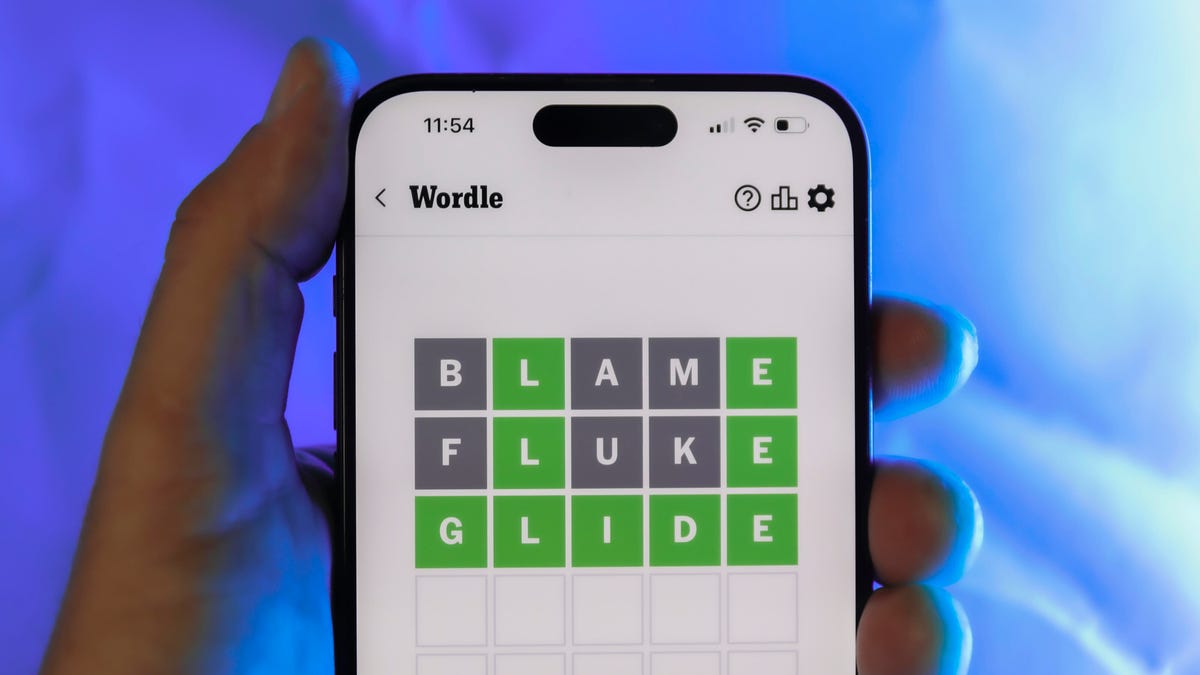
Looking for the most recent Wordle answer? Click here for today’s Wordle hints, as well as our daily answers and hints for The New York Times Mini Crossword, Connections, Connections: Sports Edition and Strands puzzles.
Today’s Wordle puzzle begins with a letter I just never guess, but once you get that, it’s an easy one. If you need a new starter word, check out our list of which letters show up the most in English words. If you need hints and the answer, read on.
Read more: New Study Reveals Wordle’s Top 10 Toughest Words of 2025
Today’s Wordle hints
Before we show you today’s Wordle answer, we’ll give you some hints. If you don’t want a spoiler, look away now.
Wordle hint No. 1: Repeats
Today’s Wordle answer has no repeated letters.
Wordle hint No. 2: Vowels
Today’s Wordle answer has two vowels.
Wordle hint No. 3: First letter
Today’s Wordle answer begins with W.
Wordle hint No. 4: Last letter
Today’s Wordle answer ends with R.
Wordle hint No. 5: Meaning
Today’s Wordle answer can refer to a person who is smarter than another.
TODAY’S WORDLE ANSWER
Today’s Wordle answer is WISER.
Yesterday’s Wordle answer
Yesterday’s Wordle answer, March 24, No. 1739, was BROOD.
Recent Wordle answers
March 20, No. 1735: OASIS
March 21, No. 1736: SLICK
March 22, No. 1737: BASIL
March 23, No. 1738: SERIF
Technologies
Pokemon Champions Release Date: When Does the New Competitive Standard Come Out?
The new Pokemon game will provide the standard battle format for the 2026 Pokemon World Championships.

Pokemon Champions, the competitive pocket monster-battling spin-off game announced during the Pokemon Day 2025 livestream, will be released on the Nintendo Switch and Switch 2 on April 8.
Champions is completely free to play, but it will be launched alongside an optional paid starter pack bundle. This pack includes extra in-game Pokemon storage, a special battle song and additional in-game currency to recruit Pokemon for battle.
The latest Pokemon game unifies professional-level play under a single battling format, which will be used for the 2026 Pokemon World Championships in August. While a whole host of battling mechanics from past games like Z-Moves and Terastallization haven’t been shown off in any of the promotional materials, Mega Pokemon will be available in Pokemon Champions as soon as the game is released.
We’ve known for a while that Pokemon Champions will largely use Pokemon Home for teambuilding. Pokemon Home is a subscription service that stores Pokemon in the cloud and allows them to be transferred in and out of multiple games, including Pokemon Go, Pokemon Sword and Shield, Pokemon Scarlet and Violet and Pokemon Legends: Z-A.
What we didn’t know is how players without a Pokemon Home subscription would build their teams — and frankly, it looks like a bit of a mess. Free-to-play users will be limited to unlocking one new Pokemon a day from a random pool of available pocket monsters.
These Pokemon can be used for a week before they disappear from the player’s account. It’ll take six days to build a whole team, and by the time a player does so, their first party member will nearly be rotated out. What a hassle.
On the upside, scoring wins against online opponents will reward players with a currency that allows them to unlock multiple Pokemon in a single day — and even keep them permanently. Hopefully, this currency is plentiful enough that Pokemon Home doesn’t feel like a requirement to engage with competitive Pokemon battling in the future.
One of the most exciting parts of the impending release of Pokemon Champions will be seeing how the new Pokemon Legends: Z-A Mega Evolutions fare in classic turn-based Pokemon combat. Legends: Z-A launched with a real-time battle system that pared down complex parts of Pokemon battling in order to create more fluid fights. When these Mega Pokemon come to Pokemon Champions, they’ll receive new abilities that could completely change high-level play.
A recent blog post by The Pokemon Company teased some of these abilities, showing off how Mega Meganium and Mega Feraligatr now have access to harder-hitting grass- and dragon-type moves, but there are many more Mega Pokemon that could gain potentially meta-defining abilities when Pokemon Champions is released in April.
A mobile release of Pokemon Champions with cross-platform multiplayer battling is planned for late 2026, but no official release dates for iOS or Android have been announced yet.
Technologies
NASA’s Ignition Program: Skipping the Lunar Orbiter and Going Straight for a Moon Base
The new initiative includes a base on the moon, a nuclear-powered flight to Mars and a replacement for the ISS.
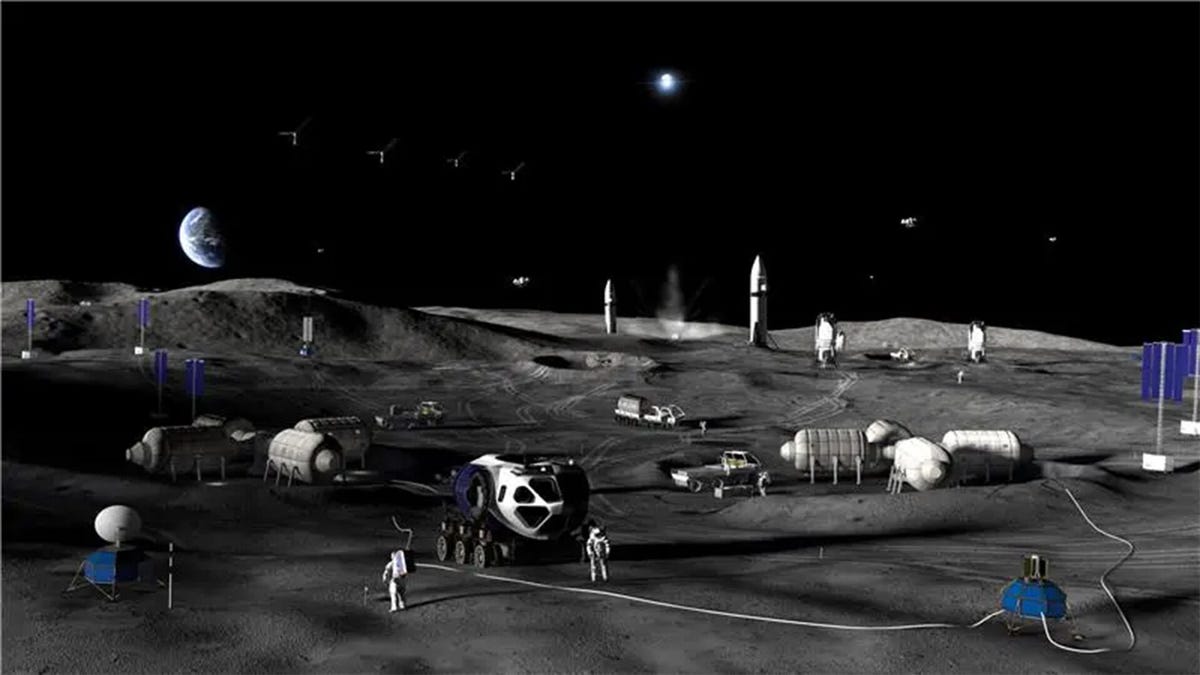
For the second time in as many months, NASA is flipping the script and changing its planned missions for the moon. At the end of last month, the agency pushed back its moon landing to the Artemis IV mission while vowing to complete lunar missions more quickly. This time, the agency said it’s scrapping the Lunar Gateway, a lunar orbiter scheduled to launch in 2027, in favor of building a base on the moon.
NASA formally introduced the new initiative, dubbed Ignition, during a 3-hour press conference on Tuesday. Ignition houses many plans for NASA’s immediate and long-term future, including replacing the International Space Station before it becomes unusable in 2030, and building «SR-1 Freedom,» a nuclear-powered spacecraft scheduled for launch to Mars in 2028.
«NASA is committed to achieving the near‑impossible once again: to return to the moon before the end of President Trump’s term, build a Moon base, establish an enduring presence and do the other things needed to ensure American leadership in space,» NASA Administrator Jared Isaacman said in a statement.
The new moon plan is set to happen in three phases over the next few years. Phase one would be to replace one-off missions with a «templated approach» to gain learning through experimentation. Phase two would see the construction of a «semi-habitable infrastructure» on the moon. Phase three would add permanent infrastructure to that moon base.
NASA hasn’t set a concrete timeline for any of these objectives, but Isaacman said the «clock is running in this great-power competition,» presumably alluding to China’s goal of putting humans on the moon by 2030. During a speech with various aerospace companies, international space agencies and Congress during an event at NASA headquarters, Isaacman said the entire initiative would take seven years and cost $20 billion.
This new plan also involves halting the construction of the Lunar Gateway station. The orbiter has been under construction for years and has been criticized for being a wasteful distraction from the real goal of putting humans back on the moon. Isaacman hinted that the orbiter will be repurposed for use on the lunar surface, which will no doubt come with its own set of challenges.
What else is NASA working on?
Ignition came with other announcements, including that the Nancy Grace Roman Telescope is ahead of schedule and under budget, the success of DART’s mission to change an asteroid’s trajectory by ramming into it, the Parker Solar probe’s continued success in studying the sun and a host of additional projects that are launching between 2026 and 2030.
Much like when it overhauled the Artemis missions last month, NASA is continuing its mission to get things done as quickly as possible. And while the moon base and the Artemis missions are the forefront of NASA’s current plans, according to Isaacman, thousands of ideas are being worked on behind the scenes.
«The whole point of today was not to come and give you a bunch of great PowerPoint [presentations] and sit and wait for it all to come to fruition,» Isaacman said. «This is about action right now … We want to get moving.»
-
 Technologies3 года ago
Tech Companies Need to Be Held Accountable for Security, Experts Say
-
 Technologies3 года ago
Best Handheld Game Console in 2023
-
 Technologies3 года ago
Tighten Up Your VR Game With the Best Head Straps for Quest 2
-
 Technologies4 года ago
Black Friday 2021: The best deals on TVs, headphones, kitchenware, and more
-
 Technologies5 лет ago
Google to require vaccinations as Silicon Valley rethinks return-to-office policies
-
 Technologies5 лет ago
Verum, Wickr and Threema: next generation secured messengers
-
 Technologies4 года ago
Olivia Harlan Dekker for Verum Messenger
-
 Technologies4 года ago
The number of Сrypto Bank customers increased by 10% in five days


