
Exclusive: The SEC drops its four-year-old investigation into EV startup Faraday Future
After four years, and multiple subpoenas and depositions, the beleaguered startup has dodged yet another bullet.

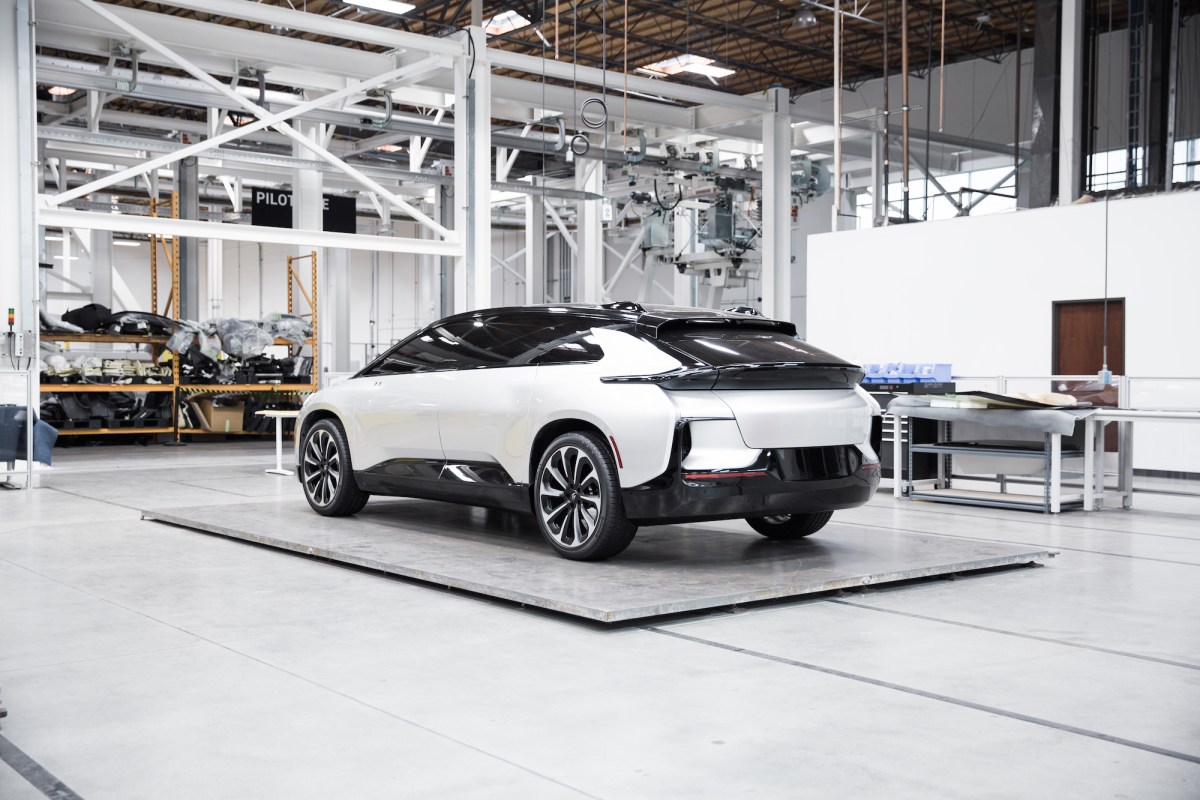
The Securities and Exchange Commission has closed its investigation into electric vehicle startup Faraday Future, despite SEC staff on the case recommending an enforcement action last year, TechCrunch has learned.
Four sources familiar with the investigation, who were granted anonymity to speak about the government case, told TechCrunch that the SEC informed the company and people involved in the probe about the closure this past week.
The dismissal of the case comes amid a historic drop in enforcement actions by the SEC, which only initiated four cases against publicly-traded companies in its 2025 fiscal year, a recent report shows. The SEC did not respond to an after-hours request for comment.
The investigation into Faraday Future lasted for nearly four years. The SEC was looking at whether the EV startup made “false and misleading statements” when it went public in a 2021 merger with a special purpose acquisition company (SPAC), and was also probing whether Faraday Future faked the sales of its first electric vehicles in 2023 — a claim that’s been made by at least three former employee whistleblowers.
The financial regulator sent the startup multiple subpoenas, regulatory filings from Faraday Future show. The SEC also took depositions of multiple former employees and executives in 2024 and 2025, three of the people familiar with the case have told TechCrunch.
In July 2025, Faraday Future revealed the SEC had sent the company and multiple executives — including founder Jia Yueting — letters known as “Wells Notices.” The SEC sends Wells Notices when staff working a case have decided to recommend the agency take enforcement action.
“We can now put all our energy into strategy execution. Over the past five years, we had to spend a great deal of time, effort, and money on cooperating with the investigation,” Jia said in a statement Sunday. Faraday Future said the SEC informed the company that it won’t take action against any of its executives, either.
Disrupt 2026: The tech ecosystem, all in one room
Your next round. Your next hire. Your next breakout opportunity. Find it at TechCrunch Disrupt 2026, where 10,000+ founders, investors, and tech leaders gather for three days of 250+ tactical sessions, powerful introductions, and market-defining innovation. Register now to save up to $400.
Save up to $300 or 30% to TechCrunch Founder Summit
1,000+ founders and investors come together at TechCrunch Founder Summit 2026 for a full day focused on growth, execution, and real-world scaling. Learn from founders and investors who have shaped the industry. Connect with peers navigating similar growth stages. Walk away with tactics you can apply immediately
Offer ends March 13.
It’s not clear if Faraday Future ever responded to the Wells Notices sent last year. As recently as February, the company disclosed in regulatory filings that it had not. “The Company and executives plan to engage with the SEC to explain why enforcement action is not warranted,” Faraday Future wrote in such a filing last month.
The Department of Justice also sent Faraday Future requests for information after the SEC opened its investigation in 2022. Faraday Future has referred to this as an “investigation” in regulatory filings; the DOJ has never confirmed if it opened a full probe, and it did not respond to an after-hours request for comment.
It is rare for the SEC to not pursue an enforcement action after sending a Wells Notice. One study done at the Wharton School in 2020 showed that around 85% of targets who receive a Wells Notice wind up in court with the SEC.
The SEC investigated nearly every electric vehicle startup that went public in a SPAC merger over the last six years. In almost all of those cases, the agency reached a settlement with the startups. It dismissed an investigation into Lucid Motors in 2023, and as TechCrunch first reported in February, the SEC ended a probe into bankrupt EV startup Fisker late last year.
Origins of the investigation
Faraday Future was founded in California in 2014 by Jia, a businessman who at the time was running a booming tech conglomerate in China known as LeEco. It was one of many new companies trying to become the “next Tesla” or, optimistically, a “Tesla killer.”
Faraday snapped up talent from Tesla, other automakers, and also tech companies like Apple, and at one point employed as many as around 1,400 employees. But things got bumpy quickly. The company turned heads, in both good and bad ways, at the 2016 Consumer Electronics Show, with a flashy concept car and the lofty goal of being as disruptive as the iPhone.
The company revealed its first vehicle the following year: a luxury electric SUV called the FF91. By the end of 2017, though the company was nearly out of cash and had laid off or furloughed hundreds of workers. Jia’s company in China had collapsed, and he self-exiled to California as the government in his home country placed him on a debtor blacklist. (It was at this time that a close business associate to Jeffrey Epstein pitched the sex criminal on investing in Faraday Future, as well as other EV startups, as TechCrunch recently revealed. Epstein never invested.)
Faraday Future was rescued by an investment from major Chinese real estate conglomerate Evergrande. But that relationship fell apart quickly, too, with Evergrande walking away by the end of 2018 and Faraday Future laying off even more employees.
Jia nominally stepped aside as CEO in 2019 and also filed for personal bankruptcy to settle billions of dollars of LeEco debt he had personally guaranteed. But behind the scenes, he was still largely in charge of the company.
This became an issue when Faraday Future went public in 2021 and raised about $1 billion. Members of the newly-appointed public company board believed that Faraday’s executives had misrepresented Jia’s control over the day-to-day operations — especially after a short seller report was published that scrutinized Faraday Future — and formed a special committee to investigate.
That committee hired an outside law firm and a forensic accounting firm, and within the first few months it started reporting its findings directly to the SEC, the three people familiar with the investigation told TechCrunch.
Between January and April 2022, Jia was sidelined as a result of the board’s investigation, a senior VP named Matthias Aydt (who is now co-CEO with Jia) was placed on probation for six months, and another VP named Jerry Wang (who is Jia’s nephew) was suspended. (Wang ultimately resigned after “failure to cooperate with the investigation,” according to company filings, but is now back with Faraday Future.)
The committee’s work also showed that Faraday Future had, in the two years before it went public, survived in part on multi-million-dollar loans made to the company by low-level employees with connections to Jia — known as “related party transactions” in legal parlance.
On March 31, 2022, Faraday Future disclosed that the SEC had opened its investigation. The startup revealed the requests for information from the DOJ in June.
Dodging another bullet
Through the rest of 2022, and amid the early stages of the SEC investigation, employees and people close to Jia waged a campaign to regain control of the board and his company. This eventually resulted in death threats against some directors, who ultimately resigned, paving the way for people close to Jia to run the company once more.
Faraday Future finally delivered the first few FF91 SUVs in early 2023. Former employees have sued the company alleging that these were not true sales, and that the company had misled investors. The SEC investigators working the case subpoenaed Faraday Future about issues related to these sales, filings show.
Former executives and employees were initially deposed by the SEC in 2024, according to the people familiar with the investigation. The SEC sat some of them for longer depositions in the first half of 2025, the people said.
The Wells Notice sent in July 2025 said SEC staff had made “a preliminary determination to recommend that the Commission file an enforcement action against the Company alleging violations of various anti-fraud provisions of the federal securities laws.”
Specifically, the Wells Notice referenced “purported false or misleading statements” made during the SPAC merger process about “related party transactions” and Jia’s “role in the Company.” Jia, his nephew Wang, and two other unnamed employees also received Wells Notices.
Faraday Future is still trying to sell the FF91, but it has also recently changed its business in a few ways. The company is importing more affordable hybrid and electric vans from China. It also appears to be selling re-badged versions of Chinese robots, and turned a publicly-traded biotechnology company into a firm focused on crypto.
Those efforts have not stopped the company’s struggles. On Friday, the company announced it had received a warning from the Nasdaq that its stock price was under the minimum of $1, which could eventually lead to the company being de-listed.
This story has been updated with a statement from Faraday Future.

Technologies
Today’s NYT Connections: Sports Edition Hints and Answers for April 8, #562
Here are hints and the answers for the NYT Connections: Sports Edition puzzle for April 8 No. 562.

Looking for the most recent regular Connections answers? Click here for today’s Connections hints, as well as our daily answers and hints for The New York Times Mini Crossword, Wordle and Strands puzzles.
Today’s Connections: Sports Edition is a tough one. If you’re struggling with today’s puzzle but still want to solve it, read on for hints and the answers.
Connections: Sports Edition is published by The Athletic, the subscription-based sports journalism site owned by The Times. It doesn’t appear in the NYT Games app, but it does in The Athletic’s own app. Or you can play it for free online.
Read more: NYT Connections: Sports Edition Puzzle Comes Out of Beta
Hints for today’s Connections: Sports Edition groups
Here are four hints for the groupings in today’s Connections: Sports Edition puzzle, ranked from the easiest yellow group to the tough (and sometimes bizarre) purple group.
Yellow group hint: Working out.
Green group hint: Cover your face.
Blue group hint: NFL players.
Purple group hint: Leap.
Answers for today’s Connections: Sports Edition groups
Yellow group: Exercises in singular form.
Green group: Sporting jobs that require masks.
Blue group: Hall of Fame defensive ends.
Purple group: ____ jump.
Read more: Wordle Cheat Sheet: Here Are the Most Popular Letters Used in English Words
What are today’s Connections: Sports Edition answers?
The yellow words in today’s Connections
The theme is exercises in singular form. The four answers are crunch, plank, situp and squat.
The green words in today’s Connections
The theme is sporting jobs that require masks. The four answers are catcher, fencer, football player and goaltender.
The blue words in today’s Connections
The theme is Hall of Fame defensive ends. The four answers are Dent, Peppers, Strahan and Youngblood.
The purple words in today’s Connections
The theme is ____ jump. The four answers are broad, high, long and triple.
Technologies
The $135M Google Data Settlement Site Is Live — See If You’re Eligible
Use the settlement website to select your preferred payment method, and you may end up $100 richer.
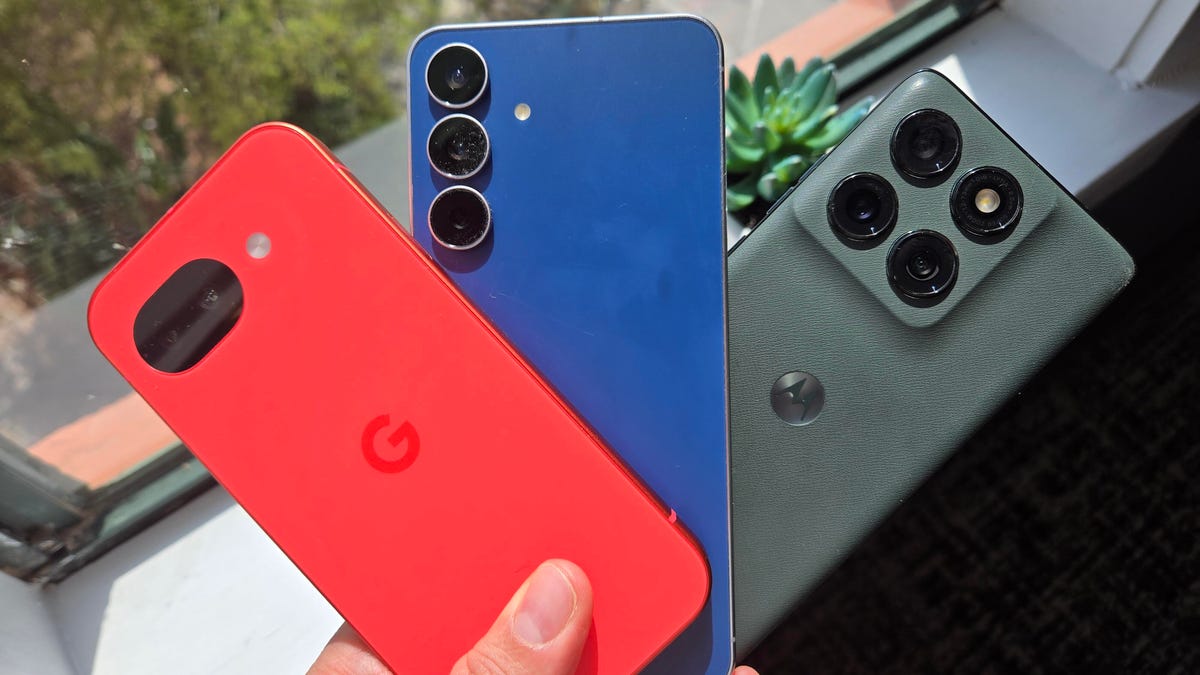
You can now file a claim in the $135 million Google data settlement. The case centers on claims that Android devices transmitted user data without consent. Specifically, the class action lawsuit Taylor v. Google LLC contends that Google’s Android devices passively transferred cellular data to Google without user permission, even when the devices were idle. While not admitting fault, Google reached a preliminary settlement in January, agreeing to pay $135 million to about 100 million US Android phone users.
The official settlement website for the lawsuit is now live. The final approval hearing won’t occur until June 23, when the court will consider whether Google’s settlement is fair and listen to objections. After that, the court will decide whether to approve the $135 million settlement.
In the meantime, if you qualify and want to be paid as part of the settlement, you can select your preferred payment method on the official website. There, you can find information on speaking at the June 23 court hearing and on how to exclude yourself or write to the court to object by May 29.
As part of the settlement, Google will update its Google Play terms of service to clarify that certain data transfers do occur passively even when you’re not using your Android device, and that cellular data may be relied upon when not connected to Wi-Fi. This can’t always be disabled, but users will be asked to consent to it when setting up their device.
Google will also fully stop collecting data when its «allow background data usage» option is toggled off.
Who can be part of the settlement?
In order to join the Taylor v. Google LLC settlement, you must meet four qualifications:
- Be a living, individual human being in the US.
- Have used an Android mobile device with a cellular data plan.
- Have used the aforementioned device at any time from Nov. 12, 2017, to the date when the settlement receives final approval.
- You’re not a class member in the Csupo v. Google LLC lawsuit, which is similar but specifically for California residents.
The final approval hearing is on June 23, so you can add your payment method until then. The hearing’s date and time may change, and any updates will be posted on the settlement website.
If you choose to do nothing, you will still be issued a settlement payment, but you may not receive it if you don’t select a payment method.
How much will I get paid?
It’s not currently known exactly how much each settlement class member will receive, but the cap is $100. Payments will be distributed after final court approval and after any appeals are resolved.
After all administrative, tax and attorney costs are paid, the settlement administrator will attempt to pay each member an equal amount. If any funds remain after payments are sent, and it’s economically feasible, they will be redistributed to members who were previously and successfully paid. If it’s not economically feasible, the funds will go to an organization approved by the court.
Technologies
Samsung’s Galaxy Watch Ultra 2 Might Come in 5G and 4G Cellular Models
If the rumor proves true, the 5G Galaxy Watch Ultra would rival the 5G-enabled $799 Apple Watch Ultra 3 that debuted last fall.
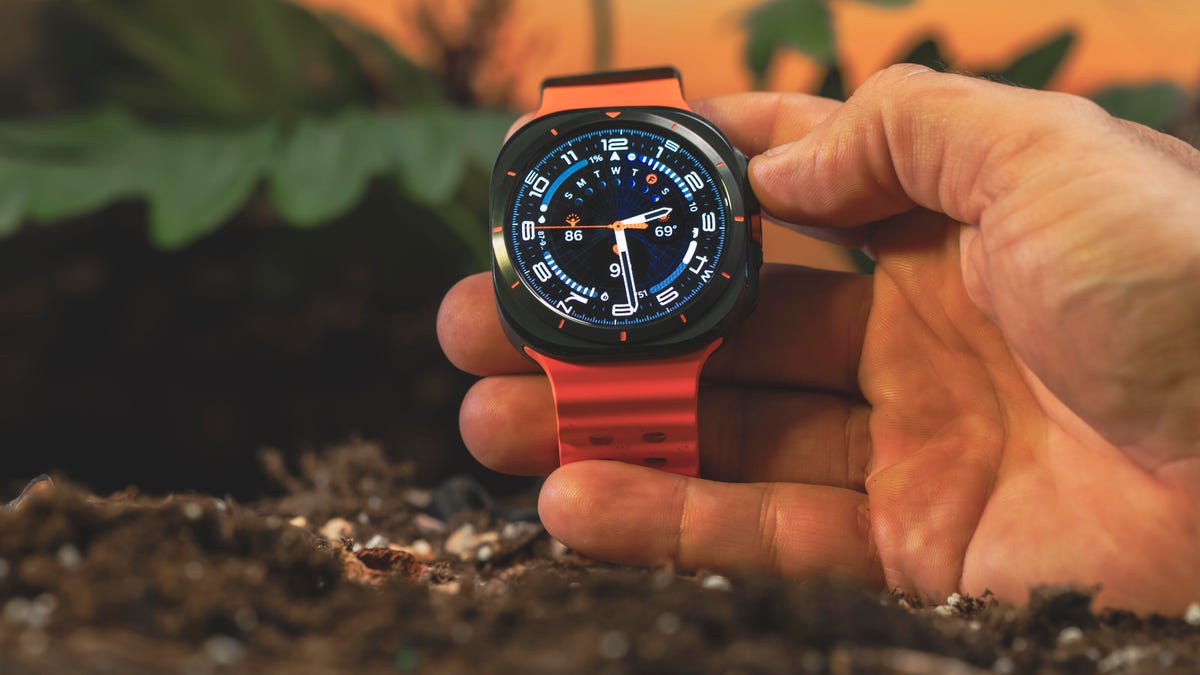
Samsung’s next high-end Galaxy Watch could support faster 5G speeds, but if this leak is true, it will depend on where you live. The rumored Samsung Galaxy Watch Ultra 2 might come in 5G and 4G cellular models, with availability for each smartwatch depending on the country.
According to the Dutch website Galaxy Club (and spotted by SamMobile), Samsung’s servers may have revealed a series of model numbers that point to 5G, 4G and Wi-Fi-enabled editions of the next Galaxy Watch Ultra, which would succeed the original model that debuted in 2024.
A representative for Samsung did not immediately respond to a request for comment.
The Galaxy Club website speculates that the 5G edition would be sold in the US and Korean markets, while the 4G edition would sell in the rest of the world. In the US, a 5G version of the Galaxy Watch Ultra would rival the 5G-enabled $799 Apple Watch Ultra 3, which debuted last fall. The 4G edition would have broader compatibility worldwide, since the earlier network is far more established.
It will likely be a few months until we hear anything official about the Galaxy Watch Ultra 2. Samsung typically unveils its new watches in the summer alongside its Galaxy Z Fold and Z Flip foldable phones. Last year, Samsung unveiled the Galaxy Watch 8 and the Galaxy Watch 8 Classic, but otherwise left the prior 2024 Ultra in the lineup for those looking for a larger 47mm smartwatch.
-
 Technologies3 года ago
Tech Companies Need to Be Held Accountable for Security, Experts Say
-
 Technologies3 года ago
Best Handheld Game Console in 2023
-
 Technologies3 года ago
Tighten Up Your VR Game With the Best Head Straps for Quest 2
-
 Technologies4 года ago
Black Friday 2021: The best deals on TVs, headphones, kitchenware, and more
-
 Technologies5 лет ago
Google to require vaccinations as Silicon Valley rethinks return-to-office policies
-
 Technologies5 лет ago
Verum, Wickr and Threema: next generation secured messengers
-
 Technologies4 года ago
Olivia Harlan Dekker for Verum Messenger
-
 Technologies4 года ago
The number of Сrypto Bank customers increased by 10% in five days


