

Technologies
Your Phone Pinging Hijacks Your Brain for 7 Seconds, Study Finds
It’s tough to ignore the buzz of your phone when a new message arrives.

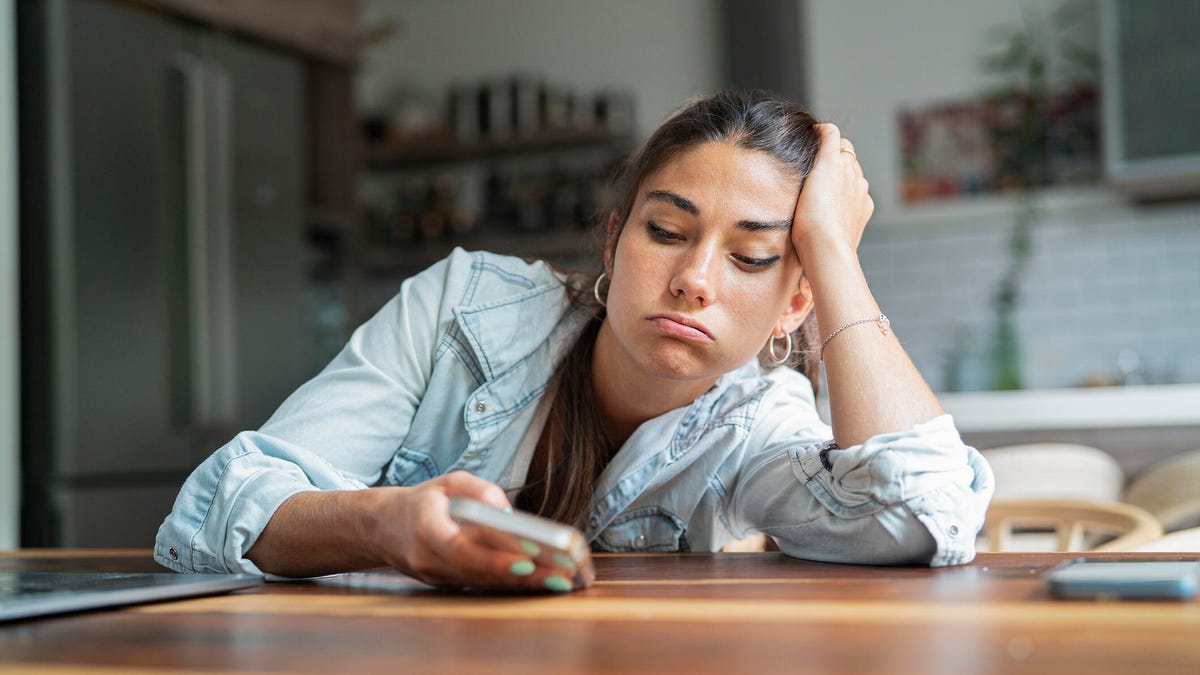
The soft ping or buzz on your phone that lets you know a new message has arrived is hard to ignore. But it can mean trouble when it’s time to concentrate on a task, according to a new study that will be published in the June issue of the journal Computers in Human Behavior.
The study found that whenever we receive a message notification, it interrupts our concentration for 7 seconds. It turns out that the type of information that we see in the notification also matters. The more personally relevant the notification, the larger the distraction.
«This interruption likely arises from several mechanisms, such as [a notification’s] perceptual prominence, the conditioning acquired through repeated exposure, and the possible social significance,» Hippolyte Fournier, a postdoctoral fellow at the University of Lausanne in Switzerland and the study’s first author, told CNET.
While 7 seconds may not seem like much, we get a lot of notifications throughout the day, and those seconds can add up.
«We observed that both the volume of notifications and how often individuals check their smartphones were linked to greater disruption,» Fournier said. «This pattern suggests that the fragmented nature of smartphone use, rather than simply total usage duration, may be a key factor in understanding how digital technologies influence attentional processes.»
Attention hijack
The study used a Stroop task, a test that measures how quickly you can process information and how well you can focus. Colored words flash across a screen for the test. The font of each word is one color, but the text of the word is a different color. So the word «blue» might be written in green font.
You have to identify the font color and ignore the color that the word spells out. It’s a lot harder than it sounds. You can take the test yourself using this YouTube video.
The researchers recruited 180 university students for the study. The students were randomly split up into three groups. All students received a Stroop task, and notifications popped up on the screen as they completed the test. But the researchers slightly changed the experiment for each group.
The researchers told the first group that the screen was mirroring their personal phones, so the students thought they were seeing their real notifications.
The second group saw pop-ups on the screen that looked like real social media notifications, but the group knew they were false. This helped the researchers test how learned habits impact attention, without personal relevance.
The third group saw only blurry notifications, with illegible text. The researchers used this test to determine how the visual distraction of an unexpected pop-up affected the group’s attention.
The notifications slowed students’ ability to process information by about 7 seconds across all three groups. But for students who thought they were getting real notifications, the delay was more pronounced.
«Although it is well documented that notifications can automatically attract attention, far less is understood about the cognitive processes that drive this attentional capture and the reasons why some people may be more susceptible than others,» Fournier said. «Our objective was to gain a better understanding of both the underlying mechanisms and the individual differences that could account for this variability in sensitivity.»
Brain delay
In the US, 90% of all people own a smartphone, according to Pew Research, and a Harmony Healthcare IT study found that we spend over 5 hours a day using them. But how long we spend on our phones may not matter as much as how often we check our notifications.
«In a lab study designed to mimic real-life notification exposure, we found that the frequency of notifications and checking habits mattered more than total screen time,» Fabian Ringeval, another of the paper’s authors, wrote in a LinkedIn post. «The more often we interact with our phones, the more vulnerable our attention becomes to interruption.»
Anna Lembke, a psychiatry professor at Stanford, told CNET that the study mirrors what she sees clinically and in research literature, «namely that the level of engagement — for example how many notifications a person gets and how quickly they respond to notifications — is as big a predictor, or an even bigger predictor, of harmful, problematic use than time spent.»
Researchers found that study participants received about 100 notifications per day. So the notifications we get on our phones could be slowing down our cognitive abilities through near-constant distraction.
«In everyday situations that require continuous attention — like driving or learning — even short slowdowns can add up,» Ringeval wrote. «Our findings suggest that improving digital well-being may be less about ‘using our phones less’ and more about reducing unnecessary interruptions.»
Lembke said it’s fair to worry about how smartphone notifications impact our attention, «which is why platforms for minors should silence notifications by default and make it difficult to re-activate notifications without parental consent, and why adults should electively turn off notifications to improve concentration and well-being, with rare exceptions for safety reasons.»
Technologies
Today’s NYT Connections Hints, Answers and Help for March 20, #1013
Here are some hints and the answers for the NYT Connections puzzle for March 20 #1013.
Looking for the most recent Connections answers? Click here for today’s Connections hints, as well as our daily answers and hints for The New York Times Mini Crossword, Wordle, Connections: Sports Edition and Strands puzzles.
Board-game players, today’s NYT Connections puzzle is calling your name — at least the green category. Read on for clues and today’s Connections answers.
The Times has a Connections Bot, like the one for Wordle. Go there after you play to receive a numeric score and to have the program analyze your answers. Players who are registered with the Times Games section can now nerd out by following their progress, including the number of puzzles completed, win rate, number of times they nabbed a perfect score and their win streak.
Read more: Hints, Tips and Strategies to Help You Win at NYT Connections Every Time
Hints for today’s Connections groups
Here are four hints for the groupings in today’s Connections puzzle, ranked from the easiest yellow group to the tough (and sometimes bizarre) purple group.
Yellow group hint: Cause anxiety.
Green group hint: Do not pass Go.
Blue group hint: Gods and monsters.
Purple group hint: Chickens lay them.
Answers for today’s Connections groups
Yellow group: Disturb.
Green group: Words on a Monopoly board.
Blue group: Figure in Greek myth.
Purple group: Egg ____.
Read more: Wordle Cheat Sheet: Here Are the Most Popular Letters Used in English Words
What are today’s Connections answers?
The yellow words in today’s Connections
The theme is disturb. The four answers are alarm, concern, rattle and shake.
The green words in today’s Connections
The theme is words on a Monopoly board. The four answers are boardwalk, chance, luxury and parking.
The blue words in today’s Connections
The theme is figure in Greek myth. The four answers are fate, fury, muse and siren.
The purple words in today’s Connections
The theme is egg ____. The four answers are carton, noodle, roll and timer.
Toughest Connections puzzles
We’ve made a note of some of the toughest Connections puzzles so far. Maybe they’ll help you see patterns in future puzzles.
#5: Included «things you can set,» such as mood, record, table and volleyball.
#4: Included «one in a dozen,» such as egg, juror, month and rose.
#3: Included «streets on screen,» such as Elm, Fear, Jump and Sesame.
#2: Included «power ___» such as nap, plant, Ranger and trip.
#1: Included «things that can run,» such as candidate, faucet, mascara and nose.
Technologies
Today’s NYT Strands Hints, Answers and Help for March 20 #747
Here are hints and answers for the NYT Strands puzzle for March 20, No. 747.
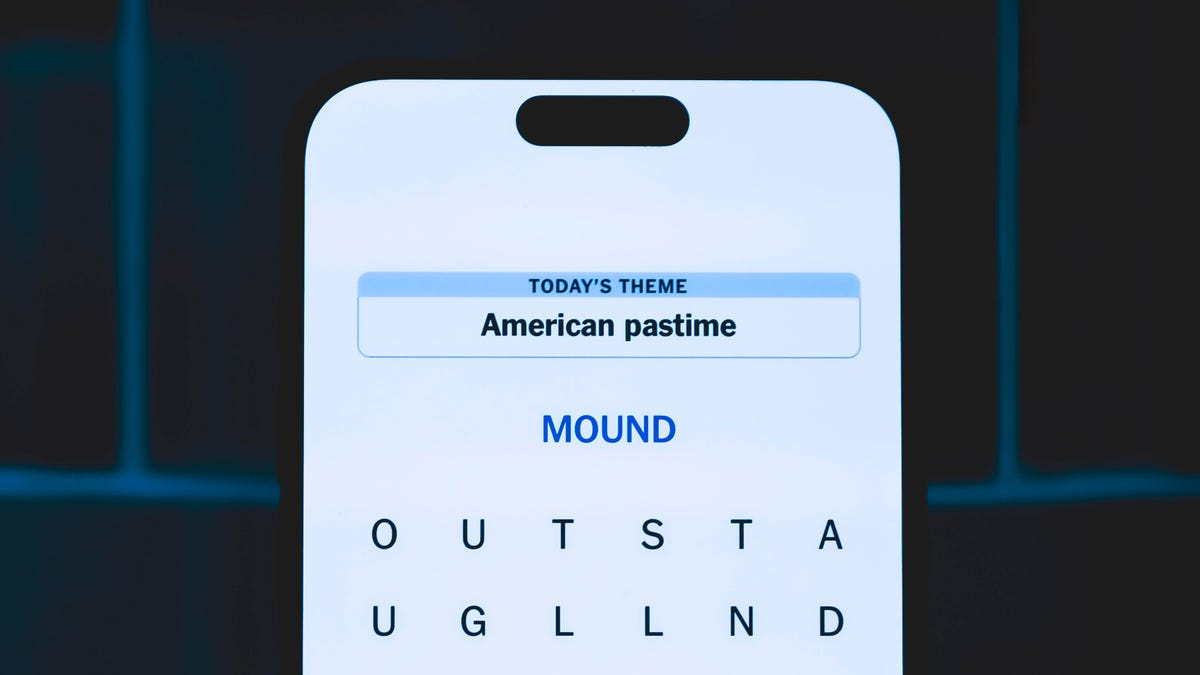
Looking for the most recent Strands answer? Click here for our daily Strands hints, as well as our daily answers and hints for The New York Times Mini Crossword, Wordle, Connections and Connections: Sports Edition puzzles.
Today’s NYT Strands puzzle could be tricky for some. First off, it’s an unusual topic. And some of the answers are difficult to unscramble, so if you need hints and answers, read on.
I go into depth about the rules for Strands in this story.
If you’re looking for today’s Wordle, Connections and Mini Crossword answers, you can visit CNET’s NYT puzzle hints page.
Read more: NYT Connections Turns 1: These Are the 5 Toughest Puzzles So Far
Hint for today’s Strands puzzle
Today’s Strands theme is: Spring fever.
If that doesn’t help you, here’s a clue: A resilient, metal device.
Clue words to unlock in-game hints
Your goal is to find hidden words that fit the puzzle’s theme. If you’re stuck, find any words you can. Every time you find three words of four letters or more, Strands will reveal one of the theme words. These are the words I used to get those hints but any words of four or more letters that you find will work:
- CORN, DELT, WEND, REND, GORE, GORY, LARD, CAPS, PAIL, PAILS, DRIP, DRIPS
Answers for today’s Strands puzzle
These are the answers that tie into the theme. The goal of the puzzle is to find them all, including the spangram, a theme word that reaches from one side of the puzzle to the other. When you have all of them (I originally thought there were always eight but learned that the number can vary), every letter on the board will be used. Here are the nonspangram answers:
- COIL, GYRE, HELIX, SPIRAL, CURLICUE, CORKSCREW
Today’s Strands spangram
Today’s Strands spangram is TWISTANDTURN. To find it, start with the T that is the bottom letter on the far-right vertical row, and wind up.
Toughest Strands puzzles
Here are some of the Strands topics I’ve found to be the toughest.
#1: Dated slang. Maybe you didn’t even use this lingo when it was cool. Toughest word: PHAT.
#2: Thar she blows! I guess marine biologists might ace this one. Toughest word: BALEEN or RIGHT.
#3: Off the hook. Again, it helps to know a lot about sea creatures. Sorry, Charlie. Toughest word: BIGEYE or SKIPJACK.
Technologies
The Samsung Galaxy Z TriFold Is the Future (Even Though It’s Dead)
-
 Technologies3 года ago
Tech Companies Need to Be Held Accountable for Security, Experts Say
-
 Technologies3 года ago
Best Handheld Game Console in 2023
-
 Technologies3 года ago
Tighten Up Your VR Game With the Best Head Straps for Quest 2
-
 Technologies4 года ago
Black Friday 2021: The best deals on TVs, headphones, kitchenware, and more
-
 Technologies5 лет ago
Google to require vaccinations as Silicon Valley rethinks return-to-office policies
-
 Technologies5 лет ago
Verum, Wickr and Threema: next generation secured messengers
-
 Technologies4 года ago
Olivia Harlan Dekker for Verum Messenger
-
 Technologies5 лет ago
iPhone 13 event: How to watch Apple’s big announcement tomorrow


