

Technologies
Marathon vs. ARC Raiders: Which Extraction Shooter Is Right for You?
The hottest extraction shooter of last year goes up against Bungie’s newest FPS game. Which one comes out on top?

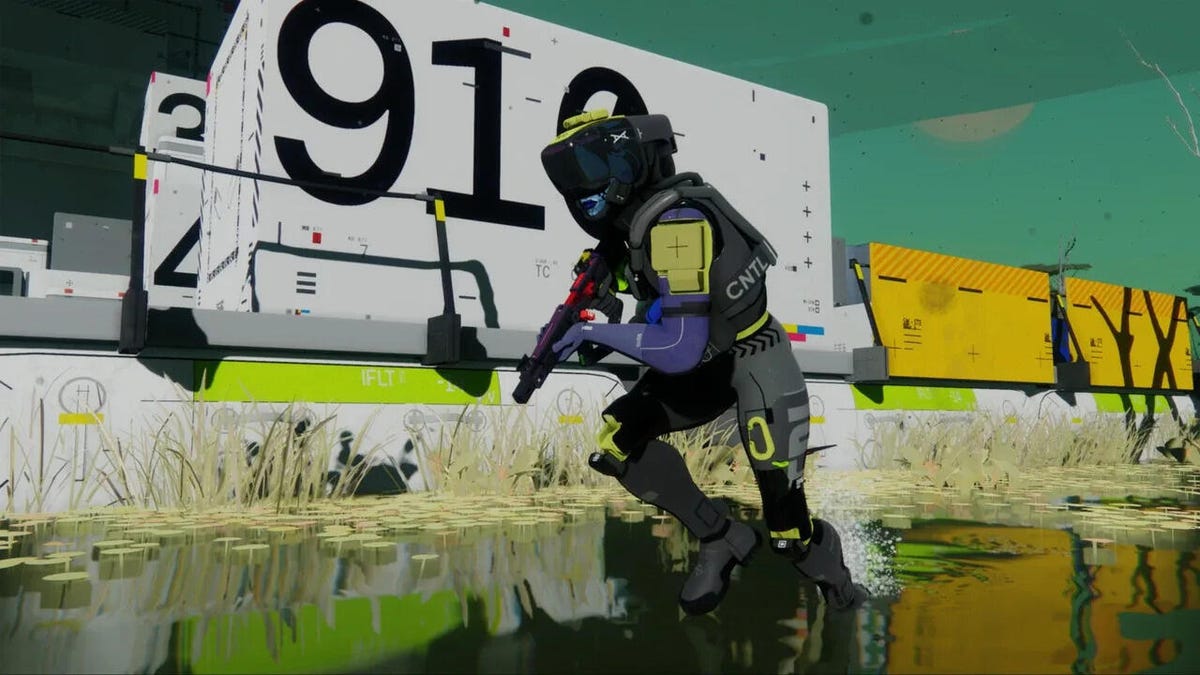
Developer Bungie’s new first-person shooter, Marathon, is a game where players drop onto an alien planet to fight a tyrannical intergalactic government’s robots, ambush fellow humans, and escape with sweet, sweet loot… or die trying.
Even if you’re unfamiliar with the wide world of extraction shooters — games where players need to get in and out of lucrative player-versus-player zones with entire inventories of loot at risk — that gameplay loop probably sounds familiar. Developer Embark Studios’ ARC Raiders, which took the gaming world by storm in October last year, also pits players against killer robots (and each other) as they try to grab any valuables that aren’t nailed down.
Frankly, I don’t think ARC Raiders and Marathon are all that similar, so it’s worth snuffing out the concern that there’s only room for one of the two in your game library. The broad strokes are the same — both games place players in the role of scavengers who will do whatever it takes to survive under positively catastrophic conditions. Both games feature lore-rich worlds colored by striking and distinct art directions. And in ARC Raiders and Marathon alike, death means losing all the weapons, medical supplies and tchotchkes you’re carrying. There are no do-overs.
In my eyes, though, that’s where the similarities between these recent releases end. ARC Raiders and Marathon are wholly separate beasts in their mechanics — even the difference in camera perspective makes a massive difference in how these games are played, with the former’s third-person angle helping players peek around corners while the latter’s first-person view increases immersion.
Moreover, live-service, multiplayer-only, player-versus-player games are shaped by their communities just as much as by their developers. ARC Raiders’ community largely fosters cautious collaboration throughout the game’s postapocalyptic Italian wasteland, while many Marathon players would stab each other in the back for a glimpse of bottom-tier loot in its neon-plastered alien landscapes.
At the end of the day, it doesn’t feel like ARC Raiders and Marathon are truly in competition with each other. The run-to-run gameplay, the combat speed and the «general vibe» of each experience are nothing alike. Which is a good thing.
Yet comparisons between these two games were inevitable: People have been champing at the bit to spin up narratives that pit these juggernauts against one another before Marathon even hit the shelves, and the headlines just keep coming. I understand the compulsion, too: A beleaguered Bungie just released its Hail Mary in the fairly niche extraction-shooter genre that is currently dominated by another game. It’s a baffling play from a studio that, from the outside, feels like it’s on the verge of becoming one of the next victims of the curse suffered by studios acquired by PlayStation.
Against all odds, though, Marathon turned out to be a pretty exceptional game. So let’s turn this perverse exercise on its head. While I think ARC Raiders and Marathon are both high-quality games, one of the two will certainly be better for you, specifically. I’m going to help you determine if you should be spending your time warring against the robotic menace (and occasional humans) here on Earth or far beyond the stars.
ARC Raiders is a game for social survivors
I knew ARC Raiders was going to be something special before it was released. Even in a sanitized games media environment without servers full of players, exploring the ruins of retrofuturist robot-infested Italian towns and countrysides immediately differentiated ARC Raiders from its competitors. Extraction shooters like Escape From Tarkov are mostly dark and dreary FPS games, and ARC Raiders feels like a breath of fresh air by contrast.
As a third-person shooter, ARC Raiders plays much slower than others in the genre. Players can peek around corners, identify threats and set traps — and they’re encouraged to do so, since the makeshift weapons that you carry around are huge, sometimes unwieldy to fire and always cumbersome to reload. The world is threatening if you’re not prepared, because it’s not easy to escape if you’ve been routed by a sneaky ARC bot or an opportunistic player.
What truly endears me to ARC Raiders is its community. The player base, at least in my experience, is mostly composed of friendly folks who just want to lend each other a hand as they scavenge the world above Speranza, but there’s still the underlying tension that chaos could break out at a moment’s notice. ARC Raiders is unique in the extraction shooter space as the one game where more people are willing to negotiate and work together than shoot you on sight, and that helps each run feel storied and distinct.
I’ve gotten to play as heroes, villains and every role in between. I’ve joined posses to hunt down antagonists sniping at a group of innocent looters, been handed loot by mysterious strangers, and backstabbed players who are celebrating a victory over a large ARC robot. I don’t feel like I’ve ever partaken in such a wealth of different interpersonal narratives in any other extraction shooter.
There are still issues with ARC Raiders that persist months after its release. While massive content packages have shipped new maps, enemies and loot, the game’s balancing still leaves something to be desired. I don’t like that the free loadout weapons are still among the best in the game (even after several rounds of game-changing updates) while more complex gadgets like ARC-seeking grenades have become even harder to craft.
ARC Raiders’ greatest flaw is that its endgame doesn’t always feel as compelling as the tooth-and-nail fight to get there. Hulking robotic enemies like the Matriarch are cinematic raid bosses, but after you take these titans down, the game starts to lose its purpose — the only things you score from this behemoth’s corpse are materials to craft guns that efficiently destroy more ARC. But you’ve already summited that mountain by beating the game’s hardest challenge, so what’s the point? If you aren’t choosing to wipe your character progress every season, ARC Raiders grows stale — while Marathon has a promising future if Bungie integrates Destiny-like raid mechanics into its endgame.
Marathon is a free-for-all sci-fi sweatfest
You have to be a little bit of a freak to enjoy Bungie’s latest first-person shooter. The tagline for the game is «death is the first step,» so it shouldn’t come as a surprise that the surface of Tau Ceti IV (the distant planet where Marathon takes place) is rife with dangerous flora, fauna and killer robots that are absolutely brutal to take on.
Even if you master this strange new world, other players will happily stab you in the back. Popping your head around a corner and trying to make conversation with another player might be a good way to make friends in ARC Raiders, but trying the same thing in Marathon will often get your head popped.
If anything, Marathon nurtures the «every man for himself» mentality, since it’s exceptionally easy to take down other players. While ARC Raiders favors slow, drawn-out engagements with makeshift weapons and shrapnel grenades where methodical approaches can decide firefights, Marathon has a very fast «time-to-kill,» making it easy for players to knock each other out in seconds. If you’re not shooting first and asking questions later, you’re losing a precious advantage you have over an opponent.
Each moment is fraught with danger, and Marathon’s world feels truly oppressive in a way that ARC Raiders doesn’t. The sound design is fantastic — the ambience of the otherworldly environment and dead industrial outposts contrasts with the thudding footfalls of nearby enemies to great effect, fueling my fear and spiking my adrenaline as I prepare to fight until my last breath. ARC Raiders only produces this thrill level in the endgame during raids against gargantuan robots; in Marathon, that satisfying mix of cortisol and dopamine is being drip-fed to you every single match.
Marathon regularly borrows elements from other extraction shooters, at the risk of sometimes feeling like a game I’ve played before. But Bungie’s latest game takes these building blocks — the unforgivingly quick time-to-kill in PvP gunfights, an in-depth contract and faction reputation system and a wonderfully complex set of perk trees — and polishes them to fit Marathon’s cold, corporate, cyberpunky world.
More impressively, the small twists on the familiar extraction shooter formula (especially light hero-shooter elements of the classes) feel extremely impactful, completely changing the way I create loadouts and instigate fights during my runs. Marathon feels like an «all killer, no filler» version of what most of the genre’s games are trying to do — it’s not groundbreaking, but it might be the best «classic» extraction shooter on the market right now.
Which extraction shooter is worth your time?
Despite my effusive praise, you may be surprised to read that I actually don’t much enjoy Marathon. I appreciate that the genre’s core gameplay loop is enhanced by Bungie’s trademark satisfying gunplay, as well as a ton of meta-progression bonuses, which I’m a total sucker for. And while I’m sure the corporate neon-drenched brutalism of Marathon’s graphic realism art style is revolting to some folks, I think the game is gorgeous.
Still, there’s just something about playing Marathon that feels empty to me compared to ARC Raiders. Every human interaction in ARC Raiders is a real toss-up between friendship and firefight. During some runs, I’ll make allies and share loot, and in other matches, I’ll strike up an uneasy alliance with a shifty player to extract together. Getting double-crossed is part of the game, but it isn’t guaranteed. I’ve fallen in love with ARC Raiders because of its community.
ARC Raiders clicks for me where Marathon just doesn’t, and that’s OK. Just because these games are big-budget productions that are ostensibly positioned as competitors doesn’t mean they’re actually built for the same audience. Bungie and Embark Studios both made exceptional extraction shooters.
If you enjoy emergent narratives and novel interactions with strangers (or you can’t keep up with twitchy, fast-paced shooters), ARC Raiders will be your go-to game. If you enjoy moving fast (and dying faster), have an affinity for Bungie’s signature brand of gunplay, or you feel at home playing Destiny or Apex Legends, then Marathon will be your new favorite game.
I truly believe neither of these games is better than the other — they’re just different, and it’s up to you to recognize what experiences you generally enjoy and choose accordingly. And hey, at the end of the day, it’s always worth remembering that nobody will stop you from enjoying them both.
Technologies
Ring Finally Goes Wire-Free for Its Latest 4K Video Doorbells
The launch of battery-powered versions of the company’s powerful AI doorbells has been highly anticipated.

Security company Ring on Wednesday announced a significant expansion of its video doorbell line, notably battery-powered versions of both its 4K and 2K models, priced from $80.
Both Amazon’s Ring and Google Nest debuted high-resolution video doorbells with new AI features in the fall of 2025. But they were wired only, and in my tests, I kept thinking, «I sure wish there were battery models available.»
Wireless video doorbells are far better for most front doors than models that require connecting to your existing doorbell wiring, which is often poorly positioned for a security camera. Mine, for example, is located on a wall beside my door that’s useless for any kind of video views, no matter how you angle a lens.
«Enhancing image quality in battery-powered doorbells means customers can enjoy reliable performance with the flexibility to install devices in a way that suits their space, whether renting or living in homes without existing wiring,» a Ring spokesperson said.
At first, I wondered whether the higher 4K resolutions and more advanced AI features would use too much power to support batteries. If so, Ring is the first to fix that issue with this suite of doorbells, including these models available for preorder right now:
- Ring Battery Doorbell Pro — $250: This model offers up to 4K resolution and 10x zoom, and Ring says it features a redesigned internal architecture to support battery power.
- Ring Battery Doorbell Plus (2nd-gen) — $180: This model includes a quick-release battery pack along with 2K video.
- Ring Battery Doorbell (2nd-gen) — $100: This video doorbell includes 2K video, a 6x zoom and what Ring calls a «streamlined, rechargeable design,» which means you take the entire video doorbell to charge it, not just the battery — a design I greatly prefer, since Ring’s battery packs can get fiddly.
There’s also a new version of a Ring wired doorbell with 2K resolution, starting at $80. It wouldn’t be Ring without a plethora of doorbell devices to confuse newcomers, which is why I have a guide specifically for Ring video doorbells that will need some updating once I finish testing these new models.
Resolution plus an intelligence upgrade
Ring’s ordinary subscriptions of the Ring Protect plan give you cloud video storage and intelligent alerts for people, packages and vehicles, which are important but not really advanced AI. But spring for the $20-per-month Ring AI Pro cam, and this new generation of cameras opens up other capabilities.
Ring’s AI features include AI video descriptions, so if you get an alert, you can also get a summary of what the doorbell saw, including people and activities. A similar feature lets you search your video history with specific terms, such as «bike,» «truck» and so on. You also get the beta version of Ring’s Familiar Faces feature, which can ID logged faces of people who approach.
If these AI features make you uneasy and you’d rather protect your privacy, the best option is to avoid a subscription altogether or choose a lower-tier plan that gives you cloud storage without AI.
I also have a guide on how to turn off Ring’s detection and data-sharing features that might make you nervous, so you can keep what you like while ditching what you don’t.
Technologies
Today’s NYT Mini Crossword Answers for Thursday, March 26
Here are the answers for The New York Times Mini Crossword for March 26.

Looking for the most recent Mini Crossword answer? Click here for today’s Mini Crossword hints, as well as our daily answers and hints for The New York Times Wordle, Strands, Connections and Connections: Sports Edition puzzles.
Baseball is back! You’ll see baseball images patterned throughout today’s Mini Crossword grid, and when you solve the puzzle, they’ll spell out a certain word. Play ball! Er, read on for all the answers. And if you could use some hints and guidance for daily solving, check out our Mini Crossword tips.
If you’re looking for today’s Wordle, Connections, Connections: Sports Edition and Strands answers, you can visit CNET’s NYT puzzle hints page.
Read more: Tips and Tricks for Solving The New York Times Mini Crossword
Let’s get to those Mini Crossword clues and answers.
Mini across clues and answers
1A clue: Degrees for boardroom execs
Answer: MBAS
5A clue: «___ want for Christmas …»
Answer: ALLI
6A clue: What Hamlet holds while giving his «Alas, poor Yorick!» speech
Answer: SKULL
7A clue: Wild, as an animal
Answer: FERAL
8A clue: Sphere
Answer: ORB
Mini down clues and answers
1D clue: Word after «match» or «mischief»
Answer: MAKER
2D clue: Bit of writing on a book jacket
Answer: BLURB
3D clue: Penne ___ vodka
Answer: ALLA
4D clue: Window ledge
Answer: SILL
6D clue: Bay Area airport, for short
Answer: SFO
Technologies
McDonald’s KPop Demon Hunter Meals Include Bright Purple Nugget Sauce
The Derpy McFlurry mixes popping boba pearls and berry sauce into a soft-serve dessert.

McDonald’s has seen success with themed combo meals, including its holiday Grinch Meal. Now, the fast-food chain is capitalizing on Netflix’s Oscar-winning animated film, KPop Demon Hunters, with new upcoming menu items and both a breakfast meal and a lunch/dinner offering. Let’s hope you like the color purple.
The HUNTR/X Meal, named for the K-pop girl group in the movie, is a 10-piece chicken McNuggets meal that includes a medium drink and three special menu items.
Ramyeon McShaker fries come with a small bag of soy, garlic, sesame and spice seasoning, along with regular McDonald’s french fries. You sprinkle the seasoning into the provided bag, dump in the fries, shake it all up and eat.
The meal includes two new sauces for the fries and nuggets. Hunter sauce is a sweet chili sauce mixing notes of chili, garlic and pepper. But my favorite item on this new menu is Demon sauce, a bold mustard sauce with some heat and a bold purple color. There’s just not enough dark purple food out there.
There’s also a new dessert, the Derpy McFlurry, which blends creamy vanilla soft serve with berry-flavored popping boba pearls, served with a swirl of wild berry sauce. McDonald’s named it for the supernatural feline, Derpy Tiger, from the movie.
If breakfast is your bag, the new morning meal is the Saja Boys Breakfast Meal, named for the movie’s boy band.
It includes a Spicy Saja McMuffin sandwich, which is a sausage McMuffin with egg and a spicy Saja sauce, hash browns and a small drink.
Both meals come with a photocard for one of the bands and a Derpy card. The Derpy card includes a QR code you can scan to unlock online content about the film.
The full KPop Demon Hunters menu should be available at participating McDonald’s beginning March 31.
The McDonald’s Grinch meal (and its accompanying patterned socks) sold out quickly, so KPop Demon Hunters fans may want to mark their calendars and nab a meal when they are released.
-
 Technologies3 года ago
Tech Companies Need to Be Held Accountable for Security, Experts Say
-
 Technologies3 года ago
Best Handheld Game Console in 2023
-
 Technologies3 года ago
Tighten Up Your VR Game With the Best Head Straps for Quest 2
-
 Technologies4 года ago
Black Friday 2021: The best deals on TVs, headphones, kitchenware, and more
-
 Technologies5 лет ago
Google to require vaccinations as Silicon Valley rethinks return-to-office policies
-
 Technologies5 лет ago
Verum, Wickr and Threema: next generation secured messengers
-
 Technologies4 года ago
Olivia Harlan Dekker for Verum Messenger
-
 Technologies4 года ago
The number of Сrypto Bank customers increased by 10% in five days


