

Technologies
Dolls, Not Tablets, Shine in Teaching Vital Skills to Children, Study Reveals
Order up a Raggedy Ann or a Barbie doll: Playing with dolls helped children develop a stronger tolerance for diverse perspectives.


Empathy, tolerance and the ability to see the world from others’ perspectives are crucial skills — and they begin developing early in life. New research suggests that playing with dolls rather than tablets may be more effective at fostering these abilities.
Researchers from Cardiff University in the UK found that children ages 4-8 who played with dolls showed better improvement than those who played open-ended games on digital tablets in developing what is called «false-belief understanding.» The study was a randomized trial and was conducted over six weeks.
False-belief understanding is our ability to recognize that others can hold false beliefs or be mistaken about the world. Developing this cognitive skill helps us appreciate that others can have different beliefs and opinions — about politics, religion, among many things — and be able to tolerate and empathize with that.
Children who develop this cognitive ability can better navigate increasingly complex social situations and deal with conflicts. Psychologists believe that kids begin to develop this ability primarily between ages 4 and 8, and some studies have shown that development can start even before age 2.
The classic example of false-belief understanding is the Sally Anne task, conducted by researchers in London in 1983. Children were shown two dolls — Sally, who had a basket, and Anne, who had a box. The Sally doll then puts a marble in her basket and leaves the room. Anne takes the marble from the basket and hides it in her box. Sally then returns to the room.
The children in the study were asked three questions, the main one being, «Where will Sally look for her marble?» If the kids answered «the basket,» then they understood that Sally’s view of the world — that the marble was still in her basket — did not reflect reality.
The experiment
For the six-week trial, children ages 4-8 played with either dolls or digital tablets loaded with creative, open-ended games. There were 81 children, with an average age of 6, from South Wales. The kids were randomly selected to play with either dolls or tablets; they could not choose on their own. The parents kept diaries of the play sessions, which lasted hours.
After the trial period, researchers found that the children who had played with dolls had a stronger improvement in false-belief understanding and an ability to separate their knowledge from what others believed to be true. To measure this improvement, the researchers used the Sandbox Task, a psychological tool created in 2011. It’s similar to the Sally Anne task but involves relocating and burying an item in a sandbox.
The researchers also saw that the children in the doll group often included friends, siblings and parents in their play. The children in the tablet group mostly played alone. The children who played with dolls also often gave them personalities, talking about what they thought the dolls wanted, believed or felt.
The researchers concluded that playing with dolls might help children practice and improve social-processing skills.
«The mechanism underlying this improvement requires further investigation, but we speculate that dolls may encourage social interaction and further practice of these skills outside of social interactions,» according to the study.
Tablet use is widespread among kids
Busy parents may be tempted to use tablets to keep their children occupied. The Pew Research Center found that 63% of children ages 2-4 interacted with tablets, and that number rose with age — 81% in children ages 5-7 and 80% in children ages 8-10. The research also showed the majority of children used smartphones at young ages — 59% in ages 2-4, 58% in ages 5-7 and 64% in ages 8-10.
A majority of parents — nearly 60% — said they were «doing the best they can,» while a little more than 40% said they «could be doing better» at managing their kids’ screen time, according to the study.
Are tablets bad?
So, is it time to ditch the tablets and order some dolls? Sarah Gerson, co-author of the study and a developmental psychologist at Cardiff University, said the study isn’t an indictment of children using tablets or other devices.
«My general advice is about letting children embrace the kinds of play that they find most natural,» Gerson told CNET. «Although tablet games were our ‘control’/comparison group in this study, we make a point of saying this doesn’t mean anything negative about tech. Instead, different types of toys and play can be beneficial for different kinds of learning/development.»
Although Gerson and her team used dolls in the experiment, children might also improve their understanding of false beliefs through play with other inanimate objects.
«Humanoid dolls are an easy access point in that it naturally propels children to use them to practice social interactions,» Gerson said. «There’s likely a lot of variability in which children extend these kinds of social interactions to stuffed animals, dinosaurs, superheroes, etc. What I think is interesting about dolls is that they don’t necessarily have a prescribed role or script — unlike, say, superheroes — so it allows children to play however they’d like in open-ended ways.»
Technologies
Today’s NYT Connections Hints, Answers and Help for March 20, #1013
Here are some hints and the answers for the NYT Connections puzzle for March 20 #1013.
Looking for the most recent Connections answers? Click here for today’s Connections hints, as well as our daily answers and hints for The New York Times Mini Crossword, Wordle, Connections: Sports Edition and Strands puzzles.
Board-game players, today’s NYT Connections puzzle is calling your name — at least the green category. Read on for clues and today’s Connections answers.
The Times has a Connections Bot, like the one for Wordle. Go there after you play to receive a numeric score and to have the program analyze your answers. Players who are registered with the Times Games section can now nerd out by following their progress, including the number of puzzles completed, win rate, number of times they nabbed a perfect score and their win streak.
Read more: Hints, Tips and Strategies to Help You Win at NYT Connections Every Time
Hints for today’s Connections groups
Here are four hints for the groupings in today’s Connections puzzle, ranked from the easiest yellow group to the tough (and sometimes bizarre) purple group.
Yellow group hint: Cause anxiety.
Green group hint: Do not pass Go.
Blue group hint: Gods and monsters.
Purple group hint: Chickens lay them.
Answers for today’s Connections groups
Yellow group: Disturb.
Green group: Words on a Monopoly board.
Blue group: Figure in Greek myth.
Purple group: Egg ____.
Read more: Wordle Cheat Sheet: Here Are the Most Popular Letters Used in English Words
What are today’s Connections answers?
The yellow words in today’s Connections
The theme is disturb. The four answers are alarm, concern, rattle and shake.
The green words in today’s Connections
The theme is words on a Monopoly board. The four answers are boardwalk, chance, luxury and parking.
The blue words in today’s Connections
The theme is figure in Greek myth. The four answers are fate, fury, muse and siren.
The purple words in today’s Connections
The theme is egg ____. The four answers are carton, noodle, roll and timer.
Toughest Connections puzzles
We’ve made a note of some of the toughest Connections puzzles so far. Maybe they’ll help you see patterns in future puzzles.
#5: Included «things you can set,» such as mood, record, table and volleyball.
#4: Included «one in a dozen,» such as egg, juror, month and rose.
#3: Included «streets on screen,» such as Elm, Fear, Jump and Sesame.
#2: Included «power ___» such as nap, plant, Ranger and trip.
#1: Included «things that can run,» such as candidate, faucet, mascara and nose.
Technologies
Today’s NYT Strands Hints, Answers and Help for March 20 #747
Here are hints and answers for the NYT Strands puzzle for March 20, No. 747.
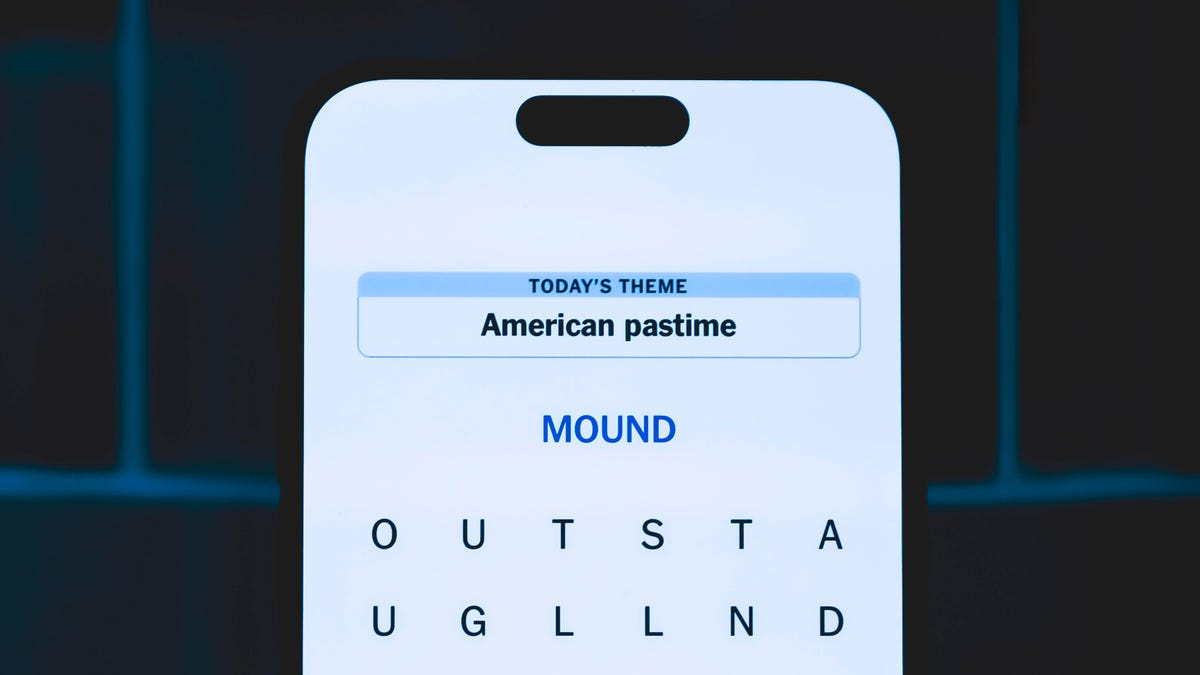
Looking for the most recent Strands answer? Click here for our daily Strands hints, as well as our daily answers and hints for The New York Times Mini Crossword, Wordle, Connections and Connections: Sports Edition puzzles.
Today’s NYT Strands puzzle could be tricky for some. First off, it’s an unusual topic. And some of the answers are difficult to unscramble, so if you need hints and answers, read on.
I go into depth about the rules for Strands in this story.
If you’re looking for today’s Wordle, Connections and Mini Crossword answers, you can visit CNET’s NYT puzzle hints page.
Read more: NYT Connections Turns 1: These Are the 5 Toughest Puzzles So Far
Hint for today’s Strands puzzle
Today’s Strands theme is: Spring fever.
If that doesn’t help you, here’s a clue: A resilient, metal device.
Clue words to unlock in-game hints
Your goal is to find hidden words that fit the puzzle’s theme. If you’re stuck, find any words you can. Every time you find three words of four letters or more, Strands will reveal one of the theme words. These are the words I used to get those hints but any words of four or more letters that you find will work:
- CORN, DELT, WEND, REND, GORE, GORY, LARD, CAPS, PAIL, PAILS, DRIP, DRIPS
Answers for today’s Strands puzzle
These are the answers that tie into the theme. The goal of the puzzle is to find them all, including the spangram, a theme word that reaches from one side of the puzzle to the other. When you have all of them (I originally thought there were always eight but learned that the number can vary), every letter on the board will be used. Here are the nonspangram answers:
- COIL, GYRE, HELIX, SPIRAL, CURLICUE, CORKSCREW
Today’s Strands spangram
Today’s Strands spangram is TWISTANDTURN. To find it, start with the T that is the bottom letter on the far-right vertical row, and wind up.
Toughest Strands puzzles
Here are some of the Strands topics I’ve found to be the toughest.
#1: Dated slang. Maybe you didn’t even use this lingo when it was cool. Toughest word: PHAT.
#2: Thar she blows! I guess marine biologists might ace this one. Toughest word: BALEEN or RIGHT.
#3: Off the hook. Again, it helps to know a lot about sea creatures. Sorry, Charlie. Toughest word: BIGEYE or SKIPJACK.
Technologies
The Samsung Galaxy Z TriFold Is the Future (Even Though It’s Dead)
-
 Technologies3 года ago
Tech Companies Need to Be Held Accountable for Security, Experts Say
-
 Technologies3 года ago
Best Handheld Game Console in 2023
-
 Technologies3 года ago
Tighten Up Your VR Game With the Best Head Straps for Quest 2
-
 Technologies4 года ago
Black Friday 2021: The best deals on TVs, headphones, kitchenware, and more
-
 Technologies5 лет ago
Google to require vaccinations as Silicon Valley rethinks return-to-office policies
-
 Technologies5 лет ago
Verum, Wickr and Threema: next generation secured messengers
-
 Technologies4 года ago
Olivia Harlan Dekker for Verum Messenger
-
 Technologies5 лет ago
iPhone 13 event: How to watch Apple’s big announcement tomorrow


