

Technologies
My Best iPhone Hack: Turn Off Your Camera Control Button for Good. Here’s How
Commentary: I hated the camera control button on my iPhone, so I used these settings to make it entirely decorative.


As a lifelong Apple fan, I was excited to finally upgrade to a newer iPhone after my beloved but worn iPhone 11 died. There’s a lot to like about the newer models, including the iPhone 16, with one major exception. One feature continually harassed me and made my phone difficult to use. Disabling this one feature has made all the difference for me to enjoy using my phone again, and it can for you, too.
Coming from an older iPhone model, I was surprised to see two new buttons on the 16: the action and camera control buttons. The action button is a small button above the volume adjusters. It was introduced with the iPhone 15 Pro models and is a customizable button that can do anything from turning your ringer on to ordering coffee from Dunkin’ to go. It’s small, demure and minds its own business. It’s the camera control button that caused all the chaos.
Camera control is a new button on the iPhone 16 lineup that does what exactly the name suggests: It controls your camera. It’s meant to help you quickly snap photos and serves as a shortcut to launching your camera app. You can slide your finger on a mini settings menu to adjust camera zoom, among other settings. But there’s one true reason for its existence: AI. All of the iPhone 17 models have this button as well.
Like every other tech company, Apple is heavily investing in artificial intelligence. Apple Intelligence has been the driving force behind much of the company’s innovation, with lots of AI updates in the new iOS 26. But there’s no bigger sign of Apple’s deep dive into AI than the camera control button. It’s the physical pathway to Visual Intelligence, a new AI-powered feature that allows you to use your camera to scan objects in the real world to get more information on them. It sounds snazzy, but this is completely pointless to me, and it’s a feature I have never been enticed to use.
There are other use cases for the camera control button, including ways to customize button settings, as my colleagues have found through their testing. But that doesn’t change the fact that my camera control button is so completely annoying.
It’s a long button, about the size of the power button, located on the lower right side of the device. And it’s very, very easy to tap by accident. I’ve opened my camera while putting my phone in my pocket, while I’m driving and using navigation apps and once as I was turning off my phone for the night, which left the camera app open the whole night and drained my phone’s battery.
And if that wasn’t annoying enough, every time I actually intended to open my camera via camera control, it took several taps to do so. Go figure. While I had camera control enabled, my camera roll included stunning shots like these:
My question: What is the point of a button that works when you don’t need it and doesn’t work when you do? There are already three different ways to access your iPhone camera from the lock screen that take just seconds to use. Camera control is a very expensive and very unreliable addition to the newer iPhones, all for the sake of AI features that many people don’t need or use. And there hasn’t been one moment since I turned camera control off that I’ve missed it.
I realize that my gripes with camera control are minor complaints among what has been an overall positive experience with a new phone. But as an AI reporter, I can’t help but see this as a troubling sign. So many tech companies have overhauled their software and devices to be AI-friendly, whether it’s Google spamming us with Gemini pop-ups in every single Google app, the new Copilot button on Microsoft Windows laptops or Apple’s camera control button.
Tech companies too eager to get on the AI train and haven’t given enough thought to whether those features enhance or just derail our experience using their products. And not enough offer opt-out options. Thankfully for me and my camera roll, Apple does. But I hope in the future, such drastic measures won’t be necessary as companies become more intentional with their AI-enabling features.
If you want to join me in making your camera control button obsolete, navigate to your iPhone settings and select camera. Then, tap camera control. Within camera control, select accessibility, then toggle off camera control. If you’re also experiencing the hyper-sensitivity, you can adjust how many taps (and the pressure needed) to trigger the button in that same accessibility page under light-press force.
For more, check out our hands-on experience with the iPhone 17 Pro and Pro Max.
Technologies
AI Brings Val Kilmer Back to the Big Screen a Year After His Death
Kilmer’s estate approves plans to use generative AI to resurrect the late actor for a role in the historical drama As Deep As the Grave.

Actor Val Kilmer died in 2025, but he’ll be seen in an upcoming movie he didn’t live to film. The historical archaeologist drama As Deep As the Grave will include an AI version of the actor who died at age 65 after a battle with throat cancer. It’s not the first time we’ve seen studios use AI this way, but it could be the most successful.
Director and writer Coerte Voorhees revealed to Variety on Wednesday that he would use AI to bring Kilmer’s likeness back to play Father Fintan, a Native American priest.
As Deep As the Grave tells the true story of an archaeologist couple who worked with the Navajo people in the 1920s to learn about America’s very first civilizations. Voorhees says that Kilmer agreed to play the role five years ago, but the actor’s struggles with throat cancer made him unable to complete work on it. There’s no date yet for the film’s release.
Hollywood actors have increasingly found themselves at odds with generative AI, a technology that has rapidly begun to infiltrate nearly every aspect of the entertainment industry. From writing scripts to generating digital likenesses of actors’ faces and voices, AI now has the ability to replicate performances with striking realism. In some instances, studios have gone even further, creating entirely new AI «actors» who can perform without ever stepping onto a set. This has raised complex questions about consent, compensation, and creative ownership, as performers grapple with the reality that their identities and craft can now be reproduced, modified, or even replaced by algorithms.
These attempts have been strongly opposed by the SAG-AFTRA labor union representing entertainers, which has been engaged in strikes against video game companies and is currently in precarious negotiations with film and TV studios. The labor guild has certain protections against generative AI following a strike that lasted more than 100 days, including requirements for clear consent and fair compensation. The current negotiations would expand these protections.
A SAG-AFTRA representative didn’t immediately respond to a request for comment.
Voorhees says that Kilmer’s children approve of this AI resurrection.
«[Kilmer] always looked at emerging technologies with optimism as a tool to expand the possibilities of storytelling,» his daughter, Mercedes Kilmer, said in a statement, according to Variety. «This spirit is something that we are all honoring within this specific film, of which he was an integral part.»
Technologies
Today’s NYT Mini Crossword Answers for Thursday, March 19
Here are the answers for The New York Times Mini Crossword for March 19.

Looking for the most recent Mini Crossword answer? Click here for today’s Mini Crossword hints, as well as our daily answers and hints for The New York Times Wordle, Strands, Connections and Connections: Sports Edition puzzles.
Need some help with today’s Mini Crossword? It’s a pretty easy one today, but we’ve got all the answers in case you’re stumped. And if you could use some hints and guidance for daily solving, check out our Mini Crossword tips.
If you’re looking for today’s Wordle, Connections, Connections: Sports Edition and Strands answers, you can visit CNET’s NYT puzzle hints page.
Read more: Tips and Tricks for Solving The New York Times Mini Crossword
Let’s get to those Mini Crossword clues and answers.
Mini across clues and answers
1A clue: Ghost’s word
Answer: BOO
4A clue: Magician’s «And just like that, it’s gone!»
Answer: POOF
5A clue: With 7-Across, it’s full of stars
Answer: NIGHT
6A clue: White bills in Monopoly
Answer: ONES
7A clue: See 5-Across
Answer: SKY
Mini down clues and answers
1D clue: Score of 4 on a par 3
Answer: BOGEY
2D clue: ___ and aahs
Answer: OOHS
3D clue: Frequently, in poetry
Answer: OFT
4D clue: Like the sands of Harbour Island, Bahamas
Answer: PINK
5D clue: Dissenting votes
Answer: NOS
Technologies
Customers Prefer Apps Over Websites for Wireless and Home Internet Service
Easier logins are a key reason customers are happier with apps, according to the J.D. Power study.
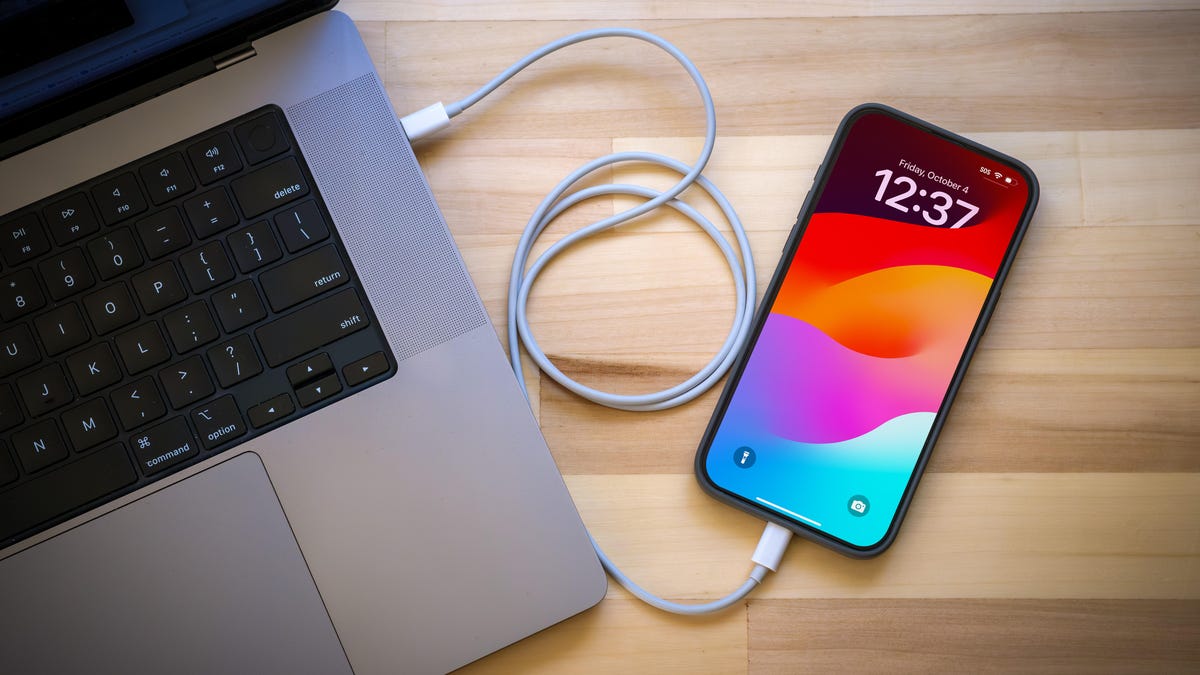
When you last checked your mobile or home internet bill, did you reach for your phone or sit down with your laptop or desktop computer? According to a new J.D. Power study, people would rather access their accounts via apps than websites. And that preference is especially strong when it comes to telecom companies such as mobile carriers and home internet providers (which increasingly overlap).
According to the 2026 US Telecom Digital Experience Study, surveyed customers gave app login an average satisfaction score of 681 for wireless carriers and 689 for internet service providers (out of 1,000 points). Website login trailed those by 38 points and 42 points, respectively. J.D. Power gathered evaluations from 12,082 customers of eight internet providers and 14 wireless carriers.
Biometric logins were a major factor in the decision. When accessing an account, there are always one or more layers of authentication just to get in. An app tends to speed you through the door using face or finger recognition to sign in or load a passkey.
Built-in services like Apple’s Passwords app can also use biometrics to unlock and fill in saved credentials in websites, but the experience isn’t as smooth. J.D. Power noted that maintenance issues and slow responsiveness also derail the website login experience across both segments.
This helps explain why carriers have invested heavily in improving their apps. For one, T-Mobile’s T-Life app is increasingly the central point of customer interaction. And AT&T just this week rolled out a new app — named simply AT&T — that is a single resource for its mobile and broadband customers.
AT&T’s Jeff Dixon, assistant vice president of Digital Product Management and Development, emphasized the importance of speed in the company’s app overhaul.
«We did focus on performance to make it snappy throughout,» he said, noting extensive architectural work on back-end services to cache and pre-fetch data.
The J.D. Power study also found that the gap between satisfaction with telecom companies’ apps and websites was wider than in other industries, suggesting that wireless and internet providers need to shore up their web experiences. There was a 25-point gap between apps and websites for wireless carriers, and an 11-point gap for internet service providers.
Overall, customer satisfaction was 654 out of 1,000 for wireless carriers and 659 for internet providers. Scores were based on four factors in order of importance: design, system performance, tools and capabilities, and information.
Ranking among the wireless carriers, Mint Mobile got the highest score (704), with Spectrum Mobile coming next (678) and followed by a tie between Metro by T-Mobile and T-Mobile itself (672). It’s worth noting that, of those, Spectrum is the only one not owned by T-Mobile.
For internet service providers, T-Mobile ranked the highest in the survey with a score of 695, followed by AT&T at 675 and Verizon at 669.
-
 Technologies3 года ago
Tech Companies Need to Be Held Accountable for Security, Experts Say
-
 Technologies3 года ago
Best Handheld Game Console in 2023
-
 Technologies3 года ago
Tighten Up Your VR Game With the Best Head Straps for Quest 2
-
 Technologies4 года ago
Black Friday 2021: The best deals on TVs, headphones, kitchenware, and more
-
 Technologies5 лет ago
Google to require vaccinations as Silicon Valley rethinks return-to-office policies
-
 Technologies5 лет ago
Verum, Wickr and Threema: next generation secured messengers
-
 Technologies4 года ago
Olivia Harlan Dekker for Verum Messenger
-
 Technologies5 лет ago
iPhone 13 event: How to watch Apple’s big announcement tomorrow


