

Technologies
How War in the Middle East Impacted the World’s Largest Mobile Phone Show
Hundreds of companies planned to gather in Barcelona to talk business, but as the conflict disrupted travel, not all of them arrived.

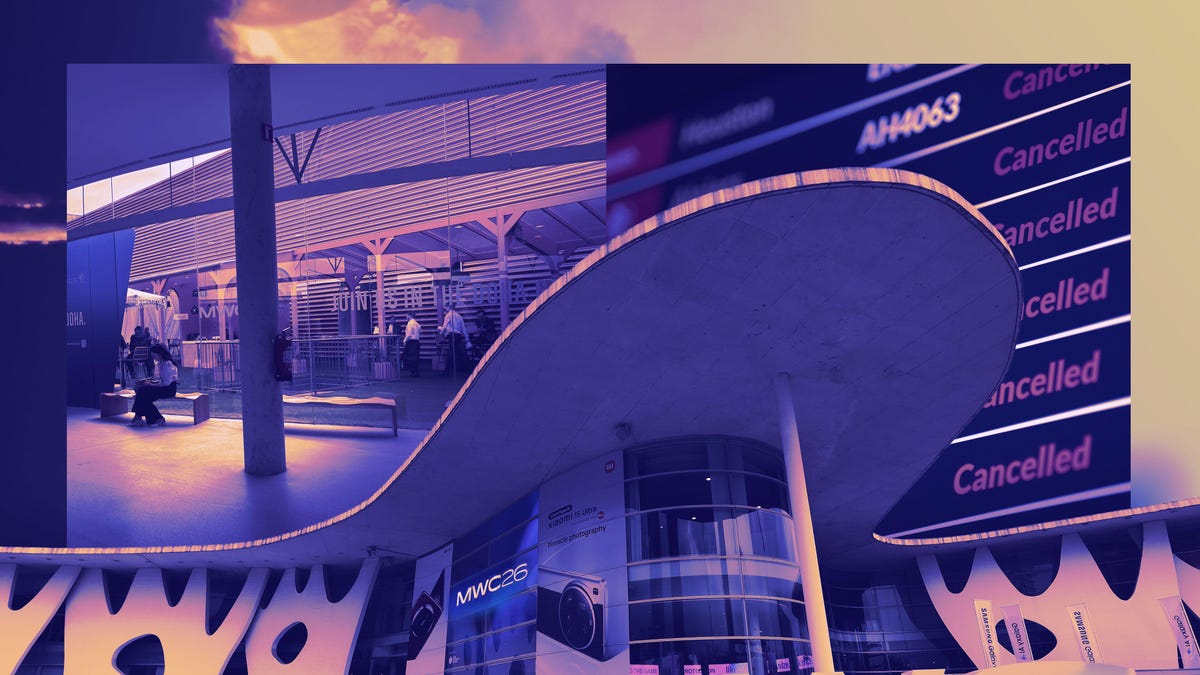
On a Tuesday in the middle of Mobile World Congress 2026, three industry experts gathered for a panel to chat about smart glasses and extended reality tech. But a fourth member of the panel, who was based in Dubai, never made it to the conference. Two days before, the US and Israel launched airborne attacks on Iran, and flights had been grounded throughout the Middle East.
Even thousands of miles away in Barcelona, on the western edge of the Mediterranean Sea, MWC was affected by the conflict. While events and meetings at the world’s largest mobile tech conference proceeded as planned, albeit under the anxious awareness of larger geopolitical events, there were notable absences.
Some booths stood empty, and some meetings scheduled between absent attendees weren’t held. Exhibitors walked the halls and saw a diminished presence from Middle Eastern companies.
While the conflict was just beginning as MWC took place, it had already affected attendees and changed the experience. While distant from the fighting in the Middle East, the war’s impact was just as seriously felt in the middle of a conference about bringing humans together.
The financial, emotional and mental cost of war on a tech conference
The fourth panelist on Tuesday’s panel was supposed to be Roman Axelrod, cofounder of Xpanceo, who would have likely discussed the smart contact lenses the company intended to show off in prototype form at MWC. But neither Axelrod nor the samples ever left Dubai, where the company is based. Conference attendees who walked by Xpanceo’s booth were greeted by employees who had flown in from elsewhere and apologized that they had only hastily made video demonstrations of the technology samples that were supposed to be on display.
I had already planned to chat with Valentyn S. Volkov, co-founder and CTO of Xpanceo, who likewise didn’t make it to MWC. While the company was intentionally headquartered in Dubai as a reliable and predictable jurisdiction for business (as well as centrally located, with many business destinations within a 7-hour flight), the country falls within the airspace of the current conflict. As a result, businesses are losing money, especially funds spent on opportunities at MWC.
«We already kind of lost, I would say, a significant amount of resources — physical, mental, scientific resources — simply because we could not get everyone to Barcelona. We could not get our prototypes to Barcelona as planned,» Volkov told me.
Fortunately, Volkov was in good spirits when I chatted with him over Zoom via a laptop in Xpanceo’s booth. He was safe, noting that local authorities in Dubai were providing «logistic safeness.»
Our chat quickly turned to the smart contact lenses that the company is working on, with plans to roll out functioning prototypes by the end of the year. As Volkov described their potential capabilities, they sounded like the next evolution of smart glasses, like the Google Specs that I saw at Google I/O last year, offering heads-up display information relayed from a nearby phone, and even potentially health data like glucose level readings taken from the lens’ contact with the eye’s tears.
«Those beauties were supposed to be shown for the very first time [at MWC], and we put lots of effort and resources into that. It’s completely bad luck,» Volkov said.
Thanks to modern network technology, Volkov and I were still able to have this virtual conversation — and fortunately, the war had not affected him or the infrastructure where he was. But anyone can tell you the value of having an in-person exchange over one on small screens. What was lost through the wires because Volkov wasn’t there to demonstrate features and concepts of Xpanceo’s products through body language and demonstration?
It’s not hard to imagine scaling that up to all the business conversations and networking opportunities lost to those whose flights were canceled and lives locked down due to the conflict in the Middle East. Some of those meetings could likely be shifted to digital chats like mine, but MWC is a show about making new connections in person, seeing new devices and getting updated on the latest tech trends across the mobile and telecom industries.
But I met some attendees who were suffering the opposite fate, having flown out early from countries now in restricted airspace. They made it to MWC, but it’s too early to tell when they can fly home.
Stranded at MWC, return unknown
I sat down with Said Saidi, an exhibitor at the show, and chatted in between his calls home. I couldn’t imagine the strain he was under with family back in Dubai and no clear idea of when he’d be able to rejoin them.
A resident of the United Arab Emirates for 19 years, Saidi was comforted to be able to chat with his family on the phone every few hours, who he said were safe. Aside from noise made by the defense system and drones coming from Iran, his reports from home said everyone is living peacefully and has no shortage of supplies, and they have so far had no major stress.
Saidi explained that this was counter to misinformation being spread on social media that says people have been stuck in the UAE without accommodation. As he said, and reports have echoed, the government and hotels have provided stranded travelers with free stays.
Saidi caught an early flight out to Barcelona the previous Friday, but most other exhibitors from the Middle East usually fly out on Sunday, he said. By then, commercial flights from the area were largely grounded following the initial strikes by the US and Israel on Saturday morning. He said the impact of this region-wide air travel blackout was stark. After walking around the show floor twice, even all the way out to the startup area at the far end of the convention center, the presence of attendees from the Middle East is «near zero,» Saidi said.
While he made it to MWC, many of the meetings Saidi was supposed to have with peers from other Middle Eastern companies had to be canceled or held online. It’s a loss all around.
«Usually, the main purpose of the exhibition is to show that we are present, we are there, and also to meet new leads and new business,» Saidi said. While executives may normally move in their own circles, at MWC, they can be met on the show floor by anyone. «The exhibition is always a good chance to meet people and do that first handshake and build on it,» Saidi said.
Waiting for the limbo to lift, but the impact remains
In three days of running around the MWC show floor, I tried to gauge the scope of these absences. None was more obvious than in the startup area, 4YFN, which was filled with company representatives from every corner of the Earth — except a strand representing the Palestinian Information Technology Association of Companies. Just two booths were manned out of what was supposed to be seven, with the rest of the startup representatives unable to fly to the show.
The representatives who were there politely declined to comment for this story and weren’t sure when they’d be able to fly back.
Saidi said the same. While he asserted that his company was taking care of him, and that he felt totally relaxed as long as his family was safe back in Dubai, he had no inkling of when he’d be able to return home.
«I have zero expectations,» Saidi said. «At this point in time, we cannot predict anything.»
From within Dubai, during our conversation, Xpanceo’s Volkov had a more optimistic outlook, with significant hope that the situation would stabilize within a week. But if it is a prolonged issue, he said his company would be prepared for that, too. And work is continuing remotely in the meantime.
The war is likely to have an impact on the mobile industry beyond MWC. Analysts have adjusted their previously dim projection on 2026’s expected phone sales to an even bleaker outlook, expecting a 13% drop over the year. Mostly, they blame the RAM shortage, which is plaguing the tech industry as AI data centers gobble up memory.
But when I chatted with International Data Corporation’s Jeronimo Francisco, he noted that the regional chaos of the war with Iran contributed to that drop, at least in terms of disrupting supply chains, increasing the cost of oil and forcing companies to find workarounds for wartime bottlenecks.
«If there was no memory crisis, instead of the market dropping 13% it would drop 5 in the worst-case scenario, something like that,» Francisco said.
It was a poignant moment for the mobile industry. Even as the AI industry-caused RAM shortage is poised to increase phone prices in 2026, MWC was awash in company slogans embracing AI agents and other applications of generative AI. Satellite companies heralded the era of increasing connectivity beyond the range of traditional cell networks. Going to the show is an opportunity to catch wind of exciting trends awaiting phone owners in the months to come.
But even when MWC feels like being in a bubble of wonky news and enthusiastic predictions, sometimes the bubble is popped by global events that significantly disrupt lives. At CNET, we have covered a lot of the coolest discoveries we made at the biggest phone show of the year — but even immersed in the deepest phone dives, it’s important to remember the human impact of conflicts that reach thousands of miles to a convention center in a Catalonian beach town.
Technologies
AI Agents at Work: Microsoft Copilot Is Getting Its Own Version of Claude Cowork
Built in collaboration with Anthropic, Microsoft’s new tool can create spreadsheets, run reports and do research autonomously.
Microsoft Copilot probably isn’t something you think about a lot, unless your company pays for you to use it at work. Microsoft has been fighting for consumers whose hearts and minds were quickly captured by other AI tools like ChatGPT and Gemini. The company’s latest wave of agentic updates, announced Monday, is its sharpest weapon yet.
The biggest new feature is Copilot Cowork, built in collaboration with Anthropic. If you’ve heard of or used Anthropic’s Claude Cowork, Microsoft’s version will feel similar. Copilot Cowork can use information in your files, email and calendar to independently complete assignments, no human supervision needed. It can create spreadsheets, run reports and do research for you.
«Cowork is the new chat. It’s the new way of interacting with AI,» said Charles Lamanna, Microsoft president of business apps and agents. Instead of overseeing AI and chatting with it, we can now entirely delegate tasks to it like a fellow team member. «With chat, you’re babysitting every step — this is much more like ‘fire and forget’ with Cowork to get the job done.»
For example, Lamanna said he used Cowork to analyze his meeting calendar for the next three months. The AI used his email and calendar history to understand what upcoming meetings may not be necessary for him to attend, and it pulled together its recommendations in an easy-to-view chart. After Lamanna reviewed it, Cowork declined some meetings, with AI-written meeting notes attached if needed. The AI’s 40-minute «delightful and practical» process saved him and his executive assistant hours worth of time so they could focus on more important duties.
Cowork is rolling out now on a limited basis as it’s a research preview concept. Microsoft also announced it will be making its AI agent platform, Agent 365, generally available on May 1. Agent 365 is a way for companies to oversee and manage all of the agents, or bots, that employees are using for their work. Microsoft itself has created more than a half-million AI agents using Agent 365, the company shared in a statement. New AI models from Anthropic and OpenAI will also be made available in Copilot. Smartly, the company isn’t picking a side in the growing feud between the AI startups.
Read More: AI Isn’t Human and We Need to Stop Treating It That Way, Says Microsoft AI CEO
Agentic AI at work
Agentic AI tools like the ones Microsoft is building are extremely popular for workers. Despite only being a research preview, Claude Cowork has garnered a lot of fans — and sparked a lot of worry on Wall Street. Major tech stocks fell at the end of January as Anthropic’s AI developments cast doubts on the future of work.
New AI tools like Cowork, Claude Code and even OpenAI’s Codex are becoming increasingly capable of replacing traditional software products, like the kind Microsoft is known for. So it makes sense that Microsoft would want to bring that agentic prowess to its own AI. Agentic AI has been a major area of focus for AI companies recently. OpenClaw, an open source agentic project that went viral this year, is one of many examples of why tech execs think 2026 will be the year of agentic AI.
Lamanna said that «the shape of what we do on a day-to-day basis will change,» but AI ought to give time back to people to focus on high-value tasks. We’re entering a new arc, going from having a human use AI to do a task quicker to delegating it entirely to an AI agent, he said.
As this tech becomes more available, there are a lot of questions about the best way to integrate AI into our work lives. Many workers are worried about having their jobs replaced by AI, fueled by AI-centric layoffs at Amazon and Block. For those who manage to keep their jobs, one study found that AI may actually make their work days longer and less enjoyable. Like any new tech, the implementation of AI will determine how effective it is — and how much it actually helps you.
Technologies
My iPhone 17E Review in Progress: The Appeal Is Magnetic (and Pink)
Apple’s new $599 budget phone brings MagSafe compatibility, higher base storage and an A19 chip. That makes the trade-offs easier to swallow.
I never thought MagSafe’s haptic feedback could be so satisfying.
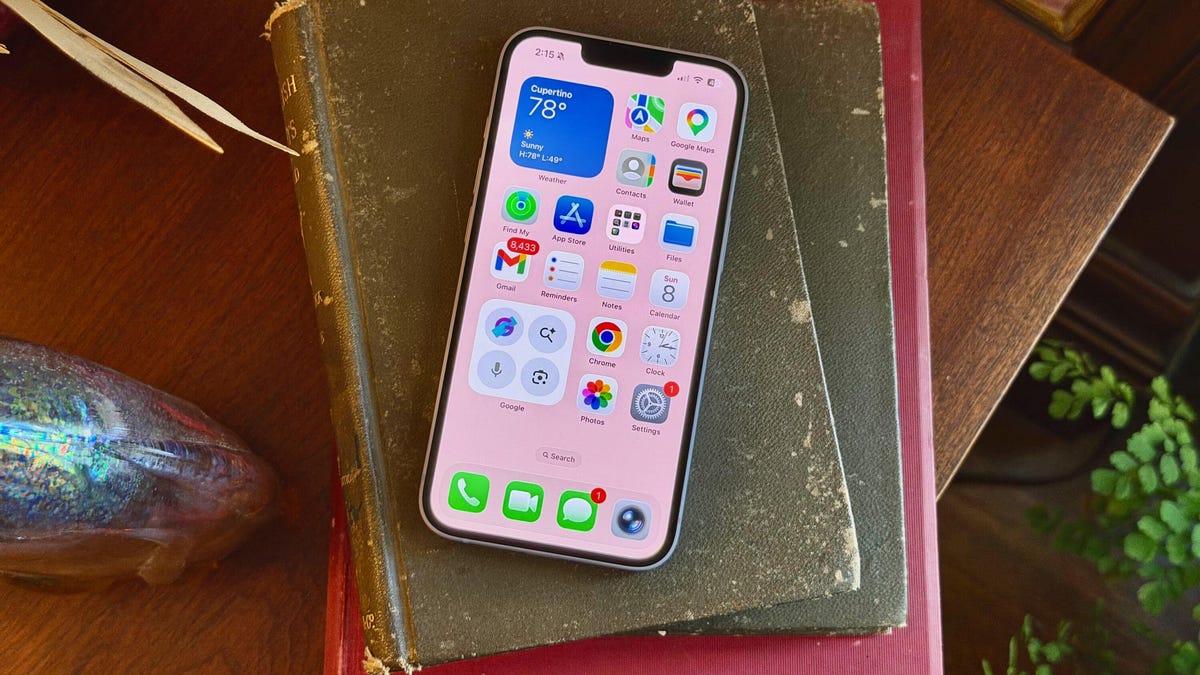
I’ve been using Apple’s $599 iPhone 17E, which brings MagSafe’s magnetic technology to its lowest-priced handset. Beyond the added convenience of easily attaching chargers and accessories, this signals Apple’s efforts to expand once-premium features across its full iPhone lineup, no matter how much you’re willing to pay. Plus, the addition of a fresh color warms my pink-loving heart.
The iPhone 17E borrows other features from the $829 baseline iPhone 17. The budget option packs the same A19 chip (albeit with a four-core GPU instead of five), an action button and a 48-megapixel main camera. It starts with 256GB of storage, making that $599 price more enticing — even if it’s arguably pushing the limits of what’s considered a «budget» phone. But the fact that I have to double-check whether I’m reaching for the iPhone 17E or the 17 is surely a good sign that the gap between the two is narrowing — and in the right direction.
Other aspects of the 17E serve as a reminder that you get what you pay for. The bezels are noticeably thicker than on Apple’s more premium options. There’s no Dynamic Island for system notifications and Live Activities, but rather an old-school notch at the top. A fixed 60 Hz display also means there’s no always-on display, so I can’t quickly glance at the time or my notifications — something that’s been hard to get used to.
There’s a lot that makes the iPhone 17E feel like a worthy lower-priced option. And for most people, the compromises shouldn’t feel too glaring, especially when you’re saving a couple hundred dollars.
The iPhone 17E is available to preorder now, and hits store shelves on March 11.
iPhone 17E look, feel and display
One of my favorite things about the iPhone 17E is that it doesn’t sacrifice the premium look and feel of its pricier counterparts. Like the other iPhone 17 models, the iPhone 17E’s back glass has a satisfying matte finish that’s resistant to fingerprints. An aluminum frame keeps it feeling nice and light at 169 grams, compared to 177 grams on the iPhone 17.
The iPhone 17E’s 6.1-inch display is just slightly smaller than the 6.3-inch display on the iPhone 17, a difference that’s hardly noticeable. The lower-priced option shares the same Ceramic Shield 2 cover glass, which Apple says has three times better scratch resistance than the iPhone 16E’s display, and 33% less reflection.
The 60Hz refresh rate is a step down from the 1-120Hz adaptive refresh rate you’ll get on Apple’s other phones, but it’s a nearly imperceptible difference unless you’re gaming. Personally, the biggest downside to this limitation is not having an always-on display, which I rely on extensively to peek at the time and see all my notifications at a glance. Going without that feature has taken some getting used to.
While the iPhone 17 supports 1,600 nits HDR peak brightness, the iPhone 17E tops out at 1,200 nits peak HDR brightness. Holding the phones side by side, I can see the difference, but the 17E looks just fine, even in the California sunshine.
The iPhone 17E’s smaller size can either be a benefit or a drawback, depending on your preferences. I tend to gravitate toward larger phones, so typing and scrolling on a smaller frame was a bit of an adjustment. But if you want a more compact device that’ll fit in practically any pocket, you’ll dig the 17E’s dimensions.
This year, Apple decided to branch out and add a soft pink color option to its budget line, along with the standard black and white. Luckily, I got paired with a pink model that takes on a pastel-like, blush hue that’s certainly more subdued than the bold orange of the iPhone 17 Pro. The subtle shade is nice if you want some color without making too much of a statement. I’m always happy when fun colors aren’t limited to the pricier models.
iPhone 17E camera gets some minor upgrades
Similar to last year’s budget iPhone, the iPhone 17E has a single 48-megapixel rear camera. With sensor cropping, it can also snap 2x telephoto images, which look as good as 1x photos to my eyes. A bonus perk of having just one rear camera is that it’s significantly less obtrusive than the camera bumps on other iPhone 17 models, particularly the Pros. It’s refreshing to go back to a phone I can hold without my fingers brushing against an ever-expanding camera platform.
Like my experience with the iPhone Air, the lack of an ultrawide camera feels limiting. It’s harder to take landscape photos or capture a wider scene — though if I had to choose between an ultrawide and a telephoto camera, I’d always pick the latter. I’m much more likely to punch into something to show more detail than take a dramatically wider shot.
The iPhone 17E has a 12-megapixel selfie camera, drawing another parallel to the iPhone 16E. The 17E doesn’t get the Center Stage camera feature that debuted on the iPhone Air and 17, which can automatically switch between portrait and landscape orientation as more people come into the frame without you rotating your phone. I don’t see this as much of a loss; in fact, I keep Center Stage disabled on my iPhone 17 Pro Max, largely because old habits die hard and I just end up rotating my phone manually anyway.
Not having Cinematic mode for video on the budget line is still a bummer, since I rely on it for more professional-looking clips with blurred backgrounds. But if trade-offs have to be made, that’s a manageable one.
The hardware feature I’ve struggled without is the Camera Control button — not because I ever use it as a shortcut to Apple’s Visual Intelligence, but because that’s how I almost exclusively launch the iPhone’s camera now. I like having a physical button that’s easy to trigger (perhaps too easy for some) when I want to quickly snap a photo. Without Camera Control on the iPhone 17E, you’ll have to open the camera the old-fashioned way by tapping on your screen, swiping the lock screen to the left or using the action button as a camera shortcut. Though I don’t think most people will mind that, especially if you’re coming from a phone that never had Camera Control in the first place. And you can access Visual Intelligence from the iPhone 17E’s Control Panel.
Portraits get a nice boost on the iPhone 17E, compared to last year’s budget phone. Apple says the advanced image pipeline allows subjects to stand out more naturally against their bokeh-effect backgrounds. For example, a person will appear in sharper focus, including fringe details like their hair or the corner of their glasses, and the transition to the image’s blurred background looks a bit more gradual and realistic.
When you’re snapping pictures in the camera’s standard Photo mode, it’ll now automatically detect cats and dogs, in addition to people, and enable portrait shots without you having to switch to that setting.
And now, you can also adjust the focus point of a photo after you’ve snapped it by going to Edit in the Photos app and tapping where you want to focus. You can modify the amount of background blur, too. It’s great to see that flexibility and customization on Apple’s lower-tier phone.
Here are a few of my favorite photos I’ve taken on the iPhone 17E:
iPhone 17E battery and MagSafe compatibility
The iPhone 17E touts the same 26 hours of video playback as the iPhone 16E. On Apple’s product pages in the European Union, where it’s required to disclose battery capacity, that’s listed as 4,005 mAh, (the same as the 16E). Apple says the battery is aided by the power-efficient A19 chip, the new C1X cellular modem and the «advanced power management of iOS 26.»
In my first few days with the phone, the battery has held up impressively well. I started with a full battery at 10:12 a.m. on Saturday, and still had a healthy 48% by 8 p.m. When I woke up the next morning at 5:15 a.m. (yes, my sleep schedule has been completely thrown off by Mobile World Congress and jet lag), the phone was at 38%. I feel confident I can go about my day without worrying about the phone dying prematurely.
The iPhone 17E supports 20-watt wired charging. And with MagSafe and Qi2 compatibility, it can charge wirelessly up to 15 watts — double the 7.5 watts on the iPhone 16E. That’s still less than the 25-watt wireless charging (Qi2.2) the iPhone 17 supports, but it’s a worthy step up from last year.
With wired charging, the iPhone 17E went from 8% to 61% in half an hour. I look forward to testing MagSafe charging speeds as well.
I’ve enjoyed snapping MagSafe accessories such as cases and wallets onto the iPhone 17E simply because I can. I’ve also been tapping into Apple’s StandBy feature, which displays widgets while you charge your phone in landscape mode, including a calendar, clock and photos.
Final thoughts for now: Should you buy the iPhone 17E?
The iPhone 17E brings subtle yet welcome changes to Apple’s budget line — namely, MagSafe charging, a higher base storage level and a more advanced A19 chip. This year’s phone shares a lot in common with the iPhone 16E, especially when it comes to the cameras and battery capacity, but it still shines in both areas.
More notably, the iPhone 17E borrows a handful of features from the baseline iPhone 17, which costs $200 more. The phones have a similar feel, a 48-megapixel main camera and that A19 chip. You’ll spot some notable design differences, including the iPhone 17E’s prominent notch, wider bezels and the lack of a Camera Control button.
If you’re switching from an older iPhone like the iPhone 11 or 12, these are trade-offs you’ll hardly notice, especially in light of all the relative upgrades. Similarly, if you’re coming from another budget phone that’s a few years old, like the iPhone SE (2020) or an older Android counterpart, the improvements are sure to outweigh any missing premium features.
If you’re using last year’s iPhone 16E, the incremental changes don’t justify the upgrade, even with the long-awaited addition of MagSafe. Apple doesn’t appear to be targeting this demographic anyway, since its promotional materials largely compare the iPhone 17E to older models like the iPhone 11. That’s where the differences really stand out.
Apple iPhone 17E specs vs. Google Pixel 10A, Apple iPhone 17, Apple iPhone 16E
| Apple iPhone 17E | Google Pixel 10A | Apple iPhone 17 | Apple iPhone 16E | |
| Display size, tech, resolution, refresh rate | 6.1-inch OLED display; 2,532×1,170 pixels; 60Hz refresh rate | 6.3-inch POLED, 2,424×1,080 pixels, 60-120Hz variable refresh rate | 6.3-inch OLED; 2,622×1,206 pixels; 1-120Hz variable refresh rate | 6.1-inch OLED display; 2,532×1,170 pixels; 60Hz refresh rate |
| Pixel density | 460 ppi | 422 ppi | 460 ppi | 460 ppi |
| Dimensions (inches) | 5.78×2.82×0.31 | 6.1×2.9×0.4 | 5.89×2.81×0.31 | 5.78×2.82×0.31 |
| Dimensions (millimeters) | 146.7×71.5×7.8 | 154.7×73.3×8.9 | 149.6×71.5×7.95 | 146.7×71.5×7.8 |
| Weight (grams, ounces) | 167g (5.88 oz.) | 183 g (6.5 oz) | 177g (6.24 oz.) | 167g (5.88 oz.) |
| Mobile software | iOS 26 | Android 16 | iOS 26 | iOS 18 |
| Camera | 48-megapixel (wide) | 48-megapixel (wide), 13-megapixel (ultrawide) | 48-megapixel (wide) 48-megapixel (ultrawide) | 48-megapixel (wide) |
| Front-facing camera | 12-megapixel | 13-megapixel | 18-megapixel | 12-megapixel |
| Video capture | 4K | 4K | 4K | 4K |
| Processor | Apple A19 | Google Tensor G4 | Apple A19 | Apple A18 |
| RAM + storage | RAM unknown + 256GB, 512GB | 8GB + 128GB, 256GB | RAM N/A + 256GB, 512GB | RAM unknown + 128GB, 256GB, 512GB |
| Expandable storage | None | None | None | None |
| Battery | 4,005 mAh | 5,100 mAh | 3,692 mAh | 4,005 mAh |
| Fingerprint sensor | None, Face ID | Under display | None, Face ID | None, Face ID |
| Connector | USB-C | USB-C | USB-C | USB-C |
| Headphone jack | None | None | None | None |
| Special features | MagSafe, Qi2 charging (up to 15W), Action button, Apple C1 5G modem, Apple Intelligence, Ceramic Shield, Emergency SOS, satellite connectivity, IP68 resistance | 7 years of OS, security and Pixel feature drops, Gorilla Glass 3 cover glass, IP68 dust and water resistance, 3,000-nit peak brightness, 2,000,000:1 contrast ratio, 30W fast charging with 45W charging adapter (charger not included), 10W wireless charging Qi certified, Satellite SOS, Wi-Fi 6E, NFC, Bluetooth 6, dual-SIM (nano SIM + eSIM), Camera Coach, Add Me, Best Take, Magic Eraser, Magic Editor, Photo Unblur, Super Res Zoom, Circle to Search; colors: lavender, berry, fog, obsidian (black) | Apple N1 wireless networking chip: Wi-Fi 7 (802.11be) with 2×2 MIMO, Bluetooth 6, Thread, Action button, Camera Control button, Dynamic Island, Apple Intelligence, Visual Intelligence, dual eSIM, 1 to 3,000 nits brightness display range, IP68 resistance; colors: black, white, mist blue, sage, lavender; fast charge up to 50% in 20 minutes using 40W adapter or higher via charging cable; fast charge up to 50% in 30 minutes using 30W adapter or higher via MagSafe Charger | Action button, Apple C1 5G modem, Apple Intelligence, Ceramic Shield, Emergency SOS, satellite connectivity, IP68 resistance |
| US price starts at | $599 (256GB) | $500 (128GB) | $829 (256GB) | $599 (128GB) |
Technologies
Today’s NYT Mini Crossword Answers for Monday, March 9
Here are the answers for The New York Times Mini Crossword for March 9.
Looking for the most recent Mini Crossword answer? Click here for today’s Mini Crossword hints, as well as our daily answers and hints for The New York Times Wordle, Strands, Connections and Connections: Sports Edition puzzles.
Need some help with today’s Mini Crossword? Read on for all the answers. And if you could use some hints and guidance for daily solving, check out our Mini Crossword tips.
If you’re looking for today’s Wordle, Connections, Connections: Sports Edition and Strands answers, you can visit CNET’s NYT puzzle hints page.
Read more: Tips and Tricks for Solving The New York Times Mini Crossword
Let’s get to those Mini Crossword clues and answers.
Mini across clues and answers
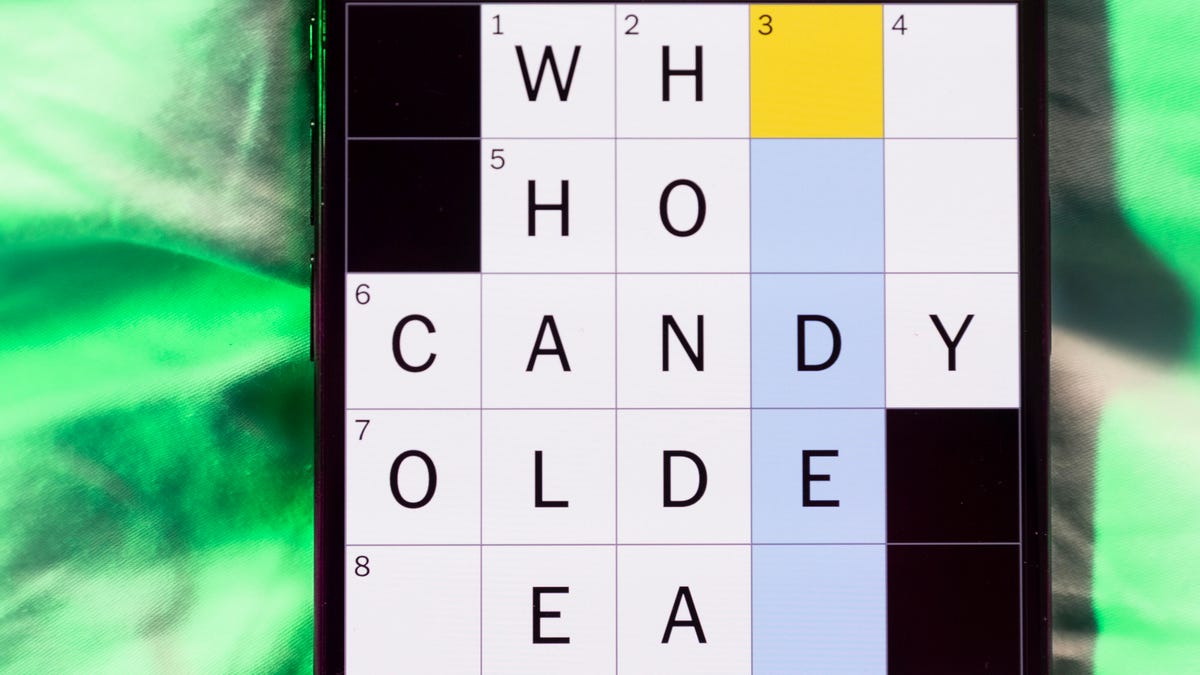
1A clue: Talk ___ (boastfully banter)
Answer: SMACK
6A clue: What has legs, but never walks?
Answer: TABLE
7A clue: French for «love»
Answer: AMOUR
8A clue: What has a mouth, but never talks?
Answer: RIVER
9A clue: Run-down in appearance
Answer: SEEDY
Mini down clues and answers
1D clue: Milky Way bits
Answer: STARS
2D clue: ___ Eisenhower, 1950s first lady
Answer: MAMIE
3D clue: Overhead
Answer: ABOVE
4D clue: Given a crossword hint
Answer: CLUED
5D clue: Actress Washington of «Scandal»
Answer: KERRY
-
 Technologies3 года ago
Tech Companies Need to Be Held Accountable for Security, Experts Say
-
 Technologies3 года ago
Best Handheld Game Console in 2023
-
 Technologies3 года ago
Tighten Up Your VR Game With the Best Head Straps for Quest 2
-
 Technologies4 года ago
Black Friday 2021: The best deals on TVs, headphones, kitchenware, and more
-
 Technologies5 лет ago
Google to require vaccinations as Silicon Valley rethinks return-to-office policies
-
 Technologies5 лет ago
Verum, Wickr and Threema: next generation secured messengers
-
 Technologies4 года ago
Olivia Harlan Dekker for Verum Messenger
-
 Technologies4 года ago
iPhone 13 event: How to watch Apple’s big announcement tomorrow


