

Technologies
iPhone 17E vs. iPhone 16E: Is the Spec Bump Worth the Extra Cash?
The iPhone 17E could be the budget upgrade we’ve been waiting for. We break down every spec change from the 16E to see if this $599 model is worth your cash.

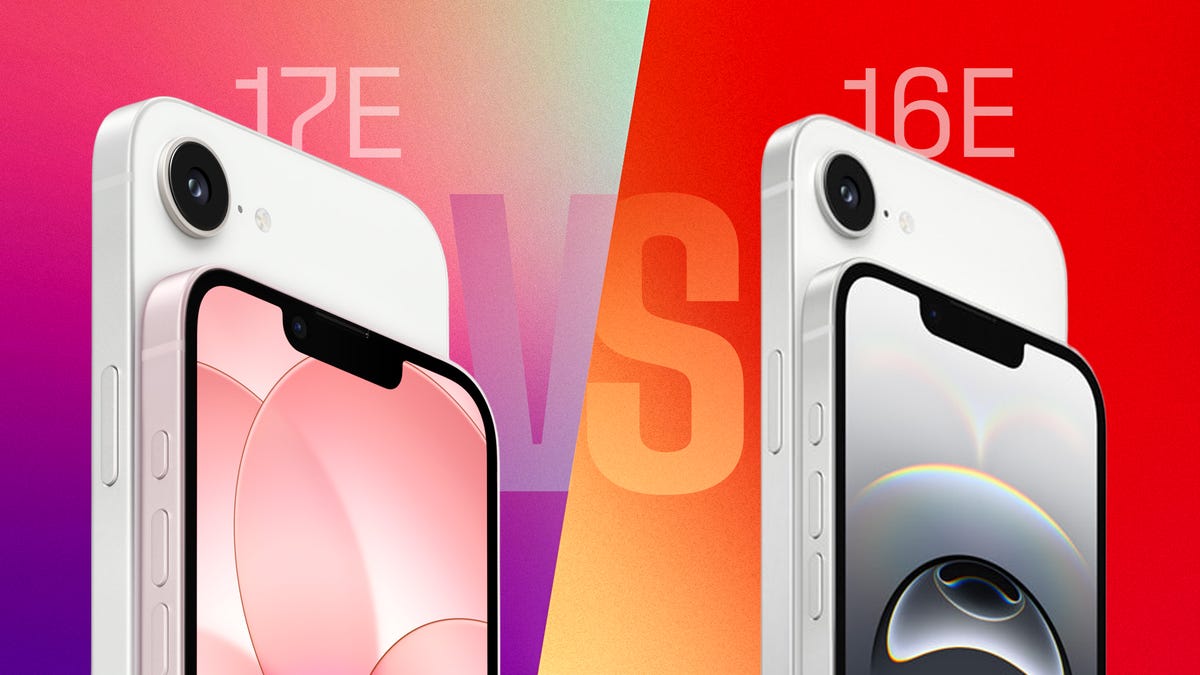
Apple’s iPhone 17E was announced earlier this week with a price of $599, bringing several compelling spec and feature upgrades to the company’s most affordable iPhone. It also serves as a nice complement to the $599 MacBook Neo, with more color options, including an attractive pink color. If you already own an iPhone 16E, you might be wondering whether it’s worth upgrading to the newer model.
Beyond specs, Apple has made two key upgrades: improved durability and quality-of-life features, such as introducing MagSafe and increasing base storage.
Here’s what you need to consider before deciding on an upgrade.
Display and build
The iPhone 17E and iPhone 16E have the same dimensions. They are both 5.78 by 2.82 by 0.31 inches, and they both have a 6.1-inch Super Retina XDR OLED display. The resolution of 2,532×1,170 pixels works out to 460 pixels per inch, and both have a peak brightness of 1,200 nits for HDR content and a typical max brightness of 800 nits. Overall, this will translate into an equally crisp and bright display for both models, with the same notch at the top for the selfie camera.
In terms of overall design and appearance, including the button layout and aluminum frame, the two phones are essentially identical. Neither is going to be as hand- or pocket-busting as the iPhone 17 Pro Max with its 6.9-inch screen. However, the iPhone 17E is slightly heavier at 5.96 ounces compared to the 16E’s 5.88 ounces.
This difference likely comes down to Apple’s durability upgrades for the newer model. The 17E uses Ceramic Shield 2 for the front glass, which offers three times the scratch resistance of the plain old Ceramic Shield on the iPhone 16E.
Both phones are also IP68 rated, offering water resistance down to 6 meters for up to 30 minutes.
There’s a slight difference with color options. The iPhone 17E comes in three colors — black, white and the ever-popular pink color — while the iPhone 16E limits you to black and white.
Ultimately, nothing in the hardware we’d say really moves the needle, aside from the added screen durability, though you could always get a screen protector and case if you’re worried.
Hardware, battery and storage
The big changes with phones start when you take a peek under the hood. The iPhone 17E has a newer A19 chip. It comes with a six-core CPU with two performance and four efficiency cores, as well as a four-core GPU with Neural Accelerators. It also has a 16-core Neural Engine and hardware-accelerated ray tracing. This is a step above the A18 chip in the iPhone 16E, which has the same core configuration but lacks the Neural Engine that comes with the GPU.
We haven’t run performance benchmarks or tested the iPhone 17E’s A19 chip yet, but we expect the newer chipset to offer a performance boost over the A18.
Worth noting is that in our review of the iPhone 16E, it performed well in its CPU benchmark, scoring higher than the iPhone 16, iPhone 15, and iPhone SE. In graphics performance, the iPhone 16 had an advantage over the iPhone 16E thanks to its extra GPU core, but we expect that will be a different story with the A19 on the iPhone 17E, since it has the same chip as the iPhone 17, just with one less GPU core.
iPhone 17E vs. iPhone 16E
| iPhone 17E | Apple iPhone 16E | |
|---|---|---|
| Display size, tech, resolution, refresh rate | 6.1-inch OLED display; 2,532×1,170 pixels; 60Hz refresh rate | 6.1-inch OLED display; 2,532×1,170 pixels; 60Hz refresh rate |
| Pixel density | 460ppi | 460ppi |
| Dimensions (inches) | 5.78×2.82×0.31 in | 5.78×2.82×0.31 in |
| Dimensions (millimeters) | 146.7×71.5×7.8 mm | 146.7×71.5×7.8 mm |
| Weight (grams, ounces) | 169g (5.96oz) | 167g (5.88oz) |
| Mobile software | iOS 26 (at launch) | iOS 18 (at launch) |
| Camera | 48 megapixel (wide) | 48 megapixel (wide) |
| Front-facing camera | 12 megapixel | 12 megapixel |
| Video capture | 4K/60fps | 4K/60fps |
| Processor | Apple A19 | Apple A18 |
| RAM + storage | RAM unknown + 256GB, 512GB | RAM unknown + 128GB, 256GB, 512GB |
| Expandable storage | None | None |
| Battery | 4,005 mAh | 4,005 mAh |
| Fingerprint sensor | None, Face ID | None, Face ID |
| Connector | USB-C, MagSafe | USB-C |
| Headphone jack | None | None |
| Special features | Action button, Apple C1X 5G modem, Apple Intelligence, Ceramic Shield 2, Emergency SOS, satellite connectivity, IP68 resistance, 15W Qi wireless charging, MagSafe | Action button, Apple C1 5G modem, Apple Intelligence, Ceramic Shield, Emergency SOS, satellite connectivity, IP68 resistance, 20W wired charging, 7.5W Qi wireless charging |
| US price starts at | $599 (256GB) | $599 (128GB) |
That means in benchmark tests, we expect the iPhone 17E to outperform both the iPhone 16E and iPhone 16 in graphics performance, but it’s likely to fall short of the iPhone 17.
«Benchmark tests for the CPU in Geekbench 6 place the iPhone 17 above the iPhone 16 Pro Max, as well as the full iPhone 15 lineup,» said Abrar Al-Heeti, CNET senior technology reporter, in her iPhone 17 review. «In a graphics test using 3DMark’s Wild Life Extreme, the iPhone 17 exceeded the performance of the entire iPhone 16 series, but was topped by the Galaxy S25 lineup.»
In real-world use, we don’t expect any performance issues with the newer iPhone 17E since it’s likely to fall right between the iPhone 16E and iPhone 17 in terms of performance.
«The phone had no issues playing video games, editing and saving videos and using Apple Intelligence,» said Patrick Holland, a managing editor at CNET, commenting on his day-to-day use of the iPhone 16E.
The other significant change comes from the storage upgrade. The iPhone 17E starts at a higher base storage model: 256GB for $599 and 512GB for $799, with the 128GB option dropped from the iPhone 16E. This is a pretty nice change, especially for those who were often brushing up against the storage limit of the entry model.
The truly substantial improvement between generations comes with the addition of MagSafe to the iPhone 17E, which was one of our big gripes when we tested the iPhone 16E. MagSafe being included in this generation means you now have support for a vast array of MagSafe cases, mounts, chargers, docks and other accessories.
This also bumps wireless charging support to Qi 2 at 15 watts, up from the 7.5-watt Qi wireless charging on the iPhone 17E. However, neither is as good as the iPhone 17, which supports 25-watt Qi charging. Both phones come with USB-C ports for charging and data, so that hasn’t changed, with a 50% charge in 30 minutes.
Cameras
The cameras haven’t seen a substantial change either. Both the iPhone 17E and 16E feature a 48-megapixel Fusion camera system as their primary rear sensor. That’s not unexpected, since Apple usually reserves its multisensor setup for the mainstay line, like the iPhone 17 and iPhone 16.
You get optical image stabilization for both 1x and 2x optical zoom, True Tone flash, Photonic Engine, Deep Fusion, Smart HDR 5, Night mode, Portrait Lighting and more.
One minor note: The iPhone 17E Portrait mode includes Depth and Focus controls, while the iPhone 16E Portrait mode had only Depth controls.
With the front camera, again, the setup remains the same. A 12MP TrueDepth camera is used for Face ID. For video recording, both support 4K Dolby Vision up to 60 frames per second and 1080p Slo-mo video at 240fps. Naturally, you get OIS and spatial audio and stereo recording too.
Looking at our iPhone 16E review should give you a fairly good idea of how well the iPhone 17E snaps pictures, though naturally, we’ll be testing it ourselves.
«The 16E’s main camera takes lovely photos, even when using night mode,» said Holland about the iPhone 16E. «It has a 48-megapixel sensor, which has enough resolution for sensor cropping to offer a 2x magnification, and the results are decent. Images look sharp, have a nice dynamic range (good for high-contrast lighting like sunrises/sunsets), and colors are attractively subdued.»
Apple software and connectivity
On the software end, you should expect essentially identical software. Both support Apple Intelligence and Siri and will get the latest iOS updates. The iPhone 17E comes with iOS 26 installed, while the iPhone 16E launched with iOS 18.3 but also supports iOS 26.
When it comes to connectivity, both the iPhone 17E and iPhone 16E have a nearly identical loadout. They support 5G (sub-6GHz) with 4×4 MIMO, gigabit LTE, Wi-Fi 6 and Bluetooth 5.3. You also get NFC, VoLTE and Wi-Fi calling. Both also support dual eSIMs.
The sole difference is that the iPhone 17E comes with the C1X modem, while the iPhone 16E has the C1 modem.
Should you upgrade?
There are two reasons you might consider upgrading from the iPhone 16E to the iPhone 17E. First, if you’re often running out of storage space on a 128GB iPhone 16E, you can get the iPhone 17E for $599 starting at 256GB. Or you can spring for the 512GB model for $799 if your needs are more substantial.
The other big reason is MagSafe. I won’t lie: There’s a pretty significant improvement in quality of life with MagSafe if you’ve had to worry about plugging or unplugging a cable. MagSafe-compatible accessories also make it easy to use cases, phone mounts, wallet attachments and other accessories. However, worth noting is that you can pick up third-party cases that add magnets to give you MagSafe compatibility.
Now, are those two reasons enough to pay $599 for a phone that you probably paid the same price for just a year ago? I’d say probably not. You’d likely be better off with the iPhone 17 base model if you’re looking for a more substantial performance and feature upgrade.
However, if you have a much older model or you’re an Android user looking for a cheap entry point into the Apple ecosystem, getting an iPhone 17E might be worth it.
Technologies
Apple Gave Us the Neo, Now It Might Be Planning a High-End MacBook Ultra
The company might launch its most sophisticated MacBook ever, with its first OLED screen.
Apple went budget with the MacBook Neo. Now reportedly the company is preparing to go high end, and high price.
Apple is gearing up to launch a MacBook «Ultra» in the fall, outfitted with the first OLED display in MacBook history, according to a report from Bloomberg’s Mark Gurman.
Gurman says the new laptop will have a touchscreen and new M6 chips. Last month, Bloomberg reported that Apple could be launching its first touchscreen MacBook — with a Dynamic Island. The Dynamic Island is a feature on more recent iPhone models — iPhone 14 and later — that’s shaped like a long horizontal pill atop the screen and shows alerts, notifications, timers and music.
It if happens, the Ultra would be at the opposite end of the cost spectrum from the Neo, which Apple launched earlier this month for $599 as a rival to Chromebooks and Windows laptops in the same price range. Gurman says the MacBook Ultra could cost 20 percent more than the new MacBook Pro (M5 series), which Apple lists at $1,699.
If you want to read more about the new Neo, CNET has been all over it: Here’s why students might love it, the colors we liked and didn’t like and why the Neo is a really is a game-changer.
Gurman suggested that Apple might keep selling the M5 series MacBook Pro even after the Ultra launches. That would give the company a wider range of MacBooks at various costs — the Neo ($599), the Air (starting at $1,099), the Pro ($1,699) and the Ultra.
Tech analyst Paolo Pescatore said adding the premium MacBook Ultra would «signal a clear shift in strategy» for Apple.
«If this turns out to be the case, then Apple appears to be stretching the Mac further upmarket,» Pescatore told CNET. «The opportunity is to drive higher spending and keep premium users firmly within Apple’s ecosystem. The challenge will be avoiding confusion, especially if the lines between MacBook Pro and iPad Pro become even more blurred.»
Gurman also said that Apple’s first foldable iPhone, rumored to be launched later this year, might be called the «iPhone Ultra.»
Technologies
AI Is One of the Least-Liked Things in America, According to New NBC Poll
The poll finds that AI is viewed less positively than ICE and President Donald Trump, and only more positively than Iran and the Democratic Party.

Artificial intelligence has rapidly become embedded in everything from phones to schoolwork to war plans. And that means everyone is likely to have an opinion about the technology.
A new national survey conducted for NBC News highlights a striking disconnect between the spread of AI tools and Americans’ views on them. The poll, which ran from Feb. 27 to March 3, asked 1,000 registered voters about their views on topics ranging from border security to the new pope.
Only 26% of voters said they view AI positively, 46% view it negatively, and 28% said they feel unsure or have no opinion, leaving AI with a net favorability of -20. In the study, AI ranked less favorably than US Immigration and Customs Enforcement, President Donald Trump, former Vice President Kamala Harris, the Republican Party and The Late Show host Stephen Colbert. (Pope Leo XIV was by far the most popular person respondents were asked about.)
Among the rankings, AI is one of the least popular topics in the survey — ranking only slightly more positively than Iran and the Democratic Party.
A growing disconnect between AI and public opinion
There is a notable disconnect between the industry’s ongoing push for AI adoption and how Americans feel about it.
Tech companies are currently investing millions of dollars into developing generative AI tools and physical AI. In the last week alone, OpenAI released its latest GPT 5.4 model and AI companies made moves to work with the US Department of Defense. At the same time, Americans are growing increasingly wary of the technology.
The mismatch between adoption and public sentiment seems to be driven by concerns about AI’s broader impact, such as job displacement, privacy issues, the spread of misinformation and the undermining of human-made work.
For companies and policymakers going all in on AI, the biggest challenge will be less about developing the next slew of innovative chatbot models or AI devices and more about persuading the public that the technology can be trusted.
Technologies
Just $30 Will Get You 3 Months of the 5GB Mint Mobile Phone Plan
Finding a phone plan for $10 a month was impossible until this Mint Mobile deal came along.

If you told me I could get a three-month cell plan for just $30, I probably wouldn’t believe you. But that’s exactly what Mint Mobile is offering right now. If you pay for three months of 5GB cell service upfront, you can score it for just $30.
New customers to Mint Mobile can score a 5GB wireless plan for just $10 per month for the first three months. The only catch is you have to use the code 5GB10 and pay $30 upfront for the full term. The usual price is $45 for three months, meaning this is a 33% discount.
After the three-month period, the plan renews at $25 per month for three months. If you really like the plan, you can opt for the six-month version, which can lower the monthly cost to $20. You can also track your data usage in the Mint Mobile app and switch to a better-suited data plan when it’s time to renew.
Don’t forget a new phone to go with your new phone plan. Take a look at the best phone deals you can score right now.
MOBILE DEALS OF THE WEEK
-
$749 (save $250)
-
$298 (save $102)
-
$241 (save $310)
-
$499 (save $300)
Why this deal matters
It seems like everything is becoming more and more expensive these days. That’s why saving wherever you can makes a huge difference. The phone bill is one thing that is here to stay, and that’s why this deal of $10 per month is really unbeatable. Just keep in mind you’ll have to pay the full three months upfront. But even that is just $30 total. Be sure to use code 5GB10 for the discount.
-
 Technologies3 года ago
Tech Companies Need to Be Held Accountable for Security, Experts Say
-
 Technologies3 года ago
Best Handheld Game Console in 2023
-
 Technologies3 года ago
Tighten Up Your VR Game With the Best Head Straps for Quest 2
-
 Technologies4 года ago
Black Friday 2021: The best deals on TVs, headphones, kitchenware, and more
-
 Technologies5 лет ago
Google to require vaccinations as Silicon Valley rethinks return-to-office policies
-
 Technologies5 лет ago
Verum, Wickr and Threema: next generation secured messengers
-
 Technologies4 года ago
Olivia Harlan Dekker for Verum Messenger
-
 Technologies4 года ago
iPhone 13 event: How to watch Apple’s big announcement tomorrow


