

Technologies
Google’s Epic Settlement Brings Fortnite Back to Google Play, Plus Broad Dev Discounts
Welcome back, Fortnite: Google is already making improvements to the Google Play Store following last year’s Epic Games settlement.

Google moved forward on Wednesday with its agreement to settle a years-long antitrust battle with Epic Games, marking a significant development for Fortnite players. While the settlement still awaits final approval, Epic Games founder and CEO Tim Sweeney posted the news on X.
«Fortnite will return to Google Play Store worldwide soon,» Sweeney wrote. «Epic Games Store continues supporting Android worldwide alongside Windows and Mac, and installation on Android will become much easier later in 2026.»
A Google representative didn’t immediately respond to a request for comment.
The Epic Games settlement included an offer from Google to change how the Google Play Store works.
«For new installs (first-time installs from users after the new fees are launched in a region), we are reducing the in-app purchase (IAP) service fee to 20%,» Google reported on its Android Developers Blog.
That’s a significant drop from the previous 30%, which could make buying apps more affordable for customers when the change rolls out to US customers by June 30. Google is also discounting its cut of recurring subscription fees to 10%.
Even more important for long-term Google Play offerings, Google is now adding the ability for developers to offer their third-party app store payment option, sideloaded with Google’s payment method, so users will have new choices regarding the platform on which they pay.
What this means for Google Play purchases
Keep in mind, Google has only just introduced its program allowing qualified alternative app stores on Android and is still in the process of lowering fees, so changes are unlikely to be felt for several months.
When the updates do roll out, developers on Google Play — including Epic Games — will have new opportunities to save money when selling their apps, and new methods to sell that didn’t exist before. That could attract more developers to the Google Play Store and make apps easier for Android users to access. If there’s an app you’ve been wishing was available on Google Play, it’s now more likely to become available.
The changes may also lead to lower prices for customers, although that’s not guaranteed. Google is lowering its profit share, but developers will have to decide whether to pass those savings along to buyers. Fortnite fans aren’t the only ones who have something to look forward to, but it will take time to see the final effects.
Technologies
Gemini Expands to Live Camera Feeds: What It Means for Your Privacy
Gemini for Home’s AI is getting a significant upgrade — if you don’t mind it peering through your security cam.
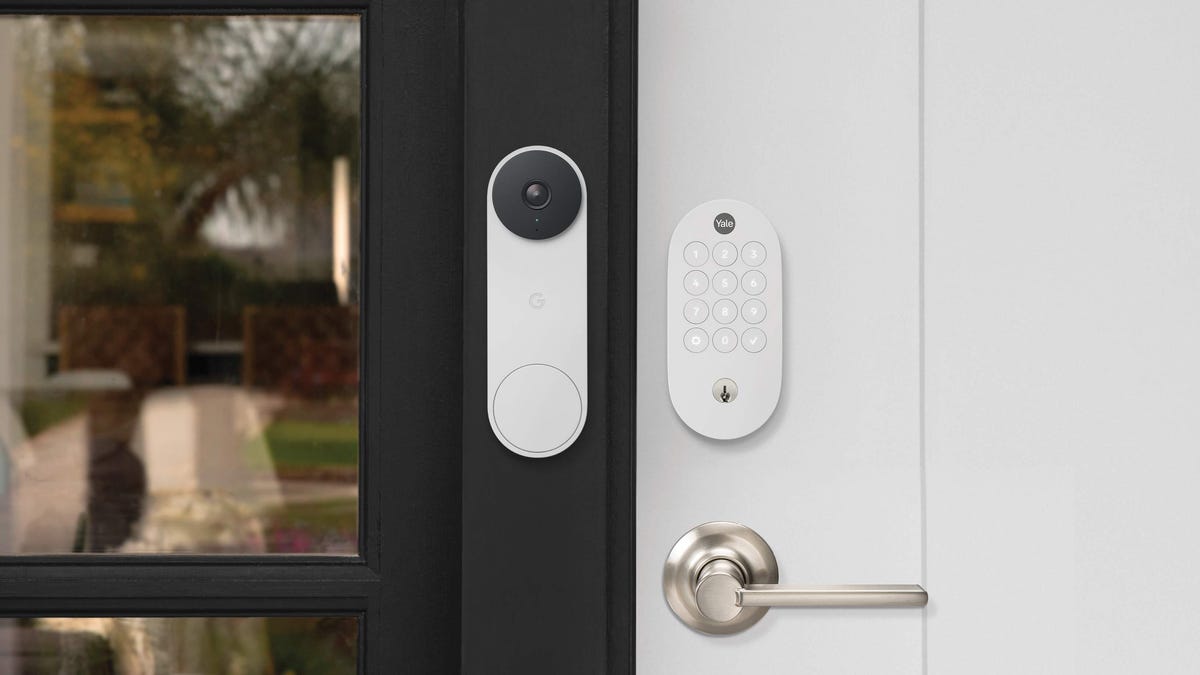
Google’s Gemini for Home AI originally could only access stored video clips from compatible security cameras. It could answer questions about object locations, notify you when a UPS van arrived and provide daily summaries of motion-detected activity captured by the cameras. Now, that AI analysis is getting a significant live viewing boost.
According to Anish Kattukaran, chief product officer for Google Home, and his latest X posts on the changes, Google Home is introducing the ability to ask Gemini for Home Live Search questions, letting the AI look at what the camera currently sees, analyze that footage and explain it.
«You can now ask Gemini to understand the current state of your home,» Kattukaran wrote. «(For example), Hey Google, is there a car in the driveway?'»
These options will be available only to Google Home Premium Advanced subscribers, with plans starting at $20.
A Google representative didn’t immediately respond to a request for comment.
Other upgrades to Google Home include the full rollout of Yale Smart Lock integration and improved casual conversation with Gemini for Home.
How invasive are these Gemini live viewing features?
Concerns about Gemini AI accessing security cameras on demand are understandable. Similar privacy questions have arisen with features like Ring’s pet-finding Search Party and the extent of law enforcement access to Flock Safety surveillance.
Unlike Ring’s cut-short partnership, Google Nest has never had any contracts with surveillance companies like Flock. However, the company has shared footage with police in the past, most notably when Nest recovered cloud footage, first assumed deleted, from a Nest camera, to help in the case of Nancy Guthrie, the missing mother of Today Show co-anchor Savannah Guthrie.
It is unclear whether the new Live Search feature will allow Gemini for Home to access cameras on demand in cases involving law enforcement requests. According to Google’s description, Gemini for Home can use Live Search whenever questions pertain to a home’s current state, giving the AI broad access. Google has not yet clarified whether Live Search can be disabled or how live camera feeds might be handled in relation to police or other privacy concerns.
Whenever Gemini for Home accesses a Nest camera, the footage may be used for AI training purposes. Details about how Live Search is activated and managed have not been fully disclosed. By default, the latest Nest cameras provide 6 hours of free cloud video storage, but Gemini for Home can only access stored or live footage if people have the appropriate subscription plan and have enabled the feature.
Technologies
Today’s NYT Connections: Sports Edition Hints and Answers for March 5, #528
Here are hints and the answers for the NYT Connections: Sports Edition puzzle for March 5, No. 528.
Looking for the most recent regular Connections answers? Click here for today’s Connections hints, as well as our daily answers and hints for The New York Times Mini Crossword, Wordle and Strands puzzles.
Today’s Connections: Sports Edition offers some tricky red herrings. Arsenal is a famous soccer/football team, of course, but that’s not how it is used here. If you’re struggling with today’s puzzle but still want to solve it, read on for hints and the answers.
Connections: Sports Edition is published by The Athletic, the subscription-based sports journalism site owned by The Times. It doesn’t appear in the NYT Games app, but it does in The Athletic’s own app. Or you can play it for free online.
Read more: NYT Connections: Sports Edition Puzzle Comes Out of Beta
Hints for today’s Connections: Sports Edition groups
Here are four hints for the groupings in today’s Connections: Sports Edition puzzle, ranked from the easiest yellow group to the tough (and sometimes bizarre) purple group.
Yellow group hint: Useful things.
Green group hint: Baseballers hang out here.
Blue group hint: March Madness.
Purple group hint: George R.R. of Game of Thrones fame.
Answers for today’s Connections: Sports Edition groups
Yellow group: Tools.
Green group: Found in a dugout.
Blue group: Last year’s men’s NCAA tournament Final Four.
Purple group: ____ Martin.
Read more: Wordle Cheat Sheet: Here Are the Most Popular Letters Used in English Words
What are today’s Connections: Sports Edition answers?
The yellow words in today’s Connections
The theme is tools. The four answers are arsenal, bag, repertoire and skill set.
The green words in today’s Connections
The theme is found in a dugout. The four answers are bubble gum, Gatorade, sunflower seeds and water.
The blue words in today’s Connections
The theme is last year’s men’s NCAA tournament Final Four. The four answers are Auburn, Duke, Florida and Houston.
The purple words in today’s Connections
The theme is ____ Martin. The four answers are Aston, Curtis, Kate and Kenyon.
Technologies
RAM Shortage Could Kill Budget Phones: The Latest Predictions at MWC 2026
Skyrocketing memory costs mean bleaker projections than even the worst predictions analysts made before.
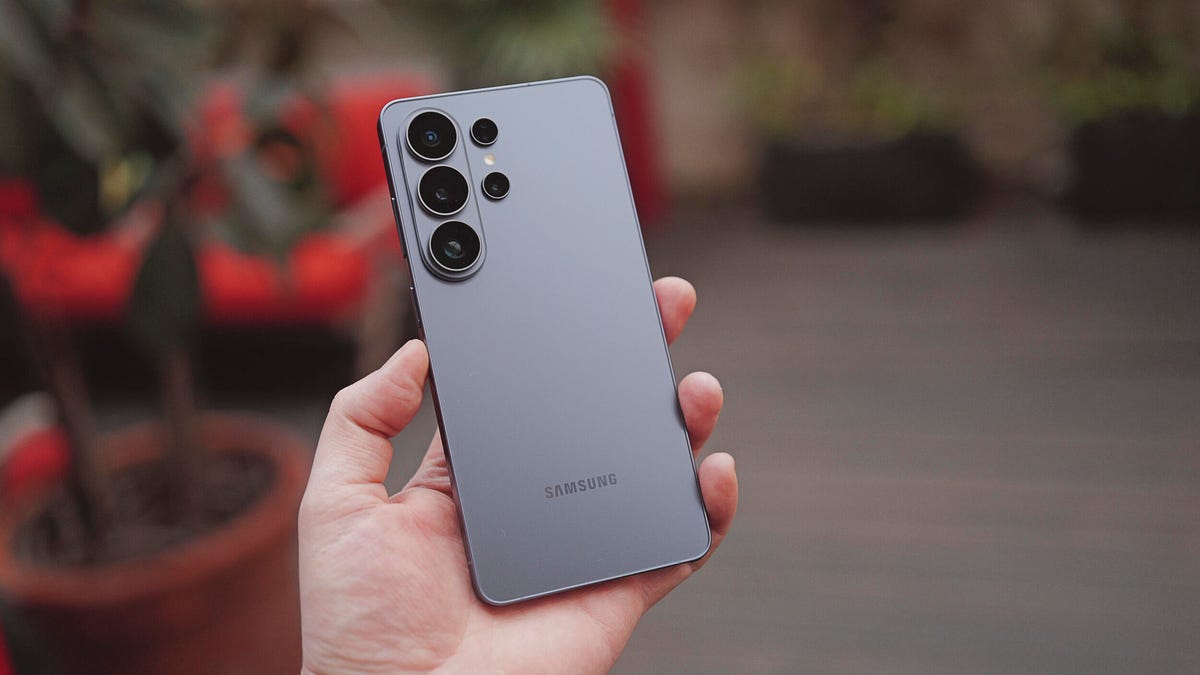
The race to build AI infrastructure has gobbled up so much memory that prices have skyrocketed, with analysts predicting that product costs will rise as a result. But the outlook is far worse than anticipated. New reports and forecasts suggest that the RAM shortage could prompt manufacturers of cheaper devices to reduce or even stop production for some time.
Smartphone shipments are expected to drop by 13% through 2026 compared with last year, according to the International Data Corporation. This won’t just be a temporary crisis, but «a tsunami-like shock originating in the memory supply chain, with ripple effects spreading across the entire consumer electronics industry,» Francisco Jeronimo, vice president for Worldwide Client Devices at IDC, had previously said in a statement.
When reached at MWC 2026, Jeronimo predicted that this impact won’t happen immediately. Phone sales will stay pretty static over the first quarter of the year (which is almost over) as distributors buy as much stock as they can, but the shortage will start affecting phone production around the second quarter, between April and June.
Phones are already getting more expensive, as analysts predicted. The Samsung Galaxy S26 and S26 Plus, which both launched with a $100 price hike over their predecessors — though they also bumped the minimum storage to 256GB from 128GB. But the premium segment likely won’t be as affected as lower-cost, higher-volume phones, said Anshel Sag, principal analyst at Moor Insights and Strategy.
«That’s why you’re already seeing the Chinese [phone manufacturers] have to jack up prices already,» Sag said.
With the shortage, RAM prices are spiking, reaching three times last year’s levels, according to a Counterpoint Research report released at the end of February. The cheapest devices, already on thin margins, will likely see their profits evaporate. At that point, it’s not worth selling those phones.
«Some vendors are telling us that they are considering leaving that [budget] segment entirely, because if you sell a phone for $150, and half the cost is memory, where will you make money? There’s no point in selling products, right?» Jeronimo said.
If the cheapest budget segment drops out of the phone industry over the next year, that’s 10% of the global market that will be gone, Jeronimo noted.
The shortage is already affecting plans for the prices of phones set to launch. At MWC 2026, several phones were shown off without finalized prices, like the Unihertz Titan 2 Elite shown off at MWC that is soon being sold on Kickstarter. Before the RAM shortage, the price of an upcoming phone would be set weeks or months in advance of its release to store shelves. Now, it’s too risky to name a price until just before it’s sold. They just might not have enough memory to even supply the first batch of products at the preset price, Jeronimo said, and potentially raise prices thereafter.
As an example, the base Xiaomi 17 recently launched at 999 euros, but Jeronimo predicted that «the price they announced on stage is not the price they [will] see [the phone at]. The price in the store, in many operations, will be 100 euros more than what they said on stage,» he said.
When will the RAM crisis end?
Unlike last year’s tariffs and the financial fluctuations that phone-makers largely absorbed, the RAM shortage is unavoidable — there’s simply a lot less of these components to go around.
«This is not a short-term thing,» Jeronimo said. «You cannot build 1,000 factories in three or four months. [That would] take two to three years.»
At IDC’s current predictions, the crisis won’t last quite that long — only one and a half to two years, Jeronimo clarified. That could be shortened if other, smaller-tier suppliers start producing memory and alleviating the shortage, but the conditions he reported are dire, with RAM manufacturers requiring payment up-front for periodic shipments with the anticipation that the next slew of units could cost more.
But IDC’s analyst also put to bed another potential mitigation that had been floated late last year — that manufacturers would reverse their previous course of increasing RAM with each generation and actually trim it in the next. Even if it were cheaper to use less memory in phones, it would diminish the experience too much, causing too many retailers to return their phones for poor performance, Jeronimo explained. RAM isn’t just used to run AI models — it also lets people keep multiple apps open and operating at once.
On the component side, major companies aren’t commenting on the shortage and have even announced they won’t take questions on the matter at the start of press briefings.
Understandably, higher phone prices will likely lead people to hold off on upgrading, extending the time they keep their current handsets, said Dipanjan Chatterjee, vice president and principal analyst at Forrester. The onus is on the brands to counteract this upgrade lethargy in two ways, he said: diversify revenue streams to lean harder on non-phone sales, like Apple is doing with its services, and second, add more bells and whistles to make price increases more palatable.
Hence, Samsung is increasing the Galaxy S26 storage alongside its price hike. And Samsung itself is better positioned to capture sales with its tradition of strong deals and incentives during a product launch. When the Galaxy S26 lineup launched, it also offered trade-in and promotional deals to offset the $100 price increase, including pairing other gadgets with its phones.
While the RAM shortage is the biggest factor driving these price increases, other factors are at play as well. Global instability, including the recent war in the Middle East, is forcing transportation to be rerouted outside no-fly zones, raising the price of transporting products. Components across the board are getting pricier, too.
The good news is that this price spike won’t last forever. Eventually, the race to build more AI data centers will slow, and in addition to more memory fabrication spinning up, the prices will stabilize. But like every other consumer good that saw a price spike, they likely won’t drop in affordability to where they were before.
«I don’t think the price of memory will go down to the same levels as last year,» Jeronimo said.
-
 Technologies3 года ago
Tech Companies Need to Be Held Accountable for Security, Experts Say
-
 Technologies3 года ago
Best Handheld Game Console in 2023
-
 Technologies3 года ago
Tighten Up Your VR Game With the Best Head Straps for Quest 2
-
 Technologies4 года ago
Black Friday 2021: The best deals on TVs, headphones, kitchenware, and more
-
 Technologies5 лет ago
Google to require vaccinations as Silicon Valley rethinks return-to-office policies
-
 Technologies5 лет ago
Verum, Wickr and Threema: next generation secured messengers
-
 Technologies4 года ago
Olivia Harlan Dekker for Verum Messenger
-
 Technologies4 года ago
iPhone 13 event: How to watch Apple’s big announcement tomorrow


