

Technologies
The Ultimate Guide to Seeing the Total Lunar Eclipse This March
Night owls will be able to check out the lunar eclipse when it appears this March.


A total lunar eclipse is coming this March. It’s like a supermoon in that they come in batches, so you only get a few chances to see them before a long wait. This is the final eclipse in a trio that started in 2025. If you miss this one, you won’t get another opportunity to see a total lunar eclipse until New Year’s Eve in 2028.
According to The Farmer’s Almanac, March’s full moon will occur on March 3. It’ll reach peak illumination, when the moon is at its fullest, at 6:38 a.m. ET. But you won’t see the full moon in all of its majesty, even if you’re outside at that exact time, because the moon will be in the middle of its eclipse.
Those hoping to see the eclipse should consider brewing an extra pot of coffee. The show starts at 3:44 a.m. ET as the moon begins to move into Earth’s shadow, a region known as the penumbra. The moon will darken during this time as Earth starts to block sunlight. This phase lasts until 4:50 a.m. ET when the moon enters the umbra, the spot behind Earth where all direct light from the sun is blocked. The moon will enter its maximum eclipse at 6:33 a.m. ET.
The moon will turn into a blood moon during this time. As sunlight passes through Earth’s atmosphere, shorter blue wavelengths scatter, while longer red and orange hues are refracted toward the moon. This gives the blood moon its signature reddish look.
This phase of the eclipse will last until 8:17 a.m. ET when the moon enters penumbra again. The eclipse ends at 9:23 a.m. once it leaves the penumbra for the final time.
Will I see the lunar eclipse?
Everyone in North America will have a chance to see the lunar eclipse, though not everyone will experience it equally. The central path of the eclipse rips right down the center of the Pacific Ocean, so only people on the West Coast, Alaska and western Canada can see the whole thing. The further east you go, the less of the eclipse you’ll be able to see.
The website Time and Date offers a map showing who can see the eclipse and how much they’ll see. It’s almost perfectly lined up with US time zones, so here’s how well you’ll be able to see the eclipse based on where you live.
- Pacific Time: The full eclipse will be visible from beginning to end.
- Mountain Time: The full eclipse will be visible, but you may miss part of the penumbra phase.
- Central Time: The entire eclipse will be visible, but you’ll miss more of the penumbra phase. People residing near the western end of the Eastern Time Zone will also experience this level of eclipse.
- Eastern time: Most of the eclipse will be visible, and you’ll miss a significant part of the penumbra phase.
Do I need special equipment to see the lunar eclipse?
You won’t need any special equipment to see the lunar eclipse.
It’ll be the brightest thing in the night sky, and the moonlight isn’t a danger to human eyes as it would be during a solar eclipse.
The only thing you’ll need is caffeine, because this all takes place in the middle of the night and very early morning.
The next lunar eclipse
Total lunar eclipses tend to happen in batches of three. The last two occurred in March and September 2025, with the final member of the trio coming on March 3, 2026. Once that one passes, the next trio of lunar eclipses won’t happen until Dec. 31, 2028, followed by June and December 2029.
Technologies
Today’s NYT Mini Crossword Answers for Tuesday, Feb. 24
Here are the answers for The New York Times Mini Crossword for Feb. 24.
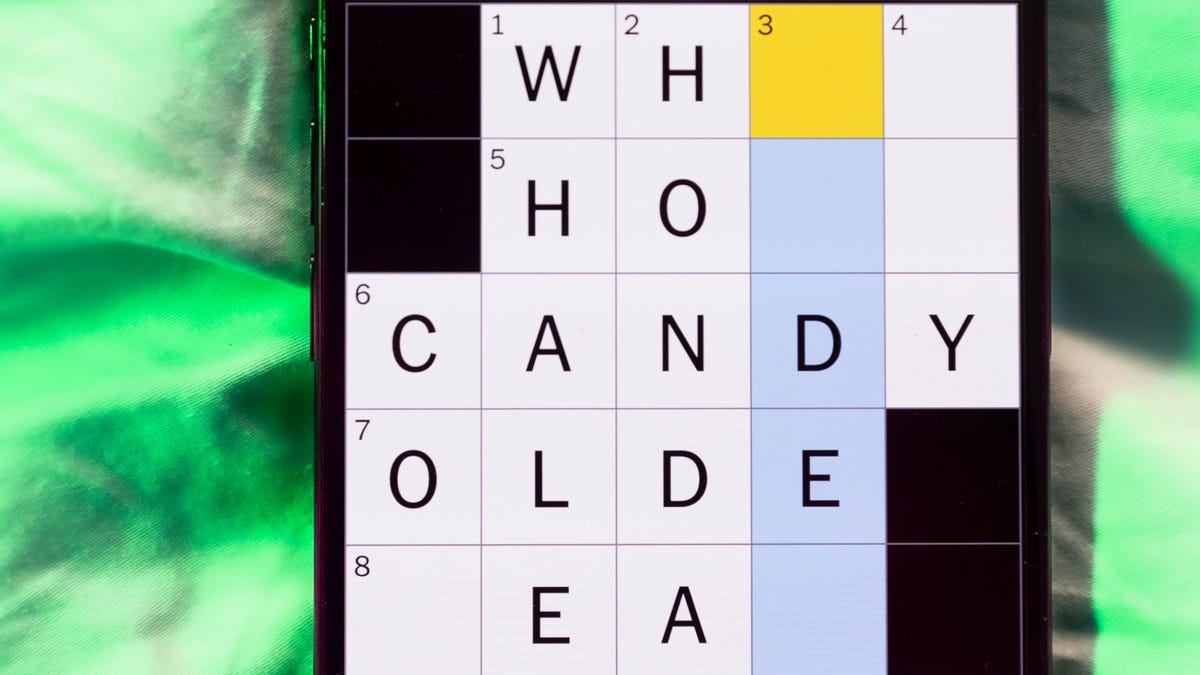
Looking for the most recent Mini Crossword answer? Click here for today’s Mini Crossword hints, as well as our daily answers and hints for The New York Times Wordle, Strands, Connections and Connections: Sports Edition puzzles.
Need some help with today’s Mini Crossword? I thought 5-Down was very tricky, and not really representative of the clue, either. Read on for all the answers. And if you could use some hints and guidance for daily solving, check out our Mini Crossword tips.
If you’re looking for today’s Wordle, Connections, Connections: Sports Edition and Strands answers, you can visit CNET’s NYT puzzle hints page.
Read more: Tips and Tricks for Solving The New York Times Mini Crossword
Let’s get to those Mini Crossword clues and answers.
Mini across clues and answers
1A clue: Goosebumps-inducing
Answer: SCARY
6A clue: Buddy, informally
Answer: HOMIE
7A clue: Rub off, as pencil markings
Answer: ERASE
8A clue: Enjoys a quiet weekend morning, perhaps
Answer: LAZES
9A clue: David Szalay novel that won the 2025 Booker Prize
Answer: FLESH
Mini down clues and answers
1D clue: Section of a bookcase
Answer: SHELF
2D clue: Color similar to salmon that’s also named for a sea creature
Answer: CORAL
3D clue: Leave speechless
Answer: AMAZE
4D clue: Gets out of bed
Answer: RISES
5D clue: «Uff-da!»
Answer: YEESH
Technologies
This AI Tool Doesn’t Help With Homework. It Does It for You
Einstein is a new AI tool that can watch lecture videos, read essays, write papers, complete quizzes and basically take your class for you.
A new AI tool called Einstein is pushing the boundaries of what automation in education looks like. Created by the startup Companion, Einstein does more than generate answers to homework questions. It logs directly into a student’s Canvas account and completes coursework on the student’s behalf.
According to its creators, Einstein operates through its own virtual computer. It can open a browser, navigate class pages, watch lecture videos, read PDFs and essays, write papers, complete quizzes and post replies in discussion boards. Once connected to a student’s account, the system can monitor deadlines and automatically submit assignments.
Unlike chatbots that respond when prompted, Einstein functions more like a digital stand-in for a human student. After setup, it can run in the background with little ongoing input.
«Students are already using AI. We’re just giving them a better version of it,» Companion CEO Advait Paliwal said in a statement.
Read more: ‘Machines Can’t Think for You.’ How Learning Is Changing in the Age of AI
How Einstein works
Einstein connects to Canvas, a widely used learning-management system in colleges and high schools. From there, it reviews course materials and identifies assigned tasks. The AI can analyze lecture recordings, summarize readings and generate written work that matches the assignment requirements.
The company says the system produces original essays with citations and context-aware discussion posts. It can also track new announcements and upcoming deadlines. In practice, this means a student could enroll in an online course and let Einstein handle much — if not all — of the required work.
The technology builds on advances in generative AI, browser automation and so-called autonomous agents that can take multistep actions on behalf of their human counterpart. While many students already use AI tools to brainstorm ideas or check grammar, Einstein moves beyond assistance into complete automation.
«Our companions aren’t simple chatbots,» Paliwal said. «Each one has access to an entire virtual computer with a persistent file system and internet access, so they can actually do things on your behalf. This makes ChatGPT look like a toy.»
A crossroads for academic integrity?
The release of Einstein comes at a time when schools are still adapting to widespread AI use. Since the arrival of powerful language models, educators have debated how to distinguish legitimate support from academic dishonesty. Most policies focus on whether students are using AI to help draft or edit their work, or do it entirely for them.
Einstein complicates that conversation.
If an AI logs in as a student and completes assignments independently, the question shifts from assistance to substitution. Is the tool essentially taking the student’s place?
Not all in education are sounding the alarm, though.
«I think the Canvas method of teaching already has a proclivity for cheating. This change, I think, will ultimately be good because it will force educators to redesign classes to not rely on virtual assignments,» said Nicholas DiMaggio, a PhD student at The University of Chicago Booth School of Business and teaching assistant for a course in consumer behavior this quarter.
DiMaggio said that this may prompt institutions to emphasize in-person work, oral exams or project-based learning instead. Beyond this one tool, schools will have to decide whether to ban such tools outright, integrate them under strict guidelines or rethink how learning is measured in the age of AI.
Read more: How to Use AI to Get Better Grades — Without Cheating
Technologies
Today’s NYT Strands Hints, Answers and Help for Feb. 24 #723
Here are hints and answers for the NYT Strands puzzle for Feb. 24, No. 723.
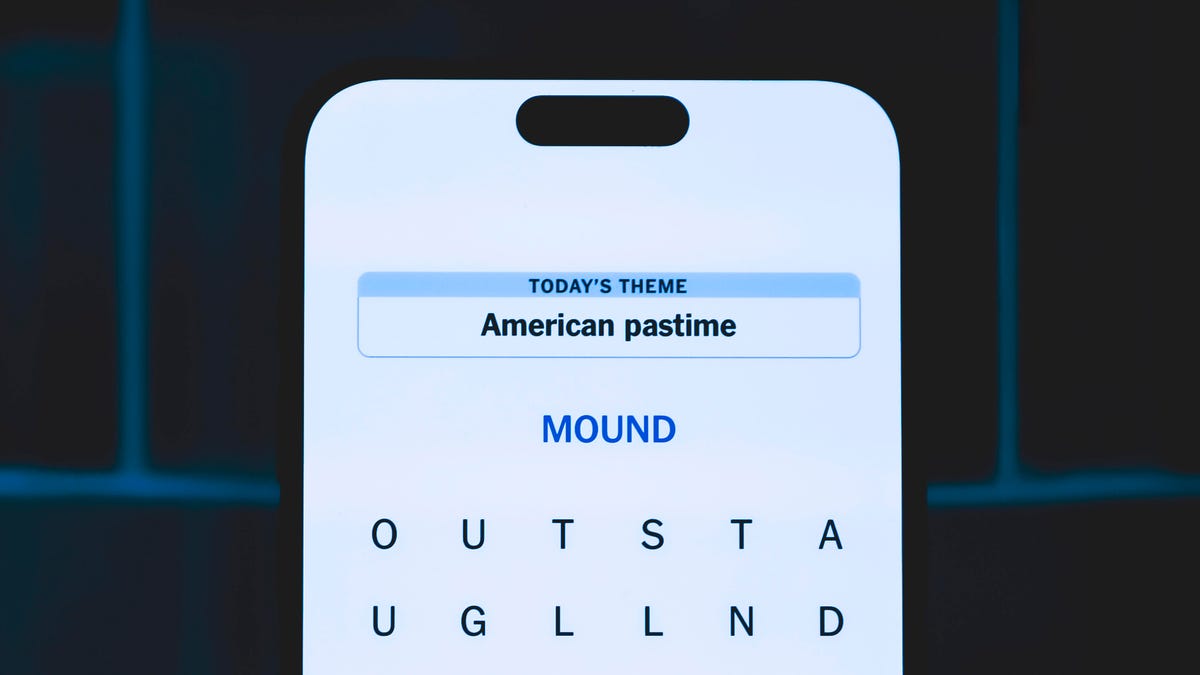
Looking for the most recent Strands answer? Click here for our daily Strands hints, as well as our daily answers and hints for The New York Times Mini Crossword, Wordle, Connections and Connections: Sports Edition puzzles.
Today’s NYT Strands puzzle is a fun one, and there are only four answers, though some of them are quite long. Some of the answers are difficult to unscramble, so if you need hints and answers, read on.
I go into depth about the rules for Strands in this story.
If you’re looking for today’s Wordle, Connections and Mini Crossword answers, you can visit CNET’s NYT puzzle hints page.
Read more: NYT Connections Turns 1: These Are the 5 Toughest Puzzles So Far
Hint for today’s Strands puzzle
Today’s Strands theme is: Just for reference.
If that doesn’t help you, here’s a clue: Like Wikipedia.
Clue words to unlock in-game hints
Your goal is to find hidden words that fit the puzzle’s theme. If you’re stuck, find any words you can. Every time you find three words of four letters or more, Strands will reveal one of the theme words. These are the words I used to get those hints but any words of four or more letters that you find will work:
- CLOP, TREAT, SHARD, PATE, PATES, DOOR, ROOD, ROOT, DIRECT
Answers for today’s Strands puzzle
These are the answers that tie into the theme. The goal of the puzzle is to find them all, including the spangram, a theme word that reaches from one side of the puzzle to the other. When you have all of them (I originally thought there were always eight but learned that the number can vary), every letter on the board will be used. Here are the nonspangram answers:
- DICTIONARY, THESAURUS, ENCYCLOPEDIA, DIRECTORY
Today’s Strands spangram
Today’s Strands spangram is LOOKITUP. To find it, start with the L that’s the last letter on the farthest vertical row to the left, and wind up.
Don’t miss any of our unbiased tech content and lab-based reviews. Add CNET as a preferred Google source.
-
 Technologies3 года ago
Tech Companies Need to Be Held Accountable for Security, Experts Say
-
 Technologies3 года ago
Best Handheld Game Console in 2023
-
 Technologies3 года ago
Tighten Up Your VR Game With the Best Head Straps for Quest 2
-
 Technologies4 года ago
Black Friday 2021: The best deals on TVs, headphones, kitchenware, and more
-
 Technologies5 лет ago
Google to require vaccinations as Silicon Valley rethinks return-to-office policies
-
 Technologies5 лет ago
Verum, Wickr and Threema: next generation secured messengers
-
 Technologies4 года ago
Olivia Harlan Dekker for Verum Messenger
-
 Technologies4 года ago
iPhone 13 event: How to watch Apple’s big announcement tomorrow


