

Technologies
I’m the Most Average Skier on the Mountain. This Gadget Is Helping Me Up My Game
After years in a skiing rut, using Carv on my recent ski trip has reignited my passion for the sport and instilled a belief that I can actually improve.

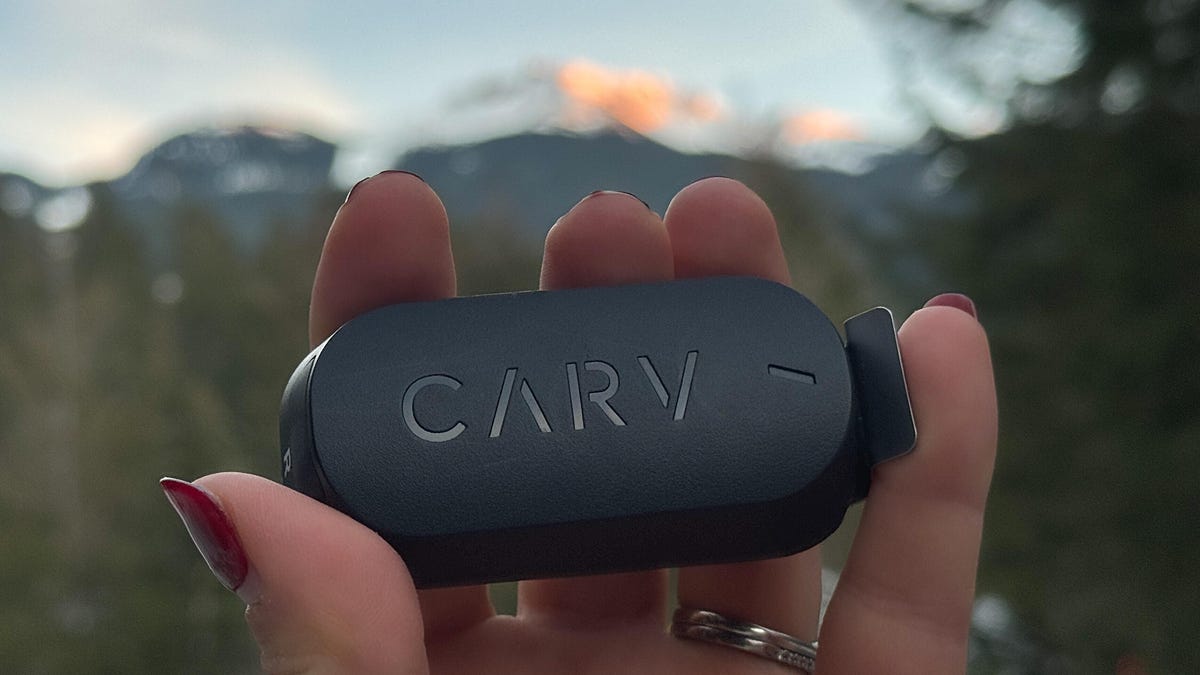
Every time I stand at the top of a black diamond run that I’ve never skied before, I have the same thought: «I know I can get down this, but at what cost to my dignity?»
Sometimes you just don’t know how things are going to go until you point your skis down the slope and tip yourself over that first edge. Perhaps the mountain will surprise you and you’ll ski with the same kind of panache you’re able to muster on green and blue runs. Or perhaps just around the first corner the incline is steeper, bumpier and icier than you’d anticipated, and you’ll be forced to shame-skid your way to more forgiving terrain.
Not all skiers have this problem, but many do. I’m stuck in what’s known in skiing parlance as the intermediate plateau. It’s common among people like me who’ve been skiing for a long time (nearly 30 years in my case) but go irregularly, and only ever for a maximum of one week per year.
Life on the plateau is comfortable and unchallenging. You’ve had enough coaching and experience to ski at a strong intermediate level, opening up most groomed runs in any resort. But your limited practice time holds you back from progressing to anything that could realistically be called advanced — those double black diamonds are none of your business.
That’s how I’ve been skiing for around two decades now. After recovering from the childhood trauma inflicted by the endlessly exasperated instructors at the Ecole du Ski Francais in the French Alps, I managed to reach a decent level that allows me to confidently navigate pretty much any piste. Aside from a few days of learning to float through powder in my twenties, this comprises the sum total of my ski tuition.
I just assumed this was how I would ski forever. How could I possibly hope to make serious improvements to my technique with my paltry six annual ski days and no instructor?
But it turns out there is a way. Enter Carv, a technology that feels designed to give skiers like me the help we need to identify our bad habits and break out of them.
Carv consists of two sensor-packed modules about the size of a standard matchbox — one for each of your ski boots — costing $250 for the pair. They clip onto your power straps and measure the movement of your feet, connecting to a phone app, which provides you with analysis and coaching. If you choose, this can even be in real time via your headphones. It plays into a wider trend of wearable tech that not only tracks our activity (the most common being steps and sleep), but also gives us actionable feedback that actually makes that data useful to us.
Given that a single day of tuition in the resort where I ski most regularly will also set you back $250, Carv feels like decent value for what it offers (although it should be noted that you do also need to pay a subscription fee to use it, which varies according to plan). That’s not to say Carv is a replacement for a human instructor. But if you want to improve without taking time out from skiing with friends, or if, like me, you bear the scars of childhood ski school, it can be a great compromise.
«Carv is a way for you to get feedback without really any sacrifices,» Alex Jackson, Carv’s co-founder, told me. What the team has found, he added, is that even tiny bits of feedback given fast and in real time can help change little things. «Honestly, if you can just change one thing, what will happen is… you’re going to unlock a totally new sensation that you didn’t quite realize was there,» he said.
I was excited to see if he was right.
Hitting the slopes with Carv
In January, I had six days to test Carv on my annual trip to Whistler, where I’d be skiing both with family and alone. The night before I hit the slopes, where fresh snow had just fallen, I charged up the Carv units ready to clip to my boots the next morning.
To my dismay, my first day on the mountain brought an unending torrent of rain. In spite of this, I managed to score a 111 Ski IQ on my first run, with Carv assigning me the title «peak pioneer.»
Ski IQ is a Carv-specific metric that takes your best eight consecutive turns in any segment of a run and provides you with a score ranging from 80 at the low end to 170-plus if you’re Olympic-worthy. I was pleased to be beyond the average skier who uses Carv, who according to the company’s own data has a Ski IQ of 100, but frustrated to fall short of a friend I know with Carv who has a Ski IQ of 124, giving him «line legend» status.
My competitive instinct kicked in and I was determined to beat him by the end of the week (spoiler alert: I didn’t). On the chairlift, I immediately started looking into the data to see where I might improve. I «nailed» keeping my skis parallel, the Carv app told me, but making smoother turns was «one to work on.»
This turned out to be a theme throughout the week. The app identified turn shape as a particular weak spot, suggesting that rather than carving lovely wide C shapes across the slope, I was instead forcing my legs to turn early, creating angles in the snow where there shouldn’t be any.
The data was presented to me in a number of different formats, each helpful in its own way. A graph depicting turn-by-turn analysis showed me that on some of my best turns I was actually well within the «line legend» performance zone, but not consistently. A diagram of my average turn path showed me that I was making a slightly smoother arc when turning left than right. All this encouraged me that I was at least doing it right some of the time, and that with some focus I could improve.
During that first day I kept the Carv app in «track» mode, and hit a top score of 115 in spite of the inclement weather. I spent the evening watching tutorials in the app and checking out drills to try the following morning.
From couch to coached
The studying paid off immediately. On my very first run on day two, on a wide, empty green slope, I focused on rounding out my turns and immediately hit a new high Ski IQ of 116.
Perhaps the most important lesson in all of this was that I unlocked the «new sensation» Jackson had described to me ahead of the trip. By finishing my turns properly, instead of forcing new ones too soon, I found it easier to shift my weight to my new outside ski and find the edge. It felt more smooth and natural, and I was able to keep my upper body pointing more consistently down the slope as a result.
«The base problem is we’re teaching your body something that is against all its best interests,» Jackson had told me. «It’s very hard to retrain your brain that that movement is the right one.»
On day three, my family joined me on the slopes. My brother, who lives in Whistler and is unsurprisingly a much better skier than me, hit a Ski IQ of 135 right off the bat (he’s since peaked at 150, making him a «grim ripper,» according to Carv). After our first run together, he noted immediately that my skiing had improved from the previous year. For several seasons now, he’s been encouraging me to take a more forward-leaning stance, to be unafraid of facing down the mountain, but it was Carv’s drills and coaching that finally gave me the confidence to follow his advice.
Over the next few days I toggled between Carv’s «learn» mode, which provides tips in your headphones when you’re on the lift, and «train» mode, which provides real-time feedback on your turns using a series of escalating beeps when you’re on track to unlock a new high score.
This gamification was especially fun when I was skiing on my own, allowing me to focus on my turn shape and closure, and encouraging me to stay in a solid rhythm even as the pitch of the slope changed under me. I loved that I could separate out and train specific skills, shifting the emphasis away from overall Ski IQ, and instead hyperfocusing on starting turns with grip or steering with my legs.
It was in this mode that I boosted my Ski IQ to 118 on the day before heading home — and on a black diamond, no less — because as of the latest update, Carv’s algorithm now favors more challenging terrain. It felt invigorating in the moment and like an achievement overall for me to get my best score of the week skiing potentially my best ever turns on a steep slope.
Rediscovering my inner thrill seeker
After years of lazily cruising down blue runs, with one eye always on my next chocolate stop, my experience using Carv reignited my passion for improving my skiing in a big way.
«Skiing is one of those sports where the better you get, the more fun it gets — pretty much consistently, right up to the very high level,» Jackson has said — and he was right.
For the first time in years, I had actively focused on improving my technique and was reaping the benefits. My gains hinted at a life beyond the intermediate plateau and helped me rediscover the thrill of the sport.
As Jackson pointed out when I reached out to let him know that I’d felt humbled by my Ski IQ score, improving isn’t always easy or linear.
«The most important thing to remember is skiing is really hard, and getting better is a) scary (there are new feelings to get used to) and b) takes time (we don’t get to ski every day!),» he said over email. «But even a small improvement, and a little bit more focus on the skiing itself (rather than just cruising) can unlock a huge amount more control, confidence and fun.»
Carv might not be right for every skier, but it helped me tap into the focus Jackson referred to, finding confidence, fun and (sometimes) control. For the first time in a decade, I feel like I’ve shed bad habits and opened up so much potential for improvement.
When I got back home, I continued watching Carv tutorials on YouTube. The algorithms that run my life have been quick to catch on and I’m constantly shown ads for Helly Hansen on Instagram and ski tip videos on TikTok. I’m already wondering how much of my annual leave I’m willing to give over to skiing, and considering remortgaging my house to pay for an instructor for a day next time I’m in Whistler.
Either way, I know Carv will be waiting for me, along with endless opportunities to tackle Whistler’s black diamonds — hopefully with more speed, style and grace.
Technologies
Apple’s AI Health Coach Project May Need a Wellness Check
The company’s ambitious plans to introduce a virtual health coach may be going back to the drawing board, according to a report.
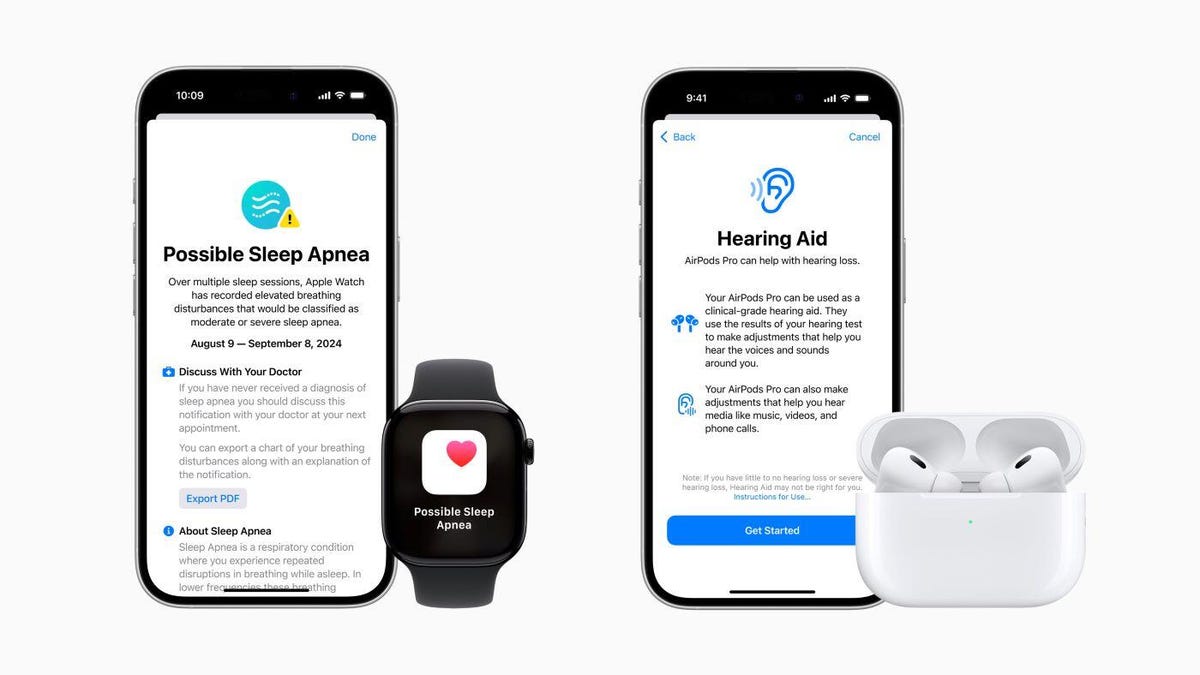
Apple is scaling back and rethinking its ambitious plans to introduce an AI-powered health coach, according to a Bloomberg report by Mark Gurman citing anonymous sources privy to the company’s plans.
The project, known inside Apple as Mulberry, was first reported last year, with the company expected to roll together health-related AI features as a coach or assistant. But now, Bloomberg reports, that project will be broken down into individual features introduced over time, as it has done with tools such as the sleep apnea and hearing tests added to Apple Watch and Apple AirPods.
A representative for Apple did not immediately respond to a request for comment.
Bloomberg’s sources point to a change in leadership over Apple’s health technology. Veteran services head Eddy Cue is overseeing those projects and addressing pressure from competitors pushing into the health space, including Oura and Peloton as well as tech giants like Google and OpenAI, which just launched ChatGPT Health.
(Disclosure: Ziff Davis, CNET’s parent company, filed a lawsuit against OpenAI in April, alleging that it infringed Ziff Davis copyrights in training and operating its AI systems.)
Apple was also said to have built a studio for a revamped health services app that would have included virtual and video wellness instructions, and integration with existing health tools and Apple devices. It is likely that some of that content and software will still be released publicly, just not in one package, according to Bloomberg.
Technologies
Here’s Why Taylor Swift’s Opalite Music Video Isn’t on YouTube Yet
The video is now available on Apple Music and Spotify, but it isn’t landing on YouTube for a couple more days.

YouTube may still be where many people instinctively go to watch music videos, but when Taylor Swift dropped her video for Opalite on Friday, it was noticeably absent from the platform. In fact, it won’t be landing on YouTube until Sunday, two days after its release on other streaming platforms.
So, why is the Opalite music video only available on Apple Music and Spotify Premium right now? It likely has to do with a disagreement between YouTube and Billboard, which ranks the most popular songs and albums of the week.
In December, Billboard shifted its charting methodology so paid and subscription-based streams are weighted even more favorably than ad-supported streams. Billboard started weighting paid streams higher than ad-supported ones in 2018. This most recent shift narrows that ratio from 1:3 to 1:2.5, putting numbers from platforms like YouTube at more of a disadvantage.
Following the change, YouTube posted a statement about its dispute with Billboard, calling the charting company’s methodology «an outdated formula.» It added, «This doesn’t reflect how fans engage with music today and ignores the massive engagement from fans who don’t have a subscription…We’re simply asking that every stream is counted fairly and equally, whether it is subscription-based or ad-supported—because every fan matters and every play should count.»
YouTube said that starting Jan. 16, 2026, its data would «no longer be delivered to Billboard or factored into their charts.»
For artists like Taylor Swift who count on early streams to boost their Billboard rankings, that could make YouTube a less appealing option for debuting new content. So the Opalite video will still be making its way to YouTube, but you’ll have to wait until Sunday, Feb. 8, at 8 a.m. ET to watch it there. Representatives for Swift, YouTube and Billboard did not immediately respond to a request for comment.
YouTube has an ad-supported streaming service as well as a paid one called YouTube Premium. However, even YouTube Premium subscribers can’t see the Opalite music video on Friday. (I’m a subscriber and can confirm it’s nowhere to be found.) According to Statista, in March 2025, YouTube had 125 million paid subscribers across its Premium and Music services. (YouTube Music is included in its Premium subscription.) That pales in comparison with the estimated 2.5 billion total users on YouTube, the majority of whom still rely on that ad-supported offering.
It remains to be seen whether or when YouTube and Billboard will mend their affairs and whether, in the words of Taylor Swift in Opalite, «this is just a temporary speed bump.»
Technologies
Valve Delays Steam Frame and Steam Machine Pricing as Memory Costs Rise
The company says its 2026 release window remains intact, but final prices and dates are still in flux.
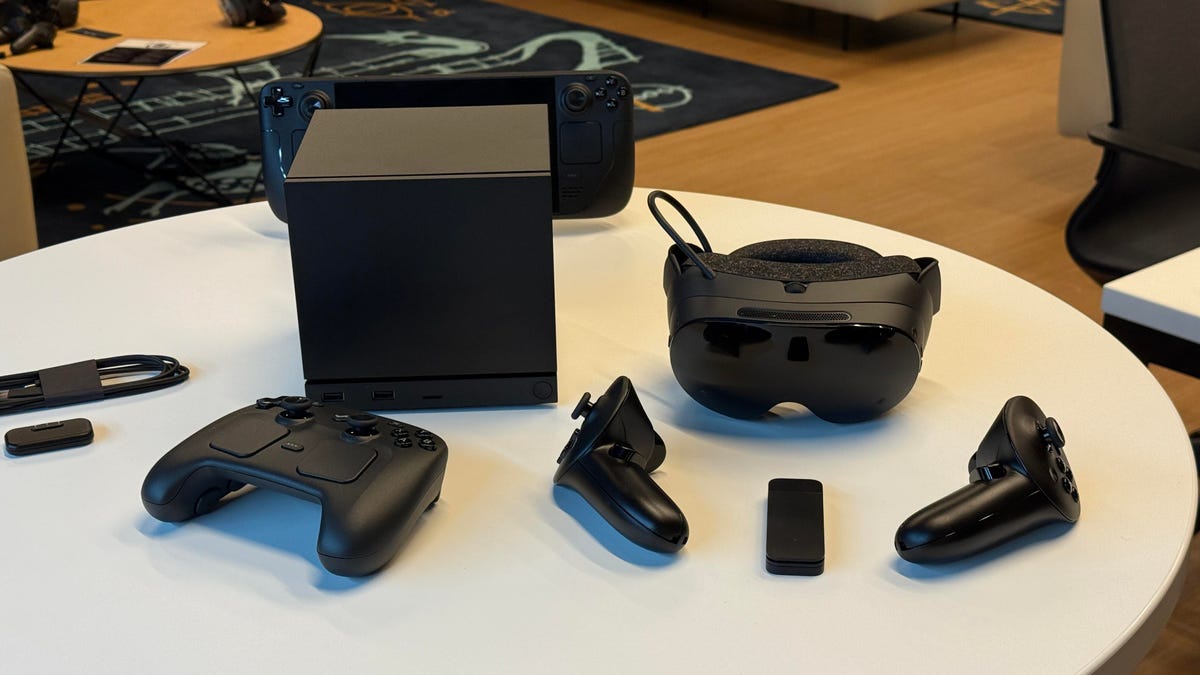
Valve revealed its lineup of upcoming hardware in November, including a home PC-gaming console called the Steam Machine and the Steam Frame, a VR headset. At the time of the reveal, the company expected to release its hardware in «early 2026,» but the current state of memory and storage prices appears to have changed those plans.
Valve says its goal to release the Steam Frame and Steam Machine in the first half of 2026 has not changed, but it’s still deliberating on final shipping dates and pricing, according to a post from the company on Wednesday. While the company didn’t provide specifics, it said it was mindful of the current state of the hardware and storage markets. All kinds of computer components have rocketed in price due to massive investments in AI infrastructure.
«When we announced these products in November, we planned on being able to share specific pricing and launch dates by now. But the memory and storage shortages you’ve likely heard about across the industry have rapidly increased since then,» Valve said. «The limited availability and growing prices of these critical components mean we must revisit our exact shipping schedule and pricing (especially around Steam Machine and Steam Frame).»
Valve says it will provide more updates in the future about its hardware lineup.
What are the Steam Frame and Steam Machine?
The Steam Frame is a standalone VR headset that’s all about gaming. At the hardware reveal in November, CNET’s Scott Stein described it as a Steam Deck for your face. It runs on SteamOS on an ARM-based chip, so games can be loaded onto the headset and played directly from it, allowing gamers to play games on the go. There’s also the option to wirelessly stream games from a PC.
The Steam Machine is Valve’s home console. It’s a cube-shaped microcomputer intended to be connected to a TV.
When will the Steam Frame and Steam Machine come out?
Valve didn’t provide a specific launch date for either. The initial expectation after the November reveal was that the Steam Frame and Steam Machine would arrive in March. Valve’s statement about releasing its hardware in the first half of 2026 suggests both will come out in June at the latest.
How much will the Steam Frame and Steam Machine cost?
After the reveal, there was much speculation on their possible prices. For the Steam Frame, the expectation was that it would start at $600. The Steam Machine was expected to launch at a price closer to $700. Those estimates could easily increase by $100 or more due to the current state of pricing for memory and storage.
-
 Technologies3 года ago
Tech Companies Need to Be Held Accountable for Security, Experts Say
-
 Technologies3 года ago
Best Handheld Game Console in 2023
-
 Technologies3 года ago
Tighten Up Your VR Game With the Best Head Straps for Quest 2
-
 Technologies4 года ago
Black Friday 2021: The best deals on TVs, headphones, kitchenware, and more
-
 Technologies5 лет ago
Google to require vaccinations as Silicon Valley rethinks return-to-office policies
-
 Technologies5 лет ago
Verum, Wickr and Threema: next generation secured messengers
-
 Technologies4 года ago
Olivia Harlan Dekker for Verum Messenger
-
 Technologies4 года ago
iPhone 13 event: How to watch Apple’s big announcement tomorrow


