

Technologies
Overwatch’s New Season 1 Is What the Game Was Always Meant to Be
A commitment to an ongoing story and more frequent new heroes, including five right now, move the game in the direction it always seemed to promise.

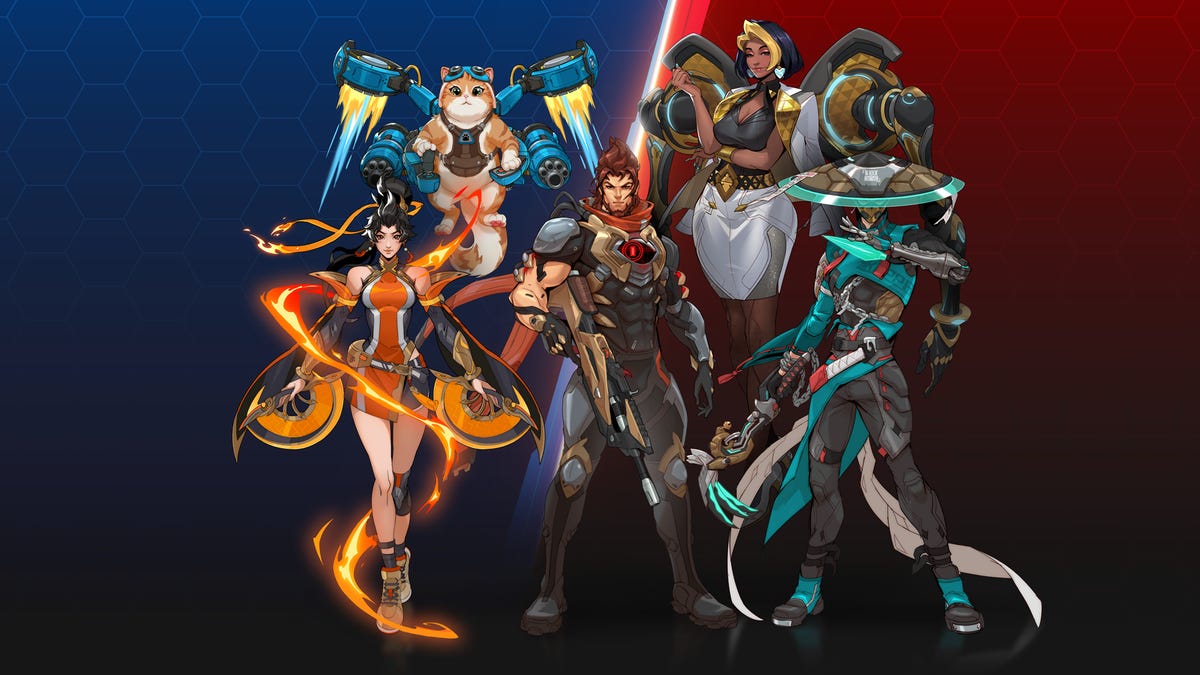
In late January, I was among a group of journalists from all around the world packed into the Blizzard Theater in Irvine, California, to watch the 40-minute Overwatch spotlight and hear from Blizzard execs about where the game was going next. I was not prepared for what we saw. Nor were the other journalists, who gasped, laughed and sometimes comically swore as the video showed us what’s coming next for the hero shooter franchise — which turns a decade old later this year.
What stirred up such audible reactions? An ongoing story that’s reflected directly in the game. New subroles with distinct passive abilities. Ten new heroes are coming this year, five of which are arriving next week. One of the later heroes is freaking Jetpack Cat, who was dreamed up in concept art and scrapped before the game was even released. And maybe most surprisingly, dropping the «2» so the game returns to simply being «Overwatch.»
One of the first questions to that group of execs was about changing the title from Overwatch 2 back to Overwatch — why change, and what does it mean? Johanna Faries, president of Blizzard Entertainment, said the team thought it was the right time for Overwatch to turn the corner in a big way. «It sets us up for a much broader conversation on where the future of this universe [is] and where these characters are going to go.»
Blizzard’s big swing to revitalize Overwatch comes as the game approaches its 10th anniversary in May. Gaming is different in 2026, as newer live-service games can disappear in an instant, and even more tenured franchises like Call of Duty and Battlefield can struggle to retain players. Even Overwatch finally has a major, direct competitor in the team hero shooter genre in Marvel Rivals. So for Blizzard to step up and commit so boldly to this vision is a jolt, a burst of life into a game that has already spent the past couple of years solidifying and expanding its identity with new game modes and features like perks and map voting.
The announcements are both a celebration of the game’s history and a statement that the game is building a bolder future for itself.
Across my own nine-year history playing Overwatch, I’ve experienced its ups and downs, from the heights of queuing with a full six-stack and joining organized team play to the lows of the seemingly interminable double shield meta. And after talking to hero designers, narrative designers, systems designers, artists and voice actors, I left the Blizzard campus reflecting on the idea of playing Overwatch and following its larger story after all these new initiatives launch. One thought stuck with me.
This is how the game was always supposed to feel.
The emotion of a new cinematic driving the story of Overwatch forward, of puzzling over 10 hero silhouettes and learning that five of them would be ready to play almost immediately… it kindled the same kind of anticipation I had in the movie theater where I first awed over an early Overwatch trailer.
Best of all, fans won’t have to wait for this new era of Overwatch, as its fittingly rebadged Season 1 is launching next week with five heroes up-front and another new hero roughly every other month in each new season. We’ll get two new maps later in the year, alongside the return of postmatch accolades, which updated the old voting cards that let you show some love to players on either team who performed particularly well in a match.
I got an early look at the journey awaiting Overwatch fans this year during my time at Blizzard. And while I have some lingering questions about how certain elements will play out, here’s why I’m more excited about the game than I’ve ever been.
Overwatch embraces storytelling directly in the game
The world of Overwatch has always felt vibrant and pulsing with lore, but the game has struggled to tell a story outside of an impressionistic narrative you could vaguely piece together between cinematics, comics and occasional in-game events.
Season 1 promises to change that by kicking off the year-long Reign of Talon storyline, beginning with a cinematic that shows major upheaval in the villainous organization and longtime antagonist to Overwatch. The rest of that story will play out over the course of the year, through traditional avenues like hero trailers, short stories and comics, as well as more immersive methods like new voice lines and map changes that reflect story events.
The Overwatch Spotlight video includes a clip of Talon aircraft assaulting Overwatch’s Gibraltar base, home of operations for genius ape hero Winston. In the media playtest, I fought across a Watchpoint: Gibraltar map that showed the damage of that attack. The bridge outside the starting attacker spawn was partially collapsed, and a flaming beam had crashed down on the airship in the hangar. These map changes breathe life into the larger narrative of a new, more aggressive Talon and make sure players see the consequences of these story beats.
In addition to map changes that illustrate the ongoing story, Overwatch’s narrative and audio designers said that character interactions will also change to reflect the story’s progression, noting an «outrageous amount» of voice lines being added to the game.
Collectively, these changes help bridge the gameplay with the wider world of conflicts and characters that have been the initial point of interest for so many players.
Five new heroes headline a massive influx over the next year
Overwatch 2 launched with three new heroes and has added another 10 in the three-plus years since then. Now we’re getting 10 heroes in a single year, starting with five who all have connections to existing characters and factions in the game.
- Domina, the new ranged tank and ally of Talon, is the heiress of Vishkar Industries, the same company that damage hero Symmetra works for and that also suppressed and exploited support hero Lucio’s hometown with technology his father had developed.
- Anran, a new fire-themed damage hero, is the older sister of support hero Wuyang. She wields hand fans that can shoot fire, and is a new Overwatch recruit alongside her brother.
- Emre, a damage hero wielding multiple weapons, is a former Overwatch agent now turned to Talon’s aims. He’s an old friend of damage hero Freja, though the person she found in their recent reunion is very different from the friend she remembers.
- Mizuki, an offensively focused support hero, is part of the Talon-aligned Hashimoto clan, which has been facing opposition from the support hero Kiriko and her allies in Japan.
- Jetpack Cat, a cat wearing a jetpack, is based on an early Overwatch hero concept long thought to be scrapped. Overwatch support hero Brigitte builds the kitty a jetpack to let her support allies from the skies by towing teammates and trolling enemies.
Multiple developers reiterated that this superdrop of new heroes wasn’t the result of cutting corners or rushing the process, but instead a benefit of improved tools and systems that have shrunk the design time for new heroes from eight months down to four or five.
«We still wanted to give the characters the same level of care we give any hero that we build,» the game’s Art Director Dion Rogers said in a panel on the new Reign of Talon story’s art.
In the leadership panel, Keller noted that the team wanted to kick off this year with an update that would feel like an expansion for the game, and the best way to do that for a hero shooter was to give them a bunch of new heroes: «People play this type of game … to learn more about these heroes, pick them up and continuously master them,» he said. Launching five heroes at once gives players that much more to engage with and could substantially shake up the meta of hero picks and team compositions.
Buzzing enthusiasm among developers
There’s plenty more driving my optimism beyond the new narrative focus and influx of new heroes. It’s the vibe of the announcements, the willingness for the game to go big, chase ideas and deliver a uniquely Overwatch experience to players.
There was palpable excitement among the five groups of Blizzard developers that journalists got to hear from at the Overwatch Spotlight event. In a panel about the game’s narrative, Lead Narrative Designer Miranda Moyer buzzed with enthusiasm, speaking alongside Scott Lawson, the game’s audio and technical director, about planning a year-long story, bringing Talon into the fray and how characters and allegiances might change over the course of that story.
«I think a lot of this new story is predicated on questions that have existed since, y’know, Overwatch was an entity [before eventually being disbanded],» Moyer said. She also noted that while some characters may have felt a little out of the loop of any sort of larger narrative throughout previous years of the game’s story, in the new structure «every single character … is pertinent to the overall plot.»
Developers being excited about their game isn’t surprising, but the degree of enthusiasm was encouraging for a game that suffered a years-long content drought followed by a troubled launch for Overwatch 2, stumbling over gated hero releases and long-announced game features that never saw the light of day. The conversations with devs gave me confidence that there’s a vision and passion for Overwatch that can fuel exciting updates like this for a long time to come.
The question marks amid the coming changes
The promises of ongoing stories and new heroes every season — six per year — are two of the most exciting things the game could announce. That said, some announcements from the spotlight raise more curiosity or concern than confidence.
A major overhaul of the menus forces us to relearn where things are and how to navigate them. The systems design team asserted that the new layout will add value, minimize interruptions and give players choices in menus, and I’m hopeful that the time spent relearning how to get around is worth the payoff. I like the cleaner look, but it will take some time to see how the new layout really feels.
The team also announced that some heroes, such as Ana and Genji, would be getting their second mythic skins before others received their first. I say this as someone who plays lots of Ana and wasn’t at all excited by her mythic skin, but that feels pretty unfair to the rest of the roster, especially given how many new faces we’re getting this year.
Balancing is the other element that feels like a bigger question mark in 2026. Dropping five heroes simultaneously and adding a new hero every season is going to put a lot more pressure on the team responsible for balance.
I asked Associate Game Director Alec Dawson about the challenge of balancing five new heroes at once. He acknowledged that the team does still want heroes to feel «impactful» at launch, but said they «probably went a bit too far» with recent releases.
«It’s good to have an impactful launch. It’s not good if your hero is banned in almost every match you’re in,» Dawson said.
The hero design team told us that they’ll be keeping a close eye on Jetpack Cat, especially given that permanent flight is an entirely new element in the game, and there are very few restrictions on her Lifeline ability that lets you fly allies around the map. Hero designer Scott Kennedy added that the team knows it’s going to be difficult to figure out all at once and that they’ll react quickly if things are out of line.
A new day and a familiar feel for Overwatch
The Spotlight video alone felt like Overwatch returning to the wonder and imagination that powered its 2016 launch. And the experience of talking to a variety of developers — and particularly seeing the seemingly unseverable thread of enthusiasm that connected them — made me as hopeful for the game as I’ve been since I started playing. The promise driving a story forward seems to mirror the team’s own internal hopes for shepherding the game into something bigger and bolder.
In a group interview with global media, I asked the game’s director, Aaron Keller, whether the Spotlight announcements were a commitment to moving the game forward — not just in terms of game mechanics but using it to tell a story beyond just brief snippets we’ve gotten from cinematics and events. He referenced the «amazing, sentimental» character pieces they’ve done so far, but said the team wants the new story to go somewhere.
«We want to take players on a journey over the course of this year — and over the course of many years,» Keller said. «We want to be doing this for as long as players are going to tune in for it.»
Technologies
I Played the 5 New Overwatch Heroes Dropping Next Week. Here Are My Thoughts
The five new heroes offer a variety of playstyles that should appeal to a range of players across all three roles.
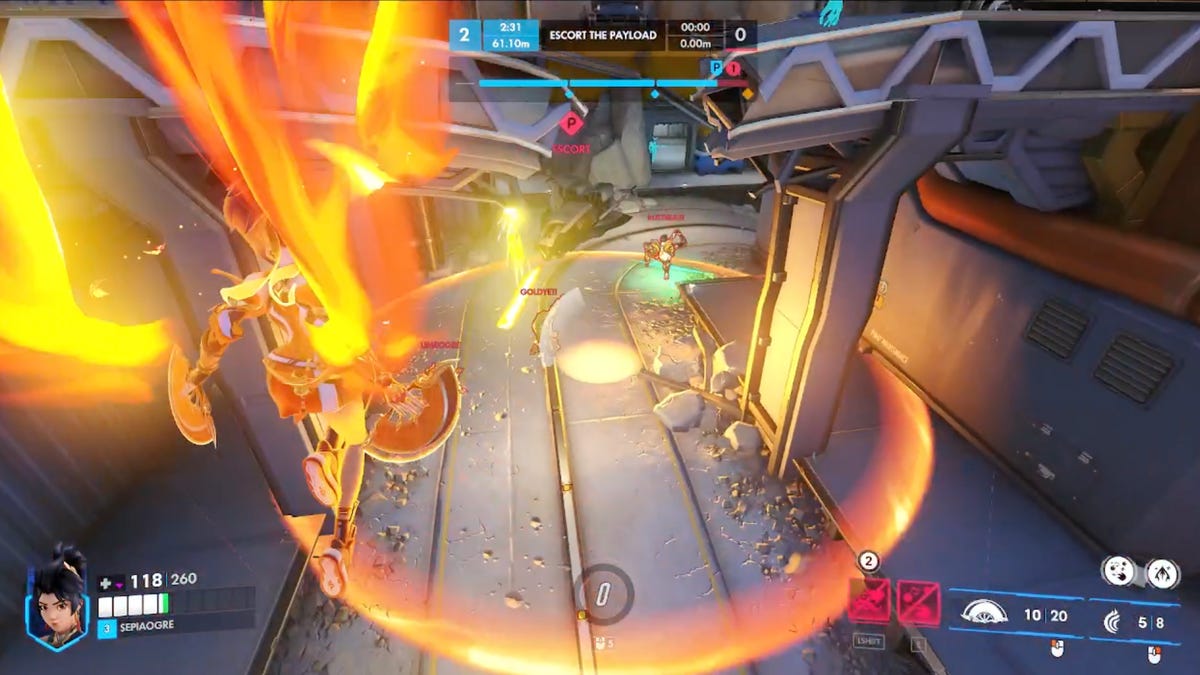
At Blizzard’s campus in Irvine, California, a week before Wednesday’s Overwatch Spotlight showcase, I sat down with other journalists from across the globe in a room packed with PCs to play the five new Overwatch heroes early. Well… to play most of them, as I tragically ran out of time before I got to play as Jetpack Cat in a full match. But I did get a feel for her in the practice range.
A few caveats: I only played a single game or round as each of the other four playable characters, splitting a competitive Gibraltar game between the two new damage heroes. That’s not nearly enough time to fully understand the intricacies of their kits. And each of the games I played pitted the five new heroes against those same five heroes, so my observations about strengths and matchups are limited to a very particular team composition.
Still, it was enough time for a few key takeaways. I’ve broken down my experience and initial analysis of each hero below.
Jetpack Cat will appeal to creative players and people who enjoy ‘pure support’ gameplay
Jetpack Cat is real, and she’s the headliner among the newly released heroes. Although I didn’t get to take the jetpack for a spin in an actual match, her kit felt intuitive while also allowing plenty of room for creativity. Her primary fire shoots Biotic Pawjectiles that seemed to pump out notable damage and healing.
Her kit-defining Lifeline ability drops a line that allies can interact with, allowing you to fly them around the map, offering lots of creative possibilities. Allies have to opt into the lift: «We’d rather this be a collaborative thing,» said Game Designer Scott Kennedy, referencing frustrations with Life Weaver’s ability to forcibly move teammates.
But if your first question, like mine, was, «What about BOB?» Dawson confirmed that you can fly Ashe’s omnic butler around at your whim. (I like to imagine that BOB has a choice in the matter, he just always opts in.) Jetpack Cat’s regular abilities are a resource-limited boost ability and a purr that heals allies and knocks back enemies immediately around her.
As for the ultimate… look, you’re going to get memed on. You need to understand and accept that now. It’s OK. It already happened to me.
Activating your ultimate pulls out a laser pointer, and confirming with primary fire sends Jetpack Cat careening toward the laser and picking up the nearest enemy. It took playtesters approximately zero seconds to realize that you could boost forward before the ultimate, giving people almost no time to react before they get dragged away to their doom.
I do think Jetpack Cat has meaningful offensive capabilities, especially up close, where she can minimize the travel time of her projectiles or just boop people off the map with her purr. But her kit also feels like it will attract the type of player who just wants to pump healing into their team without handling the responsibility of being an aggressive threat. Her primary fire and purr ability can quickly burst-heal a tank from low health, and the combination of permanent flight with a meaningful speed boost allows the hero to heal teammates without having to directly confront enemies.
Domina lets tank players lock down important angles and put out serious firepower
Domina was designed as a poke tank, competing with Sigma in compositions that aim to put out a lot of ranged damage from different angles and shoot down teams before they ever get close. She can do that with a beam weapon that has impressive range and deals extra damage on the last tick of each shot.
She has a curved barrier she can deploy at range, allowing her to cut off fire from a particular angle or shield the enemy tank from healing. But her shield is curved, with square panels that can be destroyed individually. She can also push enemies back and stun them, or fire an explosive crystal that she detonates manually. Her ultimate ability sends out a wide projectile — any enemies hit by it are trapped in a barrier and take massive damage if they don’t break out before a brief delay.
In the media playtest, a well-supported Domina was a menace. Her passive ability restores her shield health, and one of her perks activates passive healing when she deploys her barrier, which combine for meaningful survivability as long as she can keep her distance. Her boop ability stuns heroes who hit a wall, making her hard to chase down individually, and her primary fire felt very threatening, especially when landing headshots with its final burst of damage.
If you like Sigma’s general gameplay but not his double-projectile weapon, or if you prefer more proactive abilities, Domina might appeal to you. I think her more offensively tuned abilities will make her a little more vulnerable to being overwhelmed up close than Sigma, but also more reliable against flying or speedy enemies. She’ll also be fun if you enjoy the fantasy of Overwatch’s hardlight technology or just playing a swankier-than-thou villain.
Mizuki rewards high-skill support players who want to be in the fray
Mizuki was the most complex hero I tried in the playtest. He heals an area around him, similar to Brigitte, but the amount he heals increases as he puts out more damage and healing. He was designed to be a support hero that allows or even forces you to play in different, more vulnerable spaces than other supports, who tend to prefer a little separation from the team, Associate Game Director Alec Dawson said in a group interview ahead of the Spotlight.
Mizuki’s primary weapon doesn’t heal allies, but it can critically hit enemies and bounce off surfaces. His alternate fire causes him to toss his hat, which ricochets among a few allies to heal them and Mizuki as it returns. His Binding Chain ability fires off a chain that briefly hinders the enemy. His Katashiro Return ability drops a small paper doll while giving Mizuki a small dash and increased movement speed, and he can reactivate the ability to return to the doll’s location. It’s a neat tool that can be used to play mind games with your enemies or just quickly retreat to safety.
His ultimate, Kekkai Sanctuary, creates a cylindrical area to heal allies and absorb enemy projectiles. It’s not a huge burst of healing, and any weapons shot from inside the sanctuary don’t get absorbed, so it isn’t a «things in this circle can’t die» ultimate. But it is a powerful piece of protection against long-ranged threats and was effective against Emre’s ultimate in the playtest.
Mizuki felt like the kind of hero that scales aggressively with familiarity and skill, meaning a bad Mizuki might be close to useless, and a good Mizuki will be a terror. Landing hinders and keeping up a high healing multiplier will be important, as will be timely hat tosses. His relatively low healing throughput but decent utility feels particularly threatening when supporting a damage hero on an angle — landing a hinder and extra damage will help secure kills, while his hat toss and passive healing will help them hold the angle longer.
Anran is a fun, fiery flanker and should be a favorite for anyone who favors fast firefights
Anran will be playable tomorrow in a hero trial ahead of the Season 1 launch. She’s the sister of support hero Wuyang, and joins the new flanker subrole alongside damage heroes like Genji, Sombra and Tracer. Like them, Anran quickly moves around the map and attacks from unexpected angles. Her kit is built around inflicting the burning status, which she can further exploit with secondary fire that does additional damage to burning enemies. Fanning the flames also works on enemies burning from other sources, like Ashe’s Dynamite ability.
Like most flankers, she has a movement ability and another ability that can be used more defensively. Her two-charge dash ability helps build up the burning status, and her Dancing Blaze ability makes her briefly invulnerable while damaging enemies in a small radius.
Anran’s ultimate ability is perhaps the most unique part of her kit. She can use it offensively in battle to leap into the sky and release an explosion that damages and instantly burns enemies. Or, if Anran is killed while her ultimate is charged, she can use it to resurrect herself in a small explosion. I think it’ll generally be better to attack with her ultimate, but trading one-for-one on a flank and then using it to revive yourself also seems viable.
Playing Anran was my favorite part of the playtest. It took me a few minutes to put together the flow of her kit, but once it clicked for me, I loved the fluid gameplay loop of getting in and dealing quick bursts of damage before getting out. While I struggled with the short range of her secondary fire and I consistently overestimated the range of her Dancing Blaze ability, her kit felt interesting and dynamic. I expect to play lots of Anran very soon.
Emre is a lethal supersoldier with tactical gameplay and a terrifying ultimate
Emre is another damage hero who fits the soldier archetype, but unlike Soldier: 76, his kit features less running and more gunning. His primary fire is a hitscan, three-round burst rifle with remarkably little recoil. Aiming down sights doesn’t slow Emre’s movement speed, making him tricky to take down in an honest 1v1 at range.
One of Emre’s abilities pulls out a semiauto pistol that deals life-stealing explosive damage. He can also run faster and jump higher while the pistol is out. His other ability throws a grenade that will bounce once before detonating, allowing you to confirm kills around corners or chip away at an enemy’s health at the start of a skirmish — or just add a little height to your own jumps. His passive ability makes his health regeneration kick in sooner, with a 30 health burst when it starts.
Emre’s ultimate grants him the ability to fly as he pulls out a massive cannon to bombard enemies below him, firing light rounds constantly and pumping out larger blasts on a short cooldown. Those larger blasts are particularly devastating, especially to clusters of enemies or anyone trapped in a small space.
Emre felt strong in the playtest, able to confirm kills at range by scoping in, while being very self-sufficient up close thanks to the life-stealing rounds on his pistol ability. His ultimate was the second-most-feared thing in the lobby (behind a certain feline screech), capable of wiping entire teams if they didn’t have an ultimate to respond with. Overall, Emre brought back memories of Halo glory days, chucking ‘nades and mowing down enemies with a battle rifle.
New heroes arrive just in time for Overwatch’s big, year-long narrative
Overwatch has never released this many heroes at once. Even the launch of Overwatch 2 only brought us three new heroes — one from each role. It’s an exciting time for the game, with heroes released once per season as the game introduces a new, ongoing Reign of Talon narrative that each of the new heroes will tie into, on one side of the Overwatch versus Talon conflict or the other.
The new Season 1 kicks off Tuesday, Feb. 10, launching with all five of the heroes featured here.
Technologies
NASA Used AI to Drive Its Perseverance Mars Rover for the First Time
NASA used Anthropic’s Claude for an experiment in plotting the rover’s course, which the agency deemed successful.
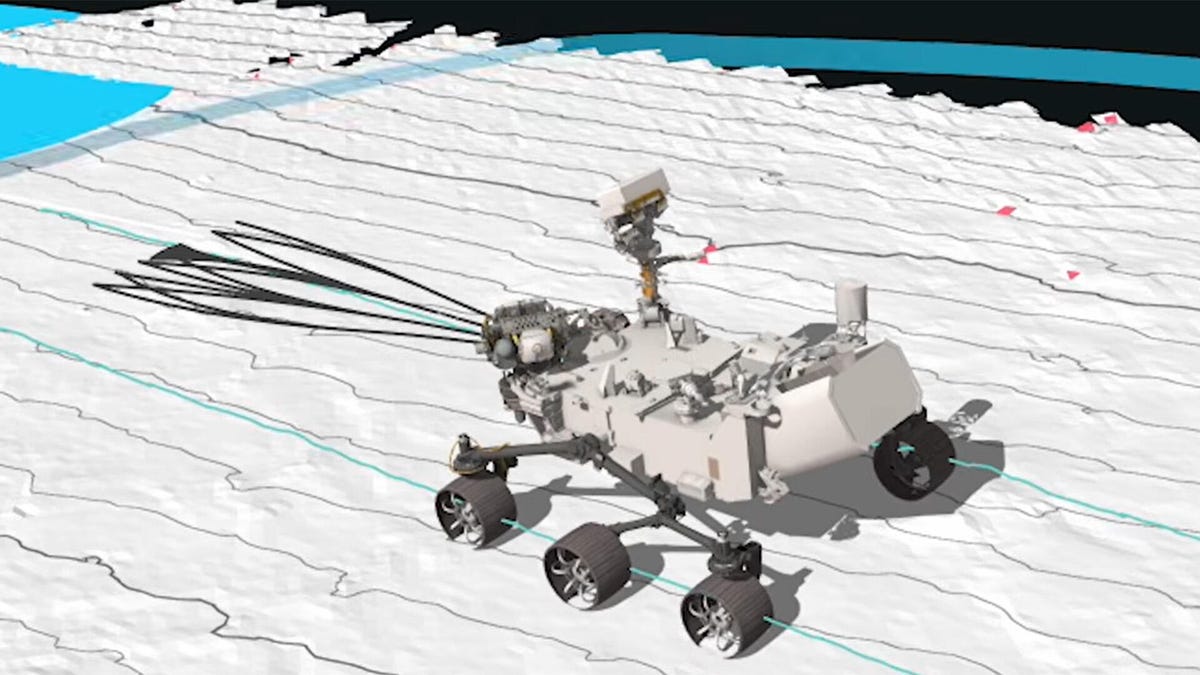
Plotting a course for NASA’s Perseverance rover, 140 million miles away on Mars, is significantly more difficult than setting a driving route here on Earth, where we can punch an address into Google Maps and be on our way in seconds. The rover’s course is usually plotted by a team at NASA’s Jet Propulsion Lab to account for terrain, obstacles and potential hazards, lest the rover tip over or get damaged.
For the first time, NASA’s JPL used AI to plot a course for Perseverance, and it seems to have worked out.
The two demonstrations, which took place on Dec. 8 and 10, were plotted by Anthropic’s Claude AI models and double-checked by JPL to ensure that the AI didn’t accidentally drive the rover into a ditch. Perseverance drove just under 1,500 feet across the two drives with no documented issues.
NASA took a similar approach with plotting the waypoints as it would with human operators. Claude was fed the same satellite imagery and data from NASA’s Mars Reconnaissance Orbiter that JPL scientists would use, and then asked to plot waypoints that Perseverance could handle safely.
The resulting path was slightly modified by NASA and then shipped to Perseverance, which then drove the path autonomously.
«This demonstration shows how far our capabilities have advanced and broadens how we will explore other worlds,» said NASA Administrator Jared Isaacman. «Autonomous technologies like this can help missions to operate more efficiently, respond to challenging terrain and increase science return as distance from Earth grows. It’s a strong example of teams applying new technology carefully and responsibly in real operations.»
You can watch the Dec. 10 drive on NASA’s YouTube channel, which has been condensed into a 52-second video.
A more efficient way to do it
While AI is largely known as a provider of slop, which has been blamed for rapidly degrading people’s internet experience, it can be useful in some scientific pursuits. It takes time to parse years of imagery and data, plot the Perseverance waypoints, and then execute them.
Per NASA, waypoints are usually set no more than 330 feet apart, which means Perseverance is exploring the red planet one football field at a time. Take its epic climb out of the Jezero Crater in 2024. The journey took Perseverance 3.5 months and, all told, the rover climbed a total of 1,640 vertical feet. As of December 2025, the rover has driven a total of just 25 miles in roughly four years.
The goal, according to JPL space roboticist Vandi Verma, is to let Perseverance (and other Mars rovers) travel much farther while «minimizing operator workload.»
Verma also notes that AI could be used to flag interesting features on the planet, saving the human science teams time by eliminating the need to manually check «huge volumes of rover images.»
«This demonstration shows how far our capabilities have advanced and broadens how we will explore other worlds,» said Isaacman. «Autonomous technologies like this can help missions to operate more efficiently, respond to challenging terrain and increase science return as distance from Earth grows. It’s a strong example of teams applying new technology carefully and responsibly in real operations.»
Technologies
Anthropic Pinky-Promises It Won’t Add Ads to Claude
Anthropic’s Super Bowl ads are funny, but can we really trust them?
In the latest chapter of Anthropic’s «We’re not like the other guys» campaign, the AI company is pledging not to introduce advertisements into conversations with its chatbot, Claude. And it’s spending big on Super Bowl ads to make sure you know that fact.
Anthropic’s announcement takes a clear shot at competitor OpenAI. The ChatGPT-maker said a few weeks ago that it would begin testing ads in its products that will be «clearly marked» as sponsored posts. The company also said that ads wouldn’t be served around sensitive or regulated topics, like mental health and politics.
The news was a stark reversal from previous statements — OpenAI CEO Sam Altman had called ads a «last resort» in 2024. But it wasn’t entirely unexpected, given the general chaos of the AI industry’s financing.
For a long time, AI startups operated at a loss, spending billions of dollars from venture capitalists and others to build their chatbots without making money. OpenAI and many others now have a complex web of circular deals to keep the lights on, but newer advanced models require more compute, better chips and generally more maintenance and money to keep up. Anthropic certainly isn’t immune to these financial pressures; the company is the the process of securing a new $10 billion funding deal.
That’s why AI companies are seeking new revenue streams. Hence the ads.
The concern with including ads in chatbots (beyond general irritation) is that it will push products at the expense of helping users. Anthropic wrote, «Users shouldn’t have to second-guess whether an AI is genuinely helping them or subtly steering the conversation towards something monetizable.»
There’s also the risk that tech companies will prioritize advertising metrics and revenue over safety or user autonomy. OpenAI did not immediately respond to a request for comment.
Anthropic, for its part, has been very outspoken about the risks posed by AI technology, so it’s not surprising to hear the company weigh in on this issue. CEO Dario Amodei has spoken at length about the potential threat that AI systems may pose to humanity.
But we have a wealth of examples to draw on — streaming services, smart TVs and now chatbots — where tech companies tried and eventually failed to resist the allure of advertiser money. We can never say never. Anthropic didn’t.
-
 Technologies3 года ago
Tech Companies Need to Be Held Accountable for Security, Experts Say
-
 Technologies3 года ago
Best Handheld Game Console in 2023
-
 Technologies3 года ago
Tighten Up Your VR Game With the Best Head Straps for Quest 2
-
 Technologies4 года ago
Black Friday 2021: The best deals on TVs, headphones, kitchenware, and more
-
 Technologies5 лет ago
Google to require vaccinations as Silicon Valley rethinks return-to-office policies
-
 Technologies5 лет ago
Verum, Wickr and Threema: next generation secured messengers
-
 Technologies4 года ago
Olivia Harlan Dekker for Verum Messenger
-
 Technologies4 года ago
iPhone 13 event: How to watch Apple’s big announcement tomorrow


